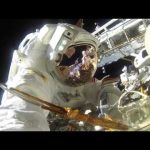
Findings published March 15 in the journal Nature from a series of flight tests in 2013 and 2014 near NASA’s Armstrong Flight Research Center in California indicate that using biofuels helps jet engines reduce particle emissions in exhaust by as much as 50 to 70 percent. That’s both an economic and an environmental benefit. The findings were based on data from the Alternative Fuel Effects on Contrails and Cruise Emissions Study, or ACCESS. The international research program led by NASA and involving agencies from Germany and Canada, studied the effects of alternative fuels on aircraft-generated contrails, engine performance and emissions. Also, NASA @SXSW Interactive Festival, Satellites See Winter Storm from Space, CST-100 Starliner Parachute Testing, and NASA’s Pi Day Challenge!
Author: kidibot
-
ESA Euronews: Universidade de Bremen é pioneira no mapeamento da poluição atmosférica
Certamente já usou uma aplicação no telemóvel para consultar a previsão meteorológica. Hoje, graças a uma rede de satélites e estações terrestres, é possível obter informações sobre poluição em várias cidades no seu telemóvel.
O jornalista Claudio Rosmino reporta-nos como a Universidade de Bremen, está a recolher esta variedade de dados para chegar a uma visão global da poluição atmosférica.
A atmosfera terrestre é um sistema complicado que depende de vários factores. Os satélites de observação que orbitam à volta do planeta monitorizam constantemente o estado do ar que inalamos e o modo como é afectado pela poluição natural e pela de origem humana.
Uma missão essencial uma vez que, segundo dados recentes da Organização Mundial de Saúde, uma em cada oito mortes a nível mundial se deve à poluição do ar.
Os investigadores da Universidade de Bremen são pioneiros na medição da poluição atmosférica cruzando os dados obtidos no espaço e os valores colhidos em estações terrestres.
-
Earth from Space: Calgary
Earth from Space is presented by Kelsea Brennan-Wessels from the ESA Web-TV virtual studios. In the 221st edition, Sentinel-2 takes us over the Rocky Mountains and Prairies of Canada’s Alberta province.
See also http://www.esa.int/spaceinimages/ESA_Multimedia/Images/2017/03/Calgary to download the image.
-
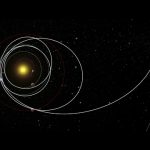
Juice’s journey to Jupiter
This animation shows the proposed trajectory of ESA’s Jupiter Icy Moons Explore (Juice) mission to Jupiter.
Based on a launch in June 2022, the spacecraft will make a series of gravity-assist flybys at Earth (May 2023, September 2024 and November 2026), Venus (October 2023) and Mars (February 2025) before arriving in the Jupiter system in October 2029.
The animation ends at the Jupiter orbit insertion point, but the planned 3.5 year mission will see Juice not only orbit Jupiter, but also make dedicated flybys of the moons Europa, Callisto and Ganymede, before orbiting the largest moon, Ganymede.
More about Juice:
http://sci.esa.int/juice/ -
Science Max | Best Episodes Compilation | Science Max Season1 | Kids Science
Science Max brings you a special compilation including some of our favourite episodes from season 1. Tune in and prepare for a heap of science madness!
Have you ever done a science experiment and wondered “What would this be like if it were HUGE?” Welcome to Science Max, the exciting new series that turbocharges all the science experiments you’ve done at home.
In season 1, join Phil as he builds rocket cars, uses elastic energy to hurl pumpkins on a giant catapult, builds a bridge out of pasta that can hold a human, find magnets powerful enough to float Phil off the ground, and many more experiments taken to the MAX!
-

Machine Learning – Supervised VS Unsupervised Learning
Enroll in the course for free at: https://bigdatauniversity.com/courses/machine-learning-with-python/
Machine Learning can be an incredibly beneficial tool to uncover hidden insights and predict future trends.
This free Machine Learning with Python course will give you all the tools you need to get started with supervised and unsupervised learning.
This Machine Learning with Python course dives into the basics of machine learning using an approachable, and well-known, programming language. You’ll learn about Supervised vs Unsupervised Learning, look into how Statistical Modeling relates to Machine Learning, and do a comparison of each.
Look at real-life examples of Machine learning and how it affects society in ways you may not have guessed!
Explore many algorithms and models:
Popular algorithms: Classification, Regression, Clustering, and Dimensional Reduction.
Popular models: Train/Test Split, Root Mean Squared Error, and Random Forests.
Get ready to do more learning than your machine!
Connect with Big Data University:
https://www.facebook.com/bigdatauniversity
https://twitter.com/bigdatau
https://www.linkedin.com/groups/4060416/profileABOUT THIS COURSE
•This course is free.
•It is self-paced.
•It can be taken at any time.
•It can be audited as many times as you wish.https://bigdatauniversity.com/courses/machine-learning-with-python/
-
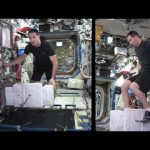
Space Station fitness
ESA astronaut Thomas Pesquet gives a guided tour of the International Space Station’s exercise machines. Staying fit is important on Earth but even more so in space as bones and muscle are used less in microgravity and tend to waste away. Astronauts spend around two hours every day doing fitness routines.
The Space Station has three types of exercise machines: a treadmill (T2), an exercise bicycle (CEVIS) and a weight-lifting machine (ARED).
Thomas is spending six months on the International Space Station as part of his Proxima mission. During Proxima, Thomas will perform around 50 scientific experiments for ESA and France’s space agency CNES as well as take part in many research activities for the other Station partners.
The mission is part of ESA’s vision to use Earth-orbiting spacecraft as a place to live and work for the benefit of European society while using the experience to prepare for future voyages of exploration further into the Solar System.
Connect with Thomas Pesquet: http://thomaspesquet.esa.int
-

Orion Spacecraft Parachute Test on This Week @NASA – March 10, 2017
NASA conducted the latest successful test of the Orion spacecraft’s parachute system on March 8 in the skies above the U.S. Army’s Yuma Proving Ground in Arizona. The test was designed to evaluate the parachutes’ performance in an emergency abort situation that would require Orion to be jettisoned from the agency’s Space Launch System rocket during a launch. Even at this relatively low altitude, the parachutes are designed to fully deploy and safely return Orion and its crew to Earth. Also, Shin Honored by Aviation Week, Space Station Resupply Mission Targeted for March 19, Small Business Innovation Proposals Selected, Deep Space Atomic Clock, Modern Figures Virtual Tour, and NASA Aero “Night of Flight”!
-
Pangaea 2016: Taking astronauts to other planets – on Earth
ESA is now training astronauts in identifying planetary geological features for future missions to the Moon, Mars and asteroids. This Pangaea course – named after the ancient supercontinent – will help astronauts to find interesting rock samples as well as to assess the most likely places to find traces of life on other planets.
This video was made during the second part of the Pangaea course held in Lanzarote, one of the Spanish Canary Islands in 2016 with ESA astronauts Luca Parmitano, Pedro Duque and Matthias Maurer and features interviews with the instructors and astronauts.
The students were tasked with interpreting geological features to understand the history of how the island formed. The goal is to help astronauts choose the best places to explore and collect rock samples.
This session put into practice a week’s training in Bressanone, Italy, where they learned about Earth and planetary geological processes as well as how to recognise rocks and meteorites.
The trio went on progressively difficult day trips, ending with a free exploration of the countryside searching for interesting samples while keeping in contact via radio with scientists at ‘mission control’.
Lanzarote was chosen for this course because of its geological similarity with Mars, such as a volcanic origin, mild sedimentary processes owing to a dry climate, hardly any vegetation and a well-preserved landscape.
More about the Pangeae course:
http://blogs.esa.int/caves/ -

Belle (From “Beauty and the Beast”/Audio Only)
Stream #BeautyAndTheBeast on Disney+.
Disney+ is the only place to stream your favorites from Disney, Pixar, Marvel, Star Wars, National Geographic and more. Access it all at https://disneymusic.co/JoinDisneyPlus?IQid=dmvevo. Coming to UK, France, Germany, Spain and Italy March 2020.
Download the Beauty and the Beast soundtrack here: http://disneymusic.co/BeautySdtrkWide?iqid=dmvevo
Watch all Beauty and the Beast music videos here:
http://disneymusic.co/BeautySdtrkWide/Vevo?iqid=dmvevoSubscribe to DisneyMusicVEVO 🔔: https://disneymusic.co/disneymusicYT?iqid=batb
Beauty and the Beast Sheet Music:
Evermore http://bit.ly/2mHJ5qg
How Does A Moment Last Forever http://bit.ly/2nmT0yH
Belle http://bit.ly/2nXEPCC
Belle (Reprise) http://bit.ly/2n9D69W
Something There http://bit.ly/2n8YEml
Be Our Guest http://bit.ly/2n8IGbL
Days In The Sun http://bit.ly/2n8RzCb
The Mob Song http://bit.ly/2o1oAox
Aria http://bit.ly/2nXxTFCFollow Disney Music:
Facebook: http://facebook.com/disneymusic
Instagram: http://instagram.com/disneymusic
Twitter: http://twitter.com/disneymusic
YouTube: http://youtube.com/disneymusic?sub_confirmation=1#AlanMenken
Music video by Emma Watson, Luke Evans, Ensemble – Beauty and the Beast performing Belle. (C) 2017 Walt Disney Records
-
Science Max | Special Full Episode Compilation | Science Max Season1 | Kids Science
Science Max brings you a special compilation including some of our favourite episodes from season 1. Tune in and prepare for a heap of science madness!
Have you ever done a science experiment and wondered “What would this be like if it were HUGE?” Welcome to Science Max, the exciting new series that turbocharges all the science experiments you’ve done at home.
In season 1, join Phil as he builds rocket cars, uses elastic energy to hurl pumpkins on a giant catapult, builds a bridge out of pasta that can hold a human, find magnets powerful enough to float Phil off the ground, and many more experiments taken to the MAX!
-

NASA Advancing Aviation Technology on This Week @NASA – March 3, 2017
On March 2, NASA’s acting Administrator, Robert Lightfoot spoke at the U.S. Chamber of Commerce’s Aviation Summit in Washington, about how the agency’s technology advancements have helped transform the aviation industry. Lightfoot was then joined by Canadian Minister of Transport Marc Garneau, who is a former astronaut and Canadian Space Agency president, and Carol Hallett, counselor to the chamber, for a discussion with NASA’s Shane Kimbrough and Peggy Whitson, via satellite from the International Space Station. The two talked about the vast array of research and technology development conducted aboard the station. Also, Anniversary of One-Year Crew’s Return, IceCube SmallSat Ready for Launch, Orion Propulsion Qualification Module Installed, Small Business Industry Awards, and African American Pioneers in Aviation and Space!
-
How to Make Slime – Elmer’s Glue Recipe
Steve shares his recipe for making the perfect Elmer’s glue slime.
Want more experiments like this? Check out http://www.stevespanglerscience.com/product/naked-eggs-and-flying-potatoes
Sick Science® is a trademark of Steve Spangler, inc.
© 2017 Steve Spangler Science all rights reserved
-
Science Max | MAKING A BOAT PART 2 | Science Max Season1 Full Episode | Kids Science
Science Max – What makes boats float? Tinfoil doesn’t float, but a boat made of tinfoil does. It’s all about how you build it. Watch as Phil builds his human-sized tinfoil boat wrong several times before he figures it out. Plus, Phil gets into a tub full of the main ingredient in diapers. Why would he do such a thing? For Science!
Have you ever done a science experiment and wondered “What would this be like if it were HUGE?” Welcome to Science Max, the exciting new series that turbocharges all the science experiments you’ve done at home.
In season 1, join Phil as he builds rocket cars, uses elastic energy to hurl pumpkins on a giant catapult, builds a bridge out of pasta that can hold a human, find magnets powerful enough to float Phil off the ground, and many more experiments taken to the MAX!
-
Sentinel services for agriculture
Sentinel-2B will be launched by a Vega rocket from Europe’s Spaceport, French Guiana.
Lift off is scheduled at 01:49 GMT (02.49 CET) on 7 March, 22:49 on 6 March in Kourou.
It will join its sister satellite Sentinel-2A and the other Sentinels part of the Copernicus programme, the most ambitious Earth observation programme to date.
Sentinel-2A and 2B will be supplying ‘colour vision’ for Copernicus and together they can cover all land surfaces once every five days thus optimising global coverage and the data delivery for numerous applications.
The data provided by these Sentinel-2 satellites is particularly suited for agricultural purposes, such as managing administration and precision farming.
ESA is currently working with the European Commission and National stakeholders to understand the full range of opportunities Earth Observation can contribute in particular to modernise and simplify the Common Agricultural Policy. This video shows how agriculture benefits from the use of the Sentinel data in the Czech Republic.
More about Sentinel-2:
http://www.esa.int/Our_Activities/Observing_the_Earth/Copernicus/Sentinel-2 -
Gaia: Science-driven introduction to the archive
Alcione Mora – ESA
Presentation recorded during the first Gaia data workshop at ESA’s European Space Astronomy Centre (ESAC) 2-4 November 2016.
The slides to this presentation are available here:
http://www.cosmos.esa.int/documents/915837/915858/2016_11_02_dr1Workshop_AlcioneMora.pdf -
Gaia: The Visualisation of Gaia Data
André Moitinho – Lisbon University
Presentation recorded during the first Gaia data workshop at ESA’s European Space Astronomy Centre (ESAC) 2-4 November 2016.
The slides to this presentation are available here: http://www.cosmos.esa.int/documents/915837/915858/Moitinho_visualisation_v2.pdf
-
Gaia: Mission Overview
Timo Prusti – ESA
Presentation recorded during the first Gaia data workshop at ESA’s European Space Astronomy Centre (ESAC) 2-4 November 2016.
The slides to this presentation are available here:
http://www.cosmos.esa.int/documents/915837/915858/20161102_Gaia_TPrusti_web.pdf -
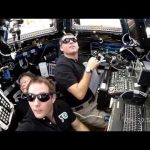
Capturing a dragon
ESA astronaut Thomas Pesquet with NASA astronauts Shane Kimbrough and Peggy Whitson in the Cupola observatory using the International Space Station’s 16-m robotic arm to grapple the SpaceX Dragon cargo spaceship.
The video is sped up 20 times with this recording lasting 45 minutes 30 seconds at normal speed. It shows Shane and Thomas monitoring the spacecraft’s approach scanning the monitors, ready to step in if necessary. Thomas took manual control of the robotic arm and extended it to grapple the vehicle when 11 m from the Station. The Dragon CRS-10 flight was launched on 19 February 2017 and berthed with the Space Station four days later.
The spacecraft carried over 1500 kg of supplies including NASA’s Stratospheric Aerosol and Gas Experiment, or SAGE III, to monitor aerosols, ozone and other gases in Earth’s high atmosphere by looking at the sunlight and moonlight as they pass through. SAGE III is mounted on ESA’s Hexapod – a six-legged tracker that points the facility in the right direction.
Inside the spacecraft was also France’s CNES space agency Fluidics experiment to probe how fluids behave in weightlessness.
Thomas is spending six months on the International Space Station as part of his Proxima mission. During Proxima, Thomas will perform around 50 scientific experiments for ESA and France’s space agency CNES as well as take part in many research activities for the other Station partners.The mission is part of ESA’s vision to use Earth-orbiting spacecraft as a place to live and work for the benefit of European society while using the experience to prepare for future voyages of exploration further into the Solar System.
Connect with Thomas Pesquet: http://thomaspesquet.esa.int
-
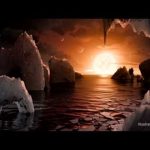
NASA’s Spitzer Reveals Largest Batch of Earth-Size, Habitable-Zone Planets Around a Single Star
NASA held a news conference Feb. 22 at the agency’s headquarters to discuss the finding by the Spitzer Space Telescope of seven Earth-sized planets around a tiny, nearby, ultra-cool dwarf star. Three of these planets are in the habitable zone, the region around the star in which liquid water is most likely to thrive on a rocky planet. This is the first time so many planets have been found in a single star’s habitable zone, and the first time so many Earth-sized planets have been found around the same star. The finding of this planetary system, called TRAPPIST-1, is the best target yet for studying the atmospheres of potentially habitable, Earth-sized worlds
-
Science Max | MAKING A BOAT PART 1| Science Max Season1 Full Episode | Kids Science
Science Max – What makes boats float? Tinfoil doesn’t float, but a boat made of tinfoil does. It’s all about how you build it. Watch as Phil builds his human-sized tinfoil boat wrong several times before he figures it out. Plus, Phil gets into a tub full of the main ingredient in diapers. Why would he do such a thing? For Science!
Have you ever done a science experiment and wondered “What would this be like if it were HUGE?” Welcome to Science Max, the exciting new series that turbocharges all the science experiments you’ve done at home.
In season 1, join Phil as he builds rocket cars, uses elastic energy to hurl pumpkins on a giant catapult, builds a bridge out of pasta that can hold a human, find magnets powerful enough to float Phil off the ground, and many more experiments taken to the MAX!
-

Can you solve the three gods riddle? – Alex Gendler
View full lesson: http://ed.ted.com/lessons/can-you-solve-the-three-gods-riddle-alex-gendler
You and your team have crash-landed on an ancient planet. Can you appease the three alien overlords who rule it and get your team safely home? Created by logician Raymond Smullyan, and popularized by his colleague George Boolos, this riddle has been called the hardest logic puzzle ever. Alex Gendler shows how to solve it.
Lesson by Alex Gendler, animation by Artrake Studio.
-
ESA Euronews: Τα «παγωμένα» μυστικά του Πλούτωνα
Αυτόν τον μήνα η εκπομπή το Space σας μεταφέρει στα απώτερα όρια του ηλιακού μας συστήματος, στον Πλούτωνα.
Αποδεικνύεται πολύ πιο εξωτικός από ότι θα περίμενε κανείς, με πολλά είδη ανεξήγητων φαινομένων στην επιφάνειά του.
Η εκπομπή Space συνάντησε μερικούς από τους κορυφαίους εμπειρογνώμονες της Ευρώπης στον πάγο για να μάθει περισσότερα για τα μυστικά του.
Ο Πλούτωνας αποτελούσε μυστήριο για την ανθρωπότητα από τότε που ανακαλύφθηκε, το 1930.
Αρχικά είναι χαρακτηριστεί ως πλανήτης. Το 2006 αναθεωρήθηκε η άποψη αυτή και ονομάστηκε πλανήτης- νάνος του ηλιακού μας συστήματος.
-
ESA Euronews: Plútó – a rejtélyes törpebolygó
A Plútóról 2015-ben készített részletes felvételeket a New Horizons űrszonda, ezek a felvételek felbolygatták a tudományos közösséget. A törpebolygó több a furcsaságot tartogat, mint arra bárki számított, felszínén olyan jelenségek zajlanak, amire egyelőre nincs magyarázatunk. A fenti videóban a téma legjobb európai szakértői beszélnek arról, mit tudunk a Plútóról, és miértérdekes ez a probléma tudományos szempontból.
A Plutó 1930-as felfedezése óta rejtély volt az emberiség számára. Először bolygónak nevezték, 2006-ban átsorolták a törpe-bolygók közé. Minél többet tudunk meg róla, annál jobban megragadja tudósok fantáziáját.
-
2017 NASA African American History Month Profile Mark Davis, Armstrong Flight Research Center
Mark Davis has been with NASA Armstrong Flight Research Center since April 1990, as a Aerodynamics Engineer. Mark Currently leads the Small Business Innovative Research Program working with small businesses that contribute to NASA’s Research goals.
-
Science Max | MAGNETS – PART 2 | Science Max Season1 Full Episode | Kids Science
Magnets have poles – when you put opposite ones together, they attract. But when you but the same ones together, they repel. Could we find magnets powerful enough to repel each other and float Phil off the ground? Plus, watch magnets defy gravity all on their own.
Have you ever done a science experiment and wondered “What would this be like if it were HUGE?” Welcome to Science Max, the exciting new series that turbocharges all the science experiments you’ve done at home.
In season 1, join Phil as he builds rocket cars, uses elastic energy to hurl pumpkins on a giant catapult, builds a bridge out of pasta that can hold a human, find magnets powerful enough to float Phil off the ground, and many more experiments taken to the MAX!
-
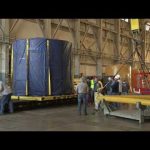
Michoud Recovering From Tornado on This Week @NASA – February 10, 2017
Recovery efforts are underway at NASA’s Michoud Assembly Facility in New Orleans, which was hit by a tornado Feb. 7. In accounting for all 3,500 employees at the facility, officials reported five suffered minor injuries. Buildings, structures and parked cars sustained damage, but there was no reported damage to hardware for NASA’s Space Launch System (SLS) rocket, Orion spacecraft, or the barge Pegasus docked at Michoud. NASA will release updates on the facility’s status as they become available. Also, SpaceX Launch Targeted for Mid-February, SLS Booster Hardware Arrives at KSC, and NASA Aerospace Days!
-

The Moon – ESA’s interactive guide
‘The Moon – ESA’s interactive guide’ is a web documentary with over 40 videos narrated by scientists involved in lunar research. The platform allows you to explore your own path and discover the science, technology and the missions around our moon. An engaging space to satisfy your curiosity, learn and be inspired.
Explore at http://lunarexploration.esa.int
-
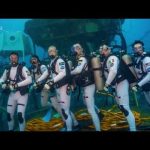
NEEMO 21: An analogue mission to Mars
In July 2016, ESA astronaut Matthias Maurer took part in NASA’s Extreme Environment Mission Operations, or NEEMO – a 16-day underwater sortie to enact a mission to Mars and test equipment for astronauts.
NEEMO’s underwater habitat off Florida acts as makeshift a space base for astronauts to make regular ‘waterwalks’ in full scuba gear. Both underwater missions plan sorties for the astronauts to simulate spacewalks.
For NEEMO 21, a rotating crew of four complemented Matthias and NASA astronaut Megan McArthur who tested new techniques, operation procedures and technology.
Connect with Matthias: http://matthiasmaurer.esa.int
More about NEEMO: https://www.nasa.gov/mission_pages/NEEMO/index.html
-
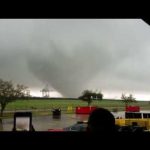
NASA’s Michoud Assembly Facility Impacted by Tornado
At 11:25 a.m. CST Feb. 7, a tornado impacted NASA’s Michoud Assembly Facility in New Orleans. At this time, only minor injuries have been reported and NASA employees and other tenants are being accounted for. There is still a threat of severe weather in the area and emergency officials are continuing to monitor the situation to ensure the safety of onsite personnel. The onsite Michoud emergency response team is also conducting damage assessments of buildings and facilities.
-

Science Max | MAGNETS – PART 1 | Science Max Season1 Full Episode | Kids Science
Magnets have poles – when you put opposite ones together, they attract. But when you but the same ones together, they repel. Could we find magnets powerful enough to repel each other and float Phil off the ground? Plus, watch magnets defy gravity all on their own.
Have you ever done a science experiment and wondered “What would this be like if it were HUGE?” Welcome to Science Max, the exciting new series that turbocharges all the science experiments you’ve done at home.
In season 1, join Phil as he builds rocket cars, uses elastic energy to hurl pumpkins on a giant catapult, builds a bridge out of pasta that can hold a human, find magnets powerful enough to float Phil off the ground, and many more experiments taken to the MAX!
-
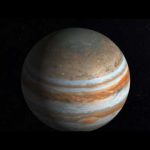
Juno’s Latest Close Flyby of Jupiter on This Week @NASA – February 3, 2017
NASA’s Juno spacecraft made its latest close flyby of Jupiter Feb. 2 — passing about 2,700 miles above the planet’s clouds. This was the fourth close flyby since Juno began orbiting Jupiter last year on July 4. During these close passes instruments on the spacecraft probe beneath the cloud cover to collect scientific data about the planet’s structure, atmosphere and magnetosphere. This information could help us better understand the planetary systems being discovered around other stars. Also, Cassini Sees Saturn’s Rings in Greater Detail, The Most Extreme Blazars, NASA at Super Bowl Event, NASA at NBA Black Heritage Celebration, and
Day of Remembrance! -

BepiColombo status
BepiColombo, Europe’s first mission to Mercury, is currently being put through its paces at ESA’s European Space Research and Technology Centre (ESTEC) in the Netherlands. Mechanical and vibration tests will get underway in April with a view to a launch in October 2018. BepiColombo will arrive at Mercury, the smallest planet in our Solar System, in December 2025.
The ESA-led joint European and Japanese mission consists of two spacecraft – the Mercury Planetary Orbiter (MPO) and the Mercury Magnetospheric Orbiter (MMO) – as well as a sunshield and a Mercury Transfer Module, which will power its seven year journey using its solar electric propulsion engine. It will be a mission of further discovery after NASA’s Messenger spacecraft uncovered a number of surprises – including evidence of water ice at the closest planet to the Sun and a magnetic dipole field.
This video covers the mission status as well and its plan to follow up on Mercury’s unexpected features and properties. It includes an interview with Johannes Benkhoff, ESA BepiColombo project scientist.
More about BepiColombo on our website: http://www.esa.int/Our_Activities/Space_Science/BepiColombo_overview2
-
Yuksek x Thomas Pesquet
This music video, directed by Jérôme de Gerlache, is a collaboration between French musician Yuksek and ESA astronaut Thomas Pesquet on the International Space Station.
The friends came up for the concept of this film to show both ships of creation: Yuksek’s studio where he composed the music inspired by Thomas Pesquet’s flight, and the spaceship where Thomas is performing science for the benefit of humanity.
Illustrating their everyday working life, they are brought together by music that crosses borders and travels easily from Earth to space. Music connects people anywhere, it is universal and that is its intrinsic beauty.
Thomas is spending six months on the International Space Station as part of his Proxima mission. During Proxima, Thomas will perform around 50 scientific experiments for ESA and France’s space agency CNES as well as take part in many research activities for the other Station partners. The mission is part of ESA’s vision to use Earth-orbiting spacecraft as a place to live and work for the benefit of European society while using the experience to prepare for future voyages of exploration further into the Solar System.
Music: Yuksek « Live Alone feat Roman Rappak »
Directed by Jérôme de Gerlache
Director of photography [space] Thomas Pesquet
Director of photography [earth] Jacques Ballard
Editor Nicolas Capus
Colorgrading Arthur Paux
Thanks to Emilien Lazaron.Many thanks to Partyfine, Universal Music, Have a great day films, Sparks seeker
Connect with Thomas at http://thomaspesquet.esa.int
-

Science Max | BUILDING A BRIDGE – PART 2 | Science Max Season1 Full Episode | Kids Science
Ever wanted to build a bridge out of pasta? It’s not too hard and works better than you’d think. But what if we were to try to make a pasta bridge big enough for Phil to walk across? Plus, learn how to build a sandcastle you can stand on!
Have you ever done a science experiment and wondered “What would this be like if it were HUGE?” Welcome to Science Max, the exciting new series that turbocharges all the science experiments you’ve done at home.
In season 1, join Phil as he builds rocket cars, uses elastic energy to hurl pumpkins on a giant catapult, builds a bridge out of pasta that can hold a human, find magnets powerful enough to float Phil off the ground, and many more experiments taken to the MAX!
-

What is Artificial Intelligence (or Machine Learning)?
Want to learn more about AI and machine learning? Take this free HubSpot Academy course: https://bit.ly/2Sm2rzG
What is AI? What is machine learning and how does it work? You’ve probably heard the buzz. The age of artificial intelligence has arrived. But that doesn’t mean it’s easy to wrap your mind around. For the full story on the rise of artificial intelligence, check out The Robot Revolution: http://hubs.ly/H0630650
Let’s break down the basics of artificial intelligence, bots, and machine learning. Besides, there’s nothing that will impact marketing more in the next five to ten years than artificial intelligence. Learn what the coming revolution means for your day-to-day work, your business, and ultimately, your customers.
Every day, a large portion of the population is at the mercy of a rising technology, yet few actually understand what it is.
Artificial intelligence. You know, HAL 9000 and Marvin the Paranoid Android?
Thanks to books and movies, each generation has formed its own fantasy of a world ruled — or at least served — by robots. We’ve been conditioned to expect flying cars that steer clear of traffic and robotic maids whipping up our weekday dinner.
But if the age of AI is here, why don’t our lives look more like the Jetsons?
Well, for starters, that’s a cartoon. And really, if you’ve ever browsed Netflix movie suggestions or told Alexa to order a pizza, you’re probably interacting with artificial intelligence more than you realize.
And that’s kind of the point. AI is designed so you don’t realize there’s a computer calling the shots. But that also makes understanding what AI is — and what it’s not — a little complicated.
In basic terms, AI is a broad area of computer science that makes machines seem like they have human intelligence.
So it’s not only programming a computer to drive a car by obeying traffic signals, but it’s when that program also learns to exhibit signs of human-like road rage.
As intimidating as it may seem, this technology isn’t new. Actually, for the past half-a-century, it’s been an idea ahead of its time.
The term “artificial intelligence” was first coined back in 1956 by Dartmouth professor John McCarthy. He called together a group of computer scientists and mathematicians to see if machines could learn like a young child does, using trial and error to develop formal reasoning. The project proposal says they’ll figure out how to make machines “use language, form abstractions and concepts, solve kinds of problems now reserved for humans, and improve themselves.”
That was more than 60 years ago.
Since then, AI has remained for the most part in university classrooms and super secret labs … But that’s changing.
Like all exponential curves, it’s hard to tell when a line that’s slowly ticking upwards is going to skyrocket.
But during the past few years, a couple of factors have led to AI becoming the next “big” thing: First, huge amounts of data are being created every minute. In fact, 90% of the world’s data has been generated in the past two years. And now thanks to advances in processing speeds, computers can actually make sense of all this information more quickly. Because of this, tech giants and venture capitalists have bought into AI and are infusing the market with cash and new applications.
Very soon, AI will become a little less artificial, and a lot more intelligent.
Now the question is: Should you brace yourself for yet another Terminator movie, live on your city streets?
Not exactly. In fact, stop thinking of robots. When it comes to AI, a robot is nothing more than the shell concealing what’s actually used to power the technology.
That means AI can manifest itself in many different ways. Let’s break down the options…
First, you have your bots. They’re text-based and incredibly powerful, but they have limitations.
Ask a weather bot for the forecast, and it will tell you it’s partly cloudy with a high of 57. But ask that same bot what time it is in Tokyo, and it’ll get a little confused. That’s because the bot’s creator only programmed it to give you the weather by pulling from a specific data source.
Natural language processing makes these bots a bit more sophisticated. When you ask Siri or Cortana where the closest gas station is, it’s really just translating your voice into text, feeding it to a search engine, and reading the answer back in human syntax. So in other words, you don’t have to speak in code.
Machine intelligence, artificial intelligence, machine learning, artificial intelligence tutorial, machine learning tutorial, evolution of machine learning, advantages of artificial intelligence, applications of artificial intelligence, ai meaning, machine learning applications, artificial intelligence examples.
Want to stay current on emerging tech? Check out our free guide today: http://bit.ly/2GJesc2
-

NASA’s Day of Remembrance
On January 31, 2017, NASA observed its annual Day of Remembrance to commemorate the crews of Apollo 1, and space shuttles Challenger and Columbia, as well as other members of the NASA family who lost their lives furthering the cause of exploration. This year also marks the 50th anniversary of the accidental fire, that occurred inside an Apollo spacecraft on the launch pad at Cape Kennedy, that tragically claimed the lives of Apollo 1 astronauts, Virgil Grissom, Edward White and Roger Chaffee.
-
ESA Euronews: Hunting Earth-like exoplanets
In this edition of Space, Euronews correspondent Jeremy Wilks reports from the Observatory of Geneva – home to experts in exoplanets, the name given to planets outside our solar system.
So far they have managed to find more than 3500, but they believe there could be literally billions of them across the Milky Way.
The first exoplanet to be discovered was what’s known as a hot Jupiter, a giant gas planet orbiting close to its star. That discovery, made by University of Geneva professor Michel Mayor in 1995, kick-started a revolution in astronomy, one which at the time of our interview put the number of exoplanets at 3559 and counting.
This video is also available in the following languages:
French https://www.youtube.com/watch?v=0BzHpdyp3wY -
ESA Euronews: Voyage au coeur du mystère des exoplanètes
Dans Space, Jérémy Wilks vous emmène ce mois-ci à l’observatoire de Genève, la “maison” des experts en exoplanètes, ces planètes qui sont en dehors de notre système solaire. A ce jour, 3.559 d’entre elles ont été découvertes, mais les scientifiques pensent qu’il en existe des millions dans la Voie Lactée.
La première exoplanète qui a été découverte est une planète géante gazeuse similaire à Jupiter, en orbite autour de son étoile. Cette découverte, faite en 1995 par le professeur Michel Mayor de l’Université de Genève, a donné le coup d’envoi d’une révolution en astronomie. Une révolution qui part de l’existence prouvée d’une exoplanète, à la découverte de 3.559 exoplanètes aujourd’hui.
-
ESA Euronews: Vadászat az emberiség lehetséges következő otthonára
Az exobolygók, vagyis a Naprendszeren kívüli bolygók keresése azon az emberi álmon alapszik, hogy a homo sapiens valaha elhagyhatja a Földet, és új hazát fog keresni. A bolygókat megtalálni azonban rendkívül nehéz, hiszen nem bocsátanak ki fényt, és olyan messze vannak, hogy a legerősebb távcsővel sem láthatók. Ezért sokáig a létezésükre sem volt bizonyíték.
Az első felfedezett exobolygó egy hatalmas gázbolygó volt, a genfi egyetemi professzor, Michel Mayor és csapatának 1995-ös felfedezése forradalmat hozott a csillagászatban. Húsz év alatt egyetlen exobolygótól eljutottunk 3599-ig.