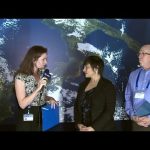
Discover more about our planet with the Earth from Space video programme. During the Global Platform for Sustainable Cities working group meeting at ESA’s ESRIN establishment in Italy, four experts join the show to discuss how satellite data can be used to promote sustainable cities.
The four guests are Xiaomei Tan: Senior Climate Change Specialist, Global Environment Facility; Xueman Wang: Global Platform for Sustainable Cities Coordinator, World Bank; Gayatri Singh: Urban Development Specialist, World Bank City Planning Labs Initiative; Herman Pienaar: Director of City Transformation and Spatial Planning, City of Johannesburg.
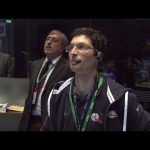
Inside the main control room at ESA’s operation centre as the Rosetta spacecraft sends its last signal from Comet 67P/Churyumov–Gerasimenko, confirming the end of the spacecraft’s 12.5 year journey in space.
On the last day of her incredible mission, Rosetta slowly descends to the surface of Comet 67P/Churyumov-Gerasimenko. After having sent her extraordinary data back home, she is ready to join Philae for a well deserved rest on the comet. But is there one last surprise in store?
On the last day of her incredible mission, Rosetta slowly descends to the surface of Comet 67P/Churyumov-Gerasimenko. After having sent her extraordinary data back home, she is ready to join Philae for a well deserved rest on the comet. But is there one last surprise in store?
On the last day of her incredible mission, Rosetta slowly descends to the surface of Comet 67P/Churyumov-Gerasimenko. After having sent her extraordinary data back home, she is ready to join Philae for a well deserved rest on the comet. But is there one last surprise in store?
On the last day of her incredible mission, Rosetta slowly descends to the surface of Comet 67P/Churyumov-Gerasimenko. After having sent her extraordinary data back home, she is ready to join Philae for a well deserved rest on the comet. But is there one last surprise in store?
Besides its scientific and operational successes, the Rosetta mission has captured the imagination of many people worldwide, stimulating them to produce art and music, and undertake other creative activities with friends and families. Many even made further education or career choices inspired by the mission.This video features a selection of contributions that were shared on the Rosetta Legacy tumblr in September 2016.
After her long, arduous training, our young Apprentice is now a fully fledged Master of cosmic origins, exploring an alien planet rich with water and life. But something familiar crosses her mind. Memories from her training, and Rosetta’s historic journey to catch a comet. She returns to the archives.
Once again, ESA and Fish Ladder / Platige Image blur the lines between science fiction and science fact in this epilogue to their award-winning 2014 short film, Ambition, which portrayed the scientific questions and technical challenges, and above all, the human determination that make exploration of the Universe such a compelling theme.
The epilogue is directed by Maciej Jackiewicz and stars Aisling Franciosi (The Fall, Game of Thrones).
Credits:
A Fish Ladder/Platige Image & European Space Agency Production
Concept/creative strategy: Fish Ladder
Director/edit: Maciej Jackiewicz
Director of photography: Mateusz Skalski
Cast: Aisling Franciosi
Story:
Maciej Jackiewicz
Jan Pomierny
Tobiasz Piątkowski
Creative producer: Jan Pomierny
Producer: Marta Staniszewska
Executive producer: Mark McCaughrean (ESA)
Set production: Beata Pych
First assistant director/set manager: Jakub Kędzierski
First assistant camera: Piotr Twardowski
Focus puller: Seweryn Kukliński
Steadicam operator: Jarosław Wierzbicki
Steadicam assistant: Sławomir Wierzbicki
Camera equipment: MX35
Rosetta revisits the exciting scientific discoveries she made during her time at Comet 67P/Churyumov-Gerasimenko, including the successful search to find Philae. Finally, she starts preparing to descend to the comet for the end of her extraordinary mission.
Animation visualising Rosetta’s descent to Comet 67P/Churyumov–Gerasimenko on 30 September 2016. The sequence is speeded up to show the relative motion of Rosetta and the rotating comet below.
Rosetta will target a smooth region close to several large pits measuring more than 100 m across and 60 m deep, on the small lobe of the comet.
The impact time is predicted as 11:20 GMT +/- 20 minutes on 30 September.
Claudia Herrera has been with NASA Armstrong Flight Research Center since January of 2005, and works as a Structural Dynamics engineer. Claudia is involved in the life cycle phase of flight‑test projects that take finite element models to flight‑test validation, participating in both the analytical and ground and flight test aspects of model correlation and verification.
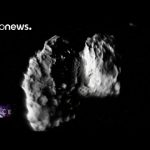
In just a few days’ time ESA’s Rosetta mission is going to come to a close in a most extraordinary fashion, because the spacecraft is going to slowly, and deliberately crash-land into the comet that it has been orbiting for the past two years.
Euronews is with the team as they prepare for this dramatic finale.
En pocos días, la misión Rosetta de la Agencia Espacial Europea (ESA) tocará a su fin. Y lo hará de la forma más extraordinaria, porque la nave espacial irá a chocar, lenta y deliberadamente, contra el cometa alrededor del cual ha estado orbitando durante los últimos dos años. Nos reunimos con el equipo mientras preparan este dramático final.
Le 30 septembre prochain, la sonde Rosetta s’écrasera lentement et délibérément sur la comète autour de laquelle elle orbite depuis deux ans. Or elle n’a pas été conçue pour cela. L’issue sera fatale. Mais avant cette dernière manoeuvre, les scientifiques ont prévu d’effectuer des relevés inédits à l’approche de “Tchouri”.
Earth from Space is presented by Kelsea Brennan-Wessels from the ESA Web-TV virtual studios. In the one hundred ninety-ninth edition, explore Kazakhstan’s Alakol Lake.
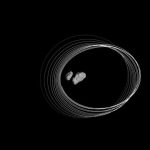
Animation of Rosetta’s trajectory over the last two months of its mission at Comet 67P/Churyumov–Gerasimenko.
The animation begins in early August, when the spacecraft started flying elliptical orbits that brought it progressively closer to the comet at its closest approach.
On 24 September 2016, Rosetta will leave its current close, flyover orbits and transfer into the start of a 16 x 23 km orbit that will be used to prepare and line up for the final descent.
On the evening of 29 September (20:50 GMT) Rosetta will manoeuvre onto a collision course with the comet, beginning the descent from an altitude of 19 km. The spacecraft will fall freely, without further manoeuvres, collecting scientific data during the descent.
The trajectory shown here was created from real data provided over the last month, but may not necessarily follow the exact comet distance because of natural deviations from the comet’s gravity and outgassing.
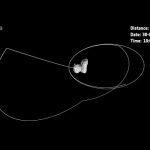
Animation of Rosetta’s final trajectory in the last 10 days of its mission at Comet 67P/Churyumov–Gerasimenko.
On 24 September 2016, Rosetta will leave a close flyover orbit and transfer into the start of a 16 x 23 km orbit that will be used to prepare and line up for the final descent. In the evening of 29 September (20:50 GMT) Rosetta will manoeuvre onto a collision course with the comet, beginning the descent from an altitude of 19 km. The spacecraft will fall freely, without further manoeuvres, collecting scientific data during the descent.
The trajectory shown in this animation is created from real data provided in the last month, but may not necessarily follow the exact distance/time details because of natural deviations in the trajectory associated with the comet’s gravity and outgassing.
Experience what it’s like to leave Earth, traveling to over 90,000 feet into the stratosphere. Never before has a 360 video been recorded at these heights – so buckle up and enjoy the view as Seeker takes you on a journey to the Edge of Space.
Thomas Pesquet from France will shortly become the last member of ESA’s 2009 astronaut class to fly to the International Space Station.
He is scheduled to fly next November for a six-month stay in orbit, during which time he’ll carry out maintenance activities and a packed schedule of experiments.
He has been training at NASA’s Johnson Space Centre in Houston, Texas, alongside veteran ESA astronaut Paolo Nespoli from Italy, who will be going to the ISS for the third time after Thomas’s return to Earth.
This video shows new images of Thomas and Paolo training at Johnson Space Center in Houston, USA.
On Sept. 14, officials from the White House and NASA discussed the space agency’s Asteroid Redirect Mission (ARM) during a televised event at NASA’s Goddard Space Flight Center. On the mission, which is targeted for launch in Dec. 2021, NASA plans to send a robotic spacecraft to an asteroid tens of millions of miles from Earth, capture a multi-ton boulder, and bring it to an orbit near the moon for future exploration by astronauts on a following mission aboard NASA’s Orion spacecraft. During the live discussion, John Holdren, assistant to President Obama for Science and Technology, NASA Administrator Charles Bolden and ARM Program Director Michele Gates highlighted the mission’s scientific and technological benefits, how the mission will support NASA’s goal of sending humans to Mars in the 2030s, and how it will demonstrate technology relevant to defending Earth from potentially hazardous asteroids. Also, Astronaut Tim Kopra Visits DC Area, The Warmest August in 136 Years, and 2016 Arctic Sea Ice Minimum Ties 2nd Lowest on Record!
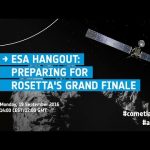
ESA’s Rosetta spacecraft is set to complete its incredible mission in a controlled descent to the surface of Comet 67P/C-G on 30 September. Mission experts joined an ESA Hangout on 19 September to discuss Rosetta’s final days and hours of operation, including expectations for the images and other scientific data that will be collected as the spacecraft gets closer and closer to the surface. They also discuss the exciting discovery of Philae that was made earlier this month.
Hangout guests:
Andrea Accomazzo, Flight operations director
Sylvain Lodiot, Rosetta spacecraft operations manager
Claire Vallat or Richard Moissl (TBC), Rosetta science ground segment liaison scientist
Laurence O’Rourke, Rosetta downlink science operations manager (lander search coordinator)
Aboard the International Space Station, Expedition 49 Flight Engineer Kate Rubins of NASA discussed research aboard the orbital laboratory with patients from the MD Anderson Cancer Center in Houston and center officials visiting mission control during an in-flight event Sept. 16. Rubins wore a suit flown to the station that she helped to fabricate pre-flight, illustrating the need for a heightened awareness of cancer research.
Scarlin Hernandez is a Spacecraft Engineer for the James Webb Space Telescope at the Space Telescope Science Institute in Baltimore, MD. She tests and verifies the ground systems that will be used to command and control the telescope once it’s in space. The telescope will be used to discover new planets and the first stars after the dark ages. The National Science Foundation awarded her a full college scholarship to the Capitol Technology University (CTU) in Laurel, MD. Scarlin completed a internship at NASA’s Goddard Space Flight Center, and by the age of 20, she was part of the ground control system team for the Tropical Rainfall Measuring Mission (TRMM) satellite. In 2013, she earned a Bachelor’s degree in Computer Engineering, but she found her real niche in Astronautical Engineering. After graduation, Scarlin was the mission planning lead for the TRMM mission before transferring to work on the James Webb Space Telescope mission.
In 1958 NASA’s top management T. Keith Glennan and Hugh L. Dryden used a film presentation to introduce the new agency to former employees of NACA (National Advisory Committee for Aeronautics). Since that day visual communication has been a key element in telling the NASA story to the world.
Launched in December 2013, Gaia is destined to create the most accurate map yet of the Milky Way. By making accurate measurements of the positions and motions of stars in the Milky Way, it will answer questions about the origin and evolution of our home galaxy.
The first intermediate data release, containing among other things three-dimensional positions and two-dimensional motions of a subset of two million stars, demonstrates that Gaia’s measurements are as precise as planned, paving the way to create the full map of one billion stars to be released towards the end of 2017.
During a live satellite interview Sept. 14 on NASA TV, astronaut and Expedition 48 Commander Jeff Williams spoke about his recent record-breaking mission aboard the International Space Station.
Williams and Russian crewmates Alexey Ovchinin and Oleg Skripochka, of the Russian space agency Roscosmos, returned to Earth Sept. 6 in Kazakhstan (7:13 a.m. Sept. 7, Kazakhstan time) to wrap up a 172 day mission aboard the station. Williams now has spent 534 days in space, making him first on the all-time NASA astronaut list. During the mission, Williams was instrumental in preparing the station for the future arrival of U.S. commercial crew spacecraft. The first International Docking Adapter was installed during a spacewalk by Williams and fellow NASA astronaut Kate Rubins Aug. 19. Outfitted with a host of sensors and systems, the adapter’s main purpose is to connect spacecraft bringing astronauts to the station in the future. Its first users are expected to be Boeing’s CST-100 Starliner and SpaceX’s Crew Dragon spacecraft, now in development in partnership with NASA.
Launched in December 2013, Gaia is destined to create the most accurate map yet of the Milky Way.
By making accurate measurements of the positions and motions of roughly 1% of the total population of stars in the Milky Way, it will answer questions about the origin and evolution of our home galaxy.
The first intermediate data release, containing, among other things, three-dimensional positions and two dimensional motions of a subset of two million stars, demonstrates that Gaia’s measurements are as precise as planned, paving the way to create the full map of one billion stars to be released towards the end of 2017.
Aboard the International Space Station, Expedition 49 Flight Engineer Kate Rubins of NASA discussed life and research aboard the orbital laboratory with students at the Vintage High School in Napa, California during an in-flight educational event Sept. 14. Rubins, who is in the third month of a four-month mission on the station, is a 1996 graduate of Vintage High School. She recently conducted two spacewalks outside the outpost to install the first International Docking Adapter that U.S. commercial crew spacecraft will link up to in the future, as well as new high definition cameras on the station’s truss.
Officials from the White House Office of Science and Technology Policy (OSTP) and NASA held a live Asteroid Redirect Mission (ARM) discussion at the space agency’s Goddard Space Flight Center in Greenbelt, Maryland. During the event on Wednesday, Sept. 14, OSTP’s Dr. John P. Holdren, NASA’s Administrator Charles Bolden and ARM Program Director Dr. Michele Gates, highlighted the mission’s scientific and technological benefits, how the mission will support NASA’s goal of sending humans to Mars in the 2030s, and how ARM will demonstrate technology relevant to defending Earth from potentially hazardous asteroids.
A virtual journey, from our Solar System through the Milky Way, based on data from the first release of ESA’s Gaia satellite.
The journey starts by looking back at the Sun, surrounded by its eight planets. We then move away from the Sun and travel towards and around the Hyades star cluster, the closest open cluster to the Solar System, some 150 light-years away.
The 3D positions of the stars shown in the animation are drawn from the Tycho-Gaia Astrometric Solution (TGAS), which combines information from Gaia’s first year of observations with the earlier Hipparcos and Tycho-2 Catalogues, both based on data from ESA’s Hipparcos mission.
This new dataset contains positions on the sky, distances and proper motions of over two million stars. It is twice as precise and contains almost 20 times as many stars as the previous reference for astrometry, the Hipparcos Catalogue.
The journey continues showing the full extent size of the stars contained in the Tycho-Gaia Astrometric Solution, all relatively near to the Sun, in the overall context of our Milky Way galaxy.
The final Gaia catalogue will contain the most detailed 3D map ever made of the Galaxy, charting a billion stars – about 1% of the Milky Way’s stellar content – to unprecedented accuracy.
ESA astronaut Andreas Mogensen narrates this video on the inspiring endeavours of human spaceflight and how it changes our daily lives.
Andreas covers the first flight in Earth-orbit and the permanent inhabitation of space on the International Space Station to future exploration of our Solar System – and how these events inspired his work as an engineer and later astronaut.
The video touches on the amazing research done in space and for space and the technological impact this has making life on Earth better.
On Sept. 8, NASA launched the Origins, Spectral Interpretation, Resource Identification, Security – Regolith Explorer, or OSIRIS-REx mission from Cape Canaveral Air Force Station in Florida. OSIRIS-REx, the first U.S. mission to sample an asteroid, is scheduled to arrive at near-Earth asteroid Bennu in 2018. Mission plans call for the spacecraft to survey the asteroid, retrieve a small sample from its surface, and return the sample to Earth for study in 2023. Analysis of that sample is expected to reveal clues about the history of Bennu over the past 4.5 billion years, as well as clues about the evolution of our solar system. Also, Williams’ Record-Breaking Spaceflight Concludes, Next ISS Crew Prepares for Launch, Sample Return Robot Challenge, NASA X-Plane Gets its Wing, and Convergent Aeronautics Solutions Showcase!
50 years ago Star Trek premiered on the small screen. Today, stars of the original series; William Shatner, Nichelle Nichols and George Takei share their excitement and passion for the real space exploration being done by NASA.
NASA scientists discussed asteroids, how they relate to the origins of our solar system, and the search for life beyond Earth during this Sept. 7 event at the agency’s Kennedy Space Center, in Florida. The event was held in conjunction with other pre-launch activities related to the Origins Spectral Interpretation Resource Identification Security – Regolith Explorer, or OSIRIS-REx mission. OSIRIS-REx will be the first U.S. mission to sample an asteroid. The spacecraft is targeted to launch Sept. 8 at 7:05 p.m. EDT to the near-Earth asteroid Bennu, arriving in 2018, to survey the surface, retrieve at least 60 grams (2.1 ounces) of surface material, and return it to Earth in 2023 for study. Analysis of the sample will reveal the earliest stages of the solar system’s evolution and the history of Bennu over the past 4.5 billion years.
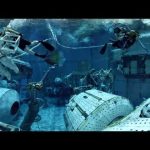
A 360-degree immersive virtual reality (VR) viewing experience, featuring exclusive astronaut training footage from NASA’s Neutral Buoyancy Laboratory (NBL) in Houston, Texas. The stunning NASA VR/360 video, produced by Harmonic, offers a variety of perspectives – in the pool and out – as astronauts complete space-walk training for future missions to the International Space Station (ISS).
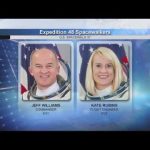
Outside the International Space Station, Expedition 48 Commander Jeff Williams and Flight Engineer Kate Rubins of NASA conducted a spacewalk Sept. 1 to retract a thermal radiator, install the first of several enhanced high definition cameras on the station’s truss and tighten bolts on a joint that enables one of the station’s solar arrays to rotate. This was the second spacewalk for the pair in just 13 days. They installed the station’s first international docking adapter during their previous spacewalk on Aug. 19. The adapter will provide a parking place for new U.S. commercial crew spacecraft delivering astronauts to the station on future missions. Also, Space Station Cameras Capture Hurricanes, Future Space Station Crews Prepare for Missions, Record-Breaking Galaxy Cluster Discovered, Up-Close with Jupiter, and more!
In recognition of Star Trek’s 50th anniversary NASA wishes the entire Star Trek family a happy anniversary. Thanks for the inspiration, Live long and prosper. #StarTrek50
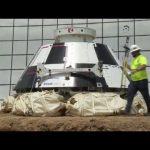
The SpaceX Dragon cargo spacecraft left the International Space Station on August 26. The Dragon departed the station five weeks after delivering almost 5,000 pounds of supplies, experiments and equipment to the orbital complex – including an international docking adapter for use by future American commercial crew spacecraft transporting astronauts to the station. The station’s Canadarm2 robotic arm was used to grapple the Dragon, move it away from the ISS, and release it for its return trip to Earth. The capsule is returning with about 3,000 pounds of cargo and experiments for researchers and investigators. Also, New U.S. Endurance Record in Space, Next U.S. Spacewalk Previewed, Boeing CST-100 Starliner Land Drop Test, SLS Liquid Hydrogen Test Tank Moved, and Celebrating National Parks, from Space!
The 7.5-minute test conducted at NASA’s Stennis Space Center is part of a series of tests designed to put the upgraded former space shuttle engines through the rigorous temperature and pressure conditions they will experience during a launch. The tests also support the development of a new controller, or “brain,” for the engine, which monitors engine status and communicates between the rocket and the engine, relaying commands to the engine and transmitting data back to the rocket.
A NASA Social was held on August 18 at the Michoud Assembly Facility in New Orleans, Louisiana, and at the Stennis Space Center near Bay St. Louis, Mississippi to give the members of social and traditional media an opportunity to see the progress being made on sending humans to Mars. The event featured tours of the manufacturing facilities at Michoud where work is underway on the core stage of the Space Launch System (SLS) — NASA’s new heavy-lift rocket that will send humans to deep space destinations, a test firing of the mighty RS-25 rocket engine that will power the SLS, and other rare behind the scenes look at other things NASA is doing to get ready for the Journey to Mars and other deep space travel.