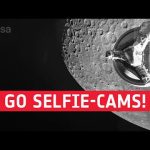
The ESA/ @JAXA-HQ BepiColombo mission has made its second gravity assist of planet Mercury, capturing new close-up images as it steers closer towards Mercury orbit in 2025.
The closest approach took place at 09:44 UTC (11:44 CEST) on 23 June 2022, about 200 km above the planet’s surface. Images from the spacecraft’s three monitoring cameras (MCAM), along with scientific data from a number of instruments, were collected during the encounter.
We are Europe’s gateway to space. Our mission is to shape the development of Europe’s space capability and ensure that investment in space continues to deliver benefits to the citizens of Europe and the world. Check out https://www.esa.int/ to get up to speed on everything space related.
🚩 Why Did the Scottish Clan System Collapse? Many pinpoint the bloody Battle of Culloden in 1746 as the moment where everything changed for Scotland’s clan system, as King George’s troops crushed the Jacobite rebellion. In what today might be considered ethnic cleansing, the ruling King of England ordered all supporters of the Jacobite cause be slaughtered, including many of the clans that populated the Scottish Highlands. This was followed by the notorious Highland Clearances and bitter disputes over land ownership, during which any final traces of Highland clans were forced on mass to the sea coast, the Lowlands or abroad.
Ready to showcase the Webb space telescope’s first full-color images, back in touch with a spacecraft on an important mission to the Moon, and our Artemis I Moon rocket and spacecraft move a step closer to launch … a few of the stories to tell you about – This Week at NASA!
Producer: Andre Valentine Editor: Lacey Young Music: Universal Production Music Credit: NASA
Have you ever done a science experiment and wondered “What would this be like if it were HUGE?” Welcome to Science Max, the exciting new series that turbocharges all the science experiments you’ve done at home.
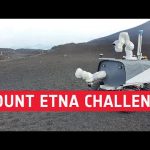
This concluding part of ESA’s ‘Analog-1’ project took place as part of a larger multi-agency, multi-rover campaign, organised by the @DLR. The Autonomous Robotic Networks to Help Modern Societies, ARCHES, project probed the ability of autonomous robots to collaborate and share data on a networked basis.
ESA’s four-wheeled, two-armed Interact rover was built by the Agency’s Human Robot Interaction Lab and modified for the rugged slopes of the volcano. This robot formed part of a team consisting of two DLR rovers – Lightweight Rover Units 1 and 2 – along with a fixed ‘lunar’ lander supplying WiFi and power to the rovers, plus a drone for surface mapping. The Karlsruhe Institute of Technology contributed the centipede-like Scout crawler, optimised for tough terrain, which could also serve as a relay between Interact and the lander, boosting its effective area of operations.
We are Europe’s gateway to space. Our mission is to shape the development of Europe’s space capability and ensure that investment in space continues to deliver benefits to the citizens of Europe and the world. Check out https://www.esa.int/ to get up to speed on everything space related.
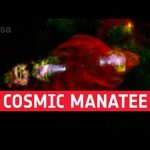
ESA’s XMM-Newton has X-rayed this beautiful cosmic creature, known as the Manatee Nebula, pinning down the location of unusual particle acceleration in its ‘head’.
The Manatee Nebula, or W50, is thought to be a large supernova remnant created when a giant star exploded around 30 000 years ago, flinging its shells of gases out across the sky. It is one of the largest such features known, spanning the equivalent size of four full Moons.
Unusually for a supernova remnant, a black hole remains in its core. This central ‘microquasar’, known as SS 433, emits powerful jets of particles travelling at speeds close to a quarter the speed of light that punch through the gassy shells, creating the double-lobed shape.
SS 433 is identified by the red dot in the middle of the image. The X-ray data acquired by XMM-Newton are represented in yellow (soft X-rays), magenta (medium energy X-rays) and cyan (hard X-ray emission), while red is radio and green optical wavelengths imaged by the Very Large Array and the Skinakas Observatory in Greece, respectively. @NASA NuSTAR and Chandra data were also used for the study (not shown in this image).
The nebula attracted attention in 2018 when the High-Altitude Water Cherenkov Observatory, which is sensitive to very high energy gamma-ray photons, revealed the presence of highly energetic particles (hundreds of tera electron volts), but could not pinpoint from where within the Manatee the particles were originating.
XMM-Newton was crucial in homing in on the region of particle acceleration in the X-ray jet blasting from the Manatee’s head, which begins about 100 light years away from the microquasar (represented by the magneta and cyan colours towards the left side SS 433) and extends to approximately 300 light years (coinciding with the radio ‘ear’ where the shock terminates).
Samar Safi-Harb of the University of Manitoba, Canada, who led the study, says “thanks to the new XMM-Newton data, supplemented with NuSTAR and Chandra data, we believe the particles are getting accelerated to very high energies in the head of the Manatee through an unusually energetic particle acceleration process. The black hole outflow likely made its way there and has been re-energized to high-energy radiation at that location, perhaps due to shock waves in the expanding gas clouds and enhanced magnetic fields.”
The nebula acts as a nearby laboratory for exploring a wide range of astrophysical phenomena associated with the outflows of many galactic and extragalactic sources and will be subject to further investigation. Furthermore, follow-up studies by ESA’s future Athena X-ray observatory will provide even more sensitive details about the inner workings of this curious cosmic Manatee.
Credits: S. Safi-Harb et al (2022)
★ Subscribe: http://bit.ly/ESAsubscribe and click twice on the bell button to receive our notifications.
We are Europe’s gateway to space. Our mission is to shape the development of Europe’s space capability and ensure that investment in space continues to deliver benefits to the citizens of Europe and the world. Check out https://www.esa.int/ to get up to speed on everything space related.
“After Euclid’s lifetime, it will just be floating in space. What if future beings found Euclid? How would they know anything about the humanity of the people?” – Tom Kitching, lead scientist of Euclid’s VIS instrument.
The team behind ESA’s Euclid mission has come together to create something special – a personal and collective galaxy-shaped fingerprint painting that has been attached to the spacecraft ready to launch into space. The collaborative nature of the artwork reflects the collaborative nature of the Euclid project overall; in both cases, people have come together to build something unique.
The Fingertip Galaxy was created by visual artist Lisa Pettibone and Euclid instrument scientist Tom Kitching. Since the very first fingerprint was pressed down in 2019, over 250 scientists and engineers have contributed to the piece of art.
So why a galaxy? Euclid is a galaxy-imaging machine that will observe billions of galaxies out to 10 billion light-years to make a 3D map of the Universe. The mission’s ultimate aim is to explore dark matter and dark energy.
“Although Euclid has always been beautiful in concept and materials, it didn’t really say anything about the people involved and humanity as a whole. We asked ourselves whether we could do something artistic that would speak to people,” says Lisa.
Scientists and engineers involved in Euclid were invited to dip their fingertips in paint and make their mark on a large piece of paper.
“We wanted something authentic, not perfect, and not shaped too much,” continues Lisa. “The result is a piece of art with a wonderful energy to it that captures all the energy of the people involved.”
The artwork was photographed and engraved onto a plaque using lasers at Mullard Space Science Laboratory – the same lasers that are used to etch parts for satellites. The plaque was fixed to Euclid and revealed at a ‘Goodbye Euclid’ event on 1 July 2022, when Euclid left Thales Alenia Space in Turin to head to Cannes for final testing as a complete system.
Euclid’s project scientist René Laureijs suggested adding text to the plaque to explain the thoughts behind it. Continuing the artistic nature of the project, poet Simon Barraclough wrote a dedicated poem, from which a short extract was chosen to be etched on to the plaque in a typewriter font that swirls around the galaxy of fingerprints. This video ends with Simon reading part of Since his poem.
Lisa summarises the Fingertip Galaxy: “It is adding an element of humanity to a dark, vast space, where as far as we can see there is no other intelligent life.”
Credit: Filmmaker/composer: Sam Charlesworth Fingertip Galaxy creators: Tom Kitching and Lisa Pettibone Poet: Simon Barraclough – ‘Unextraordinary Light (For Euclid)’ Special thanks: ESA, Euclid mission team, Mullard Space Science Laboratory Additional media: @NASA, Jeremy Perkins from unsplash.com
★ Subscribe: http://bit.ly/ESAsubscribe and click twice on the bell button to receive our notifications.
We are Europe’s gateway to space. Our mission is to shape the development of Europe’s space capability and ensure that investment in space continues to deliver benefits to the citizens of Europe and the world. Check out https://www.esa.int/ to get up to speed on everything space related.
🚩 Skip the waitlist and invest in blue-chip art for the very first time by signing up for Masterworks: https://masterworks.art/historymarche Purchase shares in great masterpieces from artists like Pablo Picasso, Banksy, Andy Warhol, and more. See important Masterworks disclosures: https://www.masterworks.io/about/disclaimer
🚩 Duke William (1027-1087) is an emblematic figure in the history of Normandy, best known for his conquest of England. However, his turbulent youth is rarely spoken of. His father, Robert the Magnificent, died and left an eight-year-old boy in charge of the Duchy. A number of barons refused to obey a “bâtard” and brought civil war to Normandy. The young Duke narrowly escaped death and was forced into hiding. When he reappeared in around 1040, new revolts broke out. William is about to live through a defining moment of his life, which, though ignored by many people, will be of great importance to him – and others: the Battle of Vas ès dunes. On the outcome of this battle will depend not only the future of Normandy, but later, as we know it, the future of England and France.
Launching a new mission around the Moon, preparing the Space Launch System for its first flight, and undocking a resupply spacecraft from the space station … a few of the stories to tell you about – This Week at NASA!
This week’s edition of the Earth from Space programme features an impressive, wide-angled view of Patagonia and the Falkland Islands (Islas Malvinas), captured by the Copernicus Sentinel-3 mission.
We are Europe’s gateway to space. Our mission is to shape the development of Europe’s space capability and ensure that investment in space continues to deliver benefits to the citizens of Europe and the world. Check out https://www.esa.int/ to get up to speed on everything space related.
Meteoroizii se ciocnesc cu atmosfera Pământului în fiecare zi. Află ce ne pot învăța aceste impacturi despre riscurile întâlnirii cu un asteroid, împreună cu Simon Anghel, cercetător în cadrul Institutului Astronomic al Academiei Române, specialist în științe planetare. Urmărește LIVE discuția moderată împreună cu Ada Roseti joi de la ora 21.00, aici https://www.youtube.com/watch? . Dacă ai curiozități, pune o întrebare aici și, dacă întrebarea va primi răspuns în cadrul emisiunii, poți câștiga o carte de la Editura Humanitas.
Twin solid rocket boosters that will produce a combined 7.2 million pounds of thrust at liftoff, a towering core stage, and the only human-rated spacecraft in the world capable of deep space travel – together, NASA’s Space Launch System rocket and Orion spacecraft stand ready to usher in a new chapter of exploration. Now fully assembled at Kennedy Space Center in Florida, SLS and Orion will soon launch on the uncrewed Artemis I mission around the Moon, paving the way for astronauts. Artemis I represents a new generation of spaceflight capabilities and partnerships that will take humans back to the Moon and beyond.
Producer: Lisa Allen, Alysia Lee Writer & Director: Paul Wizikowski
Have you ever done a science experiment and wondered “What would this be like if it were HUGE?” Welcome to Science Max, the exciting new series that turbocharges all the science experiments you’ve done at home.
A 50-metre asteroid out there has lingered at the top of risk lists around the globe. Initial observations showed 2021 QM1 had a chance of striking Earth in 2052, and frustratingly, follow-up observations soon became impossible. Not only was it outshone by the Sun at a pivotal moment, but QM1 has been receding from view as it moves away from Earth in its current orbit.
ESA’s Near-Earth Object Coordination Centre together with the European Southern Observatory made finding and assessing the risk from 2021 QM1 a top priority, and this June they had a chance to capture the risky asteroid as it edged away from the brilliant Sun. Now extremely faint in the sky, it would take one of the best telescopes in the world to spot it, and if they do, it will be the faintest asteroid ever detected. Did the team find our risky asteroid? Will it, one day, find us?
★ Subscribe: http://bit.ly/ESAsubscribe and click twice on the bell button to receive our notifications.
We are Europe’s gateway to space. Our mission is to shape the development of Europe’s space capability and ensure that investment in space continues to deliver benefits to the citizens of Europe and the world. Check out https://www.esa.int/ to get up to speed on everything space related.
Situația aceasta îngrijorătoare contrastează acut cu rolul central, bine cunoscut și documentat, pe care umanioarele și artele liberale l-au jucat în istoria democrației. Literatura și filosofia au contribuit, literalmente, la schimbarea lumii, la consolidarea regimurilor democrate liberale, și cu toate acestea, ceea ce constatăm este că părinții majorității tinerilor studioși de azi devin anxioși, dacă copiii lor doresc să studieze științele umaniste sau dacă aceștia se dovedesc a fi analfabeți din punct de vedere financiar, dar nu par să fie câtuși de puțin îngrijorați dacă educația lor în domeniul umanioarelor este precară și deficitară..”
Aceste fragmente sunt preluate din eseul “Sfârșitul umanioarelor? De ce mai avem încă nevoie de educație umanistă în universități?” scris de Mircea Dumitru, eseu aflat în curs de publicare în volum.
Despre invitați:
Mihaela Miroiu este o teoreticiană feministă română și activistă pentru drepturile omului. A fost profesoară universitară de științe politice la Școala Națională de Studii Politice și Administrative din București. Interesele sale de cercetare cuprind teoriile politice feministe, etica politică, ideologiile politice actuale și politicile de gen. Mihaela Miroiu a introdus cursul de etică politică în 1997 și a scris, în colaborare cu Gabriela Blebea, prima lucrare de etică profesională în 2001- Introducere în etică profesională. Semnificativ pentru interesul ei constant pentru perspectiva etică în teorii politice și politici de gen este faptul că a utilizat o grilă de etică politică în construcția analizelor cuprinse în volumului „Ideologii politice actuale. Semnificații, evoluții și impact” (2012). Mihaela Miroiu a contribuit semnificativ la reformarea predării filosofiei în liceu, după căderea comunismului.
Mircea Dumitru este doctor în filosofie al Tulane University (New Orleans, Louisiana) din anul 1998 cu o teză despre modalitate şi incompletitudine. Este, de asemenea, doctor în filosofie al Universităţii din Bucureşti, cu o teză despre neo-fregeanism şi neo-russellianism în semantica atribuirii de atitudini propoziţionale şi a referinţei directe. Este specializat în logică filosofică, filosofia limbajului şi metafizica analitică a modalităţii. Prof.univ.dr. Mircea Dumitru a publicat peste 50 de articole în reviste de specialitate şi capitole pe teme ca logică modală, teorii despre adevăr, semnificaţie, raţionalitate, filosofia lui Wittgenstein, logică contemporană (Quine, Kripke, Kit Fine), realism, esenţialism, relativism. Competenţele sale de predare şi cercetare acoperă domeniile logicii filosofice, logicii simbolice, filosofiei limbajului, metafizicii modalităţilor, epistemologiei, filosofiei minţii şi a conştiinţei. De asemenea, a tradus în limba română lucrări de Nozick, Nagel, Wittgenstein, Quine, Forbes, Kripke.
Watch the launch from New Zealand of CAPSTONE, a new pathfinder CubeSat that will explore a unique orbit around the Moon!
The Cislunar Autonomous Positioning System Technology Operations and Navigation Experiment, or CAPSTONE, will be the first spacecraft to fly a near rectilinear halo orbit (NRHO) around the Moon, where the pull of gravity from Earth and the Moon interact to allow for a nearly-stable orbit. CAPSTONE’s test of this orbit will lead the way for our future Artemis lunar outpost called Gateway.
CAPSTONE is targeted to launch at 5:55 a.m. EDT (9:55 UTC) Tuesday, June 28 on Rocket Lab’s Electron rocket from the company’s Launch Complex 1 in New Zealand.
A beautiful sequence of 56 images taken by the monitoring cameras on board the ESA/JAXA BepiColombo mission as the spacecraft made its second close flyby of its destination planet Mercury on 23 June 2022.
The compilation includes images from two monitoring cameras (MCAM) onboard the Mercury Transfer Module, which provides black-and-white snapshots at 1024 x 1024 pixel resolution. The MCAMs also capture parts of the spacecraft: MCAM-2 sees the Mercury Planetary Orbiter’s medium-gain antenna and magnetometer boom, while the high-gain antenna is in the MCAM-3 field-of-view.
The image sequences lasted about 15 minutes starting soon after closest approach to Mercury, which was at an altitude of 200 km. The first sequence showcases images taken by MCAM-2, starting from a distance of around 920 km from the surface of the planet and finishing at about 6099 km. The second sequence shows images from MCAM-3 covering a similar distance range (approximately 984 km – 6194 km).
Since MCAM-2 and MCAM-3 are located on either side of the spacecraft, and the image acquisition alternated quickly between the two cameras with about 15-20 seconds between them, the final sequence shows a composite of the two views, giving an impression of the complete planet receding behind the spacecraft.
During the flyby it was possible to identify various geological features that BepiColombo will study in more detail once in orbit around the planet. While craters dominate the landscape, numerous volcanic plains can also be made out, as well as roughly linear ‘scarps’ – cliff-like features created by tectonic faulting. In this flyby, the planet’s largest impact basin Caloris was seen for the first time by BepiColombo, its highly-reflective lavas on its floor making it stand out against the darker background as it rotated into the MCAM-2 field of view.
The gravity assist manoeuvre was the second at Mercury and the fifth of nine flybys overall. During its seven-year cruise to the smallest and innermost planet of the Solar System, BepiColombo makes one flyby at Earth, two at Venus and six at Mercury to help steer it on course to arrive in Mercury orbit in 2025. The Mercury Transfer Module carries two science orbiters: ESA’s Mercury Planetary Orbiter and JAXA’s Mercury Magnetospheric Orbiter. They will operate from complementary orbits to study all aspects of mysterious Mercury from its core to surface processes, magnetic field and exosphere, to better understand the origin and evolution of a planet close to its parent star.
We are Europe’s gateway to space. Our mission is to shape the development of Europe’s space capability and ensure that investment in space continues to deliver benefits to the citizens of Europe and the world. Check out https://www.esa.int/ to get up to speed on everything space related.
🚩 Thanks to Kingdom Maker for sponsoring – Download Kingdom Maker on iOS & Android and start ruling today: https://pixly.go2cloud.org/SH3EW
🚩 The Fatimid Conquest of Egypt, a pivotal moment in Islamic history. It destroyed any semblance of central authority in the Muslim world, provoked the reaction of the Turks as defenders of orthodox (Sunni) Islam, impelled the Omayyads in Spain to declare their own Caliphate, launched the powerful Murabitun revolution in western Africa, denied the Muslims their last chance to conquer Europe. Moreover the Fatimid schism gave the Crusaders an opportunity to capture Jerusalem in 1099.
Looking to power surface exploration on the Moon, new imagery from the surface of Mars, and our newest flight directors … a few of the stories to tell you about – This Week at NASA!
Producer: Andre Valentine Editor: Sonnet Apple Music: Universal Production Music
0:00 Introduction 0:13 NASA Announces Artemis Concept Awards for Nuclear Power on Moon 0:48 Curiosity Captures Stunning Views of a Changing Mars Landscape 1:25 NASA Introduces New Flight Directors in Class of 2022 1:49 NASA Documentary Celebrates Black Space Explorers 2:33 Vice President Hosts NASA for Family STEM Event
In this week’s edition of the Earth from Space programme, the Copernicus Sentinel-2 mission takes us over Lake Balkhash, the largest lake in Central Asia.
We are Europe’s gateway to space. Our mission is to shape the development of Europe’s space capability and ensure that investment in space continues to deliver benefits to the citizens of Europe and the world. Check out https://www.esa.int/ to get up to speed on everything space related.
Have you ever done a science experiment and wondered “What would this be like if it were HUGE?” Welcome to Science Max, the exciting new series that turbocharges all the science experiments you’ve done at home.
The Color of Space captures the personal stories of seven current and former Black astronauts, each selected to become part of NASA’s astronaut corps and train for space missions. Current NASA astronauts Stephanie Wilson, Victor Glover, Jeanette Epps, as well as retired astronauts Leland Melvin, Bernard Harris, Robert Curbeam, and Bobby Satcher, speak about their journeys and their motivations in a panel hosted by NASA Johnson Space Center Director Vanessa Wyche, the first Black woman to lead a NASA center.
They took the step to achieve the impossible, overcoming barriers and making space for others to follow. In this new documentary, be empowered by the remarkable stories of tenacity, courage, and motivation from the agency’s most decorated heroes. Learn about their path to NASA, their sources of inspiration, experiences in space, the importance of representation, the meaning of Juneteenth, and much more.
Originally held at Space Center Houston on March 25, the panel discussion marks the first time the seven astronauts have been assembled for an official NASA event.
🚩 Battle of Kadesh 1274 BC was a major battle fought between the Egyptians under Ramses II and the Hittites under Muwatallis. It was one of the world’s largest chariot battles, fought on the banks of the Orontes river, where Ramses II sought to wrest Syria from the Hittites and recapture the Hittite-held city of Kadesh…
The next prelaunch rehearsal before launch of our Artemis I Moon mission, news about some NASA astronomy missions, and a critical milestone for an Earth-observing satellite … a few of the stories to tell you about – This Week at NASA!
In this week’s edition of the Earth from Space programme, we explore part of the Glacier Bay National Park and Preserve, Alaska, with Copernicus Sentinel-2.
We are Europe’s gateway to space. Our mission is to shape the development of Europe’s space capability and ensure that investment in space continues to deliver benefits to the citizens of Europe and the world. Check out https://www.esa.int/ to get up to speed on everything space related.
An educational in-flight call with ESA astronaut Samantha Cristoforetti on board the International Space Station for teachers and students in Europe, connecting live with local events organised by ESERO Italy, ESERO Portugal and ESERO Luxembourg.
★ Subscribe: http://bit.ly/ESAsubscribe and click twice on the bell button to receive our notifications.
We are Europe’s gateway to space. Our mission is to shape the development of Europe’s space capability and ensure that investment in space continues to deliver benefits to the citizens of Europe and the world. Check out https://www.esa.int/ to get up to speed on everything space related.
Have you ever done a science experiment and wondered “What would this be like if it were HUGE?” Welcome to Science Max, the exciting new series that turbocharges all the science experiments you’ve done at home.
Despre invitat Doru Castaian, născut la 16 februarie 1979, la Galați. Absolvent al secției uman a Liceului Teoretic Emil Racoviță (1997), licențiat în filosofie al Facultății de Istorie și Filosofie din cadrul UBB Cluj Napoca (2001), masterat francofon la UBB Cluj Napoca (2002), doctor în filosofie al Universității de Vest Timișoara (2008). Profesor de Filosofie și Științe Socio-Umane la Liceul de Arte Dimitrie Cuclin din Galați, la Colegiul Național Vasile Alecsandri Galați și profesor asociat la Facultatea de Istorie, Filosofie și Teologie din cadrul Universității Dunărea de Jos din Galați. Din 2020, profesor metodist la Casa Corpului Didactic din Galați. Autor, traducător, publicist și animator cultural.
One of the surprising discoveries coming out of Gaia data release 3, is that Gaia is able to detect starquakes – tiny motions on the surface of a star – that change the shapes of stars, something the observatory was not originally built for.
Previously, Gaia already found radial oscillations that cause stars to swell and shrink periodically, while keeping their spherical shape. But Gaia has now also spotted other vibrations that are more like large-scale tsunamis. These nonradial oscillations change the global shape of a star and are therefore harder to detect.
Nonradial oscillation modes cause a star’s surface to move while it rotates, as shown in the animation. Dark patches are slightly cooler than bright patches, giving rise to periodic changes in the brightness of the star. The frequency of the rotating and pulsating stars was increased 8.6 million times to shift them into the audible range of humans.
Credit: ESA/Gaia/DPAC, CC BY-SA 3.0 IGO. Acknowledgement: Animation and sonification were created by: Dr. Joey Mombarg, KU Leuven, Belgium. Based on information from Gaia Data Release 3: Pulsations in main-sequence OBAF stars as observed by Gaia by the Gaia Collaboration, De Ridder et al., 2022, submitted to A&A. Van Reeth et al. 2015, ApJS 218, id.2, 32 pp. Mombarg et al. 2021, A&A 650, id.A58, 23 pp.
★ Subscribe: http://bit.ly/ESAsubscribe and click twice on the bell button to receive our notifications.
We are Europe’s gateway to space. Our mission is to shape the development of Europe’s space capability and ensure that investment in space continues to deliver benefits to the citizens of Europe and the world. Check out https://www.esa.int/ to get up to speed on everything space related.
NASA will release the first full-color images and data from the James Webb Space Telescope on July 12. These images will demonstrate Webb’s capability to unfold the universe and provide views of the cosmos that humanity has never seen before. What questions do you have about these historic images?
Join Webb experts for a conversation where you can interact in real time. Have questions you want answered in Spanish? Tune in to a live Q&A at 1 p.m. EDT (17:00 UTC) on the NASA en español Facebook, Twitter and YouTube pages:
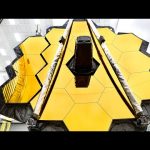
It’s time to #UnfoldTheUniverse. Watch as the mission team reveals the long-awaited first images from the James Webb Space Telescope. Webb, an international collaboration led by NASA with our partners the European Space Agency and the Canadian Space Agency, is the biggest telescope ever launched into space. It will unlock mysteries in our solar system, look beyond to distant worlds around other stars, and probe the mysterious structures and origins of our universe and our place in it.
Since its launch in 2013 ESA’s Gaia observatory has been mapping our galaxy from Lagrange point 2, creating the most accurate and complete multi-dimensional map of the Milky Way. By now two full sets of data have been released, the first set in 2016 and a second one in 2018. These data releases contained stellar positions, distances, motions across the sky, and colour information, among others. Now on 13 June 2022 a third and new full data set will be released. This data release will contain even more and improved information about almost 2 billion stars, Solar System objects and extragalactic sources. It also includes radial velocities for 33 million stars, a five-time increase compared to data release 2. Another novelty in this data set is the largest catalogue yet of binary stars in the Milky Way, which is crucial to understand stellar evolution.
We are Europe’s gateway to space. Our mission is to shape the development of Europe’s space capability and ensure that investment in space continues to deliver benefits to the citizens of Europe and the world. Check out https://www.esa.int/ to get up to speed on everything space related.
🚩 The Battle of Achelous was one of the last major efforts of the fading Byzantine Empire to re-expand their territory, and influence, into southeastern Europe. Instead, it was an unmitigated military disaster for the Byzantines, essentially leaving their entire northern frontier exposed to conquest by Bulgarian armies from Western Asia. Moreover, the battle effectively marked the end of Byzantium as a great power, though the rump state continued to hang on for five more centuries.