Category: Astronomie

  • Replay: Cosmic Kiss news conference

    Replay: Cosmic Kiss news conference

    Watch the full replay of ESA astronaut Matthias Maurer’s pre-launch news conference at ESA’s European Astronaut Centre (EAC) in Cologne, Germany.

    Held in both English and German on 9 September 2021, the conference covers ESA’s vision for human and robotic exploration as well as the science and operations Matthias will support on the International Space Station during his six-month Cosmic Kiss mission.

    Cosmic Kiss is Matthias’s first space mission. He will be launched from the Kennedy Space Center in Florida, USA as a member of US Commercial Crew-3 alongside @NASA astronauts Thomas Marshburn, Raja Chari and Kayla Barron.

    While in orbit, Matthias will support over 35 European experiments and many more international experiments. He will also be the first European to perform a Russian spacewalk since Thomas Reiter in the 1990s. Knowledge gained through the Cosmic Kiss mission will shape the future of space exploration and help enhance life on Earth.

    Conference panellists are: ESA Director General Josef Aschbacher, ESA Director of Human and Robotic Exploration David Parker, ESA International Space Station Programme Manager and Head of EAC Frank De Winne, Director General of @DLR and Member of the DLR Executive Board Walther Pelzer, and ESA Astronaut Matthias Maurer. This conference was moderated by ESA Communication Programme Officer for Human and Robotic Exploration Marco Trovatello.

    Follow Matthias: https://bit.ly/MatthiasMaurerBlog

    ★ Subscribe: http://bit.ly/ESAsubscribe and click twice on the bell button to receive our notifications.

    Check out our full video catalog: http://bit.ly/SpaceInVideos
    Follow us on Twitter: http://bit.ly/ESAonTwitter
    On Facebook: http://bit.ly/ESAonFacebook
    On Instagram: http://bit.ly/ESAonInstagram
    On Pinterest: https://bit.ly/ESAonPinterest
    On Flickr: http://bit.ly/ESAonFlickr

    We are Europe’s gateway to space. Our mission is to shape the development of Europe’s space capability and ensure that investment in space continues to deliver benefits to the citizens of Europe and the world. Check out https://www.esa.int/ to get up to speed on everything space related.

    Copyright information about our videos is available here: https://www.esa.int/ESA_Multimedia/Terms_and_Conditions

    #ESA
    #CosmicKiss
    #MatthiasMaurer

  • We Asked a NASA Scientist – Do Aliens Exist?

    We Asked a NASA Scientist – Do Aliens Exist?

    Do aliens exist? Extraterrestrial life has never been discovered. However, that doesn’t mean it doesn’t exist. And at NASA, astrobiologists like Dr. Lindsay Hays are trying to answer one of the most profound questions ever: Is there life beyond Earth? Explore more: https://astrobiology.nasa.gov/

    Producer: Scott Bednar
    Producer/Editor: Jessica Wilde

  • NASA Psyche Mission: Charting a Metallic World

    NASA Psyche Mission: Charting a Metallic World

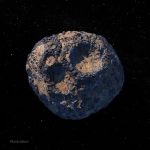
    In this artist’s rendition, we explore a metallic world named Psyche, an asteroid that offers a unique window into the building blocks of planet formation. The NASA Psyche mission launches in 2022 and will arrive at the asteroid Psyche, which orbits the Sun between Mars and Jupiter, in 2026. The spacecraft, also named Psyche, will spend 21 months orbiting the asteroid, mapping it and studying its properties. The mission is led by Principal Investigator Lindy Elkins-Tanton of Arizona State University. NASA’s Jet Propulsion Laboratory is responsible for the mission’s overall management, system engineering, integration and test, and mission operations. Maxar Technologies is providing a high-power solar electric propulsion spacecraft chassis.

  • Inflight call with Thomas Pesquet and EU Commissioners

    Inflight call with Thomas Pesquet and EU Commissioners

    Thomas Pesquet took part in a discussion with the EU Commissioner for Internal Market Thierry Breton, and the EU Commissioner for Environment, Oceans and Fisheries Virginijus Sinkevicius. The inflight call took place during their visit to ESA’s European Space Research and Technology Centre (ESTEC) in the Netherlands, where they were accompanied by ESA Director General Josef Aschbacher.

    Follow Thomas: http://bit.ly/ThomasPesquetBlog

    ★ Subscribe: http://bit.ly/ESAsubscribe and click twice on the bell button to receive our notifications.

    Check out our full video catalog: http://bit.ly/SpaceInVideos
    Follow us on Twitter: http://bit.ly/ESAonTwitter
    On Facebook: http://bit.ly/ESAonFacebook
    On Instagram: http://bit.ly/ESAonInstagram
    On Pinterest: https://bit.ly/ESAonPinterest
    On Flickr: http://bit.ly/ESAonFlickr

    We are Europe’s gateway to space. Our mission is to shape the development of Europe’s space capability and ensure that investment in space continues to deliver benefits to the citizens of Europe and the world. Check out https://www.esa.int/ to get up to speed on everything space related.

    Copyright information about our videos is available here: https://www.esa.int/ESA_Multimedia/Terms_and_Conditions

    #ESA
    #ISSTour
    #MissionAlpha

  • Earth views from space – 1 hour long in 4K!

    Earth views from space – 1 hour long in 4K!

    Watch over one hour of our planet, seen from the International Space Station, in 4K resolution. This compilation was made from video taken by ESA astronauts, mostly by Thomas Pesquet during his first mission, Proxima, and ESA astronaut Alexander Gerst on his second mission, Horizons, as well as footage from Samantha Cristoforetti’s Futura mission and Paolo Nespoli’s Vita mission.

    Flying 400 km above our amazing planet Earth, the Space Station travels at 28 800 km/h to stay in orbit. The videos are in real time and not sped up or edited. Most of the scenes were filmed in the European-built Cupola module, the Space Station’s observatory.

    On 21 April 2001, the first ESA astronaut Umberto Guidoni arrived at the Space Station. Since then, the Space Station has grown immensely, as have the number of Europeans to have worked in it, together with the science experiments performed in orbit.

    Europe contributes around 8% of the running costs of the International Space Station, but has built a large part of the structure, including ESA’s Columbus laboratory, the Cupola observatory, the Tranquillity and Harmony modules, as well as the computers that collect data and provide navigation, communications and operations for the Russian segment.

    ESA also provided the Space Station with supplies and boosted its orbit through five Automated Transfer Vehicles, the heaviest and most versatile Space Station supply ferry. This programme evolved into the European Service Modules that ESA is supplying for @NASA’s Artemis programme, taking humans forward to the Moon and thus continuing the exemplary international collaboration beyond Earth’s orbit.

    Since Umberto’s mission, there have been 26 further ESA astronaut missions to the International Space Station, with astronauts flying to Station on either the Russian Soyuz or US Space Shuttle spacecraft.

    Thomas Pesquet’s second mission, Alpha, is the 28th mission for ESA, with ESA astronaut Matthias Maurer already lined up for his first flight later this year, and ESA astronaut Samantha Cristoforetti scheduled for the 30th ESA International Space Station mission in 2022.

    ★ Subscribe: http://bit.ly/ESAsubscribe and click twice on the bell button to receive our notifications.

    Check out our full video catalog: http://bit.ly/SpaceInVideos
    Follow us on Twitter: http://bit.ly/ESAonTwitter
    On Facebook: http://bit.ly/ESAonFacebook
    On Instagram: http://bit.ly/ESAonInstagram
    On Pinterest: https://bit.ly/ESAonPinterest
    On Flickr: http://bit.ly/ESAonFlickr

    We are Europe’s gateway to space. Our mission is to shape the development of Europe’s space capability and ensure that investment in space continues to deliver benefits to the citizens of Europe and the world. Check out https://www.esa.int/ to get up to speed on everything space related.

    Copyright information about our videos is available here: https://www.esa.int/ESA_Multimedia/Terms_and_Conditions

    #ESA
    #InternationalSpaceStation
    #EarthFromSpace

  • A Long-Distance Call to Space on This Week @NASA – September 3, 2021

    A Long-Distance Call to Space on This Week @NASA – September 3, 2021

    A long-distance call to space, space station cameras capture Hurricane Ida, and another successful cargo delivery to the station … a few of the stories to tell you about – This Week at NASA!

    Download Link: https://images.nasa.gov/details-A%20Long-Distance%20Call%20to%20Space%20on%20This%20Week%20@NASA%20–%20September%203,%202021

    Producer: Andre Valentine
    Editor: Lacey Young
    Music: Universal Production Music

  • Drop tests for touchdown on Mars

    Drop tests for touchdown on Mars

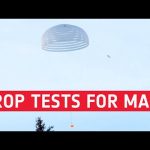
    The ExoMars team have performed important parachute drop tests as crucial preparation for a safe touchdown on Mars in 2023. The European Rosalind Franklin rover will search for signs of past life beneath the surface of Mars with its unique two metre drill and onboard laboratory. The Russian surface science platform Kazachok will study the environment at the landing site. Landing on Mars is always a challenging endeavour and all possible parameters are taken into account.

    More information on ExoMars: http://www.esa.int/exomars

    ★ Subscribe: http://bit.ly/ESAsubscribe and click twice on the bell button to receive our notifications.

    Check out our full video catalog: http://bit.ly/SpaceInVideos
    Follow us on Twitter: http://bit.ly/ESAonTwitter
    On Facebook: http://bit.ly/ESAonFacebook
    On Instagram: http://bit.ly/ESAonInstagram
    On Pinterest: https://bit.ly/ESAonPinterest
    On Flickr: http://bit.ly/ESAonFlickr

    We are Europe’s gateway to space. Our mission is to shape the development of Europe’s space capability and ensure that investment in space continues to deliver benefits to the citizens of Europe and the world. Check out https://www.esa.int/ to get up to speed on everything space related.

    Copyright information about our videos is available here: https://www.esa.int/ESA_Multimedia/Terms_and_Conditions

    #ESA
    #ExoMars
    #RosalindTheRover

  • We Asked a NASA Technologist: Is there Weather on Mars?

    We Asked a NASA Technologist: Is there Weather on Mars?

    Is there weather on Mars? Short answer: yes! And just like on Earth it varies wildly. Now, thanks to the Mars Environmental Dynamics Analyzer, or MEDA instrument on NASA’s Perseverance Mars Rover, we’re learning even more about Martian meteorology with daily weather reports. Over to José Antonio Rodríguez-Manfredi at the Spanish Astrobiology Center for more. Find out more about MEDA: https://go.nasa.gov/3lNuKWK

    Producer: Scott Bednar
    Producer/Editor: Jessica Wilde

  • Space pizza party with Thomas Pesquet 🍕 #shorts

    Space pizza party with Thomas Pesquet 🍕 #shorts

    Here’s the space burger recipe of ESA astronaut Thomas Pesquet: “Tortillas, rehydrated beef patty, fresh onion from a cargo vehicle, a slice of lettuce (grown on the International Space Station for a scientific experiment: don’t tell), and various sauces. It tasted like heaven, and flew like an angel”

    Follow Thomas: http://bit.ly/ThomasPesquetBlog

    ★ Subscribe: http://bit.ly/ESAsubscribe and click twice on the bell button to receive our notifications.

    Check out our full video catalog: http://bit.ly/SpaceInVideos
    Follow us on Twitter: http://bit.ly/ESAonTwitter
    On Facebook: http://bit.ly/ESAonFacebook
    On Instagram: http://bit.ly/ESAonInstagram
    On Pinterest: https://bit.ly/ESAonPinterest
    On Flickr: http://bit.ly/ESAonFlickr

    We are Europe’s gateway to space. Our mission is to shape the development of Europe’s space capability and ensure that investment in space continues to deliver benefits to the citizens of Europe and the world. Check out https://www.esa.int/ to get up to speed on everything space related.

    Copyright information about our videos is available here: https://www.esa.int/ESA_Multimedia/Terms_and_Conditions

    #ESA
    #SpacePizza
    #ThomasPesquet

  • Node 2 | Space Station 360 (in French with English subtitles available)

    Node 2 | Space Station 360 (in French with English subtitles available)

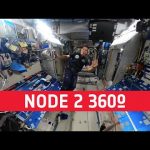
    ESA astronaut Thomas Pesquet takes you on a tour of the International Space Station like no other. Filmed with a 360 camera, the Space Station 360 series lets you explore for yourself alongside Thomas’s explanation – this is the Node 2 module.

    Node 2 is a European-built connecting module also known as Harmony that acts as an internal passageway and utility hub. Its exterior also serves as a work platform for the station’s robotic arm, Canadarm2, and has docking ports for spacecraft.

    In this video, Thomas shows the different modules that Node 2 connects: Europe’s Columbus Laboratory, the US lab Destiny and the Japanese Kibo Laboratory. He also shows workspaces and sleeping cabins where astronauts can have some personal space and sleep with their sleeping bags attached to the wall.

    Click and drag with your mouse or move your smartphone around see different angles and feel like you are in space with Thomas.

    Follow Thomas: http://bit.ly/ThomasPesquetBlog

    ★ Subscribe: http://bit.ly/ESAsubscribe and click twice on the bell button to receive our notifications.

    Check out our full video catalog: http://bit.ly/SpaceInVideos
    Follow us on Twitter: http://bit.ly/ESAonTwitter
    On Facebook: http://bit.ly/ESAonFacebook
    On Instagram: http://bit.ly/ESAonInstagram
    On Pinterest: https://bit.ly/ESAonPinterest
    On Flickr: http://bit.ly/ESAonFlickr

    We are Europe’s gateway to space. Our mission is to shape the development of Europe’s space capability and ensure that investment in space continues to deliver benefits to the citizens of Europe and the world. Check out https://www.esa.int/ to get up to speed on everything space related.

    Copyright information about our videos is available here: https://www.esa.int/ESA_Multimedia/Terms_and_Conditions

    #ESA
    #ISSTour
    #MissionAlpha

  • SECOND ATTEMPT: NASA and SpaceX Launch to the International Space Station

    SECOND ATTEMPT: NASA and SpaceX Launch to the International Space Station

    On Sun. Aug. 29, don’t miss the second launch attempt of a SpaceX Dragon spacecraft to the International Space Station. Live coverage of the mission begins at 2:45 a.m. EDT (06:45 UTC) with liftoff targeted for 3:14 a.m. EDT (07:14 UTC) from Launch Complex 39A at Kennedy Space Center in Florida.

    In addition to approximately 2,300 pounds (1,000 kilograms) of science experiments riding aboard the spacecraft, the crew can look forward to assortments of cheese, ice cream, and veggies! Docking to the orbiting lab is targeted for Mon., Aug. 30, at 11 a.m. EDT (15:00 UTC).

  • Highlighting the value of NASA on This Week @NASA – August 28, 2021

    Highlighting the value of NASA on This Week @NASA – August 28, 2021

    Highlighting the value of NASA, the next resupply mission to the space station, and a milestone for the James Webb Space Telescope … a few of the stories to tell you about – This Week at NASA!

  • NASA and SpaceX Launch to the International Space Station

    NASA and SpaceX Launch to the International Space Station

    LAUNCH UPDATE: Due to weather, today’s SpaceX cargo mission is postponed. The next attempt is Sun. Aug. 29 with our live coverage beginning at 2:45 a.m. EDT (06:45 UTC). Liftoff is targeted for 3:14 a.m. EDT (07:14 UTC).

    Join us Sat. Aug. 28 at 3:15 a.m. EDT (07:15 UTC) for live coverage of the next SpaceX mission to the International Space Station! Liftoff of the Falcon 9 rocket and Dragon cargo spacecraft is targeted for 3:37 a.m. EDT (07:37 UTC) from Launch Complex 39A at Kennedy Space Center in Florida.

    Riding aboard the spacecraft are approximately 2,300 pounds (1,000 kilograms) of science experiments, including research on osteoporosis, a remote-controlled drug delivery system, and more! Docking to the orbiting lab is targeted for Sun., Aug. 29, at 11 a.m. EDT (15:00 UTC).

  • Southern lights season is over 🐸 #shorts

    Southern lights season is over 🐸 #shorts

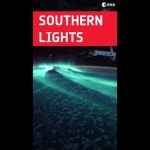
    Before the season came to an end, @thom_astro captured this timelapse of the aurora australis from the @iss and shared it on his social media channels saying: “We’ve been looking, but there’s nothing to see anymore in our aurora sweet spot (southwest of Australia, midway to Antarctica). Don’t worry, I still have a few to share. Don’t you just 💚 the way the light skips across Earth in this one as the solar arrays comes into view.”

    Follow Thomas: http://bit.ly/ThomasPesquetBlog

    ★ Subscribe: http://bit.ly/ESAsubscribe and click twice on the bell button to receive our notifications.

    Check out our full video catalog: http://bit.ly/SpaceInVideos
    Follow us on Twitter: http://bit.ly/ESAonTwitter
    On Facebook: http://bit.ly/ESAonFacebook
    On Instagram: http://bit.ly/ESAonInstagram
    On Flickr: http://bit.ly/ESAonFlickr

    We are Europe’s gateway to space. Our mission is to shape the development of Europe’s space capability and ensure that investment in space continues to deliver benefits to the citizens of Europe and the world. Check out https://www.esa.int/ to get up to speed on everything space related.

    Copyright information about our videos is available here: https://www.esa.int/ESA_Multimedia/Terms_and_Conditions

    #ESA
    #SouthernLights
    #ThomasPesquet

  • International Space Station Crew Previews SpaceX CRS-23 Science

    International Space Station Crew Previews SpaceX CRS-23 Science

    The astronauts aboard the International Space Station are ready for a big delivery of science experiments and supplies! From seeds to a robotic arm, NASA astronauts Megan McArthur and Shane Kimbrough discuss the investigations they are excited to welcome aboard station during SpaceX’s 23nd commercial resupply mission.
    The SpaceX CRS-23 mission is scheduled to arrive at the orbiting laboratory on August 29.

    Learn more about the science on this mission: https://go.nasa.gov/3lZ2Qa4

  • Enter the airlock with Thomas Pesquet [in French with English subtitles available]

    Enter the airlock with Thomas Pesquet [in French with English subtitles available]

    ESA astronaut Thomas Pesquet gives a tour of the International Space Station’s airlock – the module used to prepare for and carry out spacewalks.

    In this video, Thomas provides an overview of the EMU spacesuit used for US spacewalks and its different components. The spacesuits can be adjusted depending on an astronaut’s size, but the gloves are customised to ensure each astronaut has maximum mobility in their hands and fingers.

    Thomas shows the cameras and lighting systems that allow astronauts to continue work when over the side of Earth not lit by the sun, the visors they put down during periods of harsh light and the cooling garments worn under the suits that keep their bodies at the right temperature. He also explains the equipment lock and the crew lock, where astronauts breathe in a controlled way to rid their blood of nitrogen and adjust to the lower pressure of space.

    Follow Thomas: http://bit.ly/ThomasPesquetBlog

    ★ Subscribe: http://bit.ly/ESAsubscribe and click twice on the bell button to receive our notifications.

    Check out our full video catalog: http://bit.ly/SpaceInVideos
    Follow us on Twitter: http://bit.ly/ESAonTwitter
    On Facebook: http://bit.ly/ESAonFacebook
    On Instagram: http://bit.ly/ESAonInstagram
    On Pinterest: https://bit.ly/ESAonPinterest
    On Flickr: http://bit.ly/ESAonFlickr

    We are Europe’s gateway to space. Our mission is to shape the development of Europe’s space capability and ensure that investment in space continues to deliver benefits to the citizens of Europe and the world. Check out https://www.esa.int/ to get up to speed on everything space related.

    Copyright information about our videos is available here: https://www.esa.int/ESA_Multimedia/Terms_and_Conditions

    #ESA
    #ISSTour
    #MissionAlpha

  • We Asked a NASA Scientist: Will an Asteroid Ever Hit Earth?

    We Asked a NASA Scientist: Will an Asteroid Ever Hit Earth?

    Will an asteroid ever hit Earth? There are no known impact threats, but tiny meteors burn up in Earth’s atmosphere all the time! NASA asteroid expert Dr. Kelly Fast tells us more. Learn more about NASA’s planetary defense efforts: nasa.gov/planetarydefense

  • Planet Aqua: Solutions from Space for Clean Water

    Planet Aqua: Solutions from Space for Clean Water

    Water is life, on Earth and in space. Dutch ESA astronaut André Kuipers recounts his experience living in space for 204 days, and his time looking back on the blue face of ‘Planet Aqua’, comparing notes with divers about what is going on beneath the waves. He goes on to explore how space technology is being used for water management, from orbital tracking of water quality and pollution to spacecraft-grade recycling systems deployed down on the ground, as well as ambitious efforts to identify marine plastic litter using satellites. Produced for SIWI World Water Week with the support of the Netherlands Ministry of Foreign Affairs.

    ★ Subscribe: http://bit.ly/ESAsubscribe and click twice on the bell button to receive our notifications.

    Check out our full video catalog: http://bit.ly/SpaceInVideos
    Follow us on Twitter: http://bit.ly/ESAonTwitter
    On Facebook: http://bit.ly/ESAonFacebook
    On Instagram: http://bit.ly/ESAonInstagram
    On Pinterest: https://bit.ly/ESAonPinterest
    On Flickr: http://bit.ly/ESAonFlickr

    We are Europe’s gateway to space. Our mission is to shape the development of Europe’s space capability and ensure that investment in space continues to deliver benefits to the citizens of Europe and the world. Check out https://www.esa.int/ to get up to speed on everything space related.

    Copyright information about our videos is available here: https://www.esa.int/ESA_Multimedia/Terms_and_Conditions

    #ESA
    #WWWeek
    #PlanetAqua

  • Why the Moon?

    Why the Moon?

    The Artemis missions will build a community on the Moon, driving a new lunar economy and inspiring a new generation. Narrator Drew Barrymore and NASA team members explain why returning to the Moon is the natural next step in human exploration, and how the lessons learned from Artemis will pave the way to Mars and beyond. As NASA prepares to launch the Orion spacecraft and Space Launch System rocket on the uncrewed Artemis I mission around the Moon, we’ve already begun to take the next step.

    Video Credits:
    Writer: Paul Wizikowski
    Directors: Paul Wizikowski and Ryan Cristelli
    Editor: Phil Sexton
    Producers: Barbara Zelon and Aly Lee

  • Columbus module | Space Station 360 (in French with English subtitles available)

    Columbus module | Space Station 360 (in French with English subtitles available)

    ESA astronaut Thomas Pesquet takes you on a tour of the International Space Station like no other. Filmed with a 360 camera, the Space Station 360 series lets you explore for yourself alongside Thomas’s explanation – starting with Europe’s science laboratory, Columbus.

    Columbus is not the Station’s largest module, but it is one of the best equipped. It is the place where European astronauts conduct most of their work on board and has an external platform that allows experiments to be exposed to the vacuum of space. In addition to science racks, Columbus offers storage space and even a new crew quarter for sleeping. Click and drag with your mouse or move your smartphone around see different angles and feel like you too are in space.

    Follow Thomas: http://bit.ly/ThomasPesquetBlog

    ★ Subscribe: http://bit.ly/ESAsubscribe and click twice on the bell button to receive our notifications.

    Check out our full video catalog: http://bit.ly/SpaceInVideos
    Follow us on Twitter: http://bit.ly/ESAonTwitter
    On Facebook: http://bit.ly/ESAonFacebook
    On Instagram: http://bit.ly/ESAonInstagram
    On Flickr: http://bit.ly/ESAonFlickr

    We are Europe’s gateway to space. Our mission is to shape the development of Europe’s space capability and ensure that investment in space continues to deliver benefits to the citizens of Europe and the world. Check out https://www.esa.int/ to get up to speed on everything space related.

    Copyright information about our videos is available here: https://www.esa.int/ESA_Multimedia/Terms_and_Conditions

    #ESA
    #ISSTour
    #MissionAlpha

  • Highlighting an Upcoming Earth-Observing Mission on This Week @NASA – August 20, 2021

    Highlighting an Upcoming Earth-Observing Mission on This Week @NASA – August 20, 2021

    Highlighting an upcoming Earth-observing mission, the science on the next resupply mission to the space station, and testing a new material to help future spacecraft land on distant worlds … a few of the stories to tell you about – This Week at NASA!

    Download Link: https://images.nasa.gov/details-Highlighting%20an%20Upcoming%20Earth-Observing%20Mission%20on%20This%20Week%20@NASA%20–%20August%2020,%202021

    Producer: Andre Valentine
    Editor: Lacey Young
    Music: Universal Production Music

  • Celebrating Gene Roddenberry: Star Trek’s Bridge and NASA

    Celebrating Gene Roddenberry: Star Trek’s Bridge and NASA

    Star Trek has served as inspiration to generations of scientists, engineers and sci-fi fans around the world. Join Rod Roddenberry, Gene Roddenberry’s son and Roddenberry Entertainment CEO, George Takei, actor and activist, Administrator Bill Nelson and some of NASA’s best and brightest as they honor Star Trek creator Gene Roddenberry’s 100th birthday with a conversation about diversity and inspiration. NASA panelists include: Hortense Diggs, Director of the Office of Communication and Public Engagement at NASA’s Kennedy Space Center, Tracy Drain, Europa Clipper Flight Systems Engineer, astronaut Jonny Kim, and Swati Mohan, Mars 2020 Guidance and Controls Operations Lead.

    00:00-2:55 Administrator Nelson’s opening remarks
    2:55-5:23 Rod Roddenberry’s opening remarks
    5:23-6:30 Rod Roddenberry introduces panelists
    6:30-10:25 George Takei recalls his experience with Star Trek
    10:25-20:29 Panelists discuss what inspires them
    20:29-29:03 Q/A from George Takei
    29:03-41:21 Panelists discuss how they got to where they are today
    41:21-43:17 Rod Roddenberry’s closing remarks

    Producer/Editor: Lacey Young

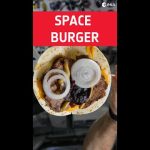
  • How do you like your (space) burger? 🍔 #shorts

    How do you like your (space) burger? 🍔 #shorts

    Here’s the space burger recipe of ESA astronaut Thomas Pesquet: “Tortillas, rehydrated beef patty, fresh onion from a cargo vehicle, a slice of lettuce (grown on the International Space Station for a scientific experiment: don’t tell), and various sauces. It tasted like heaven, and flew like an angel”

    Follow Thomas: http://bit.ly/ThomasPesquetBlog

    ★ Subscribe: http://bit.ly/ESAsubscribe and click twice on the bell button to receive our notifications.

    Check out our full video catalog: http://bit.ly/SpaceInVideos
    Follow us on Twitter: http://bit.ly/ESAonTwitter
    On Facebook: http://bit.ly/ESAonFacebook
    On Instagram: http://bit.ly/ESAonInstagram
    On Pinterest: https://bit.ly/ESAonPinterest
    On Flickr: http://bit.ly/ESAonFlickr

    We are Europe’s gateway to space. Our mission is to shape the development of Europe’s space capability and ensure that investment in space continues to deliver benefits to the citizens of Europe and the world. Check out https://www.esa.int/ to get up to speed on everything space related.

    Copyright information about our videos is available here: https://www.esa.int/ESA_Multimedia/Terms_and_Conditions

    #ESA
    #SpaceBurger
    #ThomasPesquet

  • Thomas tours the MLM module (in French with English subtitles available)

    Thomas tours the MLM module (in French with English subtitles available)

    Join ESA astronaut Thomas Pesquet for a tour of the International Space Station’s Russian MLM module. The module docked to the Station on 29 July 2021, bringing with it the European Robotic Arm (ERA) that will provide unprecedented access outside the Russian segment.

    In this tour, Thomas explains what happened when the module arrived on Station and gives an overview of its facilities and functions. Short for Multipurpose Laboratory Module, and also known as Nauka, the module increases opportunities for science and research in microgravity.

    Thomas shows the hatch to access the module, its main hall and a new toilet – the third toilet for the Space Station. He also shows the scientific racks, the piloting station for ERA, a crew quarter, and a second part of the module that will be used for docking with an airlock that will allow experiments to be sent out into the vacuum of space, and a window that – once it is functional – will provide more incredible views over Earth.

    Follow Thomas: http://bit.ly/ThomasPesquetBlog

    ★ Subscribe: http://bit.ly/ESAsubscribe and click twice on the bell button to receive our notifications.

    Check out our full video catalog: http://bit.ly/SpaceInVideos
    Follow us on Twitter: http://bit.ly/ESAonTwitter
    On Facebook: http://bit.ly/ESAonFacebook
    On Instagram: http://bit.ly/ESAonInstagram
    On Pinterest: https://bit.ly/ESAonPinterest
    On Flickr: http://bit.ly/ESAonFlickr

    We are Europe’s gateway to space. Our mission is to shape the development of Europe’s space capability and ensure that investment in space continues to deliver benefits to the citizens of Europe and the world. Check out https://www.esa.int/ to get up to speed on everything space related.

    Copyright information about our videos is available here: https://www.esa.int/ESA_Multimedia/Terms_and_Conditions

    #ESA
    #ISSTour
    #MissionAlpha

  • Science Launching on SpaceX’s 23rd Cargo Resupply Mission to the Space Station

    Science Launching on SpaceX’s 23rd Cargo Resupply Mission to the Space Station

    The 23rd SpaceX cargo resupply mission carrying scientific research and technology demonstrations launches to the International Space Station from NASA’s Kennedy Space Center in Florida in late August. Experiments aboard include an investigation of protecting bone health with vegetal byproducts, testing a way to monitor crew eye health, demonstrating improved dexterity of robots, exposing materials to the harsh environment of space, mitigating stress in plants, and more.

    Learn more about the science launching to the space station: https://go.nasa.gov/3lZ2Qa4

  • Keeping an eye on ocean plastic pollution…from space!

    Keeping an eye on ocean plastic pollution…from space!

    Meet bag, bottle and straw, three bits of plastic left on the beach.
    They are only small, but they are heading into the ocean, where they could cause big damage. ESA is exploring how satellites can help detect and reduce plastic pollution in the ocean. From spotting build-ups of marine litter to tracking ocean currents, satellites could be game-changing in tackling this enormous environmental problem.

    Though engaging for children and adults alike, this video is designed with primary
    school students in mind. In particular, teachers can use it to introduce the topic of marine litter in subjects such as geography and science.

    Dutch version available here: https://youtu.be/ScSCXaSnjhE

    Credits: ESA – Science Office
    Project coordination: Nicole Shearer (EJR-Quartz for ESA) and Mariana Barrosa (Science Office) Scientific advice: Peter de Maagt and Paolo Corradi (both ESA), Joana
    Mira Veiga (Deltares)
    Educational advice: Petra de Clippelaar (BSO ‘t Vogelnest) and Connor Mackelvey (Iroquois Elementary School)
    Design and animation: David Santos and Rui Braz (both Science Office)

    ★ Subscribe: http://bit.ly/ESAsubscribe and click twice on the bell button to receive our notifications.

    Check out our full video catalog: http://bit.ly/SpaceInVideos
    Follow us on Twitter: http://bit.ly/ESAonTwitter
    On Facebook: http://bit.ly/ESAonFacebook
    On Instagram: http://bit.ly/ESAonInstagram
    On Pinterest: https://bit.ly/ESAonPinterest
    On Flickr: http://bit.ly/ESAonFlickr

    We are Europe’s gateway to space. Our mission is to shape the development of Europe’s space capability and ensure that investment in space continues to deliver benefits to the citizens of Europe and the world. Check out https://www.esa.int/ to get up to speed on everything space related.

    Copyright information about our videos is available here: https://www.esa.int/ESA_Multimedia/Terms_and_Conditions

    #ESAKids
    #PlasticPollution
    #EarthObservation

  • Capturing a Cygnus spacecraft

    Capturing a Cygnus spacecraft

    Capturing a spacecraft requires a complex choreography between human and machine, but these two make it look easy. In this video ESA astronaut Thomas Pesquet and @NASA astronaut Megan McArthur work together to grapple and berth the @Northrop Grumman Cygnus 16 spacecraft on the Earth-facing port of the Unity module on the International Space Station.

    At 12:07 CEST (11:07 BST) Thursday 12 August, Megan used the International Space Station’s robotic Canadarm2 to grapple the spacecraft packed with over 3700 kg of science and supplies as Thomas monitored Cygnus systems during its approach.

    The Cygnus will remain docked to the Station for about three months before it departs in November 2021.

    Follow Thomas: http://bit.ly/ThomasPesquetBlog

    ★ Subscribe: http://bit.ly/ESAsubscribe and click twice on the bell button to receive our notifications.

    Check out our full video catalog: http://bit.ly/SpaceInVideos
    Follow us on Twitter: http://bit.ly/ESAonTwitter
    On Facebook: http://bit.ly/ESAonFacebook
    On Instagram: http://bit.ly/ESAonInstagram
    On Pinterest: https://bit.ly/ESAonPinterest
    On Flickr: http://bit.ly/ESAonFlickr

    We are Europe’s gateway to space. Our mission is to shape the development of Europe’s space capability and ensure that investment in space continues to deliver benefits to the citizens of Europe and the world. Check out https://www.esa.int/ to get up to speed on everything space related.

    Copyright information about our videos is available here: https://www.esa.int/ESA_Multimedia/Terms_and_Conditions

    #ESA
    #Timelapse
    #MissionAlpha

  • A Commercial Resupply Mission to the Space Station on This Week @NASA – August 13, 2021

    A Commercial Resupply Mission to the Space Station on This Week @NASA – August 13, 2021

    A Commercial Resupply Mission to the Space Station, honoring a spaceflight icon, and an out of this world experience, right here on Earth … a few of the stories to tell you about – This Week at NASA!

    Download Link:
    https://images.nasa.gov/details-A%20Commercial%20Resupply%20Mission%20to%20the%20Space%20Station%20on%20This%20Week%20@NASA%20–%20August%2013,%202021

  • Sound of a close Venus flyby #shorts

    Sound of a close Venus flyby #shorts

    A sonification of data recorded by the Italian Spring Accelerometer (ISA) aboard the BepiColombo Mercury Planetary Orbiter spacecraft during the flyby of Venus on 10 August 2021. The accelerometer data was converted to frequency to be made audible to the human ear. The resulting sound is rich with interesting effects due to the planet’s gravity acting on the spacecraft structure, the response of the spacecraft to the rapid temperature changes, and the change in reaction wheel velocity as they work hard to compensate for these effects.

    The audio has been matched to the timing that the images seen in this movie were captured, in the moments after closest approach.

    Read more: https://www.esa.int/Science_Exploration/Space_Science/Sights_and_sounds_of_a_Venus_flyby

    Credit:
    Images: ESA/BepiColombo/MTM, CC BY-SA 3.0 IGO
    Audio: ESA/BepiColombo/ISA/ASI-INAF, CC BY-SA 3.0 IGO

    ★ Subscribe: http://bit.ly/ESAsubscribe and click twice on the bell button to receive our notifications.

    Check out our full video catalog: http://bit.ly/SpaceInVideos
    Follow us on Twitter: http://bit.ly/ESAonTwitter
    On Facebook: http://bit.ly/ESAonFacebook
    On Instagram: http://bit.ly/ESAonInstagram
    On Pinterest: https://bit.ly/ESAonPinterest
    On Flickr: http://bit.ly/ESAonFlickr

    We are Europe’s gateway to space. Our mission is to shape the development of Europe’s space capability and ensure that investment in space continues to deliver benefits to the citizens of Europe and the world. Check out https://www.esa.int/ to get up to speed on everything space related.

    Copyright information about our videos is available here: https://www.esa.int/ESA_Multimedia/Terms_and_Conditions

    #ESA
    #JAXA
    #BepiColombo

  • BepiColombo’s close Venus encounter

    BepiColombo’s close Venus encounter

    A stunning sequence of 89 images taken by the monitoring cameras on board the European-Japanese BepiColombo mission to Mercury, as the spacecraft made a close approach of Venus on 10 August 2021.

    The sequence includes images from all three Monitoring Cameras (MCAM) onboard the Mercury Transfer Module, which provides black-and-white snapshots in 1024 x 1024 pixel resolution. It is not possible to image with the high-resolution camera suite during the cruise phase. The images have been lightly processed to enhance contrast and use the full dynamic range. A small amount of optical vignetting is seen in the corners of some of the images.

    The first image is from MCAM 1, and was taken at 13:41:02 UTC, prior to close approach. As such, the spacecraft was still on the nightside of the planet, but the dayside can just be seen creeping into view. Part of the spacecraft’s solar array can also be seen.

    The second image was taken by MCAM 2 at 13:51:56 UTC, two seconds after closest approach. With the Venus surface just 552 km away, the planet fills the entire field of view. The camera is not able to image detail of the planet’s atmosphere. The image also captures the Mercury Planetary Orbiter’s medium gain antenna and magnetometer boom.

    The rest of the sequence is from MCAM 3, while the spacecraft was pointed at Venus, and then as it slews away and gradually recedes from view, covering the time period 13:53:56 UTC on 10 August until 12:21:26 UTC on 11 August. The high gain antenna of the Mercury Planetary Orbiter is also seen changing orientation as it points towards Earth.

    The music accompanying the compilation was composed especially for the occasion, by @Anna Phoebe.

    The images were captured during the second of two Venus flybys, and the third of nine flybys overall. The flybys are gravity assist manoeuvres needed to help steer the spacecraft on course for Mercury. During its seven-year cruise to the smallest and innermost planet of the Solar System, BepiColombo makes one flyby at Earth, two at Venus and six at Mercury in order to approach the orbit around Mercury. Its first Mercury flyby will take place 1-2 October 2021 from a distance of just 200 km.

    BepiColombo, which comprises ESA’s Mercury Planetary Orbiter and the Mercury Magnetospheric Orbiter of @JAXA | 宇宙航空研究開発機構, is scheduled to reach its target orbit around the smallest and innermost planet of the Solar System in 2025. The spacecraft will separate and enter into their respective orbits before starting their science mission in early 2026 .

    Credit: ESA/BepiColombo/MTM, CC BY-SA 3.0 IGO

    Music composed by Anna Phoebe, with additional soundscapes by Mark McCaughrean

    ★ Subscribe: http://bit.ly/ESAsubscribe and click twice on the bell button to receive our notifications.

    Check out our full video catalog: http://bit.ly/SpaceInVideos
    Follow us on Twitter: http://bit.ly/ESAonTwitter
    On Facebook: http://bit.ly/ESAonFacebook
    On Instagram: http://bit.ly/ESAonInstagram
    On Pinterest: https://bit.ly/ESAonPinterest
    On Flickr: http://bit.ly/ESAonFlickr

    We are Europe’s gateway to space. Our mission is to shape the development of Europe’s space capability and ensure that investment in space continues to deliver benefits to the citizens of Europe and the world. Check out https://www.esa.int/ to get up to speed on everything space related.

    Copyright information about our videos is available here: https://www.esa.int/ESA_Multimedia/Terms_and_Conditions

    #ESA
    #JAXA
    #BepiColombo

  • Watch the Launch of Northrop Grumman’s Resupply Mission to the International Space Station

    Watch the Launch of Northrop Grumman’s Resupply Mission to the International Space Station

    Join us on Tues., Aug. 10 at 5:30 p.m. EDT (21:30 UTC) for live coverage of the launch of Northrop Grumman’s Antares rocket and Cygnus cargo spacecraft. Liftoff from our Wallops Flight Facility in Virginia is scheduled at 6:01 p.m. EDT (22:01 UTC). This Cygnus is named the SS Ellison Onizuka, in honor of the first Asian American astronaut.

    What’s on board the spacecraft? Over 8,200 pounds (3,720 kg) of research, technology demonstrations, and crew supplies for the astronauts living and working on the station. Experiments heading to space will demonstrate 3D printing with dust, use engineered tissue to study muscle loss, analyze growth of slime mold, and more:https://youtu.be/R-jc-dTdK5g

  • Space Olympics

    Space Olympics

    The International Space Station Expedition 65 crew recorded themselves on a day off after a long week of work having some weightless fun. From Earth orbit, 400 km above our planet, the crew present the very first Space Olympics.

    Skip to each event:
    0:00 – 00:09 Intro
    0:10 – 2:47 Synchronised floating
    2:48 – 6:41 Lack-of-floor routine
    6:42 – 8:48 No-Handball
    8:49 – 9:30 Weightless sharpshooting

    ESA astronaut Thomas Pesquet shared this video on social media with the caption: “The first ever Space @Olympics! A Saturday afternoon on the International Space Station. Four disciplines. Rules that evolved as we played 😄. Seven athletes. Four nations. Two teams. Crew cohesion and morale boosted like never before. The first Space Olympics saw Team Crew Dragon and Team Soyuz compete in lack-of-floor-routine, no-handball, synchronised space swimming and weightless sharpshooting.”

    Over 200 experiments are planned during Thomas’ time in space, with 40 European ones and 12 new experiments led by the French space agency @CNES. Throughout Mission Alpha Thomas is highlighting the parallels between being an astronaut and an athlete: both need to perform at key moments, and train hard to be at their best. Thomas has often said that sport taught him the values of team spirit and respecting team mates, and no astronaut is an island – if one profession is an example of teamwork it is being an astronaut. It takes a team to ensure they are at their best.

    Follow Thomas: http://bit.ly/ThomasPesquetBlog

    ★ Subscribe: http://bit.ly/ESAsubscribe and click twice on the bell button to receive our notifications.

    Check out our full video catalog: http://bit.ly/SpaceInVideos
    Follow us on Twitter: http://bit.ly/ESAonTwitter
    On Facebook: http://bit.ly/ESAonFacebook
    On Instagram: http://bit.ly/ESAonInstagram
    On Pinterest: https://bit.ly/ESAonPinterest
    On Flickr: http://bit.ly/ESAonFlickr

    We are Europe’s gateway to space. Our mission is to shape the development of Europe’s space capability and ensure that investment in space continues to deliver benefits to the citizens of Europe and the world. Check out https://www.esa.int/ to get up to speed on everything space related.

    Copyright information about our videos is available here: https://www.esa.int/ESA_Multimedia/Terms_and_Conditions

    #ESA
    #Olympics
    #MissionAlpha

  • #Tokyo2020: Highlights from the first-ever space Olympics!

    #Tokyo2020: Highlights from the first-ever space Olympics!

    To celebrate the Summer Games in Tokyo, astronauts and cosmonauts held the very first-ever space games aboard the International Space Station. Team Soyuz took on Team Dragon in a friendly competition of synchronized floating, no-hand ball, and more!

    The station’s Expedition 65 crew split up into teams based on which spacecraft they took to the orbiting laboratory. NASA astronaut Mark Vande Hei and cosmonauts Oleg Novitskiy and Pyotr Dubrov of the Russian space agency Roscosmos were on Team Soyuz. NASA astronauts Shane Kimbrough and Megan McArthur, JAXA (Japan Aerospace Exploration Agency) astronaut Akihiko Hoshide, and ESA (European Space Agency) astronaut Thomas Pesquet were on Team Dragon for the SpaceX Crew Dragon spacecraft. Both spacecraft arrived in April to deliver the seven-member crew for a six-month science mission in microgravity.

    Involving the U.S., Russia, Canada, Japan, and the participating countries of ESA, people have been living and working aboard the International Space Station for more than 20 years in one of the most ambitious international collaborations ever attempted. People from 19 countries have visited the unique microgravity laboratory, which has hosted more than 3,000 research investigations from scientists, researchers, and students from more than 108 countries and areas.

    Learn more at https://www.nasa.gov/station

    Follow Team ISS on Twitter @Space_Station and Instagram and Facebook @ISS.

    Download Link: https://images.nasa.gov/details-Tokyo2020%20Highlights%20from%20the%20first%20ever%20space%20Olympics

    Video Producer: Sonnet Apple
    Music: Universal Production Music

    #ISS #Olympics

  • Firing Up the Engine for our Artemis Moon Rocket on This Week @NASA – August 6, 2021

    Firing Up the Engine for our Artemis Moon Rocket on This Week @NASA – August 6, 2021

    The engine for our Artemis Moon rocket is all fired up, final launch preparations for an historic mission, and how you can hear back billions of years into the past … a few of the stories to tell you about – This Week at NASA!

    Download Link: https://images.nasa.gov/details-Firing%20Up%20the%20Engine%20for%20our%20Artemis%20Moon%20Rocket%20on%20This%20Week%20@NASA%20–%20August%206,%202021

  • What would you burn up in the atmosphere? #shorts

    What would you burn up in the atmosphere? #shorts

    The Pirs docking compartment (also called DC-1) left the International Space Station together with the Progress MS-16 cargo spacecraft after 20 years of service and burned up safely in the atmosphere above the Pacific Ocean on 26 July 2021. Its departure made room for the Nauka science module.

    European Space Agency astronaut, Thomas Pesquet, filmed this video and shared on social media with the caption: “Here’s a timelapse of DC1’s re-entry last week, together with its tow truck, Progress 77P, seen from above. Atmospheric re-entry without a heat shield results in a nice fireball (you clearly see smaller pieces of melting metal floating away and adding to the fireworks). This timelapse is sped up, we could observe the fireball for around six minutes. Next time you see a shooting star, it might be our ISS trash getting burnt up… Not sure it will be granted in that case, but you never know, I’d still advise to go ahead and make a wish.”

    Follow Thomas: http://bit.ly/ThomasPesquetBlog

    ★ Subscribe: http://bit.ly/ESAsubscribe and click twice on the bell button to receive our notifications.

    Check out our full video catalog: http://bit.ly/SpaceInVideos
    Follow us on Twitter: http://bit.ly/ESAonTwitter
    On Facebook: http://bit.ly/ESAonFacebook
    On Instagram: http://bit.ly/ESAonInstagram
    On Flickr: http://bit.ly/ESAonFlickr

    We are Europe’s gateway to space. Our mission is to shape the development of Europe’s space capability and ensure that investment in space continues to deliver benefits to the citizens of Europe and the world. Check out https://www.esa.int/ to get up to speed on everything space related.

    Copyright information about our videos is available here: https://www.esa.int/ESA_Multimedia/Terms_and_Conditions

    #ESA
    #Timelapse
    #MissionAlpha

  • Banjo time with Thomas Pesquet! #shorts

    Banjo time with Thomas Pesquet! #shorts

    European Space Agency astronaut Thomas Pesquet shared this video on social media with the caption:

    “100 days in space for #MissionAlpha. It feels like a long time ago, but we also installed new toilets shortly after arriving. I was looking at the procedures on the tablet velcroed to my thigh, and yes, this filter looked so much like a banjo, I had to. The same video specialist at ESA who edits the timelapse videos (and much, much more!), Melanie Cowan, spotted this clip from the Space Station onboard camera views, added some music and the result is… perfectly embarrassing! . True story: I actually helped Mark on this day. A little. Maybe. No one knows.”

    Over 200 experiments are planned during Thomas’ time in space, with 40 European ones and 12 new experiments led by the French space agency @CNES.

    Follow Thomas: http://bit.ly/ThomasPesquetBlog

    ★ Subscribe: http://bit.ly/ESAsubscribe and click twice on the bell button to receive our notifications.

    Check out our full video catalog: http://bit.ly/SpaceInVideos
    Follow us on Twitter: http://bit.ly/ESAonTwitter
    On Facebook: http://bit.ly/ESAonFacebook
    On Instagram: http://bit.ly/ESAonInstagram
    On Flickr: http://bit.ly/ESAonFlickr

    We are Europe’s gateway to space. Our mission is to shape the development of Europe’s space capability and ensure that investment in space continues to deliver benefits to the citizens of Europe and the world. Check out https://www.esa.int/ to get up to speed on everything space related.

    Copyright information about our videos is available here: https://www.esa.int/ESA_Multimedia/Terms_and_Conditions

    #ESA
    #MissionAlpha
    #ThomasPesquet

  • Juice takes the heat

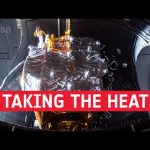
    Juice takes the heat

    ESA’s Jupiter Icy moons Explorer, Juice, has successfully completed rigorous thermal tests simulating the extreme coldness of space and the warmth of the Sun at ESA’s test centre ESTEC, in The Netherlands.

    The spacecraft underwent a month of round-the-clock testing and monitoring in the Large Space Simulator, which recreates the vacuum of space and is able to simulate both hot and cold space environments. The spacecraft was subjected to temperatures ranging from 250 degrees to minus 180 degrees Celsius, showing that it can survive its journey in space.

    Juice will launch in 2022 to our Solar System’s largest planet. It will spend over four years studying Jupiter’s atmosphere, magnetosphere and its icy moons Europa, Callisto and Ganymede, investigating whether the moons’ subsurface oceans are habitable for life.

    Learn more about Juice: https://bit.ly/JuiceESAScience

    ★ Subscribe: http://bit.ly/ESAsubscribe and click twice on the bell button to receive our notifications.

    Check out our full video catalog: http://bit.ly/SpaceInVideos
    Follow us on Twitter: http://bit.ly/ESAonTwitter
    On Facebook: http://bit.ly/ESAonFacebook
    On Instagram: http://bit.ly/ESAonInstagram
    On Flickr: http://bit.ly/ESAonFlickr

    We are Europe’s gateway to space. Our mission is to shape the development of Europe’s space capability and ensure that investment in space continues to deliver benefits to the citizens of Europe and the world. Check out https://www.esa.int/ to get up to speed on everything space related.

    Copyright information about our videos is available here: https://www.esa.int/ESA_Multimedia/Terms_and_Conditions

    #ESA
    #JuiceMission
    #InTheCleanRoom

  • The Next Commercial Crew Test Flight to the Space Station on This Week @NASA – July 30, 2021

    The Next Commercial Crew Test Flight to the Space Station on This Week @NASA – July 30, 2021

    The next commercial crew test flight to the space station, a new space station module, and another astronomical discovery by Hubble … a few of the stories to tell you about – This Week at NASA!

    https://images.nasa.gov/details-The%20Next%20Commercial%20Crew%20Test%20Flight%20to%20the%20Space%20Station%20on%20This%20Week%20@NASA%20–%20July%2030,%202021

    Producer Credit: Andre Valentine
    Editor: Sonnet Apple
    Music: Universal Production Music/”Another Way of Winning”

    Contents:

    0:00 Introduction
    0:13 Next Commercial Crew Mission to Space Station
    0:43 Arrival of New Space Station Module
    1:25 First Evidence of Water Vapor at Jupiter’s Moon Ganymede
    1:52 Tropical Rainforest Vulnerability Index
    2:22 NASA Announces Winners of Future of Flight Challenge
    2:58 50th Anniversary of Apollo 15

  • Earth from Space: Malé, the Maldives

    Earth from Space: Malé, the Maldives

    The Copernicus Sentinel-2 takes us over Malé, the capital and most populous city in the Republic of Maldives, in this edition of the Earth from Space programme.

    Download the image: https://www.esa.int/ESA_Multimedia/Images/2021/07/Male_the_Maldives

    ★ Subscribe: http://bit.ly/ESAsubscribe and click twice on the bell button to receive our notifications.

    Check out our full video catalog: http://bit.ly/SpaceInVideos
    Follow us on Twitter: http://bit.ly/ESAonTwitter
    On Facebook: http://bit.ly/ESAonFacebook
    On Instagram: http://bit.ly/ESAonInstagram
    On Flickr: http://bit.ly/ESAonFlickr

    We are Europe’s gateway to space. Our mission is to shape the development of Europe’s space capability and ensure that investment in space continues to deliver benefits to the citizens of Europe and the world. Check out https://www.esa.int/ to get up to speed on everything space related.

    Copyright information about our videos is available here: https://www.esa.int/ESA_Multimedia/Terms_and_Conditions

    #ESA
    #EarthFromSpace
    #Malé

  • NASA Science Live: How to Become a NASA Intern

    NASA Science Live: How to Become a NASA Intern

    Have you ever wondered what it would be like to work at NASA? Across the country, NASA interns from high school to graduate students are using their creativity and innovation to work on real NASA missions. Join us on Thursday, July 29th at 3:00 p.m. ET for National Intern Day, where you will hear from our very own interns on how you can join the NASA family. Send in your questions using #askNASA.

    Elio Morillo is the host for this episode and a Mars 2020 Test and Operations Engineer at NASA’s Jet Propulsion Laboratory. Elio started his NASA journey as an intern working on the System Testbed for Mars 2020. After he completed his master degree, he accepted a full time position. He says his favorite part about working for NASA is being able to showcase the amazing work his team is doing on Mars and inspiring future generations to pursue a career in STEM. In his spare time, he mentors students and participates in STEM outreach programs. He also loves exploring the culinary scene in Los Angeles, Latin dancing, surfing, and hiking!

    Annalise Giuliani is a NASA Internship Program Coordinator at Johnson Space Center. Annalise began her NASA journey as an intern in 2016. Shortly after graduating from college, she packed her bags and moved to California where she worked as the Multimedia Coordinator at Armstrong Flight Research Center. Several short years later, she moved to Houston, Texas to work as an Internship Coordinator at Johnson Space Center. She says her favorite part about working at NASA is working alongside individuals who come from such diverse backgrounds and professions. In her spare time she enjoys traveling, photography, and spending time with her friends, family, and her yellow lab, Gracie!

    Albert Kodua is a NASA Student Airborne Research Program Intern at Armstrong Flight Research Center studying California wildfires using NASA satellite imagery. Albert’s favorite part about interning at NASA is the sense of community. He says it’s really nice to have a built-in network of people who want him to succeed and grow. Albert is currently going into his senior year as a Materials Science and Engineering major at Virginia Tech and is the Launch and Early Operations sub-team lead of one of Virginia Tech’s premier rocketry design teams, the Orbital Launch Vehicle Team.

    Maria Pena is a remote summer intern at Armstrong Flight Research Center. There, she is working on developing object detection for autonomous Unmanned Aircraft Systems obstacle avoidance. Her favorite part about being an intern are the various NASA intern events. In her spare time, she likes to take portraits and nature photographs. One piece of advice she’d like to share for anyone wanting to become an intern is to always try. Never limit yourself, and push past your comfort zone.