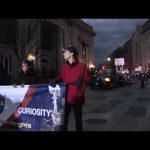
Video of full-size models of the Curiosity Mars rover and Orion, the multi-purpose capsule that will take our astronauts farther into space than ever, as they appeared in the Washington, D.C. parade on Jan. 21. Accompanying the vehicles were members of the Curiosity team from NASA’s Jet Propulsion Laboratory, and current and former astronauts Alvin Drew, Serena Aunon, Kate Rubins, Mike Massimino, Lee Morin and Kjell Lindgren, as well as Leland Melvin, NASA’s associate administrator for Education, and John Grunsfeld, NASA’s associate administrator for Science.
Category: Astronomie
-

NASA Star Party Helps Celebrate Inauguration
Video of a NASA star gazing “party” at the David M. Brown Planetarium in Arlington, Va. on Jan. 19. Free and open to the public, the event featured astronomers, astronauts, and other experts answering questions about the night sky. Telescopes were provided; planetarium shows were also held.
-
NASA Preps for Inaugural Parade
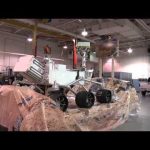
Video of preparations at the Joint Base Anacostia Bolling in Washington, D.C. on Jan. 19 for the two NASA floats scheduled to appear in Monday’s Presidential Inaugural Parade. The floats will feature full-scale models of NASA’s Orion, the multi-purpose capsule that will take our astronauts farther into space than ever, and the Curiosity rover now on Mars.
-
Inauguration Weekend on This Week @NASA
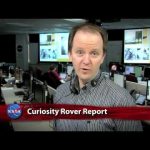
Two Open Houses at Headquarters in Washington kicked off NASA’s participation in the city’s Presidential Inaugural activities. Public visitors to the James Webb Auditorium could hear from Administrator Charles Bolden, Deputy Administrator Lori Garver and other agency officials about NASA’s current and future plans, programs and missions. Also, Bigelow’s BEAM; ESA and Orion; Curiosity Update; Robotic Refueling; Next ISS Mission; Monitoring Air Quality; Draper Medal Winner; and more!
-
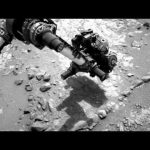
NASA’s Mars Curiosity Rover Report – January 18, 2013
A NASA Mars Curiosity rover team member gives an update on developments and status of the planetary exploration mission. The Mars Science Laboratory spacecraft delivered Curiosity to its target area on Mars at 1:31:45 a.m. EDT on Aug. 6, 2012 which includes the 13.8 minutes needed for confirmation of the touchdown to be radioed to Earth at the speed of light. The rover will conduct a nearly two-year prime mission to investigate whether the Gale Crater region of Mars ever offered conditions favorable for microbial life.
Curiosity carries 10 science instruments with a total mass 15 times as large as the science payloads on NASA’s Mars rovers Spirit and Opportunity. Some of the tools, such as a laser-firing instrument for checking rocks’ elemental composition from a distance, are the first of their kind on Mars. Curiosity will use a drill and scoop, which are located at the end of its robotic arm, to gather soil and powdered samples of rock interiors, then sieve and parcel out these samples into the rover’s analytical laboratory instruments.
-
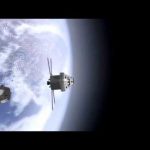
NASA, ESA Agree on New Orion Service Module
This animation shows NASA’s Orion spacecraft as it will appear on its Exploration Mission-1 in 2017, complete with a service module to be provided by the European Space Agency. After Orion blasts off atop a Space Launch System rocket, the ESA-provided service module will fuel and propel the capsule on its journey through space. Exploration Mission-1 in 2017 will be the first mission to incorporate both the Orion vehicle and NASA’s new Space Launch System. It will follow the upcoming Exploration Flight Test-1 in 2014, in which an uncrewed Orion will launch atop a Delta IV Heavy rocket and fly 3,600 miles above Earth’s surface, farther than a human spacecraft has gone in 40 years.
-
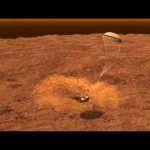
The Huygens experience
A new rendering of Huygens descent and touchdown created using real data recorded by the probe’s instruments as it descended to the surface of Titan, Saturn’s largest moon, on 14 January 2005.
The animation takes into account Titan’s atmospheric conditions, including the Sun and wind direction, the behaviour of the parachute (with some artistic interpretation only on the movement of the ropes after touchdown), and the dynamics of the landing itself. Even the stones immediately facing Huygens were rendered to match the photograph of the landing site returned from the probe, which is revealed at the end of the animation.
Split into four sequences, the animation first shows a wide-angle view of the descent and landing followed by two close-ups of the touchdown from different angles, and finally a simulated view from Huygens itself — the true Huygens experience.
This animation was released on the eighth anniversary of Huygen’s touchdown on Titan as a Space Science Image of the Week feature.Animation: ESA–C. Carreau/Schröder, Karkoschka et al (2012). Image from Titan’s surface: ESA/NASA/JPL/University of Arizona
-
ESA – Space to Relax / Earth & Mars: 2 Planets, 1 Blueprint
Watch landscapes easily blend from one world to the other in this gallery of Earth and Mars images taken from space.
Images: ESA/DLR/FU Berlin
Music: Crystals licensed by Ambient Music Garden. -
NASA’s Mars Curiosity Rover Report #18 — December 21, 2012
A NASA’s Mars Curiosity rover team member gives an update on developments and status of the planetary exploration mission. The Mars Science Laboratory spacecraft delivered Curiosity to its target area on Mars at 1:31:45 a.m. EDT on Aug. 6, which includes the 13.8 minutes needed for confirmation of the touchdown to be radioed to Earth at the speed of light. The rover will conduct a nearly two-year prime mission to investigate whether the Gale Crater region of Mars ever offered conditions favorable for microbial life.
-
Happy Holidays, NASA TV Style!
Our wish for a happy holiday season, and a healthy and prosperous 2013!
-
ESA Euronews: Volare in assenza di gravità
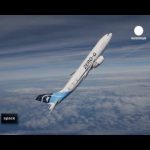
In questa puntata viviamo l’esperienza del volo parabolico, ossia in assenza di gravità. Un normale aereo di linea segue una curva a campana, in orbita all’interno dell’atmosfera. Nel punto massimo della curva parabolica si comincia a fluttuare in assenza di forza gravitazionale, come se si fosse nello spazio. Abbiamo seguito un gruppo di ricercatori, francesi e tedeschi, decollati dall’aeroporto di Bordeaux a bordo dello Zero G della società Novespace.
Tra gli scienziati decollati da Bordeaux, quelli dell’università dello sport di Colonia, desiderosi di studiare il funzionamento del cervello, per capire se la redistribuzione del volume del sangue possa avere un impatto negativo sull’attività della corteccia cerebrale.
Una squadra di ricercatori di Monaco di Baviera osserva invece le posizioni che assume il corpo umano quando non è sotto l’influenza della gravità. Il team di ricercatori francesi esamina il trasferimento del calore nei liquidi in ebollizione. Novespace effettua diversi voli parabolici all’anno per clienti come l’Agenzia Spaziale Europea. Non ci sono solo i voli in assenza di gravità, ma anche quelli che riproducono la gravità di altri pianeti.
-

ESA Euronews: Voos parabólicos: no Espaço por alguns segundos
Os voos parabólicos são uma das melhores maneiras de simular o ambiente espacial. Os passageiros são cientistas que estudam a microgravidade.
Para estarem a bordo do avião Novespace ZERO-G, os investigadores tiveram de provar que as suas experiências são cientificamente sólidas e que passar por rigorosos controlos de segurança.
Os passageiros de um voo parabólico têm 22 segundos para girar, sem as amarras da gravidade.
-
ESA Euronews: Bienvenido a la ingravidez
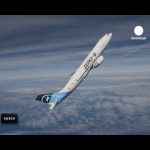
Es un avión de pasajeros convencional y se llama Flying Zero-G. Pero realiza
vuelos parabólicos para conseguir durante unos pocos segundos la ingravidez.
Un breve espacio de tiempo que los científicos aprovechan para hacer sus
experimentos.Tienen tres oportunidades. Tres vuelos en cada uno de los cuales el avión traza 31 parábolas para simular que se está en el espacio. Y ése es el momento para hacer experimentos con nuestro cuerpo o para ver cómo quedan patas arriba las leyes de la física.
-
ESA Euronews: Zero-G fliegen
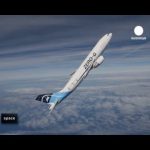
Für wenige Sekunden fühlt man sich wie im Weltall: Bei einem Parabelflug ist man für 22 Sekunden von der Schwerkraft befreit. Als Flugzeug genügt eine normale Verkehrsmaschine. Flügel, Rumpf und Triebwerke brauchen nicht verändert werden.
Die Flugbahn ist eine glockenförmige Kurve. Die Maschine wird sozusagen in die Luft geworfen. Nach einem Steigflug von 40 Grad geht die Maschine in etwa 6000 m Höhe in den Sinkflug über. Es ist der magische Moment: Wenn die Passagiere in null g schweben, berühren Sie weder Wände noch Boden. Sie sind von der Schwerkraft befreit wie im Space Shuttle oder in der Internationalen Raumstation.
Der Parabelflug ist eines der besten Mittel, um die Verhältnisse im All zu simulieren. Wissenschaftler mit ganz verschiedenen Interessen nehmen daran teil. Das Flugzeug ist für sie ein fliegendes Versuchslabor. Die Crew wird mit ihnen 31 Parabeln fliegen – also die Forscher und ihre Versuchspersonen und Apparaturen 31 mal in die Schwerelosigkeit versetzen.
-
ESA Euronews: Flying Zero-G
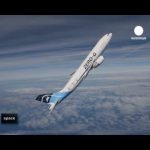
If you fly a plane in the right way at the right speed, you can be weightless for a few seconds. By throwing the aircraft into an orbit-like path within Earth’s atmosphere, you can enter the wonderful world of weightlessness.
It is one of the best ways to simulate the environment of space, and a valuable experimental tool for scientists with a special interest in microgravity. If they want to find out how the brain works, study the natural posture of humans in space, or how water boils in a weightless environment, this is the way to do it.
Take a journey into a free-floating world of the parabola in this edition of Space. -

NASA Seeks to Debunk Doomsday Prophecy
As 2012 draws to a close, many websites, books and cable
television shows are erroneously predicting the end of the world. These claims range from fears that a rogue planet is heading toward Earth, to solar flares torching our planet. David Morrison, a senior scientist and astrobiologist at NASA’s Ames Research Center is working to inform the public that each of the claims are false and there is no reason that December 21, 2012 will be different from any other day on Earth. -
“NASA Johnson Style” (“Gangnam Style” Parody)
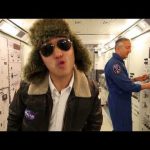
NASA astronauts and scientists are among those in this educational parody of Psy’s popular music video. “NASA Johnson Style” was created, written and produced by the Houston center’s co-op students who volunteered for the project ” to inform the public about the amazing work going on at NASA and the Johnson Space Center.”
“NASA Johnson Style” lyrics:
NASA Johnson Style
Johnson StyleWelcome to NASA’s Johnson Space Center
We are coming in hot so don’t burn up as we enter
We do science everyday that affects your daily life
Throw them up for manned space flightScience everywhere
As we engineer the marvels
That fly though the air
And take us way beyond earth’s levelsScience everywhere
Because we engineer the marvels
That fly though the air
Flys us through the airControl the mission out of Johnson
This is ground, hey!
And this is space, hey!
Tell me Houston what’s the problem
It’s okay!
It’s okay!
Because there’s flight controllers on the job todayNASA Johnson STYLE!
Johnson STYLE!
NA, NA, NA, NA NASA Johnson STYLE!
Johnson STYLE!
NA, NA, NA, NA NASA Johnson STYLE!
EYYYYYY science daily!
NA, NA, NA, NA, NASA STYLE!
EYYYYYY it’s amazing!
NA, NA, NA, NA ey ey ey ey ey ey!!
Orbiting earth, international space station
Where we work and live in space with a crew from several nations
Got Japanese, and Russians, that European charm
Throw them up, like the Canada ArmKicking out research
29k cubic feet, revolves around the earth
Science microgravity, revolves around the earth
Columbus, JEM, and Destiny
Kicking out research
Kicking out researchTrain the astronauts at Johnson
To go to space, hey!
To go to space, hey!
Cause the missions of tomorrow
Start today, hey!
Start today, hey!
As we engineer the future day by dayNASA Johnson STYLE!
Johnson STYLE!
NA, NA, NA, NA NASA Johnson STYLE!
Johnson STYLE!
NA, NA, NA, NA NASA Johnson STYLE!
EYYYYYY science daily!
NA, NA, NA, NA, NASA STYLE!
EYYYYYY it’s amazing!
NA, NA, NA, NA ey ey ey ey ey ey!!Orion or SLS, MPCV
We cannot feel the floor, cause the lack gravity
The destinations are an asteroid, mars, or moon
We are blasting off start the countdown soon
[Sound clip: launch countdown]EYYYYYY science daily!
NA, NA, NA, NA, NASA STYLE!
EYYYYYY it’s amazing!
NA, NA, NA, NA ey ey ey ey ey ey!!
NASA Johnson StyleSpecial thanks to astronauts Tracy Caldwell Dyson, Mike Massimino and Clay Anderson
Special thanks to Mr. Mike Coats, Dr. Ellen Ochoa, and all supporting senior staff members• Category
Science & Technology
• License
Standard YouTube License -

ESA 2012 Highlights
2012 has been a very busy and fruitful year for ESA.
In particular it will remain as a historical year for European launchers since it saw the successful qualification flight of the new Vega from Kourou and the birth of Ariane 6 which was decided at the Ministerial Council in Napoli last November.
This video proposes to look back at 2012 with an overview of ESA missions and events.
-
Countdown to Launch on This Week @NASA
With their launch from Kazakhstan to the International Space Station fast approaching, Expedition 34/35 Soyuz Commander Roman Romanenko, Flight Engineer Tom Marshburn of NASA and Flight Engineer Chris Hadfield of the Canadian Space Agency continue to train and finalize plans for the December 19 flight. Also, Orion taking shape; Mars field trip: GRAIL’s impact; FASTSat’s finale; “Big Wind”; rocket holiday; and more!
-
ESA astronauts training for ISS
ESA astronauts training for International Space Station
ESA’s human spaceflight programme is gaining experience with long-duration missions on the International Space Station.
A new generation of European astronauts will conduct scientific experiments and enjoy orbiting Earth in 2013 and 2014.
ESA astronaut Luca Parmitano will fly from Baikonur, Russia, next May for six months, followed by ESA astronauts Alexander Gerst and Samantha Cristoforetti in 2014.
This video shows them training at the Johnson Space Centre in Houston, USA
and Star City in Moscow, Russia.More information can be found on: http://www.esa.int/Our_Activities/Human_Spaceflight
-
NASA’s Mars Curiosity Rover Report #17 — December 7, 2012
A NASA’s Mars Curiosity rover team member gives an update on developments and status of the planetary exploration mission. The Mars Science Laboratory spacecraft delivered Curiosity to its target area on Mars at 1:31:45 a.m. EDT on Aug. 6, which includes the 13.8 minutes needed for confirmation of the touchdown to be radioed to Earth at the speed of light. The rover will conduct a nearly two-year prime mission to investigate whether the Gale Crater region of Mars ever offered conditions favorable for microbial life.
-
NASA National Native American Heritage Month Profile — Kody Ensley
Kody Ensley works at Johnson Space Center as a software engineer for the Robotics Systems Technology Branch of NASA’s Software, Robotics, and Simulation Division. He works to develop software for Robonaut 2, the humanoid robot currently residing aboard the International Space Station. Ensley is a graduate of Salish Kootenai College in Pablo Montana, where he completed a four-year pilot program in computer engineering for Native American students, which was established through coordination with JSC employees. Ensley completed two internships at JSC and held a co-op position before being hired by the Robotics Systems Technology Branch in July 2012.
-

NASA’s Mars Curiosity Rover Report #16 — November 29, 2012
A NASA’s Mars Curiosity rover team member gives an update on developments and status of the planetary exploration mission. The Mars Science Laboratory spacecraft delivered Curiosity to its target area on Mars at 1:31:45 a.m. EDT on Aug. 6, which includes the 13.8 minutes needed for confirmation of the touchdown to be radioed to Earth at the speed of light. The rover will conduct a nearly two-year prime mission to investigate whether the Gale Crater region of Mars ever offered conditions favorable for microbial life.
-
Earth from Space: Special edition
Discover more about our planet with the Earth from Space video programme. In this special edition, Andrew Shepherd from the University of Leeds and Erik Ivins from NASA’s Jet Propulsion Laboratory join the show to discuss our planet’s polar ice sheets.
Their new research shows that melting of the Antarctic and Greenland ice sheets has contributed 11.1 millimetres to global sea levels since 1992.
For more information, see article Clearest evidence yet of polar ice losses at http://www.esa.int/esaEO/SEMFN0EQZ9H_index_0.html
-

Beyond 2012: Google+ Hangout with NASA
Stories about the fictional planet Nibiru and predictions of the end of the world in December 2012 have blossomed on the Internet. Contrary to some of the common beliefs out there, Dec. 21, 2012 won’t be the end of the world as we know, however, it will be another winter solstice.
Social media users joined NASA and other scientists for a lively discussion at 2:00 p.m. EST on Wednesday, November 28, 2012 to discuss the 2012 rumors propagated across the internet. We had a great panel of experts on hand including:
– David Morrison, astrobiologist from NASA’s Ames Research Center
– Don Yeomans, asteroid scientist from NASA’s Jet Propulsion Laboratory
– Mitzi Adams, solar/archaeoastronomer from NASA’s Marshall Space Flight Center
– Lika Guhathakurta, heliophysicist from NASA Headquarters
– Paul Hertz, astrophysicist from NASA Headquarters
– Andrew Fraknoi, science educator from Foothill College in Los Altos Hills, Calif.Find out more about these rumors at http://www.nasa.gov/2012
-

Shatner Gives Shout Out to NASA Spinoffs
Actor William Shatner, who portrayed “Star Trek’s” Captain James Kirk on TV and in film, hosts a video highlighting how NASA’s outstanding accomplishments in space are used to improve life on Earth.
June Lockhart and Wil Wheaton, who also gained celebrity portraying space explorers, also host videos about how much of the technology we rely on daily was developed by NASA for space exploration and then adapted or enhanced for use here on Earth. This includes many technologies used in schools, homes, cars, computers and American industry. -

Wheaton Steps Up for NASA Spinoffs
Wil Wheaton, the actor who played Wesley Crusher on “Star Trek: The Next Generation,” is host of a new public service announcement about how much of the technology we rely on daily was developed by NASA for space exploration and then adapted or enhanced for use here on Earth.
Similar PSAs are hosted by William Shatner and June Lockhart, both of whom also portrayed space explorers on TV and the silver screen. Wheaton, who also has a large social media following, explains how many of these technologies have found their way into our schools, homes, cars, computers and American industry. -

NASA National Native American Heritage Month Profile — Raquel Redhouse
Raquel Redhouse is a mechanical engineer working in the Systems Definition & Communications Branch at NASA’s Glenn Research Center. She supports the Multi-Purpose Crew Vehicle (MPCV) Program Requirements Management Office (RMO). The RMO is responsible for the development, maintenance, and tracking of the Orion system and interface requirements. She is an active member of Glenn’s Advisory Group for Native Americans and the President of the local Lake Erie Professional Chapter of the American Indian Science & Engineering Society (AISES).
-
NASA App Puts Universe at Your Fingertips
Are you on the go with your Smart Phone or Tablet? Want to know more about what’s happening at NASA and how it affects you? Then make sure you update or install the latest NASA App from Google Play or the Apple App store to your mobile device because there’s more “Space” in your life than you know. Get the NASA App at the App store and Android Market today.
-

ESA Euronews: Industria espacial: ante la crisis, mayor innovación
La crisis económica y financiera que atraviesan la mayoría de los países europeos amenaza la inversión en algunos sectores estratégicos. El sector espacial responde a este escenario de fuertes turbulencias con el desarrollo de nuevas aplicaciones últiles para la vida cotidiana.
-
ESA Euronews: Die Raumfahrt-Industrie
Die meisten europäischen Länder stecken in einer Wirtschafts- und Finanzkrise, die verschiedene Industriebranchen bedroht.Wie ist es in dieser Situation um die Raumfahrtbranche bestellt? Welche Zukunftsperspektiven hat sie? Einige Antworten auf diese Fragen in dieser Ausgabe von Space
-
Departing Space Station Commander Provides Tour of Orbital Laboratory
In her final days as Commander of the International Space Station, Sunita Williams of NASA recorded an extensive tour of the orbital laboratory and downlinked the video on Nov. 18, just hours before she, cosmonaut Yuri Malenchenko and Flight Engineer Aki Hoshide of the Japan Aerospace Exploration Agency departed in their Soyuz TMA-05M spacecraft for a landing on the steppe of Kazakhstan. The tour includes scenes of each of the station’s modules and research facilities with a running narrative by Williams of the work that has taken place and which is ongoing aboard the orbital outpost.
-
A day in the life…Our Young Graduate Trainees share their work experience
ESA Young Graduate Trainees of the year 2011/2012 speak about their work experiences at ESA.
-
NASA’s Mars Curiosity Rover Report #15 — November 15, 2012
A NASA’s Mars Curiosity rover team member gives an update on developments and status of the planetary exploration mission. The Mars Science Laboratory spacecraft delivered Curiosity to its target area on Mars at 1:31:45 a.m. EDT on Aug. 6, which includes the 13.8 minutes needed for confirmation of the touchdown to be radioed to Earth at the speed of light. The rover will conduct a nearly two-year prime mission to investigate whether the Gale Crater region of Mars ever offered conditions favorable for microbial life.
-
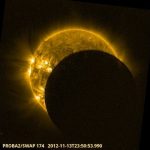
Proba-2 sees three partial solar eclipses
The total solar eclipse of 13-14 November 2012 was only visible to ground-based observers situated in northern Australia, while ESA’s Sun-watching satellite Proba-2 enjoyed three partial eclipses from its viewpoint in space. The constant change in viewing angle of Proba-2 as it orbits the Earth meant that the satellite passed through the Moon’s shadow a total of three times during the eclipse event. The video was produced from images taken by Proba-2’s SWAP imager, which snaps the Sun in ultraviolet light to reveal stormy active regions on the solar disc.
The apparent noise in the movie results from high energy particles hitting Proba-2’s electronics as the spacecraft passes through the South Atlantic Anomaly. The dimming in the movie is an effect as part of the satellite’s orbit passes through the shadow of the Earth.
Read full article here: http://www.esa.int/esaSC/SEMFYC72Q8H_index_0.html
-
NASA’s Marshburn Discusses ISS Mission
Expedition 34/35 Flight Engineer Tom Marshburn is interviewed about his upcoming stay aboard the International Space Station. Marshburn is scheduled to fly aboard a Soyuz spacecraft to the ISS in December and remain in space until May with crewmates Chris Hadfield and Roman Romanenko.
-
NASA’s Mars Curiosity Rover Report #13 — November 1, 2012
A NASA’s Mars Curiosity rover team member gives an update on developments and status of the planetary exploration mission. The Mars Science Laboratory spacecraft delivered Curiosity to its target area on Mars at 1:31:45 a.m. EDT on Aug. 6, which includes the 13.8 minutes needed for confirmation of the touchdown to be radioed to Earth at the speed of light. The rover will conduct a nearly two-year prime mission to investigate whether the Gale Crater region of Mars ever offered conditions favorable for microbial life.
-
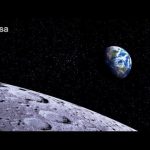
Meet ESA, the space agency for Europe
You, together with your 500 million fellow citizens from ESA’s 20* European member nations, are the collective owners of one of the world’s leading space agencies.
The European Space Agency is an intergovernmental organisation, a cooperative coming together of its Member States in their national interest and common good.
This new video offers a quick introduction: Europe, meet ESA.
(*As of February 2015, 22 Member States)