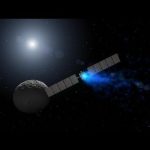
After 11 years of 🌌breathtaking imagery, ⚙️unprecedented feats of engineering & 🛰️spacecraft records broken — it’s nearly time to bid farewell to NASA’s Dawn spacecraft as it comes to the expected end of the mission. Learn about its final orbits at Ceres: https://go.nasa.gov/dawnfinale
Tag: astronomy
-

What If You Fell Into a Black Hole?
What would the outcome be if you took a leap of faith straight into a black hole? We looked to Einstein and Hawking to ponder the scenario.
Say one day you were exploring space looking for a new planet for humans to inhabit, but came across a black hole and decided – why not check it out? Would you have any chance of survival? How would you get out if at all? Would you find a shortcut to another universe? Watch the video to learn about what would happen if you fell into a black hole.
With your support we can make our show better! Join our Patreon community: http://bit.ly/whatif-patreon
Source and more: https://insh.world/science/diving-into-a-black-hole-adventure-or-an-abyss/
Watch more what-if scenarios:
Planet Earth: https://www.youtube.com/watch?v=_-HhCwYD7rc&list=PLZdXRHYAVxTJCzxwmCq0NNpYq9N9wyb2l
The Cosmos: https://www.youtube.com/watch?v=gfuJyVkMH_g&list=PLZdXRHYAVxTJno6oFF9nLGuwXNGYHmE8U
Technology: https://www.youtube.com/watch?v=CS3bBO05fpU&list=PLZdXRHYAVxTIeRY3JtgXgoGqSEB7kDdKO
Your Body: https://www.youtube.com/watch?v=QmXR46TrbA8&list=PLZdXRHYAVxTJNsV9FFeNAKl2ySsHj8GZO
Humanity: https://www.youtube.com/watch?v=fdCDQIyXGnw&list=PLZdXRHYAVxTIFnvmOeWbv-Mt8zFxSCSvZIf you enjoy What If, make sure to check out our other channel ‘Underknown’:
https://www.youtube.com/c/interestingshitAbout What If: Produced by Underknown in Toronto, Canada, What If is a mini-documentary web series that takes you on an epic journey through hypothetical worlds and possibilities. Join us on an imaginary adventure — grounded in scientific theory — through time, space and chance, as we ask what if some of the most fundamental aspects of our existence were different.
Follow what-if on Instagram for bonus material: https://www.instagram.com/what.if.show/
Suggest an episode: http://bit.ly/suggest-whatif
Follow the show on Facebook Watch: https://www.facebook.com/What.If.science“Imagination will often carry us to worlds that never were. But without it, we go nowhere.” — Carl Sagan
-

Where are all the aliens? | Stephen Webb
The universe is incredibly old, astoundingly vast and populated by trillions of planets — so where are all the aliens? Astronomer Stephen Webb has an explanation: we’re alone in the universe. In a mind-expanding talk, he spells out the remarkable barriers a planet would need to clear in order to host an extraterrestrial civilization — and makes a case for the beauty of our potential cosmic loneliness. “The silence of the universe is shouting, ‘We’re the creatures who got lucky,’” Webb says.
Check out more TED Talks: http://www.ted.com
The TED Talks channel features the best talks and performances from the TED Conference, where the world’s leading thinkers and doers give the talk of their lives in 18 minutes (or less). Look for talks on Technology, Entertainment and Design — plus science, business, global issues, the arts and more.
Follow TED on Twitter: http://www.twitter.com/TEDTalks
Like TED on Facebook: https://www.facebook.com/TEDSubscribe to our channel: https://www.youtube.com/TED
-
ESA Euronews: Gaia’s revolution in astronomy
Astronomy is undergoing a revolution with the release of precision data on 1.7 billion stars in our galaxy from the Gaia space telescope. We head to the historic Observatory of Paris and ESA’s ESTEC base in the Netherlands to find out more.
It’s fair to say that science has been waiting for centuries, or even millennia for such a detailed survey of the Milky Way, and right now star-gazers are swamped with fresh, high-quality data that they can use to answer every question about the galaxy they ever wanted to ask.
This video is also available in the following languages:
German: https://youtu.be/I7EHdEnXGi4
French: https://youtu.be/dJRPGaS3VB4
Italian: https://youtu.be/hyOdUHRCDYA
Spanish: https://youtu.be/BCP4xg6sGeY
Portuguese: https://youtu.be/OeBMRQmojXc
Greek: https://youtu.be/Ra0BOhFJ4NU
Hungarian: https://youtu.be/-PYmrCk1iwM★ Subscribe to our channel: http://bit.ly/ESAsubscribe
Learn more: http://bit.ly/GaiaRickestStarMap
-
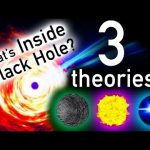
What’s Inside a Black Hole?
What’s inside a black hole? Here are three awesome theories.
Watch “Black Hole Apocalypse” Here: http://www.pbs.org/wgbh/nova/space/black-hole-apocalypse.html
Subscribe: https://www.youtube.com/WhatThePhysics?sub_confirmation=1
Have questions, ask me:
twitter @gkestinHost, Writer, Producer: Greg Kestin
Scientific Consultant: Samir Mathur
Editorial Input from: Julia Cort
Animation: Edgeworx
Animation and Editing: Greg Kestin
Special thanks: Entire NOVA team
From the producers of PBS NOVA © WGBH Educational Foundation
Funding provided by FQXi
Music provided by APM
Sound effects: Freesound.org
-

Black Hole Star Cake
NOVA has teamed up with Cook’s Illustrated to cook up a recipe for stars and black holes – a culinary “course” on how the most mysterious objects in the universe are created.
Watch “Black Hole Apocalypse” Here: http://www.pbs.org/wgbh/nova/space/black-hole-apocalypse.html
Subscribe: https://www.youtube.com/WhatThePhysics?sub_confirmation=1
Have questions, ask me:
twitter @gkestinWriter, Host, Producer: Greg Kestin
Cinematography: Brian Kantor and Ari Daniel
Editorial Input form: Julia Cort
Editor in Chief, Cook’s Illustrated: Dan Souza
Senior Editor, Cook’s Illustrated: Lan Lam
Scientific Consultants: Scott Kenyon
Animation: Edgeworx
Editing and Animation: Greg Kestin
Special thanks: Entire NOVA and Cook’s Illustrated teams
From the producers of PBS NOVA © WGBH Educational Foundation
Funding provided by FQXi
Music provided by APM
-
Stella’s experience as an ESA Young Graduate Trainee
Stella, an astrophysicist from Estonia, shares her experience as a YGT at ESA working with data provided by the Gaia mission’s team to model the movements of stars.
Apply now for new Young Graduate Trainee opportunities:
http://www.esa.int/About_Us/Careers_at_ESA/Apply_now_for_new_Young_Graduate_Trainee_opportunities -
Physics in 6 minutes
Support me at Patreon: https://www.patreon.com/sciencephiletheai
Facebook: https://www.facebook.com/sciencephile/
Twitter: https://twitter.com/Sciencephile_
Music: String Quintet in E Major, Op. 13- Minuet
Supporters: Roman Rys, Shannon McLaughlin, Save the Dinosaurs, Marko Charqueno, Indrek Palmi
-
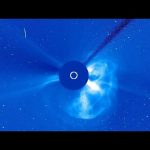
SOHO’s view of September solar flares
The Sun unleashed powerful solar flares on 6 September, one of which was the strongest in over a decade. An X2.2-class flare was launched at 09:10 GMT and an X9.3 flare was observed at 12:02 GMT. An M-class flare was also observed two days earlier on 4 September.
The images were captured by the ESA/NASA Solar and Heliospheric Observatory, SOHO. The flares were launched from a group of sunspots classified as active region 2673.The shaded disc at the centre of the image is a mask in SOHO’s LASCO instrument that blocks out direct sunlight to allow study of the faint details in the Sun’s corona. The white circle added within the disc shows the size and position of the visible Sun.
More about SOHO:
http://www.esa.int/Our_Activities/Space_Science/SOHO_overview2Credit: SOHO (ESA & NASA)
-

How to Build the Universe
Don’t build a universe at home before watching this!
SUBSCRIBE: http://youtube.com/whatthephysics?sub
↓Want more info?↓Scientific notes:
Stellar mass black holes vs. supermassive black holes
* Stellar mass black holes form from the collapse of massive stars at the ends of their lives, so they have roughly the same mass as a star. Supermassive black holes are physically identical to their smaller counterparts, except they are 10 thousand to a billion times the size of the sun. However, their formation is more of a mystery. They may form from the merging of smaller black holes.
http://astronomy.swin.edu.au/cosmos/S/Supermassive+Black+HoleSupermassive black holes at the center of galaxies
* Almost every large galaxy has a supermassive black hole at its center, but researchers are not yet sure (https://jila.colorado.edu/research/astrophysics/black-holes-galaxies) why that’s the case, how they originate, and what their role is in the creation and evolution of galaxies.Why are stars different colors?
* The color of a star depends on its temperature (http://www.atnf.csiro.au/outreach/education/senior/astrophysics/photometry_colour.html). The hotter a star, the higher energy its light will be. Higher energy/temperature corresponds with the blue end of the visible spectrum and lower energy/temperature corresponds with the red end.How does dark matter make stars spin faster?
* In the 1960s, astronomers Vera Rubin and Kent Ford noticed that stars at the edges of galaxies were moving just as fast as stars at the center, which surprised them: it appeared that the force of gravity causing stars to orbit the center of the galaxy was not weakening over distance. Their observation implied that something else, distributed throughout the galaxy, was exerting a gravitation pull. We now know that that “something else,” now named dark matter, accounts for about 85% of the matter in the universe. (It existence was inferred in the 1930s, when the astronomer Fritz Zwicky(http://www2.astro.psu.edu/users/rbc/a1/week_10.html) noticed that galaxies in clusters were moving faster than they should.)Size of the universe
* The universe is only 13.8 billion years old, but has a radius of about 46 billion light-years. If nothing can travel faster than the speed of light, how can that be? The expansion of the universe, driven by dark energy, is causing distances between objects to grow. Note that it is not moving those objects apart; rather, it is increasing the amount of space between them. https://phys.org/news/2015-10-big-universe.htmlCosmic webs
* Galaxies are not distributed randomly (http://skyserver.sdss.org/dr1/en/astro/structures/structures.asp) in space; instead, clusters of galaxies form web-like patterns. These webs consist of filaments, where dark matter and ordinary (baryonic) matter are concentrated, and voids, where galaxies are scarce. Researchers believe that these large-scale structures grew out of minor fluctuations in density at the beginning of the universe.Composition of the early universe
* Moments after the Big Bang, the universe formed the nuclei for what would be come the universe’s hydrogen and helium atoms, with one helium nucleus for every 10 or 11 hydrogen (http://umich.edu/~gs265/bigbang.htm). When the first stars formed, there were no heavier elements — those elements formed inside stars.String Theory Landscape
* The String Theory Landscape is a theory that the universe we live in is one of many universes. It attempts to explain how certain constants of nature seem “fine-tuned” for life, which contradicts the anthropic principle, or the notion that we humans hold a special place in the universe. https://www.scientificamerican.com/article/multiverse-the-case-for-parallel-universe/%0ADisintegration of the universe
* In the future Degenerate Era of the universe, as space-time expands and stars burn up, all of the matter in stars will be consumed by black holes. But even black holes are not forever. Stephen Hawking theorized that black holes will slowly radiate away their mass in what is now called Hawking radiation until they too dissipate away. http://www.nytimes.com/books/first/a/adams-universe.html
______
MEDIA CREDITS:
Music provided by APM
Sound effects: Freesound.org
Additional Animations:
– Galaxy within Universe: Edgeworx;
– Stars at center of Milky Way – NASA/NCSA University of Illinois Visualization by Frank Summers, Space Telescope Science Institute, Simulation by Martin White and Lars Hernquist, Harvard UniversityFrom the producers of PBS NOVA
© WGBH Educational Foundation
Funding provided by FQXi -

Unboxing the Universe
What if everything in the universe came to your doorstep…in a box?! What The Physics is BACK! Future episodes will explore the universe—but first, let’s unbox it.
Subscribe: http://youtube.com/whatthephysics?sub…
↓Want more info?↓SCIENTIFIC NOTES:
Explosive young stars
* The average lifetime of a star is about 10 billion years, but the bigger the star, the shorter its life. One rare type of star, called a hypergiant, can be tens, hundreds, or even a thousand times the mass of our sun. These stars burn out and explode into supernovae in just a few million years.
http://www.guide-to-the-universe.com/hypergiant-star.htmlBlack holes
* Black holes form from the collapse of a massive star at the end of its life, but this only happens in stars about three times as massive as the sun. http://burro.case.edu/Academics/Astr201/EndofSun.pdfHow big is the universe?
* Probably infinite. No one knows the size of the universe for sure, and we may never know, but the latest thinking is that it probably goes on forever. https://map.gsfc.nasa.gov/universe/uni_shape.htmlStandard cosmological model
* According to the standard cosmological model, the universe started with a big bang, underwent rapid inflation within the first fraction of a second, and continues to expand, driven by a vacuum energy called dark energy. All of the structure we see in the universe has come from interactions between dark energy and dark matter (which accounts for about 85% of the universe’s matter). This model describes and predicts many phenomena in the universe but is not perfect. https://physics.aps.org/articles/v8/108False vacuum model
* The false vacuum model is a real, albeit unlikely theory. All the fundamental forces of nature have corresponding fields (e.g., gravitational fields, magnetic fields, etc.), and we generally believe that the universe is at rest in a global minimum of the potentials of those fields. But if we are instead at rest in a local minimum, or a “false vacuum,” the universe could potentially be nudged, catastrophically, into a lower minimum.Recycling stars into life
* Before the first stars, the universe was all hydrogen and helium. All heavier elements, including the building blocks of life, were forged in stars.Dark matter and dark energy
* Only 5% of the universe is made up of matter we can see. The “missing mass” later dubbed dark matter was first noticed in the 1930s; dark energy was discovered in the 1990s. In both cases, their existence was inferred by their effect on objects they interact with. However, they are still not directly observable, so nobody knows yet what they are made of.Leftover light from the Big Bang
* The theory of the Big Bang predicted the existence of cool radiation pervading the universe, left over from its beginning. In an accidental discovery, two New Jersey scientists discovered the cosmic microwave background, a nearly uniform bath of radiation throughout the universe at a temperature of about 3 Kelvin, or -454 degrees Fahrenheit.Gravitational waves
* Albert Einstein predicted the existence of gravitational waves in his theory of general relativity in 1916. According to his theory, the acceleration of massive objects, like black holes, should send ripples through space-time at the speed of light. A century after his prediction, two merging black holes sent a ripple through space-time that was detected on Earth as a signal that stretched the 4-kilometer arms of a detector by less than 1/1,000 the width of a proton.Cosmic dust
* Cosmic dust is cast off from stars at the end of their lives and hovers in galaxies as clouds. These clouds of dust absorb ultraviolet and visible light, obscuring much of what lies behind them. This makes it notoriously difficult to study things like the dusty center of our galaxy.Fermi bubbles
* Enormous bubbles of gamma rays protruding above and below the center of the galaxy, roughly along its axis of rotation. http://www.skyandtelescope.com/astronomy-resources/understanding-fermi-bubbles/The observable universe
* The universe is 13.8 billion years old. Since the distance we can observe is limited by the time it takes light to travel to Earth, we can only ever observe a fraction of the universe: an expanding sphere around us that is now about 46 billion years in radius. However, the universe is much larger than what we can observe.CREDITS:
Host, Writer, Producer: Greg Kestin
Animation & Compositing: Danielle Gustitus
Contributing Writers: Lissy Herman, HCSUCS
Filming, Writing, & Editing Contributions from:
Samia Bouzid and David GoodliffeCreation of Sad Star Image: Drew Ganon
Special thanks:
Julia Cort
Lauren Aguirre
Ari Daniel
Anna Rothschild
Allison Eck
Fernando Becerra
And the entire NOVA teamFrom the producers of PBS NOVA
© WGBH Educational FoundationFunding provided by FQXi
Music provided by APM
Sound effects: Freesound.org
Images: Big Bang – NASA
Additional Animations: Edgeworx -
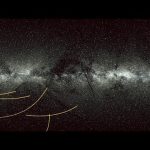
Catching speeding stars
This video reveals the evolution of stars in our Galaxy over the past million of years.
It starts from the positions of stars in the sky 1 035 000 years ago, which were calculated using data from the Tycho-Gaia Astrometric Solution, or TGAS, one of the products of the first Gaia data release. The video follows the evolution of stellar positions until the present day, ending with a view of the sky as measured by Gaia between 2014 and 2015.
Highlighted in yellow are the trajectories of six special stars: these are hypervelocity stars, moving through the Galaxy at several hundred of km/s. While it might not be apparent from the video, which shows the motions of stars as projected on the sky, they are moving through space much faster than the galactic average.
Scientists spotted these speeding stars from the TGAS data set of two million stars with the help of an artificial neural network – software that mimics a human brain – and they are looking forward to finding many more in future Gaia data releases.
These stars owe their high speeds to past interactions with the supermassive black hole that sits at the centre of the Milky Way and, with a mass of four million Suns, governs the orbits of stars in its vicinity. Having travelled great distances through the Galaxy, they provide crucial information about the gravitational field of the Milky Way from the centre to its outskirts.
One of the six stars (labelled 1 at the end of the video) seems to be speeding so fast, at over 500 km/s, that it is no longer bound by the gravity of the Galaxy and will eventually leave. The other five stars are somewhat slower (over 400 km/s for the stars labelled 2, 3, 4 and 6, and 360 km/s for the star labelled 5) and are still bound to the Galaxy.
These slightly slower stars are perhaps even more fascinating, as scientists are eager to learn what slowed them down – the invisible dark matter that is thought to pervade the Milky Way might also have played a role.
The stars are plotted in Galactic coordinates and using a rectangular projection: in this, the plane of the Milky Way stands out as the horizontal band with greater density of stars. The stripes visible in the final frames reflect the way Gaia scans the sky and the preliminary nature of the first data release; these artefacts are gradually washed out in the video as stars move across the sky.
Read more on our website:
Artificial brain helps Gaia catch speeding stars –
http://www.esa.int/Our_Activities/Space_Science/Gaia/Artificial_brain_helps_Gaia_catch_speeding_starsMore about Gaia:
http://sci.esa.int/gaia/Credit: ESA/Gaia/DPAC CC BY-SA 3.0 IGO: https://creativecommons.org/licenses/by-sa/3.0/igo/
-
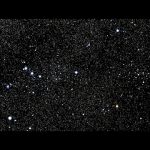
The future of the Orion constellation
This video reveals how our view of the Orion constellation will evolve over the next 450 000 years.
Amid a myriad of drifting stars, the shape of Orion as defined by its brightest stars is slowly rearranged into a new pattern as time goes by.
The portion of the sky depicted in the video measures 40 x 20º – as a comparison, the diameter of the full Moon in the sky is about half a degree.
The video is based on data from ESA’s Gaia and Hipparcos satellites, as well as additional information from ground-based observations.
A speeded-up version of the video is available here: http://sci.esa.int/gaia/59209
Full story: The future of the Orion constellation http://www.esa.int/Our_Activities/Space_Science/Gaia/The_future_of_the_Orion_constellation
The evolution of two million stellar positions on the entire sky is shown here: https://www.youtube.com/watch?v=87lgSRVUSxM
Copyright: ESA/Gaia/DPAC CC BY-SA 3.0 IGO: https://creativecommons.org/licenses/by-sa/3.0/igo/
-

Paxi – Päivä, yö ja vuodenajat
(Finnish) Join Paxi as he explores why we have day and night, and learn why the Earth has seasons.
-

Paxi – El día, la noche y las estaciones
Descubre con Paxi por qué existe el día y la noche y por qué la Tierra tiene estaciones.
-

Paxi – Dagen, natten og årstiderne
(Danish) Join Paxi as he explores why we have day and night, and learn why the Earth has seasons.
-

Paxi – Tag, Nacht und die Jahreszeiten
(German) Join Paxi as he explores why we have day and night, and learn why the Earth has seasons.
-

Paxi – Le jour, la nuit et les saisons
(French) Join Paxi as he explores why we have day and night, and learn why the Earth has seasons.
-

Paxi – Il giorno, la notte e le stagioni
(Italian) Join Paxi as he explores why we have day and night, and learn why the Earth has seasons.
-

Paxi – Dag, nacht en de seizoenen
(Dutch) Join Paxi as he explores why we have day and night, and learn why the Earth has seasons.
-

Paxi – Dag, natt, og årstidene
(Norwegian) Join Paxi as he explores why we have day and night, and learn why the Earth has seasons.
-

Paxi – O Dia, a noite e as estações do ano
(Portuguese) Join Paxi as he explores why we have day and night, and learn why the Earth has seasons.
-

Paxi – Dag, natt och årstiderna
(Swedish) Join Paxi as he explores why we have day and night, and learn why the Earth has seasons.
-

The motion of two million stars
This video reveals the changing face of our Galaxy, tracing the motion of two million stars five million years into the future using data from the Tycho-Gaia Astrometric Solution, one of the products of the first Gaia data release. This provides a preview of the stellar motions that will be revealed in Gaia’s future data releases, which will enable scientists to investigate the formation history of our Galaxy.
The stars are plotted in Galactic coordinates and using a rectangular projection: in this, the plane of the Milky Way stands out as the horizontal band with greater density of stars.
The video starts from the positions of stars as measured by Gaia between 2014 and 2015, and shows how these positions are expected to evolve. The frames in the video are separated by 750 years, and the overall sequence covers five million years. The stripes visible in the early frames reflect the way Gaia scans the sky and the preliminary nature of the first data release; these artefacts are gradually washed out in the video as stars move across the sky.
The shape of the Orion constellation can be spotted towards the right edge of the frame, just below the Galactic Plane, at the beginning of the video. As the sequence proceeds, the familiar shape of this constellation (and others) evolves into a new pattern. Two stellar clusters – groups of stars that were born together and consequently move together – can be seen towards the left edge of the frame: these are the alpha Persei (Per OB3) and Pleiades open clusters.
More about this video:
http://sci.esa.int/gaia/59004-two-million-stars-on-the-move/Credit: ESA/Gaia/DPAC CC BY-SA 3.0 IGO: https://creativecommons.org/licenses/by-sa/3.0/igo/
-

JWST 2016 – Welcome: ESA Space Science Programme (M. Kessler)
The first workshop in this series took place at ESA’s European Space Astronomy Center (ESAC) near Madrid on September 26-28, 2016. The main goal of this first workshop was to present to help prospective JWST users to select the best observing modes to achieve their science goals.
-

ESA Euronews: Hunting Earth-like exoplanets
In this edition of Space, Euronews correspondent Jeremy Wilks reports from the Observatory of Geneva – home to experts in exoplanets, the name given to planets outside our solar system.
So far they have managed to find more than 3500, but they believe there could be literally billions of them across the Milky Way.
The first exoplanet to be discovered was what’s known as a hot Jupiter, a giant gas planet orbiting close to its star. That discovery, made by University of Geneva professor Michel Mayor in 1995, kick-started a revolution in astronomy, one which at the time of our interview put the number of exoplanets at 3559 and counting.
This video is also available in the following languages:
French https://www.youtube.com/watch?v=0BzHpdyp3wY -

ESA Euronews: Voyage au coeur du mystère des exoplanètes
Dans Space, Jérémy Wilks vous emmène ce mois-ci à l’observatoire de Genève, la “maison” des experts en exoplanètes, ces planètes qui sont en dehors de notre système solaire. A ce jour, 3.559 d’entre elles ont été découvertes, mais les scientifiques pensent qu’il en existe des millions dans la Voie Lactée.
La première exoplanète qui a été découverte est une planète géante gazeuse similaire à Jupiter, en orbite autour de son étoile. Cette découverte, faite en 1995 par le professeur Michel Mayor de l’Université de Genève, a donné le coup d’envoi d’une révolution en astronomie. Une révolution qui part de l’existence prouvée d’une exoplanète, à la découverte de 3.559 exoplanètes aujourd’hui.
-

ESA Euronews: Vadászat az emberiség lehetséges következő otthonára
Az exobolygók, vagyis a Naprendszeren kívüli bolygók keresése azon az emberi álmon alapszik, hogy a homo sapiens valaha elhagyhatja a Földet, és új hazát fog keresni. A bolygókat megtalálni azonban rendkívül nehéz, hiszen nem bocsátanak ki fényt, és olyan messze vannak, hogy a legerősebb távcsővel sem láthatók. Ezért sokáig a létezésükre sem volt bizonyíték.
Az első felfedezett exobolygó egy hatalmas gázbolygó volt, a genfi egyetemi professzor, Michel Mayor és csapatának 1995-ös felfedezése forradalmat hozott a csillagászatban. Húsz év alatt egyetlen exobolygótól eljutottunk 3599-ig.
-

Paxi – Day, night, and the seasons
Join Paxi as he explores why we have day and night, and learn why the Earth has seasons.
More about Paxi:
http://www.esa.int/paxi/This video is available in the following languages:
German: https://www.youtube.com/watch?v=8lY9VY_iq6M
French: https://www.youtube.com/watch?v=hIqGfq0_iQI
Spanish: https://www.youtube.com/watch?v=soQ5MN0nuMg
Portuguese: https://www.youtube.com/watch?v=fUEpgzg-6jk
Italian: https://www.youtube.com/watch?v=EcD5k4K_CEk
Dutch: https://www.youtube.com/watch?v=0zXovjSdtP4
Danish: https://www.youtube.com/watch?v=IkZALmRy7_0
Norwegian: https://www.youtube.com/watch?v=HKLg6U-pZq8
Swedish: https://www.youtube.com/watch?v=pitWGwEqvls
Finnish: https://www.youtube.com/watch?v=pnRIno-1_cY
Czech: https://www.youtube.com/watch?v=ioCO2Pl7Xt0
Romanian: https://www.youtube.com/watch?v=X22p7YK2-Co
Polish: https://www.youtube.com/watch?v=ekY5oZDdQ4k -

Press Conference: First Data Release from ESA’s Gaia Mission
Launched in December 2013, Gaia is destined to create the most accurate map yet of the Milky Way. By making accurate measurements of the positions and motions of stars in the Milky Way, it will answer questions about the origin and evolution of our home galaxy.
The first intermediate data release, containing among other things three-dimensional positions and two-dimensional motions of a subset of two million stars, demonstrates that Gaia’s measurements are as precise as planned, paving the way to create the full map of one billion stars to be released towards the end of 2017.
-
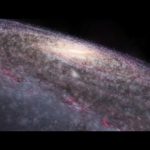
From the Solar System to the Hyades cluster
A virtual journey, from our Solar System through the Milky Way, based on data from the first release of ESA’s Gaia satellite.
The journey starts by looking back at the Sun, surrounded by its eight planets. We then move away from the Sun and travel towards and around the Hyades star cluster, the closest open cluster to the Solar System, some 150 light-years away.
The 3D positions of the stars shown in the animation are drawn from the Tycho-Gaia Astrometric Solution (TGAS), which combines information from Gaia’s first year of observations with the earlier Hipparcos and Tycho-2 Catalogues, both based on data from ESA’s Hipparcos mission.
This new dataset contains positions on the sky, distances and proper motions of over two million stars. It is twice as precise and contains almost 20 times as many stars as the previous reference for astrometry, the Hipparcos Catalogue.
The journey continues showing the full extent size of the stars contained in the Tycho-Gaia Astrometric Solution, all relatively near to the Sun, in the overall context of our Milky Way galaxy.
The final Gaia catalogue will contain the most detailed 3D map ever made of the Galaxy, charting a billion stars – about 1% of the Milky Way’s stellar content – to unprecedented accuracy.
For more information about Gaia, visit: http://www.esa.int/gaia
Credit: ESA/Gaia/DPAC; Acknowledgement: S. Jordan & T. Sagristà Sellés (Zentrum für Astronomie der Universität Heidelberg)
-
Space science: everything starts here
How did it all begin? What are the origins of our planet? To understand our place in the Universe we need to explore space. Find out how we’re doing this with ESA’s incredible fleet of space science missions to study our Sun and chart the stars around us, probe the dark matter and dark energy of the Universe, and tour various planets, moons and other small bodies in our Solar System.
-

NASA Reaches New Heights in 2015
As 2015 comes to a close we look back at an exciting year of reaching new heights and revealing the unknown for the benefit of humankind.
-
Does Dark Matter BREAK Physics? | Space Time | PBS Digital Studios
Tweet at us! @pbsspacetime
Facebook: facebook.com/pbsspacetime
Email us! pbsspacetime [at] gmail [dot] com
Comment on Reddit: http://www.reddit.com/r/pbsspacetime
Support us on Patreon! http://www.patreon.com/pbsspacetimeHelp translate our videos! http://www.youtube.com/timedtext_cs_panel?tab=2&c=UC7_gcs09iThXybpVgjHZ_7g
SPACETIME IS BACK! And with this episode we welcome in Matt O’Dowd as the new host to rigorously take you through the mysteries of space, time, and the nature of reality. We’re starting off this new season with perhaps one of the most mysterious things of all — DARK MATTER. What is it? Where does it come from? And is it even real? Watch this episode of Space Time to find out!
—————————————-———
Comment Links
SafetySkull
https://www.youtube.com/watch?v=vNaEBbFbvcY&lc=z13zunhjrov4sdl2n22zjlq5fsumsbib304Agen0000
https://www.youtube.com/watch?v=vNaEBbFbvcY&lc=z132eztqnvzoft4qb04ccpnyglqmfhm5hu40k—————————————-———
Let us know what topics you want to learn more about:http://bit.ly/spacetimepoll -
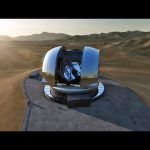
ESA Euronews: Empieza la construcción del telescopio óptico-infrarrojo más grande del mundo
Esta zona remota del desierto de Atacama, en Chile, es famosa porque aquí no hay nada. No hay agua, ni plantas, ni animales. Esto hace que sea un lugar perfecto para un proyecto realmente innovador, el Telescopio Europeo Extremadamente Grande, E-ELT.
Credits: ESA/Euronews
-
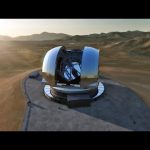
ESA Euronews: Um Telescópio Extremamente Grande para um Universo Infinito
O deserto de Atacama, no Chile é famoso por não ter nada – não tem água, nem plantas, nem animais. O que faz dele o local perfeito para acolher projeto verdadeiramente inovador, a construção do E-ELT, o European Extremely LargeTelescope ou o Telescópio Europeu Extremamente Grande.
Credits: ESA/Euronews
-
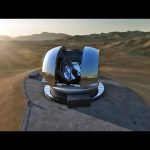
ESA Euronews: E-ELT: Das riesige Teleskop soll unbekannte Gebiete des Universums erforschen
Das E-ELT ist ein europäisches Projekt, um das weltweit größte optische Infrarot-Teleskop zu bauen. Die bahnbrechende Konstruktion in der Atacamawüste in Chile wird ferne Exoplaneten mit einer nie gekannten Detailschärfe untersuchen.
Credits: ESA/Euronews
-
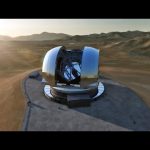
ESA Euronews: E-ELT : le télescope européen de l’extrême
Dans le désert d’Atacama au Chili, la construction du Télescope géant européen, l’E-ELT est entrée dans sa phase concrète avec la création d’une plate-forme au sommet d’une montagne à 3000 mètres d’altitude. C’est là que cet instrument optique / infrarouge le plus grand au monde sera mis en service au début de la prochaine décennie. Ses performances permettront notamment d’en savoir plus sur les exoplanètes et éventuellement, de faire avancer la vaste quête vers une autre forme de vie.
Credits: ESA/Euronews
-

ESA Euronews: E-ELT: Europe’s extreme new telescope
Work is underway to build the E-ELT, a telescope that could one day find signs of life on distant planets. With a 39-metre mirror, it will be the world’s biggest optical and infrared telescope.
Other languages available:
Italian: http://youtu.be/vrQZEBOWqsM
French: http://youtu.be/5enycnYuVR8
German: http://youtu.be/sCTKGGmHp2s
Spanish: http://youtu.be/_0jcfXKxjLI
Greek: http://youtu.be/e1y3FNZK9h0
Portuguese: http://youtu.be/ZX-srt2dlr8
Hungarian: http://youtu.be/nGyRcuk4ydkCredits: ESA/Euronews
-
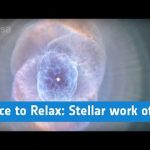
ESA – Space to Relax / Stellar Works of Art
Journey through galaxies, past star-forming clouds, around mammoth stars, and inside gas and dust nebulas. A relaxation programme of astronomical wonders by the European Space Agency.
Originally produced for Lufthansa inflight entertainment (released June 2011).
Credit images: XMM-Newton, Herschel, Planck, Cluster, Integral, Joint ESA/NASA Hubble Space Telescope and ESA amateur ground-based cameras.
Credit music: “Dream Elements” by Green Sun, licensed by AmbientMusicGarden.com