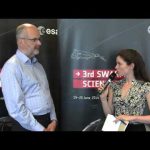
Kasha Patel and Mike Behrenfeld chat about the North Atlantic Aerosols and Marine Ecosystems Study (NAAMES). This NASA field experiment took to the sea in May to investigate the world’s largest plankton bloom and how it gives rise to small organic particles that leave the ocean and end up in the atmosphere, ultimately influencing clouds and climate.
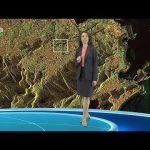
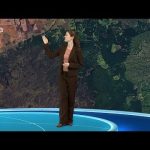
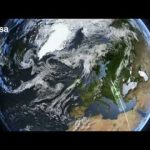
Earth from Space is presented by Kelsea Brennan-Wessels from the ESA Web-TV virtual studios. The one hundred eighty-fifth edition features a Sentinel-2A image of the Rub’ al Khali desert.
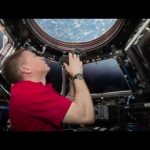
‘A Beautiful Planet’ stars Earth as seen from space by astronauts and cosmonauts aboard the orbiting laboratory. Shooting spanned multiple expeditions with NASA astronauts Kjell Lindgren, Terry Virts, and Barry “Butch” Wilmore as well as former NASA astronaut Scott Kelly volunteering as filmmakers during their time on station.
On April 22nd, Earth Day is an annual world wide celebration in support of environmental protection. NASA undertakes various efforts to protect and understand our home planet. NASA wants to capture what people all around the world are doing to protect, improve and celebrate Earth… So, where on EARTH will you be? http://www.nasa.gov/24Seven #24Seven
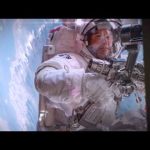
ESA astronaut Tim Peake shares his views of Earth and his six-month Principia mission while on the International Space Station. Narrated by Tim himself taken from interviews while in space, this video shows the best views, experiments and shares the experience of Tim’s life in space.
Earth from Space is presented by Malì Cecere from the ESA Web-TV virtual studios. The one hundred eightieth edition features a Sentinel-3A image of the River Nile and surroundings.
Earth from Space is presented by Kelsea Brennan-Wessels from the ESA Web-TV virtual studios. The Mediterranean island of Cyprus is featured in the one hundred seventy-seventh edition.
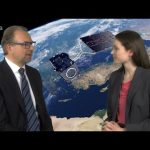
Discover more about our planet with the Earth from Space video programme. In this special edition, ESA’s Josef Aschbacher joins the show to discuss the past, present and future of the Copernicus environment monitoring programme and its Sentinel satellites.
Earth from Space is presented by Malì Cecere from the ESA Web-TV virtual studios. The one hundred seventy-sixth edition features a Sentinel-2A image of Utah in the US.
Earth from Space is presented by Kelsea Brennan-Wessels from the ESA Web-TV virtual studios. Ahead of World Wetlands Day, a wetland of international importance in Sierra Leone is featured in the one hundred seventy-first edition.
Earth from Space is presented by Malì Cecere from the ESA Web-TV virtual studios. The one hundred seventieth edition features a Sentinel-2 satellite image of Bahrain and surroundings
The work NASA does, and will continue in 2016, helps the United States maintain its world leadership in space exploration and scientific discovery. The agency will continue investing in its journey to Mars, returning human spaceflight launches from American soil, fostering groundbreaking technology development, breakthroughs in aeronautics and bringing to every American the awe-inspiring discoveries and images captured by NASA’s missions in our solar system and beyond.
For more about NASA’s missions, research and discoveries, visit:
Earth from Space is presented by Kelsea Brennan-Wessels from the ESA Web-TV virtual studios. The one hundred fifty-first edition features a satellite image of New York City in the United States.
Earth from Space is presented by Kelsea Brennan-Wessels from the ESA Web-TV virtual studios. The sandy and rocky terrain of the Sahara desert in central Algeria, captured by the Sentinel-2A satellite, is featured in the one hundred fiftieth edition.
NASA uses the vantage point of space to increase our understanding of our home planet, improve lives and safeguard our future. The agency also develops new ways to observe and study Earth’s interconnected natural systems with long-term data records, shares this unique knowledge, and works with institutions around the world to gain new insights into how our planet is changing. Here’s a brief thirty second video showing some of the sights and sounds of our Earth and why it’s important to us all to appreciate our unique home in the solar system.
In this special edition, Sentinel-2 Project Manager François Spoto and System Engineering and Operations Manager Omar Sy join the show to tell us more about the Sentinel-2A satellite and its mission at IABG in Munich, Germany.
Earth from Space is presented by Kelsea Brennan-Wessels from the ESA Web-TV virtual studios. The one hundred thirty-fourth edition features a false-colour image of Belgium’s capital.
Earth from Space is presented by Kelsea Brennan-Wessels from the ESA Web-TV virtual studios. The one hundred thirty-third edition features a mosaic of Sentinel-1A radar scans, pieced together to create a single image of Estonia.
NASA’s Soil Moisture Active Passive (SMAP) spacecraft launched Jan. 31 from California’s Vandenberg Air Force Base. SMAP is the first U.S. Earth-observing satellite designed to collect global observations of surface soil moisture. The mission’s high resolution space-based measurements of soil moisture will give scientists a new capability to better predict natural hazards of extreme weather and improve our understanding of Earth’s water, energy and carbon cycles.
Watch Earth roll by through the perspective of ESA astronaut Alexander Gerst in this six-minute timelapse video from space. Combining 12 500 images taken by Alexander during his six-month Blue Dot mission on the International Space Station this Ultra High Definition video shows the best our beautiful planet has to offer.
Marvel at the auroras, sunrises, clouds, stars, oceans, the Milky Way, the International Space Station, lightning, cities at night, spacecraft and the thin band of atmosphere that protects us from space.
Often while conducting scientific experiments or docking spacecraft Alexander would set cameras to automatically take pictures at regular intervals. Combining these images gives the timelapse effect seen in this video.
Watch the video in 4K resolution for the best effect and find out more about Alexander Gerst’s Blue Dot mission here: http://www.esa.int/BlueDot
Audio via the Audio Network library:
1. Into The Matrix (1899/6) Jason Pedder / Ben Ziapour
2. We Are Delirious (2073/6) Annie Drury / Bob Bradley / Matt Sanchez / Matt Parker
Earth from Space is presented by Kelsea Brennan-Wessels from the ESA Web-TV virtual studios. The one hundred twenty-sixth edition features a mosaic of Sentinel-1A radar scans, pieced together to create a single image of Romania.
Earth from Space is presented by Kelsea Brennan-Wessels from the ESA Web-TV virtual studios. Explore the city of Mumbai in the one hundred twenty-first edition.
This timelapse video was made from images taken by ESA astronaut Alexander Gerst orbiting Earth on the International Space Station.
The video is offered in Ultra High Definition, the highest available to consumers. Be sure to change the settings in YouTube if your computer or television can handle it for the full effect.
The montage is made from a long sequence of still photographs taken at a resolution of 4256 x 2832 pixels at a rate of one every second. The high resolution allowed the ESA production team to create a 3840 x 2160 pixel movie, also known as Ultra HD or 4K.
Playing these sequences at 25 frames per second, the film runs 25 times faster than it looks for the astronauts in space.
The artistic effects of the light trails from stars and cities at night are created by superimposing the individual images and fading them out slowly.
Alexander Gerst is a member of the International Space Station Expedition 40 crew. He is spending five and a half months living and working on the ISS for his Blue Dot mission.
Earth from Space is presented by Kelsea Brennan-Wessels from the ESA Web-TV virtual studios. In the one-hundred-fifteenth edition, discover this important water source for over 60 million people in Chad, Cameroon, Niger and Nigeria.
Earth from Space is presented by Kelsea Brennan-Wessels from the ESA Web-TV virtual studios. In the one-hundred-thirteenth edition, visit the Cal Madow mountain range in northern Somalia.
Earth from Space is presented by Kelsea Brennan-Wessels from the ESA Web-TV virtual studios. In the one-hundred-eleventh edition we examine a Sentinel-1 radar image over Rio de Janeiro and the site of this year’s World Cup final.
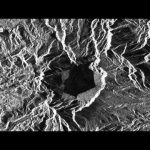
Earth from Space is presented by Kelsea Brennan-Wessels from the ESA Web-TV virtual studios. This week’s image from the Sentinel-1A radar satellite shows part of the Philippine island of Luzon with Mount Pinatubo.
Earth from Space is presented by Kelsea Brennan-Wessels from the ESA Web-TV virtual studios. A Ramsar wetland of international importance located in southern Iran is featured in the one-hundred-ninth edition.
Discover more about our planet with the Earth from Space video programme.
In this special edition, Nils Olsen from DTU Space joins the show to discuss the latest measurements of Earth’s magnetic field and changes observed over the last six months by ESA’s Swarm mission.
Earth from Space is presented by Kelsea Brennan-Wessels from the ESA Web-TV virtual studios. Explore Mount Kenya and the surrounding national park in the one-hundred-eighth edition.
Earth from Space is presented by Kelsea Brennan-Wessels from the ESA Web-TV virtual studios. Discover a giant geological wonder in the Sahara Desert in the one-hundred-third edition.
Accurate information about the environmental is crucial. It helps to understand how our planet and climate are changing, the role human activity play in these changes and how this affects our daily lives. Responding to these challenges, the EU and ESA have developed an Earth observation programme called Copernicus, formerly known as Global Monitoring for Environment and Security, – a programme that becomes operational with the launch of Sentinel-1A.
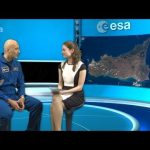
Discover more about our planet with the Earth from Space video programme. In this special edition, ESA astronaut Luca Parmitano joins the show to share his view of Earth from space while on the International Space Station.
Has the universe a beginning or was it here since forever? Well, evidence suggests that there was indeed a starting point to this universe we are part of right now. But how can this be? How can something come from nothing? And what about time? We don’t have all the answers yet so let’s talk about what we know.
Also, we try to make this one not depressing. Tell us if we succeeded.
BY THE WAY. We have a website now. We’ll try to blog from time to time, show you guys how we make the videos and give more insight to our process. Also we sell stuff. We really don’t know where this whole kurzgesagt stuff leads us. But we are really thankful for all the attention and positive feedback and yeah, maybe we can make this our jobs — it would be pretty nice and we could do more content each month. But we’ll see. For now, thank you very much everybody for making this little adventure possible.
If you like the MUSIC of the video, you can get it here: http://bit.ly/1fCOlLI
Thomas did an aweful good job again. 🙂
Next Video: April. (as soon as we can but we kind of have to make a living and visit college) Topic: Nuclear Energy (probably, if we finish the research in time — if not something else)
Short videos, explaining things. For example Evolution, the Universe, Time, the Stock Exchange or controversial topics like Fracking. Because we love science.
We’re a bunch of Information designers from munich, visit us on our website, twitter, facebook or behance to say hi!
Earth from Space is presented by Kelsea Brennan-Wessels from the ESA Web-TV virtual studios. Mount Kilimanjaro in Tanzania and the plains in southern Kenya are pictured in a false-colour image featured in the ninetieth edition.
Earth from Space is presented by Kelsea Brennan-Wessels from the ESA Web-TV virtual studios. The eighty-fourth edition features an Envisat image of the Dasht-e Lut salt desert in southeast Iran.
Located in Frascati, Italy, ESRIN — known as the ESA Centre for Earth Observation — is one of the five ESA specialised centres situated in Europe.
The mission and payload operations of ESA’s Earth observation satellites are managed here and ESRIN is the primary source for the acquisition, distribution and exploitation of data from these and other non-ESA satellites.
Within ESRIN, a key role in Europe’s space effort has been undertaken with the development of the new small launcher, Vega, which took its maiden voyage in February 2012.
ESRIN designs and develops all ESA-wide software for corporate applications and is responsible for developing security measures for classified space programmes.
The European Centre for Space Records (ECSR) is also based at ESRIN. The ECSR appraises and preserves the valuable technical records of completed ESA projects together with their management archives to safeguard this valuable knowledge for generations to come.
Finally, ESRIN is home to ESA’s Near-Earth Object Coordination Centre. The centre serves as the central access point to a network of European near-Earth object data sources and information providers being established under ESA’s Space Situational Awareness (SSA) Programme.