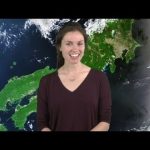
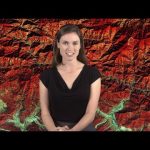
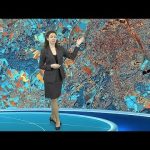
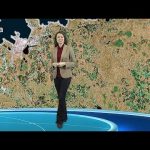
Earth from Space is presented by Kelsea Brennan-Wessels from the ESA Web-TV virtual studios. Learn about land reclamation around Amsterdam in the 228th edition.
Earth from Space is presented by Kelsea Brennan-Wessels from the ESA Web-TV virtual studios. In the 225th edition, Sentinel-2 takes us over vast agricultural fields in Brazil.
Earth from Space is presented by Kelsea Brennan-Wessels from the ESA Web-TV virtual studios. In the 224th edition, Sentinel-2 takes us over northern Serbia to the region of Vojvodina.
Earth from Space is presented by Kelsea Brennan-Wessels from the ESA Web-TV virtual studios. In the 221st edition, Sentinel-2 takes us over the Rocky Mountains and Prairies of Canada’s Alberta province.
Recovery efforts are underway at NASA’s Michoud Assembly Facility in New Orleans, which was hit by a tornado Feb. 7. In accounting for all 3,500 employees at the facility, officials reported five suffered minor injuries. Buildings, structures and parked cars sustained damage, but there was no reported damage to hardware for NASA’s Space Launch System (SLS) rocket, Orion spacecraft, or the barge Pegasus docked at Michoud. NASA will release updates on the facility’s status as they become available. Also, SpaceX Launch Targeted for Mid-February, SLS Booster Hardware Arrives at KSC, and NASA Aerospace Days!
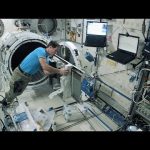
ESA astronaut Thomas Pesquet working in the Kibo laboratory to prepare a CubeSat launch – at 30 times increased speed.
The cylinder in the back is the mini-airlock that allows objects to be sent outside the Space Station. First Thomas and NASA astronaut Shane Kimbrough retrieved the Robotics External Leak Locator and wrapped it up for storage.
Afterwards Thomas installs the platform that the robotic arm grabs. The pointy bit is the connector for the robotic arm.
This video was recorded in December 2016 and was the first step for launching the CubeSats on 16 January 2017. Later Thomas put the satellite launcher on the platform and a third step is to connect the satellites themselves.
Thomas is spending six months on the International Space Station as part of his Proxima mission. During Proxima, Thomas will perform around 50 scientific experiments for ESA and France’s space agency CNES as well as take part in many research activities for the other Station partners. The mission is part of ESA’s vision to use Earth-orbiting spacecraft as a place to live and work for the benefit of European society while using the experience to prepare for future voyages of exploration further into the Solar System.
Earth from Space is presented by Kelsea Brennan-Wessels from the ESA Web-TVvirtual studios. Take a tour with Sentinel-2 to the Tian Shan mountains inChina in the 211th edition.
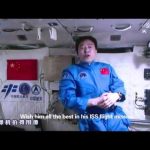
Astronauts on Chinese space station Tiangong-2 greet ESA and Thomas Pesquet. This video was recorded inside the Chinese space station Tiangong-2 by astronauts Jing Haipeng and Chen Dong. The duo landed safely on Earth on 18 November after spending a month orbiting Earth. A few hours before their descent, ESA astronaut Thomas Pesquet was launched aboard a Soyuz spacecraft to the International Space Station.
ESA’s Director of Human Spaceflight, David Parker, noted, “Human spaceflight provides many opportunities to increase international cooperation, and the interaction between the Astronaut Centre of China and the European Astronaut Centre is already creating positive experiences on which to build for the future.”
A cheesecake created by French chef Alain Ducasse for Thomas Pesquet’s six-month mission on the International Space Station was sent to the Chinese astronauts.
Chinese astronaut Ye Guangfu, who trained with the astronauts in this video, took part in ESA’s underground course this summer.
Earth from Space is presented by Kelsea Brennan-Wessels from the ESA Web-TV virtual studios. Part of Nepal including its capital city, Kathmandu, and the Himalayan foothills are featured in the 202nd edition.
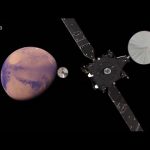
On 16 October, seven months and 500 million km after launching from Baikonur in Kazakhstan, the joint European and Russian ExoMars 2016 mission reaches a crucial phase.
The Trace Gas Orbiter will release its Schiaparelli lander for a three day coast and a six minute descent to the Martian surface.The lander, which was designed to demonstrate technologies for entry, descent and landing on Mars, is heading for the Meridiani Planum. This is an area that is currently being studied by NASA’s Opportunity rover and Europe’s Mars Express orbiter.
On 19 October, the Schiaparelli lander will be activated a few hours before reaching the Martian atmosphere, when it will be travelling at some 21 000 km/h. The front heatshield – covered with 90 insulating tiles – will be subjected to temperatures of up to 1500 degrees Celsius.
This video covers the separation, descent and landing procedures, as well as the orbiter’s critical burn to avoid crashing on the surface of Mars.
Earth from Space is presented by Kelsea Brennan-Wessels from the ESA Web-TV virtual studios. The Chinese city of Shanghai is featured in the 200th edition.
Discover more about our planet with the Earth from Space video programme. During the Global Platform for Sustainable Cities working group meeting at ESA’s ESRIN establishment in Italy, four experts join the show to discuss how satellite data can be used to promote sustainable cities.
The four guests are Xiaomei Tan: Senior Climate Change Specialist, Global Environment Facility; Xueman Wang: Global Platform for Sustainable Cities Coordinator, World Bank; Gayatri Singh: Urban Development Specialist, World Bank City Planning Labs Initiative; Herman Pienaar: Director of City Transformation and Spatial Planning, City of Johannesburg.
Earth from Space is presented by Kelsea Brennan-Wessels from the ESA Web-TV virtual studios. In the one hundred ninety-ninth edition, explore Kazakhstan’s Alakol Lake.
Launched in December 2013, Gaia is destined to create the most accurate map yet of the Milky Way.
By making accurate measurements of the positions and motions of roughly 1% of the total population of stars in the Milky Way, it will answer questions about the origin and evolution of our home galaxy.
The first intermediate data release, containing, among other things, three-dimensional positions and two dimensional motions of a subset of two million stars, demonstrates that Gaia’s measurements are as precise as planned, paving the way to create the full map of one billion stars to be released towards the end of 2017.
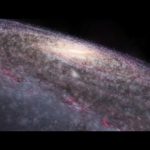
A virtual journey, from our Solar System through the Milky Way, based on data from the first release of ESA’s Gaia satellite.
The journey starts by looking back at the Sun, surrounded by its eight planets. We then move away from the Sun and travel towards and around the Hyades star cluster, the closest open cluster to the Solar System, some 150 light-years away.
The 3D positions of the stars shown in the animation are drawn from the Tycho-Gaia Astrometric Solution (TGAS), which combines information from Gaia’s first year of observations with the earlier Hipparcos and Tycho-2 Catalogues, both based on data from ESA’s Hipparcos mission.
This new dataset contains positions on the sky, distances and proper motions of over two million stars. It is twice as precise and contains almost 20 times as many stars as the previous reference for astrometry, the Hipparcos Catalogue.
The journey continues showing the full extent size of the stars contained in the Tycho-Gaia Astrometric Solution, all relatively near to the Sun, in the overall context of our Milky Way galaxy.
The final Gaia catalogue will contain the most detailed 3D map ever made of the Galaxy, charting a billion stars – about 1% of the Milky Way’s stellar content – to unprecedented accuracy.
Earth from Space is presented by Kelsea Brennan-Wessels from the ESA Web-TV virtual studios. Discover the southern Pacific Ocean island, Tongatapu, in the one hundred ninety-fourth edition.
Earth from Space is presented by Malì Cecere from the ESA Web-TV virtual studios. The one hundred ninety-third edition features a Sentinel-2 image of Sundarbans in Bangladesh.
Earth from Space is presented by Kelsea Brennan-Wessels from the ESA Web-TV virtual studios. The one hundred eighty-fifth edition features a Sentinel-2A image of the Rub’ al Khali desert.
NASA Administrator Charles Bolden recorded a congratulatory video message to students at St. Thomas More Cathedral School in Arlington, Virginia on becoming the first elementary school to build a small satellite and have it launched into space. On May 16, the school’s St. Thomas More (STM Sat-1), was deployed from the International Space Station. STMSat-1 was launched to the ISS on Dec. 6, 2015 aboard an Orbital ATK Cygnus cargo resupply spacecraft as part of NASA’s Educational Launch of Nanosatellites (ELaNa) IX mission. The STMSat-1 mission is an educational mission to provide hands-on, inquiry-based learning activities with an on-orbit mission to photograph the Earth and transmit images to our primary ground station and to remote ground stations throughout the country.
Earth from Space is presented by Malì Cecere from the ESA Web-TV virtual studios. The one hundred eightieth edition features a Sentinel-3A image of the River Nile and surroundings.
Earth from Space is presented by Kelsea Brennan-Wessels from the ESA Web-TV virtual studios. The Mediterranean island of Cyprus is featured in the one hundred seventy-seventh edition.
Discover more about our planet with the Earth from Space video programme. In this special edition, ESA’s Josef Aschbacher joins the show to discuss the past, present and future of the Copernicus environment monitoring programme and its Sentinel satellites.
Earth from Space is presented by Malì Cecere from the ESA Web-TV virtual studios. The one hundred seventy-sixth edition features a Sentinel-2A image of Utah in the US.
Earth from Space is presented by Kelsea Brennan-Wessels from the ESA Web-TV virtual studios. Ahead of World Wetlands Day, a wetland of international importance in Sierra Leone is featured in the one hundred seventy-first edition.
Earth from Space is presented by Malì Cecere from the ESA Web-TV virtual studios. The one hundred seventieth edition features a Sentinel-2 satellite image of Bahrain and surroundings
Mars is not the only place to explore during holidays. Follow our little Robot as he surveys his new surroundings. This holiday house is full of NASA treats… see if you can spot them all.
From our family to yours… Season’s Greetings, from NASA.
A Dec. 2 event with the House of Representatives Committee on Science, Space and Technology, featured a live chat with NASA’s Scott Kelly and Kjell Lindgren from onboard the International Space Station. Kelly and Lindgren answered questions from Texas Representative and Chairperson Lamar Smith and other committee members, about life on the station and the research on the orbital laboratory. Kelly is in the ninth month of his year-long mission with Russian cosmonaut Mikhail Kornienko to gather biomedical data that will help formulate a human mission to Mars, while Lindgren is preparing to return to Earth Dec. 11 to complete a 141-day mission. Also, Next space station crew preparing for launch, Orion powerhouse ready for testing, Anniversary of Orion’s first flight test, Your planet is changing. We’re on it, and Preparing Earth observation tool for space station!
Full-orbit movies produced from Visual Monitoring Camera (VMC) images acquired as part of ESA’s #VMCSchools campaign. This clip includes images acquired by ESA’s Mars Express on 25 and 26 May 2015.
For the complete list of submitted school projects, access ESA’s Mars Express blog via http://wp.me/p2E5wN-lj
Earth from Space is presented by Kelsea Brennan-Wessels from the ESA Web-TV virtual studios. The one hundred fifty-first edition features a satellite image of New York City in the United States.
Earth from Space is presented by Kelsea Brennan-Wessels from the ESA Web-TV virtual studios. The sandy and rocky terrain of the Sahara desert in central Algeria, captured by the Sentinel-2A satellite, is featured in the one hundred fiftieth edition.
NASA and commercial partner SpaceX discussed its plans for a launch of its seventh cargo delivery to the International Space Station under the agency’s Commercial Resupply Services contract. The company’s Falcon 9 will carry its Dragon cargo spacecraft to the station from Space Launch Complex 40 at Cape Canaveral Air Force Station in Florida and be filled with more than 4,000 pounds of supplies and payloads, including critical materials for the science and research investigations that will occur during Expeditions 44 and 45.
The science payloads aboard will offer new insight to combustion in microgravity, perform the first space-based observations of meteors entering Earth’s atmosphere, continue solving potential crew health risks and make new strides toward being able to grow food in space. Research continues to support the twins study and one-year mission investigations with NASA Astronaut Scott Kelly. This mission also is launching more than 30 student experiments, all of which are flying under the U.S. National Laboratory managed by the Center for the Advancement of Science in Space (CASIS).
The first of two International Docking Adapters for the station will be delivered in Dragon’s unpressurized trunk. The adapters will enable space station docking of commercial crew spacecraft, including the Boeing CST-100 and SpaceX Crew Dragon. Expedition 44 Flight Engineer Scott Kelly of NASA will use the station’s Canadarm2 robotic arm to reach out and capture Dragon with Station commander Gennady Padalka of the Russian Federal Space Agency (Roscosmos) supporting Kelly as they operate from the station’s cupola. After more than five weeks at the space station, the spacecraft will return with more than 1,400 pounds of cargo, including science experiments, crew supplies, hardware and computer resources, space station hardware, and trash.
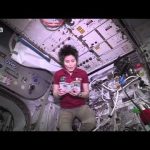
Among the books that ESA astronaut Samantha Cristoforetti has brought on board the International Space Station there is also the collection of rhymes “I viaggi di Giovannino Perdigiorno” from the famous Italian children’s author Gianni Rodari.
Rodari is also famous in Russia; in this video Samantha reads a Russian version of the story “Il pianeta di cioccolato” (The planet made of chocolate).
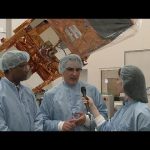
In this special edition, Sentinel-2 Project Manager François Spoto and System Engineering and Operations Manager Omar Sy join the show to tell us more about the Sentinel-2A satellite and its mission at IABG in Munich, Germany.
Earth from Space is presented by Kelsea Brennan-Wessels from the ESA Web-TV virtual studios. The one hundred thirty-fourth edition features a false-colour image of Belgium’s capital.
Earth from Space is presented by Kelsea Brennan-Wessels from the ESA Web-TV virtual studios. The one hundred thirty-third edition features a mosaic of Sentinel-1A radar scans, pieced together to create a single image of Estonia.