Tag: international

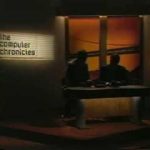
  • Computer Chronicles: Artificial Intelligence and Expert Systems (1984) Part 1

    Computer Chronicles: Artificial Intelligence and Expert Systems (1984) Part 1

    Thanks for watching, please make sure to subscribe to my channel by clicking on the link below or the Subscribe button for more computer videos.
    http://www.youtube.com/subscription_center?add_user=computercloset
    http://archive.org/details/computerchronicles
    http://www.youtube.com/user/computercloset

    An early look at artificial Intelligence. Guests includes Edward Feigenbaum of Stanford University, Nils Nilsson of the AI Center at SRI International, Tom Kehler of Intellegenetics, Herb Lechner of SRI, and John McCarthy of Stanford. Featured demonstrations include Inferential Knowledge Engineering and the programming language LISP. Originally broadcast in 1984.

    Q. What is artificial intelligence?

    A. It is the science and engineering of making intelligent machines, especially intelligent computer programs. It is related to the similar task of using computers to understand human intelligence, but AI does not have to confine itself to methods that are biologically observable.

    Q. Yes, but what is intelligence?

    A. Intelligence is the computational part of the ability to achieve goals in the world. Varying kinds and degrees of intelligence occur in people, many animals and some machines.

    Q. Isn’t there a solid definition of intelligence that doesn’t depend on relating it to human intelligence?

    A. Not yet. The problem is that we cannot yet characterize in general what kinds of computational procedures we want to call intelligent. We understand some of the mechanisms of intelligence and not others.

    Q. Is intelligence a single thing so that one can ask a yes or no question “Is this machine intelligent or not?”?

    A. No. Intelligence involves mechanisms, and AI research has discovered how to make computers carry out some of them and not others. If doing a task requires only mechanisms that are well understood today, computer programs can give very impressive performances on these tasks. Such programs should be considered “somewhat intelligent”.

    Q. Isn’t AI about simulating human intelligence?

    A. Sometimes but not always or even usually. On the one hand, we can learn something about how to make machines solve problems by observing other people or just by observing our own methods. On the other hand, most work in AI involves studying the problems the world presents to intelligence rather than studying people or animals. AI researchers are free to use methods that are not observed in people or that involve much more computing than people can do.

    Q. What about IQ? Do computer programs have IQs?

    A. No. IQ is based on the rates at which intelligence develops in children. It is the ratio of the age at which a child normally makes a certain score to the child’s age. The scale is extended to adults in a suitable way. IQ correlates well with various measures of success or failure in life, but making computers that can score high on IQ tests would be weakly correlated with their usefulness. For example, the ability of a child to repeat back a long sequence of digits correlates well with other intellectual abilities, perhaps because it measures how much information the child can compute with at once. However, “digit span” is trivial for even extremely limited computers.

    Hosted by Stewart Cheifet, Computer Chronicles was the world’s most popular television program on personal technology during the height of the personal computer revolution. It was broadcast for twenty years from 1983 – 2002. The program was seen on more than 300 television stations in the United States and in over 100 countries worldwide, with translations into French, Spanish, Chinese, and Arabic. The series had a weekly television broadcast audience of over two million viewers.

    Many of the series programs are distributed on video to corporations and educational institutions for use in computer training. Computer Chronicles program segments have also been bundled with various computer text books by major publishers.
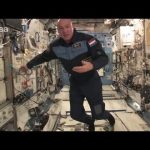
  • ESA astronaut André Kuipers’ tour of the International Space Station

    ESA astronaut André Kuipers’ tour of the International Space Station

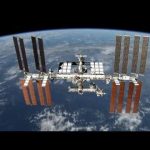
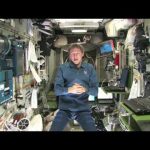
    ESA astronaut Andre Kuipers invites you to follow a guided tour of the complete International Space Station. Andre himself is the tour guide during this unique visit to the Station.

    In the space of one hour Andre shows every module of the International Space Station and explains the ins and outs of living in the largest laboratory in space. This video gives a wonderful glimpse of how life is for an astronaut living in the Station. From science and maintenance to operating robotic arms and finding lost equipment, Andre takes you from the Japanese research module via the Station’s cellar and ‘garden’ to the Russian segment, ending his tour with breath-taking views of Earth from the European-built Cupola observation module.

    This video was recorded during the end of ESA’s PromISSe mission. Andre spent a total of 193 days in space before returning to Earth on 1 July 2012.

  • ESA at Farnborough 2012 – Fernando Doblas, Head of the ESA Communication Department

    ESA at Farnborough 2012 – Fernando Doblas, Head of the ESA Communication Department

    An interview with Fernando Doblas, Head of the ESA Communication Department, in the Space Zone at Farnborough air show 2012. Fernando answers questions on ESA’s presence in the Space Zone, and how such events foster international cooperation and the role of ESA.

  • ESA at Farnborough 2012 – A Tour of the ESA Stand

    ESA at Farnborough 2012 – A Tour of the ESA Stand

    Tour of the Space Zone at Farnborough International Air show 2012 in the UK. ESA’s exhibition, alongside other space agencies and industries, is in the Space Zone between 9 — 15 July.

  • ESA Euronews: Private Space

    ESA Euronews: Private Space

    Boldly going where no private company has gone before.

    On 25 May 2012 the first commercial spacecraft berthed with the International Space Station. A private company achieved something only national agencies have ever done before: flying and recovering an orbital craft. With private companies launching their own spaceships and designing their own orbital stations, it’s the dawn of commercial spacefaring.
    We talk to people involved in that development and we explore the world’s first commercial spaceport.

  • Within Temptation dedicate ‘Faster’ to André

    Within Temptation dedicate ‘Faster’ to André

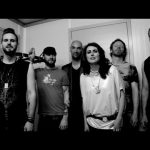
    Within Temptation is the internationally known symphonic rock band, founded in the Netherlands in 1996 by vocalist Sharon den Adel and guitarist Robert Westerholt. The band members are interested in all things science-fiction and space-related, and have been following the PromISSe mission of ESA astronaut André Kuipers. When they heard that three of their songs (“Faster”, “Mother Earth” and “The Promise”) had been included in André’s playlist to be played in space, the band were very excited to support his mission. They helped us to produce this video, recording a special message and dedicating their song “Faster” to André, wishing him a high-speed but safe return later this week.
    Within Temptation are Sharon den Adel, Robert Westerholt, Stefan Helleblad, Jeroen van Veen, Ruud Jolie, Martijn Spierenburg and Mike Coolen.

    More information at: www.within-temptation.com

    Thanks to the ORTS for the live band footage.
    Video copyright ESA/Within Temptation.
    Faster written by S. den Adel, R. Westerholt & D. Gibson.
    Video produced by ESA/J. Makinen.

  • ESA astronaut André Kuipers and astronaut Don Pettit greet WWF

    ESA astronaut André Kuipers and astronaut Don Pettit greet WWF

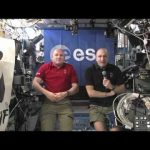
    ESA astronaut and World Wildlife Fund (WWF) ambassador André Kuipers and his Expedition 31 crewmate, NASA astronaut Don Pettit, took part in a video call with the WWF annual meeting that took place in Rotterdam, the Netherlands on 8 May 2012.

    WWF representatives worldwide heard what André and Don had to say about our planet. Their unique vantage point on the International Space Station and ESA’s Earth observation satellites help us understand how fragile our planet is.

    The Dutch branch of the WWF — Wereld Natuur Fonds — is celebrating its 50th anniversary this year.

  • The International Space Station: Together is the Future

    The International Space Station: Together is the Future

    As the International Space Station Program completes 10 years of continuous human presence, administrators and former crewmembers discuss its past, present and future. The first residents, astronaut Bill Shepherd and cosmonauts Sergei Krikalev and Yuri Gidzenko came aboard the ISS on Nov. 2, 2000 on Expedition 1.

  • The ISS: a work in progress!

    The ISS: a work in progress!

    Highlights of ESA astronaut Christer Fuglesang’s 14-day Alissé mission to the International Space Station between 29 August and 12 September 2009. Fuglesang was part of the seven-strong STS-128 crew launched to the ISS with Space Shuttle Discovery. STS-128 delivered new supplies and equipment to the ISS. The crew also performed three spacewalks to continue Station construction.

  • Space Shuttle Discovery returns to Earth

    Space Shuttle Discovery returns to Earth

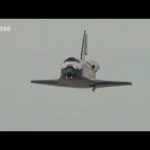
    Space Shuttle Discovery lands at Edwards Air Force Base, California, on 12 September concluding ESA astronaut Christer Fuglesang’s 14-day Alissé mission to the the International Space Station.

  • ESA astronauts working on the ISS

    ESA astronauts working on the ISS

    ESA astronauts Frank De Winne and Christer Fuglesang met up on the International Space Station in September 2009. Fuglesang was visiting the ISS during his 14-day Alissé mission. De Winne, on his six-month OasISS mission, was already on the ISS as part of the resident ISS Expedition 20 crew.

  • How do you wash your clothes in space?

    How do you wash your clothes in space?

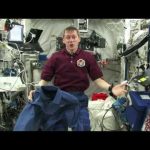
    Frank De Winne is answering a question on the ISS submitted by Herman from Belgium:
    – How do you wash your clothes in space?
    – Do you use washing powder to wash your clothes in space?

  • How does food stay fresh on the ISS?

    How does food stay fresh on the ISS?

    Frank De Winne is answering a question on the ISS submitted by Cedric from Belgium:
    – How do you occupy yourself during the 2-day Soyuz journey to the ISS?
    – How does food stay fresh in space, since there is no fridge on the ISS?

  • What medical conditions would stop you becoming an astronaut?

    What medical conditions would stop you becoming an astronaut?

    Frank De Winne is answering a question on the ISS submitted by Mrs. Shahi from Birmingham (United Kingdom):
    What medical conditions would stop you becoming an astronaut?

  • ATV: ‘Trucking’ in space

    ATV: ‘Trucking’ in space

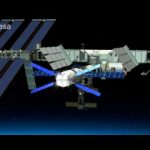
    The ISS depends on regular deliveries of experiments and spare parts, as well as food, air and water for its permanent crew. ESA’s Automated Transfer Vehicle is one of the ISS’s indispensable supply spaceships.

  • NASA Mission Update: New Horizon

    NASA Mission Update: New Horizon

    Three billion miles away from Earth, near the farthest reaches of our solar system, is the heavenly body with an extreme orbit known for 76 years as Pluto. Discovered by astronomers in 1930, Pluto was considered the ninth planet in our solar system until 2006 — when, after much debate, it was reclassified by the International Astronomical Union as a “dwarf planet,” officially dropping its name — for a number.

    Denis Bogan, New Horizons Program Scientist: “Well, it certainly doesnt affect Pluto. Pluto is the same thing it was before it was discovered, before it was given a name, and before the name was changed.”

    Nor does Pluto’s reclassification change the importance of NASA’s first mission to study it.

    Launch Announcer: “We have ignition and lift off of NASAs New Horizon spacecraft on a decade-long”

    Launched in January 2006, the thousand-pound New Horizons spacecraft will travel through space for 9-1/2 years before meeting up with Pluto in the summer of 2015.

    Denis Bogan: “The last time Pluto was in this position in its orbit was during the French and Indian War. It takes 248 Earth years to travel around its orbit and come back to the same place again. At the speed of light, sending a radio signal back from the spacecraft, from Pluto to Earth, will take 4-1/2 hours.”

    Operating on less power than a pair of common 100-watt light bulbs, New Horizons will map the highest-interest areas of Pluto to a resolution of 50 meters, less than the length of a football field — three billion miles away. Itll then move on to survey Pluto’s neighborhood: the atmosphere, ancient materials and small bodies of the Kuiper Belt, a chaotic region astrophysicists believe can tell us how Earth, the planets, even our sun were made.

    Denis Bogan: “We have primitive material chunks of rock and ice, millions of objects of objects out there in the Kuiper Belt and we know very little about it. We didnt discover it until 1992.”

    Traveling 3 billion miles to frozen, rocky Pluto and its environs, New Horizon is, in a way, going back in time to the chemical building blocks of the solar system, and life.

    To learn more about the New Horizons mission visit www.nasa.gov

  • NASA Mission Update: ULYSSES

    NASA Mission Update: ULYSSES

    The sun is the source of life-sustaining energy here on Earth. Much of how it works – and affects us — remains a source of scientific mystery. Sunspots were first recorded by humans in the 16-hundreds. Astrophysicists have since linked heightened sunspot activity with the solar wind. It’s a million-mile-an-hour force of magnetically-charged particles emanating from the sun’s upper atmosphere. Ebbing and flowing in minimum and maximum intensities over eleven year cycles, this so-called space weather can seriously affect how things work here on Earth, such as disrupting satellite communications, telephone service and personal electronics.

    Arik Posner, Program Scientist: “It would help our technology, to safeguard the technology by knowing when and in what intensity space weather occurs and where these effects might show up”

    Launch Announcer : “2 -1 ignition and liftoff of Discovery and the Ulysses spacecraft bound for the polar regions of the sun.”

    Until the launch of Ulysses from space shuttle Discovery in 1990, data for understanding and predicting space weather had come from a limited sampling area: the plane extending from the suns equator. Ulysses has since made three orbits above and below the poles of the sun, vastly expanding the territory from where raw space weather data are gathered.

    Arik Posner: “So Ulysses was really the first spacecraft that leaped out of this confinement, and it gives us a view of the global heliosphere.”

    Ulysses has found that the solar minimum were in right now is producing the lowest levels of solar wind seen since accurate readings became available a half-century ago. But for heliophysicists, these data raise as many questions as they answer.

    Arik Posner: “The Space Age is only 50 years now, and the Sun just operates on longer time scales than these 50 years. So we might have just glimpsed just the surface of what is really going on.”

    By expanding its reach, both in time and space, Ulysses is helping the discipline of space weather prediction grow beyond its infancy for the betterment of life here on Earth.

    For more about Ulysses, the heliosphere, and space weather, log onto: www.nasa.gov/missions and click on ‘Ulysses.’

  • NASA Mission Update: CALIPSO

    NASA Mission Update: CALIPSO

    NASA Mission Update: CALIPSO

    Clouds have forever held the imagination of skygazers who are captivated by their endless beauty and seeming randomness. But clouds, and whats in them, also hold fascination for scientists who seek to understand the many effects they have on life here on Earth.

    Hal Maring, Program Scientist, CALIPSO: “Low clouds, which are white, can reflect sunlight and cause cooling of the Earth, and high clouds tend to warm the Earth by absorbing and re-radiating warmth back into the atmosphere.”

    Launch Announcer: “2-1 We have ignition and we have lift-off of NASAs Calipso/Cloudsat spacecraft.”

    Since its launch in April 2006, the Cloud-Aerosol Lidar and Infrared Pathfinder Satellite Observation mission, CALIPSO, has provided new insight into the role that clouds play in regulating our climate. As CALIPSO orbits the Earth, its light detection and ranging, or lidar system, emits short pulses of green and infrared light, producing a 300-feet wide snapshot of what’s in the atmosphere from top to bottom — clouds and airborne particles. Snapshots collected along the same orbit are then streamed together to paint a picture of what a vertical slice of our atmosphere looks like.

    Hal Maring: “Its basically a large laser range finder, and it shoots light down into the atmosphere. And, its able to detect and measure, clouds in the vertical .Not like a photograph, which tends to be two-dimensional, but gives us vertical curtains of measurements of clouds, i.e., their altitude.”

    These critical cloud data from CALIPSO are used with information gathered by other satellites in NASAs A-train constellation of Earth-observing spacecraft to quantify just how much sunlight reaches the planet — and how much gets radiated back into space. This so-called energy budget is a key to documenting and understanding climate change.

    Hal Maring: “We have found, it appears as though, the Earth is warming and its warming because of an imbalance or a change in the Earths energy budget.”

    To see and learn more about CALIPSOs cloud images, or how CALIPSOs also helping scientists understand how climate may be changed by naturally-occurring and manmade particulates in the atmosphere called aerosols, go to www.nasa.gov/missions and click on “CALIPSO.”

  • Space for Europe

    Space for Europe

    Space touches us all on Earth – it is used for protecting our environment, for improving our everyday lives, for safety and security, and for stimulating our need for knowledge. Space is a key asset for Europe to face global challenges, for boosting our economic growth, for building our future.

  • Space: for protecting our environment

    Space: for protecting our environment

    Space touches us all on Earth – it is used for protecting our environment, for improving our everyday lives, for safety and security, and for stimulating our need for knowledge. Space is a key asset for Europe to face global challenges, for boosting our economic growth, for building our future.

  • Columbus: ESA’s real estate’ in space

    Columbus: ESA’s real estate’ in space

    In February 2008, the Columbus module was launched on the Space Shuttle Atlantis, creating space history when it was attached to the International Space Station as the first European laboratory dedicated to long-term research in microgravity.

  • European missions to the International Space Station

    European missions to the International Space Station

    Capturing the excitement of three highlights of European manned spaceflight in 2007 and 2008, these clips feature Paolo Nespoli’s STS-120 flight, the Columbus laboratory, and finally the ATV Jules Verne, Europe’s first space ferry.

  • ESA’s space ferry: The Automated Transfer Vehicle

    ESA’s space ferry: The Automated Transfer Vehicle

    The International Space Station (ISS) depends on regular deliveries of equipment, food, air and water for its crews. Since the arrival of the first Automated Transfer Vehicle in April 2008, it has become one of the Stations indispensable supply ships.