Aurelia works on VR experiences that recreate locations in space.
Sometimes, her work takes her beyond the office. Recently, Aurelia attended Gamescom , the world’s biggest video game event, where her team showcased MUSE, a VR project she helped design!
Join Ariane 6 launch system architect, Tina, as she shows us a day in her life.
Tina has worked on space transport systems for 20 years now. She first worked on the Automated Transfer Vehicle (ATV), then on the Ariane 5 Mid-life Evolution development and now on Europe’s newest launcher Ariane 6.
How did she become a rocket scientist?
“I was lucky enough to spend some months in French Guiana as a student for an internship and working there got me hooked – I was determined to come back for my job one day, and here I am: I spent a great part of 2023 in Kourou testing the Ariane 6 propulsion system, together with an amazing team of very skilled professionals.
I consider myself extremely lucky to have a job and colleagues that make me want to get out of bed and into the office every day – because we love what we do and because the people are simply amazing!”
Here’s a big question: How did life begin on Earth? We don’t quite know, but this fundamental question is a driving force behind astrobiology research at NASA. Understanding how life originated on our planet could inform us about the potential for life to exist throughout the universe.
Astrobiology expert Shawn Domagal-Goldman explains more about our search for answers. Explore more about astrobiology at NASA: https://astrobiology.nasa.gov
30 June marks Asteroid Day, which aims to emphasise the importance of asteroids –their role in the formation of our Solar System, their impact in space resources and the importance of defending our planet from future impacts.
This year we are celebrating along with @universalpictures and @focusfeatures for the release of Wes Anderson’s new movie @AsteroidCity to bring you all the information you need to know about asteroids and how we protect our planet from them.
Credits: ESA – European Space Agency
★ Subscribe: http://bit.ly/ESAsubscribe and click twice on the bell button to receive our notifications.
We are Europe’s gateway to space. Our mission is to shape the development of Europe’s space capability and ensure that investment in space continues to deliver benefits to the citizens of Europe and the world. Check out https://www.esa.int/ to get up to speed on everything space related.
Ganymede is the primary scientific target of the Jupiter Icy Moons Explorer, Juice, mission. With a diameter of about 5260 km, larger than that of Pluto and Mercury, Ganymede tops the Solar-System moons’ size chart. It is the seventh moon from the gas giant (and the third among the Galilean satellites) and orbits Jupiter at a distance of more than 1 million kilometres. Researchers believe there is tidal heating on Ganymede, although to a much smaller degree than on Io and Europa. This heat could drive some tectonic activity and provide one of the necessary conditions for life to emerge: a source of energy.
This high-resolution mapping of the surface can help constrain the moon’s composition and mineralogy, and assess how habitable Ganymede could be by searching for biosignatures. Observations at various wavelengths will allow astronomers to study non-water-ice material to determine the distribution of biologically essential elements—such as carbon or oxygen—and other important elements—such as magnesium and iron—on the planetary body. The mission will also shed light on the origin and evolution of the materials on the surface by exploring which substances form at Ganymede and which are brought in from the plasma environment around the moon.
To study Ganymede in detail, Juice will enter orbit around it, becoming the first spacecraft to orbit a moon in the outer Solar System. The dedicated orbital tour is expected to last about eight months and will be the final stage of the mission.
📹 @EuropeanSpaceAgency
★ Subscribe: http://bit.ly/ESAsubscribe and click twice on the bell button to receive our notifications.
We are Europe’s gateway to space. Our mission is to shape the development of Europe’s space capability and ensure that investment in space continues to deliver benefits to the citizens of Europe and the world. Check out https://www.esa.int/ to get up to speed on everything space related.
Is there life on Mars? No, we have never discovered life on the Red Planet, but we have found lots of evidence that suggests Mars could have once supported life in its ancient past. There’s even a chance that Mars could be habitable beneath its surface. NASA astrobiologist Heather Graham explains more.
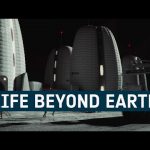
A detailed concept for a lunar habitat, created by one of the world’s leading architectural firms with ESA technical support, is currently on show at the Biennale in Venice. Skidmore, Owings & Merrill, originator of many of the world’s tallest skyscrapers, worked with ESA on a semi-inflatable habitat design which could be part of a long-term vision for an international Moon settlement.
The resulting design is on show at the 17th International Architecture Exhibition of La Biennale di Venezia (@BiennaleChannel). While the theme of the overall exhibition is ‘How will we live together?’, the SOM installation is called ‘Life Beyond Earth’, peering beyond our post-COVID-19 planet to show how human life can be sustained in the hostile space environment. The installation encompasses two large-scale, physical models and this film, bringing Biennale visitors on a journey from Earth to the Moon’s surface.
SOM designed a semi-inflatable shell structure to offer the highest possible volume to mass ratio. Once inflated on the lunar surface, it would reach approximately double its original internal volume.
A lot of work went into the four-storey habitat interior, in terms of lighting conditions, reconfigurable features, and a high floor to ceiling space, to allow crew members to take advantage of lunar one-sixth g using grabbing bars and other simple aids.
Its chosen site has been described as the most desirable real estate in the Solar System: the rim of Shackleton crater beside the lunar South Pole. Avoiding the crippling temperature extremes of the Moon’s two-week days and nights, this location offers near-continuous sunlight for solar power, an ongoing view of Earth and access to lunar water ice deposits in adjacent permanently-shadowed craters.
Credit: SOM
★ Subscribe: http://bit.ly/ESAsubscribe and click twice on the bell button to receive our notifications.
We are Europe’s gateway to space. Our mission is to shape the development of Europe’s space capability and ensure that investment in space continues to deliver benefits to the citizens of Europe and the world. Check out https://www.esa.int/ to get up to speed on everything space related.
If astrobiologists find life beyond Earth in the solar system, it will most likely be in the form of tiny organisms called microbes – nothing that would talk to us. But the galaxy is a big place; the universe even bigger. Somewhere out there, life may have evolved to become as smart, or even much smarter, than us. And the next step in that ladder may be “post-biological,” argues Susan Schneider, the Baruch S. Blumberg NASA/Library of Congress Chair in Astrobiology, Exploration, and Scientific Innovation. Advanced life may be entirely based on microchips and silicon, using the tools of artificial intelligence instead of brains. Listen to the full episode of “Gravity Assist” at nasa.gov/gravityassist.
Producer Credit: Sonnet Apple & Elizabeth Landau
Music Credit: Universal Production Music
Astrobiologists study ancient lakes on Earth in order to help us search for life in our solar system and beyond. Subscribe to our “Gravity Assist” podcast for this episode and more: www.nasa.gov/gravityassist
As the Perseverance Rover flies toward Jezero Crater on Mars, which once hosted water, astrobiologists are interested in places on Earth that are similar to the rover landing site. Kennda Lynch, scientist at the Lunar and Planetary Institute in Houston, Texas, has been doing fieldwork in an ancient lake location in Utah called the Pilot Valley Playa. In this episode of Gravity Assist, she describes her recent discoveries and why she’s excited about Perseverance. She also explains how all life forms create waste products, even bacteria, that could leave tracers or “biosignatures” for scientists to detect. By looking at how microbes survive in extreme environments on Earth, scientists can explore the bigger question of how life could sustain itself on other planetary bodies like Mars and Jupiter’s moon Europa.
Image Credits:
NASA
Vox/ YouTube Original -“Glad You Asked”
Brocken Inaglory/Wikimedia Commons
Alexander Gerst/Wikimedia Commons
Paul Hermans/Wikimedia Commons
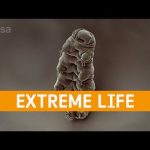
Microbial life is known to survive in all sorts of extreme environments by going into a dormant state. Could they have survived long trips around our galaxy to seed life on Earth? Astrobiologist Nicol Caplin talks extreme life in this episode of Meet The Experts.
We are Europe’s gateway to space. Our mission is to shape the development of Europe’s space capability and ensure that investment in space continues to deliver benefits to the citizens of Europe and the world. Check out http://www.esa.int/ESA to get up to speed on everything space related.
Is there life beyond Earth? How did life get started on Earth anyway? This season of NASA’s Gravity Assist podcast is about the origins of life on Earth and the search for life elsewhere. Subscribe at https://www.nasa.gov/gravityassist. See all NASA podcasts: www.nasa.gov/podcasts
Hosted by NASA’s Chief Scientist Jim Green, each episode features a conversation with a scientist who has researched some aspect of these questions. We’ll talk about the search for life on Mars, what kind of life might survive on Saturn’s moon Titan, and much more.
The ESA Shop has it all!
Our classic logo and collectable designs printed on apparel, as well as publications, patches and gadgets. You can also explore themed designs that capture our activities of the moment.
See if something catches your eye, to ‘space up’ your life, or for the special space explorer in your life.
We are Europe’s gateway to space. Our mission is to shape the development of Europe’s space capability and ensure that investment in space continues to deliver benefits to the citizens of Europe and the world. Check out http://www.esa.int/ESA to get up to speed on everything space related.
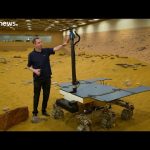
ExoMars is the first mission to head to the Red Planet to seek signs of life, now or in the past. It’s a massive scientific and technical challenge, and Euronews meets some of the team involved in this joint ESA-Roscosmos project in this month’s edition of Space.
ESA is Europe’s gateway to space. Our mission is to shape the development of Europe’s space capability and ensure that investment in space continues to deliver benefits to the citizens of Europe and the world. Check out http://www.esa.int/ESA to get up to speed on everything space related.
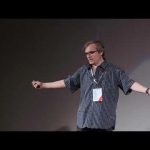
Curiozitatea, povestea şi ecuaţiile sunt coloana vertrebrală a fizicii. Curiozitatea este scânteia care, odată ce pătrunde în creier, declanşează o reacţie în lanţ. Aşa cum ştim de la copii, curiozitatea este satisfăcută prin poveşti. Acesta este al doilea pas. Deși frumoase, poveștile nu descriu cantitativ și precis natura. De aceea, pentru a încheia povestea, trebuie să învățam să folosim matematica, limbajul universal al naturii. „Fizica este o cale de a te descoperi pe tine insuti”, asa cum ne marturiseste Cristian Presura.
Fiind unul dintre cei mai cunoscuti fizicieni romani contemporani, Cristian Presura s-a descoperit pe sine prin fizica. Nascut in 1971 acesta a studiat Fizica la Universitatea din Bucuresti. Dupa terminarea studiilor a lucrat la Intitutul de Fizica Atomica unde a studiat proprietatile laserelor in medii active si solide.
A caracterizat proprietatile optice ale sistemelor corelate de electroni, obtinadu-si astfel doctoratul in fizica la Universitatea Groningen din Olanda în anul 2002. In urma cercetarilor sale, Cristian a publicat rezultatele descoperite în numeroase lucrari publicate in reviste de specialitate precum : Science.
In prezent Cristian este dedicate domeniului cercetarii si doreste sa aduca inovatie prin descoperirile sale. Acesta lucreaza ca cercetator la compania Philips si este specializat in sensozi medicali. Alaturi de echipa sa, a inventat primul ceas ce poate masura pulsul sportivilor exclusiv pe baza sensorilor optici. Cristian Presura este totodata membru al asociatiei cercetatorilor romani Ad Astra.
Dedicarea lui Cristian pentru cercetare nu se opreste aici. Acesta a publicat de-a lungul carierei sale zeci de lucrari si brevete, una dintre cele mai cunsocute fiind volumul “Fizica povestita”, o lucrare distinsa ce a fost premiata cu Premiul Academiei Romane in domeniul stiintelor fizice.
Din dorinta de a populariza stiinta si in particular fizica, Cristian este fondator al asociatiei Stiinte pentru Toti. This talk was given at a TEDx event using the TED conference format but independently organized by a local community. Learn more at https://www.ted.com/tedx
The Rio Tinto river snakes through the Spanish countryside for 100 kilometres, a dark, blood-red stain of acid water and rusty-looking rocks that scientists love to study. Both ESA and NASA experts regularly spend weeks in the Rio Tinto, examining the life underground, and using it as a test bed to look for life on Mars.
Designer babies, the end of diseases, genetically modified humans that never age. Outrageous things that used to be science fiction are suddenly becoming reality. The only thing we know for sure is that things will change irreversibly.
Thanks to Volker Henn, James Gurney and (prefers anonymity) for help with this video!
THANKS A LOT TO OUR LOVELY PATRONS FOR SUPPORTING US:
Jeffrey Schneider, Konstantin Kaganovich, Tom Leiser, Archie Castillo, Russell Eishard, Ben Kershaw, Marius Stollen, Henry Bowman, Ben Johns, Bogdan Radu, Sam Toland, Pierre Thalamy, Christopher Morgan, Rocks Arent People, Ross Devereux, Pascal Michaud, Derek DuBreuil, Sofia Quintero, Robert Swiniarski, Merkt Kızılırmak, Michelle Rowley, Andy Dong, Saphir Patel, Harris Rotto, Thomas Huzij, Ryan James Burke, NTRX, Chaz Lewis, Amir Resali, The War on Stupid, John Pestana, Lucien Delbert, iaDRM, Jacob Edwards, Lauritz Klaus, Jason Hunt, Marcus : ), Taylor Lau, Rhett H Eisenberg, Mr.Z, Jeremy Dumet, Fatman13, Kasturi Raghavan, Kousora, Rich Sekmistrz, Mozart Peter, Gaby Germanos, Andreas Hertle, Alena Vlachova, Zdravko Šašek
SOURCES AND FURTHER READING:
The best book we read about the topic: GMO Sapiens
A composite day at ESTEC, the European space research and technology centre, as depicted in time-lapse format.
Located in Noordwijk, the Netherlands, ESTEC is Europe’s largest place for space, the technical heart of the European Space Agency. For almost all European space missions, the path to space leads through ESTEC.
Around 2700 people arrive here for work every day, working on a broad range of space activities from scientific exploration to telecommunications, Earth observation to navigation, robotics to human spaceflight.
A suite of unique laboratories probe every aspect of the space environment, applying decades of hard-won expertise. Seen here is preparation for testing materials in simulated space conditions as well as atomic force microscopy, employing a nanometer-wide tip like a stylus across a record player to reveal surface topography down to the atomic scale.
Full-scale testing of satellites takes place in the ESTEC Test Centre, including the Maxwell Chamber, kept isolated from the external world for precision electromagnetic testing, and the Large Space Simulator, Europe’s largest vacuum chamber used to reproduce the airlessness and temperature extremes encountered in space. The chamber uses large quantities of liquid nitrogen to mimic the chill of deep space.
Erasmus is ESTEC’s human spaceflight facility, supporting researchers in the design and performance of experiments in microgravity conditions. Also based there is ESTEC’s Telerobotics lab – developing methods of remotely controlling robots using force feedback, extending the human sense of touch to space. The lab team are putting the finishing touches to the Interact Centaur rover, a robot designed to be operated remotely by astronauts in orbit.
Earth’s magnetic field is our life saver, protecting us from the energetic solar wind. The Swarm satellites will measure Earth’s magnetic field to allow us to understand it for a safer future.
You, together with your 500 million fellow citizens from ESA’s 20* European member nations, are the collective owners of one of the world’s leading space agencies.
The European Space Agency is an intergovernmental organisation, a cooperative coming together of its Member States in their national interest and common good.
This new video offers a quick introduction: Europe, meet ESA.
Follow Expedition 24 crewmembers Aleksandr Skvortsov, Mikhail Korniyenko, Tracy Caldwell Dyson, Fyodor Yurchikhin, Shannon Walker, and Doug “Wheels” Wheelock as they live and work aboard the International Space Station. The music of Five for Fighting provides the backdrop for this compilation of images taken before, during, and after the mission.
NASA-funded astrobiology research has changed the fundamental knowledge about what comprises all known life on Earth.
Researchers conducting tests in the harsh environment of Mono Lake in California have discovered the first known microorganism on Earth able to thrive and reproduce using the toxic chemical arsenic. The microorganism substitutes arsenic for phosphorus in its cell components.
This finding of an alternative biochemistry makeup will alter biology textbooks
and expand the scope of the search for life beyond Earth. The research
is published in this week’s edition of Science Express.
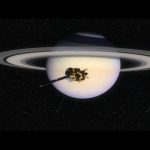
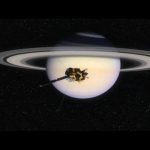
Há algumas décadas, para observar Saturno, os cientistas recorriam a telescópios. Hoje em dia, os segredos de Saturno e da sua misteriosa lua Titã são revelados graças aos dados e imagens enviados pela missão Cassini-Huygens. Saturno nunca antes visto, é o tema de Space esta semana.
Hasta hace algunas décadas para ver Saturno la ciencia tenía que mirar a través de telescópios. Hoy Saturno y su misteriosa luna Titán son nuevos conocidos gracias a la misión Cassini-Huygens que desde 2004 envía imágenes y datos. Una aventura que está cambiando la percepción que hasta ahora teníamos de nuestro Sistema Solar.
Noch vor einigen Jahrzehnten konnte man den Saturn nur mit dem Teleskop beobachten. Heute lüftet die Cassini-Huygens-Mission mit ihren Bildern die Geheimnisse des Saturnsystems und liefert Antworten auf entscheidende wissenschaftliche Fragen.
The world is an amazing place full of stories, beauty and natural wonder. Jump in to BBC Earth’s YouTube channel and meet your planet.You’ll find 50 years worth of astounding, entertaining, thought-provoking and educational natural history content on here.
Dramatic, rare, and exclusive, nature doesn’t get more exciting than this.
Subscribe to be the first to view new clips and competitions.
For more brilliant natural history shows, exclusive to YouTube, head over to our brand-new channel Earth Unplugged! http://www.youtube.com/earthunplugged
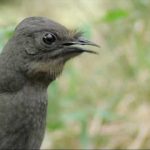
David looks at this amazing bird, which mimics the calls of other birds – and chainsaws and camera shutters! Watch more high quality videos on the BBC Earth YouTube channel here: http://www.youtube.com/BBCEarth and visit http://www.BBCEarth.com for all the latest natural history exclusives and fantastic new wildlife videos.
Space touches us all on Earth – it is used for protecting our environment, for improving our everyday lives, for safety and security, and for stimulating our need for knowledge. Space is a key asset for Europe to face global challenges, for boosting our economic growth, for building our future.
Valles Marineris, the ‘Grand Canyon’ of Mars, a huge canyon system around 4000 km long, up to 240 km wide and 6.5 km deep, where water is believed to have flowed many thousands of years ago. The geological history of Valles Marineris still remains a mystery.