Data from NASA’s Aquarius instrument has helped researchers create worldwide maps of soil moisture, showing how the wetness of the land fluctuates with the seasons and weather phenomena. Soil moisture, the water contained within soil particles, is an important player in Earth’s water cycle. When it launched in June 2011, the primary science objective of the Aquarius mission was to study the salt content of ocean surface waters. But investigators have since developed a method to retrieve soil moisture data from the instrument’s microwave radiometer. Also, SLS Core Preliminary Design Review, JWST update and Dry ice gullies on Mars.
Tag: NASA
-

NASA Flight Controller talks space with students
From NASA’s Mission Control in Houston, TX, International Space Station Flight Controller, Brion Au, answered questions from students at the Museum of Flight in Washington who are in the Washington Aerospace Scholars program, during a NASA Digital Learning Network (DLN) interactive broadcast.
NASA DLN broadcasts are connecting students around the country with the live mission operations being done by the International Space Station Flight Control Team. ISS flight controllers, astronauts and scientists answer student’s questions about living and working in space, how the Houston mission control center operates, and a wealth of other topics related to Science, Technology, Engineering, and Mathematics.
-
Carbon Observing Mission Launches on This Week @NASA
NASA’s Orbiting Carbon Observatory-2 mission is underway. Launched from California’s Vandenberg Air Force Base, OCO-2 will help track our impact on the amount of carbon dioxide in the atmosphere and help us better understand the various human-made and natural sources of CO-2. This is one of five Earth-observing missions scheduled in 2014 — the most Earth-focused missions launched in a single year, in more than a decade. Also, Saucer-shaped vehicle tested, Cygnus Orb-2 launch update, Space Launch System model tests and 10 years exploring Saturn.
-
Working @NASA 50 Years After The Civil Rights Act Willis Chapman
In recognition of the 50th anniversary of the Civil Rights Act of 1964, this series of short videos features NASA employees discussing their experiences and recollections related to the Civil Rights Movement, the civil rights progress of the last 50 years and the challenges that still confront us. The Civil Rights Act was signed into law July 2, 1964 by President Lyndon Baines Johnson — the namesake of NASA’s Johnson Space Center.
-
NASA’s Orbiting Carbon Observatory-2 (OCO-2) Launch From Vandenberg Air Force Base
NASA’s first spacecraft dedicated to studying carbon dioxide in Earth’s atmosphere was successfully launched from Vandenberg Air Force Base, California. OCO-2 will be collecting a great number of high-resolution measurements, which will provide a greater spatial distribution of CO2 over the entire globe, in short, a bigger, clearer, more complete picture of global CO2. These measurements will be combined with data from the ground-based network to provide scientists with the information that they need to better understand the processes that regulate atmospheric CO2 and its role in the carbon cycle.
-

Women at NASA Monica Bowie
Growing up, Monica Bowie dreamed of becoming a lawyer for the Department of Justice. After 23 years of working for NASA, she is delighted that the life she planned for herself was not what actually happened. Ms. Bowie started at NASA as a Clerk Typist and has worked her way up to serving as NASA’s Lead for International Guest Operations. She supports international guests attending Shuttle and Expendable Launch Vehicle events at NASA Centers, serving as the international lead coordinator for 22 Shuttle launches and landings. She established a unique process for supporting NASA’s international guests and became the recognized expert Agency-wide and around the world. Recently, she supported Office of International and Interagency Relations International Program Specialists in developing international agreements.
Ms. Bowie assisted in the negotiation and renewal of the NASA-ESA Spacelab Loan Agreement. She renewed the University of British Columbia Loan Agreement. She assisted with the coordination of the Exchange of Notes between the Government of the United States of America and the Government of Australia. She also coordinates Astronauts post-flight international visits. Ms. Bowie realizes that not everyone at NASA has the opportunity to associate with astronauts. Her work with this special group is priceless and creates memories that she will forever cherish.
-

NASA celebrates 50 years of Civil Rights progress
The Civil Rights Act of 1964 was signed into law July 2, 1964 by President Lyndon Baines Johnson, the namesake of NASA¹s Johnson Space Center.
NASA employees and retirees from around the Nation join together to share their stories as they remember the past, discuss diversity and look forward to future progress. -
NASA LGBT Pride Month Profile – Amy Stalker, Glenn Research Center
Amy Stalker is a mechanical engineer in the structural mechanics branch at Glenn Research Center.
-

Exploring Europa – Ocean Worlds of the Outer Solar System
Where is the best place to find living life beyond Earth? It may be a small, ice-covered moon of Jupiter or Saturn that harbors some of the most habitable real estate in our Solar System. Life loves liquid water and these moons have lots of it! Dr.Kevin Hand, Deputy Chief Scientist for Solar System Exploration at NASA’s Jet Propulsion Laboratory explains the science behind how these oceans exist and what we know about the conditions on these worlds. Dr. Hand focuses on Jupiter’s moon Europa, which is a top priority for future NASA missions and shows how the exploration of Earth’s ocean is helping our understanding of the potential habitability of worlds.
-

NASA Announces Latest Progress, Upcoming Milestones in Hunt for Asteroids
NASA is on the hunt for an asteroid to capture with a robotic spacecraft, redirect to a stable orbit around the moon, and send astronauts to study in the 2020s — all on the agency’s human Path to Mars. Agency officials announced on Thursday recent progress to identify candidate asteroids for its Asteroid Redirect Mission (ARM), increase public participation in the search for asteroids, and advance the mission’s design.
NASA plans to launch the ARM robotic spacecraft in 2019 and will make a final choice of the asteroid for the mission about a year before the spacecraft launches. NASA is working on two concepts for the mission: the first is to fully capture a very small asteroid in open space, and the second is to collect a boulder-sized sample off of a much larger asteroid. The agency will choose between these two concepts in late 2014 and further refine the mission’s design.NASA’s Spitzer Space Telescope made recent observations of an asteroid, designated 2011 MD, which bears the characteristics of a good candidate for the full capture concept. While NASA will continue to look for other candidate asteroids during the next few years as the mission develops, astronomers are making progress to find suitable candidate asteroids for humanity’s next destination into the solar system.
-

NASA Spinoff with Seth Green
Actor Seth Green discusses products and technology derived from NASA research, often called “spinoffs”, that are being used to improve life on Earth.
A spinoff is a commercialized product that incorporates NASA technology or NASA “know how” and benefits the public.
Spinoffs promote commercial activity, encourages economic growth, and stimulates innovation in business and commerce.www.spinoff.nasa.gov
-

NASA astronaut discusses life in space
Aboard the International Space Station, Expedition 40 Commander Steve Swanson of NASA talked with the CBS Radio Network and the ABC Digital Network about the daily activities he’s involved in on the orbital laboratory, during a pair of in-flight interviews May 27. Swanson and his two Russian crewmates will welcome three new crew mates on May 29.
-

This Week at NASA
The Morpheus prototype lander took to the skies above the Kennedy Space Center to test a suite of landing and hazard avoidance technology and self-navigate to a safe landing. Over in Hawaii, NASA’s Low-Density Supersonic Decelerator, a rocket-powered, saucer-shaped test vehicle, has completed final assembly and will be flown in an experimental flight test is planned for June. And, NASA is moving ahead with construction of the lander for the InSight mission to Mars where it will probe the Martian sub-surface. An ISS Science Forum took place Wednesday at Johnson Space Center, a Spacex Dragon Cargo craft departed the space station while a new expedition crew trains in Russia and students launch rockets that reach nearly 20,000 feet this week on This Week at NASA!
-
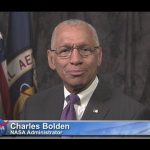
NASA Administrator Charles Bolden Discusses Space Station Science
NASA Administrator Bolden discusses the unique science accomplishments of the International Space Station (ISS) and plans for the future.
-
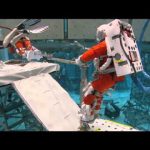
NASA Center Renamed on This Week @NASA
Two giants of aerospace history were honored at a May 13 ceremony to celebrate the renaming of Dryden Flight Research Center to Armstrong Flight Research Center, after the late Neil Armstrong and the naming of the center’s aeronautical test range after Hugh Dryden. Armstrong was the first person to set foot on the moon and a former research test pilot at the center and Dryden served as NASA’s first deputy administrator. Also, Space Station Crews on the Move, Asteroid Mission Gear Tested, Unstoppable Glacier Melt, Exploring Earth’s Magnetic Fields, Shrinking Great Red Spot, Helicopter Drop Test, Technology Transfer University and more!
-

NASA’s Fleet of Satellites Help Understand Climate Change on This Week @NASA
The third U.S. National Climate Assessment was released which took observations from NASA’s fleet of satellites to help understand climate change in the United States. Also, NASA’s Orbiting Carbon Observatory-2 spacecraft arrived at California’s Vandenberg Air Force Base to begin final preparations for a scheduled July 1 launch. In Florida, the remaining flight hardware for the Delta IV rocket that will launch NASA’s Orion spacecraft on Exploration Flight Test-1 in December arrived at Port Canaveral. At the Stennis Space Center, a cold-shock test for the RS-25 engine that will help power NASA’s new Space Launch System rocket was completed. The Chandra X-ray Observatory found new stars, simulated space dust was created on earth, a new ISS crew trains in Russia, Shannon Lucid and Jerry Ross are inducted into the Astronaut Hall of Fame and NASA recognizes the small business community for helping the agency work toward achieving its goals!
-
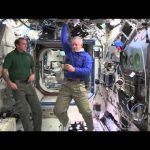
NASA Space Station Crew Discusses Life in Space with Idaho Students and Educators
Aboard the International Space Station, Expedition 39 Flight Engineers Rick Mastracchio and Steve Swanson of NASA discussed their daily work and research on the orbital laboratory with students at Boise State University in Idaho and educators, including former educator-astronaut Barbara Morgan, during an in-flight educational event May 6. Mastracchio is in the final week of his six-month mission on the station, heading for a landing in his Soyuz return craft in Kazakhstan on May 13, U.S. time. Swanson, who will become station commander on May 12, will remain aboard the complex until mid-September.
-
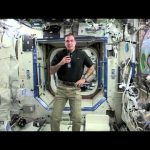
A Star Wars Day Message from NASA
In celebration of Star Wars Day, NASA flight engineer Rick Mastracchio hopes to deliver a special message from the International Space Station. Little does he know, however, that the Empire plans to jam his transmissions. Thankfully, R2-D2 is on the case.
-
Exploration forum showcases NASA’s Human Path to Mars
An April 29 exploration forum aired on NASA Television from NASA headquarters, featured Administrator Charles Bolden and other agency leadership showcasing NASA’s human exploration path to Mars. NASA is developing the capabilities needed to send astronauts to an asteroid by 2025 and Mars in the 2030s.
-
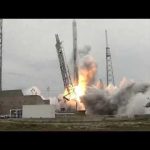
New NASA Cargo Launches to Space Station Aboard SpaceX-3 Mission
Approximately 2.4 tons of NASA science investigations and cargo were launched to the International Space Station aboard SpaceX’s Dragon spacecraft. The launch aboard the company’s Falcon 9 rocket took place from Space Launch Complex 40 at Cape Canaveral Air Force Station in Florida on Monday, April 18 at 3:25 p.m. EDT. Dragon’s cargo will support more than 150 experiments that will be conducted during space station Expeditions 39 and 40. The spacecraft will be grappled at 7:11 a.m. on Wednesday, April 16 by Expedition 39 Commander Koichi Wakata of the Japan Aerospace Exploration Agency. Dragon is scheduled to depart the space station May 18 for a splashdown in the Pacific Ocean west of Baja California, bringing with it about 3,500 pounds of science and research, hardware, crew supplies and spacewalk tools from the space station.
-
The Dragon Takes Flight on This Week @NASA
SpaceX-3 launches to the International Space Station, Kepler finds a Earth-sized planet and LADEE ends its mission on the lunar surface. These stories and more on this week’s, This Week @NASA
-

Bolden Testifies About the Budget on This Week @NASA
NASA Administrator Charlie Bolden responded to questions at a Congressional hearing about the agency’s $17.5 billion FY2015 budget proposal, which affirms the bi-partisan plan agreed to by Congress and the President for NASA to carry out an ambitious deep space exploration program. One that includes sending humans to an asteroid and Mars, extending use of the International Space Station to at least 2024, developing the Orion spacecraft and Space Launch System rocket and fostering commercial partnerships. Also, Asteroid Initiative Opportunities Forum, Nyberg and Parmitano in DC, Welcome to space! GPM’s first light, Exploration Design Challenge, Composite cryo tank delivered and Angry Nerd robot!
-
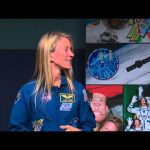
NASA Social with NASA Astronaut Karen Nyberg
NASA Astronaut Karen Nyberg spoke with social media followers and their guests at NASA Headquarters after recently returning from a 5.5-month stay aboard the International Space Station. Participants learned how Karen lived and worked from space, and as an artist, quilting and drawing http://www.nasa.gov/mission_pages/station/expeditions/expedition36/nyberg_profile.html#.UyMrRPldWSo during her off time; how she managed the unique aspects and challenges of parenting off the planet http://women.nasa.gov/karen-nyberg/ ; how as an astronaut and fitness lover, she exercised while on orbit http://www.youtube.com/watch?v=_ikouWcXhd0 ; current scientific experiments underway aboard the space station; how researchers study the effects of a weightless environment on the human body to help protect astronauts for long-duration spaceflight missions in the future; and how the space station is being used to test groundbreaking, new technologies that will help astronauts safely reach new deep space destinations, including an asteroid and eventually Mars.
-
NASA Observes World Water Day
On March 22, NASA will observe World Water Day. While our home planet is about 71 percent water, only 3 percent of that is available as fresh water. And many people do not have access to safe and clean water sources. On a water planet like Earth, “following the water” is a massive undertaking but one that is essential to predicting the future of our climate and the availability of water resources around the globe
-
Administrator Visits Aeronautics and Space Research Facilities on This Week @NASA
NASA Administrator Charlie Bolden visited aeronautics and space research facilities at Ames Research Center on March 17, including the laboratory for the volleyball-sized satellites called SPHERES, which are used onboard the International Space Station for space robotics and spacecraft navigation experiments. He also saw the high-fidelity airport control tower simulator called, “Future Flight Central”, used by NASA, the Federal Aviation Administration and other industry partners for joint research on next-generation air traffic management. Also, Rocket for Orion’s flight test highlighted, Future explorer celebrated at KSC, NASA’s new Chief Technologist, Coastal Flooding Challenge, Next space station crews , Hubble 24th anniversary image and more!
-
NASA Women’s History Month Profile, Karin Bozak – Glenn Research Center
Karin Bozak is an electrical engineer in the power systems branch at the NASA Glenn Research Center. In her current job she supports the design, integration, and test of a power-processing unit for NASA’s solar electric propulsion project.
-
NASA Administrator Checks Out SLS Flight Avionics on This Week @NASA
NASA Administrator Charlie Bolden visited Marshall Space Flight Center to see work being done on the avionics and flight software for NASA’s Space Launch System rocket. Marshall’s System Integration Lab conducts flight simulations of the avionics system — including hardware, software and operating systems — that will guide the launch vehicle, to see how the SLS will perform during launch. Also, Dream Chaser agreement expanded, ISS crew returns safely, Senate Youth Program, More high marks for Morpheus, Asteroid Data Hunter challenge, SXSW Interactive and more!
-
NASA Astronaut Mike Massimino on “Gravity” Award Win
NASA Astronaut Mike Massimino congratulates the filmmakers and actors of the Academy Award-winning film “Gravity” on their achievement.
-
NASA Astronaut Cady Coleman on ‘Gravity’ Oscar Win
NASA Astronaut Cady Coleman congratulates the cast and crew of the Academy Award-winning film “Gravity” on their achievement. Coleman lived aboard the International Space Station during Expedition 27, while “Gravity” was being filmed, and spoke with the film’s star, Sandra Bullock, from space. Coleman thanks the filmmakers for “sharing that world and that view with everyone.”
-
NASA and the Japanese Aerospace Agency Launch GPM Satellite
From the Tanegashima Space Center near the southernmost tip of Japan, NASA and the Japanese Aerospace Exploration Agency (JAXA) launched a joint mission to study global measurements of rainfall and snowfall abroad JAXA’s H-IIA rocket. The Global Precipitation Measurement (GPM) Core Observatory is a new NASA built science satellite that will link data from a constellation of current and planned satellites and produce the most precise observations of rain and snow every three hours from anywhere on the globe. The GPM Core Observatory will fly 253 miles (407 kilometers) above Earth in an orbit inclined at 65-degrees to the equator and will begin normal operations in about 60 days after launch. Data will be downlinked through NASA’s Tracking and Data Relay Satellite System to the agency’s Goddard Space Flight Center’s Precipitation Processing Center in Greenbelt, Md., where it will be processed and distributed over the Internet.
-
NASA Mars Curiosity Rover Report — February 14, 2014
A NASA Mars Curiosity rover team member gives an update on developments and status of the planetary exploration mission. The Mars Science Laboratory spacecraft delivered Curiosity to its target area on Mars at 1:31:45 a.m. EDT on Aug. 6, 2012 which includes the 13.8 minutes needed for confirmation of the touchdown to be radioed to Earth at the speed of light. The rover will conduct a nearly two-year prime mission to investigate whether the Gale Crater region of Mars ever offered conditions favorable for microbial life.
Curiosity carries 10 science instruments with a total mass 15 times as large as the science payloads on NASA’s Mars rovers Spirit and Opportunity. Some of the tools, such as a laser-firing instrument for checking rocks’ elemental composition from a distance, are the first of their kind on Mars. Curiosity will use a drill and scoop, which are located at the end of its robotic arm, to gather soil and powdered samples of rock interiors, then sieve and parcel out these samples into the rover’s analytical laboratory instruments.
-
2014 NASA African-American History Month Profile: Charles Doxley, Glenn Research Center
Charles Doxley is an electronics engineer at the NASA Glenn Research Center. His work for the avionics division includes working on a project that tests future space radios to make sure they are compatible with NASA’s spacecraft tracking and data relay satellite system. Doxley earned his Bachelor’s Degree in Mathematics from Albany State University in Albany, Georgia and a Master’s Degree from Tuskegee University in Tuskegee, Alabama.
-

NASA Highlights James Webb Space Telescope Progress
NASA Administrator Charles Bolden and Senator Barbara Mikulski of Maryland participated in a news conference Feb. 3 at NASA’s Goddard Space Flight Center in Greenbelt, Md., to discuss the status of the agency’s flagship science project, the James Webb Space Telescope (JWST). Bolden and Mikulski congratulated the JWST team for the integration at Goddard of all the telescope’s flight instruments and primary mirrors.
The most powerful space telescope ever built, Webb will be the premiere observatory of the next decade, serving thousands of astronomers worldwide. It will study every phase in the history of our universe, including the first luminous glows after the big bang, the formation of solar systems capable of supporting life on planets similar to Earth, and the evolution of our own solar system.
-

NASA Event Reflects on Accomplishments of Mars Rover
NASA will reflected on the work of Mars rover Opportunity during a news conference on Jan. 23.
Opportunity landed on the Red Planet Jan. 24, 2004, three weeks behind a twin rover named Spirit. Both rovers made important discoveries about wet environments that could have supported microbial life on ancient Mars. Spirit stopped communicating with Earth in 2010, but Opportunity is continuing to provide scientific results, and currently is investigating the rim of a crater 14 miles (22 kilometers) wide.
-
NASA Sends Out of This World New Year’s Greeting in Times Square
A New Year’s video greeting from Expedition 36 flight engineer Karen Nyberg, who returned from the International Space Station in November, and from three of the astronauts currently on board the space station: NASA’s Rick Mastracchio and Mike Hopkins, and Koichi Wakata of the Japan Aerospace Exploration Agency.
-

MAVEN is on the way on This Week @NASA
The Mars Atmosphere and Volatile EvolutioN, or MAVEN spacecraft launched from Cape Canaveral Air Force Station in Florida on a 10-month journey to Mars. MAVEN will take critical measurements of the Martian upper atmosphere to investigate how loss of the atmosphere to space impacted the history of water on the planet’s surface. Also, Happy anniversary, ISS!, Asteroid Ideas, LADEE in science orbit, Orion progress, Rocket autopilot test, Commercial crew, and more!
-
MAVEN is on the way on This Week @NASA
The Mars Atmosphere and Volatile EvolutioN, or MAVEN spacecraft launched from Cape Canaveral Air Force Station in Florida on a 10-month journey to Mars. MAVEN will take critical measurements of the Martian upper atmosphere to investigate how loss of the atmosphere to space impacted the history of water on the planet’s surface. Also, Happy anniversary, ISS!, Asteroid Ideas, LADEE in science orbit, Orion progress, Rocket autopilot test, Commercial crew, and more!
-
MAVEN Update on This Week @NASA
The MAVEN spacecraft is the latest NASA probe designed to help piece together a complete picture of The Red Planet’s past. MAVEN’s piece of the puzzle — to understand what happened to Mars’ upper atmosphere. Following its launch from Cape Canaveral Air Force Station — MAVEN is scheduled to reach Mars in September 2014. Also, Getting to deep space, A stunning new view of Saturn, Commercial success, Earth science satellite, Antarctica campaign, Tail wing technology and more!
-
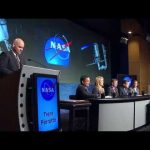
NASA News Conference on Completion of COTS Program
NASA Administrator Charles Bolden discusses the success of the agency’s Commercial Orbital Transportation Services (COTS) initiative during a televised news briefing at NASA Headquarters. Through COTS, NASA’s partners Space Exploration Technologies Corp. (SpaceX) and Orbital Sciences Corp., developed new U.S. rockets and spacecraft, launched from U.S. soil, capable of transporting cargo to low-Earth orbit and the International Space Station. A successful Orbital Sciences demonstration mission to the space station was completed in October, signifying the end of COTS development. SpaceX made its first trip to the space station in May 2012 and completed its COTS partnership with NASA the same year. The agency now contracts space station cargo resupply missions with both companies.
The briefing participants were:
— Charles Bolden, NASA Administrator
— Alan Lindenmoyer, Manager of Commercial Crew and Cargo Program, NASA
— Gwynne Shotwell, President, SpaceX
— Frank Culbertson, Executive Vice President and General Manager, Orbital Sciences Advanced Programs Group
— Frank Slazer, Vice President of Space Systems, Aerospace Industries Association
— Phil McAlister, Director of Commercial Spaceflight Development, NASA -
Mars Mission Briefed on This Week @NASA
During a news briefing at NASA headquarters officials and scientists discussed MAVEN, the agency’s next mission to Mars. Scheduled to launch November 18 from Cape Canaveral Air Force Station in Florida, MAVEN will study the history and change of Mars’ atmosphere, climate, and planetary habitability. Also, Bolden visits Langley, Power Up, Solar Flares, A busy time!, Free flight and Ice Flight!