Tag: NASA

  • China to Korea at night timelapse

    China to Korea at night timelapse

    Timelapse video made during ESA astronaut Thomas Pesquet’s second mission to the International Space Station, “Alpha”. The camera is setup to take pictures at intervals of two a second, and the pictures are then edited into this video that plays at 25 pictures a second. The video is around 12 times faster than real speed.

    Thomas shared this video on social media with the caption:
    “A night #timelapse over South-East Asia. Green lights of squid fishing, bright city lights of Hong Kong and Shanghai followed by Seoul until the border of the Korean peninsula closes on a pitch black DPRK.”

    Over 200 experiments are planned during Thomas’ time in space, with 40 European ones and 12 new experiments led by the French space agency #CNES.

    Latest updates on the Alpha mission can be found via @esaspaceflight on Twitter, with more details on ESA’s exploration blog via thomaspesquet.esa.int.

    Background information on the Alpha mission is available at www.esa.int/MissionAlpha with a brochure at www.esa.int/AlphaBrochure.

    ★ Subscribe: http://bit.ly/ESAsubscribe and click twice on the bell button to receive our notifications.

    Check out our full video catalog: http://bit.ly/SpaceInVideos
    Follow us on Twitter: http://bit.ly/ESAonTwitter
    On Facebook: http://bit.ly/ESAonFacebook
    On Instagram: http://bit.ly/ESAonInstagram
    On Pinterest: https://bit.ly/ESAonPinterest
    On Flickr: http://bit.ly/ESAonFlickr

    We are Europe’s gateway to space. Our mission is to shape the development of Europe’s space capability and ensure that investment in space continues to deliver benefits to the citizens of Europe and the world. Check out https://www.esa.int/ to get up to speed on everything space related.

    Copyright information about our videos is available here: https://www.esa.int/ESA_Multimedia/Terms_and_Conditions

    #ESA
    #MissionAlpha
    #Timelapse

  • NASA Science Live: Moon to Mars Ice and Prospecting Challenge

    NASA Science Live: Moon to Mars Ice and Prospecting Challenge

    NASA Science Live is back and we’re LIVE from the Moon to Mars Ice & Prospecting Challenge. Ten teams from across the country have been tasked with one goal: to extract ice beneath a simulated lunar or Martian surface. As we look forward to NASA’s Artemis program to the Moon and even one-day crewed missions to Mars, ideas from challenges like this will be essential in creating technology to access resources like water for humans to survive on other worlds. Join us on Sept 24th at 3:00 p.m. to hear from NASA experts and the teams.

    Meet the experts
    Alejandro Pensado is an Aerospace Engineer at NASA Langley Research Center. In 2018, Alejandro joined the Space Mission Analysis Branch at NASA Langley, working on in-situ resource utilization, propulsion, and Moon and Mars mission architectures. He says he loves the variety of his work and enjoys collaborating with creative and talented people which makes his job more fun. In his spare time, he loves photography, cooking, and traveling.

    Shelley Spears is the National Institute of Aerospace Director of Education and Outreach. As one of the organizers of the competition, Shelley says she loves the magnitude of impact her work has on society and its contribution to American competitiveness. In her spare time she loves boating, golfing, bird hunting with her dogs, traveling, staying fit, as well as cooking and entertaining with family and friends.

    Christopher Jones is a Senior Aerospace Engineer at NASA Langley Research Center. Ever since he was a young boy, Christopher always dreamt of working for NASA. Soon his opportunity came as he joined the Space Mission Analysis Branch at NASA Langley. He says he loves working on the diverse mix of projects that all support improving life on Earth through space. Outside of work, he spends his time playing racquetball, cooking, playing board games, and writing.

  • We Asked a NASA Technologist – Is There Oxygen on Mars?

    We Asked a NASA Technologist – Is There Oxygen on Mars?

    Is there oxygen on Mars? Technically yes, but it’s nothing like the amount we have on Earth. So breathing is out of the question. However, there IS a lot of carbon dioxide (CO2) on Mars. Now a new technology — MOXIE — has proven that we can convert Martian CO2 into oxygen for use by future explorers. NASA engineer Asad Aboobaker tells us more. Learn more about MOXIE: https://go.nasa.gov/37ujwOl

    Producers: Jessica Wilde & Scott Bednar
    Editor: Matthew Schara

  • The Future of NASA

    The Future of NASA

    NASA’s future will continue to be a story of human exploration, science, engineering and technology. Working together, we define the future, achieve the impossible and discover the unknown.

    With our Artemis missions, NASA will land the first woman and first person of color on the Moon, using innovative technologies to explore more of the lunar surface than ever before. We will collaborate with commercial and international partners and establish the first long-term presence on the Moon. Then, we will use what we learn on and around the Moon to take the next giant leap: sending the first astronauts to Mars.

    We will continue to nurture the development of a vibrant low-Earth orbit economy that builds on the work done to date by the International Space Station. Commercial companies will play an increasing role in the space industry: launching rockets and satellites, transporting cargo and crew, building infrastructure in low-Earth orbit.

    NASA research and missions are essential to the future of Earth. The unique vantage point of space allows us to better understand Earth’s systems and use that knowledge to live sustainably on our home planet, protect life around the world, and adapt to natural and human-caused changes. Our data and observations will help protect our home planet.

    Our James Webb Space Telescope will peer farther into the Universe than ever before. Our scientists will work to increase an understanding of our planet, our solar system and our place in the universe. We will continue to try to answer the question, “Are we alone?”

    Download Link: https://images.nasa.gov/details-The%20Future%20of%20NASA

    Video Credits:
    Producer/Editor: Amy Leniart

  • NASA Town Hall on Human Spaceflight

    NASA Town Hall on Human Spaceflight

    Tune in to hear NASA Administrator Bill Nelson and other senior leaders provide updates about our human spaceflight programs, projects, and activities.

  • We Asked a NASA Scientist – Does NASA Know About All the Asteroids?

    We Asked a NASA Scientist – Does NASA Know About All the Asteroids?

    Does NASA know about ALL the asteroids? We know about the vast majority of larger ones and none of those pose a threat, but space is big, so we’re always on the lookout. NASA asteroid expert Dr. Amy Mainzer explains. Learn more: nasa.gov/planetarydefense

    Producer: Scott Bednar
    Producer/Editor: Jessica Wilde

  • We Asked a NASA Scientist – Do Aliens Exist?

    We Asked a NASA Scientist – Do Aliens Exist?

    Do aliens exist? Extraterrestrial life has never been discovered. However, that doesn’t mean it doesn’t exist. And at NASA, astrobiologists like Dr. Lindsay Hays are trying to answer one of the most profound questions ever: Is there life beyond Earth? Explore more: https://astrobiology.nasa.gov/

    Producer: Scott Bednar
    Producer/Editor: Jessica Wilde

  • NASA Psyche Mission: Charting a Metallic World

    NASA Psyche Mission: Charting a Metallic World

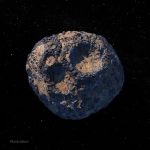
    In this artist’s rendition, we explore a metallic world named Psyche, an asteroid that offers a unique window into the building blocks of planet formation. The NASA Psyche mission launches in 2022 and will arrive at the asteroid Psyche, which orbits the Sun between Mars and Jupiter, in 2026. The spacecraft, also named Psyche, will spend 21 months orbiting the asteroid, mapping it and studying its properties. The mission is led by Principal Investigator Lindy Elkins-Tanton of Arizona State University. NASA’s Jet Propulsion Laboratory is responsible for the mission’s overall management, system engineering, integration and test, and mission operations. Maxar Technologies is providing a high-power solar electric propulsion spacecraft chassis.

  • Earth views from space – 1 hour long in 4K!

    Earth views from space – 1 hour long in 4K!

    Watch over one hour of our planet, seen from the International Space Station, in 4K resolution. This compilation was made from video taken by ESA astronauts, mostly by Thomas Pesquet during his first mission, Proxima, and ESA astronaut Alexander Gerst on his second mission, Horizons, as well as footage from Samantha Cristoforetti’s Futura mission and Paolo Nespoli’s Vita mission.

    Flying 400 km above our amazing planet Earth, the Space Station travels at 28 800 km/h to stay in orbit. The videos are in real time and not sped up or edited. Most of the scenes were filmed in the European-built Cupola module, the Space Station’s observatory.

    On 21 April 2001, the first ESA astronaut Umberto Guidoni arrived at the Space Station. Since then, the Space Station has grown immensely, as have the number of Europeans to have worked in it, together with the science experiments performed in orbit.

    Europe contributes around 8% of the running costs of the International Space Station, but has built a large part of the structure, including ESA’s Columbus laboratory, the Cupola observatory, the Tranquillity and Harmony modules, as well as the computers that collect data and provide navigation, communications and operations for the Russian segment.

    ESA also provided the Space Station with supplies and boosted its orbit through five Automated Transfer Vehicles, the heaviest and most versatile Space Station supply ferry. This programme evolved into the European Service Modules that ESA is supplying for @NASA’s Artemis programme, taking humans forward to the Moon and thus continuing the exemplary international collaboration beyond Earth’s orbit.

    Since Umberto’s mission, there have been 26 further ESA astronaut missions to the International Space Station, with astronauts flying to Station on either the Russian Soyuz or US Space Shuttle spacecraft.

    Thomas Pesquet’s second mission, Alpha, is the 28th mission for ESA, with ESA astronaut Matthias Maurer already lined up for his first flight later this year, and ESA astronaut Samantha Cristoforetti scheduled for the 30th ESA International Space Station mission in 2022.

    ★ Subscribe: http://bit.ly/ESAsubscribe and click twice on the bell button to receive our notifications.

    Check out our full video catalog: http://bit.ly/SpaceInVideos
    Follow us on Twitter: http://bit.ly/ESAonTwitter
    On Facebook: http://bit.ly/ESAonFacebook
    On Instagram: http://bit.ly/ESAonInstagram
    On Pinterest: https://bit.ly/ESAonPinterest
    On Flickr: http://bit.ly/ESAonFlickr

    We are Europe’s gateway to space. Our mission is to shape the development of Europe’s space capability and ensure that investment in space continues to deliver benefits to the citizens of Europe and the world. Check out https://www.esa.int/ to get up to speed on everything space related.

    Copyright information about our videos is available here: https://www.esa.int/ESA_Multimedia/Terms_and_Conditions

    #ESA
    #InternationalSpaceStation
    #EarthFromSpace

  • We Asked a NASA Technologist: Is there Weather on Mars?

    We Asked a NASA Technologist: Is there Weather on Mars?

    Is there weather on Mars? Short answer: yes! And just like on Earth it varies wildly. Now, thanks to the Mars Environmental Dynamics Analyzer, or MEDA instrument on NASA’s Perseverance Mars Rover, we’re learning even more about Martian meteorology with daily weather reports. Over to José Antonio Rodríguez-Manfredi at the Spanish Astrobiology Center for more. Find out more about MEDA: https://go.nasa.gov/3lNuKWK

    Producer: Scott Bednar
    Producer/Editor: Jessica Wilde

  • Space pizza party with Thomas Pesquet 🍕 #shorts

    Space pizza party with Thomas Pesquet 🍕 #shorts

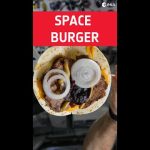
    Here’s the space burger recipe of ESA astronaut Thomas Pesquet: “Tortillas, rehydrated beef patty, fresh onion from a cargo vehicle, a slice of lettuce (grown on the International Space Station for a scientific experiment: don’t tell), and various sauces. It tasted like heaven, and flew like an angel”

    Follow Thomas: http://bit.ly/ThomasPesquetBlog

    ★ Subscribe: http://bit.ly/ESAsubscribe and click twice on the bell button to receive our notifications.

    Check out our full video catalog: http://bit.ly/SpaceInVideos
    Follow us on Twitter: http://bit.ly/ESAonTwitter
    On Facebook: http://bit.ly/ESAonFacebook
    On Instagram: http://bit.ly/ESAonInstagram
    On Pinterest: https://bit.ly/ESAonPinterest
    On Flickr: http://bit.ly/ESAonFlickr

    We are Europe’s gateway to space. Our mission is to shape the development of Europe’s space capability and ensure that investment in space continues to deliver benefits to the citizens of Europe and the world. Check out https://www.esa.int/ to get up to speed on everything space related.

    Copyright information about our videos is available here: https://www.esa.int/ESA_Multimedia/Terms_and_Conditions

    #ESA
    #SpacePizza
    #ThomasPesquet

  • SECOND ATTEMPT: NASA and SpaceX Launch to the International Space Station

    SECOND ATTEMPT: NASA and SpaceX Launch to the International Space Station

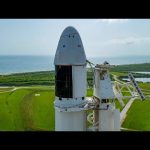
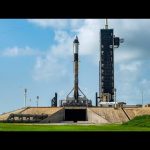
    On Sun. Aug. 29, don’t miss the second launch attempt of a SpaceX Dragon spacecraft to the International Space Station. Live coverage of the mission begins at 2:45 a.m. EDT (06:45 UTC) with liftoff targeted for 3:14 a.m. EDT (07:14 UTC) from Launch Complex 39A at Kennedy Space Center in Florida.

    In addition to approximately 2,300 pounds (1,000 kilograms) of science experiments riding aboard the spacecraft, the crew can look forward to assortments of cheese, ice cream, and veggies! Docking to the orbiting lab is targeted for Mon., Aug. 30, at 11 a.m. EDT (15:00 UTC).

  • NASA and SpaceX Launch to the International Space Station

    NASA and SpaceX Launch to the International Space Station

    LAUNCH UPDATE: Due to weather, today’s SpaceX cargo mission is postponed. The next attempt is Sun. Aug. 29 with our live coverage beginning at 2:45 a.m. EDT (06:45 UTC). Liftoff is targeted for 3:14 a.m. EDT (07:14 UTC).

    Join us Sat. Aug. 28 at 3:15 a.m. EDT (07:15 UTC) for live coverage of the next SpaceX mission to the International Space Station! Liftoff of the Falcon 9 rocket and Dragon cargo spacecraft is targeted for 3:37 a.m. EDT (07:37 UTC) from Launch Complex 39A at Kennedy Space Center in Florida.

    Riding aboard the spacecraft are approximately 2,300 pounds (1,000 kilograms) of science experiments, including research on osteoporosis, a remote-controlled drug delivery system, and more! Docking to the orbiting lab is targeted for Sun., Aug. 29, at 11 a.m. EDT (15:00 UTC).

  • Southern lights season is over 🐸 #shorts

    Southern lights season is over 🐸 #shorts

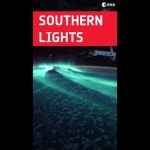
    Before the season came to an end, @thom_astro captured this timelapse of the aurora australis from the @iss and shared it on his social media channels saying: “We’ve been looking, but there’s nothing to see anymore in our aurora sweet spot (southwest of Australia, midway to Antarctica). Don’t worry, I still have a few to share. Don’t you just 💚 the way the light skips across Earth in this one as the solar arrays comes into view.”

    Follow Thomas: http://bit.ly/ThomasPesquetBlog

    ★ Subscribe: http://bit.ly/ESAsubscribe and click twice on the bell button to receive our notifications.

    Check out our full video catalog: http://bit.ly/SpaceInVideos
    Follow us on Twitter: http://bit.ly/ESAonTwitter
    On Facebook: http://bit.ly/ESAonFacebook
    On Instagram: http://bit.ly/ESAonInstagram
    On Flickr: http://bit.ly/ESAonFlickr

    We are Europe’s gateway to space. Our mission is to shape the development of Europe’s space capability and ensure that investment in space continues to deliver benefits to the citizens of Europe and the world. Check out https://www.esa.int/ to get up to speed on everything space related.

    Copyright information about our videos is available here: https://www.esa.int/ESA_Multimedia/Terms_and_Conditions

    #ESA
    #SouthernLights
    #ThomasPesquet

  • We Asked a NASA Scientist: Will an Asteroid Ever Hit Earth?

    We Asked a NASA Scientist: Will an Asteroid Ever Hit Earth?

    Will an asteroid ever hit Earth? There are no known impact threats, but tiny meteors burn up in Earth’s atmosphere all the time! NASA asteroid expert Dr. Kelly Fast tells us more. Learn more about NASA’s planetary defense efforts: nasa.gov/planetarydefense

  • How do you like your (space) burger? 🍔 #shorts

    How do you like your (space) burger? 🍔 #shorts

    Here’s the space burger recipe of ESA astronaut Thomas Pesquet: “Tortillas, rehydrated beef patty, fresh onion from a cargo vehicle, a slice of lettuce (grown on the International Space Station for a scientific experiment: don’t tell), and various sauces. It tasted like heaven, and flew like an angel”

    Follow Thomas: http://bit.ly/ThomasPesquetBlog

    ★ Subscribe: http://bit.ly/ESAsubscribe and click twice on the bell button to receive our notifications.

    Check out our full video catalog: http://bit.ly/SpaceInVideos
    Follow us on Twitter: http://bit.ly/ESAonTwitter
    On Facebook: http://bit.ly/ESAonFacebook
    On Instagram: http://bit.ly/ESAonInstagram
    On Pinterest: https://bit.ly/ESAonPinterest
    On Flickr: http://bit.ly/ESAonFlickr

    We are Europe’s gateway to space. Our mission is to shape the development of Europe’s space capability and ensure that investment in space continues to deliver benefits to the citizens of Europe and the world. Check out https://www.esa.int/ to get up to speed on everything space related.

    Copyright information about our videos is available here: https://www.esa.int/ESA_Multimedia/Terms_and_Conditions

    #ESA
    #SpaceBurger
    #ThomasPesquet

  • Capturing a Cygnus spacecraft

    Capturing a Cygnus spacecraft

    Capturing a spacecraft requires a complex choreography between human and machine, but these two make it look easy. In this video ESA astronaut Thomas Pesquet and @NASA astronaut Megan McArthur work together to grapple and berth the @Northrop Grumman Cygnus 16 spacecraft on the Earth-facing port of the Unity module on the International Space Station.

    At 12:07 CEST (11:07 BST) Thursday 12 August, Megan used the International Space Station’s robotic Canadarm2 to grapple the spacecraft packed with over 3700 kg of science and supplies as Thomas monitored Cygnus systems during its approach.

    The Cygnus will remain docked to the Station for about three months before it departs in November 2021.

    Follow Thomas: http://bit.ly/ThomasPesquetBlog

    ★ Subscribe: http://bit.ly/ESAsubscribe and click twice on the bell button to receive our notifications.

    Check out our full video catalog: http://bit.ly/SpaceInVideos
    Follow us on Twitter: http://bit.ly/ESAonTwitter
    On Facebook: http://bit.ly/ESAonFacebook
    On Instagram: http://bit.ly/ESAonInstagram
    On Pinterest: https://bit.ly/ESAonPinterest
    On Flickr: http://bit.ly/ESAonFlickr

    We are Europe’s gateway to space. Our mission is to shape the development of Europe’s space capability and ensure that investment in space continues to deliver benefits to the citizens of Europe and the world. Check out https://www.esa.int/ to get up to speed on everything space related.

    Copyright information about our videos is available here: https://www.esa.int/ESA_Multimedia/Terms_and_Conditions

    #ESA
    #Timelapse

    #MissionAlpha

  • What would you burn up in the atmosphere? #shorts

    What would you burn up in the atmosphere? #shorts

    The Pirs docking compartment (also called DC-1) left the International Space Station together with the Progress MS-16 cargo spacecraft after 20 years of service and burned up safely in the atmosphere above the Pacific Ocean on 26 July 2021. Its departure made room for the Nauka science module.

    European Space Agency astronaut, Thomas Pesquet, filmed this video and shared on social media with the caption: “Here’s a timelapse of DC1’s re-entry last week, together with its tow truck, Progress 77P, seen from above. Atmospheric re-entry without a heat shield results in a nice fireball (you clearly see smaller pieces of melting metal floating away and adding to the fireworks). This timelapse is sped up, we could observe the fireball for around six minutes. Next time you see a shooting star, it might be our ISS trash getting burnt up… Not sure it will be granted in that case, but you never know, I’d still advise to go ahead and make a wish.”

    Follow Thomas: http://bit.ly/ThomasPesquetBlog

    ★ Subscribe: http://bit.ly/ESAsubscribe and click twice on the bell button to receive our notifications.

    Check out our full video catalog: http://bit.ly/SpaceInVideos
    Follow us on Twitter: http://bit.ly/ESAonTwitter
    On Facebook: http://bit.ly/ESAonFacebook
    On Instagram: http://bit.ly/ESAonInstagram
    On Flickr: http://bit.ly/ESAonFlickr

    We are Europe’s gateway to space. Our mission is to shape the development of Europe’s space capability and ensure that investment in space continues to deliver benefits to the citizens of Europe and the world. Check out https://www.esa.int/ to get up to speed on everything space related.

    Copyright information about our videos is available here: https://www.esa.int/ESA_Multimedia/Terms_and_Conditions

    #ESA
    #Timelapse
    #MissionAlpha

  • Banjo time with Thomas Pesquet! #shorts

    Banjo time with Thomas Pesquet! #shorts

    European Space Agency astronaut Thomas Pesquet shared this video on social media with the caption:

    “100 days in space for #MissionAlpha. It feels like a long time ago, but we also installed new toilets shortly after arriving. I was looking at the procedures on the tablet velcroed to my thigh, and yes, this filter looked so much like a banjo, I had to. The same video specialist at ESA who edits the timelapse videos (and much, much more!), Melanie Cowan, spotted this clip from the Space Station onboard camera views, added some music and the result is… perfectly embarrassing! . True story: I actually helped Mark on this day. A little. Maybe. No one knows.”

    Over 200 experiments are planned during Thomas’ time in space, with 40 European ones and 12 new experiments led by the French space agency @CNES.

    Follow Thomas: http://bit.ly/ThomasPesquetBlog

    ★ Subscribe: http://bit.ly/ESAsubscribe and click twice on the bell button to receive our notifications.

    Check out our full video catalog: http://bit.ly/SpaceInVideos
    Follow us on Twitter: http://bit.ly/ESAonTwitter
    On Facebook: http://bit.ly/ESAonFacebook
    On Instagram: http://bit.ly/ESAonInstagram
    On Flickr: http://bit.ly/ESAonFlickr

    We are Europe’s gateway to space. Our mission is to shape the development of Europe’s space capability and ensure that investment in space continues to deliver benefits to the citizens of Europe and the world. Check out https://www.esa.int/ to get up to speed on everything space related.

    Copyright information about our videos is available here: https://www.esa.int/ESA_Multimedia/Terms_and_Conditions

    #ESA
    #MissionAlpha
    #ThomasPesquet

  • NASA Science Live: How to Become a NASA Intern

    NASA Science Live: How to Become a NASA Intern

    Have you ever wondered what it would be like to work at NASA? Across the country, NASA interns from high school to graduate students are using their creativity and innovation to work on real NASA missions. Join us on Thursday, July 29th at 3:00 p.m. ET for National Intern Day, where you will hear from our very own interns on how you can join the NASA family. Send in your questions using #askNASA.

    Elio Morillo is the host for this episode and a Mars 2020 Test and Operations Engineer at NASA’s Jet Propulsion Laboratory. Elio started his NASA journey as an intern working on the System Testbed for Mars 2020. After he completed his master degree, he accepted a full time position. He says his favorite part about working for NASA is being able to showcase the amazing work his team is doing on Mars and inspiring future generations to pursue a career in STEM. In his spare time, he mentors students and participates in STEM outreach programs. He also loves exploring the culinary scene in Los Angeles, Latin dancing, surfing, and hiking!

    Annalise Giuliani is a NASA Internship Program Coordinator at Johnson Space Center. Annalise began her NASA journey as an intern in 2016. Shortly after graduating from college, she packed her bags and moved to California where she worked as the Multimedia Coordinator at Armstrong Flight Research Center. Several short years later, she moved to Houston, Texas to work as an Internship Coordinator at Johnson Space Center. She says her favorite part about working at NASA is working alongside individuals who come from such diverse backgrounds and professions. In her spare time she enjoys traveling, photography, and spending time with her friends, family, and her yellow lab, Gracie!

    Albert Kodua is a NASA Student Airborne Research Program Intern at Armstrong Flight Research Center studying California wildfires using NASA satellite imagery. Albert’s favorite part about interning at NASA is the sense of community. He says it’s really nice to have a built-in network of people who want him to succeed and grow. Albert is currently going into his senior year as a Materials Science and Engineering major at Virginia Tech and is the Launch and Early Operations sub-team lead of one of Virginia Tech’s premier rocketry design teams, the Orbital Launch Vehicle Team.

    Maria Pena is a remote summer intern at Armstrong Flight Research Center. There, she is working on developing object detection for autonomous Unmanned Aircraft Systems obstacle avoidance. Her favorite part about being an intern are the various NASA intern events. In her spare time, she likes to take portraits and nature photographs. One piece of advice she’d like to share for anyone wanting to become an intern is to always try. Never limit yourself, and push past your comfort zone.

  • NASA Honors the 100th Anniversary of John Glenn’s Birth

    NASA Honors the 100th Anniversary of John Glenn’s Birth

    NASA honors the 100th anniversary of the birth of space pioneer John Glenn. Glenn was one of NASA’s original seven Mercury astronauts, served four terms as a U.S. senator from Ohio, and flew on the space shuttle Discovery at the age of 77.

    His flight on Friendship 7 on Feb. 20, 1962, showed the world that America was a serious contender in the space race with the Soviet Union. It also made Glenn an instant hero as the first American to orbit Earth.

    After retiring from NASA in 1965, Glenn took an active part in Ohio politics and environmental protection efforts. He won his Senate seat in 1974, carrying all 88 counties of Ohio. He was re-elected in 1980 with the largest margin in Ohio history.

    Ohio returned him to the Senate for a third term in 1986, again with a substantial majority. In 1992 he was elected again, becoming the first popularly elected senator from his state to win four consecutive terms.

    In 1998, Glenn flew on the STS-95 Discovery shuttle flight, a 9-day mission during which the crew supported a variety of research payloads including deployment of the Spartan solar-observing spacecraft, the Hubble Space Telescope Orbital Systems Test Platform, and Glenn’s investigations on space flight and the aging process.

  • Mission Equity: Making NASA Accessible to All

    Mission Equity: Making NASA Accessible to All

    NASA Administrator Bill Nelson and other agency officials and guests discuss the many ways the public can participate in NASA’s mission.

    Five specific avenues of participation and partnership with the agency include:

    NASA’s Internship Program
    Science Competition Process
    Grants & Cooperative Agreements
    Procurement/Contracting Strategies
    Early-Stage Innovations & Partnerships

    For more information visit: https://www.nasa.gov/mission-equity

    Video Producer: Jori Kates
    Music Credit: Universal Production Music

  • Spacewalk season timelapse, episode 3

    Spacewalk season timelapse, episode 3

    Timelapse video made during ESA astronaut Thomas Pesquet’s second mission to the International Space Station, “Alpha”.
    ESA astronaut Thomas Pesquet and @NASA astronaut Shane Kimbrough performed three spacewalks in the span of 10 days to install two new solar arrays that will generate more electricity on the International Space Station.

    The third and final spacewalk for the duo happened on June 25 to finish installing the second pair of new solar arrays. This spacewalk proceeded without problems, and the two new solar arrays are already working and supplying power to the Space Station.

    The design of the new solar arrays will be used to power the lunar Gateway that will be built in an orbit around the Moon – the next outpost in space for the agencies that run the International Space Station.

    Thomas has now spent exactly 33 hours on spacewalks, all with Shane over the course of two spaceflights.

    Thomas posted this video on his social media channels with the caption: “Aki took another great timelapse of our last spacewalk to install the new solar panels… for now. Four more are set to be installed, but they are not on the Station yet. This timelapse is great because it shows how small we are compared to the huge layout of the Space Station (it is about the same size as a football field – both types: American football or actually-using-your-feet-football fields). Note how the solar arrays we are working on don’t move, this is because they were turned off and not following the Sun so were not generating power. As an extra precaution we didn’t connect the power cables until darkness!”
    Over 200 experiments are planned during Thomas’ time in space, with 40 European ones and 12 new experiments led by the French space agency @CnesFrance.

    Follow Thomas: http://bit.ly/ThomasPesquetBlog

    Timelapse directed by Aki Hoshide, edited by Melanie Cowan.
    ★ Subscribe: http://bit.ly/ESAsubscribe and click twice on the bell button to receive our notifications.

    Check out our full video catalog: http://bit.ly/SpaceInVideos
    Follow us on Twitter: http://bit.ly/ESAonTwitter
    On Facebook: http://bit.ly/ESAonFacebook
    On Instagram: http://bit.ly/ESAonInstagram
    On Flickr: http://bit.ly/ESAonFlickr

    We are Europe’s gateway to space. Our mission is to shape the development of Europe’s space capability and ensure that investment in space continues to deliver benefits to the citizens of Europe and the world. Check out https://www.esa.int/ to get up to speed on everything space related.

    Copyright information about our videos is available here: https://www.esa.int/ESA_Multimedia/Terms_and_Conditions

    #ESA
    #Spacewalk
    #MissionAlpha

  • A Message from NASA Deputy Administrator Col. Pam Melroy to the NASA Workforce

    A Message from NASA Deputy Administrator Col. Pam Melroy to the NASA Workforce

    NASA’s new deputy administrator Col. Pam Melroy shares her vision for NASA’s future.

    One of only two women to command a space shuttle, Melroy logged more than 38 days in space. She served as pilot on two flights, STS-92 in 2000 and STS-112 in 2002, and was the mission commander on STS-120 in 2007. All three of her missions were assembly missions to build the International Space Station.

    After graduating from United States Air Force Test Pilot School, Melroy logged more than 6,000 flight hours in more than 50 different aircraft. She is a veteran of Operation Desert Shield/Desert Storm and Operation Just Cause, with more than 200 combat and combat support hours.

    After serving more than two decades in the Air Force and as a NASA astronaut, Melroy took on a number of leadership roles, including at Lockheed Martin, the Federal Aviation Administration, the Defense Advanced Research Projects Agency, Nova Systems Pty, Australia, and as an advisor to the Australian Space Agency. She also served as an independent consultant and a member of the National Space Council’s Users Advisory Group.

    Producer/Editor: Lacey Young
    Music: Universal Production Music

  • NASA Science Live: International Asteroid Day

    NASA Science Live: International Asteroid Day

    At NASA, every day is asteroid day. From the many missions journeying to asteroids in our solar system – some even returning samples to Earth – to the efforts to find, track and monitor near-Earth objects and protect our planet from potential impact hazards, NASA and its partners are always looking to the skies. Join us on International Asteroid Day, Wednesday, June 30 at 1:00 p.m. ET to hear from experts and ask them your questions about all things asteroids. Send in questions using #askNASA.

    Meet the experts:

    Dr. Dani DellaGiustina is a Research Scientist at the University of Arizona and the acting Deputy Principal Investigator for the OSIRIS-REx mission. Dani has been studying our solar system and asteroids for quite some time. She says she loves seeing images and data that’s coming off spacecraft for the first time because chances are – you might be the first human who has ever seen a rock or feature on a planetary surface. She says it feels like you are on the edge of human knowledge. In her spare time, Dani enjoys being outside and hanging out with her dogs.

    Dr. Terik Daly is a Senior Scientist at Johns Hopkins University Applied Physics Laboratory. As a planetary scientist, Terik investigates how the solar system formed and changes through time. He loves working in teams to solve problems that are too big for any one person to solve, which is why he finds his work in planetary defense interesting. Terik has three young kids and enjoys cooking, yoga and biking.

  • The NASA Family and Your Family: Moving Forward Safely

    The NASA Family and Your Family: Moving Forward Safely

    Staying safe and healthy moves us forward – for your family and the NASA family.

    We prioritize the safety of our employees and our communities. All employees are strongly encouraged to monitor vaccine availability in their local communities while the agency updates its capabilities to support vaccine distribution and works with states to get vaccine for our mission-critical workforce.

    Download Link: https://images.nasa.gov/details-The%20NASA%20Family%20and%20Your%20Family%20-%20Moving%20Forward%20Safely

    Video Credits
    Producer/Editor: Amy Leniart

  • Spacewalk season timelapse, episode 2

    Spacewalk season timelapse, episode 2

    Timelapse video made during ESA astronaut Thomas Pesquet’s second mission to the International Space Station, “Alpha”.
    On Sunday 20 June 2021 Thomas and @NASA astronaut Shane Kimbrough were helped into their spacesuits again for their fourth spacewalk together. This time it was to complete installation of the first new solar array and get ahead on the second.

    During this spacewalk the duo unfolded the solar arrays that are rolled into tubes for transport, aligned them, connected data cables and secured them to the mounting bracket. Connecting the power lines must be done during the orbital night-time as a precaution to avoid any chance of electric shock.

    As Thomas and Shane waited for the night to arrive, Shane’s helmet lights and camera partially detached from his helmet but Thomas used some wire to successfully reattach them as a temporary fix.

    From there the spacewalk went smoothly. Shane and Thomas connected the new solar array, watched it unfurl and prepared for the installation of the second new solar array. The second spacewalk lasted 6 hours and 28 minutes, with the duo arriving back at the airlock at 20:10 CEST (19:10 BST).

    This video shows scenes from this spacewalk. The images for this timelapse were taken by @JAXA | 宇宙航空研究開発機構 astronaut and Space Station commander Aki Hoshide.
    Thomas posted this video on his social media with the caption: “We have to do EVAs, but someone has to keep running the Space Station while we are preparing, spacewalking, reconfiguring, preparing again… Aki has been rock solid taking care of the spaceship pretty much by himself, performing all the maintenance and the science experiments, AND ON TOP OF THAT he found the time to take timelapses of our little walks outside. The man is a machine!”

    Over 200 experiments are planned during Thomas’ time in space, with 40 European ones and 12 new experiments led by the French space agency @CNES.

    Follow Thomas: http://bit.ly/ThomasPesquetBlog

    Timelapse directed by Aki Hoshide, edited by Melanie Cowan.

    ★ Subscribe: http://bit.ly/ESAsubscribe and click twice on the bell button to receive our notifications.

    Check out our full video catalog: http://bit.ly/SpaceInVideos
    Follow us on Twitter: http://bit.ly/ESAonTwitter
    On Facebook: http://bit.ly/ESAonFacebook
    On Instagram: http://bit.ly/ESAonInstagram
    On Flickr: http://bit.ly/ESAonFlickr

    We are Europe’s gateway to space. Our mission is to shape the development of Europe’s space capability and ensure that investment in space continues to deliver benefits to the citizens of Europe and the world. Check out https://www.esa.int/ to get up to speed on everything space related.

    Copyright information about our videos is available here: https://www.esa.int/ESA_Multimedia/Terms_and_Conditions

    #ESA
    #Spacewalk
    #MissionAlpha

  • Spacewalk season timelapse, episode 1

    Spacewalk season timelapse, episode 1

    Timelapse video made during ESA astronaut Thomas Pesquet’s second mission to the International Space Station, “Alpha”.
    On 16 June 2021 Thomas and @NASA astronaut Shane Kimbrough went on a spacewalk to install a new solar array for the International Space Station. These arrays, called IROSA for ISS Roll-Out Solar Array, had to be taken from their storage area outside the Space Station and passed from spacewalker to spacewalker to the worksite. There the rolled arrays were to be secured, unfolded, connected and then unfurled.

    During the spacewalk a small technical problem in Shane’s spacesuit required him to return to the airlock and restart his Display and Control Module. This module provides astronauts with continuous information on pressure, temperature and other vital data during a spacewalk. Though the restart was successful and Shane was in no danger, it delayed the duo’s work, preventing them from completing installation of the first new solar array as planned. A second spacewalk was done on 20 June to finish installing the first solar array.

    This video shows scenes from the first spacewalk with Thomas being moved on the robotic arm, at the controls was NASA astronaut Megan McArthur. The images for this timelapse were taken by @JAXA | 宇宙航空研究開発機構 astronaut and Space Station commander Aki Hoshide.

    Thomas posted this video on his social media with the caption: “We have to do EVAs, but someone has to keep running the Space Station while we are preparing, spacewalking, reconfiguring, preparing again… Aki has been rock solid taking care of the spaceship pretty much by himself, performing all the maintenance and the science experiments, AND ON TOP OF THAT he found the time to take timelapses of our little walks outside. The man is a machine!”

    Over 200 experiments are planned during Thomas’ time in space, with 40 European ones and 12 new experiments led by the French space agency @CNES

    Follow Thomas: http://bit.ly/ThomasPesquetBlog

    Timelapse directed by Aki Hoshide, edited by Melanie Cowan.

    ★ Subscribe: http://bit.ly/ESAsubscribe and click twice on the bell button to receive our notifications.

    Check out our full video catalog: http://bit.ly/SpaceInVideos
    Follow us on Twitter: http://bit.ly/ESAonTwitter
    On Facebook: http://bit.ly/ESAonFacebook
    On Instagram: http://bit.ly/ESAonInstagram
    On Flickr: http://bit.ly/ESAonFlickr

    We are Europe’s gateway to space. Our mission is to shape the development of Europe’s space capability and ensure that investment in space continues to deliver benefits to the citizens of Europe and the world. Check out https://www.esa.int/ to get up to speed on everything space related.

    Copyright information about our videos is available here: https://www.esa.int/ESA_Multimedia/Terms_and_Conditions

    #ESA
    #Timelapse
    #MissionAlpha

  • Join NASA Astronauts on Mission Equity

    Join NASA Astronauts on Mission Equity

    NASA has issued a Request for Information (RFI) to receive input from the public on NASA’s mission directorates’ programs, procurements, grants, regulations and policies. NASA will use this information to evaluate, implement, modify, expand, and streamline its programs, procurements, grants, regulations and policies to remove systemic inequitable barriers and challenges facing underserved communities.

    Through the RFI process, NASA hopes to initiate vibrant, meaningful, and ongoing dialogues that will help the agency build and improve current agency policies, practices, and programs. The deadline for public comments to this RFI is Monday, July 12, but we encourage submission of comments as soon as possible to enable early analysis and follow-up discussions.

    Video Producer: Sonnet Apple
    Music Credit: Universal Production Music

  • ‘Why Does NASA Exist?’ – William Shatner Reads Ray Bradbury

    ‘Why Does NASA Exist?’ – William Shatner Reads Ray Bradbury

    William Shatner, Star Trek’s Captain Kirk, reads Ray Bradbury’s poem ‘Witness and Celebrate NASA’s Future.’ The poem was written by Bradbury in 2000 for the NASA Art Program.

    Editor: Lacey Young
    Music: Universal Production Music

  • NASA Science Live: Engineering Human Tissue

    NASA Science Live: Engineering Human Tissue

    Teams across the country have been competing for years to be the first to engineer functional human tissue in a lab. Now, scientists have accomplished this medical feat by creating thick vascularized human organ tissue, which could have profound implications both on Earth and off. Join us LIVE on Wednesday, June 9 at 3:00 p.m. ET, as we announce the official winner of NASA’s Vascular Tissue Challenge. Have questions? Use #askNASA

  • NASA Science Live: We’re Going to Venus – NASA Selects Two New Missions

    NASA Science Live: We’re Going to Venus – NASA Selects Two New Missions

    Venus, our planetary neighbor, is a hot, hellish unforgiving world. Its toxic atmosphere and sweltering surface make it a challenging place to study, and it’s been over 3 decades since NASA visited Earth’s evil twin…until now! NASA is sending two bold new missions to study this inferno-like world: DAVINCI+ and VERITAS. Join mission experts Thursday, June 3 at 3:00 p.m. ET on #NASAScience Live and submit your questions for them to answer using #askNASA.

    Meet the experts:
    Dr. James Garvin is the Principal Investigator for the DAVINCI+ mission. His lifelong passion for Venus began in the Fall of 1979 and he says having the DAVINCI+ mission selected is a dream come true. Dr. Garvin is looking forward to exploring many exciting areas of Venus but says that it will be epic to see the Venus mountains at human scales in 3D with DAVINCI+. When he’s not dreaming about going to Venus, Dr. Garvin loves taking walks with his wife and their dog Glenda and watching ice hockey.

    Dr. Susanne Smrekar is the Principal Investigator for the VERITAS mission. She was first hooked on the incredible intrigue of Venus when she was ‘in the room’ with the great minds of geology and geophysics, watching data arrive from the Magellan mission over 30 years ago. It has been her lifelong quest to understand how Earth and Venus have diverged. In her free time, she loves to mountain bike, run, hike and be outside.

  • State of NASA Address from Administrator Bill Nelson

    State of NASA Address from Administrator Bill Nelson

    On June 2 at 3 p.m. EDT, join NASA Administrator Bill Nelson to learn about our plans for future climate science missions, a robotic and human return to the Moon through our Artemis program, and more during a #StateOfNASA event. Following his remarks, Nelson and other senior leaders provide updates about human exploration and operations, aeronautics research, space technology, science, and mission support.

  • James Webb Space Telescope – Media briefing and Q&A

    James Webb Space Telescope – Media briefing and Q&A

    James Webb Space Telescope – the largest, most powerful telescope to be sent into space is getting ready for launch in autumn 2021!

    Watch the replay of the media presentation and Q&A with representatives from Webb’s partners ESA, @NASA and the @Canadian Space Agency, as well as ESA’s partner @arianespace, to hear more about it and its upcoming launch. Following in the footsteps of the Hubble Space Telescope as the next great space science observatory, the International James Webb Space Telescope is designed to help answer outstanding questions about the Universe and make breakthrough discoveries in all fields of astronomy.

    Learn more about Webb: https://bit.ly/JamesWebbSpaceTelescopeLaunchKit

    ★ Subscribe: http://bit.ly/ESAsubscribe and click twice on the bell button to receive our notifications.

    Check out our full video catalog: http://bit.ly/SpaceInVideos
    Follow us on Twitter: http://bit.ly/ESAonTwitter
    On Facebook: http://bit.ly/ESAonFacebook
    On Instagram: http://bit.ly/ESAonInstagram
    On Flickr: http://bit.ly/ESAonFlickr

    We are Europe’s gateway to space. Our mission is to shape the development of Europe’s space capability and ensure that investment in space continues to deliver benefits to the citizens of Europe and the world. Check out https://www.esa.int/ to get up to speed on everything space related.

    Copyright information about our videos is available here: https://www.esa.int/ESA_Multimedia/Terms_and_Conditions

    #ESA
    #Webb
    #WebbSeesFarther

  • NASA Astronauts Celebrate Asian American & Pacific Islander Heritage Month

    NASA Astronauts Celebrate Asian American & Pacific Islander Heritage Month

    Each May, NASA commemorates #AAPIHeritageMonth to recognize the significant contributions of the Asian and Pacific Islander community.

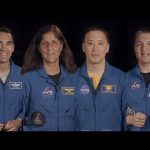
    This year, NASA Administrator Sen. Bill Nelson and NASA astronauts Raja Chari, Jonny Kim, Kjell Lindgren, and Sunita Williams bring their perspectives around this year’s theme of Advancing Leaders Through Purpose-Driven Service. Hear their stories of resilience, leading with values, and making a difference by serving others and focusing on a bigger mission to make the world a better place.

    Discover more stories: https://www.nasa.gov/image-gallery/asian-pacific-american-heritage

  • A Message from NASA Administrator Sen. Bill Nelson to the NASA Workforce

    A Message from NASA Administrator Sen. Bill Nelson to the NASA Workforce

    NASA’s new administrator Sen. Bill Nelson shares his vision for NASA’s future.

    Nelson has an extensive history of working with NASA and has been integral to the agency’s current successes. Prior to his nomination, was a member-at-large on NASA’s advisory council. From 2001 to 2019, Nelson represented Florida in the U.S. Senate, where he served as ranking member of the Committee on Commerce, Science and Transportation and led its Subcommittee on Science and Space.

    Previously, Nelson represented Florida’s 9th and 11th districts in the U.S. House of Representatives. While chair of the House space subcommittee, Nelson flew aboard the space shuttle Columbia as a payload specialist on the STS-61C mission in 1986. The mission also included Bolden, as pilot.

  • NASA Astronauts Share Teacher Appreciation Week Message From the Space Station

    NASA Astronauts Share Teacher Appreciation Week Message From the Space Station

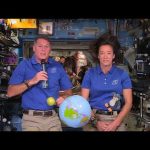
    NASA astronauts Shane Kimbrough and Megan McArthur share a special message during Teacher Appreciation Week while aboard the International Space Station, orbiting 200 miles above the Earth’s surface.

    Producer/Editor: Lacey Young
    Music: Universal Production Music

  • NASA Science Live: Mars Helicopter and the Future of Extraterrestrial Flight

    NASA Science Live: Mars Helicopter and the Future of Extraterrestrial Flight

    On April 19, the Ingenuity Mars helicopter became the first spacecraft to achieve powered, controlled flight on another world. This historic flight on Mars has implications for how we will explore other worlds. Join experts from the Ingenuity Mars Helicopter team and upcoming Dragonfly mission to learn about the future of extraterrestrial flight. Have questions? Use #askNASA.

    Meet the guests:

    Mr. Johnny Lam is an Ingenuity Mars Helicopter pilot at NASA’s Jet Propulsion Laboratory. Mr. Lam always had an interest in math and science growing up, and enjoys getting to work on one-of-a-kind missions that are helping us to learn more about the universe. He is an avid frisbee player and has a family that is expecting their second baby soon. Mr. Lam has an exciting vision for how aerial vehicles could be used for exploration in the future. Watch the show to hear more about it!

    Mr. Nishant Mehta is the Deputy Lead for the Dragonfly Mobility System at Johns Hopkins University’s Applied Physics Laboratory. Mr. Mehta grew up surrounded by science fiction through books and television, these stories reinforced the notion that possibilities are endless with science. His favorite part of his job is knowing that he is working on something that will ultimately be on another planet to help humanity understand our universe better than before.

    Ms. Jia-Rui Cook is the News Events & Projects Supervisor at NASA’s Jet Propulsion Laboratory and will be your host for this episode. As the child of immigrants, she has always been interested in American history and asking the question, “What does it mean to be American?” Working for NASA’s news and media team means she gets a front-row seat at this history in the making. In her role in the media office, she gets to help figure out how stories about first-of-their-kind accomplishments are told. When it comes to the Ingenuity Mars Helicopter, Ms. Cook is amazed that the team could build something so light and powerful at the same time.

  • NASA Celebrates Asian American and Pacific Islander (AAPI) Heritage Month 2021

    NASA Celebrates Asian American and Pacific Islander (AAPI) Heritage Month 2021

    Each May, NASA commemorates Asian American and Pacific Islander (AAPI) Heritage Month to recognize the significant contributions of past and present employees of AAPI descent. Each of them embody the enduring and resilient spirit this community brings to advancing science, research, and discovery. Hear their stories.

    Featured in the video:
    Anthony Arviola – Langley Research Center
    Han Woong (Brian) Bae – Marshall Space Flight Center
    Kelly Busquets – Goddard Space Flight Center
    Sarat Calmur – Langley Research Center
    Gemma Flores – NASA Headquarters
    Wensheng Huang – Glenn Research Center
    Miki Kenji – Glenn Research Center
    Alex Lin – Langley Research Center
    Rita Melvin – Goddard Space Flight Center
    Kartik Sheth – NASA Headquarters
    Steve Shih – NASA Headquarters
    Emilie Siochi – Langley Research Center
    Jenny Staggs – Armstrong Flight Research Center
    Githika Tondapu – Marshall Space Flight Center
    Sara Tsui – Kennedy Space Center
    Jennifer Turner – Johnson Space Center

    Video Credit: NASA 360 – Jessica Wilde, David Shelton, and Scott Bednar

  • NASA Remembers Apollo Astronaut Michael Collins

    NASA Remembers Apollo Astronaut Michael Collins

    We are heartbroken to share that astronaut Michael Collins, the command module pilot of the historic Apollo 11 mission to the Moon, has passed away at the age of 90.

    Collins was one of the third group of astronauts named by NASA in October 1963. In 1966, he served as the pilot on the 3-day Gemini 10 mission, during which he set a world altitude record and became the nation’s third spacewalker, completing two extravehicular activities. His second flight was as command module pilot of the historic Apollo 11 mission in July 1969. He remained in lunar orbit while Neil Armstrong and Buzz Aldrin became the first men to walk on the Moon.