Tag: Planck

  • Science at ESA

    Science at ESA

    Science is the underpinning theme of ESA, driving the spiral of inspiration, innovation, infor­mation exchange and interaction with our stakeholders. In this video, Günther Hasinger, ESA Director of Science, reflects on the growth of ESA’s space science programme over the past decades, as well as on its current and future challenges. He also highlights the importance of long-term strategic planning and international cooperation in these endeavours, and finally looks back at some recent successes of ESA’s space science missions.

    Learn more about ESA’s space science missions: http://www.esa.int/science

    Science is everywhere at ESA. As well as exploring the Universe and answering the big questions about our place in space we develop the satellites, rockets and technologies to get there. Science also helps us to care for our home planet. All this week we’re highlighting different aspects of science at ESA. Join the conversation with #ScienceAtESA.

    Credits: ESA/NASA/JPL/University of Arizona (Huygens landing); ESA/Rosetta/Philae/ROLIS/DLR, Stefano Mottola (Philae landing); ESA/Planck Collaboration (cosmic microwave background); ESA/Gaia/DPAC (Milky Way); MPG/ESO (Eagle Nebula, visible); ESA/Herschel/PACS/SPIRE/Hill, Motte, HOBYS Key Programme Consortium (Eagle Nebula, far-infrared); ESA/XMM-Newton/EPIC/XMM-Newton-SOC/Boulanger (Eagle Nebula, X-rays); NASA, ESA/Hubble and the Hubble Heritage Team (Pillars of Creation); ESO (Pillars of Creation, ground-based view); Koppelman, Villalobos & Helmi, Kapteyn Astronomical Institute, University of Groningen (Milky Way simulation); ESA/XMM-Newton/F. Nicastro et al./R. Cen (warm-hot intergalactic medium); ESA/DLR/FU Berlin, CC BY-SA 3.0 IGO (Mars surface); ESA/NASA/JPL/ASI/Univ. Rome (Mars, liquid water under south pole); NASA/JPL-Caltech (Mars view); ESO, M. Kornmesser, L. Calcada (`Oumuamua animation)

    ★ Subscribe: http://bit.ly/ESAsubscribe and click twice on the bell button to receive our notifications.

    Check out our full video catalog: http://bit.ly/SpaceInVideos
    Follow ESA on Twitter: http://bit.ly/ESAonTwitter
    On Facebook: http://bit.ly/ESAonFacebook
    On Instagram: http://bit.ly/ESAonInstagram
    On Flickr: http://bit.ly/ESAonFlickr

    ESA is Europe’s gateway to space. Our mission is to shape the development of Europe’s space capability and ensure that investment in space continues to deliver benefits to the citizens of Europe and the world. Check out http://www.esa.int/ESA to get up to speed on everything space related.

    Copyright information about our videos is available here: http://www.esa.int/spaceinvideos/Terms_and_Conditions

    #ESA
    #ScienceAtESA
    #SpaceScience
  • Space science: everything starts here

    Space science: everything starts here

    How did it all begin? What are the origins of our planet? To understand our place in the Universe we need to explore space. Find out how we’re doing this with ESA’s incredible fleet of space science missions to study our Sun and chart the stars around us, probe the dark matter and dark energy of the Universe, and tour various planets, moons and other small bodies in our Solar System.

  • ESA Euronews: Echoes from the Big Bang

    ESA Euronews: Echoes from the Big Bang

    Scientists are getting closer than ever to understanding the origins of the Universe. For the first time, they have glimpsed behind the veil that covers the ‘Big Bang’ with the announcement that the Background Imaging of Cosmic Extragalactic Polarisation — BICEP2 — experiment at the South Pole had spotted the footprints of something called primordial gravitational waves. These waves may be a sign that a theory known as cosmic inflation can be confirmed. For those studying the Big Bang — the beginning of the Universe — this is big news.

    Other languages available:
    Italian: http://youtu.be/_woXIqJ1NPQ
    French: http://youtu.be/b-e5s0IVgic
    German: http://youtu.be/xiNRKQvteWI
    Spanish: http://youtu.be/VGc_moUu9Gk
    Greek: http://youtu.be/_62reqKm2n4
    Portuguese: http://youtu.be/54YS2K6PsuQ
    Hungarian: http://youtu.be/PYf_psXKsPg

  • ESA Euronews: Vadászat a Big Bang visszhangjára

    ESA Euronews: Vadászat a Big Bang visszhangjára

    Segíthetnek-e a gravitációs hullámok megérteni az univerzum kezdetét? Ez még mindig nagy kérdés, ezért izgatják annyira az elsődleges gravitációs hullámok a tudósokat.

  • ESA Euronews: Ήχοι από τη Μεγάλη Έκρηξη

    ESA Euronews: Ήχοι από τη Μεγάλη Έκρηξη

    Πλησιάζουμε περισσότερο από ποτέ στην κατανόηση της προέλευσης του σύμπαντος. Για πρώτη φορά αφαιρούμε το πέπλο που καλύπτει το Big Bang. Τι καταλαβαίνουμε λοιπόν για τη γέννηση του κόσμου.

  • Planck’s view of the Universe

    Planck’s view of the Universe

    This animation highlights some of the many discoveries made by ESA’s Planck space telescope over its 4.5 year observing career, from new discoveries in our home Milky Way Galaxy stretching back to the first few moments after the Big Bang 13.82 billion years ago.

    Credits: ESA

    Read more on the ESA website:
    http://www.esa.int/Our_Activities/Space_Science/Planck/Celebrating_the_legacy_of_ESA_s_Planck_mission

  • ESA Euronews: Planck, Higgs and the Big Bang

    ESA Euronews: Planck, Higgs and the Big Bang

    When it comes to the origins of the Universe, there’s one idea that really captures our imagination: everything, even time itself, started with the Big Bang.

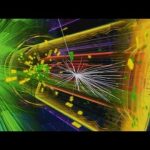
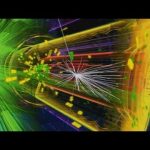
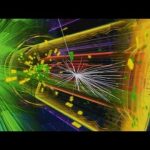
    The concept of the Big Bang is difficult to describe and problematic to measure, however that’s exactly what two major projects have set out to do: one on Earth, the Large Hadron Collider at CERN, the other in space, ESA’s Planck mission.

    In this edition of Space, Euronews gets to the heart of the matter and attempts to discover how matter and everything in the Universe came into being.

    We speak with experts from the CERN, Institut d’Astrophysique de Paris, Sorbonne University and ESA, all studying how the Universe works.

  • ESA Euronews: Big Bang: Εξερευνώντας πώς ξεκίνησε το σύμπαν

    ESA Euronews: Big Bang: Εξερευνώντας πώς ξεκίνησε το σύμπαν

    Πώς δημιουργήθηκε το σύμπαν; Πρόκειται για ένα αιώνιο ερώτημα, με απαντήσεις που ξεπερνούν κάθε φαντασία. Όλοι μιλούν για το περίφημο Big Bang. Τι είναι όμως αυτό; Τι ακριβώς συνέβη;

    Ακόμα και οι επιστήμονες διαφωνούν. “Το Big Bang με τον σημερινό τρόπο σκέψης είναι κάτι σαν το σημείο εκκίνησης, η στιγμή που δημιουργήθηκε το σύμπαν”, λέει ένας, αλλά διευκρινίζει: “Πώς συνέβη αυτό και τι ακριβώς υπήρχε εκείνη τη χρονική στιγμή εκεί, είναι κάτι που δεν είναι ακόμη απόλυτα γνωστό”. Ωστόσο ένας άλλος επισημαίνει: “Το Big Bang θα έλεγα ότι είναι μια ιδέα. Δεν είναι μια χρονική στιγμή”.

    Εάν είναι δύσκολο να περιγράψει κανείς αυτή καθεαυτή την έννοια του Big Bang, είναι ακόμα πιο δύσκολο να την μελετήσει με επιστημονικά πειράματα. Αλλά αυτό ακριβώς έχουν σκοπό να κάνουν δύο μεγάλα πειράματα της εποχής μας. Το ένα από αυτά είναι στη Γη, το άλλο στο διάστημα.

    Στις εγκαταστάσεις του CERN, κοντά στην Γενεύη, έχει δημιουργηθεί ο Μεγάλος Επιταχυντής Αδρονίων. Εκεί ανακαλύφθηκε πέρυσι το μποζόνιο Χιγκς, το σωματίδιο που δίνει μάζα στην ύλη και αποδεικνύει την ύπαρξη του πεδίου Χιγκς. “Εάν δείτε το επίπεδο ενέργειας στο οποίο φτάνουμε και το είδος των μαζών που μπορούμε να δημιουργήσουμε με αυτό το πείραμα, θα πρέπει να πηγαίνουμε σε ένα σημείο, κάτι σαν ένα δισεκατομμυριοστό του δευτερολέπτου μετά το Big Bang, επομένως κοντά, πολύ κοντά στο Big Bang”, εξηγούν οι επιστήμονες του CERN.

    Ενώ στο CERN συγκρούονται μικροσκοπικά σωματίδια, ο δορυφόρος Planck της Ευρωπαϊκής Υπηρεσίας Διαστημικής, προσπαθεί σε μια επική αναζήτηση να ανιχνεύσει τα απομεινάρια του φωτός από το Big Bang. Την άνοιξη η ομάδα του Planck δημοσιοποίησε αυτό που θεωρείται ως ο απόλυτος χάρτης της κοσμικής μικροκυματικής ακτινοβολίας.Δείχνει πώς ήταν το σύμπαν μόλις 380.000 χρόνια μετά το Big Bang.

    Το φως που ταξιδεύει σε εμάς από την έναρξη του σύμπαντος και τα σωματίδια που σπάνε σε έναν γιγάντιο επιταχυντή είναι οι μαρτυρίες στις οποίες βασιζόμαστε για να αντιληφθούμε την θεωρία του Big Bang και όσων το ακολούθησαν. Αλλά λένε αυτές οι μαρτυρίες τα ίδια πράγματα; ή μήπως καταλήγουν σε διαφορετικά συμπεράσματα;

    Η εικόνα μας για το πρώιμο σύμπαν απέχει ωστόσο ακόμα από το να είναι πλήρης. Υπάρχουν πολλά εκκρεμή ζητήματα και ανωμαλίες. Και αυτό είναι ένα ζήτημα στο οποίο ακόμα και οι ίδιοι οι επιστήμονες σε ορισμένες περιπτώσεις σηκώνουν τα χέρια ψηλά…

  • ESA Euronews: Planck, Higgs e a Teoria do Big Bang

    ESA Euronews: Planck, Higgs e a Teoria do Big Bang

    Quando se trata da origem do universo, há uma ideia que realmente capta a nossa atenção. Que é a seguinte: tudo, até mesmo o próprio tempo, começou com o Big Bang. Se o conceito de Big Bang é difícil de descrever é ainda mais difícil de medir e testar através de uma experiência científica. Mas é exatamente isso que dois dos principais projetos do nosso tempo pretendem fazer. Um deles está na terra, o outro no espaço. Na Terra, essa experiência está no CERN, perto de Genebra.

  • ESA Euronews: Planck maps the dawn of time

    ESA Euronews: Planck maps the dawn of time

    Scientists have traced a unique new map of the first light of the universe, and raised profound questions about the Big Bang.The image of the cosmic microwave background they have released was taken by ESA’s Planck satellite, and its results could have a significant impact on the field of cosmology.

    “It turns that most of this image, most of this map, fits beautifully our very simple model. At the same time we find some strange things, and this is where it starts to get interesting, because we see some signs of things that do not fit,” explains ESA’s Planck Project Scientist Jan Tauber.

    “Roughly speaking the things that we are finding that are not as we expect are features that are across the whole sky. When you look only at the large features on this map you find that that our best fitting model, our best theory has a problem fitting the data, there is a lack of signal that we would expect to see,” he says.

    The news that the early universe is not quite as was thought has left the greatest minds in cosmology spinning with excitement.

    George Efstathiou, Professor of Astrophysics, University of Cambridge, is a key member of the Planck Science Team.

    “The idea that you can actually experimentally test what happened at the Big Bang still amazes me,” he says.

    The Big Bang theory remains intact of course, but the concept of inflation could be put to test by the Planck data.

    “We see these strange patterns that are not expected in inflationary theory, the simplest inflationary theories,” explains Efstathiou.

    “So there’s a real possibility that we have an incomplete picture. It may be that we have been fooled, that inflation didn’t happen. It’s perfectly possible that there was some phase of the universe before the Big Bang actually happened where you can track the history of the universe to a pre-Big Bang period.”

    The Planck mission could test ideas about how the early universe was formed.The puzzle is that at small scales the data fits the theoretical model very nicely, but at larger scales the signal from the cosmic microwave background is much weaker than expected.

    Efstathiou is looking for answers: “Can we find a theoretical explanation that links together the different phenomena that we have seen, the different little discrepancies, with inflationary theory? That’s where there’s the potential for a paradigm shift, because at the moment there’s no obvious theoretical explanation that links together these anomalies that we have seen. But if you found a theory that links phenomena that were previously unrelated, then that’s a pointer to new physics.”

    It appears that the audacious Planck mission really will shed new light on the dawn of time.

  • Planck reveals an almost perfect Universe

    Planck reveals an almost perfect Universe

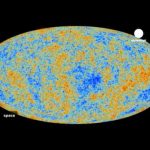
    Acquired by ESA’s Planck space telescope, the most detailed map ever created of the cosmic microwave background — the relic radiation from the Big Bang — was released today, revealing the existence of features that challenge the foundations of our current understanding of the Universe.

  • ESA – Space to Relax / Stellar Works of Art

    ESA – Space to Relax / Stellar Works of Art

    Journey through galaxies, past star-forming clouds, around mammoth stars, and inside gas and dust nebulas. A relaxation programme of astronomical wonders by the European Space Agency.

    Originally produced for Lufthansa inflight entertainment (released June 2011).

    Credit images: XMM-Newton, Herschel, Planck, Cluster, Integral, Joint ESA/NASA Hubble Space Telescope and ESA amateur ground-based cameras.
    Credit music: “Dream Elements” by Green Sun, licensed by AmbientMusicGarden.com

  • ESA Euronews: Alla ricerca delle origini

    ESA Euronews: Alla ricerca delle origini

    Tredici miliardi e settecento milioni di anni fa nasceva l’Universo. Si tratta del Big Bang. Cos’è? Esisteva qualcosa prima? A quest’interrogativo si comincia a dare delle risposte grazie alla missione spaziale Planck.

  • ESA Euronews: Searching for the origins

    ESA Euronews: Searching for the origins

    The universe was born 13.7 billion years ago with the Big Bang. But what is the Big Bang and what was there before?
    Scientists are starting to get an answer thanks to the time-travelling Planck mission.

  • Understanding the Universe with ESA’s next science missions

    Understanding the Universe with ESA’s next science missions

    Herschel will investigate how stars and galaxies formed and how they continue to form in our own and other galaxies, meanwhile Planck will look back at the dawn of time, helping astronomers to study the birth and evolution of the Universe.