Tag: Rosetta (Spacecraft)

  • How we made history by landing on a comet?

    How we made history by landing on a comet?

    On 12 November 2014, after a ten-year journey through the Solar System and over 500 million kilometres from home, Rosetta’s lander Philae made space exploration history by touching down on a comet for the first time. On the occasion of the tenth anniversary of this extraordinary feat, we celebrate by taking a look back over the mission’s highlights.

    Rosetta was an ESA mission with contributions from its Member States and NASA. It studied Comet 67P/Churyumov-Gerasimenko for over two years, including delivering lander Philae to the comet’s surface. Philae was provided by a consortium led by DLR, MPS, CNES and ASI.

    Credits: ESA – European Space Agency

    ★ Subscribe: http://bit.ly/ESAsubscribe and click twice on the bell button to receive our notifications.

    Check out our full video catalog: http://bit.ly/SpaceInVideos
    Follow us on Twitter: http://bit.ly/ESAonTwitter
    On Facebook: http://bit.ly/ESAonFacebook
    On Instagram: http://bit.ly/ESAonInstagram
    On LinkedIn: https://bit.ly/ESAonLinkedIn
    On Pinterest: https://bit.ly/ESAonPinterest
    On Flickr: http://bit.ly/ESAonFlickr

    We are Europe’s gateway to space. Our mission is to shape the development of Europe’s space capability and ensure that investment in space continues to deliver benefits to the citizens of Europe and the world. Check out https://www.esa.int/ to get up to speed on everything space related.

    Copyright information about our videos is available here: https://www.esa.int/ESA_Multimedia/Terms_and_Conditions

    #ESA #Comet #RosettaMission
  • Philae facing eternal hibernation

    Philae facing eternal hibernation

    15 months after Philae made its historic landing on a comet, its legacy is enormous even if Rosetta’s lander is facing eternal hibernation.

    Mission teams are now looking ahead to the grand finale: making a controlled impact of the Rosetta orbiter on the comet next September.Rosetta arrived at Comet 67P/Churyumov–Gerasimenko on 6 August 2014 and Philae was delivered to the surface on 12 November. After touching down Philae bounced several times and completed 80% of its planned first science sequence before falling into hibernation. 
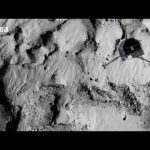
    A contact was made with the lander on 13 June and intermittent contacts were made up to 9 July. However the results of Philae mission are unique and complement all the science harvested by the orbiter Rosetta who is continuing its quest before being sent directly to the surface of 69P late September.
  • Reconstructing Philae’s flight

    Reconstructing Philae’s flight

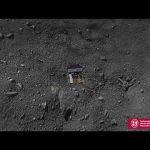
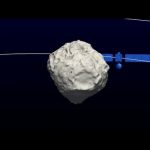
    Data from both the Philae lander and Rosetta orbiter experiments, as well as simulation results based on Philae’s mechanical design have been used to reconstruct the lander’s attitude and motion during its descent and touchdowns on Comet 67P/Churyumov-Gerasimenko on 12 November 2014.

    The new animation presented today, one year after Philae touched down on the comet, focuses on Philae’s dramatic two-hour flight from Agilkia to Abydos.

    More details in the Rosetta blog: http://blogs.esa.int/rosetta/2015/11/12/reconstructing-philaes-flight-across-the-comet/

    Credits: The video was prepared with inputs from the ROMAP, RPC-MAG, OSIRIS, ROLIS, CIVA CONSERT, SESAME and MUPUS instrument teams as well as from the Lander Control Centre at DLR and Science Operation and Navigation Center at CNES.

  • Rosetta Philae landing: one year

    Rosetta Philae landing: one year

    It’s been an extraordinary year for the Rosetta comet mission since Philae landed on the surface of Comet 67P/Churyumov-Gerasimenko on 12 November 2014.
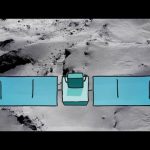
    Continual data from the orbiter, together with information collected over several days from the lander, is providing a comprehensive picture of a remnant from our Solar System.

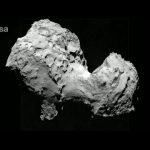
    This film covers the most recent science news from the Rosetta mission, as well as selected scientific highlights from the last year. It includes the comet’s unusual surface terrace structure, its formation from two colliding objects producing the unusual rubber duck shape, how water is transported from inside the comet towards the surface, and the surprising detection of molecular oxygen – familiar on Earth but not on a comet.

    Find out more about the Rosetta mission: http://rosetta.esa.int/

  • The Rosetta Mission
    The Rosetta Mission
    The Rosetta Mission has captured the interest and imagination of a generation and it is not over yet! Take a look at this Royal Observatory Greenwich video which explains what Rosetta and Philae have achieved as well as the impact the mission has had on our knowledge of our very own solar system. http://bit.ly/rogvideo #rogrosetta
    Credits:
    ROG – Creator
    Beakus – Producer
    Amaël Isnard – Director

  • ESA Euronews: Rosetta’s quest for the origin of life

    ESA Euronews: Rosetta’s quest for the origin of life

    The Rosetta Mission has been writing a new chapter in what we know about the formation of life. The ESA teams involved are now preparing for the last part of this amazing journey.

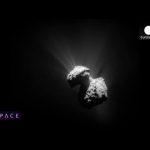
    Comet Churyumov-Gerasimenko has recently reached the perihelion – that’s the closest point to the Sun in its six and a half year orbit. It’s an important scientific step – as increasing solar energy warms the comet’s frozen ices, turning them to gas and dust. To stay safe, Rosetta has been forced to move further from the comet.

    The Rosetta mission has been extended by nine months – until September next year. It’s hoped this will further boost the enormous amount of data that’s already been collected.

    This video is also available in the following languages:
    Spanish https://www.youtube.com/watch?v=1S7lYxNMbUU
    Portuguese https://www.youtube.com/watch?v=9jrEaaFOo18
    German https://www.youtube.com/watch?v=ah774y94sEA
    French https://www.youtube.com/watch?v=j49w_F9O1Fc
    Italian https://www.youtube.com/watch?v=pjI4-DbCCtk
    Greek https://www.youtube.com/watch?v=eSVZtTADnmc
    Hungarian https://www.youtube.com/watch?v=gFc-W4xE0Z0

  • ESAHangout: Rosetta mission’s day in the Sun

    ESAHangout: Rosetta mission’s day in the Sun

    A Google hangout with Rosetta mission experts to celebrate perihelion – the closest point to the Sun along the comet’s orbit – which occurred on the morning of on 13 August 2015.

    Joining our host Emily Baldwin (ESA Space Science Editor) were:
    Nico Altobelli – Acting Rosetta Project Scientist, ESAC
    Michael Küppers – Rosetta Science Operations Coordinator, ESAC
    Sylvain Lodiot – Rosetta Spacecraft Operations Manager, ESOC
    Armelle Hubault – Rosetta spacecraft operations engineer, ESOC
    Barbara Cozzoni – Philae Lander engineer, DLR
    Holger Sierks – OSIRIS Principal Investigator, MPS
    Joel Parker – Alice instrument Deputy-PI, SwRI
    Colin Snodgrass – Professional ground-based observing campaign coordinator, Open University
    Aurelie Moussi-Soffys – Science activities manager SONC (Philae)

    Date: 13 August 2015
    Time: 15:00-17:00 CEST (13:00-15:00 GMT)

    Background info on perihelion: http://www.esa.int/Our_Activities/Space_Science/Rosetta/Rosetta_preparing_for_perihelion

    #Perihelion2015 #Rosetta #hangoutsonair

  • Rosetta update

    Rosetta update

    The Rosetta spacecraft is still orbiting comet 67P/Churyumov-Gerasimenko while it now approaches the Sun. Six months ago Rosetta made history by delivering its Philae lander onto a comet’s surface – something no other space mission has done before.

    This video covers the mission’s highlights so far: from its launch in 2004; its journey across the solar system and waking up after deep space hibernation ten years later, its arrival at the selection of a landing site and Philae’s unexpected multiple landings on the comet. It also reviews what we have learnt about the comet to this point.

    Credit: ESA, with footage by DLR, licenced under CC-BY 3.0 DE

  • Getting to know Comet 67P/Churyumov-Gerasimenko

    Getting to know Comet 67P/Churyumov-Gerasimenko

    This animation of NAVCAM images follows the spacecraft’s approach to the comet from a distance of about 800 km on 1 August to a distance of about 62 km on 22 August 2014.

    The movie is a showcase of over one thousand NAVCAM images released today in ESA’s Archive Image Browser: http://imagearchives.esac.esa.int/

    More info: http://blogs.esa.int/rosetta/2015/04/29/major-release-of-navcam-images-800-to-30-km/

    Credits: ESA/Rosetta/NAVCAM – CC BY-SA IGO 3.0

  • Once upon a time… #cometlanding

    Once upon a time… #cometlanding

    Rosetta and Philae were ready for their biggest challenge yet: landing on Comet 67P/Churyumov-Gerasimenko. As Rosetta bid her lander farewell and sent him to the comet’s surface, the whole world looked on, anxious to see what would happen next…

    This video is also available in the following languages:
    German: http://youtu.be/zo00t_DloWo
    Spanish: http://youtu.be/f5OIme-pCZY
    Italian: http://youtu.be/DdTJItbD_4M
    French: http://youtu.be/r3HbauwhdTY

    Previous videos in the series are available in this playlist:
    https://www.youtube.com/playlist?list=PLbyvawxScNbui_Ncl9uQ_fXLOjS4sNSd8

    Credits: ESA

  • Paxi – Rosetta et les comètes

    Paxi – Rosetta et les comètes

    Suis Paxi aux frontières du système solaire pour découvrir le monde des comètes et en apprendre plus sur l’incroyable mission « Rosetta » sur la comète 67P/Churyumov-Gerasimenko.

    Dans cette vidéo, destinée aux enfants de 6 à 12 ans, Paxi emmène les enfants à la découverte des comètes et de Rosetta, l’incroyable engin spatial de l’ESA qui vole aux côtés de la comète 67P/Churyumov-Gerasimenko et qui va essayer, le 12 novembre 2014, d’y envoyer un petit robot.

    Cette vidéo est la troisième d’une série d’animations dans lesquelles Paxi, la mascotte du bureau de l’éducation de l’ESA, vous fait découvrir différents aspects du système solaire, de l’Univers, des secrets de la planète Terre et bien plus encore.

    Credit: ESA; produced by Science Office, illustrations by Kaleidoscope Design, NL

    Qui est Paxi ? : http://youtu.be/aWxtjvRzyRQ
    Paxi – Le système solaire: http://youtu.be/shQJd3oGYn8
    Paxi – Rosetta et les comètes: http://youtu.be/5nHMTpl4aUk

    These videos are also available in the following languages:
    English: https://www.youtube.com/playlist?list=PLbyvawxScNbucdsnNdB9p89RmePmGv5cM
    Spanish: https://www.youtube.com/playlist?list=PLbyvawxScNbsiYWkwXlb3WMdm2IFWoMyc
    Dutch: https://www.youtube.com/playlist?list=PLbyvawxScNbs-7xR5B6QgJeEK89RtGdoK
    Italian: https://www.youtube.com/playlist?list=PLbyvawxScNbt11Hfg6Cww2ckfHnvXeOdv
    German: https://www.youtube.com/playlist?list=PLbyvawxScNbvwcIVrGQV4p6g6cp9pH0To

  • Paxi – Rosetta und Kometen

    Paxi – Rosetta und Kometen

    Begleite Paxi an den Rand unseres Sonnensystems, entdecke das Reich der Kometen und lerne mehr über die erstaunliche Mission Rosetta zum Kometen 67P/Churyumov-Gerasimenko.

    In diesem Video, das sich an Kinder zwischen 6 und 12 Jahren richtet, nimmt Paxi Kinder mit auf die Reise um mehr über Kometen und die spektakuläre Mission „Rosetta“ zu lernen: Die Raumsonde der ESA, die um den Kometen 67P/Churyumov-Gerasimenko kreist und am 12 November 2014 versuchen wird ein Mini-Labor darauf zu landen.

    Dieses Video ist die dritte einer Serie von Animationen mit Paxi, dem Maskottchen von ESA-Education, in denen verschiedene Aspekte unseres Sonnensystems, das Universum, Geheimnisse des Planeten Erde und vieles andere thematisiert werden.

    Credit: ESA; produced by Science Office, illustrations by Kaleidoscope Design, NL

    Wer ist Paxi? http://youtu.be/-uXtNhRr060
    Paxi – Das Sonnensystem http://youtu.be/N7ezarEYKxk
    Paxi – Rosetta und Kometen http://youtu.be/QAxCiaUwY-U

    These videos are also available in the following languages:
    English: https://www.youtube.com/playlist?list=PLbyvawxScNbucdsnNdB9p89RmePmGv5cM
    Spanish: https://www.youtube.com/playlist?list=PLbyvawxScNbsiYWkwXlb3WMdm2IFWoMyc
    Dutch: https://www.youtube.com/playlist?list=PLbyvawxScNbs-7xR5B6QgJeEK89RtGdoK
    Italian: https://www.youtube.com/playlist?list=PLbyvawxScNbt11Hfg6Cww2ckfHnvXeOdv
    French: https://www.youtube.com/playlist?list=PLbyvawxScNbsiKIAXeo63bGr1QjYJ4QiL

  • Paxi – Rosetta e le comete

    Paxi – Rosetta e le comete

    Seguite Paxi ai confini del Sistema Solare per scoprire il mondo delle comete e saperne di più sull’incredibile missione di Rosetta verso la cometa 67P/Churyumov-Gerasimenko.

    In questo video, indirizzato a bambini tra i 6 e i 12 anni, Paxi porta i bambini alla scoperta di comete e Rosetta, l’incredibile sonda dell’ESA che vola insieme alla cometa 67P/Churyumov-Gerasimenko e che proverà, il 12 Novembre 2014, a rilasciare un veicolo d’atterraggio su di essa.

    Questo video è il terzo di una serie di animazioni in cui Paxi, la mascotte dell’Education Office dell’ESA, descrive diverse caratteristiche del Sistema Solare, dell’Universo, i segreti del pianeta Terra e molto altro.

    Credit: ESA; produced by Science Office, illustrations by Kaleidoscope Design, NL

    Chi è Paxi? http://youtu.be/gKQYsjr4fis
    Paxi – Il Sistema Solare http://youtu.be/A9bEEiXWYEc
    Paxi – Rosetta e le comete http://youtu.be/z6zCjaUcwfQ

    These videos are also available in the following languages:
    English: https://www.youtube.com/playlist?list=PLbyvawxScNbucdsnNdB9p89RmePmGv5cM
    Spanish: https://www.youtube.com/playlist?list=PLbyvawxScNbsiYWkwXlb3WMdm2IFWoMyc
    Dutch: https://www.youtube.com/playlist?list=PLbyvawxScNbs-7xR5B6QgJeEK89RtGdoK
    German: https://www.youtube.com/playlist?list=PLbyvawxScNbvwcIVrGQV4p6g6cp9pH0To
    French: https://www.youtube.com/playlist?list=PLbyvawxScNbsiKIAXeo63bGr1QjYJ4QiL

  • Paxi – Rosetta en kometen

    Paxi – Rosetta en kometen

    Volg Paxi tot de rand van onze zonnestelsel om een wereld van kometen te ontdekken, en te leren over de verbazingwekkende Rosetta missie naar de komeet 67P/Churyumov-Gerasimenko.

    In deze video, met als doelgroep kinderen tussen de 6 en 12 jaar oud, neemt Paxi kinderen met hem mee om kometen en Rosetta te ontdekken, de verbazingwekkende ESA ruimtevaartuig die naast komeet 67P/Churyumov-Gerasimenko vliegt en op 12 November 2014 een poging zal doen om een lander te landen.

    Deze video is de derde in een animatie serie waarin Paxi, de mascotte van ESA Education, verschillende aspecten van het zonnestelsel, het universum, de geheimen van planeet aarde, en nog veel meer zal toelichten.

    Credit: ESA; produced by Science Office, illustrations by Kaleidoscope Design, NL

    Wie is Paxi? http://youtu.be/6iWfNh8RcJQ
    Paxi – Het zonnestelsel http://youtu.be/4lSQE8LCDiU
    Paxi – Rosetta en kometen http://youtu.be/6ItAdZNwMEg

    These videos are also available in the following languages:
    English: https://www.youtube.com/playlist?list=PLbyvawxScNbucdsnNdB9p89RmePmGv5cM
    Spanish: https://www.youtube.com/playlist?list=PLbyvawxScNbsiYWkwXlb3WMdm2IFWoMyc
    Italian: https://www.youtube.com/playlist?list=PLbyvawxScNbt11Hfg6Cww2ckfHnvXeOdv
    German: https://www.youtube.com/playlist?list=PLbyvawxScNbvwcIVrGQV4p6g6cp9pH0To
    French: https://www.youtube.com/playlist?list=PLbyvawxScNbsiKIAXeo63bGr1QjYJ4QiL

  • Paxi – Rosetta y los cometas

    Paxi – Rosetta y los cometas

    Sigue a Paxi hasta los confines del Sistema Solar para descubrir el mundo de los cometas y aprender sobre la asombrosa misión Rosetta hacia el cometa 67P/ Churyumov-Gerasimenko.

    En este vídeo, destinado a niños de entre 6 y 12 años, Paxi se lleva a los niños con él a descubrir cometas y Rosetta, la asombrosa nave de la ESA que vuela junto al cometa 67P/ Churyumov-Gerasimenko al que intentará, el 12 de Noviembre 2014, aterrizar mediante un módulo de aterrizaje.

    Este vídeo es el tercero de una serie de animaciones en las que Paxi, la mascota de la Oficina de Educación de la ESA, explica diferentes aspectos del Sistema Solar, el Universo, los secretos del planeta Tierra y mucho más.

    Credit: ESA; produced by Science Office, illustrations by Kaleidoscope Design, NL

    Quién es Paxi? http://youtu.be/V1rkchtH2_I
    Paxi – El Sistema Solar http://youtu.be/vQIsQK4m7Qk
    Paxi – Rosetta y los cometas http://youtu.be/N5Yq42XgYHU

    These videos are also available in the following languages:
    English: https://www.youtube.com/playlist?list=PLbyvawxScNbucdsnNdB9p89RmePmGv5cM
    Dutch: https://www.youtube.com/playlist?list=PLbyvawxScNbs-7xR5B6QgJeEK89RtGdoK
    Italian: https://www.youtube.com/playlist?list=PLbyvawxScNbt11Hfg6Cww2ckfHnvXeOdv
    German: https://www.youtube.com/playlist?list=PLbyvawxScNbvwcIVrGQV4p6g6cp9pH0To
    French: https://www.youtube.com/playlist?list=PLbyvawxScNbsiKIAXeo63bGr1QjYJ4QiL

  • ESA Euronews: Philae’s adventure

    ESA Euronews: Philae’s adventure

    The Philae lander may be in hibernation mode on the surface of a comet, but it’s still very much alive in the hearts of the Comet Hunters, the team who helped Rosetta become the most famous space mission since the Moon landings. In this special edition of Euronews Space we have an extended episode of our Comet Hunters series, filmed during and after the comet landing at ESA’s base in Darmstadt and at the DLR’s Philae control room in Köln.

    This video is also available in the following languages:
    Spanish: http://youtu.be/t0d-v86ZE44
    Portuguese: http://youtu.be/pbTVHzOTNZw
    Greek: http://youtu.be/Z2lOE8wsi5w
    Italian: http://youtu.be/6VQ6VAEzQBQ
    Hungarian: http://youtu.be/cUnD7vhTDJs
    German: http://youtu.be/hWGcjLu00EI
    French: http://youtu.be/h2YYMzZw30U

  • ESA Euronews: La aventura de Philae

    ESA Euronews: La aventura de Philae

    El módulo de aterrizaje Philae puede que esté en modo hibernación allá lejos, en la superficie del cometa, pero aún está muy vivo en los corazones de los Cazadores de cometas. El equipo ha hecho que Rosetta se convierta en una de las misiones espaciales más famosas desde que el hombre llegó a la Luna. En esta edición especial de Space, en Euronews, veremos un largo episodio de nuestra serie Cazadores de cometas, filmado durante y después del aterrizaje de Philae en el cometa desde la base de la Agencia Espacial Europea en Darmstadt y en la sala de control del Centro Aeroespacial Alemán en Colonia.

  • ESA Euronews: L’avventura di Philae

    ESA Euronews: L’avventura di Philae

    Mercoledì 12 novembre, il D-Day per Rosetta e Philae: un giorno che i cacciatori di comete non dimenticheranno mai.
    Matt Taylor, scienziato del progetto Rosetta, ESA: “Ieri iero rilassato, ora invece c’è questo aumento esponenziale di stress ed eccitazione. Sono al massimo adesso”. “Questa è la mia previsione per oggi, ecco quanto mi sento sicuro”, dice Taylor mostrando un tatuaggio del lander sulla gamba.
    Paolo Ferri, direttore della missione Rosetta, ESA: “Sono estremamente stressato, la notte non è trascorsa tranquillamente come speravo. Le attività di preparazione del lander hanno richiesto molto più tempo, abbiamo dovuto rifare delle cose”.
    Ma poi la buona notizia è arrivata, Rosetta ha ricevuto un segnale da Philae, e poi, dopo alcune ore di tensione, la missione è compiuta. Matt Taylor, scienziato del progetto Rosetta, ESA: “Siamo atterrati su una cometa!”

  • ESA Euronews: Οι περιπέτειες του Philae

    ESA Euronews: Οι περιπέτειες του Philae

    Το ρομποτικό σκάφος Philae προσγειώθηκε στον κομήτη 67P γράφοντας μία νέα σελίδα στη διαστημική ιστορία

    To euronews είχε εξ αρχής προνομιακή πρόσβαση στο κέντρο ελέγχου των επιχειρήσεων.
    Η προσεδάφιση του Philae στον κομήτη κέντρισε το ενδιαφέρον όλου του κόσμου. Η 12η Νοεμβρίου είναι μία ημέρα που η επιστημονική ομάδα δεν πρόκειται να ξεχάσει ποτέ.
    Πάμε να γνωρίσουμε τους πρωταγωνιστές της επιχείρησης Ροζέτα και να ρίξουμε μία παρασκηνιακή ματιά στο κέντρο των επιχειρήσεων στο Ντάρμσταντ της Γερμανίας.
    «Χθες ήμουν χαλαρός. Τώρα έχω και πάλι άγχος αλλά και μεγάλο ενθουσιασμό. Με το τατουάζ μου που απεικονίζει την προσεδάφιση του Philae κάνω την πρόβλεψή μου. Είμαι σίγουρος ότι όλα θα πάνε καλά», δηλώνει ο Ματ Τέιλορ, επιστήμονας της ESA στην επιχείρηση Ροζέτα.
    «Είχα απίστευτο άγχος καθώς η νύχτα δεν εξελισσόταν όσο ομαλά ήλπιζα. Οι ενέργειες για την προετοιμασία προσεδάφισης μας πήρανε περισσότερο χρόνο, γιατί έπρεπε να ξανακάνουμε κάποια πράγματα», διηγείται ο διευθυντής του εγχειρήματος Πάολο Φέρι.
    Τέλος καλό, όλα καλά. Η κούραση και το στρες εξαφανίστηκαν, όταν η Ροζέτα έλαβε το πρώτο σήμα από το ρομποτικό σκάφος Philae. Οι συντελεστές πανηγύρισαν τη μεγάλη επιτυχία τους.
    Την επόμενη ημέρα τα τηλεοπτικά συνεργεία που πολιόρκησαν το κέντρο επιχειρήσεων άρχισαν να μαζεύουν τον εξοπλισμό τους.
    Στην αίθουσα ελέγχου του Ευρωπαϊκού Οργανισμού Διαστήματος η επιστημονική ομάδα προσπαθεί να εντοπίσει το Philae πάνω στον κομήτη. Το ρομποτικό σκάφος αναπήδησε δύο φορές και προσγειώθηκε σε μία σκοτεινή ρωγμή. Αυτό δεν το εμπόδισε να στείλει σημαντικές πληροφορίες.

  • ESA’s technical heart celebrates Rosetta’s Philae landing

    ESA’s technical heart celebrates Rosetta’s Philae landing

    Celebrating the landing of Rosetta’s Philae lander on 67P/Churyumov–Gerasimenko at ESA’s technical heart. Along with the main Rosetta landing event taking place at ESA’s ESOC control centre, many other events took place all across Europe. More than a quarter of a century in the making, the Rosetta comet-chaser had been designed, planned and finally tested at ESTEC – ESA’s largest establishment, based in Noordwijk, the Netherlands – in advance of its 2004 launch.

    More than 450 external guests, media representatives and Agency personnel gathered together at SpaceExpo, ESTEC’s visitor centre, to follow the nail-biting Philae landing during the afternoon and evening of Wednesday 12 November 2014. ESTEC Director Franco Ongaro presided over the gathering, which was also attended by ESA astronaut André Kuipers, Rob van Hassel of Airbus Defence and Space Netherlands – who detailed the Dutch contributions to Rosetta – as well as comet expert Inge Loes ten Kate from Utrecht University.

  • Rosetta mission: Results from comet landing: 14 Nov, 13:00 GMT

    Rosetta mission: Results from comet landing: 14 Nov, 13:00 GMT

    Update on the Rosetta mission, including status of the Philae lander.

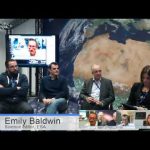
    Hosted by Emily Baldwin – ESA Science Editor, with:
    Andrea Accomazzo – ESA Rosetta Flight Director, ESOC
    Stephan Ulamec – Philae Lander Manager, DLR
    Matt Taylor – Rosetta Project Scientist, ESA
    Philippe Gaudon – CNES Rosetta Project Manager, SONC
    Holger Sierks – PI for OSIRIS, Max-Planck-Institute for Solar System Research
    Valentina Lommatsch – DLR-Lander Control Center, mission team
    Jeff Grossman – OSIRIS-REx Program Scientist, NASA
    Gordon Johnston – OSIRIS-REx Program Scientist, NASA

    Starts 13:00 GMT (14:00 CET)

    More about the Rosetta mission:
    http://www.esa.int/rosetta

  • Philae landing: lander status and first descent image

    Philae landing: lander status and first descent image

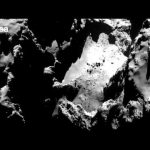
    Highlights from coverage of ESA’s Rosetta mission soft-landing its Philae probe on a comet, the first time in history that such an extraordinary feat has been achieved. Including the presentation of the first ROLIS image sent back by Philae as the lander descended to the surface of the comet.

    After a tense wait during the seven-hour descent to the surface of Comet 67P/Churyumov–Gerasimenko, the signal confirming the successful touchdown arrived on Earth at 16:03 GMT (17:03 CET).

    More about Rosetta at:
    http://www.esa.int/rosetta

  • Philae landing: touchdown highlights

    Philae landing: touchdown highlights

    Highlights from coverage of ESA’s Rosetta mission soft-landing its Philae probe on a comet, the first time in history that such an extraordinary feat has been achieved.

    After a tense wait during the seven-hour descent to the surface of Comet 67P/Churyumov–Gerasimenko, the signal confirming the successful touchdown arrived on Earth at 16:03 GMT (17:03 CET).

    More about Rosetta at:
    http://www.esa.int/rosetta

  • “Philae’s journey” by Vangelis

    “Philae’s journey” by Vangelis

    The second of a trio of music videos released by ESA to celebrate the first ever attempted soft landing on a comet by ESA’s Rosetta mission.

    Vangelis, the world-renowned musician, has composed this piece of music specially for ESA and inspired by the Rosetta mission. Vangelis’s music is often linked to themes of science, history and exploration, and he is best known for his Academy Award–winning score for the film Chariots of Fire, composing scores for the films Antarctica, Blade Runner, 1492: Conquest of Paradise and Alexander, and the use of his music in the documentary series Cosmos, by Carl Sagan.

    Vangelis said: “Mythology, science and space exploration are subjects that have fascinated me since my early childhood. And they were always connected somehow with the music I write.”

    Video copyright: ESA/Vangelis
    Original music: Vangelis

    Follow the Rosetta mission at: http://www.esa.int/rosetta

    Also watch:
    Part one: “Arrival” by Vangelis
    http://youtu.be/FJrUnzLsmZk

    Part three: “Rosetta’s waltz” by Vangelis
    http://youtu.be/PUpSVxoCcik

    More information about Vangelis at: http://elsew.com/data/latest.htm

    More information on the album at the UDiscoverMusic online store: https://store.udiscovermusic.com/artist.html?a=vangelis

  • “Arrival” by Vangelis

    “Arrival” by Vangelis

    The first of a trio of music videos released by ESA to celebrate the first ever attempted soft landing on a comet by ESA’s Rosetta mission.

    Vangelis, the world-renowned musician, has composed this piece of music specially for ESA and inspired by the Rosetta mission. Vangelis’s music is often linked to themes of science, history and exploration, and he is best known for his Academy Award–winning score for the film Chariots of Fire, composing scores for the films Antarctica, Blade Runner, 1492: Conquest of Paradise and Alexander, and the use of his music in the documentary series Cosmos, by Carl Sagan.

    Vangelis said: “Mythology, science and space exploration are subjects that have fascinated me since my early childhood. And they were always connected somehow with the music I write.”

    Video copyright: ESA/Vangelis
    Original music: Vangelis

    Follow the Rosetta mission at: http://www.esa.int/rosetta

    Also watch:
    Part 2: “Philae’s journey” by Vangelis
    http://youtu.be/W8bVOGN9jSg

    More information about Vangelis at: http://elsew.com/data/latest.htm

    More information on the album at the UDiscoverMusic online store: https://store.udiscovermusic.com/artist.html?a=vangelis

  • Paxi – Rosetta and comets

    Paxi – Rosetta and comets

    Follow Paxi to the edge of the Solar System to discover the world of comets, and learn about the amazing Rosetta mission to comet 67P/Churyumov-Gerasimenko.

    In this video, targeted at children aged between 6 and 12, Paxi takes kids with him to discovery comets and Rosetta, the amazing ESA spacecraft flying alongside comet 67P/Churyumov-Gerasimenko that will attempt, on 12 November 2014, to release a lander onto it.

    This video is the third of a series of animations in which Paxi, ESA’s Education mascot, touches on different aspects of the Solar System, the Universe, the secrets of planet Earth, and much more.

    More Paxi videos in this playlist:
    https://www.youtube.com/playlist?list=PLbyvawxScNbucdsnNdB9p89RmePmGv5cM

    Copyright: ESA; produced by Science Office, illustrations by Kaleidoscope Design, NL

    The Paxi videos are also available in the following languages, follow the link for a full playlist
    Spanish: https://www.youtube.com/playlist?list=PLbyvawxScNbsiYWkwXlb3WMdm2IFWoMyc
    Dutch: https://www.youtube.com/playlist?list=PLbyvawxScNbs-7xR5B6QgJeEK89RtGdoK
    Italian: https://www.youtube.com/playlist?list=PLbyvawxScNbt11Hfg6Cww2ckfHnvXeOdv
    German: https://www.youtube.com/playlist?list=PLbyvawxScNbvwcIVrGQV4p6g6cp9pH0To
    French: https://www.youtube.com/playlist?list=PLbyvawxScNbsiKIAXeo63bGr1QjYJ4QiL

  • Message from William Shatner

    Message from William Shatner

    William Shatner, known to millions around the world as Capt. James T. Kirk from the original Star Trek series, sent this message to ESA’s Rosetta team today to wish them good luck for tomorrow’s Philae landing.

    For more information on Rosetta:
    http://www.esa.int/rosetta

    For more on William Shatner: www.williamshatner.com

  • Journey to the surface of a comet

    Journey to the surface of a comet

    Rosetta’s deployment of Philae to land on Comet 67P/Churyumov–Gerasimenko.

    The animation begins with Philae still on Rosetta, which will come to within about 22.5 km of the centre of the nucleus to release the lander on 12 November 2014.

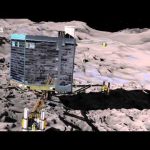
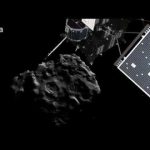
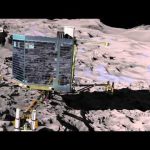
    The animation then shows Philae being ejected by Rosetta and deploying its own three legs, and follows the lander’s descent until it reaches the target site on the comet about seven hours later.

    The animation is speeded up, but the comet rotation is true: in the time it takes for Philae to descend, the nucleus has rotated by more than 180º (the comet’s rotation period is 12.4 hours).

    The final steps of Philae’s descent towards the comet are shown as seen by a hypothetical observer close to the landing site on the comet.

    Acknowledgement: The background image of the sequence showing Philae closing in on the landing site was taken by Rosetta’s OSIRIS narrow-angle camera (ESA/Rosetta/MPS for OSIRIS Team MPS/UPD/LAM/IAA/SSO/INTA/UPM/DASP/IDA) on 14 September 2014 from a distance of about 30 km.

    Philae was provided by a consortium led by DLR, MPS, CNES and ASI.

    Credit: ESA/ATG medialab

  • Journey to a comet and science on the surface

    Journey to a comet and science on the surface

    Rosetta’s deployment of Philae to land on Comet 67P/Churyumov–Gerasimenko.

    The animation begins with Philae still on Rosetta, which will come to within about 22.5 km of the centre of the nucleus to release the lander on 12 November 2014.

    The animation then shows Philae being ejected by Rosetta and deploying its own three legs, and follows the lander’s descent until it reaches the target site on the comet about seven hours later.

    The animation is speeded up, but the comet rotation is true: in the time it takes for Philae to descend, the nucleus has rotated by more than 180º (the comet’s rotation period is 12.4 hours).

    The final steps of Philae’s descent towards the comet are shown as seen by a hypothetical observer close to the landing site on the comet.

    Finally, the animation shows Philae landing on the comet.

    Because of the comet’s extremely low gravity, landing gear will absorb the small forces of landing while ice screws in the probe’s feet and a harpoon system will lock the probe to the surface. At the same time a thruster on top of the lander will push it down to counteract the impulse of the harpoon imparted in the opposite direction. Once it is anchored to the comet, the lander will begin its primary science mission, based on its 64-hour initial battery lifetime. The animation shows a number of the science instruments in action on the surface.

    Acknowledgement: The background image of the sequence showing Philae closing in on the landing site was taken by Rosetta’s OSIRIS narrow-angle camera (ESA/Rosetta/MPS for OSIRIS Team MPS/UPD/LAM/IAA/SSO/INTA/UPM/DASP/IDA) on 14 September 2014 from a distance of about 30 km.

    Philae was provided by a consortium led by DLR, MPS, CNES and ASI.

    Credit: ESA/ATG medialab

  • Rosetta orbiting around the comet

    Rosetta orbiting around the comet

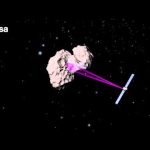
    Rosetta orbiting Comet 67P/Churyumov–Gerasimenko and scanning its surface to make scientific measurements. The colours of the beams and their shape on the surface represent two different instruments imaging and analysing the comet.

    The Rosetta orbiter has a total of 11 instruments to study the characteristics and environment of the comet. Rosetta is taking images of the comet at a variety of different wavelengths, measuring its gravity, mass, density, internal structure, shape and rotation, and assessing the properties of its gaseous, dust-laden atmosphere, or coma. It is also probing the surrounding plasma environment and analysing how it interacts with the solar wind.

    Rosetta also carries a small lander, Philae, which will descend to the surface of the comet and make in situ measurements using its suite of 10 instruments.

    The animation is not to scale; the comet is about 4.1 km wide and Rosetta is 32 m across including its solar wings, and it conducts scientific investigations at a range of altitudes. The comet shape is based on a true comet shape model.

    Credits: ESA

  • ESAHangout: Rosetta science and countdown to comet landing

    ESAHangout: Rosetta science and countdown to comet landing

    Media and interested members of the public joined Rosetta mission experts online on Friday, 7 November for a briefing ahead of the historic comet landing on 12 November.

    Programme:
    Introduction: Emily Baldwin, ESA space science editor
    Overview of media events: Jocelyne Landeau-Constantin, Head of ESOC communication office
    Science from Rosetta so far: Matt Taylor, ESA Rosetta project scientist
    Spacecraft status and operations timeline: Andrea Accomazzo, ESA Rosetta flight director
    Key messages: Fred Jansen, ESA Rosetta mission manager
    Q&A: all

    Follow the Rosetta mission at: http://rosetta.esa.int

  • Philae’s descent: closing in on the landing site

    Philae’s descent: closing in on the landing site

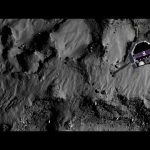
    The final steps of Philae’s descent towards Comet 67P/Churyumov–Gerasimenko on 12 November 2014, as seen by a hypothetical observer close to the landing site on the comet.

    The background image was taken by Rosetta’s OSIRIS narrow-angle camera on 14 September 2014 from a distance of about 30 km.

    Philae was provided by a consortium led by DLR, MPS, CNES and ASI.

    Credit: ESA/ATG medialab; background image: ESA/Rosetta/MPS for OSIRIS Team MPS/UPD/LAM/IAA/SSO/INTA/UPM/DASP/IDA

  • Demonstrating Rosetta’s Philae lander on the Space Station

    Demonstrating Rosetta’s Philae lander on the Space Station

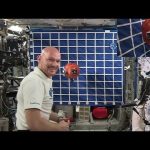
    ESA astronaut Alexander Gerst performs a demonstration of how ESA’s Rosetta mission will attempt to put a lander, called ‘Philae’ on the surface of comet 67P/Churyumov–Gerasimenko.

    Alexander narrates the story of the Rosetta mission and performs a demonstration that visualises the difficulties of landing on an object that has little gravitational pull. Using the weightless environment of the Space Station, Alexander attempts to land ‘Philae’ (an ear plug) onto the surface of the ‘comet’ (an inactive SPHERES robot) with increasing levels of difficulty: a rotating comet that is not moving to one that is both rotating and moving.

    This video is one of the six experiments and demonstrations in the Flying Classroom, Alexander will use small items to demonstrate several principles of physics in microgravity to students aged 10–17 years.

    The Rosetta mission’s lander, Philae, will be deployed on 12 November at 08:35 GMT/09:35 CET from a distance of 22.5 km from the centre of the comet. It will land about seven hours later, with confirmation expected to arrive at Earth at around 16:00 GMT/17:00 CET.

    More about the Rosetta mission: http://rosetta.esa.int
    More about ESA Education: http://www.esa.int/education

    Credit: ESA

  • Rosetta: landing on a comet

    Rosetta: landing on a comet

    Rosetta will release its Philae lander when approximately 22 kilometres from the centre of the comet. A signal confirming the separation will arrive at ground stations on Earth 28 minutes and 20 seconds later while the lander’s descent to the surface will take seven hours. On the way down, Philae will take a series of images and onboard instruments will sample the dust, gas and plasma close to the comet’s surface and measure any magnetic field.

    Philae’s three lander legs will absorb the momentum of impact and use it to drive an ice screw in each foot into the surface. At the same time two harpoons will fire to lock the probe onto the surface and a small thruster on top will counteract the impulse. Once anchored to the nucleus, Philae will begin its primary science mission, based on its initial battery lifetime of 64 hours.

    The SESAME experiment – which contains three instruments – includes one called CASSE, located in the lander’s feet. Harald KRUEGER, Principal Investigator of Rosetta’s SESAME experiment, explains how CASSE will use acoustic waves to determine properties of the comet’s soil.

    Within hours of landing, we also hope to see the first ever images of a comet from its surface.

    More about the Rosetta mission: http://rosetta.esa.int

  • Rosetta’s journey

    Rosetta’s journey

    A summary of Rosetta’s journey – from its launch on 2 March 2004 – to the planned landing on comet 67P/Churyumov-Gerasimenko on 12 November 2014. The journey has included four gravitational assists from Mars and the Earth, flybys with asteroids Steins and Lutetia, and the spacecraft’s temporary hibernation and successful wake up on 20 January 2014.

    In May Rosetta put on the brakes and performed rendezvous manoeuvres for several months. During this period, images from the onboard cameras revealed the comet’s unusual ‘space duck’ shape.

    Rosetta arrived at its destination on 6 August and became the first spacecraft to orbit a comet. The primary landing site was announced in September and Rosetta is now on schedule to release its Philae lander onto the comet’s surface in November.

  • Preparing for #CometLanding

    Preparing for #CometLanding

    After a ten-year journey, Rosetta and Philae had finally reached their destination, Comet 67P/Churyumov–Gerasimenko. Rosetta spent many weeks studying the comet, sending lots of information back to Earth. But where was Philae going to land? Eventually the scientists on Earth found the best place on the comet for Philae to land. Soon it was time to make the final preparations for Philae’s great adventure. Both spacecraft couldn’t wait any longer. The whole world would be watching as Rosetta and Philae prepared for their biggest challenge yet…

    This video is also available in the following languages:
    Italian: http://youtu.be/pNwPY5__SNw
    French: http://youtu.be/KeCse_mA2cs
    German: http://youtu.be/afbfA3HaCxc
    Spanish: http://youtu.be/sEexOXkazWs

    Other videos in the series are available in this playlist:
    https://www.youtube.com/playlist?list=PLbyvawxScNbui_Ncl9uQ_fXLOjS4sNSd8

    Credit: ESA

  • Preparing for #CometLanding (German)

    Preparing for #CometLanding (German)

    Nach einer 10-jährigen Reise haben Rosetta und Philae endlich ihr Ziel erreicht. Den Kometen 67P/Churyumov-Gerasimenko. Rosetta verbrachte mehrere Wochen damit, die Oberfläche des Kometen zu studieren und schickte viele Informationen zurück zur Erde. Aber wo würde Philae wohl landen können? Die Wissenschaftler überlegten lang und intensiv. Letztendlich fanden sie die beste Landestelle für Philae. Beide Raumsonden konnten es nicht mehr erwarten. Die ganze Welt würde zusehen, wenn sich Rosetta und Philae für ihre bisher größte Herausfordung bereit machen…

  • The making of ‘Ambition’

    The making of ‘Ambition’

    The making of the short film Ambition, a collaboration between Platige Image and ESA. Directed by Tomek Bagiński and starring Aidan Gillen and Aisling Franciosi, Ambition was filmed on location in Iceland, produced in Poland, and screened on 24 October 2014 during the British Film Institute’s celebration of Sci-Fi: Days of Fear and Wonder, at the Southbank, London.

    More information:
    Rosetta: the ambition to turn science fiction into science fact: http://www.esa.int/Our_Activities/Space_Science/Rosetta/Rosetta_the_ambition_to_turn_science_fiction_into_science_fact

    Credits: ESA/Platige Image

  • How big is Rosetta compared with the comet?

    How big is Rosetta compared with the comet?

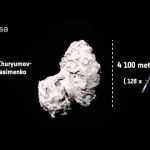
    This short animation explains the relative sizes of the Rosetta spacecraft and comet 67P/Churyumov–Gerasimenko. Rosetta is 32 m from tip to tip of the solar wings. The comet measures 4.1 km along its longest length, 128 times the width of Rosetta.

    Unlike typical artist’s impressions, this image is scaled to convey the vast difference in size between Rosetta and the comet, even when the spacecraft is in a close 10 km orbit, as depicted here.

    Rosetta reached 10 km distance from the comet centre by October 2014.

    Credits: ESA

  • Rosetta: close orbits to lander deployment (annotated)

    Rosetta: close orbits to lander deployment (annotated)

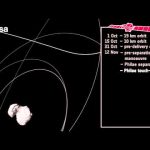
    Animation showing Rosetta’s orbit in the lead up to, during and after lander separation.

    The animation begins on 1 October 2014, when Rosetta is orbiting about 19 km from Comet 67P/Churyumov–Gerasimenko (all distances refer to the comet’s centre). The animation shows the transition to the close 10 km orbit by mid-October, and then the steps taken to move onto the pre-separation trajectory.

    On the day of landing, 12 November, Rosetta makes a further manoeuvre 2–3 hours before separation to move to 22.5 km from the comet centre to deploy the lander, Philae. While Philae descends to the surface over a period of seven hours, Rosetta makes another manoeuvre to maintain visibility with the lander. A series of ‘relay phase’ manoeuvres then move Rosetta out to a distance of about 50 km, before moving first to a 30 km orbit and later to an orbit at about 20 km by early December.

    The speed of the animation slows during the separation and lander phase to better highlight these events. The comet shape and rate of rotation is real – the comet rotates with a period of about 12.4 hours.

    Credits: ESA