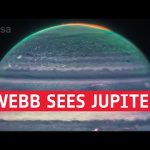
Webb’s Jupiter observations will give scientists even more clues to Jupiter’s inner life since with giant storms, powerful winds, aurorae, and extreme temperature and pressure conditions, the planet has a lot going on.
We are Europe’s gateway to space. Our mission is to shape the development of Europe’s space capability and ensure that investment in space continues to deliver benefits to the citizens of Europe and the world. Check out https://www.esa.int/ to get up to speed on everything space related.
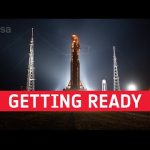
The Artemis I mission is almost ready for launch: it will send an uncrewed spacecraft beyond the Moon and back. Join this virtual Q&A to learn more about Europe’s contribution to the mission: ESA is overseeing the development of the European Service Module, that provides air, electricity and propulsion to the spacecraft. Participants to this media briefing include Josef Aschbacher, ESA Director General ; David Parker, ESA Director for Human and Robotic Exploration ; Jean-Marc Nasr, @Airbus EVP Space Systems and Marc Steckling, Airbus Head of Space Exploration.
We are Europe’s gateway to space. Our mission is to shape the development of Europe’s space capability and ensure that investment in space continues to deliver benefits to the citizens of Europe and the world. Check out https://www.esa.int/ to get up to speed on everything space related.
We are Europe’s gateway to space. Our mission is to shape the development of Europe’s space capability and ensure that investment in space continues to deliver benefits to the citizens of Europe and the world. Check out https://www.esa.int/ to get up to speed on everything space related.
We are Europe’s gateway to space. Our mission is to shape the development of Europe’s space capability and ensure that investment in space continues to deliver benefits to the citizens of Europe and the world. Check out https://www.esa.int/ to get up to speed on everything space related.
The series of heatwaves we are currently experiencing in western Europe is a clear sign of human-induced global warming. ESA’s Clement Albergel explains how we monitor these events using satellites such as the Copernicus Sentinel-3 mission and puts them in the context of the long-term climate data record generated via ESA’s Climate Change Initiative.
Credits: ESA
★ Subscribe: http://bit.ly/ESAsubscribe and click twice on the bell button to receive our notifications.
We are Europe’s gateway to space. Our mission is to shape the development of Europe’s space capability and ensure that investment in space continues to deliver benefits to the citizens of Europe and the world. Check out https://www.esa.int/ to get up to speed on everything space related.
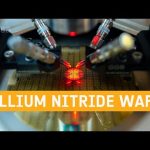
Etched onto this thin Gallium Nitride (GaN) semiconductor wafer are hundreds of space-quality microwave integrated circuits. The transistor gate terminals are fabricated at a scale of 0.25 micrometres – a micrometre being a thousandth of a millimetre!
We are Europe’s gateway to space. Our mission is to shape the development of Europe’s space capability and ensure that investment in space continues to deliver benefits to the citizens of Europe and the world. Check out https://www.esa.int/ to get up to speed on everything space related.
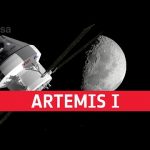
The Orion spacecraft with European Service Module will fly farther from Earth than any human-rated vehicle has ever flown before. This video gives an overview of the first mission – without astronauts – for Artemis, focussing on ESA’s European Service Module that powers the spacecraft.
The spacecraft will perform a flyby of the Moon, using lunar gravity to gain speed and propel itself 70 000 km beyond the Moon, almost half a million km from Earth – further than any human has ever travelled, where it will inject itself in a Distant Retrograde Orbit around the Moon.
On its return journey, Orion will do another flyby of the Moon before heading back to Earth.
The total trip will take around 20 days, ending with a splashdown in the Pacific Ocean without the European Service Module – it separates and burns up harmlessly in the atmosphere.
The second Artemis mission will have a simplified flight plan with only a flyby of the Moon but with four astronauts. The third Artemis mission will see astronauts taken to the lunar surface.
The European Service Module is ESA’s contribution to @NASA’s Orion spacecraft that will send astronauts to the Moon and beyond. It provides electricity, water, oxygen and nitrogen as well as keeping the spacecraft at the right temperature and on course.
The European Service Module has 33 thrusters, 11 km of electrical wiring, four propellant and two pressure tanks that all work together to supply propulsion and everything needed to keep astronauts alive far from Earth – there is no room for error.
★ Subscribe: http://bit.ly/ESAsubscribe and click twice on the bell button to receive our notifications.
We are Europe’s gateway to space. Our mission is to shape the development of Europe’s space capability and ensure that investment in space continues to deliver benefits to the citizens of Europe and the world. Check out https://www.esa.int/ to get up to speed on everything space related.
To prepare Europe for future decision making on Space-Based Solar Power, ESA has proposed a preparatory programme for Europe, initially named SOLARIS, for the upcoming ESA Council at Ministerial Level in November 2022.
Space-based solar power is a potential source of clean, affordable, continuous, abundant and secure energy. This basic concept has been given fresh urgency by the need for new sources of clean and secure energy to aid Europe’s transition to a Net Zero carbon world by 2050. If Europe wants to benefit from this game-changing capability then we need to start investing now.
We are Europe’s gateway to space. Our mission is to shape the development of Europe’s space capability and ensure that investment in space continues to deliver benefits to the citizens of Europe and the world. Check out https://www.esa.int/ to get up to speed on everything space related.
ESA astronaut Matthias Maurer returned from his first mission to the International Space Station, known as ‘Cosmic Kiss’, on Friday 6 May 2022. Revisit some of the highlights of his first stay in orbit with us. During his mission, Matthias became the 600th person in space, conducted his first spacewalk, and supported over one hundred cutting-edge scientific experiments – the findings of which will improve life back here on Earth.
We are Europe’s gateway to space. Our mission is to shape the development of Europe’s space capability and ensure that investment in space continues to deliver benefits to the citizens of Europe and the world. Check out https://www.esa.int/ to get up to speed on everything space related.
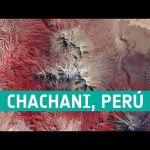
Chachani is the tallest of the mountains near the Peruvian city of Arequipa. The outskirts of the city and part of the airport runway are just visible in the centre bottom of the image.
We are Europe’s gateway to space. Our mission is to shape the development of Europe’s space capability and ensure that investment in space continues to deliver benefits to the citizens of Europe and the world. Check out https://www.esa.int/ to get up to speed on everything space related.
ESA and NASA are working hand in hand before the first Artemis mission to the Moon through a series of joint mission simulations. Teams based at the Erasmus Support Facility (ESF) at ESA’s ESTEC facility in The Netherlands, the German Space Operations Centre at ESA’s Columbus Control Centre in Oberphfaffenhofen and NASA’s Johnson Space Center in Houston are combining their expertise in a series of exercises to ensure a successful launch.
When it comes to simulations, it’s important that not everything goes perfectly right as it recreates – in real time – different stages of the mission to monitor the spacecraft’s position, propulsion, power, avionics and thermal properties. The European team, consisting of 40 people from ESA and industry, apply their considerable expertise from working on the European Service Module (ESM) to any unexpected problems. The ESM will provide power for the Orion spacecraft and propel it along its orbit to the Moon.
We are Europe’s gateway to space. Our mission is to shape the development of Europe’s space capability and ensure that investment in space continues to deliver benefits to the citizens of Europe and the world. Check out https://www.esa.int/ to get up to speed on everything space related.
We are Europe’s gateway to space. Our mission is to shape the development of Europe’s space capability and ensure that investment in space continues to deliver benefits to the citizens of Europe and the world. Check out https://www.esa.int/ to get up to speed on everything space related.
The mission to return martian samples back to Earth will see a European 2.5 metre-long robotic arm pick up tubes filled with precious soil from Mars and transfer them to a rocket for an historic interplanetary delivery.
The sophisticated robot, known as the Sample Transfer Arm or STA, will play a crucial role in the success of the Mars Sample Return campaign. The joint endeavour between @NASA and ESA aims to bring back martian samples to the best labs in our planet by 2033.
The robotic arm will land on Mars to retrieve the sample tubes NASA’s Perseverance rover is currently collecting from the surface. Able to “see”, “feel” and take autonomous decisions, the Sample Transfer Arm will identify, pick up and transfer the tubes into the first rocket fired off another planet – the Mars Launch System.
Only after the robot closes the container’s lid, the martian samples will be launched for rendezvous with ESA’s Earth Return Orbiter (ERO) and bring the material back to Earth.
The Sample Transfer Arm is conceived to be autonomous, highly reliable and robust.
Its architecture mimics a human arm with a shoulder, elbow and wrist, and has its own built-in brain and eyes. The robot can perform a large range of movements with seven degrees of freedom.
We are Europe’s gateway to space. Our mission is to shape the development of Europe’s space capability and ensure that investment in space continues to deliver benefits to the citizens of Europe and the world. Check out http://www.esa.int/ESA to get up to speed on everything space related.
We are Europe’s gateway to space. Our mission is to shape the development of Europe’s space capability and ensure that investment in space continues to deliver benefits to the citizens of Europe and the world. Check out https://www.esa.int/ to get up to speed on everything space related.
ESA’s new Vega-C rocket lifted off for its inaugural flight VV21 at 15:13 CEST/13:13 UTC/10:13 local time from Europe’s Spaceport in French Guiana. With new first and second stages and an uprated fourth stage, Vega-C increases performance to about 2.3 t in a reference 700 km polar orbit, from the 1.5 t capability of its predecessor, Vega. For flight VV21, Vega-C’s payload is LARES-2, a scientific mission of @AsiTVit and six research CubeSats from France, Italy and Slovenia.
We are Europe’s gateway to space. Our mission is to shape the development of Europe’s space capability and ensure that investment in space continues to deliver benefits to the citizens of Europe and the world. Check out https://www.esa.int/ to get up to speed on everything space related.
ESA’s new Vega-C rocket lifted off for its inaugural flight VV21 on 13 July 2022 at 15:13 CEST/13:13 UTC/10:13 local time from Europe’s Spaceport in French Guiana. This video features shots of the launch from different angles.
With new first and second stages and an uprated fourth stage, Vega-C increases performance to about 2.3 t in a reference 700 km polar orbit, from the 1.5 t capability of its predecessor, Vega.
For flight VV21, Vega-C’s payload is LARES-2, a scientific mission of the Italian space agency ASI and six research CubeSats from France, Italy and Slovenia.
We are Europe’s gateway to space. Our mission is to shape the development of Europe’s space capability and ensure that investment in space continues to deliver benefits to the citizens of Europe and the world. Check out https://www.esa.int/ to get up to speed on everything space related.
ESA’s EarthCARE satellite mission will soon be launched to answer some critical scientific questions related to the role that clouds and aerosols play in reflecting incident solar radiation back out to space and trapping infrared radiation emitted from Earth’s surface. As engineers are preparing EarthCARE for its life in orbit, the satellite is being put through its paces at ESA testing facilities in the Netherlands – the largest satellite test facility in Europe, equipped to simulate every aspect of the space environment.
One of the first tests involved the deployment of the satellite’s 11 metre solar wing from its folded stowed configuration, which allows it to fit in the rocket fairing, to its fully deployed configuration as it will be in orbit around Earth.
This timelapse video shows this deployment test from various angles.
We are Europe’s gateway to space. Our mission is to shape the development of Europe’s space capability and ensure that investment in space continues to deliver benefits to the citizens of Europe and the world. Check out https://www.esa.int/ to get up to speed on everything space related.
ESA’s new Vega-C rocket lifted off for its inaugural flight VV21 at 15:13 CEST/13:13 UTC/10:13 local time from Europe’s Spaceport in French Guiana. With new first and second stages and an uprated fourth stage, Vega-C increases performance to about 2.3 t in a reference 700 km polar orbit, from the 1.5 t capability of its predecessor, Vega. For flight VV21, Vega-C’s payload is LARES-2, a scientific mission of the Italian space agency ASI and six research CubeSats from France, Italy and Slovenia.
We are Europe’s gateway to space. Our mission is to shape the development of Europe’s space capability and ensure that investment in space continues to deliver benefits to the citizens of Europe and the world. Check out https://www.esa.int/ to get up to speed on everything space related.
The 25th SpaceX cargo resupply services mission (SpaceX CRS-25) carrying scientific research and technology demonstrations to the International Space Station is scheduled for launch July 14from NASA’s Kennedy Space Center in Florida. Experiments aboard the Dragon capsule include studies of the immune system, Earth’s oceans, soil communities, and cell-free biomarkers, along with mapping the composition of Earth’s dust and testing an alternative to concrete.
Enjoy the inaugural flight of ESA’s new Vega-C rocket. The principal payload of this flight is LARES-2, a scientific mission of @AsiTV. Also onboard are six European research CubeSats.
We are Europe’s gateway to space. Our mission is to shape the development of Europe’s space capability and ensure that investment in space continues to deliver benefits to the citizens of Europe and the world. Check out https://www.esa.int/ to get up to speed on everything space related.
Enjoy the inaugural flight of ESA’s new Vega-C rocket. The principal payload of this flight is LARES-2, a scientific mission of @AsiTV. Also onboard are six European research CubeSats.
We are Europe’s gateway to space. Our mission is to shape the development of Europe’s space capability and ensure that investment in space continues to deliver benefits to the citizens of Europe and the world. Check out https://www.esa.int/ to get up to speed on everything space related.
Enjoy the inaugural flight of ESA’s new Vega-C rocket. The principal payload of this flight is LARES-2, a scientific mission of the @AsiTV. Also onboard are six European research CubeSats.
We are Europe’s gateway to space. Our mission is to shape the development of Europe’s space capability and ensure that investment in space continues to deliver benefits to the citizens of Europe and the world. Check out https://www.esa.int/ to get up to speed on everything space related.
NASA revealed the first five full-color images and spectrographic data from the world’s most powerful space telescope, the James Webb Space Telescope, a partnership with ESA (European Space Agency), and CSA (Canadian Space Agency). The world got its first look at the full capabilities of the mission at a live event streamed from the agency’s Goddard Space Flight Center in Greenbelt, Maryland, on July 12, 2022.
The event showcased these targets: – Carina Nebula: A landscape speckled with glittering stars and cosmic cliffs – Stephan’s Quintet: An enormous mosaic with a visual grouping of five galaxies – Southern Ring Nebula: A nebula with rings of gas and dust for thousands of years in all directions – WASP 96-b: A distinct signature of water in the atmosphere of an exoplanet orbiting a distant Sun-like star – SMACS 0723: The deepest and sharpest infrared image of the distant universe to date
The full set of the telescope’s first full-color images and spectroscopic data are available at: https://nasa.gov/webbfirstimages
Webb’s first observations were selected by a group of representatives from NASA, ESA, CSA, and the Space Telescope Science Institute:
– WASP-96b: Webb’s detailed observation of this hot, puffy planet outside our solar system reveals the clear signature of water, along with evidence of haze and clouds that previous studies of this planet did not detect. With Webb’s first detection of water in the atmosphere of an exoplanet, it will now set out to study hundreds of other systems to understand what other planetary atmospheres are made of.
– Carina Nebula: Webb’s look at the ‘Cosmic Cliffs’ in the Carina Nebula unveils the earliest, rapid phases of star formation that were previously hidden. Looking at this star-forming region in the southern constellation Carina, as well as others like it, Webb can see newly forming stars and study the gas and dust that made them.
– Southern Ring: This planetary nebula, an expanding cloud of gas that surrounds a dying star, is approximately 2,000 light years away. Here, Webb’s powerful infrared eyes bring a second dying star into full view for the first time. From birth to death as a planetary nebula, Webb can explore the expelling shells of dust and gas of aging stars that may one day become a new star or planet.
– Stephan’s Quintet: Webb’s view of this compact group of galaxies, located in the constellation Pegasus, pierced through the shroud of dust surrounding the center of one galaxy, to reveal the velocity and composition of the gas near its supermassive black hole. Now, scientists can get a rare look, in unprecedented detail, at how interacting galaxies are triggering star formation in each other and how the gas in these galaxies is being disturbed.
– SMACS 0723: Webb has delivered the deepest and sharpest infrared image of the distant Universe so far – and in only 12.5 hours. This new image, a color composite of multiple exposures each about two hours long, is approximately the size of a grain of sand held at arm’s length. This deep field uses a lensing galaxy cluster to find some of the most distant galaxies ever detected. This image only scratches the surface of Webb’s capabilities in studying deep fields and tracing galaxies back to the beginning of cosmic time.
We are Europe’s gateway to space. Our mission is to shape the development of Europe’s space capability and ensure that investment in space continues to deliver benefits to the citizens of Europe and the world. Check out https://www.esa.int/ to get up to speed on everything space related.
ESA’s newest launcher stands nearly 35m tall when its four stages and payload are fully stacked. For its inaugural flight, VV21, the main payload is LARES-2, a scientific mission of @AsiTV.
We are Europe’s gateway to space. Our mission is to shape the development of Europe’s space capability and ensure that investment in space continues to deliver benefits to the citizens of Europe and the world. Check out https://www.esa.int/ to get up to speed on everything space related.
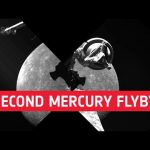
The ESA/ @JAXA-HQ BepiColombo mission has made its second gravity assist of planet Mercury, capturing new close-up images as it steers closer towards Mercury orbit in 2025.
The closest approach took place at 09:44 UTC (11:44 CEST) on 23 June 2022, about 200 km above the planet’s surface. Images from the spacecraft’s three monitoring cameras (MCAM), along with scientific data from a number of instruments, were collected during the encounter.
We are Europe’s gateway to space. Our mission is to shape the development of Europe’s space capability and ensure that investment in space continues to deliver benefits to the citizens of Europe and the world. Check out https://www.esa.int/ to get up to speed on everything space related.
This concluding part of ESA’s ‘Analog-1’ project took place as part of a larger multi-agency, multi-rover campaign, organised by the @DLR. The Autonomous Robotic Networks to Help Modern Societies, ARCHES, project probed the ability of autonomous robots to collaborate and share data on a networked basis.
ESA’s four-wheeled, two-armed Interact rover was built by the Agency’s Human Robot Interaction Lab and modified for the rugged slopes of the volcano. This robot formed part of a team consisting of two DLR rovers – Lightweight Rover Units 1 and 2 – along with a fixed ‘lunar’ lander supplying WiFi and power to the rovers, plus a drone for surface mapping. The Karlsruhe Institute of Technology contributed the centipede-like Scout crawler, optimised for tough terrain, which could also serve as a relay between Interact and the lander, boosting its effective area of operations.
We are Europe’s gateway to space. Our mission is to shape the development of Europe’s space capability and ensure that investment in space continues to deliver benefits to the citizens of Europe and the world. Check out https://www.esa.int/ to get up to speed on everything space related.
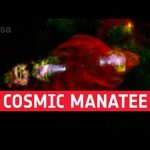
ESA’s XMM-Newton has X-rayed this beautiful cosmic creature, known as the Manatee Nebula, pinning down the location of unusual particle acceleration in its ‘head’.
The Manatee Nebula, or W50, is thought to be a large supernova remnant created when a giant star exploded around 30 000 years ago, flinging its shells of gases out across the sky. It is one of the largest such features known, spanning the equivalent size of four full Moons.
Unusually for a supernova remnant, a black hole remains in its core. This central ‘microquasar’, known as SS 433, emits powerful jets of particles travelling at speeds close to a quarter the speed of light that punch through the gassy shells, creating the double-lobed shape.
SS 433 is identified by the red dot in the middle of the image. The X-ray data acquired by XMM-Newton are represented in yellow (soft X-rays), magenta (medium energy X-rays) and cyan (hard X-ray emission), while red is radio and green optical wavelengths imaged by the Very Large Array and the Skinakas Observatory in Greece, respectively. @NASA NuSTAR and Chandra data were also used for the study (not shown in this image).
The nebula attracted attention in 2018 when the High-Altitude Water Cherenkov Observatory, which is sensitive to very high energy gamma-ray photons, revealed the presence of highly energetic particles (hundreds of tera electron volts), but could not pinpoint from where within the Manatee the particles were originating.
XMM-Newton was crucial in homing in on the region of particle acceleration in the X-ray jet blasting from the Manatee’s head, which begins about 100 light years away from the microquasar (represented by the magneta and cyan colours towards the left side SS 433) and extends to approximately 300 light years (coinciding with the radio ‘ear’ where the shock terminates).
Samar Safi-Harb of the University of Manitoba, Canada, who led the study, says “thanks to the new XMM-Newton data, supplemented with NuSTAR and Chandra data, we believe the particles are getting accelerated to very high energies in the head of the Manatee through an unusually energetic particle acceleration process. The black hole outflow likely made its way there and has been re-energized to high-energy radiation at that location, perhaps due to shock waves in the expanding gas clouds and enhanced magnetic fields.”
The nebula acts as a nearby laboratory for exploring a wide range of astrophysical phenomena associated with the outflows of many galactic and extragalactic sources and will be subject to further investigation. Furthermore, follow-up studies by ESA’s future Athena X-ray observatory will provide even more sensitive details about the inner workings of this curious cosmic Manatee.
Credits: S. Safi-Harb et al (2022)
★ Subscribe: http://bit.ly/ESAsubscribe and click twice on the bell button to receive our notifications.
We are Europe’s gateway to space. Our mission is to shape the development of Europe’s space capability and ensure that investment in space continues to deliver benefits to the citizens of Europe and the world. Check out https://www.esa.int/ to get up to speed on everything space related.
“After Euclid’s lifetime, it will just be floating in space. What if future beings found Euclid? How would they know anything about the humanity of the people?” – Tom Kitching, lead scientist of Euclid’s VIS instrument.
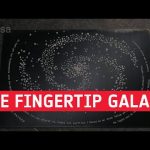
The team behind ESA’s Euclid mission has come together to create something special – a personal and collective galaxy-shaped fingerprint painting that has been attached to the spacecraft ready to launch into space. The collaborative nature of the artwork reflects the collaborative nature of the Euclid project overall; in both cases, people have come together to build something unique.
The Fingertip Galaxy was created by visual artist Lisa Pettibone and Euclid instrument scientist Tom Kitching. Since the very first fingerprint was pressed down in 2019, over 250 scientists and engineers have contributed to the piece of art.
So why a galaxy? Euclid is a galaxy-imaging machine that will observe billions of galaxies out to 10 billion light-years to make a 3D map of the Universe. The mission’s ultimate aim is to explore dark matter and dark energy.
“Although Euclid has always been beautiful in concept and materials, it didn’t really say anything about the people involved and humanity as a whole. We asked ourselves whether we could do something artistic that would speak to people,” says Lisa.
Scientists and engineers involved in Euclid were invited to dip their fingertips in paint and make their mark on a large piece of paper.
“We wanted something authentic, not perfect, and not shaped too much,” continues Lisa. “The result is a piece of art with a wonderful energy to it that captures all the energy of the people involved.”
The artwork was photographed and engraved onto a plaque using lasers at Mullard Space Science Laboratory – the same lasers that are used to etch parts for satellites. The plaque was fixed to Euclid and revealed at a ‘Goodbye Euclid’ event on 1 July 2022, when Euclid left Thales Alenia Space in Turin to head to Cannes for final testing as a complete system.
Euclid’s project scientist René Laureijs suggested adding text to the plaque to explain the thoughts behind it. Continuing the artistic nature of the project, poet Simon Barraclough wrote a dedicated poem, from which a short extract was chosen to be etched on to the plaque in a typewriter font that swirls around the galaxy of fingerprints. This video ends with Simon reading part of Since his poem.
Lisa summarises the Fingertip Galaxy: “It is adding an element of humanity to a dark, vast space, where as far as we can see there is no other intelligent life.”
Credit: Filmmaker/composer: Sam Charlesworth Fingertip Galaxy creators: Tom Kitching and Lisa Pettibone Poet: Simon Barraclough – ‘Unextraordinary Light (For Euclid)’ Special thanks: ESA, Euclid mission team, Mullard Space Science Laboratory Additional media: @NASA, Jeremy Perkins from unsplash.com
★ Subscribe: http://bit.ly/ESAsubscribe and click twice on the bell button to receive our notifications.
We are Europe’s gateway to space. Our mission is to shape the development of Europe’s space capability and ensure that investment in space continues to deliver benefits to the citizens of Europe and the world. Check out https://www.esa.int/ to get up to speed on everything space related.
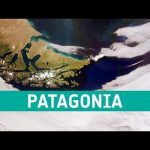
This week’s edition of the Earth from Space programme features an impressive, wide-angled view of Patagonia and the Falkland Islands (Islas Malvinas), captured by the Copernicus Sentinel-3 mission.
We are Europe’s gateway to space. Our mission is to shape the development of Europe’s space capability and ensure that investment in space continues to deliver benefits to the citizens of Europe and the world. Check out https://www.esa.int/ to get up to speed on everything space related.
A 50-metre asteroid out there has lingered at the top of risk lists around the globe. Initial observations showed 2021 QM1 had a chance of striking Earth in 2052, and frustratingly, follow-up observations soon became impossible. Not only was it outshone by the Sun at a pivotal moment, but QM1 has been receding from view as it moves away from Earth in its current orbit.
ESA’s Near-Earth Object Coordination Centre together with the European Southern Observatory made finding and assessing the risk from 2021 QM1 a top priority, and this June they had a chance to capture the risky asteroid as it edged away from the brilliant Sun. Now extremely faint in the sky, it would take one of the best telescopes in the world to spot it, and if they do, it will be the faintest asteroid ever detected. Did the team find our risky asteroid? Will it, one day, find us?
★ Subscribe: http://bit.ly/ESAsubscribe and click twice on the bell button to receive our notifications.
We are Europe’s gateway to space. Our mission is to shape the development of Europe’s space capability and ensure that investment in space continues to deliver benefits to the citizens of Europe and the world. Check out https://www.esa.int/ to get up to speed on everything space related.
A beautiful sequence of 56 images taken by the monitoring cameras on board the ESA/JAXA BepiColombo mission as the spacecraft made its second close flyby of its destination planet Mercury on 23 June 2022.
The compilation includes images from two monitoring cameras (MCAM) onboard the Mercury Transfer Module, which provides black-and-white snapshots at 1024 x 1024 pixel resolution. The MCAMs also capture parts of the spacecraft: MCAM-2 sees the Mercury Planetary Orbiter’s medium-gain antenna and magnetometer boom, while the high-gain antenna is in the MCAM-3 field-of-view.
The image sequences lasted about 15 minutes starting soon after closest approach to Mercury, which was at an altitude of 200 km. The first sequence showcases images taken by MCAM-2, starting from a distance of around 920 km from the surface of the planet and finishing at about 6099 km. The second sequence shows images from MCAM-3 covering a similar distance range (approximately 984 km – 6194 km).
Since MCAM-2 and MCAM-3 are located on either side of the spacecraft, and the image acquisition alternated quickly between the two cameras with about 15-20 seconds between them, the final sequence shows a composite of the two views, giving an impression of the complete planet receding behind the spacecraft.
During the flyby it was possible to identify various geological features that BepiColombo will study in more detail once in orbit around the planet. While craters dominate the landscape, numerous volcanic plains can also be made out, as well as roughly linear ‘scarps’ – cliff-like features created by tectonic faulting. In this flyby, the planet’s largest impact basin Caloris was seen for the first time by BepiColombo, its highly-reflective lavas on its floor making it stand out against the darker background as it rotated into the MCAM-2 field of view.
The gravity assist manoeuvre was the second at Mercury and the fifth of nine flybys overall. During its seven-year cruise to the smallest and innermost planet of the Solar System, BepiColombo makes one flyby at Earth, two at Venus and six at Mercury to help steer it on course to arrive in Mercury orbit in 2025. The Mercury Transfer Module carries two science orbiters: ESA’s Mercury Planetary Orbiter and JAXA’s Mercury Magnetospheric Orbiter. They will operate from complementary orbits to study all aspects of mysterious Mercury from its core to surface processes, magnetic field and exosphere, to better understand the origin and evolution of a planet close to its parent star.
We are Europe’s gateway to space. Our mission is to shape the development of Europe’s space capability and ensure that investment in space continues to deliver benefits to the citizens of Europe and the world. Check out https://www.esa.int/ to get up to speed on everything space related.
In this week’s edition of the Earth from Space programme, the Copernicus Sentinel-2 mission takes us over Lake Balkhash, the largest lake in Central Asia.
We are Europe’s gateway to space. Our mission is to shape the development of Europe’s space capability and ensure that investment in space continues to deliver benefits to the citizens of Europe and the world. Check out https://www.esa.int/ to get up to speed on everything space related.
In this week’s edition of the Earth from Space programme, we explore part of the Glacier Bay National Park and Preserve, Alaska, with Copernicus Sentinel-2.
We are Europe’s gateway to space. Our mission is to shape the development of Europe’s space capability and ensure that investment in space continues to deliver benefits to the citizens of Europe and the world. Check out https://www.esa.int/ to get up to speed on everything space related.