Follow us on Spotify: https://open.spotify.com/show/1IomTgKYtGDtcJd6aSxUJe?si=SQoZCTUbQqWd6gzydVOnLQ
Follow us on SoundCloud: https://soundcloud.com/user-20349831-419444734
Follow us on Instagram: https://www.instagram.com/hoy_scout/?hl=en
Follow us on Spotify: https://open.spotify.com/show/1IomTgKYtGDtcJd6aSxUJe?si=SQoZCTUbQqWd6gzydVOnLQ
Follow us on SoundCloud: https://soundcloud.com/user-20349831-419444734
Follow us on Instagram: https://www.instagram.com/hoy_scout/?hl=en
Get a month of CuriosityStream for free at http://www.curiositystream.com/joescott.
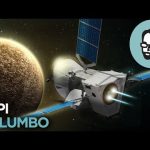
The European Space Agency – or ESA – has been a major player in the commercial launch space for decades with their Ariane series of rockets. But they also have been racking up some impressive interplanetary missions, their latest one being the BepiColumbo mission to Mercury.
Here we break down the ESA, talk about some of their biggest victories, and where they want to go in the future.
Like my shirt? Get one here:
http://www.answerswithjoe.com/shirts
Support me on Patreon!
http://www.patreon.com/answerswithjoe
Follow me at all my places!
Instagram: https://instagram.com/answerswithjoe
Snapchat: https://www.snapchat.com/add/answerswithjoe
Facebook: http://www.facebook.com/answerswithjoe
Twitter: https://www.twitter.com/answerswithjoe
LINKS LINKS LINKS:
https://www.esa.int/About_Us/Law_at_ESA/ESA_Convention
First launch of the Ariane 5 that blew up:
https://www.youtube.com/watch?v=gp_D8r-2hwk
The BepiColumbo path to Mercury:
https://www.youtube.com/watch?v=0Yp-q1wqgig
https://www.space.com/39390-alien-planets-reveal-our-strange-solar-system.html
https://www.popularmechanics.com/space/rockets/a27290/one-chart-spacex-dominate-rocket-launches/
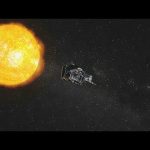
A new record for our mission to the Sun, the end of an era for a prolific planet hunter, and our next mission to Mars is closing in on its destination … a few of the stories to tell you about – This Week at NASA!
This video is available for download from NASA’s Image and Video Library: https://images.nasa.gov/details-NHQ_2018_1102_The%20Closest%20Spacecraft%20to%20the%20Sun%20on%20This%20Week%20@NASA%20%E2%80%93%20November%202,%202018.html

Snow is one part of the cryosphere that many of us have actually encountered, but it also plays a crucial role in regulating Earth’s climate. Through decades of remote sensing, NASA has kept a close eye on the ebb and flow of snow cover. #NASAExplorers also venture into the field at the far reaches of Earth to study snow, a critical resource for the millions of people who rely on it for drinking water.

NASA Explorers is a new digital series that takes you inside the space agency and follows the pioneers, risk-takers and experts at the front line of exploration. Season 1, “Cryosphere,” joins NASA scientists on their journey to the frozen ends of the Earth as they study our rapidly changing world from satellites, planes and boots on the ground. The Cryosphere is a place we all depend on, but many of us will never go to. As temperatures rise, the frozen regions of Earth are changing rapidly. NASA scientists are locked in a race against time to understand our shifting climate and how it affects life on Earth.
The European Space Agency demonstrates its commitment to the United Nations Sustainable Development Goals through the activities promoted by its ten directorates. Satellite data and space applications, as well as space technologies, play a major role in addressing issues ranging from health care and education through to climate change and human migration. ESA’s multifaceted technical expertise can provide policy makers, aid organisations and private companies with the necessary tools to support economic growth, social development and environmental protection.
Credit: ESA -The ScienceOffice.org

Meet Bepi, Mio and MTM, three new space explorers about to start an extraordinary journey to Mercury, a planet of extremes and mysteries.
Find out how these bold spacecraft have been preparing for their epic adventure, from space school to flyby practice. Watch as their training covers not only planetary science and space education, but also cultural aspects of their places of origin: Bepi and MTM were born in Europe, while Mio comes from Japan.
Follow Bepi, Mio and MTM as they become fascinated by their destination thanks to the curious discoveries made by their cousin Messenger. Learn about the science questions that Bepi and Mio will investigate, from Mercury’s geology and surface composition to the magnetic field and its interaction with the solar wind.
Finally, walk with them to the launch pad and wish them a great start to a memorable adventure.
This video is also available in the following languages:
日本人: https://youtu.be/Z96Sw0NyvEg
Français: https://youtu.be/m5vaMYJupfM
Deutsche: https://youtu.be/fvahTWyhV1g
Italiano: https://youtu.be/ziMwI5fR2HA
Español: https://youtu.be/2VnUX6yRn4Q
Learn more about #BepiColombo: http://bit.ly/ESAsBepiColombo
★ Subscribe: http://bit.ly/ESAsubscribe
Check out our full video catalog: http://bit.ly/SpaceInVideos
Follow ESA on Twitter: http://bit.ly/ESAonTwitter
On Facebook: http://bit.ly/ESAonFacebook
On Instagram: http://bit.ly/ESAonInstagram
On Flickr: http://bit.ly/ESAonFlickr
ESA is Europe’s gateway to space. Our mission is to shape the development of Europe’s space capability and ensure that investment in space continues to deliver benefits to the citizens of Europe and the world. Check out http://www.esa.int/ESA to get up to speed on everything space related.
Copyright information about our videos is available here: http://www.esa.int/spaceinvideos/Terms_and_Conditions
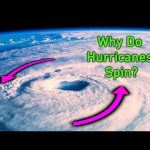
The Coriolis effect says that anytime you’re rotating—whether it’s on a playground toy or your home planet—objects moving in straight lines will appear to curve. This bizarre phenomenon affects many things, from the paths of missiles to the formation of hurricanes.
You may have heard that the Coriolis effect makes water in the bathtub spiral down the drain in a certain way, or that it determines the way that a toilet flushes. That’s actually wrong.
Although, as you may have noticed while tracking a hurricane on the news, storms in the Northern Hemisphere spin counterclockwise, while those in the Southern Hemisphere spin clockwise. Why do storms spin in different directions depending on their location? And why do they spin in the first place? The answer is the Coriolis effect.
SUBSCRIBE here: https://www.youtube.com/WhatThePhysics?sub_confirmation=1
** PRODUCTION CREDITS
————————————————————
– Host, Producer: Greg Kestin
– Filming: Greg Kestin
– Research, Writing: Greg Kestin
Samia Bouzid
– Editing, Animating: Samia Bouzid
Greg Kestin
– Editorial Input: Julia Cort, Ari Daniel
– Science consultants: David Holland, Louis Deslauriers, Kerry Emanuel, Daniel Jacob
– Media: Shutterstock, NASA, ESA
– Special thanks: Harvard Lecture Demonstration Group (Daniel Davis, Allen Crockett, Daniel Rosenberg)
– Special thanks: Entire NOVA team
– From the producers of PBS NOVA © WGBH Educational Foundation – Funding provided by FQXi
– Music provided by APM

This short movie shares an impression of some of the scientific highlights from Rosetta’s mission at Comet 67P/Churyumov–Gerasimenko, as told through the voices of scientists working with Rosetta’s vast dataset, two years after the mission ended.
Rosetta launched in 2004 and travelled for ten years to its destination before deploying the lander Philae to the comet’s surface. Following the comet along its orbit around the Sun, Rosetta studied the comet’s surface changes, its dusty, gassy environment and its interaction with the solar wind. Even though scientific operations concluded in September 2016 with Rosetta’s own descent to the comet’s surface, analysis of the mission’s data will continue for decades.
Credits: This is an ESA Web TV production. The video contains artist impressions of the spacecraft (credit: ESA/ATG medialab) and animations/infographics by ESA. Images of the comet are from Rosetta’s OSIRIS and NAVCAM cameras, as well as Philae’s CIVA camera (credits: ESA/Rosetta/MPS for OSIRIS Team MPS/UPD/LAM/IAA/SSO/INTA/UPM/DASP/IDA – CC BY SA 4.0; ESA/Rosetta/NavCam – CC BY-SA IGO 3.0; ESA/Rosetta/Philae/CIVA). Ground-based images were provided by Colin Snodgrass/Alan Fitzsimmons/Liverpool Telescope. The plasma visualisation is based on modelling and simulation by Technische Universität Braunschweig and Deutsches Zentrum für Luft- und Raumfahrt, and visualised by Zuse-Institut Berlin. The animation of Philae’s flight across the surface is based on data from Philae’s ROMAP, RPC-MAG, OSIRIS, ROLIS, CIVA CONSERT, SESAME and MUPUS instrument teams, the Lander Control Centre at DLR and the Science Operation and Navigation Center at CNES.
Learn more about #Rosetta: http://bit.ly/RosettaMissionESA
★ Subscribe: http://bit.ly/ESAsubscribe
Check out our full video catalog: http://bit.ly/SpaceInVideos
Follow ESA on Twitter: http://bit.ly/ESAonTwitter
On Facebook: http://bit.ly/ESAonFacebook
On Instagram: http://bit.ly/ESAonInstagram
On Flickr: http://bit.ly/ESAonFlickr
ESA is Europe’s gateway to space. Our mission is to shape the development of Europe’s space capability and ensure that investment in space continues to deliver benefits to the citizens of Europe and the world. Check out http://www.esa.int/ESA to get up to speed on everything space related.
Copyright information about our videos is available here: http://www.esa.int/spaceinvideos/Terms_and_Conditions

Some Fortune 500 companies are using tools that deploy artificial intelligence to weed out job applicants. But is this practice fair? In this episode of Moving Upstream, WSJ’s Jason Bellini investigates.
Watch for new episodes of Moving Upstream this fall.
To be notified of future episodes and updates on the series, sign up here: https://confirmsubscription.com/h/d/CABE7097D284D80F
Don’t miss a WSJ video, subscribe here: http://bit.ly/14Q81Xy
More from the Wall Street Journal:
Visit WSJ.com: http://www.wsj.com
Visit the WSJ Video Center: https://wsj.com/video
On Facebook: https://www.facebook.com/pg/wsj/videos/
On Twitter: https://twitter.com/WSJ
On Snapchat: https://on.wsj.com/2ratjSM

Netflix series black mirror is futuristic but is it really that far off from the truth?!
#smokiedavis
#netflix
#blackmirror
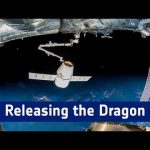
This timelapse video shows still pictures taken from the International Space Station of the departing #Dragon supply spacecraft. Played in quick succession the video displays faster than real life but in 4K resolution.
The Dragon spacecraft was released from the Station’s robotic arm at 18:38 GMT on 3 August 2018. Thrusters fired to increase its distance from the Space Station and the spacecraft started its deorbit and return to Earth, splashing down in the Pacific Ocean less than seven hours after release.
The International Space Station flies at 28 800 km/h above our planet doing a complete orbit in around 90 minutes – during release operations the sun set and rose above the horizon many times.
As Dragon faded into the distance it flew over a stormy part of Earth – lightning flashes can be seen many kilometres below.
Dragon is the only spacecraft that can return to Earth with scientific cargo aside from the Soyuz spacecraft that ferries astronauts to space and back – this flight carried over 1700 kg of cargo.
Watch the release of Cygnus here: https://youtu.be/bttU_rKoti0
★ Subscribe: http://bit.ly/ESAsubscribe
Follow Alexander and the Horizons mission on social media via http://bit.ly/AlexanderGerstESA and on http://bit.ly/HorizonsBlogESA.
Check out our full video catalog: http://bit.ly/SpaceInVideos
Follow ESA on Twitter: http://bit.ly/ESAonTwitter
On Facebook: http://bit.ly/ESAonFacebook
On Instagram: http://bit.ly/ESAonInstagram
On Flickr: http://bit.ly/ESAonFlickr
ESA is Europe’s gateway to space. Our mission is to shape the development of Europe’s space capability and ensure that investment in space continues to deliver benefits to the citizens of Europe and the world. Check out http://www.esa.int/ESA to get up to speed on everything space related.
Copyright information about our videos is available here: http://www.esa.int/spaceinvideos/Terms_and_Conditions
Aeronautics is our tradition. For 60 years, we have advanced aeronautics, developed new technologies and researched aerodynamics. Our advancements have transformed the way you fly. We will continue to revolutionize flight.
Congress passed the National Aeronautics and Space Act, on July 16 and President Eisenhower signed it into law on July 29, 1958. NASA opened for business on Oct. 1, 1958. Our history tells a story of exploration, innovation and discoveries. The next 60 years, that story continues. Learn more: https://www.nasa.gov/60
This video is available for download from NASA’s Image and Video Library: https://images.nasa.gov/details-NHQ_2018_0828_NASA%2060_Leading%20Edge%20of%20Flight.html
This illusion tricks your brain into slowing down time. And it can help explain REAL time dilation, thanks to the constant speed of light.
“How To Travel to Another Galaxy” will be out next week––subscribe so you won’t miss it! https://bit.ly/2o2WYxD
PRODUCTION CREDITS
Host, Producer: Greg Kestin
Filming: Greg Kestin
Research, Writing: Greg Kestin, Samia Bouzid
Editing, Animating: Samia Bouzid, Lauren Liebhaber
Editorial Input from: Julia Cort, Ari Daniel
Special thanks: Entire NOVA team
From the producers of PBS NOVA © WGBH Educational Foundation Funding provided by FQXi Music provided by APM
Test yourself! How well can you solve some of the biggest cosmic puzzles? You get one clue: redshift.
SUBSCRIBE: https://www.youtube.com/WhatThePhysics?sub_confirmation=1
Host, Producer: Greg Kestin
Filming: Greg Kestin
Research, Writing: Greg Kestin, Samia Bouzid
Editing, Animating: Daniel Thomson
Editorial Input from: Julia Cort, Ari Daniel
Science consultant: Susana Deustua
Media: Shutterstock, NASA, ESA
Special thanks: Entire NOVA team
From the producers of PBS NOVA © WGBH Educational Foundation Funding provided by FQXi Music provided by APM
Music: APM

What the Physics?! is about the fun and amazing physics around you, in you, and of you. With host Greg Kestin, theoretical physicist at Harvard University.
SUBSCRIBE: https://www.youtube.com/WhatThePhysics?sub_confirmation=1
Host, Producer: Greg Kestin
Writing: Greg Kestin, Samia Bouzid
Editorial Input from: Julia Cort, Ari Daniel
Filming: Greg Kestin
Editing: Greg Kestin & Daniel Thomson
Special thanks: Entire NOVA team
From the producers of PBS NOVA © WGBH Educational Foundation Funding provided by FQXi
Music provided by APM

NASA heliophysicist Alex Young explains how sound connects us with the Sun and all other stars. This piece features low frequency sounds of the Sun. Raw audio (no commentary): https://youtu.be/-I-zdmg_Dno Read more: https://go.nasa.gov/2JR0wLL
Credit: NASA’s Goddard Space Flight Center
Micheala Sosby (NASA/GSFC): Lead Producer
Katie Atkinson (GSFC Interns): Lead Producer
C. Alex Young (NASA/GSFC): Narrator
Aaron E. Lepsch (ADNET Systems Inc.): Technical Support
Music: “Flow” by Lee Rosevere
This video is public domain and along with other supporting materials can be downloaded from the Scientific Visualization Studio at: https://svs.gsfc.nasa.gov/13011

Tracing the source of a cosmic phenomenon, the sound of plasma waves in space, and X-ray exploration of the Eagle Nebula … a few of the stories to tell you about – This Week at NASA!
This video is available for download from NASA’s Image and Video Library: https://images.nasa.gov/details-NHQ_2018_0713_Tracing%20The%20Source%20of%20a%20Cosmic%20Phenomenon%20on%20This%20Week%20@NASA%20%E2%80%93%20July%2013,%202018.html
I had the honor and priviledge to be able to sit down with Nick Redfern and interview him in person for the second time! This was a 2 part discussion starting off with big brother, propaganda, artificial intelligence and mind control. We end with part 2 connecting the dots of the first part with the UFOs, and the Artificial Alien Threat.
PART 1
Elite Bloodlines
Illuminati
New World Order
Orchestrated Events
Big Brother the Orwellian Society
Surveillance through Social Media
Propaganda through Television and Mainstream Media
Mind Control and Dumbing Down the Masses
GMOs in Food and Pharmaceutical Drugs as a Weapon for the Elite
Black Budget Operations and Programs
Artificial Intelligence
Virtual Reality
Technology is great but can easily be abused
Post 9/11 World
DARPA and Microchip Implants
Low Frequency Weapon
Georgia Guide Stones
Depopulation Agendas
PART 2 CONNECTING THE DOTS WITH PART 1
Ronald Reagans Alien Threat Speech
Project Bluebeam and the Fake Alien Threat
Advanced Holographic Technologies
Bob Lazar, Area 51, and Alien Technologies
Black Triangle UFO’s
Fabricated Events
The Orchestration of the Second Coming of Christ
Are Governments of the World working alongside ET’s
Project Serpo and Eisenhower
Disinformation
Dulce Underground Wars
Phil Schneider
Are ET’s traveling here? Are they already here possibly underground or hollow earth?
Underground Top Secret Facilities
Underground Submersive Objects
Our alien friend Paxi, ESA Education’s mascot, went to visit American astronaut Mark Vande Hei on board the International Space Station. Vande Hei tells Paxi about how astronauts exercise in weightlessness, an important aspect of living on the ISS.
Credit: ESA/NASA
★ Subscribe: http://bit.ly/ESAsubscribe
#ESA
#Paxi
#InternationalSpaceStation
The largest of Pluto’s five moons, Charon, was discovered on June 22, 1978, by James Christy and Robert Harrington at the U.S. Naval Observatory in Flagstaff, Arizona.
Read the story: https://www.nasa.gov/feature/charon-at-40-four-decades-of-discovery-on-pluto-s-largest-moon
Charon was discovered only about six miles from where Pluto itself was discovered at Lowell Observatory. They weren’t even looking for satellites of Pluto – Christy, examining a series of grainy telescope images, trying to refine Pluto’s orbit around the Sun.
Christy and others tell the story of this amazing scientific find, which fueled Pluto’s transformation from a telescopic dot into an actual planetary system – and a source of many discoveries to come.
The National Symphony Orchestra Pops and the John F. Kennedy Center for the Preforming Arts hosted a celebration for NASA’s 60th Anniversary June 1, 2018.
This video is available for download from NASA’s Image and Video Library: https://images.nasa.gov/details-NHQ_2018_0606_The%20National%20Symphony%20Orchestra%20Pops%20Celebrates%20NASA%E2%80%99s%2060th%20Anniversary.html
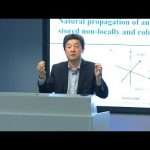
Prof. Shoucheng Zhang discusses three pillars of information technology: quantum computing, AI and blockchain. He presents the fundamentals of crypto-economic science, and answers questions such as: What is the intrinsic value of a medium of exchange? What is the value of consensus and how does it emerge? How can math be used to create distributed self-organizing consensus networks to create a data-marketplace for AI and machine learning?
Prof. Zhang is the JG Jackson and CJ Wood professor of physics at Stanford University. He is a member of the US National Academy of Science, the American Academy of Arts and Sciences and a foreign member of the Chinese Academy of Sciences. He discovered a new state of matter called topological insulator in which electrons can conduct along the edge without dissipation, enabling a new generation of electronic devices with much lower power consumption. For this ground breaking work he received numerous international awards, including the Buckley Prize, the Dirac Medal and Prize, the Europhysics Prize, the Physics Frontiers Prize and the Benjamin Franklin Medal.
He is also the founding chairman of DHVC venture capital fund, which invests in AI, blockchain, mobile internet, big data, AR/VR, genomics and precision medicine, sharing economy and robotics.
Tracking the space station’s next crew, a distant and lonely neutron star, and taking the bite out of some very dangerous bugs – a few of the stories to tell you about – This Week at NASA!
This video is available for download from NASA’s Image and Video Library: https://images.nasa.gov/details-NHQ_2018_0601_Tracking%20the%20Space%20Station%E2%80%99s%20Next%20Crew%20on%20This%20Week%20@NASA%20%E2%80%93%20June%201,%202018.html

Our alien friend Paxi, ESA Education’s mascot, went to visit American astronaut Mark Vande Hei on board the International Space Station. Vande Hei shows Paxi the views outside of the Cupola, the biggest window on Earth in the International Space Station.
Credit: ESA/NASA
★ Subscribe: http://bit.ly/ESAsubscribe
Visit ESAKids: http://bit.ly/ESAKids
#ESA
#Paxi
#InternationalSpaceStation
Join Paxi as he explores the greenhouse effect to learn about global warming.
★ Subscribe: http://bit.ly/ESAsubscribe
The adventures of Paxi are also available in the following languages:
🇨🇿 https://youtu.be/jLO-6B4efr8
🇩🇰 https://youtu.be/tl0F4JEanCo
🇳🇱 https://youtu.be/vCSHFGvKdf4
🇫🇮 https://youtu.be/G_Tne4eIWPQ
🇫🇷 https://youtu.be/99_x2nYfvKY
🇩🇪 https://youtu.be/7tEODAlOIZY
🇮🇹 https://youtu.be/RR30r52uQmQ
🇳🇴 https://youtu.be/K9BJfsgIMcE
🇵🇱 https://youtu.be/3oYYDXW1mMc
🇵🇹 https://youtu.be/r7S3Wqgl1JQ
🇷🇴 https://youtu.be/i_DAxjw9bS4
🇪🇸 https://youtu.be/0IYozXSfHDs
🇸🇪 https://youtu.be/ytbUoRBSe6M
Will robots take over the world? Most researchers don’t think so. But how about our jobs?
NOVA on Facebook: https://www.facebook.com/NOVAonline
NOVA on Twitter: @novapbs
NOVA on Instagram: @novapbs
PRODUCTION CREDITS
Digital Producer:
Michael Rivera
NOVA WONDERS: WHAT ARE ANIMALS SAYING?
Producers:
Michael Bicks & Anna Lee Strachan
© WGBH Educational Foundation 2018
Animated 3D view of the sky as observed by ESA’s Gaia satellite using information from the mission’s second data release.
The bright band in the left half of the image is the Milky Way, where most of the stars in our Galaxy reside. The animation starts with the Orion constellation at the centre; we then move towards the neighbouring Taurus constellation and to the Hyades star cluster, which is part of this constellation. Hyades is the closest open cluster to the Solar System, some 150 light-years away.
The animation first shows the 3D structure of the cluster, based on accurate position and distance information from Gaia. Then an animated view of the future motions of stars is shown – both in Hyades and beyond. This is based on Gaia’s measurements of the velocity of stars across the sky, also known as proper motion.
Credit: ESA/Gaia/DPAC, CC BY SA 3.0 IGO
Acknowledgement: Gaia Data Processing and Analysis Consortium (DPAC); Gaia Sky; S. Jordan / T. Sagristà, Astronomisches Rechen-Institut, Zentrum für Astronomie der Universität Heidelberg, Germany
★ Subscribe: http://bit.ly/ESAsubscribe
Learn more: bit.ly/GaiaRickestStarMap
Sign up for the in60Learning
Learning List: https://www.in60learning.com/
Check out in60Learning’s titles on Amazon: https://amzn.to/2qAfdMq
If you enjoyed the video, please drop a like!
When people think about the big players of the space industry, they don’t tend to think about Europe. But believe it or not the European Space Agency or ESA has the second highest budget out of any space agency. So what are they doing with all that money?
Narration by Mark Lurenana
Written and Edited by David Blom – https://twitter.com/leavedavidalone
Music:
Cycles – Audionautix
European Union Anthem
Simon Bichbihler – In the 1980’s
Thank you to In60learning for sponsoring this video.
#EuropeanSpaceAgency #ESA #Explained
Trevor Moore’s drug-fueled laptop becomes autonomous and takes him on a wild ride through time.
Watch the full special here: https://on.cc.com/2I17uyt
Our alien friend Paxi, ESA Education’s mascot, went to visit American astronaut Scott Tingle on board the International Space Station. Tingle tells Paxi about how astronauts sleep in weightlessness, an important aspect of living on the ISS.
Credit: ESA/NASA
#ESA
#Paxi
#InternationalSpaceStation

Building the future of quiet supersonic flight, science and supplies delivered to the space station, and uncovering the farthest star ever seen – a few of the stories to tell you about, This Week at NASA!
This video is available for download from NASA’s Image and Video Library: https://images.nasa.gov/details-Lowering%20the%20Boom%20of%20Supersonic%20Flight%20on%20This%20Week%20@NASA%20%E2%80%93%20April%206,%202018.html
Business Insider spoke to 6 tech industry figures at MWC 2018, and asked them what they thought the world would look like in 50 years’ time. From self-driving cars to implanted technology, watch to hear what these experts are predicting for the future.
Tech Insider tells you all you need to know about tech: gadgets, how-to’s, gaming, science, digital culture, and more.
Subscribe to our channel and visit us at: http://www.businessinsider.com/sai
TI on Facebook: https://www.facebook.com/techinsider
TI on Instagram: https://www.instagram.com/tech_insider/
TI on Twitter: https://twitter.com/techinsider

Vice President Mike Pence led the second meeting of the National Space Council, Next Space Station Crew Trains for Launch, and Webb Telescope to Reveal Secrets of Mars … a few of the stories to tell you about – This Week at NASA!
This video is available for download from NASA’s Image and Video Library: https://images.nasa.gov/details-NHQ_2018_0223_The%20Second%20Meeting%20of%20the%20National%20Space%20Council%20on%20This%20Week%20@NASA%20%E2%80%93%20February%2023,%202018.html

ESA’s Earth Explorer Aeolus satellite will be launched later this year to measure the world’s winds from space. The satellite carries one of the most sophisticated instruments ever to be put into orbit: Aladin, which includes two powerful lasers, a large telescope and very sensitive receivers. The laser generates ultraviolet light that is beamed down into the atmosphere to profile the world’s winds – a completely new approach to measuring the wind from space. These vertical slices through the atmosphere, along with information it gathers on aerosols and clouds, will improve our understanding of atmospheric dynamics and contribute to climate research. As well as advancing science, Aeolus will play an important role in improving weather forecasts. The mission will also complement information about the atmosphere being provided by the Copernicus Sentinel missions.
Visit our website to learn more: http://www.esa.int/Our_Activities/Observing_the_Earth/Aeolus

If Quantum and Gravity were in a relationship…worst Valentine’s day in the Universe!
Subscribe: https://www.youtube.com/WhatThePhysics?sub_confirmation=1
Have questions, ask me:
twitter @gkestin
CREDITS:
Host, Producer: Greg Kestin
Researcher: Samia Bouzid
Writers: Samia Bouzid, Greg Kestin
Scientific Consultants: Sabine Hossenfelder, Dave Goldberg
Editorial Input from: Julia Cort, Ari Daniel, David Condon
Filming: Greg Kestin, Peter Chang, Samia Bouzid
Animation and Editing: Greg Kestin
Special thanks: Entire NOVA team
From the producers of PBS NOVA © WGBH Educational Foundation
Funding provided by FQXi
Music provided by APM
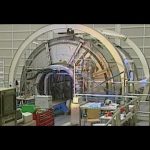
From building to liftoff and installation, these images show the making of European space lab Columbus and its daily use for out-of-this-world research.
Like the transatlantic voyages that Christopher Columbus made half a millennium ago, the Columbus module was meticulously planned, budgeted, scrapped and redesigned before getting the official blessing to build, ship and launch.
The laboratory ascended to orbit aboard Space Shuttle Atlantis from the Kennedy Space Center in Florida, USA on 7 February 2008. Nestling in the spaceplane’s cargo bay, Columbus was accompanied by a seven-man crew.
On 11 February, the crew on the International Space Station captured the new arrival. At that moment, Columbus became Europe’s first permanent human outpost in orbit and Europe became a full partner of the International Space Station.
Columbus houses as many disciplines as possible in a small volume, from astrobiology to solar science through metallurgy and psychology – more than 225 experiments have been carried out during this remarkable decade. Countless papers have been published drawing conclusions from experiments performed in Columbus.
More about Columbus here: esa.int/Columbus
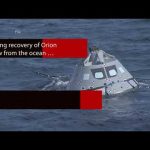
Firing the engine that will power humans to deep space, testing a potential source of power for future exploration, and practicing water recovery of the Orion spacecraft – a few of the stories to tell you about – This Week at NASA!
This video is available for download from NASA’s Image and Video Library: https://images.nasa.gov/details-NHQ_2018_0119_Feel%20the%20Rumble!%20RS-25%20Engine%20Test%20on%20This%20Week%20@NASA%20%E2%80%93%20January%2019,%202018.html

Black people are under-represented in STEM. But as technology progresses, is racism creeping into AI?
HASHTAG: #TheRundownBET
TW: @TheRundownBET – https://twitter.com/therundownbet?lan…
FB: @TheRundownBET – https://www.facebook.com/TheRundownBET/
IG:@therundownBET – https://www.instagram.com/therundownbet/
Still haven’t subscribed to BET on Youtube? ►► http://bit.ly/1U0v9xG
Download the BET NOW app for full episodes of your favorite BET shows and exclusive content!
Connect with BET
Web: http://www.BET.com
Facebook: http://www.facebook.com/BET
Twitter: http://www.twitter.com/BET
Instagram: http://www.instagram.com/BET
Google+: http://www.bet.us/gplusBET