The Moon is a destination, a laboratory for science, a place to learn the skills of planetary exploration, and a source of materials and energy for use on the Moon and in space to create new spacefaring capability.
Advocate of a human return on the Moon, Paul D. Spudis, Senior Staff Scientist at the Lunar and Planetary Institute in Houston (Texas, USA), takes us on a journey to rediscover the value of lunar exploration, a topic on which he has spent more than 40 years of study, thought and publications.
Space Bites hosts the best talks on space exploration from the most inspiring and knowledgeable speakers from the field. Held at the technical heart of the European Space Agency in the Netherlands, the lectures are now also available on YouTube. If you want to know about the present and future challenges of ESA, stay tuned for more.
We are Europe’s gateway to space. Our mission is to shape the development of Europe’s space capability and ensure that investment in space continues to deliver benefits to the citizens of Europe and the world. Check out https://www.esa.int/ to get up to speed on everything space related.
2017: A year of groundbreaking discoveries and record-setting exploration at NASA. The Moon became a focal point for the agency, we brought you unique coverage of the first coast-to-coast total solar eclipse in the U.S. in 99 years, we announced the most Earth-size planets ever found in the habitable zone of a star outside our solar system, and more!
This animation takes the viewer on a simulated flight into, and then out of, Jupiter’s upper atmosphere at the location of the Great Red Spot. It was created by combining an image from the JunoCam imager on NASA’s Juno spacecraft with a computer-generated animation.
The perspective begins about 2,000 miles (3,000 kilometers) above the cloud tops of the planet’s southern hemisphere. The bar at far left indicates altitude during the quick descent; a second gauge next to that depicts the dramatic increase in temperature that occurs as the perspective dives deeper down. The clouds turn crimson as the perspective passes through the Great Red Spot. Finally, the view ascends out of the spot.
The Geminid meteor shower will put on a dazzling show for skywatchers when it peaks overnight on Dec. 13-14, 2017. NASA will show a livestream of the Geminid shower beginning at 9 p.m. EST (10 p.m. Central) on Dec. 13, from the Automated Lunar and Meteor Observatory at NASA’s Marshall Space Flight Center in Huntsville, Alabama.
Produced in association with Arm, this short and thoughtful film looks at the role robots powered by Artificial Intelligence (AI) may be set to play in our lives: from becoming our friends and keeping us company; to helping children with autism communicate; or assisting a rapidly ageing population. Jem Davies, Fellow and General Manager for Machine Learning at Arm, joins other experts from industry and academia to offer their perspective on the future possibilities for companion robots and AI.
Written and directed by: Colin Ramsay and James Uren
Producer: Colin Ramsay
Executive Producer: Beth Singler
A Little Dragon Films production
Co-funded by the Faraday Institute for Science and Religion
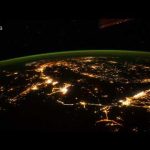
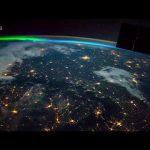
A series of nighttime photos were taken by ESA astronaut Paolo Nespoli to create this time-lapse of the Earth from the Black Sea to Oman as seen from the International Space Station.
ESA astronaut Paolo Nespoli in currently working and living on board the International Space Station as part of the Italian Space Agency’s long-duration VITA mission.
Filmed with a RED Dragon camera aboard the International Space Station by ESA astronaut Paolo Nespoli on 29 August 2017, the video is shown in real time as the ISS flew over Italy.
Background song “Daylight” by Roob Sebastian.
ESA astronaut Paolo Nespoli in currently working and living aboard the International Space Station as part of the Italian Space Agency long duration VITA mission.
On 12 September 2017, 710 photos were taken by ESA astronaut Paolo Nespoli to create this time-lapse of the Earth (from Africa to Russia) as seen from the International Space Station.
ESA astronaut Paolo Nespoli in currently working and living aboard the Station as part of his long duration Vita mission.
ESA astronaut Paolo Nespoli is currently living and working on the International Space Station as part of his VITA mission. This video shows highlights from his first month.
The mission is part of ESA’s vision to use Earth-orbiting spacecraft as a place to live and work for the benefit of European society while using the experience to prepare for future voyages of exploration further into the Solar System.
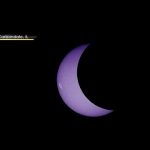
During the eclipse, 14 states across the U.S. were in the path of totality and experienced more than two minutes of darkness in the middle of the day – with a partial eclipse viewable all across North America. The broadcast – Eclipse Across America: Through the Eyes of NASA – covered locations along the path of totality, from Oregon to South Carolina including public reactions from all ages. The eclipse’s long path over land provided a unique opportunity to study the Sun, Earth, Moon and their interaction.
This video is available for download from NASA’s Image and Video Library:
Scientific notes:
Stellar mass black holes vs. supermassive black holes
* Stellar mass black holes form from the collapse of massive stars at the ends of their lives, so they have roughly the same mass as a star. Supermassive black holes are physically identical to their smaller counterparts, except they are 10 thousand to a billion times the size of the sun. However, their formation is more of a mystery. They may form from the merging of smaller black holes. http://astronomy.swin.edu.au/cosmos/S/Supermassive+Black+Hole
Supermassive black holes at the center of galaxies
* Almost every large galaxy has a supermassive black hole at its center, but researchers are not yet sure (https://jila.colorado.edu/research/astrophysics/black-holes-galaxies) why that’s the case, how they originate, and what their role is in the creation and evolution of galaxies.
Why are stars different colors?
* The color of a star depends on its temperature (http://www.atnf.csiro.au/outreach/education/senior/astrophysics/photometry_colour.html). The hotter a star, the higher energy its light will be. Higher energy/temperature corresponds with the blue end of the visible spectrum and lower energy/temperature corresponds with the red end.
How does dark matter make stars spin faster?
* In the 1960s, astronomers Vera Rubin and Kent Ford noticed that stars at the edges of galaxies were moving just as fast as stars at the center, which surprised them: it appeared that the force of gravity causing stars to orbit the center of the galaxy was not weakening over distance. Their observation implied that something else, distributed throughout the galaxy, was exerting a gravitation pull. We now know that that “something else,” now named dark matter, accounts for about 85% of the matter in the universe. (It existence was inferred in the 1930s, when the astronomer Fritz Zwicky(http://www2.astro.psu.edu/users/rbc/a1/week_10.html) noticed that galaxies in clusters were moving faster than they should.)
Size of the universe
* The universe is only 13.8 billion years old, but has a radius of about 46 billion light-years. If nothing can travel faster than the speed of light, how can that be? The expansion of the universe, driven by dark energy, is causing distances between objects to grow. Note that it is not moving those objects apart; rather, it is increasing the amount of space between them. https://phys.org/news/2015-10-big-universe.html
Cosmic webs
* Galaxies are not distributed randomly (http://skyserver.sdss.org/dr1/en/astro/structures/structures.asp) in space; instead, clusters of galaxies form web-like patterns. These webs consist of filaments, where dark matter and ordinary (baryonic) matter are concentrated, and voids, where galaxies are scarce. Researchers believe that these large-scale structures grew out of minor fluctuations in density at the beginning of the universe.
Composition of the early universe
* Moments after the Big Bang, the universe formed the nuclei for what would be come the universe’s hydrogen and helium atoms, with one helium nucleus for every 10 or 11 hydrogen (http://umich.edu/~gs265/bigbang.htm). When the first stars formed, there were no heavier elements — those elements formed inside stars.
String Theory Landscape
* The String Theory Landscape is a theory that the universe we live in is one of many universes. It attempts to explain how certain constants of nature seem “fine-tuned” for life, which contradicts the anthropic principle, or the notion that we humans hold a special place in the universe. https://www.scientificamerican.com/article/multiverse-the-case-for-parallel-universe/%0A
Disintegration of the universe
* In the future Degenerate Era of the universe, as space-time expands and stars burn up, all of the matter in stars will be consumed by black holes. But even black holes are not forever. Stephen Hawking theorized that black holes will slowly radiate away their mass in what is now called Hawking radiation until they too dissipate away. http://www.nytimes.com/books/first/a/adams-universe.html
______
MEDIA CREDITS:
Music provided by APM
Sound effects: Freesound.org
Additional Animations:
– Galaxy within Universe: Edgeworx;
– Stars at center of Milky Way – NASA/NCSA University of Illinois Visualization by Frank Summers, Space Telescope Science Institute, Simulation by Martin White and Lars Hernquist, Harvard University
BuzzFeedBlue
Sports, video games, Unsolved & more epic daily videos!
MUSIC
Licensed via Audio Network
STILLS
O.J. Simpson Criminal Trial – Simpson Tries on Bloodstained Gloves – June 15, 1995
Lee Celano/Getty Images
Attingham Park
Andreas von Einsiedel/Getty Images
USA, Florida, Jacksonville, satellite image
Stocktrek/Getty Images
A John Dillinger wanted poster.
John Parrot/Stocktrek Images/Getty Images
Front page article covering the case of ‘Granny Killer’ John Wayne Glover from T
Fairfax Media / Contributor/Getty Images
Black Binder Clips (with path)
subjug/Getty Images
Evidence in plastic bags
Paul Taylor/Getty Images
vintage map of the world 1831
javarman3/Getty Images
rope string
Picsfive/Getty Images
Old paper sheets, vintage photo frames and corners, open book
LiliGraphie/Getty Images
Bulletin Board
subjug/Getty Images
pushpins
ConstantinosZ/Getty Images
Blank old corkboard
GuidoVrola/Getty Images
Lotto ticket
eduardrobert/Getty Images
Royalty free vector illustration Most Wanted Poster
bubaone/Getty Images
Classified files
EXTREME-PHOTOGRAPHER/Getty Images
Headlines From The Charles Stuart Shooting
Boston Globe / Contributor/Getty Images
Parcel wrap
Nastco/Getty Images
Receipts
DNY59/Getty Images
Planning notes on a napkin next to coffee
edfuentesg/Getty Images
Call me napkin
grapegeek/Getty Images
“Missing” and “Wanted” posters taped to brick wall
RapidEye/Getty Images
passport
Howard Sokol/Getty Images
gun for hire
THEPALMER/Getty Images
Secret document folder
Robert Mizerek/Getty Images
Set of various paint splatters
itchySan/Getty Images
Vintage light bulbs
choness/Getty Images
Finger Print Distressed
ScottTalent/Getty Images
1970s Detective
Robbie Augspurger/Getty Images
A white theater mask
Adam Burn/Getty Images
1950s 1960s PORTRAIT MALE…
H. Armstrong Roberts/ClassicStock /Getty Images
Royalty – Coronation of Queen Elizabeth II – London
PA Images / Contributor/Getty Images
1960s SMILING MAN IN SUIT…
H. Armstrong Roberts/ClassicStock/Getty Images
A blue blanket, folded
Dorling Kindersley/Getty Images
Pedigree Pram
Raymond Kleboe Collection / Contributor/Getty Images
Cardboard box on beach
MGP/Getty Images
Abandoned Tractor On Field
Cami Lind / EyeEm/Getty Images
Child touching wet metallic surface
PhotoAlto/Anne-Sophie Bost/Getty Images
Loopable snowfall alpha layer with foreground
Robin_Hoood/Getty Images
helix soft background lines
bacalaofilms/Getty Images
No pictures!
Lev Olkha/Getty Images
Steel compartments in morgue
Frank P wartenberg/Getty Images
Unknown Boys Footprints
Temple University library, Philadelphia, PA/Getty Images
Woman Depressed And Alone
sdominick/Getty Images
Stay Away!
markgoddard/Getty Images
Remmington Bristow
Daily News by Satif Piatat/Getty Images
Artificial Intelligence and Mind related vector icon set.
lushik/Getty Images
A run-down, abandoned house with graffiti on it, Detroit, Michigan, USA
Peter Baker/Getty Images
Mother hitting daughter
Peter Dazeley/Getty Images
Salvation Army at work, attending to nee
RALPH MORSE/Getty Images
Boy on Mechanical Horse
MacGregor and Gordon/Getty Images
llegitimate infant boy is separated fro
ALLAN GRANT/Getty Images
USA, New Jersey, Mendham, Garage sale
Daniel Grill/Getty Images
Baby’s Crib Alone in Attic Room
LOOK Photography/Getty Images
1950s 1960s YELLOW HOUSE.
H. Armstrong Roberts/ClassicStock/Getty Images
Psychic/Palm Reading dwelling, home, business
Pete Starman/Getty Images
High Angle View Of Boy Sleeping On Bed
Orenda Randuch / EyeEm/Getty Images
Family w Christmas tree at home
George Marks/
What if everything in the universe came to your doorstep…in a box?! What The Physics is BACK! Future episodes will explore the universe—but first, let’s unbox it.
Subscribe: http://youtube.com/whatthephysics?sub…
↓Want more info?↓
SCIENTIFIC NOTES:
Explosive young stars
* The average lifetime of a star is about 10 billion years, but the bigger the star, the shorter its life. One rare type of star, called a hypergiant, can be tens, hundreds, or even a thousand times the mass of our sun. These stars burn out and explode into supernovae in just a few million years. http://www.guide-to-the-universe.com/hypergiant-star.html
Black holes
* Black holes form from the collapse of a massive star at the end of its life, but this only happens in stars about three times as massive as the sun. http://burro.case.edu/Academics/Astr201/EndofSun.pdf
How big is the universe?
* Probably infinite. No one knows the size of the universe for sure, and we may never know, but the latest thinking is that it probably goes on forever. https://map.gsfc.nasa.gov/universe/uni_shape.html
Standard cosmological model
* According to the standard cosmological model, the universe started with a big bang, underwent rapid inflation within the first fraction of a second, and continues to expand, driven by a vacuum energy called dark energy. All of the structure we see in the universe has come from interactions between dark energy and dark matter (which accounts for about 85% of the universe’s matter). This model describes and predicts many phenomena in the universe but is not perfect. https://physics.aps.org/articles/v8/108
False vacuum model
* The false vacuum model is a real, albeit unlikely theory. All the fundamental forces of nature have corresponding fields (e.g., gravitational fields, magnetic fields, etc.), and we generally believe that the universe is at rest in a global minimum of the potentials of those fields. But if we are instead at rest in a local minimum, or a “false vacuum,” the universe could potentially be nudged, catastrophically, into a lower minimum.
Recycling stars into life
* Before the first stars, the universe was all hydrogen and helium. All heavier elements, including the building blocks of life, were forged in stars.
Dark matter and dark energy
* Only 5% of the universe is made up of matter we can see. The “missing mass” later dubbed dark matter was first noticed in the 1930s; dark energy was discovered in the 1990s. In both cases, their existence was inferred by their effect on objects they interact with. However, they are still not directly observable, so nobody knows yet what they are made of.
Leftover light from the Big Bang
* The theory of the Big Bang predicted the existence of cool radiation pervading the universe, left over from its beginning. In an accidental discovery, two New Jersey scientists discovered the cosmic microwave background, a nearly uniform bath of radiation throughout the universe at a temperature of about 3 Kelvin, or -454 degrees Fahrenheit.
Gravitational waves
* Albert Einstein predicted the existence of gravitational waves in his theory of general relativity in 1916. According to his theory, the acceleration of massive objects, like black holes, should send ripples through space-time at the speed of light. A century after his prediction, two merging black holes sent a ripple through space-time that was detected on Earth as a signal that stretched the 4-kilometer arms of a detector by less than 1/1,000 the width of a proton.
Cosmic dust
* Cosmic dust is cast off from stars at the end of their lives and hovers in galaxies as clouds. These clouds of dust absorb ultraviolet and visible light, obscuring much of what lies behind them. This makes it notoriously difficult to study things like the dusty center of our galaxy.
The observable universe
* The universe is 13.8 billion years old. Since the distance we can observe is limited by the time it takes light to travel to Earth, we can only ever observe a fraction of the universe: an expanding sphere around us that is now about 46 billion years in radius. However, the universe is much larger than what we can observe.
CREDITS:
Host, Writer, Producer: Greg Kestin
Animation & Compositing: Danielle Gustitus
Contributing Writers: Lissy Herman, HCSUCS
Filming, Writing, & Editing Contributions from:
Samia Bouzid and David Goodliffe
Creation of Sad Star Image: Drew Ganon
Special thanks:
Julia Cort
Lauren Aguirre
Ari Daniel
Anna Rothschild
Allison Eck
Fernando Becerra
And the entire NOVA team
It’s an age when many of us would be considering winding down, and cutting back on physical exertion. Not so for Paolo Nespoli, who is about to embark on his third space mission at the age of 60, which makes him Europe’s oldest astronaut. At the end of July he will voyage to the International Space Station (ISS), where he will remain for some months.
THANKS A LOT TO OUR LOVELY PATRONS FOR SUPPORTING US:
Brandon Eversole, Andrew Anglehart, Christian Ahlin, Kathleen Woolum, Estel Anahmias, Adam Schlender, Mike Luque, Encyclo, Stevie Taylor, Brent Yoder, Invisibleman, Jeff Lam, Christopher Hayes, Oliver Walker, gwendolyn bellermann, Matt Logan, Philip Chou, Brandon Young, Arlo Stewart, Thomas Hodnemyr, Viachaslau Hurmanau, Sam Cousins, Robin Hultgren, Jose Schroeder, Ched, Claustrophobya, Charles Wang, Dolan Dark, Casaro, Donglin Li, Sarah Thompson, Pamela Palmer, Fergal Harrington, Jonas Erath, Spencer, Zsuzsi Balai, Tyler Roberts, Allyssa Blalock, Robert Bishop, Carl-Johan Linde, Thomas Nielsen, Heather Pray, Marco Boneberger, Mehsotopes, Joe Johnston, ugo dubois, Keagan Boys, Miles Gard, Frantisek Sumsala, Scott, Tobias Theobald, Solar3ty Games, Nicholas Carr, K41N_of_2358, Daniel RodrÌguez, Pixlpit, Gytis Kirvela, Thomas Flanigan, Dwagon, Costin Graur, Mavis Everett, Kwiatkowski Robert, Huo Benpeng, Dan Gretton, Joshua Davison, Bryce Comp, Andrey Lipattsev, DEFECT DAVIS, Gurleen Saini, Andrew “FastLizard4” Adams, Isak Hietala, Leon Han, Sarah Johnson, Kieran Chakravorty, Hanna Khoury, Kimberly Martin, Jon Glass, Julius Wroblewski, Ben Zautner, Kester Falge, Juan Florez, Tad Moore
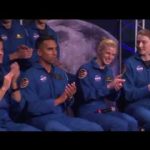
After receiving a record-breaking number of applications to join an exciting future of space exploration, NASA has selected its largest astronaut class since 2000. Rising to the top of more than 18,300 applicants, NASA chose 12 women and men as the agency’s new astronaut candidates. Vice President Mike Pence joined Acting NASA Administrator Robert Lightfoot, Johnson Space Center Director Ellen Ochoa, and Flight Operations Director Brian Kelly to welcome the new astronaut candidates during an event June 7 at the agency’s Johnson Space Center in Houston. The astronaut candidates will return to Johnson in August to begin two years of training. Then they could be assigned to any of a variety of missions: performing research on the International Space Station, launching from American soil on spacecraft built by commercial companies, and departing for deep space missions on NASA’s new Orion spacecraft and Space Launch System rocket.
Also, check out the free WIRED channel on Roku, Apple TV, Amazon Fire TV, and Android TV. Here you can find your favorite WIRED shows and new episodes of our latest hit series Masterminds.
ABOUT WIRED
WIRED is where tomorrow is realized. Through thought-provoking stories and videos, WIRED explores the future of business, innovation, and culture.
The Future of Your Job in the Age of AI | Robots & Us | WIRED
On May 12, Peggy Whitson and Jack Fischer conducted a spacewalk outside the International Space Station. This was the 200th spacewalk in support of station assembly and maintenance. Prior to the outing, during their pre-breathe activities in the airlock, the spacewalkers had to share Whitson’s service and cooling umbilical (SCU), due to an issue with the SCU connected to Fischer’s suit. That device provides electricity, cooling and communications during the pre-breathe phase of a spacewalk. Despite a late start, the pair completed the primary task of replacing an avionics box that supplies electricity and data connections to the science experiments on the orbital laboratory. It was Whitson’s ninth spacewalk and the first for Fischer. Also, Exploration Mission-1 Announcement, Future Space Station Crew Previews Mission, Humans to Mars Summit 2017, James Webb Space Telescope at JSC, and Martian New Year in Mars, PA!
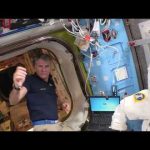
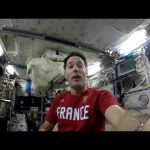
ESA astronaut Thomas Pesquet takes us on a six-minute tour of the International Space Station, recorded 23 March 2017 during his Proxima mission.
During his Proxima mission, Thomas will perform around 50 scientific experiments for ESA and France’s space agency CNES as well as take part in many research activities for the other Station partners.
The mission is part of ESA’s vision to use Earth-orbiting spacecraft as a place to live and work for the benefit of European society while using the experience to prepare for future voyages of exploration further into the Solar System.
This video reveals the changing face of our Galaxy, tracing the motion of two million stars five million years into the future using data from the Tycho-Gaia Astrometric Solution, one of the products of the first Gaia data release. This provides a preview of the stellar motions that will be revealed in Gaia’s future data releases, which will enable scientists to investigate the formation history of our Galaxy.
The stars are plotted in Galactic coordinates and using a rectangular projection: in this, the plane of the Milky Way stands out as the horizontal band with greater density of stars.
The video starts from the positions of stars as measured by Gaia between 2014 and 2015, and shows how these positions are expected to evolve. The frames in the video are separated by 750 years, and the overall sequence covers five million years. The stripes visible in the early frames reflect the way Gaia scans the sky and the preliminary nature of the first data release; these artefacts are gradually washed out in the video as stars move across the sky.
The shape of the Orion constellation can be spotted towards the right edge of the frame, just below the Galactic Plane, at the beginning of the video. As the sequence proceeds, the familiar shape of this constellation (and others) evolves into a new pattern. Two stellar clusters – groups of stars that were born together and consequently move together – can be seen towards the left edge of the frame: these are the alpha Persei (Per OB3) and Pleiades open clusters.
NASA’s Orion spacecraft will take astronauts to destinations at or beyond low Earth orbit. In January 2013, it was announced that ESA would provide the European Service Module (ESM) for Orion’s first uncrewed mission. Derived from ESA’s Automated Transfer Vehicle cargo spacecraft, the ESM will provide life support, propulsion and structural functions for Orion. In February 2017, a contract was signed for a second ESM to be used on Orion’s first crewed flight, which will carry astronauts beyond the Moon and back.
Disney+ is the only place to stream your favorites from Disney, Pixar, Marvel, Star Wars, National Geographic and more. Access it all at https://disneymusic.co/JoinDisneyPlus?IQid=dmvevo. Coming to UK, France, Germany, Spain and Italy March 2020.
‘The Moon – ESA’s interactive guide’ is a web documentary with over 40 videos narrated by scientists involved in lunar research. The platform allows you to explore your own path and discover the science, technology and the missions around our moon. An engaging space to satisfy your curiosity, learn and be inspired.
On 10 September 2016, about 2000 Europeans helped to shape the future of space by taking part in a world first: the Citizens’ Debate on Space for Europe. The future of ESA’s space missions were discussed and the different debate sites connected via video conferencing.
Watch the amazing cartoon adventures of Rosetta and Philae, now back-to-back in one special feature-length production.
Find out how Rosetta and Philae first got inspired to visit a comet, and follow them on their incredible ten-year journey through the Solar System to their destination, flying around planets and past asteroids along the way. Watch as Philae tries to land on the comet and deals with some unexpected challenges!
Learn about the fascinating observations that Rosetta made as she watched the comet change before her eyes as they got closer to the Sun and then further away again. Finally, wish Rosetta farewell, as she, too, finishes her amazing adventure on the surface of the comet. Keep watching for one last surprise!
Watch the amazing cartoon adventures of Rosetta and Philae, now back-to-back in one special feature-length production.
Find out how Rosetta and Philae first got inspired to visit a comet, and follow them on their incredible ten-year journey through the Solar System to their destination, flying around planets and past asteroids along the way. Watch as Philae tries to land on the comet and deals with some unexpected challenges!
Learn about the fascinating observations that Rosetta made as she watched the comet change before her eyes as they got closer to the Sun and then further away again. Finally, wish Rosetta farewell, as she, too, finishes her amazing adventure on the surface of the comet. Keep watching for one last surprise!
Watch the amazing cartoon adventures of Rosetta and Philae, now back-to-back in one special feature-length production.
Find out how Rosetta and Philae first got inspired to visit a comet, and follow them on their incredible ten-year journey through the Solar System to their destination, flying around planets and past asteroids along the way. Watch as Philae tries to land on the comet and deals with some unexpected challenges!
Learn about the fascinating observations that Rosetta made as she watched the comet change before her eyes as they got closer to the Sun and then further away again. Finally, wish Rosetta farewell, as she, too, finishes her amazing adventure on the surface of the comet. Keep watching for one last surprise!
Watch the amazing cartoon adventures of Rosetta and Philae, now back-to-back in one special feature-length production.
Find out how Rosetta and Philae first got inspired to visit a comet, and follow them on their incredible ten-year journey through the Solar System to their destination, flying around planets and past asteroids along the way. Watch as Philae tries to land on the comet and deals with some unexpected challenges!
Learn about the fascinating observations that Rosetta made as she watched the comet change before her eyes as they got closer to the Sun and then further away again. Finally, wish Rosetta farewell, as she, too, finishes her amazing adventure on the surface of the comet. Keep watching for one last surprise!
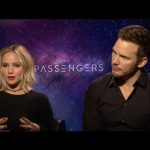
NASA Scientist Tiffany Kataria drops in on Jennifer Lawrence, Chris Pratt and Michael Sheen for a fun, not so serious chat about science fiction, other worlds and time travel???
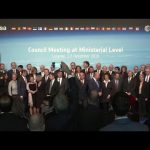
Scenes from the opening day of the ESA Ministerial Council 2016 in Lucerne, Switzerland. Ministers in charge of space activities from the 22 ESA Member States, Slovenia and Canada met on 1 and 2 December to decide on future space activities for Europe.
During a Nov. 2 media event at NASA’s Goddard Space Flight Center, Administrator Charlie Bolden was joined by Goddard Center Director Chris Scolese and Senior Project Scientist, Dr. John Mather for an update on the James Webb Space Telescope, including a rare glimpse at the telescope’s primary mirror. Engineers and technicians recently completed a “Center of Curvature” test on the mirror, which measures the shape of the mirror. This is the first important optical measurement before the mirror goes into the testing chambers. Meanwhile, the telescope’s sunshield layers also have been finished. This will protect Webb’s sensitive instruments from the sun when the telescope is in space. The Webb Telescope, which is targeted for launch in 2018, will study every phase in the history of our universe, including the cosmos’ first luminous glows, the formation of planetary systems capable of supporting life, and the evolution of our own solar system. Also, Expedition 49 Returns Safely from the International Space Station, Next Space Station Crew Travels to Launch Site, Agency Innovation Mission Day, SDO Captures Lunar Transit, and World Altitude Record for MMS!