Learn more at http://www.stevespanglerscience.com/experiments For years, Steve has taught people how to shrink and grow heads without actually, you know, permanently changing the size of their head. In addition to being temporary, it’s also an extremely fun optical illusion. In mere moments, you’ll go from staring at a black and white spiral, to a state of shock with this stunning illusion.
Learn more at http://www.stevespanglerscience.com/experiment/the-force-of-sound-sick-science If you’ve ever watched an action movie in a theater, you’ve seen and felt an onscreen explosion. Did you know that what you were feeling was actually waves of sound from the theater’s speaker system? We’ll show you how you can visualize the sound vibrations and explain why, even though you can’t always see it, you can feel sound.
Learn more at http://www.stevespanglerscience.com/experiment/index-card-tricks-sick-science What if we told you that you can fit a quarter through a dime-sized hole in an index card? Would you believe it was possible? It is possible, and we can even show you how to fit your entire body through an index card. Don’t believe us? Try it for yourself!
Learn more at http://www.stevespanglerscience.com/experiment/index-card-tricks-sick-science What if we told you that you can fit a quarter through a dime-sized hole in an index card? Would you believe it was possible? It is possible, and we can even show you how to fit your entire body through an index card. Don’t believe us? Try it for yourself!
Learn more at http://www.stevespanglerscience.com/experiment/magic-rollback-can-sick-science In our long line of “magical” science, we introduce the Magic Rollback Can. The Magic Rollback Can appears to be a normal can of coffee or oats, but after you roll it along the ground a little ways and watch it come back, you’ll be wondering just how it works.
Magicians have made money appear from behind ears and out of nostrils for years. And you’ve seen Steve set a $100 bill on fire without harming Mr. Franklin. That’s all well and good, but we want to take your money… er… teach you a trick that uses science to make money “appear” as if it has disappeared.
Steve Spangler is a celebrity teacher, science toy designer, speaker, author and an Emmy award-winning television personality. Spangler is probably best known for his Mentos and Diet Coke geyser experiment that went viral in. Spangler is the founder of www.SteveSpanglerScience.com, a Denver-based company specializing in the creation of science toys, classroom science demonstrations, teacher resources and home for Spangler’s popular science experiment archive and video collection. Spangler is a frequent guest on the Ellen DeGeneres Show and Denver 9 News where he takes classroom science experiments to the extreme. For teachers, parents or DIY Science ideas – check out other sources of learning:
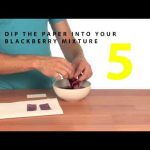
Learn more at http://www.stevespanglerscience.com/experiment/berry-ph-paper-sick-science No longer must you search for specialty litmus paper. Here at Steve Spangler Science, we’ve come up with a formula that will allow you to create your own acid and base detecting litmus paper using little more than a bit of fruit.
Check out http://www.stevespanglerscience.com/experiment/falling-ring-catch-sick-science to learn more about this experiment and to see other cool science experiments. Is it possible to catch a falling ring with a loop of string? Sure it is! It’s going to take a bit of experimentation and trial and error, but you’ll get the hang of it in no time! You’ll see how motion and force can sometimes create unexpected results.
Learn more at http://www.stevespanglerscience.com/experiment/buzzing-noise-maker-sick-science Are you the type that craves attention? Want to make a ton of noise? The Buzzing Noise Maker experiment is perfect for you! The greatest aspect of the Buzzing Noise Maker is that, while you’re attracting all that attention and making all that noise, you can explain it by saying, “Hey! Steve Spangler is teaching me about science.”
Wondering what’s up post-shuttle, popular Internet vlogger Hank Green of Vlogbrothers gets the straight skinny from Charlie Bolden and others at NASA about the agency’s plans for future human space exploration.
Check out the experiment at http://www.stevespanglerscience.com/experiment/cd-hovercraft-sick-science We used to think that building our own hovercraft was going to take a couple of trips to NASA. We quickly realized that it was a little iffy having jet engines and ultra-lightweight material anywhere near Steve. We had to develop our own design using everyday materials, and that’s exactly what we did. Using a CD, a balloon, and a few other household items you can create a working hovercraft, too!
Download the free templates at http://www.stevespanglerscience.com/diskspinners You might have heard the term, “Faster than the human eye.” But is there really something that can happen so fast that a normal human eye can’t register it? Believe it or not, it’s absolutely possible and the Spinning Disc Illusion is a great way to learn how easily your eyes can be beaten.
Learn more about Steve at https://www.stevespanglerscience.com/ Through the years, a lot has happened at Steve Spangler Science. We set a Guinness World Record, took 100 teachers on an Alaskan cruise, gave 700 people the experience of laying on a bed of nails, started a war with potato guns, and even had the police called on us… a few times! Here is a look at a few of the fun moments we’ve had!
Steve Spangler is a celebrity teacher, science toy designer, speaker, author and an Emmy award-winning television personality. Spangler is probably best known for his Mentos and Diet Coke geyser experiment that went viral in 2005 and prompted more than 1,000 related YouTube videos. Spangler is the founder of www.SteveSpanglerScience.com, a Denver-based company specializing in the creation of science toys, classroom science demonstrations, teacher resources and home for Spangler’s popular science experiment archive and video collection. Spangler is a frequent guest on the Ellen DeGeneres Show where he takes classroom science experiments to the extreme. Check out his pool filled with 2,500 boxes of cornstarch!
On the education side, Spangler started his career as a science teacher in the Cherry Creek School district for 12 years. Today, Steve travels extensively training teachers in ways to make learning more engaging and fun. His hands-on science boot camps and summer institutes for teachers inspire and teach teachers how to prepare a new generation for an ever-changing work force. Over the last 15 years, he has also made more than 500 television appearances as an authority on hands-on science and inquiry-based learning.
On the business side, Spangler is the founder and CEO of Steve Spangler Science, a Denver-based company specializing in the creation of educational toys and kits and hands-on science training services for teachers. The companys unique business strategies and viral creations have been featured in the Wall Street Journal, Inc. Magazine, Wired and TIME Magazine where online readers voted Steve Spangler #18 in the Top 100 Most Influential People of the Year for 2006 (what were they thinking?). You’ll find more than 140 Spangler created products available online at SteveSpanglerScience.com and distributed to toy stores and mass-market retailers worldwide.
Spangler joined NBC affiliate 9News in 2001 as the science education specialist. His weekly experiments and science segments are designed to teach viewers creative ways to make learning fun. His now famous Mentos Geyser experiment, turning 2-liter bottles of soda into erupting fountains, became an Internet sensation in September 2005 when thousands of people started posting their own Mentos explosions on YouTube.com.
As founder of SteveSpanglerScience.com, Spangler and his design team have developed more than 140 educational toys and science-related products featured by mass-market retailers like Target, Wal-Mart, Toys R’ Us, Discovery Channel Stores and over 1,400 independent specialty toy stores. His educational science catalog and on-line business offers more than a thousand science toys and unique learning resources. Recently, Spangler has been featured in the Wall Street Journal, Inc. Magazine, WIRED, the History Channel, Food Network and TIME Magazine where on-line readers voted Steve Spangler #18 in the Top 100 Most Influential People of the Year for 2006.
His recent appearances on the Ellen DeGeneres Show have taught viewers how to blow up their food, shock their friends, create mountains of foam, play on a bed of nails, vanish in a cloud of smoke and how to turn 2,500 boxes of cornstarch and a garden hose into a swimming pool of fun.
Is it possible to make a thermometer out of water? Absolutely! The best part about our Water Thermometer experiment is that you have all the materials you need in your own home. That’s right, you’ll be measuring temperature with this amazing homemade tool in no time.
Is there a way to see air changing? Sure, there are clouds and fog, but those are particles of water. Does anything happen to air when it gets cooled or heated? We’ve come up with a great way to see how air changes when it gets hotter and colder… and you can do it all with just a few things you probably already have in your house!
Have you ever tried writing in the dark? Even something as simple as your own name might turn out looking like you were writing in an earthquake. We knew there had to be a better way, and after giving Steve and his team a bit of time they came up with a beautiful and amazing solution – Light Writer. It’s a phenomenal trip into the world of optics, photography, and fun.
Steve Spangler along with his Demo Team and 9News Meteorologist Kathy Sabine, put on the 2nd annual Weather and Science Day at Coors Field in Colorado on May 17th, 2011. Thanks to Colle McVoy, Steve was able to borrow the worlds largest smoke ring launcher to fire 9′ smoke rings into the crowd. 10,000 people showed up for the pre-game event and using Boom Whackers, created the biggest drum circle ever seen… or heard!
Ever wonder how light switches really work? Using some christmas lights, a couple alligator clips, a battery, and a switch, you can build your own circuit at home.
When it comes to creating something out of nothing, Steve Spangler takes the cake. The Steve Spangler Science team recently challenged Steve to create a simple homopolar motor by using objects that he could find around his home. The trick to homopolar motors is the use of electromagnets and a lack of polarity change. It’s complicated, so we were sure that Steve would have trouble. Much to the surprise of everyone, Steve not only accomplished the (what we thought to be) impossible, but he did it twice. Steve was so proud that he wanted to give both of his designs to you. It’s a Sick Science 2-for-1 with the Electromagnetic Motor.
When it comes to creating something out of nothing, Steve Spangler takes the cake. The Steve Spangler Science team recently challenged Steve to create a simple homopolar motor by using objects that he could find around his home. The trick to homopolar motors is the use of electromagnets and a lack of polarity change. It’s complicated, so we were sure that Steve would have trouble. Much to the surprise of everyone, Steve not only accomplished the (what we thought to be) impossible, but he did it twice. Steve was so proud that he wanted to give both of his designs to you. It’s a Sick Science 2-for-1 with the Electromagnetic Motor.
A briefing at the Kennedy Space Center details NASA’s recent awards of more than $269 million for the continued development of commercial transportation systems to carry astronauts to and from low-Earth orbit. Four U.S. companies received the awards in the second round of NASA’s Commercial Crew Development, or CCDev, effort. Commercial crew transport will free NASA to concentrate on developing and building new technologies for human exploration beyond low-Earth orbit.
What happens when you have a build-up of gas? Don’t answer that question! The gas in question is carbon dioxide and the explosion is nothing short of fun. Warning: It’s impossible to do this activity just once. It is addicting and habit-forming. Proceed at your own risk!
April 29 is the official launch date for space shuttle Endeavour on STS-134. That announcement came at the conclusion of the mission’s Flight Readiness Review, where shuttle managers expressed satisfaction with the preparations for the program’s next-to-last flight. Launch is scheduled for 3:47 p.m. Eastern. Also, developing new ways to low-Earth orbit; putting the freeze on Webb’s mirror; Hubble turns 21; NASA’s Earth Day; soaring student rockets; do the Logo Motion; and Yuri’s Night at Langley.
This experiment answers the age-old question, “Which came first, the rubber egg or the rubber chicken?” It’s easy to make a rubber egg if you understand the chemistry of removing the eggshell with vinegar. What you’re left with is a totally embarrassed naked egg and a cool piece of science.
It’s probably not a wise idea to soak a $20 bill in a flammable liquid and set it on fire, but that’s what you’ll have to do with this science demonstration. Sure, you could use just a $1 bill, but then you don’t sweat as much. There is a point to all of this burning… it’s the fact that to everyone’s amazement, paper money never actually burns (if you do it correctly). Read on to discover the secret behind this amazing demonstration.
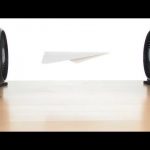
APRIL FOOL’S! A few days ago we posted a video showing a paper airplane hovering between two fans. This is not actually possible without the help of a little fishing line. We thought why not have some fun around April Fool’s Day and see how many people we could trick.
We don’t know if the Wright Brothers ever made the attempt, but Steve Spangler has defied the odds to create a hovering airplane. We don’t suggest any passengers (because they wouldn’t fit), but this Floating Paper Plane is a great hands-on science tool for teaching the science behind airplanes, lift and drag, and principles of air.
Our science guy, isn’t taking a break to read the newspaper. He’s using a sheet of newspaper and some karate-chopping skills to demonstrate the incredible power of air pressure.
It’s an explosion of color! Some very unusual things happen when you mix a little milk, food coloring, and a drop of liquid soap. Use this experiment to amaze your friends and uncover the scientific secrets of soap. It’s also the perfect idea for your next science fair project!
Steve Spangler is a celebrity teacher, science toy designer, speaker, author and an Emmy award-winning television personality. Spangler is probably best known for his Mentos and Diet Coke geyser experiment that went viral in. Spangler is the founder of www.SteveSpanglerScience.com, a Denver-based company specializing in the creation of science toys, classroom science demonstrations, teacher resources and home for Spangler’s popular science experiment archive and video collection. Spangler is a frequent guest on the Ellen DeGeneres Show and Denver 9 News where he takes classroom science experiments to the extreme. For teachers, parents or DIY Science ideas – check out other sources of learning:
If you’ve ever changed a diaper and noticed what looked like tiny crystals on the baby’s skin, you’ve uncovered the secret of superabsorbent, disposable diapers. Those tiny crystals actually come from the lining of the diaper and are made out of a safe, non-toxic polymer that absorbs moisture away from the baby’s skin.
Sick Science™ is a trademark of Steve Spangler, inc.
It’s one of those things you hear about but wonder if it’s true. Can you use taco sauce to clean the tarnish off of a penny? Believe it or not, taco sauce does a great job of cleaning pennies, but how does it work? Which ingredients in the taco sauce really do the cleaning? Eight year old Jack Spangler tackled these questions as part of his science fair project and made a surprising discovery.
At one time or another, we’ve all had secrets. Secret handshakes, secret knocks, or secret crushes have probably been a part of everyone’s lives. What if you could write a secret invisible message that could only be revealed through magic? Well, we’re not going to suggest something magical and not teach you how it’s possible. This experiment may seem like magic, but it’s really just some “hot” science.
It’s not just a book, it’s an experience. Naked Eggs and Flying Potatoes is a hands-on science book using household materials. The Scientifically Enhanced eBook is available on Apple’s iBookstore for iPad and iPhone 4. It includes 37 instructional videos and over 200 stunning photographs.
For years we have been making seven layer density columns. We challenged our team to not only add two more liquids, but add seven objects that would float at different levels. The outcome… the Amazing 9 Layer Density Tower!
Steve Spangler is a celebrity teacher, science toy designer, speaker, author and an Emmy award-winning television personality. Spangler is probably best known for his Mentos and Diet Coke geyser experiment that went viral in. Spangler is the founder of www.SteveSpanglerScience.com, a Denver-based company specializing in the creation of science toys, classroom science demonstrations, teacher resources and home for Spangler’s popular science experiment archive and video collection. Spangler is a frequent guest on the Ellen DeGeneres Show and Denver 9 News where he takes classroom science experiments to the extreme. For teachers, parents or DIY Science ideas – check out other sources of learning:
You may think it’s impossible or that we have completely lost our mind, but we are going to teach you a trick that will have your friends thinking you are magic. You can relight a candle without touching the flame to wick… only the smoke needs to be touched! It seems ludicrous, but it really works. And who knows, you might just learn some science about candles that you didn’t know before.
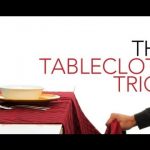
With Thanksgiving just around the corner, here is a classic table trick, whipping the tablecloth out from beneath the dishes! Make sure not to use mom’s best china.