The Land3U team consists of one PhD, and five MSc students from Cranfield University’s Astronautics and Space Engineering course. The team’s microgravity experiment proposed to simulate the landing of a 3U CubeSat on an asteroid, as part of ESA Academy’s Drop Your Thesis! 2018 Programme. For the team, the low gravity conditions of the Drop Tower in Bremen, Germany, are perfect as it resembles the gravity conditions surrounding the asteroids. Their CubeSat experiment sought to provide valuable insights into the engineering challenges that must be addressed by future asteroid missions; in particular when attempting to land on the surface of such low-gravity bodies.
ESA is Europe’s gateway to space. Our mission is to shape the development of Europe’s space capability and ensure that investment in space continues to deliver benefits to the citizens of Europe and the world. Check out http://www.esa.int/ESA to get up to speed on everything space related.
ExoMars is the first mission to head to the Red Planet to seek signs of life, now or in the past. It’s a massive scientific and technical challenge, and Euronews meets some of the team involved in this joint ESA-Roscosmos project in this month’s edition of Space.
ESA is Europe’s gateway to space. Our mission is to shape the development of Europe’s space capability and ensure that investment in space continues to deliver benefits to the citizens of Europe and the world. Check out http://www.esa.int/ESA to get up to speed on everything space related.
Timelapse of the Russian Progress MS-10 cargo spacecraft launched on 16 November 2018 at 18:14 GMT from Baikonur cosmodrome, Kazakhstan, taken by ESA astronaut Alexander Gerst from the International Space Station.
The spacecraft was launched atop a Soyuz rocket with 2564 kg of cargo and supplies. Flying at 28 800 km/h, 400 km high, the International Space Station requires regular supplies from Earth such as this Progress launch. Spacecraft are launched after the Space Station flies overhead so they catch up with the orbital outpost to dock, in this case two days later on 18 November 2018.
The images were taken from the European-built Cupola module with a camera set to take pictures at regular intervals. The pictures are then played quickly after each other at 8 to 16 times normal speed. The video shows around 15 minutes of the launch at normal speed.
The Progress spacecraft delivered food, fuel and supplies, including about 750 kg of propellant, 75 kg of oxygen and air and 440 l of water.
Some notable moments in this video are:
00:07 Soyuz-FG rocket booster separation.
00:19 Core stage separation.
00:34:05 Core stage starts burning in the atmosphere as it returns to Earth after having spent all its fuel.
00:34:19 Progress spacecraft separates from rocket and enters orbit to catch up with the International Space Station.
ESA is Europe’s gateway to space. Our mission is to shape the development of Europe’s space capability and ensure that investment in space continues to deliver benefits to the citizens of Europe and the world. Check out http://www.esa.int/ESA to get up to speed on everything space related.
Europe’s Vega launch vehicle operating from Europe’s Spaceport in Kourou, French Guiana, has a flawless record.
Vega serves a wide range of missions and payload configurations, responding to different market opportunities. It is the ideal launcher for most scientific and Earth observation missions, benchmarked to loft 1500 kg into a 700 km-altitude circular orbit at 90° inclination.
Based on this success a more powerful #Vega, Vega-C, now in development is set to launch in mid-2019 offering greater performance at no additional cost.
Vega-C shares technology with Europe’s other new launcher Ariane 6. The P120C solid fuel motor will be used as the first stage for Vega-C and two or four will be used as strap-on boosters for Ariane 6.
ESA is Europe’s gateway to space. Our mission is to shape the development of Europe’s space capability and ensure that investment in space continues to deliver benefits to the citizens of Europe and the world. Check out http://www.esa.int/ESA to get up to speed on everything space related.
Since the very first module Zarya launched from Baikonur Cosmodrome on 20 November 1998, the International Space Station has delivered a whole new perspective on this planet we call home. Join us as we celebrate 20 years of international collaboration and research for the benefit of Earth with ESA astronaut Alexander Gerst’s longest timelapse yet.
In just under 15 minutes, this clip takes you from Tunisia across Beijing and through Australia in two trips around the world. You can follow the Station’s location using the map at the top right-hand-side of the screen alongside annotations on the photos themselves.
This timelapse comprises approximately 21 375 images of Earth all captured by Alexander from the International Space Station and shown 12.5 times faster than actual speed.
Music is Orbital Horizons, an original composition by Los Angeles-based musician Matt Piper.
Participate in further Space Station celebrations via social media using hashtag #SpaceStation20th.
ESA is Europe’s gateway to space. Our mission is to shape the development of Europe’s space capability and ensure that investment in space continues to deliver benefits to the citizens of Europe and the world. Check out http://www.esa.int/ESA to get up to speed on everything space related.
During ESA’s ɸ-week on 12–16 November in Italy, Patrick Helber from the German Research Center for Artificial Intelligence explains how artificial intelligence is being trained with Earth observation data and images such as that from the Copernicus Sentinel-2 mission so features can be detected automatically. This can then be used to classify land cover types automatically, for example.
ESA is Europe’s gateway to space. Our mission is to shape the development of Europe’s space capability and ensure that investment in space continues to deliver benefits to the citizens of Europe and the world. Check out http://www.esa.int/ESA to get up to speed on everything space related.
The European Space Agency demonstrates its commitment to the United Nations Sustainable Development Goals through the activities promoted by its ten directorates. Satellite data and space applications, as well as space technologies, play a major role in addressing issues ranging from health care and education through to climate change and human migration. ESA’s multifaceted technical expertise can provide policy makers, aid organisations and private companies with the necessary tools to support economic growth, social development and environmental protection.
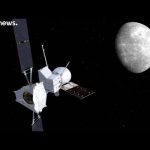
Highlights from the days up to and including the exciting launch of the ESA-JAXA BepiColombo mission to Mercury.
BepiColombo launched at 01:45 GMT from Europe’s Spaceport in Kourou, French Guiana. It will make a seven year cruise to Mercury, flying by Earth once, Venus twice and Mercury six times before entering orbit.
It is the first European mission to Mercury, the smallest and least explored planet in the inner Solar System, and the first to send two spacecraft to make complementary measurements of the planet and its dynamic environment at the same time. The mission comprises two science orbiters: ESA’s Mercury Planetary Orbiter (MPO) and JAXA’s Mercury Magnetospheric Orbiter (MMO). The ESA-built Mercury Transfer Module (MTM) will carry the orbiters to Mercury using a combination of solar electric propulsion and gravity assist flybys.
ESA is Europe’s gateway to space. Our mission is to shape the development of Europe’s space capability and ensure that investment in space continues to deliver benefits to the citizens of Europe and the world. Check out http://www.esa.int/ESA to get up to speed on everything space related.
Mercury is a planetary misfit, an oddball in the solar system, and this month the BepiColombo mission is setting off to study it in unprecedented detail.
The best images we have of Mercury are from NASA’s MESSENGER mission, which pictured its cratered surface and curious features earlier this decade.
Soon, the joint European and Japanese BepiColombo mission will head there to take an even closer look.
ESA is Europe’s gateway to space. Our mission is to shape the development of Europe’s space capability and ensure that investment in space continues to deliver benefits to the citizens of Europe and the world. Check out http://www.esa.int/ESA to get up to speed on everything space related.
The moment to ask all your questions about space has come!
Join one of the European Space Talks happening in your country to learn how space contributes to your daily life and helps to solve some of humankind’s greatest challenges.
ESA is Europe’s gateway to space. Our mission is to shape the development of Europe’s space capability and ensure that investment in space continues to deliver benefits to the citizens of Europe and the world. Check out http://www.esa.int/ESA to get up to speed on everything space related.
Jetzt kannst Du alle Deine Fragen zum Thema Weltraum und Raumfahrt stellen!
Nimm an einem der Europäischen Space Talks in Deinem Land teil und erfahre, wie die Raumfahrt deinen Alltag beeinflusst und dazu beiträgt, einige der großen Fragen der Menschheit zu beantworten.
ESA is Europe’s gateway to space. Our mission is to shape the development of Europe’s space capability and ensure that investment in space continues to deliver benefits to the citizens of Europe and the world. Check out http://www.esa.int/ESA to get up to speed on everything space related.
Meet Bepi, Mio and MTM, three new space explorers about to start an extraordinary journey to Mercury, a planet of extremes and mysteries.
Find out how these bold spacecraft have been preparing for their epic adventure, from space school to flyby practice. Watch as their training covers not only planetary science and space education, but also cultural aspects of their places of origin: Bepi and MTM were born in Europe, while Mio comes from Japan.
Follow Bepi, Mio and MTM as they become fascinated by their destination thanks to the curious discoveries made by their cousin Messenger. Learn about the science questions that Bepi and Mio will investigate, from Mercury’s geology and surface composition to the magnetic field and its interaction with the solar wind.
Finally, walk with them to the launch pad and wish them a great start to a memorable adventure.
ESA is Europe’s gateway to space. Our mission is to shape the development of Europe’s space capability and ensure that investment in space continues to deliver benefits to the citizens of Europe and the world. Check out http://www.esa.int/ESA to get up to speed on everything space related.
ESA is Europe’s gateway to space. Our mission is to shape the development of Europe’s space capability and ensure that investment in space continues to deliver benefits to the citizens of Europe and the world. Check out http://www.esa.int/ESA to get up to speed on everything space related.
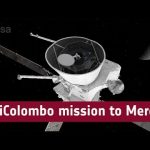
BepiColombo is scheduled for launch at 01:45 GMT (03:45 CEST) on 20 October on an Ariane 5 from Europe’s Spaceport in Kourou.
Final assembly of the two orbiters and transfer module has taken place, ready for the spacecraft to be integrated into its Ariane 5 launcher.
BepiColombo is Europe’s first mission to Mercury, the smallest and least explored planet in the inner Solar System. It is a joint endeavour between ESA and the Japan Aerospace Exploration Agency, JAXA, and consists of two scientific orbiters: ESA’s Mercury Planetary Orbiter (MPO) and JAXA’s Mercury Magnetospheric Orbiter (MMO). The mission will study all aspects of Mercury, from the structure and dynamics of its magnetosphere and how it interacts with the solar wind, to its internal structure with its large iron core, and the origin of the planet’s magnetic field.
ESA is Europe’s gateway to space. Our mission is to shape the development of Europe’s space capability and ensure that investment in space continues to deliver benefits to the citizens of Europe and the world. Check out http://www.esa.int/ESA to get up to speed on everything space related.
ESA is Europe’s gateway to space. Our mission is to shape the development of Europe’s space capability and ensure that investment in space continues to deliver benefits to the citizens of Europe and the world. Check out http://www.esa.int/ESA to get up to speed on everything space related.
ESA is Europe’s gateway to space. Our mission is to shape the development of Europe’s space capability and ensure that investment in space continues to deliver benefits to the citizens of Europe and the world. Check out http://www.esa.int/ESA to get up to speed on everything space related.
The Coriolis effect says that anytime you’re rotating—whether it’s on a playground toy or your home planet—objects moving in straight lines will appear to curve. This bizarre phenomenon affects many things, from the paths of missiles to the formation of hurricanes.
You may have heard that the Coriolis effect makes water in the bathtub spiral down the drain in a certain way, or that it determines the way that a toilet flushes. That’s actually wrong.
Although, as you may have noticed while tracking a hurricane on the news, storms in the Northern Hemisphere spin counterclockwise, while those in the Southern Hemisphere spin clockwise. Why do storms spin in different directions depending on their location? And why do they spin in the first place? The answer is the Coriolis effect.
A new supercomputer model could help astronomers find spiraling, merging systems of two supermassive black holes. These mergers happen often in the universe, but are hard to see. Watch as the simulation reveals the merger’s brighter, more variable X-rays. https://go.nasa.gov/2OsaMAs
Credit: NASA’s Goddard Space Flight Center
Music: “Games Show Sphere 01” from Killer Tracks
This video is public domain and along with other supporting visualizations can be downloaded from the Scientific Visualization Studio at: http://svs.gsfc.nasa.gov/13043
This short movie shares an impression of some of the scientific highlights from Rosetta’s mission at Comet 67P/Churyumov–Gerasimenko, as told through the voices of scientists working with Rosetta’s vast dataset, two years after the mission ended.
Rosetta launched in 2004 and travelled for ten years to its destination before deploying the lander Philae to the comet’s surface. Following the comet along its orbit around the Sun, Rosetta studied the comet’s surface changes, its dusty, gassy environment and its interaction with the solar wind. Even though scientific operations concluded in September 2016 with Rosetta’s own descent to the comet’s surface, analysis of the mission’s data will continue for decades.
Credits: This is an ESA Web TV production. The video contains artist impressions of the spacecraft (credit: ESA/ATG medialab) and animations/infographics by ESA. Images of the comet are from Rosetta’s OSIRIS and NAVCAM cameras, as well as Philae’s CIVA camera (credits: ESA/Rosetta/MPS for OSIRIS Team MPS/UPD/LAM/IAA/SSO/INTA/UPM/DASP/IDA – CC BY SA 4.0; ESA/Rosetta/NavCam – CC BY-SA IGO 3.0; ESA/Rosetta/Philae/CIVA). Ground-based images were provided by Colin Snodgrass/Alan Fitzsimmons/Liverpool Telescope. The plasma visualisation is based on modelling and simulation by Technische Universität Braunschweig and Deutsches Zentrum für Luft- und Raumfahrt, and visualised by Zuse-Institut Berlin. The animation of Philae’s flight across the surface is based on data from Philae’s ROMAP, RPC-MAG, OSIRIS, ROLIS, CIVA CONSERT, SESAME and MUPUS instrument teams, the Lander Control Centre at DLR and the Science Operation and Navigation Center at CNES.
ESA is Europe’s gateway to space. Our mission is to shape the development of Europe’s space capability and ensure that investment in space continues to deliver benefits to the citizens of Europe and the world. Check out http://www.esa.int/ESA to get up to speed on everything space related.
ESRIN, ESA’s centre for Earth observation in Frascati, near Rome, is one of the agency’s main specialised centres in Europe, and its founding ceremony took place 50 years ago on 27 September 1968.
Today, ESRIN manages the exploitation phase of the Earth Observation satellites and the ground segment for ESA and third-party Earth observation satellites, maintaining the largest archive of environmental data in Europe and coordinating over 20 ground stations and ground segment facilities in Europe. It also hosts the project team managing the Vega small-launcher programme.
ESA is Europe’s gateway to space. Our mission is to shape the development of Europe’s space capability and ensure that investment in space continues to deliver benefits to the citizens of Europe and the world. Check out http://www.esa.int/ESA to get up to speed on everything space related.
German citizen, Matthias Maurer, officially graduated as an ESA astronaut on Tuesday 25 September 2018 at the European Astronaut Centre in Cologne, Germany. Having completed basic and pre-assignment training, he is now qualified to go to space.
From in the classroom to underwater, across Europe, China and beyond, this clip showcases a few highlights from a challenging and rewarding three-year programme.
Send your congratulatory messages to Matthias in the comment section below.
ESA is Europe’s gateway to space. Our mission is to shape the development of Europe’s space capability and ensure that investment in space continues to deliver benefits to the citizens of Europe and the world. Check out http://www.esa.int/ESA to get up to speed on everything space related.
Although it may not be immediately obvious when we visit the beach, sea-level rise is affecting coastlines all over the world. For low-lying countries such as the Netherlands, sea-level rise and tidal surges are a constant threat. Our oceans are rising as a consequence of climate change. As the temperature of seawater increases it expands and the ice melting from ice sheets and glaciers adds more water to the global ocean. We know this because satellites high above our heads measure the temperature of the sea surface and of our changing ice.
While the global averaged trend is towards rising levels, there are many regional differences so that in some places it is rising and in other places it is falling. Satellites carrying altimeter instruments systematically measure the height of the sea surface so that sea-level rise can be closely monitored. Altimetry measurements over the last 25 years show that on average sea-level is rising about 3 mm a year and this rise is accelerating.
ESA is Europe’s gateway to space. Our mission is to shape the development of Europe’s space capability and ensure that investment in space continues to deliver benefits to the citizens of Europe and the world. Check out http://www.esa.int/ESA to get up to speed on everything space related.
This edition of #Space comes from the coast of northern Norway, where we’ve come to the Andøya Space Centre to meet scientists working on a new satellite called Aeolus. This mission carries revolutionary laser technology to measure the wind around the entire globe. Lofted into orbit in August 2018 on a Vega rocket from French Guiana, Aeolus has only just begun its life in space. Engineers are now busy commissioning the mission to ensure that it will soon be ready to deliver novel data on winds. This will be used to improve our understanding of the atmosphere and to improve weather forecasts.
ESA is Europe’s gateway to space. Our mission is to shape the development of Europe’s space capability and ensure that investment in space continues to deliver benefits to the citizens of Europe and the world. Check out http://www.esa.int/ESA to get up to speed on everything space related.
At the end of 2019 Vega-C will be launched from Europe’s Spaceport in French Guiana increasing performance from Vega’s current 1.5 t to about 2.2 t in its reference 700 km polar orbit, with no increase in launch costs.
Vega-C’s first stage is based on the P120, the largest single segment carbon fibre solid-propellant rocket motor ever built. It was successfully tested in July 2018. Its development relies on new technologies derived from Vega’s current first stage P80 motor. Two or four P120C motors will also be used for the liftoff boosters on Ariane 6.
Vega-C’s 3.3 m diameter fairing will accommodate larger payloads such as Earth observation satellites of more than two tonnes, and ESA’s Space Rider reentry vehicle.
The Vega launch pad and mobile gantry are being modified to accommodate Vega-C leading into a period when launch facilities will accommodate both vehicles.
ESA is Europe’s gateway to space. Our mission is to shape the development of Europe’s space capability and ensure that investment in space continues to deliver benefits to the citizens of Europe and the world. Check out http://www.esa.int/ESA to get up to speed on everything space related.
Italian ESA astronaut Samantha Cristoforetti, speaking from the European Astronaut Centre near Cologne in Germany, has a message of thanks to all those who’ve entered our Lunar 3D printing competition so far. A new lunar analogue test facility, called Luna for short, is currently being set up at EAC to test the technologies and techniques needed for any future Moon base – with 3D printing high on the list. And a team ESA’s technical centre in Noordwijk, the Netherlands, is overseeing a project to research in detail how 3D printing could be used in such a Moon base. We’re also interested in the human factor: what would you 3D print to make the Moon feel like home? That’s why we’re crowdsourcing your ideas through this competition. The closing date is 23 September 2018.
ESA is Europe’s gateway to space. Our mission is to shape the development of Europe’s space capability and ensure that investment in space continues to deliver benefits to the citizens of Europe and the world. Check out http://www.esa.int/ESA to get up to speed on everything space related.
ESA astronaut Alexander Gerst launches the 2018/19 European Astro Pi Challenge; an ESA Education project run in collaboration with the Raspberry Pi Foundation. He invites students and young people to conduct their own scientific investigations in space, by writing computer programs that run on Raspberry Pi computers on board the International Space Station.
ESA is Europe’s gateway to space. Our mission is to shape the development of Europe’s space capability and ensure that investment in space continues to deliver benefits to the citizens of Europe and the world. Check out http://www.esa.int/ESA to get up to speed on everything space related.
ESA is Europe’s gateway to space. Our mission is to shape the development of Europe’s space capability and ensure that investment in space continues to deliver benefits to the citizens of Europe and the world. Check out http://www.esa.int/ESA to get up to speed on everything space related.
This timelapse video shows still pictures taken from the International Space Station of the departing #Dragon supply spacecraft. Played in quick succession the video displays faster than real life but in 4K resolution.
The Dragon spacecraft was released from the Station’s robotic arm at 18:38 GMT on 3 August 2018. Thrusters fired to increase its distance from the Space Station and the spacecraft started its deorbit and return to Earth, splashing down in the Pacific Ocean less than seven hours after release.
The International Space Station flies at 28 800 km/h above our planet doing a complete orbit in around 90 minutes – during release operations the sun set and rose above the horizon many times.
As Dragon faded into the distance it flew over a stormy part of Earth – lightning flashes can be seen many kilometres below.
Dragon is the only spacecraft that can return to Earth with scientific cargo aside from the Soyuz spacecraft that ferries astronauts to space and back – this flight carried over 1700 kg of cargo.
ESA is Europe’s gateway to space. Our mission is to shape the development of Europe’s space capability and ensure that investment in space continues to deliver benefits to the citizens of Europe and the world. Check out http://www.esa.int/ESA to get up to speed on everything space related.
ESA’s Earth Explorer Aeolus satellite lifted off on a Vega rocket from Europe’s Spaceport in Kourou, French Guiana, at 21:20 GMT (23:20 CEST, 18:20 local time) on 22 August 2018. Aeolus carries one of the most sophisticated instruments ever to be put into orbit. The first of its kind, the Aladin instrument includes revolutionary laser technology to generate pulses of ultraviolet light that are beamed down into the atmosphere to profile the world’s winds – a completely new approach to measuring the wind from space. By profiling the lowermost 30 km of the atmosphere, Aeolus will give scientists global information on the speed of the wind in near-real time. This will improve our understanding of how wind, pressure, temperature and humidity are interlinked. This new mission will also provide insight into how the wind influences the exchange of heat and moisture between Earth’s surface and the atmosphere. These aspects are important for understanding climate change. As well as advancing science and improving weather forecasts, data from Aeolus will be used in air-quality models to improve forecasts of dust and other airborne particles that affect public health.
The universe is incredibly old, astoundingly vast and populated by trillions of planets — so where are all the aliens? Astronomer Stephen Webb has an explanation: we’re alone in the universe. In a mind-expanding talk, he spells out the remarkable barriers a planet would need to clear in order to host an extraterrestrial civilization — and makes a case for the beauty of our potential cosmic loneliness. “The silence of the universe is shouting, ‘We’re the creatures who got lucky,’” Webb says.
The TED Talks channel features the best talks and performances from the TED Conference, where the world’s leading thinkers and doers give the talk of their lives in 18 minutes (or less). Look for talks on Technology, Entertainment and Design — plus science, business, global issues, the arts and more.
ESA’s Pangaea training course prepares astronauts and space engineers to identify planetary geological features during future missions to the Moon, Mars and asteroids.
The Pangaea campaign – named after the ancient supercontinent – provides the crew with introductory and practical knowledge to find interesting rock samples and assess the most likely places to find traces of life on other planets. Leading European planetary geologists share their insights into the geology of the Solar System.
Theoretical work is followed by field trips to the Ries impact crater in Germany, the sedimentary environment of Geopark Bletterbach in the Italian Dolomites and the volcanic landscapes of the Geopark of Lanzarote, Spain.
Pangaea is the first step in preparing European astronauts to become planetary explorers on missions to other planets, allowing them to effectively communicate with science advisors on Earth.
Through Pangaea, Europe is also developing operational concepts for surface missions where astronauts and robots work together, among themselves and with scientists and engineers on Earth, using the best field geology and planetary observation techniques.
Diego Fernandez and Chris Stewart welcome Earth observation attendants and provide their opening remarks.
Every two years, ESA’s Earth observation summer schools draws young scientists from all over the world to learn more about remote sensing, Earth system science, modelling and monitoring, and how data can be used to better understand the world we live in. In 2018, the two-week summer school is held on 30 July to 10 August. While the students engage in practical sessions in the afternoons, the morning lectures were streamed live.
Ever wondered what it feels like to fly from Alaska to the Andes in 260 seconds? ESA astronaut Alexander Gerst captured this timelapse footage of Alaska, the USA and South America while orbiting Earth on board the International Space Station.
This timelapse is made up of 6,375 images shown 12.5 times faster than actual speed. Music is Our Oasis by Miriam Speyer, sourced from Audio Network Limited.
To support Kurzgesagt and learn more about Brilliant, go to https://www.brilliant.org/nutshell and sign up for free. The first 688 people that go to that link will get 20% off the annual Premium subscription.
Are wormholes real or are they just magic disguised as physics and maths? And if they are real how do they work and where can we find them?
🐦🐧🐤 PATREON BIRD ARMY 🐤🐧🐦
▀▀▀▀▀▀▀▀▀▀▀▀▀▀▀▀▀▀▀▀▀▀▀▀▀▀
Many Thanks to our wonderful Patreons from http://kgs.link/patreon who support us every month and made this video possible:
Big Skapinsky, Liam Wenzel, Juan Gonzalez, Grigory Sarnitsky, Brandon Cleary, Amanda Hutchings, Siddharth Amarsee, Maciamo Hay, Nick T., Gabriel Correa, Matthew McAteer, Javier Silva Calvo, javier canella, Gergely Szakács, Pernox, Alana leonhardy, Tommi Moilanen, David DiGiovanni, Jack Bernstein, Jonas Steen Nielsen, Thomas Pyke, Gizem Ozdemir, ShiroiYami, Alice Bater, Ennio Sialiti, Alexander Evans, Eric Chan, Peter Noort, Adrian Haslinger, Tomasz Różalski, Miro Cibula, Lyle Jeff, Sunil Pai, Aurélien Delaux, Piotr Pałek, Øyvind Helland, Khloudalahbaby, Nicola Larosa, Dave, Montant, Eli V, ryan oberfield, Iain Garioch, Janina Lamøy, Saurischian, Zachary Osman, Cody Douglas, Can Berk Güder, Jason Lin, Eric Lugo, Emil Hjort, Luuk Perdaems, Brandon Carraway, Zack Methven, dava, Gauthier Muguerza, Tim Andreev, Robin Gielings, Mihai Anei, Pranab Kumar Mishra, jeong-min, An, Nerijana, jongre1512, Mike Levy, David W., Jakob Stams, Linda Yancey, Leo White, John, Justin Boh, Thot, Matthew Dyet, Andrei Stefan, Patrick McKelvy, Kervan Govender, Rajiv Cruz, Peter Duncan, Ramsey Elbasheer, Zhuang Miao, Brayden Sola, frikinside, Yasmeen Mawlawi, Loic Rebillard, Nicholas Miller, Philipp Bergamin, K. Gustavo Carlos, Albin, Connor Wilson, Talal Al-Khaldi, NURO, Durham Goode, Christopher Hadley, Sean Holland, iulian constantin, Pumpk!nH34D, Douwe de Jong, Jens Baumann, Vladislav Aleynikov, Joshua Olson, Andrew Boggs, William Wu, Andrew Mckinley, Eric Burnett, Benjamin Bromberg, Barry Costa, Philippe Ryll, Barbieri Davide, Claire Baldauf, Ondrej Debreceni, Benjamin Sairanen, Elija Peterson, Eki Hassa, Ryan K. Allen, Ville Vuorela, Reinhold Dunkl, Gloria Hope, Matti Hanberg, Moritz Roell, Marco Schmidt, Trey, Jiesi Ren, Maurice Simmons, Simon Sardeson-Coe, Sam Day, Orphansmith, Noah T Blanchard, Gerald Balla, Yannick van Andel, Khaled I. Johari
Māori, as native New Zealanders, refer to their islands as “Aotearoa” or “the land of the long white cloud”. This timelapse from ESA astronaut Alexander Gerst shows Australia and New Zealand shrouded in cloud from the unique viewpoint of the International Space Station.
Comprised of 5,175 photos, this timelapse is 12.5 times faster than actual speed and is set to the soundtrack “Try or Die” sourced from Audio Network Limited.
The date is fixed: you are invited to the annual ESA Open Day at ESTEC, ESA’s technical heart in the Netherlands, on Sunday, 7 October.
The theme this year is ‘A voyage through space with Europe’. We’ll have all ESA establishments represented on site, either with speakers giving talks or live link-ups to the different centres. You’ll be able to meet astronauts, scientists and engineers, plus some special guests. You’ll see how we design space missions, how we develop the technologies needed to go into space and how we simulate space on the ground. With the help of our colleagues from the other ESA centres, we’ll complete the life-cycle of a mission and see how it is launched and controlled once in space!