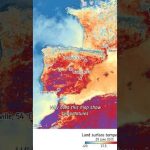
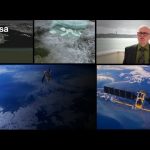
Satellites like Copernicus Sentinel-3 measure land surface temperature — that’s the heat coming directly from the ground, not the air above it. And yes, it’s often hotter in the summer than what your app tells you.
📹 European Space Agency (ESA) 📸 Contains modified Copernicus Sentinel data (2025), processed by ESA
Steve Spangler is a bestselling author, STEM educator and Emmy award-winning television personality with more than 2,100 television appearances to his credit. Steve appeared as a regular guest on the Ellen DeGeneres Show from 2007-2022 (27 appearances).
Plants are more than just greenery, they’re key to helping astronauts survive and thrive off Earth. They provide food and oxygen, recycle water and waste, and even offer psychological benefits.
But the positives don’t stop there. Growing plants in the International Space Station also helps scientists develop new technologies for agriculture in extreme environments, a skill that could benefit future explorers on the Moon and Mars but also agriculture right here on Earth, especially in places where growing food is a challenge.
A group of volunteers is spending two months lying in bed—with their feet up and one shoulder always touching the mattress—even while eating, showering, and using the toilet. But why? This extreme bedrest study is helping scientists understand how space travel affects the human body and how to keep astronauts healthy on long missions.
Microgravity causes muscle and bone loss, fluid shifts, and other physiological changes similar to those experienced by bedridden patients on Earth. By studying volunteers here on Earth, researchers can develop better countermeasures for astronauts and even improve treatments for medical conditions like osteoporosis.
In this study, participants are divided into three groups: one stays in bed with no exercise, another cycles in bed to mimic astronaut workouts, and a third cycles while being spun in a centrifuge to simulate artificial gravity. Scientists hope artificial gravity could become a key tool in protecting astronauts during deep-space missions.
Could you handle 60 days in bed for the sake of space exploration? Let us know in the comments!
Credits: ESA – European Space Agency
★ Subscribe: http://bit.ly/ESAsubscribe and click twice on the bell button to receive our notifications.
We are Europe’s gateway to space. Our mission is to shape the development of Europe’s space capability and ensure that investment in space continues to deliver benefits to the citizens of Europe and the world. Check out https://www.esa.int/ to get up to speed on everything space related.
Steve Spangler is a bestselling author, STEM educator and Emmy award-winning television personality with more than 2,100 television appearances to his credit. Steve appeared as a regular guest on the Ellen DeGeneres Show from 2007-2022 (27 appearances).
Steve Spangler is a bestselling author, STEM educator and Emmy award-winning television personality with more than 2,100 television appearances to his credit. Steve appeared as a regular guest on the Ellen DeGeneres Show from 2007-2022. Learn more about Steve at https://stevespangler.com/about-steve-spangler/
1️⃣ Space near Mercury is HOT. Sending a spacecraft there is a bit like asking a laptop to work inside a hot pizza oven! Some spacecraft have gotten close to Mercury but none have remained in this scorching heat continuously. This means we still don’t have high-resolution data covering Mercury’s entire surface.
2️⃣ It’s difficult to observe from Earth: Because Mercury is very close to the Sun, when we try to look at it from Earth, it’s often lost in the Sun’s glare.
3️⃣ It’s hard to reach: Mercury is not that far, but according to some estimates, it would take less energy to get to Pluto than to get to Mercury. The Sun’s strong gravitational pull means that spacecraft need to use a lot of energy to slow down enough to orbit Mercury.
But our BepiColombo mission, will help us learn a lot more about Mercury when it enters into orbit in 2026! It’s the most advanced spacecraft ever sent to Mercury. It will help us answer many questions, such as: Why is there ice in the polar craters of the scorched planet? And what are the mysterious ‘hollows’ on its surface?
Hera, ESA’s first planetary defence mission, is headed to space.
Hera will fly to a unique target among the 1.3 million known asteroids of our Solar System – the first body to have had its orbit shifted by human action – to probe lingering unknowns related to its deflection.
Hera is scheduled for launch on a SpaceX Falcon 9 rocket from Cape Canaveral Space Force Station in Florida, USA, today, Monday 7 October, at 16:52 CEST / 15:52 BST.
—————————————————
Credits: ESA – European Space Agency
—————————————————
Chapters: 00:00 What is Hera? 01:07 Why do we need to protect our planet? 02:22 How did we pick this asteroid to explore? 03:36 What are we expecting to see on Dimorphos? 05:56 How do we get there? 07:48 What type of technology do we need to inspect an asteroid? 10:49 Conclusion
★ Subscribe: http://bit.ly/ESAsubscribe and click twice on the bell button to receive our notifications.
We are Europe’s gateway to space. Our mission is to shape the development of Europe’s space capability and ensure that investment in space continues to deliver benefits to the citizens of Europe and the world. Check out https://www.esa.int/ to get up to speed on everything space related.
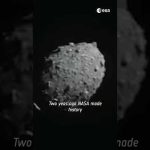
On 26 September 2022, NASA’s approximately half-tonne Double Asteroid Redirect Test (DART) spacecraft impacted the Dimorphos asteroid at an approximate speed of 6.1 km/s, shortening its orbit around Didymos by more than half an hour.
Our Hera spacecraft will be launched this October to reach Dimorphos and perform a close-up ‘crash scene investigation’, gathering data on the asteroid’s mass, structure and make-up to turn this kinetic impact method of planetary defence into a well understood and repeatable technique.
ESA’s Jupiter Icy Moons Explorer (Juice) returns to Earth on 19–20 August 2024, to complete the world’s first Lunar-Earth gravity assist. Flight controllers will guide the spacecraft past the Moon and then Earth itself, ‘braking’ the spacecraft. This manoeuvre may seem counterintuitive but will allow Juice to take a shortcut via Venus on it’s way to Jupiter.
Juice has already travelled more than 1000 million km to the giant planet but it still has a long way to go even though Jupiter is on average ‘just’ 800 million km away from Earth. Join us as we explain why Juice’s journey to Jupiter is taking sooo long.
We are Europe’s gateway to space. Our mission is to shape the development of Europe’s space capability and ensure that investment in space continues to deliver benefits to the citizens of Europe and the world. Check out https://www.esa.int/ to get up to speed on everything space related.
Europe’s new rocket Ariane 6 will take off from Europe’s Spaceport in French Guiana, near the equator, and far from populated areas.
Why did Europe choose a spaceport on the other side of the world? The main reason is the lack of space. There are hardly any places in Europe where rockets can be launched and fly over unpopulated areas during its initial launch phase. We also need a large area to build the launch pad and operations.
Europe’s Spaceport is also very close to the equator. As our Earth spins itself, you can get an extra boost if you launch where Earth is widest… at the equator.
📹 ESA – European Space Agency 📸 ESA – European Space Agency
Steve Spangler is a bestselling author, STEM educator and Emmy award-winning television personality with more than 2,100 television appearances to his credit. Steve appeared as a regular guest on the Ellen DeGeneres Show from 2007-2022. Learn more about Steve at https://stevespangler.com/about-steve-spangler/
All astronauts go through a quarantine period before flying to space.
This period of isolation keeps them away from any germs or viruses that might make them sick. Quarantine is also important to minimise the risk of bringing an infectious disease with them to space.
Marcus Wandt entered quarantine two weeks ahead of his launch in Florida, USA, just a few kilometres away from the rocket that took him to the ISS as part of Axiom Mission 3.
Quarantine for astronauts does not mean a holiday – it is a busy period. Marcus spent around twelve hours a day preparing for the mission ahead. His schedule included physical exercise, refreshers of flight operations, the review of science and outreach activities, and even virtual reality simulations of the job awaiting him on the Space Station.
The planet’s thick CO2-filled atmosphere is great at trapping heat. This creates a runaway greenhouse effect that makes Venus roughly 700°F (389°C) hotter than it would be otherwise. @NASAJPL’s Dr. Amy Hofmann provides all the sizzling details.
Global sea levels are rising as a result of human-caused global warming, with recent rates being unprecedented over the past 2,500-plus years. NASA JPL’s sea level rise expert Ben Hamlington explains how our warming planet is causing sea levels to rise.
Why is Venus called Earth’s evil twin? The two planets actually have a lot in common, but somewhere along the way Venus and Earth took two very different paths. NASA Director of Planetary Science, Dr. Lori Glaze, explains how Venus became a hot, hellish, and unforgiving place.
Why does climate change matter? Because it’s happening and we’re already feeling its effects around the world. But there’s hope. NASA Chief Scientist and Senior Climate Advisor Dr. Kate Calvin explains how NASA collects data and develops tools that can help us better understand and prepare for climate change: https://climate.nasa.gov
🚩 Go to: https://curiositystream.thld.co/historymarche_0322 and use the code HISTORYMARCHE to save 25% discount off today, that’s only $14.99 a year. Thanks to Curiosity Stream for sponsoring today’s video. 👇 Push down for more cool stuff 👇
🚩 Ever since it happened people have been debating what took place at Canossa. Some have called it a brilliant masterstroke by Emperor Henry IV, while others have termed it his humiliation. The events leading up to January 28, 1077 are considered one of the most dramatic moments of the Middle Ages, and perhaps the most murky when it comes to understanding what really took place at this Italian castle.
🚩 This video was produced in collaboration with Medievalists.net, the best place to learn about the Middle Ages for FREE. Enjoy expertly written news, articles and videos – Medievalist.net is where the Middle Ages begin! https://www.medievalists.net/
Why can you see the Moon during the day? Easy, because it’s there! It may seem odd to look up at the daytime sky and see the Moon but it’s perfectly natural. Planetary geologist Sarah Noble breaks it down so you know when to look up. Follow more Moon science: http://www.nasa.gov/moon
Producers: Jessica Wilde & Scott Bednar Editor: Seth Robinson
The Artemis missions will build a community on the Moon, driving a new lunar economy and inspiring a new generation. Narrator Drew Barrymore and NASA team members explain why returning to the Moon is the natural next step in human exploration, and how the lessons learned from Artemis will pave the way to Mars and beyond. As NASA prepares to launch the Orion spacecraft and Space Launch System rocket on the uncrewed Artemis I mission around the Moon, we’ve already begun to take the next step.
Video Credits: Writer: Paul Wizikowski Directors: Paul Wizikowski and Ryan Cristelli Editor: Phil Sexton Producers: Barbara Zelon and Aly Lee
🚩 Watch thousands of high quality documentaries on CuriosityStream: https://curiositystream.thld.co/historymarchemar and use the code: HISTORYMARCHE when you sign up to get 30 days of FREE unlimited access.
🚩 I’m very pleased to say that I’ve collaborated with Knowledgia on this project.
In part 1 you will learn about the geopolitics of this period and why did Rome attack Greece. In the 2nd part you will see details about the Battle of Cynoscephalae, which settled the age old dispute of Legion vs Phalanx and brought the Second Macedonian War to an end.
Make sure to check out Part 1 on Knowledgia, for a detailed insight into events that preceded the battle. https://youtu.be/n56BhDqeCyw
Listen to the full episode of this podcast and subscribe at: https://www.nasa.gov/gravityassist
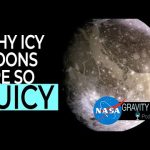
For decades, moons of the outer solar system have proven fascinating subjects for scientists interested in the search for life. Forty years ago this year, NASA’s Voyager 1 spacecraft flew by Saturn’s moon Titan and took the first close images, revealing a thick orange-colored atmosphere that is the most Earth-like in the solar system. NASA’s Cassini probe then dropped off a lander at Titan called Huygens in 2004, and studied Titan in detail during its 13 years at Saturn. Now, NASA is preparing to launch the rotorcraft mission Dragonfly to Titan in the 2020s. But Titan is just one interesting moon. The European Space Agency’s upcoming JUpiter ICy moons Explorer (JUICE) mission will study Ganymede, Europa, and another moon of Jupiter called Callisto. Meanwhile, NASA’s Europa Clipper mission will provide complementary observations of Europa.
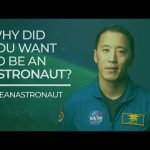
To explore the unknown. To be part of a team. A love of science, math, engineering and technology.
We asked our newest graduates why they wanted to #BeAnAstronaut. It turns out, there isn’t just one reason. What will be yours? Applications are open until March 31, 2020: https://www.nasa.gov/astronauts
➤ Watch awesome documentaries on CuriosityStream: https://curiositystream.com/historymarche
Register with the promo code “historymarche” to get a 30-day free trial!
➤ Music:
Omri Lahav – Peaks of Atlas
Joss Edwards – Sand and Sunburn
Derek & Brandon Flechter – The Sahara Desert
➤ Sources:
“Histories” – Polybius
“Carthage must be destroyed” – Richard Miles
“Fall of Carthage” – Adrian Goldsworthy
“Hannibal’s Oath” – John Prevas
“Hannibal: The Military Biography of Rome’s Greatest Enemy” – Richard A. Gabriel
“Life of Marcellus” – Plutarch
“The Second Punic war at sea” – Boris Rankov
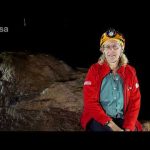
NASA’s director of Astrobiology Institue, Penelope Boston, explains why caves are interesting to astrobiologists.
Caves are little studied areas and can resemble environments found on other planets. Caves exist on the Moon and Mars and could be used by astronauts for shelter when we explore our Solar System
Recorded during a workshop on astrobiology and caves in Sardinia, Italy in 2015.
ESA’s CAVES course – Cooperative Adventure for Valuing and Exercising human behaviour and performance Skills – is a two-week course that prepares astronauts to work safely and effectively in multicultural teams in an environment where safety is critical – in caves.
★ Subscribe: http://bit.ly/ESAsubscribe and click twice on the bell button to receive our notifications.
We are Europe’s gateway to space. Our mission is to shape the development of Europe’s space capability and ensure that investment in space continues to deliver benefits to the citizens of Europe and the world. Check out http://www.esa.int/ESA to get up to speed on everything space related.
NASA Chief Scientist Jim Green answers the question “Why are we going to the Moon?” Comment on this video using #AskNASA with your questions for upcoming episodes!
He addresses key questions about our plans to explore the Moon and Mars, including where we will most likely find water on the Moon. Jim shares his extensive background in Planetary Science to explain the significance of returning with international and commercial partners. Jim also highlights how we are currently exploring Mars with the Curiosity rover.
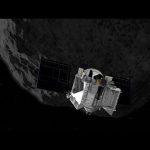
On Dec. 3, 2018, the OSIRIS-REx spacecraft arrives at its target, near-Earth asteroid Bennu. Here, the team explains mission goals and the process of approach and rendezvous. OSIRIS-REx will study Bennu for two years before collecting a sample to return to Earth.
Artificial Intelligence is everywhere now, what changed?
This artificial intelligence tutorial explains in a simple way by comparing how a child learns how to recognize various objects & why we see AI everywhere now.
00:00 So why is artificial intelligence everywhere all of a sudden? So Hi, this is Charlotte from fashion marketing and in this tutorial, I’m going to talk about why are we seeing artificial intelligence, machine learning deep learning everywhere and what has actually changed it caused this. So to understand that, let’s take a look at how a child actually learns. So when you have a child, a niece and nephew or your own kid probably, and you want your kid to tell the difference between a car and a bus. So what do you do? You show them multiple images of a car. Like, let’s say we’re driving on the freeway and you’re like, hey, that’s a car that’s a car. And then you see a bunch of buses and you tell them, hey, that’s an image of a bus or this is actually a bus looks like. So you’re teaching them and eventually you’re showing them so many images of cars and buses and telling them this is actually what a car looks like or this is actually what a bus looks like.
00:50 And eventually the kid learns to tell the difference between a car and a bus, and now when you show them an image of a car or a bus that they have not seen before, and you ask them, hey, which one is the bus? And if they’re able to get this right, that this is a bug and this is, this is not a bus, you know, that, that per, that your child is actually learning. And now in the future, if you show them an image of a bus or a car that they have not seen, they will be able to tell the difference. So this is basically how machine learning or deep learning is used to teach computers so they can recognize any object and they can tell one object from another. So in, in order for artificial intelligence to function, it basically needs three components, right?
01:34 So number one is high-performance GPU, which can calculate a fast enough. Number two is sophisticated algorithms that you can create a sophisticated model that tells what is the definition of a bus and what is, how do you define a bus? Or if I were to define a pair of shoes or things like that. And third is it lots of labeled data. So which also has like two subcategory, which means having a lot of data and then having a lot of labeled data. So in the past few years we always had, you know, we had high-performance Gpu, Nvidia, we always can create sophisticated algorithms because the programming language has not changed that much, but what would need, what we did not have was a lot of big data and lot of labeled data. So what, what is labeled data? So you think about, you know, 90 percent of the world data has been created in last two years and two point three quintillion bytes of data is created every single day.
02:32 So what is a label data? So labeling data basically means is the way you were teaching your kid, right? So you were telling him this is a car, this is a bus. So in the same way, think about having thousands and thousands and millions of images and each image actually being labeled that this is a car, this is a person you know, this is a sign, this is a signal, and the same thing was done for clothing that this is actually a mustard solid full wool coat. Know these are sneakers and they are solid, they have laces, they are pink in color or this is a sweatshirt which has yellow in color, has drowned as full and as a solid color. So a lot of this data has been available, which has turned out to be big data and big data. That data has been labeled by either by a lot of companies or lot by people.
03:21 And the biggest example is facebook. So remember back in the days when Facebook came out and it was asking you to tag your friends, it could not tell which was the person’s face. So we will just point at where a regular person and we’ll ask you to click on the person’s face and then you typed in the name of the person that this is carried. This is kate, fast forward a couple of years. Then facebook was able to tell that this is actually a face, but it still could not tell whose face it is, so it will put a little square around the face and they’ll ask you to tag the person that you will still tie it into. This is Carrie. This is kate. This is Nicole, and now facebook has had enough people on the facebook platform. Tag carries image so many different times from so many different angles and now facebook is actually able to figure out that this actually carries and this is kate and this is Nicole and this is Jessica.
The launch of the first Sentinel-1 satellite marks a new paradigm in Earth observation focusing on operational missions to support users for decades to come. This first satellite for Europe’s environmental monitoring Copernicus programme carries an advanced radar to image Earth’s surface no matter what the weather or if it is day or night. Olaf Trieschmann from the European Maritime Safety Agency talks about the need for radar satellites and how data from Sentinel-1 will be used to monitor oil spills and for maritime surveillance. ESA’s Josef Aschbacher talks about how the wide range of services offered through Copernicus will make a step change in the way we manage the environment.
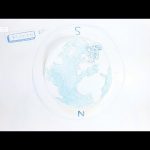
Earth’s magnetic field is continuously changing. Magnetic north wanders, and every few hundred thousand years the polarity gradually flips, so that a compass would point south instead of north.