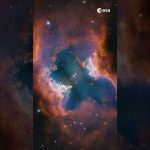
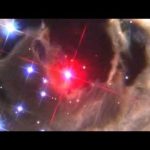
In celebration of the NASA/ESA Hubble Space Telescope’s 35 years in Earth orbit, an assortment of images that were recently taken by Hubble has been released today. This stretches from the planet Mars to images of stellar birth and death, and a magnificent neighbouring galaxy. After over three decades of scrutinising our Universe, Hubble remains a household word as the most well-recognised telescope in scientific history.
25 years ago, Copernicus set out to transform the way we see our planet. It is the largest environmental monitoring programme in the world. Learn more about the Copernicus programme and the Sentinel satellite missions developed by ESA. 👉 https://www.esa.int/Applications/Observing_the_Earth/Copernicus
Credits: ESA
★ Subscribe: http://bit.ly/ESAsubscribe and click twice on the bell button to receive our notifications.
We are Europe’s gateway to space. Our mission is to shape the development of Europe’s space capability and ensure that investment in space continues to deliver benefits to the citizens of Europe and the world. Check out https://www.esa.int/ to get up to speed on everything space related.
Twenty years ago, on the first of March 2002, ESA launched a new satellite to monitor our planet from space: Envisat. This research mission, which carried 10 instruments, would become a beacon for the development of future Earth observation satellites. In orbit for 10 years, double its projected lifespan, this flagship mission provided science with a wealth of data on the health of our planet and climate change – a treasure trove of data that is still used today. Thanks to the Heritage Space Programme, ESA ensures these precious data are preserved and made accessible for future generations.
We are Europe’s gateway to space. Our mission is to shape the development of Europe’s space capability and ensure that investment in space continues to deliver benefits to the citizens of Europe and the world. Check out https://www.esa.int/ to get up to speed on everything space related.
Sixty years ago, on May 5, 1961, NASA astronaut Alan Shepard Jr. launched on the Freedom 7 mission, powered by a Mercury-Redstone rocket to become the first American in space. Shepard’s flight lasted 15 minutes, 22 seconds. He later made it to the Moon on Apollo 14.
Watch live on February 18, 2021, as our Perseverance Mars Rover touches down on the Red Planet.
60 years ago, NASA started sending robotic explorers to Mars, but none have been as sophisticated as Perseverance. It will gather samples from the Martian surface for possible later return to Earth, and fly a drone for the first time on any planetary body. Watch it touch down live and use the hashtag #CountdownToMars for the latest updates and news.
Producer/Editor: David Anderson Music: Universal Production Music
Marking 20 years of humans aboard the space station, getting out the vote from space, and preparations continue for NASA and SpaceX’s next crew launch … a few of the stories to tell you about – This Week at NASA!
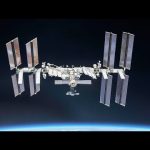
Monday 2 November 2020 marks 20 years of continuous human presence on the International Space Station. Relive a few memorable moments from the unique orbital outpost in this clip covering 20 years of the International Space Station in 60 seconds.Since Crew One took up residence on 2 November, 240 people including 18 ESA astronauts have lived and worked on the orbital outpost, carrying out essential research to benefit life on Earth.The next ESA mission to the International Space Station is set for 2021, when Thomas Pesquet will become the first European to fly on a SpaceX Crew Dragon spacecraft for his Alpha mission.
September 2020 – ESA’s Kiruna ground station in northern Sweden celebrates 30 years of space excellence. Near the top of the world, at a latitude of almost 68° north and sited 38 kilometres east of Kiruna town, the Kiruna ground station has been operational for 30 years. Ideally positioned to support polar-orbiting missions, the station is a crucial gateway for much of the data enabling us to study our planet’s oceans, water and atmosphere, forecast weather and understand the rapid advance of climate change. With its two sophisticated antennas, it also supports some of ESA’s scientific missions such as Integral and Cluster. The station is part of ESA’s Estrack network linking all Agency missions to the ESOC mission control centre in Darmstadt, Germany.
★ Subscribe: http://bit.ly/ESAsubscribe and click twice on the bell button to receive our notifications.
We are Europe’s gateway to space. Our mission is to shape the development of Europe’s space capability and ensure that investment in space continues to deliver benefits to the citizens of Europe and the world. Check out http://www.esa.int/ESA to get up to speed on everything space related.
This season on NASA Explorers, you’ve seen what it takes to send science to the International Space Station through the eyes of one team of researchers. They are just two of thousands more scientists who have sent experiments to the orbiting laboratory over the past two decades.
Take a look back at those 20 years of microgravity science along with the researchers who helped make it happen.
“What if we built a bridge, between and above all nations, to jointly discover the galaxy’s great unknowns?” Join us this fall as we prepare to celebrate the 20th anniversary of the International Space Station. As a global endeavor, 240 people from 19 countries have visited the unique microgravity laboratory, which has hosted more than 2,800 research investigations from scientists in over 100 nations.
On 24 April 1990 the NASA/ESA Hubble Space Telescope was sent into orbit aboard the space shuttle Discovery, the first space telescope of its kind. It offered a new view of the Universe and has, for 30 years, reached and surpassed all expectations, beaming back data and images that have changed scientists’ understanding of the Universe and the public’s perception of it. Hubble’s discoveries have revolutionised nearly all areas of current astronomical research, from planetary science to cosmology, and its pictures are unmistakably out of this world.
This video revisits some of Hubble’s biggest science discoveries throughout its three decades of operation to celebrate the telescope’s 30th anniversary.
Credit:
Directed by: Bethany Downer
Visual design and editing: Martin Kornmesser
Written by: Bethany Downer
Narration: Sara Mendes da Costa
Images & Videos: NASA, ESA, M.Kornmesser, L. Calçada, ESO, G. Bacon (STScI), theHubble Heritage Team (STScI/AURA)-ESA/Hubble Collaboration, and H. Bond (STScI and Pennsylvania State University), A. Feild (STScI), and A. Riess (STScI/JHU), D. Jewitt (UCLA), F. Summers, Z. Levay, J. DePasquale, L. Hustak, L. Frattare, M. Robberto (STScI), R. Hurt (Caltech/IPAC) Acknowledgement: R. Gendler, spaceengine.org.
Music: Johan B. Monell (www.johanmonell.com)
Web and technical support: Raquel Yumi Shida
Executive producer: Mariya Lyubenova
★ Subscribe: http://bit.ly/ESAsubscribe and click twice on the bell button to receive our notifications.
We are Europe’s gateway to space. Our mission is to shape the development of Europe’s space capability and ensure that investment in space continues to deliver benefits to the citizens of Europe and the world. Check out http://www.esa.int/ESA to get up to speed on everything space related.
This month marks the 30th anniversary of the international Hubble Space Telescope.
Launched on 24 April 1990, and deployed from the Space Shuttle Discovery cargo bay a day later (25 April 1990), the telescope has given us a new perspective on the Universe.
The joint NASA/ESA mission has shown us distant galaxies and spectacular nebulae. It has revealed supermassive black holes and planets in distant solar systems; and has proved that the Universe is not only expanding, the expansion is accelerating.
Hubble’s mission has also been eventful. When it was first launched, a defect in the mirror meant it sent back blurry images. Since then, five servicing missions have enabled the telescope to be improved and upgraded. Today, it is still going strong.
We are Europe’s gateway to space. Our mission is to shape the development of Europe’s space capability and ensure that investment in space continues to deliver benefits to the citizens of Europe and the world. Check out http://www.esa.int/ESA to get up to speed on everything space related.
The 250th flight of an Ariane launcher was another success. The Ariane launcher programme has effectively put Europe on the map in the worldwide commercial satellites launcher market. Next 24 December will mark the 40th anniversary of the first Ariane Launch from Europe’ Spaceport in French Guiana and the situation has evolved along the years. An opportunity to look at what has been achieved and what can be expected for the future of Space Transportation in Europe.
★ Subscribe: http://bit.ly/ESAsubscribe and click twice on the bell button to receive our notifications.
We are Europe’s gateway to space. Our mission is to shape the development of Europe’s space capability and ensure that investment in space continues to deliver benefits to the citizens of Europe and the world. Check out http://www.esa.int/ESA to get up to speed on everything space related.
SMOS has been in orbit for a decade. This remarkable satellite has not only exceeded its planned life in orbit, but also surpassed its original scientific goals. It was designed to deliver data on soil moisture and ocean salinity which are both crucial components of Earth’s water cycle. By consistently mapping these variables, SMOS is not only advancing our understanding of the water cycle and the exchange processes between Earth’s surface and the atmosphere, but is also helping to improve weather forecasts and contributing to climate research as well as contributing to a growing number practical everyday applications.
We are Europe’s gateway to space. Our mission is to shape the development of Europe’s space capability and ensure that investment in space continues to deliver benefits to the citizens of Europe and the world. Check out http://www.esa.int/ESA to get up to speed on everything space related.
In 1969 when NASA astronauts took one small step on the lunar surface, the feat resulted in a giant leap forward in innovations for humanity. The many challenges NASA overcame on the way to the Moon led the agency and its partners to devise new inventions and techniques that spread into public life, and we are still reaping the benefits of those technology developments today. As with the many spinoffs from the Apollo era, the technologies we’re building for today’s missions to the Moon and on to Mars will transform our lives for generations to come.
On 25 December 2003, ESA’s Mars Express entered orbit around the Red Planet. The spacecraft began returning the first images from orbit using its High Resolution Stereo Camera just a couple of weeks later, and over the course of its fifteen year history has captured thousands of images covering the globe.
This video compilation highlights some of the stunning scenes revealed by this long-lived mission. From breathtaking horizon-to-horizon views to the close-up details of ice- and dune-filled craters, and from the polar ice caps and water-carved valleys to ancient volcanoes and plunging canyons, Mars Express has traced billions of years of geological history and evolution.
ESA is Europe’s gateway to space. Our mission is to shape the development of Europe’s space capability and ensure that investment in space continues to deliver benefits to the citizens of Europe and the world. Check out http://www.esa.int/ESA to get up to speed on everything space related.
Celebrating sixty years of NASA, space station crew makes a safe return to Earth , and evidence of a possible discovery outside our solar system … a few of the stories to tell you about – This Week at NASA!
This video is available for download from NASA’s Image and Video Library: https://images.nasa.gov/details-NHQ_2018_1005_Sixty%20Years%20of%20NASA%20and%20Counting,%20on%20This%20Week%20@NASA%20%E2%80%93%20October%205,%202018.html
Congress passed the National Aeronautics and Space Act, on July 16 and President Eisenhower signed it into law on July 29, 1958. NASA opened for business on Oct. 1, 1958, with T. Keith Glennan as our first administrator. Our history tells a story of exploration, innovation and discoveries. The next 60 years, that story continues. Learn more: https://www.nasa.gov/60
This video is available for download from NASA’s Image and Video Library: https://images.nasa.gov/details-NASA%2060%20Years%20in%2060%20Seconds.html
ESRIN, ESA’s centre for Earth observation in Frascati, near Rome, is one of the agency’s main specialised centres in Europe, and its founding ceremony took place 50 years ago on 27 September 1968.
Today, ESRIN manages the exploitation phase of the Earth Observation satellites and the ground segment for ESA and third-party Earth observation satellites, maintaining the largest archive of environmental data in Europe and coordinating over 20 ground stations and ground segment facilities in Europe. It also hosts the project team managing the Vega small-launcher programme.
ESA is Europe’s gateway to space. Our mission is to shape the development of Europe’s space capability and ensure that investment in space continues to deliver benefits to the citizens of Europe and the world. Check out http://www.esa.int/ESA to get up to speed on everything space related.
Things that fizz, pop, explode and inspire the next generation of scientists and engineers. Here’s are just a few highlights of the last 25 years working with the team at Steve Spangler Science. Thanks to everyone from around the world who subscribed to our channels, participated in our live events, purchased our educational science kits, joined our STEM subscription club or followed our journey over the years. We promise more fun, learning and inspiration in the years to come. Thank you! – Steve Spangler
Sick Science® is a trademark of Steve Spangler, inc.
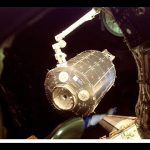
On 7 February 2008, Space Shuttle Atlantis launched to the International Space Station. In its cargo bay, ESA’s laboratory module Columbus. Now for adecade Columbus has been a part of the ISS. It is the place where ESA astronauts have done countless experiments in microgravity and the scientific importance of the module can hardly be overstated.
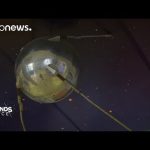
Sixty years ago, Sputnik became the first satellite in space and changed the world forever.
Launched by the Soviet Union on 4 October 1957, this shiny orb kick-started the space race, and opened up the heavens for mankind to explore.
To mark the occasion ESA Euronews arranged access to the private museum of RSC Energia, the Russian state company that actually built the world’s first satellite, officially called Sputnik-1. Hanging in this Moscow treasure trove of pioneering space probes is one of the original Sputnik flight spares, built in 1957. Compact, at just over 80 kilogrammes, its polished surfaces and distinctive antennae are now unmistakable – look at this satellite, and the first word in your mind is ‘Sputnik’.
NASA Langley – 100 Years: Something happened 100 years ago that changed forever the way we fly, the way we explore space and how we study our home planet. That something was the establishment of what is now NASA’s Langley Research Center in Hampton, Virginia, which commemorates its 100th anniversary on July 17, 2017.
Astronaut Neil Armstrong, the first human to step foot on the moon and who learned how to do so by training at Langley said, “If a competition were held to determine the organization that had accomplished the largest number of advancements to aeronautic and aerospace progress, my nomination would be this place.”
This 45-minute documentary looks back across the 100 years, updates us on work being done at Langley today, and takes a peek into the future.
Find out more about NASA Langley’s centennial at: https://www.nasa.gov/langley/100
This NASA documentary celebrates 50 years of extravehicular activity (EVA) or spacewalks that began with the first two EVAs conducted by Russian Alexey Leonov in March 1965 and American astronaut Edward White in June 1965 . The documentary features interviews with NASA Administrator and astronaut, Charles Bolden, NASA Deputy Administrator and spacesuit designer, Dava Newman, as well as other astronauts, engineers, technicians, managers and luminaries of spacewalk history. They share their personal stories and thoughts that cover the full EVA experience– from the early spacewalking experiences, to spacesuit manufacturing, to modern day spacewalks aboard the International Space Station as well as what the future holds for humans working on a tether in space. “Suit Up,” is narrated by actor and fan of space exploration Jon Cryer. Cryer recently traveled to Star City, NASA Headquarters and the Johnson Space Center to film an upcoming Travel Channel documentary series.
On April 24, 1990, NASA’s Hubble Space Telescope rode to space aboard space shuttle Discovery – on a mission to do just that – discover. The results over the past 25 years have been nothing short of remarkable.
The storied and historic journey into the cosmos that Hubble’s eyes have taken us on, has led to groundbreaking discoveries, captivated imaginations and given humans a better understanding of our place in the universe. NASA celebrated Hubble’s Silver anniversary with a variety of events including the unveiling of the official Hubble 25th anniversary image at the Newseum in Washington and a gala at the Smithsonian’s National Air and Space Museum, during which many of the astronauts, scientists, engineers, technicians, educators, and others who have contributed to Hubble’s success were honored. Also, NASA celebrates Earth Day, 3-D printed copper engine part and more!
In recognition of the 50th anniversary of the Civil Rights Act of 1964, this series of short videos features NASA employees discussing their experiences and recollections related to the Civil Rights Movement, the civil rights progress of the last 50 years and the challenges that still confront us. The Civil Rights Act was signed into law July 2, 1964 by President Lyndon Baines Johnson — the namesake of NASA’s Johnson Space Center.
The Civil Rights Act of 1964 was signed into law July 2, 1964 by President Lyndon Baines Johnson, the namesake of NASA¹s Johnson Space Center. NASA employees and retirees from around the Nation join together to share their stories as they remember the past, discuss diversity and look forward to future progress.
2014 is a special year: the space community is celebrating the anniversary of the construction of Europe as a space power and 50 years of unique achievements in space.
It started with the creation of two entities, entering into force in 1964, the European Launcher Development Organisation (ELDO) and the European Space Research Organisation (ESRO).
A little more than a decade later, the European Space Agency (ESA) would be established, replacing these two organisations and since then serving European cooperation and innovation.
This video recalls the importance of Europe efforts in space and its successes with now a guaranteed and independent access to space and several programs covering all possible areas from Science, to Earth Observation, Human Spaceflight, Telecom and Navigation.
Premiered in 2008 at NASA’s Golden Anniversary Gala held at the Smithsonian National Air and Space Museum’s Udvar-Hazy Center in Chantilly, Va., this 13-and-a-half-minute video produced by NASA TV highlights the agency’s historic half-century milestones, including the landing of Apollo 11’s Neil Armstrong and Buzz Aldrin on the moon in 1969.