✡ Source: Lancaster University
✡Summary: Children may learn new words using the same method as robots. New research suggests that early learning is based not on conscious thought but on an automatic ability to associate objects, which enables babies to quickly make sense of their environment.
———————————————————————————————————
♫ Video :
➥ Playlist : Earth & Climate News : https://goo.gl/QP2KCL
➥ Playlist : Computers & Math News : https://goo.gl/IEY43O
➥ Playlist : Health & Medicine News : https://goo.gl/YvK431
➥ Playlist : Matter & Energy News : https://goo.gl/zzdMUQ
➥ Playlist : Plants & Animals News : https://goo.gl/JzQ6rB
➥ Playlist : Искусственный интеллект : https://goo.gl/u7Xu5d
———————————————————————————————————–
★ Channel : Artificial Intelligence News – Researched Daily News
★ Sub for me [free] : https://goo.gl/f01zWg
★ Twitter : https://goo.gl/iPQsAk
★ Fanpage : https://goo.gl/PCEx5D
★ Website :https://goo.gl/5cXqhe [Coming Soon]
© [Source] https://goo.gl/vaFbJm
Author: kidibot
-
![Artificial Intelligence News – Toddler Robots Help Solve How Children Learn☑️[Computer and Math]](https://video.kidibot.ro/wp-content/uploads/2019/12/923/artificial-intelligence-news-toddler-robots-help-solve-how-children-learnefb88fcomputer-and-math-150x150.jpg)
Artificial Intelligence News – Toddler Robots Help Solve How Children Learn☑️[Computer and Math]
-

NASA Hosts News Conference, Interviews with Next Space Station Crew
NASA astronaut Randy Bresnik, Paolo Nespoli of ESA (European Space Agency), and Sergey Ryazanskiy of the Russian space agency Roscosmos, who are scheduled to launch to the International Space Station in late spring, participated in a news conference Jan. 25, at the agency’s Johnson Space Center in Houston.
This will be Bresnik’s second trip to the space station, the second expedition for Ryazanskiy, and Nespoli’s third trip to the space station. They will be part of Expeditions 52 and 53.
-
(German) ESA’s Earth Observation Programmes: an introduction
High above us, satellites are looking down at our Earth. This video provides an introduction to ESA’s Earth observation programmes.
More about ESA’s Earth observation programmes on our website:
http://www.esa.int/eoThis video is also available in the following languages;
English: https://www.youtube.com/watch?v=N0G_3FWOOPA -
ESA’s Earth Observation Programmes: an introduction
High above us, satellites are looking down at our Earth. This video provides an introduction to ESA’s Earth observation programmes.
More about ESA’s Earth observation programmes on our website:
http://www.esa.int/eoThis video is also available in the following languages:
German: https://www.youtube.com/watch?v=kvP-OdCqAJE
French: https://www.youtube.com/watch?v=Q4QjxDIr81k -
(French) ESA’s Earth Observation Programmes: an introduction
High above us, satellites are looking down at our Earth. This video provides an introduction to ESA’s Earth observation programmes.
More about ESA’s Earth observation programmes on our website:
http://www.esa.int/eoThis video is also available in:
English: https://www.youtube.com/watch?v=N0G_3FWOOPA -
Introducing ESA’s new astronaut Matthias Maurer
Matthias Maurer, from Germany, has started his astronaut training as part of ESA’s astronaut corps.
Matthias was among the 10 finalists in 2009 selection, and is now undergoing basic training at the European Astronaut Centre in Cologne, Germany.
A new recruit for ESA’s astronaut corps:
http://www.esa.int/Our_Activities/Human_Spaceflight/Astronauts/A_new_recruit_for_ESA_s_astronaut_corps -
NASA Television Provides Coverage of Service Celebrating Life, Legacy of Eugene Cernan
NASA Television provided live coverage of the Jan. 24 funeral service at Houston’s St. Martin’s Episcopal Church, celebrating the life and legacy of NASA astronaut and U.S. Navy Capt. Eugene A. Cernan. The former Gemini and Apollo astronaut died Jan. 16 at the age of 82.
Cernan left his mark on the history of exploration by flying three times in space, twice to the moon. He also holds the distinction of being the second American to walk in space and the last human to leave his footprints on the lunar surface.
-
Science Max | BUILDING A BRIDGE – PART 1 | Science Max Season1 Full Episode | Kids Science
Ever wanted to build a bridge out of pasta? It’s not too hard and works better than you’d think. But what if we were to try to make a pasta bridge big enough for Phil to walk across? Plus, learn how to build a sandcastle you can stand on!
Have you ever done a science experiment and wondered “What would this be like if it were HUGE?” Welcome to Science Max, the exciting new series that turbocharges all the science experiments you’ve done at home.
In season 1, join Phil as he builds rocket cars, uses elastic energy to hurl pumpkins on a giant catapult, builds a bridge out of pasta that can hold a human, find magnets powerful enough to float Phil off the ground, and many more experiments taken to the MAX!
-
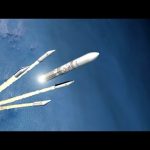
Ariane 6
Decided in Luxemburg by the European Space Agency council meeting at Ministerial level, Ariane 6 is a modular three-stage launcher (solid–cryogenic–cryogenic) with two configurations using: four boosters (A64) or two boosters (A62).
More about Ariane 6:
http://www.esa.int/Our_Activities/Launchers/Launch_vehicles/Ariane_6Credit: ESA-David Ducros
(January 2017)
-
How to be Ready for Jobs in an Artificial Intelligence Driven World
The world is changing and is changing fast. Many of today’s traditional #jobs are at risk. With #AI becoming more predominant, how can we ensure that our children and their children can thrive in this future?
Here, I share some thoughts.
-
Gordon Ramsay Is Stunned by Farmed Caviar; Makes Lobster & Caviar Salad
Gordon heads to Spain to visit a sustainable sturgeon farm, and experiences first hand how much caviar Can be produced from just one fish. He then whips up a lobster and potato salad with truffle mayonnaise and caviar to top it all off. Indulgent.
Gordon Ramsay Ultimate Fit Food: http://amzn.to/2FznHtk
Subscribe for weekly cooking videos.If you liked this clip check out the rest of Gordon’s channels:
http://www.youtube.com/gordonramsay
http://www.youtube.com/kitchennightmares
http://www.youtube.com/thefword -
Spacewalker’s view
ESA astronaut Thomas Pesquet completed his first spacewalk 13 January 2017 together with NASA astronaut Shane Kimbrough to complete a battery upgrade to the outpost’s power system.
Thomas recorded the spacewalk for the first time with a camera in a space-proof casing that was mounted to a bracket on his chest called the mini work station. This video shows scenes from the spacewalk using this camera.
The spacewalk went as planned and, even better, Shane and Thomas performed a number of extra tasks once they had installed the batteries. They retrieved a failed camera, installed a protective cover on an unused docking port, moved handrails in preparation for future spacewalks and took pictures of external facilities for ground control.
The duo spent five hours and 58 minutes outside the International Space Station.
Thomas is spending six months on the International Space Station as part of his Proxima mission. During Proxima, Thomas will perform around 50 scientific experiments for ESA and France’s space agency CNES as well as take part in many research activities for the other Station partners. The mission is part of ESA’s vision to use Earth-orbiting spacecraft as a place to live and work for the benefit of European society while using the experience to prepare for future voyages of exploration further into the Solar System.
-
Citizens’ debate 2016: ESA Director General Jan Woerner’s Welcome (German)
On 10 September 2016, about 2000 Europeans helped to shape the future of space by taking part in a world first: the Citizens’ Debate on Space for Europe. The future of ESA’s space missions were discussed and the different debate sites connected via video conferencing.
-
Citizens’ debate 2016: ESA Director General Jan Woerner’s Welcome (Italian)
On 10 September 2016, about 2000 Europeans helped to shape the future of space by taking part in a world first: the Citizens’ Debate on Space for Europe. The future of ESA’s space missions were discussed and the different debate sites connected via video conferencing.
-
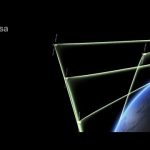
Citizens’ debate 2016: The role of Europe in space exploration and exploitation (Norwegian)
On 10 September 2016, about 2000 Europeans helped to shape the future of space by taking part in a world first: the Citizens’ Debate on Space for Europe. The future of ESA’s space missions were discussed and the different debate sites connected via video conferencing.
-
Citizens’ debate 2016: ESA Director General Jan Woerner’s Welcome (Greek)
On 10 September 2016, about 2000 Europeans helped to shape the future of space by taking part in a world first: the Citizens’ Debate on Space for Europe. The future of ESA’s space missions were discussed and the different debate sites connected via video conferencing.
-
Citizens’ debate 2016: ESA Director General Jan Woerner’s Welcome (Romanian)
On 10 September 2016, about 2000 Europeans helped to shape the future of space by taking part in a world first: the Citizens’ Debate on Space for Europe. The future of ESA’s space missions were discussed and the different debate sites connected via video conferencing.
-
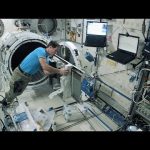
Launching satellites from Space Station – step one
ESA astronaut Thomas Pesquet working in the Kibo laboratory to prepare a CubeSat launch – at 30 times increased speed.
The cylinder in the back is the mini-airlock that allows objects to be sent outside the Space Station. First Thomas and NASA astronaut Shane Kimbrough retrieved the Robotics External Leak Locator and wrapped it up for storage.
Afterwards Thomas installs the platform that the robotic arm grabs. The pointy bit is the connector for the robotic arm.
This video was recorded in December 2016 and was the first step for launching the CubeSats on 16 January 2017. Later Thomas put the satellite launcher on the platform and a third step is to connect the satellites themselves.Thomas is spending six months on the International Space Station as part of his Proxima mission. During Proxima, Thomas will perform around 50 scientific experiments for ESA and France’s space agency CNES as well as take part in many research activities for the other Station partners. The mission is part of ESA’s vision to use Earth-orbiting spacecraft as a place to live and work for the benefit of European society while using the experience to prepare for future voyages of exploration further into the Solar System.
Connect with Thomas Pesquet: http://thomaspesquet.esa.int
Music: Dynamic Systems – Gledden / Pedder
-
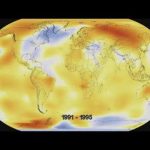
Warmest Global Temperature on Record on This Week @NASA – January 20, 2017
NASA and the National Oceanic and Atmospheric Administration (NOAA) announced on Jan. 18, that global surface temperatures in 2016 were the warmest since modern record keeping began in 1880. The finding was based on results of independent analyses by both agencies. According to analysis by scientists at NASA’s Goddard Institute for Space Studies (GISS) in New York, 2016 is the third year in a row to set a new record for global average surface temperatures, further demonstrating a long-term warming trend. Also, Cygnus Cargo Module Arrives at KSC, Up in 30 Seconds, and Remembering Gene Cernan.
-
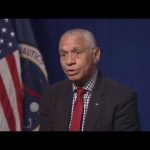
NASA Administrator Bolden Remembers Gene Cernan
NASA Administrator Charles Bolden shared his thoughts on the life and legacy of Gemini and Apollo astronaut Gene Cernan, who passed away on Jan. 16 at the age of 82.
Cernan flew on three separate space missions. He was the second American to walk in space as the pilot on Gemini IX; ventured to the moon on Apollo 10, the pathfinder for the first lunar landing; and as commander of Apollo 17, Cernan holds the distinction of being the last person to leave his footprints on the surface of the moon.
-
Science Max | FRICTION PART 2 | Science Max Season1 Full Episode | Kids Science
🚀NEW VIDEOS EVERY THURSDAY! 🚀
Phil starts with a balloon powered hover disc, then tries to make a maxed out version big enough to ride. In fact, why not make two and then race them! Phil also tries to use the power of friction to climb the walls and even to fly!
Have you ever done a science experiment and wondered “What would this be like if it were HUGE?” Welcome to Science Max, the exciting new series that turbocharges all the science experiments you’ve done at home.
In season 1, join Phil as he builds rocket cars, uses elastic energy to hurl pumpkins on a giant catapult, builds a bridge out of pasta that can hold a human, find magnets powerful enough to float Phil off the ground, and many more experiments taken to the MAX!
-
NASA Reflects on Legacy of Gene Cernan, Last Man to Walk on Moon
Former NASA astronaut Eugene Cernan, the last man to walk on the moon, died Monday, Jan. 16, following ongoing health issues, according to a statement from his family.
“It is with very deep sadness that we share the loss of our beloved husband and father,” said Cernan’s family. “Our family is heartbroken, of course, and we truly appreciate everyone’s thoughts and prayers. Gene, as he was known by so many, was a loving husband, father, grandfather, brother and friend.”
“Even at the age of 82, Gene was passionate about sharing his desire to see the continued human exploration of space and encouraged our nation’s leaders and young people to not let him remain the last man to walk on the Moon,” the family continued.Cernan, a Captain in the U.S. Navy, left his mark on the history of exploration by flying three times in space, twice to the moon. He also holds the distinction of being the second American to walk in space and the last human to leave his footprints on the lunar surface.
The following is a statement from NASA Administrator Charles Bolden on the passing of the Gemini and Apollo astronaut:
“Gene Cernan, Apollo astronaut and the last man to walk on the moon, has passed from our sphere, and we mourn his loss. Leaving the moon in 1972, Cernan said, ‘As I take these last steps from the surface for some time into the future to come, I’d just like to record that America’s challenge of today has forged man’s destiny of tomorrow.’ Truly, America has lost a patriot and pioneer who helped shape our country’s bold ambitions to do things that humankind had never before achieved.”
According to the family, details regarding services will be announced in the coming days.
Note: package may include some silent video.
-
Paxi – Day, night, and the seasons
Join Paxi as he explores why we have day and night, and learn why the Earth has seasons.
More about Paxi:
http://www.esa.int/paxi/This video is available in the following languages:
German: https://www.youtube.com/watch?v=8lY9VY_iq6M
French: https://www.youtube.com/watch?v=hIqGfq0_iQI
Spanish: https://www.youtube.com/watch?v=soQ5MN0nuMg
Portuguese: https://www.youtube.com/watch?v=fUEpgzg-6jk
Italian: https://www.youtube.com/watch?v=EcD5k4K_CEk
Dutch: https://www.youtube.com/watch?v=0zXovjSdtP4
Danish: https://www.youtube.com/watch?v=IkZALmRy7_0
Norwegian: https://www.youtube.com/watch?v=HKLg6U-pZq8
Swedish: https://www.youtube.com/watch?v=pitWGwEqvls
Finnish: https://www.youtube.com/watch?v=pnRIno-1_cY
Czech: https://www.youtube.com/watch?v=ioCO2Pl7Xt0
Romanian: https://www.youtube.com/watch?v=X22p7YK2-Co
Polish: https://www.youtube.com/watch?v=ekY5oZDdQ4k -
Science Max | FRICTION PART 1 | Science Max Season1 Full Episode | Kids Science
Phil starts with a balloon powered hover disc, then tries to make a maxed out version big enough to ride. In fact, why not make two and then race them! Phil also tries to use the power of friction to climb the walls and even to fly!
Have you ever done a science experiment and wondered “What would this be like if it were HUGE?” Welcome to Science Max, the exciting new series that turbocharges all the science experiments you’ve done at home.
In season 1, join Phil as he builds rocket cars, uses elastic energy to hurl pumpkins on a giant catapult, builds a bridge out of pasta that can hold a human, find magnets powerful enough to float Phil off the ground, and many more experiments taken to the MAX!
-
Thomas Pesquet – EVA preparations
Thomas Pesquet from France has been onboard the International space Station since 19 November 2016. He is about to take part in his first Extra-Vehicular Activity (EVA, or spacewalk), performing maintenance outside the Space Station to upgrade its batteries to newer lithium-ion versions. Intensive preparations for this procedure took place in the months leading up to launch, with classroom sessions at NASA’s Johnson Space Centre in conjunction with underwater training in NASA’s Neutral Buoyancy Lab.
-
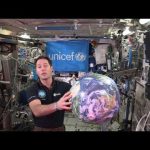
Thomas Pesquet soutient les enfants aux côtés de l’UNICEF
En tant qu’ambassadeur UNICEF, l’astronaute de l’ESA Thomas Pesquet, actuellement à bord de la Station spatiale internationale dans le cadre de l’Expédition 50, souhaite attirer l’attention sur le besoin de protéger et soutenir les jeunes générations, à l’heure où le changement climatique met toujours plus en péril leur avenir.
In his role as an ambassador for UNICEF France, ESA astronaut Thomas Pesquet, who is currently on the International Space Station as part of the Expedition 50 crew, spreads the message about the need to protect and support children in a time when climate change increasingly endangers their lives.
Connect with Thomas Pesquet at:
http://thomaspesquet.esa.int -

Anki Overdrive Starter Kit Test and Review (fun for kids and family)
Watch us test and play with the Anki Overdrive car track toy. At the end of the video we present the Family Playlab Play Rating where we give ratings (1-5 and 5 is better) in the following categories:
-Assembly
-Durability
-Price
-Fun scoreOverall we think that the Anki Overdrive is a very fun toy to play with.
Anki Overdrive is like a smart robot version of a classic slot car race track, where each car is a robot with smart artificial intelligence.
Disclaimer: Anki did not pay us to make this video. This is a test and review of the Anki Overdrive product, and Anki has had no control of the content of the video.
-
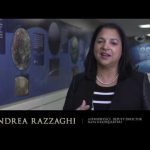
NASA Modern Figure: Andrea Razzaghi
Good advice: Don’t let the lack of confidence hide your true potential.
https://www.nasa.gov/modernfigures -
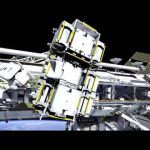
NASA Previews Spacewalks to Upgrade ISS Power System
On Jan. 4, NASA held a press briefing at the agency’s Johnson Space Center in Houston to preview a pair of planned spacewalks to perform a complex upgrade to the International Space Station’s power system. NASA’s Shane Kimbrough and Peggy Whitson will conduct the spacewalk on Jan. 6. The second spacewalk, on Jan. 13, will be performed by Kimbrough and Thomas Pesquet of ESA (European Space Agency). Working on the right side truss of the space station, the crew members will install adapter plates and hook up electrical connections for six new lithium-ion batteries that were delivered to the station in December.
-
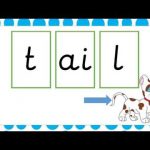
Phonics Ai Sound CVC Words Reading Machine
Learn to read CVC words with the ai phoneme reading machine style. The letters a and i make the ai sound like in the word rain.
CVC words featured: rain, pain, nail, mail, sail, tail, chain.
Children learn to read and write using phonics. In phonics we listen to the sounds in the word then break the word into sounds. This is called segmentation. You sound out the word by saying each sound then blend the sounds together to say the word.
-
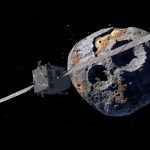
NASA’s New Discovery Missions
On Jan. 4, NASA announced the selection of two missions to explore previously unexplored asteroids. The first mission, called Lucy, will study asteroids, known as Trojan asteroids, trapped by Jupiter’s gravity. The Psyche mission will explore a very large and rare object in the solar system’s asteroid belt that’s made of metal, and scientists believe might be the exposed core of a planet that lost its rocky outer layers from a series of violent collisions. Lucy is targeted for launch in 2021 and Psyche in 2023. Both missions have the potential to open new windows on one of the earliest eras in the history of our solar system – a time less than 10 million years after the birth of our sun.
-

The amazing adventures of Rosetta and Philae (German)
Watch the amazing cartoon adventures of Rosetta and Philae, now back-to-back in one special feature-length production.
Find out how Rosetta and Philae first got inspired to visit a comet, and follow them on their incredible ten-year journey through the Solar System to their destination, flying around planets and past asteroids along the way. Watch as Philae tries to land on the comet and deals with some unexpected challenges!
Learn about the fascinating observations that Rosetta made as she watched the comet change before her eyes as they got closer to the Sun and then further away again. Finally, wish Rosetta farewell, as she, too, finishes her amazing adventure on the surface of the comet. Keep watching for one last surprise!
This video is also available in
English: https://www.youtube.com/watch?v=HD2zrF3I_II -
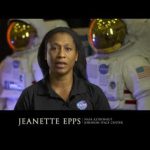
NASA Modern Figure: Jeanette Epps
NASA Astronaut Jeanette Epps gives a little advice on moving forward in a STEM career.
Find out more about NASA’s Modern Figures at:
https://www.nasa.gov/modernfigures -
NASA 2017 – Building the Future
NASA looks forward to 2017.
For more information on NASA in 2016 and beyond, visit:
https://www.nasa.gov/press-release/nasa-reveals-the-unknown-in-2016 -

Science Max | ELASTICS PART 2 | Season1 Full Episode | Kids Science
Science Max – Phil starts with a Popsicle stick catapult. Then he uses everything he knows about elastic energy to build a full-size catapult that hurls pumpkins! Plus, a maxed out paddle wheel boat and a historical re-enactment (sort of) of how catapults were used in medieval days.
Have you ever done a science experiment and wondered “What would this be like if it were HUGE?” Welcome to Science Max, the exciting new series that turbocharges all the science experiments you’ve done at home.
In season 1, join Phil as he builds rocket cars, uses elastic energy to hurl pumpkins on a giant catapult, builds a bridge out of pasta that can hold a human, find magnets powerful enough to float Phil off the ground, and many more experiments taken to the MAX!
-

The amazing adventures of Rosetta and Philae (Spanish)
Watch the amazing cartoon adventures of Rosetta and Philae, now back-to-back in one special feature-length production.
Find out how Rosetta and Philae first got inspired to visit a comet, and follow them on their incredible ten-year journey through the Solar System to their destination, flying around planets and past asteroids along the way. Watch as Philae tries to land on the comet and deals with some unexpected challenges!
Learn about the fascinating observations that Rosetta made as she watched the comet change before her eyes as they got closer to the Sun and then further away again. Finally, wish Rosetta farewell, as she, too, finishes her amazing adventure on the surface of the comet. Keep watching for one last surprise!
-

The amazing adventures of Rosetta and Philae (French)
Watch the amazing cartoon adventures of Rosetta and Philae, now back-to-back in one special feature-length production.
Find out how Rosetta and Philae first got inspired to visit a comet, and follow them on their incredible ten-year journey through the Solar System to their destination, flying around planets and past asteroids along the way. Watch as Philae tries to land on the comet and deals with some unexpected challenges!
Learn about the fascinating observations that Rosetta made as she watched the comet change before her eyes as they got closer to the Sun and then further away again. Finally, wish Rosetta farewell, as she, too, finishes her amazing adventure on the surface of the comet. Keep watching for one last surprise!
-

The amazing adventures of Rosetta and Philae
Watch the amazing cartoon adventures of Rosetta and Philae, now back-to-back in one special feature-length production.
Find out how Rosetta and Philae first got inspired to visit a comet, and follow them on their incredible ten-year journey through the Solar System to their destination, flying around planets and past asteroids along the way. Watch as Philae tries to land on the comet and deals with some unexpected challenges!
Learn about the fascinating observations that Rosetta made as she watched the comet change before her eyes as they got closer to the Sun and then further away again. Finally, wish Rosetta farewell, as she, too, finishes her amazing adventure on the surface of the comet. Keep watching for one last surprise!
This video is also available in
Italian: https://www.youtube.com/watch?v=mOE1lt-t3JY
French: https://www.youtube.com/watch?v=t2qcopytSbQ
Spanish: https://www.youtube.com/watch?v=jfU09NXRnfI
German: https://www.youtube.com/watch?v=gDmp4ZhSuIc -
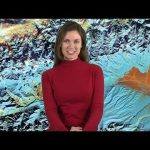
Earth from Space: China’s Tian Shan mountains
Earth from Space is presented by Kelsea Brennan-Wessels from the ESA Web-TVvirtual studios. Take a tour with Sentinel-2 to the Tian Shan mountains inChina in the 211th edition.
See also http://www.esa.int/spaceinimages/Images/2016/12/China_s_Tian_Shan_mountains to download the image.