In 2014, NASA took significant steps on the agency’s journey to Mars — testing cutting-edge technologies and making scientific discoveries while studying our changing Earth and the infinite universe as the agency made progress on the next generation of air travel. Here’s a look at some of the top NASA stories of the year!
Author: kidibot
-
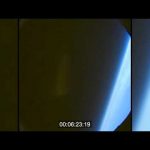
Video Gives Inside Look at Trial by Fire for NASA’s Orion Spacecraft
The video begins 10 minutes before Orion’s 11:29 a.m. EST splashdown in the Pacific Ocean, just as the spacecraft was beginning to experience Earth’s atmosphere. Peak heating from the friction caused by the atmosphere rubbing against Orion’s heat shield comes less than two minutes later, and the footage shows the plasma created by the interaction change from white to yellow to lavender to magenta as the temperature increases. The video goes on to show the deployment of Orion’s parachutes and the final splash as it touches down.
-
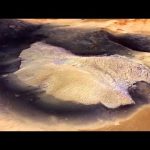
Flying over Becquerel crater
Becquerel crater is 167 km in diameter and lies in the Arabia Terra region on Mars, on the boundary between the southern highlands and northern lowlands. This movie shows the location of Becquerel crater on Mars and then provides a flyover of a mound of layered, sulphate-bearing deposits on the crater floor, thought to have formed under the influence of water. The darker material surrounding the mound is wind-blown dust from a source to the north, and provides evidence for effects of wind in eroding the sedimentary deposits.
The movie was made from a mosaic of four individual images acquired by the High Resolution Stereo Camera on ESA’s Mars Express during orbits 3253/1, 5332, 5350 and 5368. The image is centred at about 22ºN / 352ºE. The average ground resolution is about 17 m per pixel.
To download the raw images and dtms in GIS-ready formats, please follow this direct link to Becquerel crater on the HRSC mapserver: http://maps.planet.fu-berlin.de/?zoom=7&lat=21.12671&lon=-8.38806&layers=B0TFFFTTT
Credit: ESA/DLR/FU Berlin, CC BY-SA 3.0 IGO
Copyright Notice:
This work is licenced under the Creative Commons Attribution-ShareAlike 3.0 IGO (CC BY-SA 3.0 IGO) licence. The user is allowed to reproduce, distribute, adapt, translate and publicly perform this publication, without explicit permission, provided that the content is accompanied by an acknowledgement that the source is credited as ‘ESA/DLR/FU Berlin’, a direct link to the licence text is provided and that it is clearly indicated if changes were made to the original content. Adaptation/translation/derivatives must be distributed under the same licence terms as this publication. To view a copy of this license, please visit http://creativecommons.org/licenses/by-sa/3.0/igo/ -
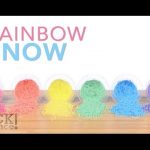
Rainbow Snow – Sick Science! #221
Get everything you need here: http://www.stevespanglerscience.com/rainbow-snow.html
See the full experiment here: http://www.stevespanglerscience.com/lab/experiments/rainbow-snow
We’ll admit, we take a little bit of offense when someone says, “Snow only comes in white.” Apparently, they’ve never seen the Rainbow Snow activity. If you’ve ever played with our Insta-Snow® powder, especially with our Color Fizzers, you know exactly how superabsorbent polymers can create a colorful blizzard of the most realistic fake snow out there.
Want more experiments like this? Check out http://www.stevespanglerscience.com/product/naked-eggs-and-flying-potatoes
Sick Science™ is a trademark of Steve Spangler, inc.
© 2014 Steve Spangler Science all rights reserved
-
ESA Euronews: Rockets, Mars and Europe’s future in space
In the afterglow of the Rosetta mission’s success in landing on a comet, the member states of ESA met in Luxembourg in early December to look forward to future challenges. Among the priorities is the development and construction of the new rocket, Ariane 6, which is seen as essential to maintaining Europe’s lead in the launcher market. Then there’s the ExoMars mission to further explore the ‘Red Planet’ and look for signs of life. But it’s not just about probes – ESA’s manned spaceflight programme also has momentum, with new astronauts currently in training and due to fly in 2015 and 2016. So, as the agency marks a half century of Europe’s space sector, it’s onwards and upwards for the next 50 years.
This video is also available in the following languages:
French: http://youtu.be/eq32fl5H0m8
German: http://youtu.be/hBLpzhgAmtU
Hungarian: http://youtu.be/4Snqq5VXGyg
Italian: http://youtu.be/If6JOY9mBy4
Greek: http://youtu.be/MyPvRhylA6M
Portuguese: http://youtu.be/wUzDxKetGWk
Spanish: http://youtu.be/15EAFYXl3N0 -
ESA Euronews: Europe spatiale : le calendrier des 50 prochaines années
Dans le sillage du succès de la mission Rosetta qui a fait se poser la sonde Philae sur une comète, les Etats membres de l’Agence spatiale européenne ont réuni leurs ministres à Luxembourg début décembre pour définir les défis de demain. Parmi les priorités, le développement et la construction de la nouvelle fusée européenne Ariane 6, perçue comme essentielle au maintien de l’Europe en position de leader sur le marché des lanceurs. Autre priorité : la mission ExoMars qui vise à rechercher des traces de vie sur la planète rouge. Mais tout ne tourne pas uniquement autour des sondes. Le programme de vols habités reprend de l’élan avec l’envoi de deux nouveaux astronautes européens sur la Station spatiale internationale en 2015 et 2016. Alors que l’agence célèbre le demi-siècle du secteur spatial européen, l’aventure continue toujours plus loin, toujours plus haut pour les cinquante années à venir.
-
ESA Euronews: Mit hoz a jövő az űrben?
Izgalmas időket élünk az űrben – új űrhajósok, új missziók és új rakéták indulnak a világűrbe. Az európai űrszektor vezetőivel arra keressük a választ, hogy mi lesz az űrkutatás jövője Európában. 2014 rendkívüli év volt a naprendszerünkben. Sikerült leszállni egy üstökösön, új űrhajósok mentek föl az űrbe, és kölönféle missziókat terveznek. Merre is tartunk? Mi a jövője az űrkutatásnak Európában?
-

Sugar Crystal Ornaments – Sick Science! #220
Check out cool science kits and toys: www.stevespanglerscience.com
See the full experiment here: http://www.stevespanglerscience.com/lab/experiments/sugar-crystal-ornaments
Sugar is delicious, sweet and… perfect for creating colorful, beautiful ornaments? This holiday season, grab a bag of Imperial Sugar or Dixie Crystals granulated sugar and mix yourself a supersaturated solution. Don’t know how to make a supersaturated solution? We’ll teach you! Once you’ve learned the science behind Sugar Crystal Ornaments, you’re tree, house, or classroom will have some of the most awesome (and scientific) ornaments around.
Want more experiments like this? Check out http://www.stevespanglerscience.com/product/naked-eggs-and-flying-potatoes
Sick Science™ is a trademark of Steve Spangler, inc.
© 2014 Steve Spangler Science all rights reserved
-
Orion’s first flight on This Week @NASA – December 8, 2014
The successful first flight test of NASA’s Orion spacecraft on Dec. 5 not only was a historic moment for the agency – but also was a critical step on NASA’s Journey to Mars. Orion rode to space from Cape Canaveral Air Force Station on a Delta IV heavy rocket with no crew, but loaded with about 1,200 sensors. The flight test basically was a compilation of the riskiest events that will happen when astronauts fly on Orion on deep space missions. Also, Journey to Mars briefing, 1st SLS flight barrel and Commercial crew milestone.
-
NASA TV Presents: Inside the ISS – December 2014
A look inside the life, science and adventure of being an astronaut aboard the International Space Station.
www.nasa.gov/mission_pages/station
-
Soyuz TMA-15M spacecraft transfer and liftoff
This timelapse video shows the Soyuz TMA-15M spacecraft during transfer from the MIK 40 integration facility to Baikonur Cosmodrome launch pad 31, as well as the launch on 23 November 2014 with ESA astronaut Samantha Cristoforetti and her crewmates to the International Space Station where they will live and work for five months.
With Samantha are Russian Soyuz commander Anton Shkaplerov and NASA astronaut Terry Virts. All three are part of the Station’s Expedition 42/43 crew.
On this mission, Samantha is flying as an ESA astronaut for Italy’s ASI space agency under a special agreement between ASI and NASA.
Directed by Stephane Corvaja, ESA
Edited by Manuel Pedoussaut, Zetapress
Music: MZB -
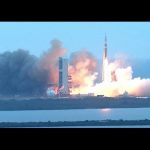
Orion Soars on First Flight Test
NASA’s Orion spacecraft launched successfully atop a United Launch Alliance Delta IV Heavy rocket Dec. 5 at 7:05 a.m. EST from Space Launch Complex 37 at Cape Canaveral Air Force Station in Florida. Orion’s Exploration Flight Test-1 (EFT-1), is the first flight test for NASA’s new deep space capsule and is a critical step on NASA’s journey to Mars. The 4.5 hour flight is scheduled to conclude with the splashdown of Orion in the Pacific Ocean.
-
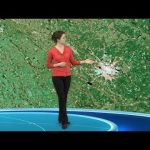
Earth from Space: Romanian mosaic
Earth from Space is presented by Kelsea Brennan-Wessels from the ESA Web-TV virtual studios. The one hundred twenty-sixth edition features a mosaic of Sentinel-1A radar scans, pieced together to create a single image of Romania.
See also http://www.esa.int/spaceinimages/Images/2014/12/Romania to download the image.
-
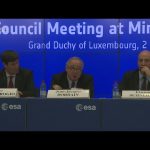
ESA Ministerial Council 2014: Press conference replay
Watch a replay of the press conference that took place after the conclusion of the ESA Council Meeting at Ministerial Level, Luxembourg, on 2 December 2014.
Ministers in charge of space activities within the 20 ESA Member States and Canada met in Luxembourg on 2 December to take key decisions on Europe’s launcher programmes, the European Participation in the ISS Exploitation Programme, the future European strategy for exploration and the evolution of ESA.
-
Bubble Inside a Bubble – Sick Science! #219
Check out cool science kits and toys: www.stevespanglerscience.com
See the full experiment here: http://www.stevespanglerscience.com/lab/experiments/bubble-inside-a-bubble
Grab a bag of Imperial Sugar or Dixie Crystals and let’s blow some bubbles. Wait… let’s blow bubbles INSIDE of other bubbles! When you mix-up a batch of super strong bubble solution and know a bit about volume and elasticity, you can blow bubble inside of bubble, inside of bubble. How many Bubble Inside a Bubble challenges can you do?
Want more experiments like this? Check out http://www.stevespanglerscience.com/product/naked-eggs-and-flying-potatoes
Sick Science™ is a trademark of Steve Spangler, inc.
© 2014 Steve Spangler Science all rights reserved
-
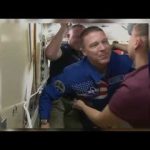
New crew launches to ISS on This Week @NASA – November 28, 2014
NASA’s Terry Virts and Expedition 42/43 crewmates, Anton Shkaplerov of the Russian Federal Space Agency and the European Space Agency’s Samantha Cristoforetti, launched Nov. 23 at 4:01 p.m. Eastern Standard Time, from Baikonur, Kazakhstan. Almost six hours later, their Soyuz spacecraft docked to the International Space Station – where they joined Expedition 42 Commander Barry Wilmore of NASA, and Flight Engineers Alexander Samokutyaev and Elena Serova of Roscosmos – returning the station crew to its full complement of six people. Also, First 3-D printed object in space, Orion flight test update, New airborne Earth Science missions and Happy Thanksgiving from space!
-
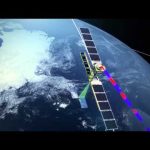
Linking by laser for fast data delivery
Launched in April 2014, Sentinel-1A carries an advanced radar instrument to image Earth’s surface through cloud and rain, regardless of whether it is day or night. Among its many applications Sentinel-1 routinely monitors shipping zones, maps sea ice and provides information on winds and waves for marine traffic, tracks changes in the way land is being use and provides imagery for rapid response to disasters such as floods, and monitors uplift and subsidence. The satellite transmits data to Earth when passing over ground stations in Norway, Italy and Spain. For continual data delivery, the satellite is also equipped with a laser terminal to transmit data to satellites in geostationary orbit carrying the European Data Relay System (EDRS). These satellites then transmit the Sentinel-1 data to the ground. Complementing the Sentinel ground-station network, EDRS will ensure the timely availability of large volumes of data.
Currently, a precursor optical communications terminal and downlink system is carried on the geostationary Alphasat, Europe’s largest telecommunications satellite. The first EDRS element will be carried on the Eutelsat-9B satellite, which will be launched in 2015. In the meantime, Sentinel-1A can use the precursor instrument on Alphasat to further improve the availability of its data. Sentinel-2A, scheduled to be launched in the spring of 2015, also carries the same optical communications payload.
-
ESA Ministerial Conference: Launchers
Ministers in charge of space activities within the 20 ESA Member States and Canada will meet in Luxembourg on 2 December to take key decisions, in particular on Europe’s Launcher Programmes and the new Ariane 6 design should then be unveiled, a next generation launcher being required for an increasingly competitive market.
This video covers why it is important for Europe to have independent access to space and maintain its leadership in the world’s commercial satellite launch market.
If final approval on its development is given at the forthcoming Ministerial, Ariane 6 will launch from Kourou at the start of the next decade.
-

Stained Glass Sugar – Sick Science! #218
Check out cool science kits and toys: www.stevespanglerscience.com
See the full experiment here: http://www.stevespanglerscience.com/lab/experiments/stained-glass-sugar
Sugar is tasty, but it can also be beautiful. Learn about awesome science like crystallization while creating a delicious and colorful treat! Stained Glass Sugar takes a tried and true recipe for sugar glass and creates vibrant, edible stained glass. The recipe is simple and easy, but by the end you’ll have made sugar glass that’s awesome enough for use on a movie set!
Want more experiments like this? Check out http://www.stevespanglerscience.com/product/naked-eggs-and-flying-potatoes
Sick Science™ is a trademark of Steve Spangler, inc.
© 2014 Steve Spangler Science all rights reserved
-
Futura docking replay
The Soyuz TMA-15M spacecraft approaches the International Space Station. The spacecraft lifted off at 20:59 GMT on 23 November (21:59 CET; 02:59 local time 24 November) and reached orbit nine minutes later.
Their spacecraft docked as planned at 02:49 GMT (03:49 CET), and the hatch to their new home in space was opened at 05:00 GMT (06:00 CET).
For more information about Samantha’s Futura mission online, visit http://www.esa.int/Futura
Follow the Futura mission with live updates from Samantha and the mission directors themselves on the mission blog ‘Outpost 42’ via http://outpost42.esa.int
Connect with Samantha on social media at:
http://samanthacristoforetti.esa.int -
Futura launch replay
The Soyuz TMA-15M spacecraft was launched from Baikonur cosmodrome in Kazakhstan at 21:01 GMT/22:01 CET on 23 November 2014 with ESA astronaut Samantha Cristoforetti and her crewmates to the weightless research centre where they will live and work for five months.
With Samantha are Russian Soyuz commander Anton Shkaplerov and NASA astronaut Terry Virts. All three are part of the Station’s Expedition 42/43 crew.
On this mission, Samantha is flying as an ESA astronaut for Italy’s ASI space agency under a special agreement between ASI and NASA. Her mission is called the Futura mission.
-
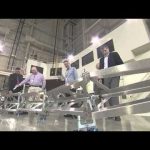
NASA is with you when you fly on This Week @NASA – November 21, 2014
NASA invited social media members Nov. 18 and 19 to the agency’s Armstrong Flight Research Center for a two-day event highlighting the ways NASA is with you when you fly. The NASA social gave participants an exclusive look at the latest tools and technologies being developed to improve the efficiency, safety and adaptability of air transportation. Also, Next ISS crew trains, 3D printer installed in space, Asteroid capture technology test, Journey to Mars media day and more!
-
ESA Euronews: Philae’s adventure
The Philae lander may be in hibernation mode on the surface of a comet, but it’s still very much alive in the hearts of the Comet Hunters, the team who helped Rosetta become the most famous space mission since the Moon landings. In this special edition of Euronews Space we have an extended episode of our Comet Hunters series, filmed during and after the comet landing at ESA’s base in Darmstadt and at the DLR’s Philae control room in Köln.
This video is also available in the following languages:
Spanish: http://youtu.be/t0d-v86ZE44
Portuguese: http://youtu.be/pbTVHzOTNZw
Greek: http://youtu.be/Z2lOE8wsi5w
Italian: http://youtu.be/6VQ6VAEzQBQ
Hungarian: http://youtu.be/cUnD7vhTDJs
German: http://youtu.be/hWGcjLu00EI
French: http://youtu.be/h2YYMzZw30U -

ESA Euronews: La aventura de Philae
El módulo de aterrizaje Philae puede que esté en modo hibernación allá lejos, en la superficie del cometa, pero aún está muy vivo en los corazones de los Cazadores de cometas. El equipo ha hecho que Rosetta se convierta en una de las misiones espaciales más famosas desde que el hombre llegó a la Luna. En esta edición especial de Space, en Euronews, veremos un largo episodio de nuestra serie Cazadores de cometas, filmado durante y después del aterrizaje de Philae en el cometa desde la base de la Agencia Espacial Europea en Darmstadt y en la sala de control del Centro Aeroespacial Alemán en Colonia.
-

ESA Euronews: L’avventura di Philae
Mercoledì 12 novembre, il D-Day per Rosetta e Philae: un giorno che i cacciatori di comete non dimenticheranno mai.
Matt Taylor, scienziato del progetto Rosetta, ESA: “Ieri iero rilassato, ora invece c’è questo aumento esponenziale di stress ed eccitazione. Sono al massimo adesso”. “Questa è la mia previsione per oggi, ecco quanto mi sento sicuro”, dice Taylor mostrando un tatuaggio del lander sulla gamba.
Paolo Ferri, direttore della missione Rosetta, ESA: “Sono estremamente stressato, la notte non è trascorsa tranquillamente come speravo. Le attività di preparazione del lander hanno richiesto molto più tempo, abbiamo dovuto rifare delle cose”.
Ma poi la buona notizia è arrivata, Rosetta ha ricevuto un segnale da Philae, e poi, dopo alcune ore di tensione, la missione è compiuta. Matt Taylor, scienziato del progetto Rosetta, ESA: “Siamo atterrati su una cometa!” -
ESA Euronews: Οι περιπέτειες του Philae
Το ρομποτικό σκάφος Philae προσγειώθηκε στον κομήτη 67P γράφοντας μία νέα σελίδα στη διαστημική ιστορία
To euronews είχε εξ αρχής προνομιακή πρόσβαση στο κέντρο ελέγχου των επιχειρήσεων.
Η προσεδάφιση του Philae στον κομήτη κέντρισε το ενδιαφέρον όλου του κόσμου. Η 12η Νοεμβρίου είναι μία ημέρα που η επιστημονική ομάδα δεν πρόκειται να ξεχάσει ποτέ.
Πάμε να γνωρίσουμε τους πρωταγωνιστές της επιχείρησης Ροζέτα και να ρίξουμε μία παρασκηνιακή ματιά στο κέντρο των επιχειρήσεων στο Ντάρμσταντ της Γερμανίας.
«Χθες ήμουν χαλαρός. Τώρα έχω και πάλι άγχος αλλά και μεγάλο ενθουσιασμό. Με το τατουάζ μου που απεικονίζει την προσεδάφιση του Philae κάνω την πρόβλεψή μου. Είμαι σίγουρος ότι όλα θα πάνε καλά», δηλώνει ο Ματ Τέιλορ, επιστήμονας της ESA στην επιχείρηση Ροζέτα.
«Είχα απίστευτο άγχος καθώς η νύχτα δεν εξελισσόταν όσο ομαλά ήλπιζα. Οι ενέργειες για την προετοιμασία προσεδάφισης μας πήρανε περισσότερο χρόνο, γιατί έπρεπε να ξανακάνουμε κάποια πράγματα», διηγείται ο διευθυντής του εγχειρήματος Πάολο Φέρι.
Τέλος καλό, όλα καλά. Η κούραση και το στρες εξαφανίστηκαν, όταν η Ροζέτα έλαβε το πρώτο σήμα από το ρομποτικό σκάφος Philae. Οι συντελεστές πανηγύρισαν τη μεγάλη επιτυχία τους.
Την επόμενη ημέρα τα τηλεοπτικά συνεργεία που πολιόρκησαν το κέντρο επιχειρήσεων άρχισαν να μαζεύουν τον εξοπλισμό τους.
Στην αίθουσα ελέγχου του Ευρωπαϊκού Οργανισμού Διαστήματος η επιστημονική ομάδα προσπαθεί να εντοπίσει το Philae πάνω στον κομήτη. Το ρομποτικό σκάφος αναπήδησε δύο φορές και προσγειώθηκε σε μία σκοτεινή ρωγμή. Αυτό δεν το εμπόδισε να στείλει σημαντικές πληροφορίες. -

Futura mission: Launch preparation 3
ESA astronaut Andreas Mogensen’s third video diary from Baikonur, in Kazakhstan, where he is currently joining the Expedition 42/43 crew in quarantine ahead of their launch to the International Space Station on 23 November. In this video Andreas reports on the roll-out of the Soyuz rocket to the launch pad.
Andreas is in Baikonur to experience launch preparations ahead of his own launch to the ISS in September 2015. He will spend 10 days on the Space Station for his Iriss mission.
ESA astronaut Samantha Cristoforetti is a member of the Expedition 42/43 crew and will spend 6 months on the ISS for the Futura mission.
Connect with Andreas at http://andreasmogensen.esa.int
Connect with Samantha at http://samanthacristoforetti.esa.int -
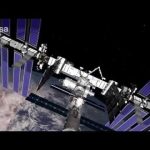
Soyuz rendezvous and docking explained
This second video in the ‘Journey to the International Space Station’ series follows the Soyuz capsule from Earth orbit to docking with the Space Station. Featuring interviews with ESA astronauts Luca Parmitano, Frank De Winne and Paolo Nespoli, and an introduction by Alexander Gerst, it includes unique footage taken from inside the Soyuz spacecraft.
Produced by the ESA Human Spaceflight and Operations Astronaut Training Division in Cologne, Germany, in collaboration with the Human Spaceflight and Operations Strategic Planning and Outreach Office in Noordwijk, The Netherlands.
Narration: Bernard Oattes
Technical experts: Stephane Ghiste, Dmitriy Churkin
Content design: Stephane Ghiste, Dmitriy Churkin, Matthew Day, Celena Dopart
Animation: Nelson Steinmetz, Yannis Nourrisson
Video editing: Celena Dopart, Andrea Conigli
Project coordination: Matthew DaySpecial thanks to:
NASA
Roscosmos
Frank De Winne
Paolo Nespoli
Luca Parmitano
Alexander Gerst
Smithsonian National Air and Space MuseumAlso watch:
Journey to the ISS Part 1: The Soyuz launch sequence explained
https://www.youtube.com/watch?v=AVvgpKt5uCAJourney to the ISS Part 3: Soyuz undocking, reentry and landing explained
https://www.youtube.com/watch?v=-l7MM9yoxIICaptions available in English, Spanish, German, French, Russian and Italian. We’re working on more languages and they will be added as they become available. Click on the CC button to switch between languages.
-

Brown Sugar Homemade Ice Cream – Sick Science! #217
Check out cool science kits and toys: http://www.stevespanglerscience.com/
See the full experiment here: http://www.stevespanglerscience.com/lab/experiments/brown-sugar-homemade-ice-cream
Food always tastes better when it’s homemade, and the same is true for ice cream. We went out and got some brown sugar from Imperial Sugar and Dixie Crystals to concoct a tasty ice cream creation. You can make your own ice cream, too! With the easy-to-follow steps below, you’ll have Brown Sugar Homemade Ice Cream in less than 30 minutes!
Want more experiments like this? Check out http://www.stevespanglerscience.com/product/naked-eggs-and-flying-potatoes
Sick Science™ is a trademark of Steve Spangler, inc.
© 2014 Steve Spangler Science all rights reserved
-

Blue Dot mission summary
ESA astronaut Alexander Gerst spent 166 days in space with NASA astronaut Reid Wiseman and Roscosmos commander Max Suraev in 2014.
This ten-minute video shows highlights of his Blue Dot mission, from docking spacecraft to science and spacewalks Alexander worked to improve the International Space Station and life on Earth.
From launch to landing, look at the experiments and beautiful images Alexander shared with us.
For more about the Blue Dot mission go to:
http://www.esa.int/Our_Activities/Human_Spaceflight/Blue_dotConnect with Alexander at http://alexandergerst.esa.int
-
Samantha Cristoforetti: Final preparations
Samantha Cristoforetti from Italy will shortly fly to the International Space Station. The final stage of her preparations happens in Star City, near Moscow, training alongside three other members of ESA’s Astronaut Corps. The third of ESA’s new generation of astronauts to fly, she’ll be undergoing a long-duration stay in orbit – replacing Alexander Gerst from Germany as part of the Station’s permanent onboard crew.
Connect with Samantha:
http://samanthacristoforetti.esa.intMore about the Futura mission:
http://www.esa.int/Our_Activities/Human_Spaceflight/Futura -
ESA’s technical heart celebrates Rosetta’s Philae landing
Celebrating the landing of Rosetta’s Philae lander on 67P/Churyumov–Gerasimenko at ESA’s technical heart. Along with the main Rosetta landing event taking place at ESA’s ESOC control centre, many other events took place all across Europe. More than a quarter of a century in the making, the Rosetta comet-chaser had been designed, planned and finally tested at ESTEC – ESA’s largest establishment, based in Noordwijk, the Netherlands – in advance of its 2004 launch.
More than 450 external guests, media representatives and Agency personnel gathered together at SpaceExpo, ESTEC’s visitor centre, to follow the nail-biting Philae landing during the afternoon and evening of Wednesday 12 November 2014. ESTEC Director Franco Ongaro presided over the gathering, which was also attended by ESA astronaut André Kuipers, Rob van Hassel of Airbus Defence and Space Netherlands – who detailed the Dutch contributions to Rosetta – as well as comet expert Inge Loes ten Kate from Utrecht University.
-
Rosetta mission: Results from comet landing: 14 Nov, 13:00 GMT
Update on the Rosetta mission, including status of the Philae lander.
Hosted by Emily Baldwin – ESA Science Editor, with:
Andrea Accomazzo – ESA Rosetta Flight Director, ESOC
Stephan Ulamec – Philae Lander Manager, DLR
Matt Taylor – Rosetta Project Scientist, ESA
Philippe Gaudon – CNES Rosetta Project Manager, SONC
Holger Sierks – PI for OSIRIS, Max-Planck-Institute for Solar System Research
Valentina Lommatsch – DLR-Lander Control Center, mission team
Jeff Grossman – OSIRIS-REx Program Scientist, NASA
Gordon Johnston – OSIRIS-REx Program Scientist, NASAStarts 13:00 GMT (14:00 CET)
More about the Rosetta mission:
http://www.esa.int/rosetta -

Philae landing: lander status and first descent image
Highlights from coverage of ESA’s Rosetta mission soft-landing its Philae probe on a comet, the first time in history that such an extraordinary feat has been achieved. Including the presentation of the first ROLIS image sent back by Philae as the lander descended to the surface of the comet.
After a tense wait during the seven-hour descent to the surface of Comet 67P/Churyumov–Gerasimenko, the signal confirming the successful touchdown arrived on Earth at 16:03 GMT (17:03 CET).
More about Rosetta at:
http://www.esa.int/rosetta -

Philae landing: touchdown highlights
Highlights from coverage of ESA’s Rosetta mission soft-landing its Philae probe on a comet, the first time in history that such an extraordinary feat has been achieved.
After a tense wait during the seven-hour descent to the surface of Comet 67P/Churyumov–Gerasimenko, the signal confirming the successful touchdown arrived on Earth at 16:03 GMT (17:03 CET).
More about Rosetta at:
http://www.esa.int/rosetta -
Philae landing: Acquisition of signal from spacecraft and lander
Scene inside Mission Control as the team regained contact with Rosetta as expected after separation, and with Philae that is descending onto the surface of Comet 67P/C-G.
More about Rosetta:
http://www.esa.int/rosetta -
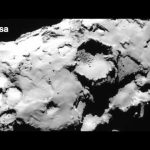
“Rosetta’s waltz” by Vangelis
The third of a trio of music videos released by ESA to celebrate the first ever attempted soft landing on a comet by ESA’s Rosetta mission.
Vangelis, the world-renowned musician, has composed this piece of music specially for ESA and inspired by the Rosetta mission. Vangelis’s music is often linked to themes of science, history and exploration, and he is best known for his Academy Award–winning score for the film Chariots of Fire, composing scores for the films Antarctica, Blade Runner, 1492: Conquest of Paradise and Alexander, and the use of his music in the documentary series Cosmos, by Carl Sagan.
Vangelis said: “Mythology, science and space exploration are subjects that have fascinated me since my early childhood. And they were always connected somehow with the music I write.”
Video copyright: ESA/Vangelis
Original music: VangelisFollow the Rosetta mission at: http://www.esa.int/rosetta
Also watch:
Part one: “Arrival” by Vangelis
http://youtu.be/FJrUnzLsmZkPart two: “Philae’s journey” by Vangelis
http://youtu.be/W8bVOGN9jSgMore information about Vangelis at: http://elsew.com/data/latest.htm
More information on the album at the UDiscoverMusic online store: https://store.udiscovermusic.com/artist.html?a=vangelis
-
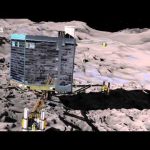
“Philae’s journey” by Vangelis
The second of a trio of music videos released by ESA to celebrate the first ever attempted soft landing on a comet by ESA’s Rosetta mission.
Vangelis, the world-renowned musician, has composed this piece of music specially for ESA and inspired by the Rosetta mission. Vangelis’s music is often linked to themes of science, history and exploration, and he is best known for his Academy Award–winning score for the film Chariots of Fire, composing scores for the films Antarctica, Blade Runner, 1492: Conquest of Paradise and Alexander, and the use of his music in the documentary series Cosmos, by Carl Sagan.
Vangelis said: “Mythology, science and space exploration are subjects that have fascinated me since my early childhood. And they were always connected somehow with the music I write.”
Video copyright: ESA/Vangelis
Original music: VangelisFollow the Rosetta mission at: http://www.esa.int/rosetta
Also watch:
Part one: “Arrival” by Vangelis
http://youtu.be/FJrUnzLsmZkPart three: “Rosetta’s waltz” by Vangelis
http://youtu.be/PUpSVxoCcikMore information about Vangelis at: http://elsew.com/data/latest.htm
More information on the album at the UDiscoverMusic online store: https://store.udiscovermusic.com/artist.html?a=vangelis