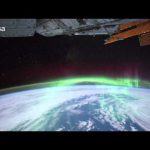
André took this video of Aurora Australis from the European Cupola module in the Space Station. The beautiful phenomenon is caused by bursts of particles from the Sun pouring down Earth’s magnetic field into the atmosphere.
Category: Astronomie
-
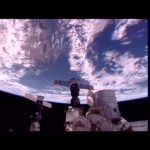
ORBITAL DEBRIS SAFELY PASSES INTERNATIONAL SPACE STATION
A small piece of Cosmos 2251 satellite debris safely passed by the International Space Station at 2:38a.m. EDT, Saturday March 24 allowing the six Expedition 30 crew members onboard the orbiting complex to exit their Soyuz spacecraft and resume normal activities.
The crew sheltered in the two Soyuz spacecraft as a precaution, the third time in station history that a crew has had to shelter in place due to the possibility of a conjunction with orbital debris and the first since June 2011. NASA’s Expedition 30 Commander Dan Burbank and Russian cosmonauts Anton Shkaplerov and Anatoly Ivanishin were in their Soyuz TMA-22 spacecraft attached to the Poisk module on the space-facing side of the Zvezda service module, while cosmonaut Oleg Kononenko, NASA’s Don Pettit and Andre Kuipers of the European Space Agency were in their Soyuz TMA-03M spacecraft on the Earth-facing side of the Zarya module.
The piece of debris was a remnant of a Feb. 10, 2009 collision between the dormant Cosmos 2251 satellite and an operational Iridium 33 communications satellite. The collision added about 2,000 trackable items to the orbital debris catalog. At the time of closest approach, the debris was moving from left to right in front of the station at an estimated overall miss distance of between 11 and 14 kilometers and a radial miss distance of 120 meters.
-
Supply Mission to Station on This Week @ NASA
The European Space Agency has successfully launched its third Automated Transfer Vehicle. The cargo ferry, named Edoardo Amaldi for the Italian physicist and spaceflight pioneer, was sent on its way to the International Space Station atop an Ariane 5 rocket from Europe’s Spaceport in Kourou, French Guiana. The ATV brings essential supplies and propellant to the ISS, as well as the ability to re-boost the station’s altitude. ATV Edoardo Amaldi follows the two highly successful supply missions carried out by ATV Jules Verne in March 2008 and ATV Johannes Kepler in February of last year. Also, members of the International Space Station’s Expedition 32 crew discuss their upcoming mission aboard the orbiting laboratory with the media, Engineers at the Marshall Space Flight Center test fire a scaled down solid rocket booster for NASA’s Space Launch System, or SLS, the 100th anniversary of the birth of a space pioneer and more!
-
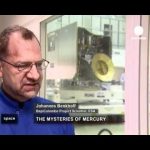
ESA Euronews: The mysteries of Mercury
Mercury has always been something of a puzzle for planetary scientists. Its close position to the Sun means it is very difficult to observe, but now a series of satellites is getting up close to this fascinating planet. The European Space Agency’s BepiColombo mission is among them, and it will offer an unprecedented level of information about the mysterious world of Mercury.
-

ESA astronaut Samantha Cristoforetti addresses Space Lab winners
YouTube Space Lab is a campaign initiated by YouTube, NASA, Space Adventures and Lenovo that challenges students around the world to design a science experiment for the International Space Station.
The winning experiments will be conducted in space on the International Space Station, making it the Universe’s largest science lesson, streamed live for the world to see via YouTube.
-
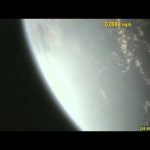
“Riding the Booster” Never Sounded Better
From launch to landing, a space shuttle’s solid rocket booster journey is captured, with sound mixed and enhanced by Skywalker Sound.
-
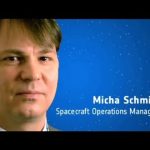
A job like no other…Micha Schmidt on his career @ ESA
Micha Schmidt is a Spacecraft Operations Manager at ESA. In this video he talks about his involvement in the Herschel project and the many phases of development that exist in all ESA projects. Micha also talks about his fascination for space as a boy and what a great experience it has been to live in various European countries whilst working for ESA.
-
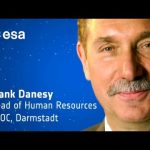
How to become an astronaut
‘How do I become an astronaut?’ is a question that Frank Danesy has been asked many, many times. In this video Frank talks about the qualities needed to become an astronaut, the selection campaigns and the rigorous training involved for the lucky few who are eventually chosen.
-
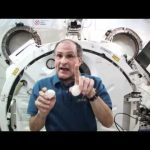
Angry Birds & Pigs Go Weightless!!!
In cooperation with NASA, Finland-based Rovio Entertainment, creator of the Angry Birds franchise, has announced its newest game, “Angry Birds Space.” Game developers have incorporated concepts of human space exploration into the new game. From the weightlessness of space to the gravity wells of nearby planets, players use physics as they explore the various levels of the game set both on planets and in microgravity. Aboard the International Space Station, Flight Engineer Don Pettit of NASA created a video using Angry Birds Space to explain how physics works in space, including demonstrating trajectories in microgravity by catapulting an Angry Bird through the space station.
-
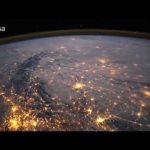
Timelapse of Western Europe seen from onboard the ISS
Western Europe in timelapse as seen from the International Space Station by ESA astronaut André Kuipers, during his long-duration mission to the ISS, PromISSe
-
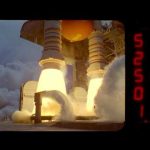
We Are the Explorers
Why do we explore? Simply, it is part of who we are, something we’ve done throughout history. NASA’s new video, “We Are the Explorers,” looks at that tradition of reaching for things just beyond our grasp, and how it’s helping lay the foundation for our greatest journeys ahead.
-
NASA African-American History Month Profile – Darrius Lewis
Darrius Lewis is an Emergency Preparedness Officer and Continuity of Operations Program Manager at NASA Headquarters. He is responsible for overseeing the Continuity Of Operations Program at NASA Headquarters as well as the functionality of the Emergency Notification System. He is charged with strategically planning for man-made and natural disasters to minimize any impact to NASA personnel, so that NASA workers and leadership can continue to conduct the business of NASA.
-
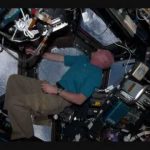
Orchestra plays an inspiring tribute to ESA’s André Kuipers
The 42-piece DSS Aarlanderveen orchestra played an inspiring tribute to André Kuipers at their annual ‘Wish concert’ on 11 February 2012. Each year the orchestra take ‘wish’ requests from Dutch celebrities, but this year the orchestra wanted to perform something very special for Wensconcert 2012, and uniquely decided to dedicate their ‘wish’ spot to André.
They chose the Jupiter hymn from Holst’s ‘The Planets’ suite, one of
André’s favourite pieces. Afterwards the audience was treated to a message received from the ISS, in which André said: “Oh how nice! I have this music up here with me. I’m very honoured to have such a beautiful piece dedicated to me. Warmest thanks for that.”The DSS Aarlanderveen orchestra is based in Aarlanderveen, near Alphen aan den Rijn, in the Netherlands. Leading the orchestra on the night was Danny Oosterman, a well-known Dutch conductor, cornet and trumpet player, and instructor at the Conservatorium van Amsterdam and the Utrechts Conservatorium.
-
ESA Euronews: The sounds of space
There are many links between music and space. Astronauts like Frank De Winne take their favourite rock music with them to orbit, while musicians on Earth often take inspiration from the stars in their work. Some astrophysicists have transposed plasma waves and electron beams into audible sound.
-

NASA African-American History Month Profile- Rhonda Baker
Rhonda Baker is the Associate Director for Center Operations at Ames Research Center. She has been working in Federal government positions since the age of 16. She came to Ames as a procurement specialist in 1998, and worked in support of several research areas, including the NASA Astrobiology Institute (NAI). She is now the Associate Director for Center Operations at Ames Research Center.
-
Succès pour le vol inaugural du nouveau lanceur Vega de l’ESA
Vega, le nouveau lanceur de l’ESA, est désormais prêt pour son entrée en exploitation aux côtés d’Ariane-5 et de Soyouz, après le succès de son vol de qualification, effectué ce matin depuis le port spatial de l’Europe à Kourou (Guyane française).
Avec Vega, qui vient compléter la famille des lanceurs disponibles à Kourou, l’Europe est désormais à même de répondre à toute la gamme des besoins de lancement, que ce soit pour mettre sur orbite des petits satellites scientifiques et d’observation de la Terre ou pour entreprendre des missions de vaste envergure comme l’envoi de véhicules ESA de ravitaillement à destination de la Station spatiale internationale (ISS).
Vega a décollé pour la première fois à 10h00 GMT (11h00 heure de Paris, 7h00 heure locale) de son nouveau pas de tir, et son vol de qualification s’est parfaitement déroulé.
-
ScienceCasts: Alien Matter in the Solar System
“Alien matter” detected by a NASA spacecraft orbiting Earth shows that the chemical make-up of our solar system differs from that of the surrounding galaxy. Researchers discuss the possible meaning of this mismatch in this week’s ScienceCast video.
Visit http://science.nasa.gov/ for more. -
ESA Euronews: A star rocket is born
The family of European rockets is growing. The next one is the youngest, called Vega, soon to be launched from Europe’s Spaceport in French Guiana.
This new rocket complements the range that Europe already has to offer in the commercial market. -
ESA Euronews: Nasce una stella tra i lanciatori spaziali europei
La famiglia dei vettori spaziali europei si allarga con il prossimo lancio di Vega dalla base europea della Guyana francese. Questo nuovo lanciatore va a completare l’offerta della gamma europea nell’ambito dei razzi commerciali. Ne parliamo nella rubrica Space.
-

PromISSe launch campaign – now in 3D!
Follow ESA astronaut André Kuipers and his crewmates, NASA astronaut Donald Pettit and Roscosmos cosmonaut Oleg Kononeko, on their journey from Baikonur cosmodrome, in Kazakhstan, up to their launch onboard a Soyuz TMA-03M spacecraft to the International Space Station (ISS).
On 21 December 2011, André embarked on ESA’s fourth long-duration mission to the ISS, “PromISSe”. During his five months onboard this human outpost in space, Andre is serving as a flight engineer for Expedition 30.
This exceptional 3D video shows some of the main events before launch, including: the city of Baikonur, the avenue of cosmonauts with the tree once planted by Yuri Gagarin, the Gagarin Museum, the roll-out of Soyuz in the early morning hours, the vertical erection of the rocket on the launch pad, the pre-launch press conference, the ready-to-fly report of the crew commander, and of course – the amazing light show of a night launch from the Gagarin launch pad in Baikonur.
Stereoscopic 3D glasses are required to properly enjoy the full 3D effect of this footage.
André and his fellow crew members will return to Earth by the end of May 2012.
-

M16, the Eagle Nebula
This stunning movie shows the Eagle Nebula from the iconic 1995 Hubble image of the Pillars of Creation through to the latest multi-wavelength composite.
Credits: far-infrared: ESA/Herschel/PACS/SPIRE/Hill, Motte, HOBYS Key Programme Consortium; ESA/XMM-Newton/EPIC/XMM-Newton-SOC/Boulanger; optical: MPG/ESO; near-infrared/VLT/ISAAC/McCaughrean & Andersen/AIP/ESO
-
2012 ESA Missions Preview
This video presents the key events in 2012 for ESA.
André Kuipers continues his PromISSe mission aboard the International Space Station until May, the 4th ESA long duration mission. During his stay the third European ATV cargo ship will bring food and supplies to the orbital outpost. Early in the year the new Vega launcher will make its qualifying flight from Europe’s Spaceport in French Guiana. The end of the year will be marked by an ESA Conference at Ministerial level, a major decision point for the future of Europe in Space.
More backgroud information can be found on: www.esa.int
-

NASA’s GRAIL Twins to Welcome 2012 at Moon
NASA’s two Gravity Recovery And Interior Laboratory (GRAIL) spacecraft are closing in on their quarry, the moon. The mission plans New Year’s Eve and New Year’s Day main engine burns to place the twin spacecraft in lunar orbit. http://www.nasa.gov/grail
-
NASA’s GRAIL Twins to Welcome 2012 at Moon
NASA’s two Gravity Recovery And Interior Laboratory (GRAIL) spacecraft are closing in on their quarry, the moon. The mission plans New Year’s Eve and New Year’s Day main engine burns to place the twin spacecraft in lunar orbit. http://www.nasa.gov/grail
-

Discovery, Innovation and New Destinations Highlight “This Year @NASA”
From understanding our Earth, to new clues about possible life elsewhere. From fostering life-changing research in space, to sharing our vision of the future with those destined to journey there.
From the end of one monumental mission, to the beginning of a new era in the human exploration of our solar system. “This Year @NASA” looks back at the stories that made 2011 — and help frame our path ahead. -

NASA’s Orion: From Factory to Flight
NASA is making steady progress on building the Orion spacecraft, which will take astronauts deeper into space than ever before. Take a look at the latest achievements and milestones in “Orion: From Factory to Flight” as Orion gets ready for its first orbital test flight in 2014.
-
ESA Euronews: Klein aber fein
Sie haben die Größe einer Waschmaschine, doch sie beschaffen wertvolle Informationen bei der Beobachtung der Erde und der Sonne. Die Rede ist von Mikrosatelliten mit dem Namen Proba.
-
New Crew Sets Sights on Station on “This Week @NASA”
At the Baikonour Cosmodrome in Kazakhstan, training continues for the next residents of the International Space Station. Expedition 30 Soyuz Commander Oleg Kononenko, NASA Flight Engineer Don Pettit and European Space Agency Flight Engineer Andre Kuipers, are reviewing flight procedures and making other preparations in advance of their upcoming launch to the orbiting laboratory scheduled for on Dec. 21. Also, next-gen tests; Dawn’s new orbit; and, Third Rock rolls out.Plus, Cleveland tech showcase; Explorer moves; “Sully” at the sim; FIRST Lego; “Operation Cookies,” and more.
-
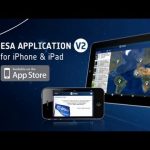
ESA Application V2 for iPhone and iPad
ESA has updated its application for iPhone and iPad.
With the launch of the ESA App V2, users can see ESA’s latest satellite imagery from Envisat in near-real time, complementing the latest news and discoveries in space exploration and Earth observation.
Making full use of the iPhone and iPad touch features, ESA App V2 puts videos, images, facts and figures, ESA’s Twitter feeds, YouTube links and other information in a convenient mobile package.
Download ESA App V2 here: http://itunes.apple.com/us/app/esa-european-space-agency/id441518639?mt=8 -

NASA Future Forum Hosted by Seattle’s Museum of Flight
The Dec. 9 event opens with an address by NASA Deputy Administrator, Lori Garver. (Part 1 of 4) Since 2008, the agency’s ongoing series of Future Forums have provided NASA leadership, technologists, scientists, and engineers an opportunity to join with local business, science, technology, and education leaders to discuss the future role of NASA in further advancing innovation, technology, science, engineering, education and the economy that benefits their community and the nation.
-
Mars Rover Launches on This Week @NASA
The NASA Mars Science Laboratory launched from the Cape Canaveral Air Force Station in Florida, beginning its journey to the Red Planet. When it arrives at Gale Crater next August, Curiosity rover’s ten instruments will investigate whether that area of Mars could ever have sustained microbial life. Also, ISS spinoff; Bolden on tour: lander test; best of the feds; money saver; high-flying feast, and more.
-

NASA Spinoffs Benefit All of Us (Including Santa!)
Elf 6409EF from Sony Pictures new film, “Arthur Christmas,” cites how spinoffs of NASA-developed space technologies are making our lives better here on Earth.
-
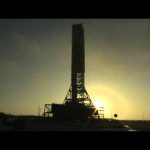
NASA’s Mobile Launcher Moved to Launch Pad
The mobile launcher that’ll support NASA’s Space Launch System (SLS) has moved from the Vehicle Assembly Building to Launch Pad 39B at the Kennedy Space Center in Florida. The 355-foot-tall ML, which took about two years to construct, is
being modified to support the heavy-lift rocket that will launch astronauts farther into space than ever before. SLS also will create high-quality jobs here at home, and provide the cornerstone for America’s future human space exploration efforts. -

NASA Heroes Awarded Congressional Gold Medal
The Gold Medal, Congress’s highest expression of national appreciation for distinguished achievements and contributions, is presented to four storied NASA astronauts: John Glenn, Neil Armstrong, Michael Collins, and Buzz Aldrin. The Capitol Hill award ceremony was hosted by House and Senate leaders of both parties.
-
What’s Up @NASA?
NASA enters the next era of spaceflight that includes developing plans to build a new rocket to send astronauts beyond low Earth orbit.
The Space Launch System, or SLS, will power the Orion spacecraft to whatever destination NASA chooses, whether it be a near-Earth asteroid, the moon, or Mars. -

NASA Recruits New Astronauts Via Web
NASA unveils its new, online application process for those wishing to become NASA astronauts. In this video that appears on the application site, Administrator and former astronaut Charles Bolden urges candidates to join NASA’s astronauts Class of 2013 and be part of our nation’s future space exploration effort. To learn more: www.astronauts.nasa.gov
-
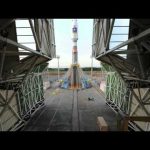
First Soyuz transfer and liftoff from French Guiana
The Russian Soyuz vehicle lifted off for the first time from its new launch complex at Europe’s Spaceport in French Guiana on 21 October 2011. Flight VS01 carried the first two operational satellites of Europe’s Galileo navigation system into orbit.
This time-lapse movie shows the three-stage Soyuz transfer from the assembly and testing building to the launch pad where it is then raised to the vertical. Once in the Mobile gantry, the Upper Composite containing the satellites and Fregat-MT upper stage is hoisted into position on top of the vehicle. The gantry is then rolled back, clearing the way for Soyuz to lift off. -
Mars500 – 520 days in 15 minutes
ESA’s Mars500 crewmembers Diego Urbina and Romain Charles recorded 15 video diaries from all phases of their simulated mission to Mars, plus hundreds of photos and other video clips. Most of these are available on ESA’s Mars500 website (www.esa.int/Mars500), but here is a compilation of their YouTube videos.
Relive this great adventure with Romain and Diego! -
ESA Euronews: Soyuz descola pela primeira vez do Porto Espacial da Europa
Lançou o Sputnik e Gagarin para o espaço. O mítico foguetão russo Soyuz conta já com mais de 1700 voos. O lançamento do Porto Espacial Europeu, na Guiana Francesa, abre um novo capítulo na sua longa carreira.
-
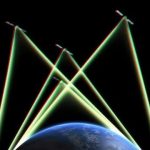
Galileo — Europe leads the way… in 3D!
A 3D presentation of the Galileo satellite navigation system, a joint development by the European Union and European Space Agency. This constellation of satellites will allow users to pinpoint their location anywhere on Earth — their launches commencing on 20 October 2011.
Use red/blue 3D glasses to experience the full 3D experience of this clip.