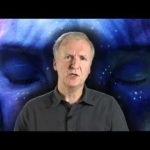
James Cameron, director of “Avatar,” describes many contributions of NASA’s Earth science program has made to environmental awareness and exploration of our home planet. “Part of the Global Network” is one of three public service announcements featuring “Avatar” film imagery and computer animations and data from NASA’s fleet of Earth-observing satellites. NASA has 14 science satellites in orbit making cutting-edge global observations of the entire global system including the atmosphere, oceans, land surface, snow and ice.
Category: Astronomie
-
NASA and, ESA Unite for Mars Missions
NASA and the European Space Agency (ESA) have joined to share resources and expertise on three future science missions to Mars. In three separate robotic missions (the first in 2016), both agencies will study the possibility of past life on the Red Planet, as well as test communications relays and other geochemical and biological mysteries. The third mission, in the 2020’s, will return to Earth a sample taken from the Martian surface.
-
Rover’s First “Steps” Make “Parents” Proud on This Week @ NASA
The Mars Science Laboratory, also known as Curiosity, rolled across a clean room floor at NASA’s Jet Propulsion Laboratory, essentially taking its first “steps” before proud mission team members. The largest rover ever made for Mars is scheduled to launch to the Red Planet in the fall of 2011. Also, two Russian cosmonauts made a successful spacewalk outside the International Space Station; wind tunnel testing is making human spaceflight safer; the first map to cover the entire surface of Mars makes its debut online, and more.
-
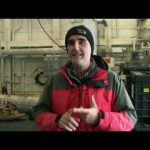
NASA’s Arctic Voyage Underway
NASA’s first oceanographic research expedition left Alaska on June 15, 2010. The five-week ICESCAPE mission is headed into the Arctic to study sea ice and the changing ocean ecosystem. Listen to the scientists as they get ready to head to sea.
-

Mars500 video diary 1 – Diego’s guided tour
Diego Urbina (@diegou) takes us on tour inside the Mars500 facilities – see how the crew are living and working for the next 17 months in isolation.
-
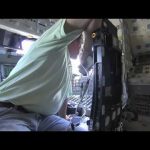
Shuttle Atlantis: From the Inside
An unprecedented up close, inside look in high-definition of space shuttle Atlantis as it was readied for “towback” from Kennedy’s Shuttle Landing Facility runway to Orbiter Processing Facility-1 following its May 26 landing on STS-132. After every shuttle landing, about 150 trained workers assist the crew out and prepare the shuttle for towing atop a large diesel-driven tractor to its processing hangar.
-
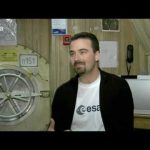
Interview with Romain Charles (ESA Mars500 participant)
Romain Charles of the Mars500 crew talks about his motivation for taking part in this adventure and how he’ll cope with his 520-day ‘mission to Mars’ .
-

“Ice Team” Inspects NASA’s Shuttle Atlantis During STS-132 Launch Countdown
At NASA’s Kennedy Space Center in Florida, members of the Final Inspection Team, also known as the “Ice Team,” performs a walkdown of Kennedy’s Launch Pad 39A during space shuttle Atlantis’ STS-132 launch countdown on May 14. The six-member team walks on every level of the pad’s fixed service structure, inspecting the shuttle, external fuel tank, solid rocket boosters, pad structure and ground equipment for signs of ice buildup, debris or anything else that might be amiss prior to launch. As part of the inspection, photos are taken and transmitted to the launch team for review.
A videographer for NASA was included as a member of the team to capture the first-ever up close, high-definition video of this important and hazardous inspection process. -
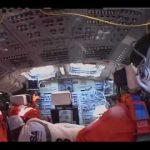
Launch Tops STS-132 Crews First Day in Space
The liftoff and eight-and-a-half minute ascent of shuttle Atlantis into space is among the highlights of STS-132’s first flight day of its 12-day mission. The six-member crew of Commander Ken Ham, Pilot Tony Antonelli and Mission Specialists Garrett Reisman, Steve Bowen, Mike Good and Piers Sellers is delivering to the ISS a cargo carrier filled with spare parts and Rassvet, the Russian Mini Research Module-1.
-
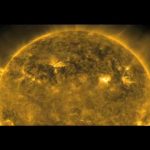
First Images: The Solar Dynamics Observatory, SDO
The first images of NASAs Solar Dynamics Observatory (SDO) released on April 21, 2010. Launched Feb. 11, 2010, SDO is the most advanced spacecraft ever designed to study the sun and its dynamic behavior. The spacecraft can produce images with clarity ten times better than high definition television and provide more comprehensive science data faster than any solar observing spacecraft in history. SDO will help scientists study solar activity to improve forecasts of how the suns weather affects Earth. www.nasa.gov/sdo http://www.nasa.gov/sdo
-
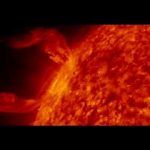
Most Advanced Spacecraft Studies the Sun
The first images of NASAs Solar Dynamics Observatory (SDO) have been revealed, astonishing heliophysicists with their brilliant clarity. Launched Feb. 11, 2010, SDO is the most advanced spacecraft ever designed to study the sun and its dynamic behavior. The spacecraft can produce images with clarity ten times better than high definition television and provide more comprehensive science data faster than any solar observing spacecraft in history. SDO will help scientists study solar activity to improve forecasts of how the suns weather affects Earth. www.nasa.gov/sdo
-

“Welcome Back!” Discovery Lands Safely at Kennedy
Space shuttle Discovery and seven astronauts ended a two-week journey of more than 6.2 million miles with a Tuesday morning landing at NASA’s Kennedy Space Center in Florida. Returning to Earth aboard the orbiter were STS-131 Commander Alan Poindexter, Pilot Jim Dutton, and Mission Specialists Stephanie Wilson, Rick Mastracchio, Clay Anderson, Dottie Metcalf-Lindenburger and Naoko Yamazaki of the Japan Aerospace Exploration Agency. The STS-131 mission to the International Space Station included three spacewalks, the installation of equipment outside the ISS, and the transfer of thousands of pounds of cargo and supplies from the orbiter’s payload bay to various locations on the station.
-

A New Era of Innovation and Discovery – President Obama’s Plan for NASA
President Barack Obama’s new plan for NASA.
-
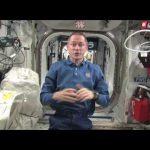
How do you feel after the first few months in orbit?
Frank De Winne is answering a few questions on the ISS submitted by the pupils of Class 7M from the Christian Morgenstern School in Hersching (Germany):
Question:
– Jerome (13): How do you feel in orbit after 2 months?
– Karina (13): How much time do you spend working outside the ISS?
– Tamara: Do you have any real free time in the ISS, and how can you spend this time? How often do you contact your family?
– Antoine (13): Have you ever felt scared in orbit? Has there ever been a moment that you wished to be back on Earth?
– Regina (14): Has anything strange happened on the ISS that none of your colleagues have been able to explain?
– Flavu: Which kind of education and qualification do you need for this kind of work? -
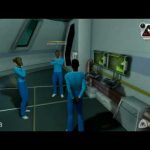
ESA highlights online games as key future technology
Video gaming has become one of the globes most popular pastimes. Fans say games are often educational, their detractors answer they are anything but. Might ESA have something to learn from gaming? A new Agency study says the answer is yes.
http://www.esa.int/esaCP/SEMHGBFKZ6G_index_0.html -
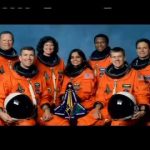
NASA Heroes Remembered
A wreath-laying ceremony at the Kennedy Space Center Visitor Complex is one of many tributes to NASAs fallen heroes on this Day of Remembrance.
-
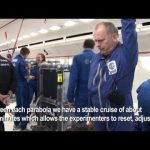
Airbus Zero G
Operated for ESA by the French company Novespace, the Zero-G aircraft flies parabolic arcs so that its passengers and cargo experience periods of freefalling weightlessness.
-

NASA Remembers Fallen Heroes
NASA Day of Remembrance commemorates the fallen heroes of Apollo1, Challenger, and Columbia.
-

Ariane 30th birthday
On 24 December 1979, Ariane made its first flight from French Guiana, marking the beginning of 30 years of success and giving Europe a guaranteed independent access to space. With Ariane, ESA could develop its own programmes in many different domains: telecommunications, Earth observation, science and exploration. Europe was the pioneer in the civil launch space market, with the creation of Arianespace, the world-leading space transportation company.
-
NASA TV Season’s Greetings 2009
The beauty of images from the Hubble Space Telescope, and several of the NASA missions was the inspiration for the 2009 NASA Seasons Greetings ID.
Mark R. Hailey, NASA Televisions Art Director created this piece.
-
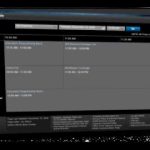
NASA TV Schedule on the Web
NASA Televisions online Program Schedule is now more easy-to-read, with all three channels listed on one page.
Listings of upcoming programs, events, or features on NASA TVs Public, Education and Media channels can now be easily accessed by visiting the NASA Television Web page, at www.nasa.gov/ntv , and clicking on NASA TV Schedule in the upper left.
For NASA TV streaming video and downlink information, visit:
www.nasa.gov/ntv . -
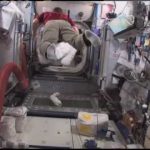
NASA STS-129 Mission Highlights
Astronaut Nicole Stott returned to Earth aboard shuttle Atlantis on Nov. 27 after 91 days in space. She had spent 87 days aboard the International Space Station and 80 days as an Expedition 20/21 flight engineer. She is the last astronaut who will be transported to or from the space station by a space shuttle. Atlantis landed at NASA’s Kennedy Space Center, Fla., to end its STS-129 mission to the station.
For more info: www.nasa.gov/shuttle
-
STS-129 HD Landing
Space shuttle Atlantis and its crew of seven astronauts ended an 11-day journey of nearly 4.5 million miles with a 9:44 a.m. EST landing Friday at NASA’s Kennedy Space Center in Florida.
The mission, designated STS-129, included three spacewalks and the installation of two platforms to the International Space Station’s truss, or backbone. The platforms hold large spare parts to sustain station operations after the shuttles are retired. The shuttle crew delivered about 30,000 pounds of replacement parts for systems that provide power to the station, keep it from overheating, and maintain a proper orientation in space.
-

Happy Thanksgiving from NASA
The 2009 NASA Thanksgiving Promo. Inspired by the NASA Television footage of the Astronauts enjoying meals together aboard the International Space Station.
Mark R. Hailey, NASA Televisions Art Director, created this piece
-
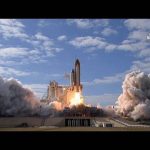
STS-129 HD Launch
Space shuttle Atlantis and its six-member crew began an 11-day delivery flight to the International Space Station on Monday with a 2:28 p.m. EST launch from NASA’s Kennedy Space Center in Florida. The shuttle will transport spare hardware to the outpost and return a station crew member who spent more than two months in space.
Atlantis is carrying about 30,000 pounds of replacement parts for systems that provide power to the station, keep it from overheating, and maintain a proper orientation in space. The large equipment can best be transported using the shuttle’s unique capabilities.
-
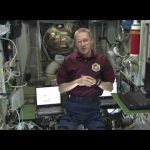
What does a typical working day on the ISS look like?
Frank De Winne is answering a question on the ISS submitted by Thomas Kern from Germany:
What does a typical working day on the ISS look like? -

Can you feel the speed at which the ISS travels?
Frank De Winne is answering a question on the ISS submitted by Paul from Portugal:
When you do your EVA (space walk), can you feel the speed (28.000 Km/h) at which the ISS is travelling? -
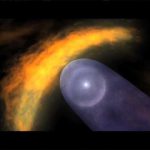
NASA IBEX Science Update
NASA’s Interstellar Boundary Explorer, or IBEX, spacecraft has made it possible for scientists to construct the first comprehensive sky map of our solar system and its location in the Milky Way galaxy. The new view will change the way researchers view and study the interaction between our galaxy and sun.
-
The ISS: a work in progress!
Highlights of ESA astronaut Christer Fuglesang’s 14-day Alissé mission to the International Space Station between 29 August and 12 September 2009. Fuglesang was part of the seven-strong STS-128 crew launched to the ISS with Space Shuttle Discovery. STS-128 delivered new supplies and equipment to the ISS. The crew also performed three spacewalks to continue Station construction.
-
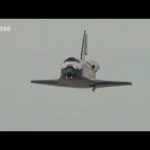
Space Shuttle Discovery returns to Earth
Space Shuttle Discovery lands at Edwards Air Force Base, California, on 12 September concluding ESA astronaut Christer Fuglesang’s 14-day Alissé mission to the the International Space Station.
-
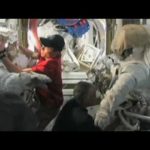
ESA astronauts working on the ISS
ESA astronauts Frank De Winne and Christer Fuglesang met up on the International Space Station in September 2009. Fuglesang was visiting the ISS during his 14-day Alissé mission. De Winne, on his six-month OasISS mission, was already on the ISS as part of the resident ISS Expedition 20 crew.
-
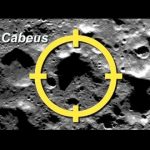
NASA SELECTS TARGET CRATER FOR LUNAR IMPACT OF LCROSS SPACECRAFT
NASA has selected the crater Cabeus, near the moons South Pole, as the spot where it will search for water on the moon. The crater is the optimal target for the impacts of
the Lunar Crater Observation and Sensing Satellite, or LCROSS, and its spent Centaur rocket, in the early morning hours of October 9, 2009. For more information: www.nasa.gov/lcross -
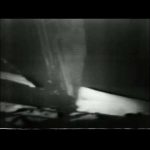
NASA TV History Emmy Award Video 2009
This video was aired when NASA Television was honored with a Primetime Emmy Award by the Academy of Television Arts & Sciences. The 2009 Philo T. Farnsworth Award recognizes the agency for engineering excellence and commemorates the 40th anniversary of the technological innovations that made possible the first live TV broadcast from the moon by the Apollo 11 crew on July 20, 1969.
The prestigious Emmy Award, named after the man credited with designing and building the world’s first working television system, honors an agency, company or institution with contributions over a long period of time that have significantly affected the state of television technology and engineering.
-

NASA Science Briefing – A New Moon
Participants discuss new science data from the moon collected during national and international space missions.
-
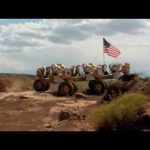
NASA Completes Desert Lunar Rover Testing
One of the stops on NASA’s way to the moon is the Arizona desert. The 2009 Desert RATS – or Research
and Technology Studies – field test simulated a 14-day lunar mission. Two crew members – an astronaut
and a geologist – lived for 14 days inside NASA’s prototype Lunar Electric Rover, scouting the area for
features of geological interest and conducting moonwalks as necessary to collect samples. Other
prototype vehicles tested include Ames’s K-10 robotic scout and JPL’s Tri-Athlete cargo handling and
manipulation system. For more information www.nasa.gov -
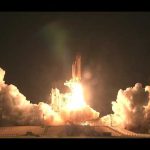
STS-128 HD Launch
With seven astronauts and a host of experiments and equipment on board, space shuttle Discovery completed a flawless ascent into orbit Friday night to begin a two-day chase of the International Space Station. With Commander Rick “C.J. ” Sturckow at the controls, the shuttle lifted off on-time at 11:59 p.m. EDT from NASA’s Kennedy Space Center in Florida. The crew will rendezvous and dock with the station Sunday and the crew will begin transferring equipment to the outpost during the 13-day mission.
After flying up on Discovery, Nicole Stott will trade places with station resident Tim Kopra, who went into space last month aboard Endeavour. Equipment and science racks for the orbiting laboratory are riding inside the Leonardo cargo module, which is secured tightly inside Discovery’s payload bay. The module will be lifted out of Discovery and locked onto the station so the crew can transfer the gear efficiently. The treadmill named for comedian Stephen Colbert also is aboard Discovery and destined for the station.
-
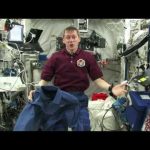
How do you wash your clothes in space?
Frank De Winne is answering a question on the ISS submitted by Herman from Belgium:
– How do you wash your clothes in space?
– Do you use washing powder to wash your clothes in space? -
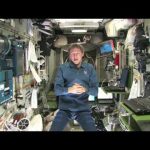
How does food stay fresh on the ISS?
Frank De Winne is answering a question on the ISS submitted by Cedric from Belgium:
– How do you occupy yourself during the 2-day Soyuz journey to the ISS?
– How does food stay fresh in space, since there is no fridge on the ISS?