Category: Astronomie

  • NASA Begins Work to Build a Quieter Supersonic Passenger Jet

    NASA Begins Work to Build a Quieter Supersonic Passenger Jet

    The return of supersonic passenger air travel is one step closer to reality with NASA’s award of a contract for the preliminary design of a “low boom” flight demonstration aircraft. This is the first in a series of ‘X-planes’ in NASA’s New Aviation Horizons initiative, introduced in the agency’s Fiscal Year 2017 budget.

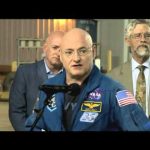
    NASA Administrator Charles Bolden announced the award at an event Monday at Ronald Reagan Washington National Airport in Arlington, Virginia.

    Participants:
    NASA Administrator, Charlie Bolden
    Associate Administrator, Jaiwon Shin
    David Melcher of the Aeronautic Industry Association
  • ExoMars science

    ExoMars science

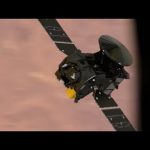
    On 14 March at 09:31 GMT ExoMars 2016 will be launched from Baikonur onboard a Proton rocket.

    The joint European and Russian ExoMars mission will test key exploration technologies and search for evidence of methane and other rare gases in the Martian atmosphere. These gases could result from geological processes or they could be signatures of current biological activity on the planet.

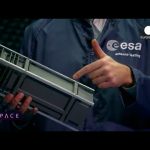
    This film examines the two European science instruments on the ExoMars Trace Gas Orbiter (TGO) – CaSSIS and NOMAD. The high-resolution CaSSIS (Colour and Stereo Surface Imaging System) acts as the orbiter’s scientific eye. It is a telescope with a sophisticated detector that can provide colour and stereo images over a nine and a half kilometre wide strip. CaSSIS will examine recurring slope linea – dark lines on the surface of Mars at different times of the day over the planet’s seasons. These linea are believed to be associated with liquid brine. They increase in size during the Martian spring and summer and fade away during autumn and winter.

    NOMAD (Nadir and Occultation for MArs Discovery) will be the first high resolution instrument of its kind around the planet. It will observe information about Mars’ atmosphere by looking at the Sun during sunsets and sunrises. It contains three spectrometers – two working in the infrared and one in ultraviolet – and can identify trace gases in the atmosphere, such as methane. The presence of methane in Mars’ atmosphere could result from simple life forms like microbes.

  • The One-Year Crew returns on This Week @NASA – March 4, 2016

    The One-Year Crew returns on This Week @NASA – March 4, 2016

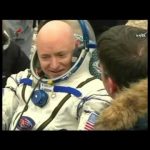
    After spending nearly a year aboard the International Space Station — conducting a host of biomedical and psychological research on the impacts of long-duration spaceflight on the human body, NASA’s Scott Kelly and Mikhail Kornienko of the Russian space agency Roscosmos wrapped up their historic mission on March 1 – with a safe parachute landing in Kazakhstan . Just over a day, later – at Houston’s Ellington Field, near Johnson Space Center, a host of family, colleagues and VIPs welcomed Kelly back to the United States, including Second Lady of the United States Dr. Jill Biden, Assistant to the President for Science and Technology Dr. John P. Holdren, and NASA Administrator Charles Bolden. There were cheers, embraces and expressions of appreciation for his efforts to help advance deep space exploration and America’s Journey to Mars. Also, Next ISS crew heads to launch site, “Low boom” aircraft, Orion Service Module’s solar array wing deployment and more!
  • Earth from Space: Puzzle of Utah

    Earth from Space: Puzzle of Utah

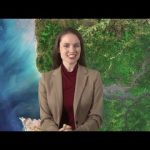
    Earth from Space is presented by Malì Cecere from the ESA Web-TV virtual studios. The one hundred seventy-sixth edition features a Sentinel-2A image of Utah in the US.
    See also http://www.esa.int/spaceinimages/Images/2016/03/Puzzle_of_Utah to download the image.

  • Sentinel-3A prepares for liftoff (4K timelapse)

    Sentinel-3A prepares for liftoff (4K timelapse)

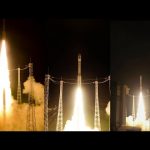
    This timelapse video shows Sentinel-3A, from final preparations to liftoff on a Rockot launcher from the Plesetsk Cosmodrome in northern Russia, at 17:57 GMT (18:57 CET) on 16 February 2016.

    Sentinel-3A is the third satellite to be launched for Europe’s Copernicus environment monitoring programme.

    Designed as a two-satellite constellation – Sentinel-3A and -3B – the Sentinel-3 mission carries a series of cutting-edge instruments for systematic measurements of Earth’s oceans, land, ice and atmosphere. Over oceans, Sentinel-3 measures the temperature, colour and height of the sea surface as well as the thickness of sea ice. These measurements will be used, for example, to monitor changes in sea level, marine pollution and biological productivity. Over land, this innovative mission will monitor wildfires, map the way land is used, provide indices of vegetation state and measure the height of rivers and lakes.
    More about Sentinel-3A: http://esa.int/sentinel-3

    Credits: Directed by Stephane Corvaja, ESA; Edited by Manuel Pedoussaut, Zetapress ; Music by Hubrid-Rockot

  • ExoMars prepares for launch

    ExoMars prepares for launch

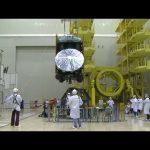
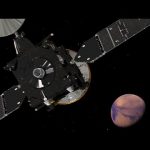
    The ExoMars 2016 spacecraft – consisting of the Trace Gas Orbiter (TGO) and the Schiaparelli entry, descent and landing demonstrator – is in Baikonur, Kazakhstan, preparing for its mid-March launch on a Russian Proton rocket.

    This joint European and Russian mission will test key exploration technologies and search for evidence of methane and other rare gases in the martian atmosphere. These gases could result from geological processes or they could be signatures of current biological activity on the planet. Three days before reaching Mars in October, Schiaparelli will separate from the orbiter and coast towards the planet in hibernation mode to reduce power consumption.

    This video covers the journey, the orbit of the Trace Gas Orbiter, the separation of the Schiaparelli lander and its 20 000 km/hour descent and eventual landing. It also contains filming at ESA’s European Space and Technology Centre (ESTEC) Mars Yard in the Netherlands. 

    Learning more about Mars’ water and environment will shed further light on this planet – while knowing the origin of its methane could finally answer the exciting question of whether there is life on Mars.

    Read more about ExoMars:
    http://www.esa.int/exomars

  • ESA Euronews: Building a Moon base

    ESA Euronews: Building a Moon base

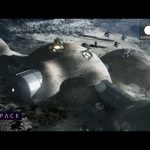
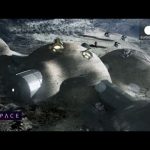
    Jan Woerner, Director General of the European Space Agency, has a bold new vision for space exploration. “My intention is to build up a permanent base station on the Moon,” he tells Euronews from the agency’s main control room in Darmstadt. “Meaning that it’s an open station, for different member states, for different states around the globe.”

    Mankind has never had a permanent lunar presence, and so this new vision, that Woerner likes to call the ‘Moon village’, would represent a giant leap in space exploration.

    This video is also available in the following languages:
    French: https://www.youtube.com/watch?v=iBfgxieUw1g
    German: https://www.youtube.com/watch?v=5EICRnmBatQ
    Italian: https://www.youtube.com/watch?v=2RJKZ-d5OL0
    Spanish: https://www.youtube.com/watch?v=P2Z59Fa585Y
    Portuguese: https://www.youtube.com/watch?v=39axiS1qocU
    Greek: https://www.youtube.com/watch?v=9BBOmJj_b-c
    Hungarian: https://www.youtube.com/watch?v=defs2TL6IcA

  • ESA Euronews: Un village sur la Lune ?

    ESA Euronews: Un village sur la Lune ?

    Le directeur général de l’Agence spatiale européenne dit vouloir construire une base permanente sur la Lune. Ce projet incroyable prend peu à peu forme à mesure que les scientifiques européens commencent à sérieusement y réfléchir. Nous avons rencontré quelques-uns de ceux qui pourraient faire de ce rêve, une réalité, notamment au Centre européen des astronautes à Cologne.

    “J’ai l’intention de construire une base permanente sur la Lune : ce sera une station ouverte pour différents Etats participants, des pays des quatre coins du monde,” explique posément le nouveau directeur général de l’Agence spatiale européenne.

  • ESA Euronews: Bald ein Dorf auf dem Mond?

    ESA Euronews: Bald ein Dorf auf dem Mond?

    Die Europäische Weltraumorganisation ESA will ein tollkühnes Projekt in Angriff nehmen: Sie will ein Dorf auf dem Mond bauen. Die permanente Station soll an dem Ort entstehen, an dem einst die Russen landeten und die Amerikaner erste Schritte machten. ESA-Chef Jan Woerner hat eine Vision: “Ich will eine permanente Mondstation bauen. Es wäre eine offene Station für mehrere Länder aus der ganzen Welt.”

    Die Apollo-Ära hat gezeigt, dass Träume Wirklichkeit werden können. Die Forscher damals hatten ein klares Ziel vor Augen: die Mondlandung. ESA-Astronaut Andreas Mogensen scheint zuversichtlich: “In den 1960er Jahren haben sie das innerhalb von zehn Jahren geschafft. Heute sind wir technologisch gesehen viel weiter. Wir können es also noch einmal machen.”

    Die Mondstation würde die Internationale Raumstation, ISS, ablösen. Sie wäre das neue gemeinsame Raumfahrt-Projekt, an dem alle teilnehmen könnten. “Die Amerikaner, die Russen, die Chinesen, die Inder und die Japaner werden mitmachen. Und andere Länder werden ebenfalls etwas beisteuern,” so Woerner.

  • ESA Euronews: Holdbázis – egy hosszú út kezdete

    ESA Euronews: Holdbázis – egy hosszú út kezdete

    – Feltett szándékom egy állandó bázisállomás építése a Holdra – mondja az Európai Űrügynökség vezetője, Jan Woerner. – Ez egy közös bázis lenne a partnereinkkel, amit a világ más országaival közösen építenénk és használnánk. Benne lesznek az amerikaiak, az oroszok, a kínaiak az indiaiak, a japánok és kisebb hozzájárulással más országok is.

    A jelenlegi helyzetben a Holdbázis álomnak tűnik – de az Apolló-program során már kiderült, hogy megfelelő költségvetés mellett óriási technológiai ugrások lehetségesek. A tervek szerint ez lenne az új globális űrprojekt a Nemzetközi Űrállomás után.

  • ESA Euronews: Si torna sulla Luna

    ESA Euronews: Si torna sulla Luna

    Tornare sulla Luna? La prossima tappa dell’esplorazione spaziale, dopo l’esperienza della Stazione Spaziale Internazionale, prevede molto di più. L’Agenzia spaziale europea ha un nuovo obiettivo: costruire una base permanente sulla luna.

    I russi furono i primi a lanciare una missione sulla luna mentre gli americani i primi a camminare sulla sua superficie. Oggi la luna continua ad essere al centro di ambiziose ricerche come ci conferma anche il direttore generale dell’Agenzia spaziale europea Jan Wörner. Una base internazionale, una stazione aperta ai diversi Stati membri dell’Agenzia e ai paesi di tutto il mondo.

    Un sogno animato dalla stessa passione che ha portato il primo uomo sulla Luna. Certo finora nessuno ha mai realizzato un progetto simile. Dalla missione spaziale Apollo sono stati fatti passi da gigante.

  • ESA Euronews: Como a ESA pretende construir uma aldeia na Lua

    ESA Euronews: Como a ESA pretende construir uma aldeia na Lua

    O homem que está à frente da Agência Espacial Europeia (ESA) tem um ambicioso objetivo: construir uma base permanente na Lua. É no Centro Europeu de Astronautas em Colónia, na Alemanha, que estão a ser dados os primeiros passos nessa direção.

    Em 1959, os russos conseguiram aterrar uma nave não tripulada na Lua; dez anos mais tarde, os americanos passearam na sua superfície. Hoje em dia, o plano é ficar. _”O meu objetivo é construir uma base permanente na Lua. Uma estrutura aberta à participação de diferentes países”_, declara Jan Wörner, diretor geral da ESA. A ideia é criar um projeto global à semelhança da Estação Espacial Internacional.

    O Centro Europeu de Astronautas em Colónia organizou um workshop precisamente sobre como erguer uma espécie de pequena aldeia sobre a superfície lunar. A presença de certos metais, minerais e de água gelada pode representar um contributo valioso. Segundo Bernard Foing, diretor do Grupo Internacional de Exploração Lunar, _”a Lua tem imensos recursos. Encontrámos gelo nos polos, encontrámos áreas que estão quase constantemente expostas ao Sol. São zonas que nos podem fornecer recursos para utilizarmos na construção ou na manutenção da vida dos astronautas na base lunar.”_

  • ESA Euronews: ¿Listos para construir una base permanente en la Luna?

    ESA Euronews: ¿Listos para construir una base permanente en la Luna?

    La nueva cúpula de la Agencia Espacial Europea (ESA) quiere construir una base permanente en la Luna. El lugar donde hace medio siglo los rusos llegaron por primera vez y los estadounidenses dieron sus primeros pasos. Se trata de un proyecto muy ambicioso en el que ya está trabajando el Centro Europeo de Astronautas con sede en la ciudad alemana de Colonia.

    “Mi intención es construir una base permanente en la luna, una estación abierta a diferentes estados miembros de todo el mundo”, asegura Jan Woerner, director de la ESA.

  • NASA Astronaut Scott Kelly Reflects on His Year in Space

    NASA Astronaut Scott Kelly Reflects on His Year in Space

    Aboard the International Space Station, Expedition 46 Commander Scott Kelly of NASA reflected on his year aboard the orbital laboratory and the accomplishments he and Russian cosmonaut Mikhail Kornienko of Roscosmos have chalked up during their year-long mission in an in-flight interview recorded Jan. 28 with NASA Public Affairs Officer Rob Navias of the Johnson Space Center in Houston. Kelly and Kornienko are scheduled to land March 1, U.S. time (March 2, Kazakhstan time) in a Russian Soyuz spacecraft to complete a 340-day mission in which they collected valuable biomedical data on the long duration effects of weightlessness that will be used to formulate a human mission to Mars.

  • ISS reboost

    ISS reboost

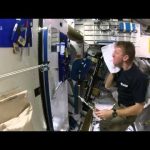
    Ever wondered what happens inside the International Space Station during a reboost? ESA astronaut Tim Peake filmed inside during last week’s firing of the Progress thrusters.

    Even at 400 km, there are still enough molecules of the atmosphere to create some ‘atmospheric drag’, which causes the Station to drop by about 2 km a month. Because of this we need to raise the Station’s orbit every so often. On 17 February the engines of the Progress M-29M spacecraft that is docked to the aft port of the Zvezda module were fired for 11 minutes.

    The burn primarily focused on raising the Station’s perigee, making the orbit more circular.

    Pre-reboost: 398.2 x 407.4 km – inclination 51.64° – Period: 92.62min
    Post-reboost: 402.1 x 406.9 km – inclination 51.64° – Period: 92.66min

    More about the Principia mission: http://www.esa.int/principia

  • ExoMars 2016 arriving at Mars

    ExoMars 2016 arriving at Mars

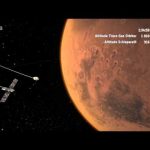
    The paths of the ExoMars 2016 Trace Gas Orbiter (TGO) and the Schiaparelli entry, descent and landing demonstrator module arriving at Mars on 19 October (right and left, respectively). The counter begins at the start of a critical engine burn that TGO must conduct in order to enter Mars orbit. The altitude above Mars is also indicated, showing the arrival of Schiaparelli on the surface and the subsequent trajectory of TGO. The orbiter’s initial 4-day orbit will be about 250 x 100 000 km. Starting in December 2016, the spacecraft will perform a series of aerobraking manoeuvres to steadily lower it into a circular, 400 km orbit (not shown here).

    More about the ExoMars mission:
    http://www.esa.int/exomars

    Credits: ESA/ATG medialab

  • ExoMars 2016 journey to Mars

    ExoMars 2016 journey to Mars

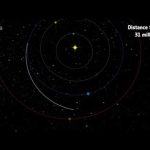
    The journey that the ExoMars 2016 spacecraft will take from Earth to Mars. ‘Distance to Mars’ is the straight-line distance between the spacecraft and Mars, and not the actual distance that the spacecraft will travel.

    The mission is scheduled for launch in the 14–25 March window. The Trace Gas Orbiter and the Schiaparelli entry, descent and landing demonstrator module will separate on 16 October. Schiaparelli is set to enter the martian atmosphere on 19 October, while TGO will enter orbit around Mars.

    More about the ExoMars mission:
    http://www.esa.int/exomars

    Credits: ESA/ATG medialab

  • ExoMars 2016: launch to Mars

    ExoMars 2016: launch to Mars

    Animation visualising milestones during the launch of the ExoMars 2016 mission and its cruise to Mars. The mission comprises the Trace Gas Orbiter and an entry, descent and landing demonstrator module, Schiaparelli, which are scheduled to be launched on a four-stage Proton-M/Breeze-M rocket from Baikonur during the 14–25 March 2016 window.

    About ten-and-a-half hours after launch, the spacecraft will separate from the rocket and deploy its solar wings. Two weeks later, its high-gain antenna will be deployed. After a seven-month cruise to Mars, Schiaparelli will separate from TGO on 16 October. Three days later it will enter the martian atmosphere, while TGO begins its entry into Mars orbit.

  • SpaceShip EAC heading for the Moon

    SpaceShip EAC heading for the Moon

    ESA’s European Astronaut Centre (EAC) in Cologne, Germany, trains and prepares astronauts for their missions into space. This video details how EAC is preparing astronauts and technology for missions to the Moon as part of their SpaceShip EAC programme.

  • Our NASA is strong on This Week @NASA – February 12, 2016

    Our NASA is strong on This Week @NASA – February 12, 2016

    During his Feb. 9 State of NASA speech at Langley Research Center in Hampton, Va, Administrator Charles Bolden characterized President Obama’s $19 billion Fiscal Year 2017 budget proposal for NASA as a vote of confidence and an indication of the agency’s strength. Bolden noted that the investments in the FY2017 budget proposal will empower NASA to continue to work with partners both in and out of government to develop the technologies that drive exploration – to build an even stronger future in which NASA continues reaching for new heights for the benefit of all humankind. Also, Space station one-year crew update, Increased land water slows sea level rise, Gravitational waves detected, and more!

  • Philae facing eternal hibernation

    Philae facing eternal hibernation

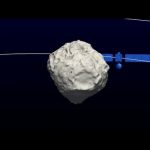
    15 months after Philae made its historic landing on a comet, its legacy is enormous even if Rosetta’s lander is facing eternal hibernation.

    Mission teams are now looking ahead to the grand finale: making a controlled impact of the Rosetta orbiter on the comet next September.Rosetta arrived at Comet 67P/Churyumov–Gerasimenko on 6 August 2014 and Philae was delivered to the surface on 12 November. After touching down Philae bounced several times and completed 80% of its planned first science sequence before falling into hibernation. 

    A contact was made with the lander on 13 June and intermittent contacts were made up to 9 July. However the results of Philae mission are unique and complement all the science harvested by the orbiter Rosetta who is continuing its quest before being sent directly to the surface of 69P late September.

  • Sentinels for Copernicus

    Sentinels for Copernicus

    On 16 February 2016 at 18:57 CET (17:57 GMT), Sentinel-3A will be launched on top of a Rockot from the Russian Plesetsk Cosmodrome.

    This satellite will be the third Sentinel for the Copernicus Programme. Copernicus is the most ambitious Earth Observation programme to date. It will provide accurate, timely and easily accessible information to improve the management of the environment, understand and mitigate the effects of climate change and ensure civil security. This initiative is headed by the European Commission (EC) in partnership with the European Space Agency.

    ESA coordinates the delivery of data and is developing a new family of satellites, the Sentinels, specifically for the operational needs of Copernicus. The EC, acting on behalf of the European Union, is responsible for the overall initiative, setting requirements and managing the services. These services fall into six main categories: land management, the marine environment, atmosphere, emergency response, security and climate change.

    This video explains what the Sentinels represent within Copernicus.

  • Administrator Bolden Discusses the ‘State of NASA’

    Administrator Bolden Discusses the ‘State of NASA’

    On Tuesday, Feb. 9, as part of the rollout of President Barack Obama’s Fiscal Year 2017 budget proposal for NASA, Administrator Charles Bolden delivered a “State of NASA” speech at the agency’s Langley Research Center, in Hampton, Va. During the speech, Bolden highlighted key work and advancements by the agency during the last few years and discussed some of the future goals the agency continues to work toward, including exploration of Mars and elsewhere in our solar system and beyond, aeronautics research, development of technology to enable humans to explore deep space, and research aboard the International Space Station for the benefit of life on Earth and for astronauts on long duration space missions.

  • Welcome to NASA

    Welcome to NASA

    A visual highlight of the people involved in the innovative technologies developed and under development, as well as the scientific discoveries made as NASA explores and studies our changing Earth and our universe, and continues to make advancements in green, next-generation air travel.

  • Sentinel-3: Technology and heritage

    Sentinel-3: Technology and heritage

    ESA’s new Earth observation satellite Sentinel-3A will soon be launched into orbit. Once more the European Space Agency proves it is on the forefront of monitoring our environment and the climate.

    Using state of the art and proven technology the Sentinel-3 satellite is a fabulous piece of engineering set to play a key role in the European Commission’s Copernicus programme. However this technological piece of craftsmanship is only possible as the result of earlier scientific missions such as ERS, Envisat and Cryosat, with Sentinel-3 building on their heritage.

    More about Sentinel-3:
    http://www.esa.int/sentinel-3

  • Space scrambled eggs

    Space scrambled eggs

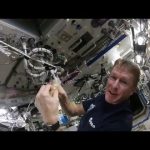
    ESA astronaut Tim Peake prepares his breakfast on the International Space Station: rehydrated scrambled eggs. Just add hot water and wait.

    Tim Peake is spending six months in space for his Principia mission.

    More about Principia: www.esa.int/Principia
    Follow Tim Peake via timpeake.esa.int

  • Earth from Space: Sierra Leone River Estuary

    Earth from Space: Sierra Leone River Estuary

    Earth from Space is presented by Kelsea Brennan-Wessels from the ESA Web-TV virtual studios. Ahead of World Wetlands Day, a wetland of international importance in Sierra Leone is featured in the one hundred seventy-first edition.

    See also http://www.esa.int/spaceinimages/Images/2016/01/Sierra_Leone_River_Estuary to download the image.

  • NASA Day of Remembrance

    NASA Day of Remembrance

    January 28th 2016 marks the 30th anniversary of the loss of Space Shuttle Challenger. NASA Day of Remembrance commemorates the crews of Apollo 1, Challenger, and Columbia; along with all the members of its family who lost their lives while furthering the cause of exploration and discovery.

  • LISA Pathfinder prepares for liftoff (4K timelapse replay)

    LISA Pathfinder prepares for liftoff (4K timelapse replay)

    This timelapse video shows the preparations for LISA Pathfinder’s launch at Europe’s Spaceport in Kourou, French Guiana. The video spans three weeks, starting on 12 November 2015 with the completed and fuelled spacecraft and ending on the 3 December launch day.

    Over this period, the spacecraft was attached to the payload adaptor of the Vega launcher, encapsulated within the half-shells of the rocket fairing, transferred to the launcher assembly area, and installed on top of Vega inside the mobile gantry, which was rolled back shortly before liftoff.

    LISA Pathfinder will test key technologies for space-based observation of gravitational waves – ripples in the fabric of spacetime that are predicted by Albert Einstein’s general theory of relativity.

    Credit/Copyrights: Directed by Stephane Corvaja, ESA; Edited by Manuel Pedoussaut, Zetapress; Music: Hubrid-Gravity

  • ESA Euronews: O gigantesco mundo dos nanossatélites

    ESA Euronews: O gigantesco mundo dos nanossatélites

    Os nanossatélites são pequenos cubos que prometem determinar o futuro da exploração espacial, desde as incursões a Marte até à observação de asteróides potencialmente perigosos para a Terra. No Centro Espacial Mektory de Tallin, na Estónia, um grupo de estudantes está precisamente a construir um destes concentrados de tecnologia.

    Também conhecidos como cubesats, os nanossatélites abrem um sem número de possibilidades na aventura espacial. Daí que o seu desenvolvimento desperte o interesse tanto das grandes agências espaciais, como das universidades, como esta na capital estoniana, que integra o centro de inovação Mektory.

  • Tim Peake’s space shower

    Tim Peake’s space shower

    ESA astronaut Tim Peake washes on the International Space Station during his six-month Principia mission.

    There is no shower on the Space Station so astronauts use wet towels to keep clean. The towels are packed as waste in returning cargo vessels.

    More about Principia: http://www.esa.int/Principia
    Follow Tim on social media via: http://timpeake.esa.int

  • Saturday cleaning day on Space Station

    Saturday cleaning day on Space Station

    ESA astronaut Tim Peake shows the cleaning duties on the International Space Station. Every Saturday all astronauts living in the weightless research laboratory spend the morning cleaning.

    Tim’s six-month mission in space is called Principia: www.esa.int/Principia

    Follow Tim via: http://timpeake.esa.int

  • Tim Peake brushing his teeth in space

    Tim Peake brushing his teeth in space

    ESA astronaut Tim Peake brushing his teeth in space during his six-month Principia mission on the International Space Station. A morning and evening ritual even astronauts cannot escape.

    More about Principia: www.esa.int/Principia

    Follow Tim Peake: timpeake.esa.int

  • ESA Euronews: CubeSat, a satellite in a shoe box

    ESA Euronews: CubeSat, a satellite in a shoe box

    Tiny satellites the size of a small cube, jam-packed with the most advanced nanotechnologies: is this the future of Space missions?

    To find out, ESA Euronews went to Tallin, Estonia, where students at the Mektory Space Centre are preparing the launch of their first nanosatellite.

    Nanosatellites – tiny cubes of 10cm x 10cm x 10cm, full of nanotechnologies — are going to be more and more important in the future of space exploration, from Mars missions, to the surveillance of asteroids, which could potentially be dangerous for our planet.

    Also known as ‘CubeSats’ these tiny satellites open up a whole world of possibilities for those who want to explore space.

    This video is also available in the following languages:
    French: https://www.youtube.com/watch?v=RFVJ0ZGW2nI
    German: https://www.youtube.com/watch?v=rOdjO5bhoiU
    Italian: https://www.youtube.com/watch?v=5cP0baTNDYo
    Spanish: https://www.youtube.com/watch?v=NlZSt0WfMTo
    Portuguese: https://www.youtube.com/watch?v=6tM5AXZtY18
    Greek: https://www.youtube.com/watch?v=WIIVLxcOlT0
    Hungarian: https://www.youtube.com/watch?v=XAlfhpzadWc

  • ESA Euronews: De mi az a nanoműhold?

    ESA Euronews: De mi az a nanoműhold?

    A nanoműholdak egyre fontosabbak lesznek az űrkutatásban, a Mars megfigyelésétől a Földre veszélyt jelentő aszteroidák felkutatásáig. A bennük rejlő potenciált mindenki igyekszik kiaknázni, a nagy űrügynökségektől a tudományos diákkörökig. Ez a helyzet a Mektory Űrközpontban, az észt főváros, Talinn műszaki egyetemén, ahol a diákok az első nanoműholdjuk Föld körüli pályára állítását készítik elő.

    – Azt hittem, soha nem fogok műholdat építeni, hiszen ilyesmit csak a NASA-nál csinálnak. Most meg műholdat építek az egyetemi laborban – hitetlenkedett az Euronewsnak Marta Hang, az űrközpont programasszisztense.

    A Mektory nanoműhold-programja egy nemzetközi egyetemi kezdeményezés, amelyben az oktatók és a hallgatók együttműködnek az űrkutatásban érdekelt és más technológiai cégekkel. A cél az, hogy felkészítsék a hallgatókat arra, hogy az űriparban helyezkedjenek el. A csapat jelenleg az első űrküldetését tervezi.

    – Egy kockaműholdat fejlesztünk, amely egy egységből áll, és távérzékelési célokat szolgál, vagyis képeket készít majd a Földről – magyarázza a Mektory Űrközpont igazgatója, Mart Vihmand.

  • Space debris story (2013)

    Space debris story (2013)

    The story of space debris highlighting how the unintended consequences of intense spaceflight activity during the past 60 years has resulted in a growing population of debris objects that pose hazards to safe space navigation. In 2013, experts estimate that 29 000 objects larger than 10 cm were orbiting Earth.

    The video also highlights the current state of debris mitigation measures and presents several concepts for removing defunct satellites from economically vital orbits now being studied by space agencies and industry across Europe.

    This video was produced for the 6th European Conference on Space Debris, 22-25 April 2013.

  • Earth from Space: Colours of the Persian Gulf

    Earth from Space: Colours of the Persian Gulf

    Earth from Space is presented by Malì Cecere from the ESA Web-TV virtual studios. The one hundred seventieth edition features a Sentinel-2 satellite image of Bahrain and surroundings

    See also http://www.esa.int/spaceinimages/Images/2016/01/Colours_of_the_Persian_Gulf to download the image.

  • A New Planet in our Solar System? NASA Takes a Look

    A New Planet in our Solar System? NASA Takes a Look

    NASA’s Director of Planetary Science, Jim Green, discusses the Jan. 20 Astronomical Journal science paper that points to the possibility of a new “Planet 9” in our solar system beyond Pluto, examining the scientific process and inviting you to have a front row seat to our exploration of the solar system.

  • Tim’s spacewalk highlights

    Tim’s spacewalk highlights

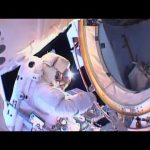
    On 15 January ESA astronaut Tim Peake and NASA astronaut Tim Kopra stepped outside of the International Space Station to replace a failed power regulator and install cabling.

    The meticulously planned and executed sortie was stopped early after Tim Kopra reported a small amount of water building up in his helmet. The two Tims worked in close cooperation with each other to return to the Space Station, with NASA commander Scott Kelly and cosmonaut Sergei Volkov waiting inside to help them out of their suits.

    They left the confines of the weightless research laboratory at 12:48 GMT after their five-hour preparations to don their spacesuits and purge their bodies of nitrogen to avoid decompression sickness.

    Tim Kopra went first to the far end of the Station’s starboard truss, with Tim Peake following with the replacement Sequential Shunt Unit. Swapping the suitcase-sized box was a relatively simple task but one that needed to be done safely while the clock was ticking.

    With their main task complete, the Tims separated for individual jobs for the remainder of their time outside but was told by Mission Control to return to the airlock earlier than planned.

    The 4 hour 43 minute spacewalk was the first for a British astronaut. The spacewalk officially ended at 17:31 GMT when the Tims began the repressurisation of the Quest airlock.