Category: Astronomie

  • ESA Euronews: Gol via satellite

    ESA Euronews: Gol via satellite

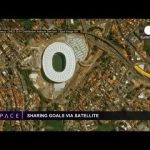
    I Mondiali di calcio sono in corso e milioni le immagini dal Brasile arriveranno in tutto il mondo grazie alla tecnologia spaziale. Migliaia di fan vi assisteranno personalmente, ma si stima che più di 3,2 miliardi di persone (ovvero quasi la metà della popolazione del pianeta) ne seguiranno almeno una parte in tv. La Coppa del Mondo viene diffusa con quella che gli operatori satellitari come SES, qui in Lussemburgo, chiamano trasmissione per ‘uso occasionale’. Si tratta della banda supplementare adibita alla copertura di eventi speciali in diretta. Ed è uno spazio molto affollato. “Indipendentemente da quale sia la tecnologia usata nelle case per ricevere la tv” afferma Xavier Lobao, dell’ESA “si utilizzano i satelliti.”

    Credits: ESA/Euronews
  • ESA Euronews: Partilhando golos via satélite

    ESA Euronews: Partilhando golos via satélite

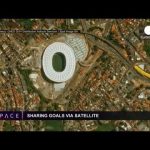
    Com a chegada do Mundial o planeta irá recorrer à tecnologia espacial para reproduzir os acontecimentos em direto, a partir do Brasil. Milhares de adeptos testemunharão o evento ao vivo, mas são muitos mais os que irão assistir a tudo através da televisão. Estima-se que mais de 3,2 mil milhões de pessoas acompanhem a cobertura televisiva – quase metade da população do planeta terra. O Campeonato do Mundo é transmitido através do que os operadores de satélite chamam de transmissão de “uso ocasional.” É esse o nome para largura de banda alocada juntamente com transmissões regulares para cobrir eventos especiais em direto. O período de duração do Mundial será atarefado. “Independentemente da tecnologia usada nas casas para receber sinal de televisão, os satélites serão utilizados”, sublinha Xavier Lobao, chefe de Projetos de Telecomunicações Futuras na Agência Espacial Europeia.

    Credits: ESA/Euronews
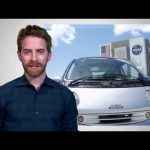
  • NASA Spinoff with Seth Green

    NASA Spinoff with Seth Green

    Actor Seth Green discusses products and technology derived from NASA research, often called “spinoffs”, that are being used to improve life on Earth.
    A spinoff is a commercialized product that incorporates NASA technology or NASA “know how” and benefits the public.
    Spinoffs promote commercial activity, encourages economic growth, and stimulates innovation in business and commerce.

    www.spinoff.nasa.gov

  • Earth from Space: Mount Kenya

    Earth from Space: Mount Kenya

    Earth from Space is presented by Kelsea Brennan-Wessels from the ESA Web-TV virtual studios. Explore Mount Kenya and the surrounding national park in the one-hundred-eighth edition.

    See also http://www.esa.int/spaceinimages/Images/2014/06/Mount_Kenya to download the image.

  • NASA astronaut discusses life in space

    NASA astronaut discusses life in space

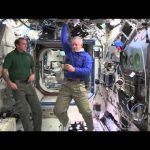
    Aboard the International Space Station, Expedition 40 Commander Steve Swanson of NASA talked with the CBS Radio Network and the ABC Digital Network about the daily activities he’s involved in on the orbital laboratory, during a pair of in-flight interviews May 27. Swanson and his two Russian crewmates will welcome three new crew mates on May 29.

  • This Week at NASA

    This Week at NASA

    The Morpheus prototype lander took to the skies above the Kennedy Space Center to test a suite of landing and hazard avoidance technology and self-navigate to a safe landing. Over in Hawaii, NASA’s Low-Density Supersonic Decelerator, a rocket-powered, saucer-shaped test vehicle, has completed final assembly and will be flown in an experimental flight test is planned for June. And, NASA is moving ahead with construction of the lander for the InSight mission to Mars where it will probe the Martian sub-surface. An ISS Science Forum took place Wednesday at Johnson Space Center, a Spacex Dragon Cargo craft departed the space station while a new expedition crew trains in Russia and students launch rockets that reach nearly 20,000 feet this week on This Week at NASA!

  • ESA Euronews: Echoes from the Big Bang

    ESA Euronews: Echoes from the Big Bang

    Scientists are getting closer than ever to understanding the origins of the Universe. For the first time, they have glimpsed behind the veil that covers the ‘Big Bang’ with the announcement that the Background Imaging of Cosmic Extragalactic Polarisation — BICEP2 — experiment at the South Pole had spotted the footprints of something called primordial gravitational waves. These waves may be a sign that a theory known as cosmic inflation can be confirmed. For those studying the Big Bang — the beginning of the Universe — this is big news.

    Other languages available:
    Italian: http://youtu.be/_woXIqJ1NPQ
    French: http://youtu.be/b-e5s0IVgic
    German: http://youtu.be/xiNRKQvteWI
    Spanish: http://youtu.be/VGc_moUu9Gk
    Greek: http://youtu.be/_62reqKm2n4
    Portuguese: http://youtu.be/54YS2K6PsuQ
    Hungarian: http://youtu.be/PYf_psXKsPg

  • ESA Euronews: Vadászat a Big Bang visszhangjára

    ESA Euronews: Vadászat a Big Bang visszhangjára

    Segíthetnek-e a gravitációs hullámok megérteni az univerzum kezdetét? Ez még mindig nagy kérdés, ezért izgatják annyira az elsődleges gravitációs hullámok a tudósokat.

  • ESA Euronews: Ήχοι από τη Μεγάλη Έκρηξη

    ESA Euronews: Ήχοι από τη Μεγάλη Έκρηξη

    Πλησιάζουμε περισσότερο από ποτέ στην κατανόηση της προέλευσης του σύμπαντος. Για πρώτη φορά αφαιρούμε το πέπλο που καλύπτει το Big Bang. Τι καταλαβαίνουμε λοιπόν για τη γέννηση του κόσμου.

  • NASA Administrator Charles Bolden Discusses Space Station Science

    NASA Administrator Charles Bolden Discusses Space Station Science

    NASA Administrator Bolden discusses the unique science accomplishments of the International Space Station (ISS) and plans for the future.

  • NASA Center Renamed on This Week @NASA

    NASA Center Renamed on This Week @NASA

    Two giants of aerospace history were honored at a May 13 ceremony to celebrate the renaming of Dryden Flight Research Center to Armstrong Flight Research Center, after the late Neil Armstrong and the naming of the center’s aeronautical test range after Hugh Dryden. Armstrong was the first person to set foot on the moon and a former research test pilot at the center and Dryden served as NASA’s first deputy administrator. Also, Space Station Crews on the Move, Asteroid Mission Gear Tested, Unstoppable Glacier Melt, Exploring Earth’s Magnetic Fields, Shrinking Great Red Spot, Helicopter Drop Test, Technology Transfer University and more!
  • Venus Express aerobraking

    Venus Express aerobraking

    Visualisation of the Venus Express aerobraking manoeuvre, which will see the spacecraft orbiting Venus at an altitude of around 130 km from 18 June to 11 July. In the month before, the altitude will gradually be reduced from around 200 km to 130 km. If the spacecraft survives and fuel permits, the elevation of the orbit will be raised back up to approximately 450 km, allowing operations to continue for a further few months. Eventually, however, the spacecraft will plunge back into the atmosphere and the mission will end.

    Credit: ESA–C.Carreau

  • Rosetta puts on the brakes

    Rosetta puts on the brakes

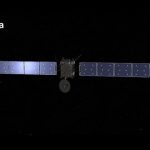
    Rosetta is about to put on the brakes to ensure that it is on target for comet 67P/Churyumov-Gerasimenko.

    This video explains the crucial orbit correction manoeuvres that are required to slow down Rosetta’s speed, relative to the comet, from 750 metres per second to just one metre per second between 21 May and 5 August. By then, nine thruster burns (including one test burn in early May) will have reduced the distance between them from one million kms to just under 200 kms.

    We also see the first images of the comet from the spacecraft’s OSIRIS camera (Optical, Spectroscopic and Infrared Remote Imaging System), taken between 24 March and 4 May 2014. As the spacecraft gets closer to the comet, further images will improve the orbital corrections and provide more details about the comet’s shape, size and rotation.

    MIRO, built by an international team for the European Space Agency, will start taking measurements from late May onwards and will measure gases released from the comet as it approaches the Sun.

  • 50 years serving European cooperation and innovation

    50 years serving European cooperation and innovation

    2014 is a special year: the space community is celebrating the anniversary of the construction of Europe as a space power and 50 years of unique achievements in space.

    It started with the creation of two entities, entering into force in 1964, the European Launcher Development Organisation (ELDO) and the European Space Research Organisation (ESRO).

    A little more than a decade later, the European Space Agency (ESA) would be established, replacing these two organisations and since then serving European cooperation and innovation.

    This video recalls the importance of Europe efforts in space and its successes with now a guaranteed and independent access to space and several programs covering all possible areas from Science, to Earth Observation, Human Spaceflight, Telecom and Navigation.

  • NASA’s Fleet of Satellites Help Understand Climate Change on This Week @NASA

    NASA’s Fleet of Satellites Help Understand Climate Change on This Week @NASA

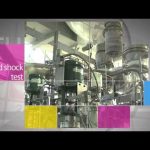
    The third U.S. National Climate Assessment was released which took observations from NASA’s fleet of satellites to help understand climate change in the United States. Also, NASA’s Orbiting Carbon Observatory-2 spacecraft arrived at California’s Vandenberg Air Force Base to begin final preparations for a scheduled July 1 launch. In Florida, the remaining flight hardware for the Delta IV rocket that will launch NASA’s Orion spacecraft on Exploration Flight Test-1 in December arrived at Port Canaveral. At the Stennis Space Center, a cold-shock test for the RS-25 engine that will help power NASA’s new Space Launch System rocket was completed. The Chandra X-ray Observatory found new stars, simulated space dust was created on earth, a new ISS crew trains in Russia, Shannon Lucid and Jerry Ross are inducted into the Astronaut Hall of Fame and NASA recognizes the small business community for helping the agency work toward achieving its goals!

  • NASA Space Station Crew Discusses Life in Space with Idaho Students and Educators

    NASA Space Station Crew Discusses Life in Space with Idaho Students and Educators

    Aboard the International Space Station, Expedition 39 Flight Engineers Rick Mastracchio and Steve Swanson of NASA discussed their daily work and research on the orbital laboratory with students at Boise State University in Idaho and educators, including former educator-astronaut Barbara Morgan, during an in-flight educational event May 6. Mastracchio is in the final week of his six-month mission on the station, heading for a landing in his Soyuz return craft in Kazakhstan on May 13, U.S. time. Swanson, who will become station commander on May 12, will remain aboard the complex until mid-September.

  • A Star Wars Day Message from NASA

    A Star Wars Day Message from NASA

    In celebration of Star Wars Day, NASA flight engineer Rick Mastracchio hopes to deliver a special message from the International Space Station. Little does he know, however, that the Empire plans to jam his transmissions. Thankfully, R2-D2 is on the case.

  • Galileo works, and works well

    Galileo works, and works well

    How far has Europe’s Galileo satellite navigation system progressed?

    Watch this video summary of Galileo’s In-Orbit Validation phase milestones to find out, and learn what happens next.

  • Earth from Space: Desert bullseye

    Earth from Space: Desert bullseye

    Earth from Space is presented by Kelsea Brennan-Wessels from the ESA Web-TV virtual studios. Discover a giant geological wonder in the Sahara Desert in the one-hundred-third edition.

    See also http://www.esa.int/spaceinimages/Images/2014/05/Richat_structure_Mauritania to download the image.

  • Exploration forum showcases NASA’s Human Path to Mars

    Exploration forum showcases NASA’s Human Path to Mars

    An April 29 exploration forum aired on NASA Television from NASA headquarters, featured Administrator Charles Bolden and other agency leadership showcasing NASA’s human exploration path to Mars. NASA is developing the capabilities needed to send astronauts to an asteroid by 2025 and Mars in the 2030s.

  • Proba-2 views partial eclipse

    Proba-2 views partial eclipse

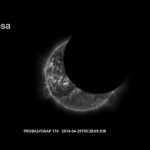
    ESA’s Proba-2 Sun-watcher saw Australia’s 29 April 2014 partial solar eclipse from orbit – footage captured by the Royal Observatory of Belgium.

  • ESA Euronews: Europe’s 50 year space odyssey

    ESA Euronews: Europe’s 50 year space odyssey

    In this edition of Space we look back at the past 50 years of space in Europe; five decades of discovery, drama and innovation that have had a profound impact on how we see ourselves and our planet. Historian John Krige gives his insight on how Europe’s space sector has evolved, while veteran space scientists recount their experiences in major missions and launches.

  • ESA Euronews: Közös űrprogram – amikor Európa működik

    ESA Euronews: Közös űrprogram – amikor Európa működik

    Idén ötven éve indult el a közös európai űrprogram. A nehezen összekovácsolt tudományos együttműködés az egyik remek példa arra, amikor Európa működik.

    Ötven évvel ezelőtt a világ már az űrverseny lázában égett. A Szputnyik elküldte az első jeleket, Jurij Gagarin már járt az űrben, az Egyesült Államok és a Szovjetunió vetélkedése hajtotta a tudományt előre.

    *Azt hittük, vége a világnak*

    – A világ elképesztően törékeny, veszélyes hely volt – jellemezte az időszakot John Krige, a Georgia Institute of Technology történésze. – A szuperhatalmak vetélkedése talán akkor volt a csúcson, a kubai rakétaválság idején. Én fiatalember voltam, és egész biztosan azt gondoltam, hogy az lesz a világ vége. Szerintem nem voltam ezzel egyedül.

    Ebben a feszült helyzetben lépett fel két európai fizikus, az olasz Eduardo Arnaldi és a francia Pierre Auger, akik szentül hittek abban, hogy a rakétáknak és a műholdaknak a tudományt kell szolgálniuk, nem a kardcsörtetést.

    – Azok az országok, amelyek a közös európai űrprogramba belevágtak, húsz évvel korábban gyilkos háborút vívtak egymással – magyarázta Roger-Maurice Bonnet, az Európai Űrügynökség (ESA) volt tudományos igazgatója. – Ezek az országok összegyűltek, és úgy döntöttek, olyan közös nyelvet fognak használni, amelyen nem lehet őket egymásra uszítani – a tudomány nyelvét.

  • New NASA Cargo Launches to Space Station Aboard SpaceX-3 Mission

    New NASA Cargo Launches to Space Station Aboard SpaceX-3 Mission

    Approximately 2.4 tons of NASA science investigations and cargo were launched to the International Space Station aboard SpaceX’s Dragon spacecraft. The launch aboard the company’s Falcon 9 rocket took place from Space Launch Complex 40 at Cape Canaveral Air Force Station in Florida on Monday, April 18 at 3:25 p.m. EDT. Dragon’s cargo will support more than 150 experiments that will be conducted during space station Expeditions 39 and 40. The spacecraft will be grappled at 7:11 a.m. on Wednesday, April 16 by Expedition 39 Commander Koichi Wakata of the Japan Aerospace Exploration Agency. Dragon is scheduled to depart the space station May 18 for a splashdown in the Pacific Ocean west of Baja California, bringing with it about 3,500 pounds of science and research, hardware, crew supplies and spacewalk tools from the space station.

  • The Dragon Takes Flight on This Week @NASA

    The Dragon Takes Flight on This Week @NASA

    SpaceX-3 launches to the International Space Station, Kepler finds a Earth-sized planet and LADEE ends its mission on the lunar surface. These stories and more on this week’s, This Week @NASA

  • Plants in space

    Plants in space

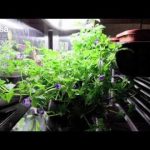
    Growing plants for food was a significant step in the history of mankind. Growing plants for food in space and on other planets will be necessary for exploration of our Universe.

    Javier Medina from the Spanish research council CSIC explains the attraction of plants for human exploration to supply oxygen and food.

    He introduces current and future experiments on the International Space Station into plants and explains the logic of these greenhouses in space.

    More about plant experiments on the International Space Station:
    http://www.esa.int/Our_Activities/Human_Spaceflight/Research/Plants

  • Onboard camera view: launch and separation of Sentinel-1A

    Onboard camera view: launch and separation of Sentinel-1A

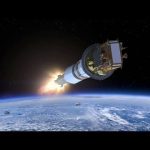
    Cameras mounted on the Soyuz Fregat upper stage that sent Sentinel-1A into space on 3 April 2014 captured this superb footage. It shows liftoff, the various stages in the rocket’s ascent and the Sentinel-1A satellite being released from the Fregat upper stage to start its life in orbit around Earth.

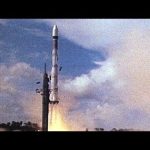
    The 2.3 tonne satellite lifted off on a Soyuz rocket from Europe’s Spaceport in Kourou, French Guiana at 21:02 GMT (23:02 CEST). The first stage separated 118 sec later, followed by the fairing (209 sec), stage 2 (287 sec) and the upper assembly (526 sec). After a 617 sec burn, the Fregat upper stage delivered Sentinel into a Sun-synchronous orbit at 693 km altitude. The satellite separated from the upper stage 23 min 24 sec after liftoff.

    Sentinel-1 is the first in the family of satellites for Europe’s Copernicus programme. It carries an advanced radar to scan Earth’s surface in all weather conditions and regardless of whether it is day or night. This new mission will be used to care for many aspects of our environment, from detecting and tracking oil spills and mapping sea ice to monitoring movement in land surfaces and mapping changes in the way land is used.

  • ESA astronauts training in Japan

    ESA astronauts training in Japan

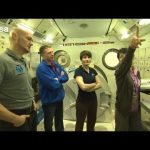
    ESA astronauts have to train with all International Space Station partners: we often see images of them training at Star City in Russia or in Houston, in the US, but they also have to go to Japan during the preparations for their mission.

    ESA astronauts Alexander Gerst and Samantha Cristoforetti were recently in Tsukuba, at the Japanese Aerospace Exploration Centre.

  • Sentinel-1A separation in space

    Sentinel-1A separation in space

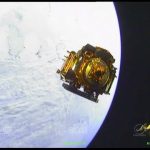
    This superb footage was acquired by cameras on the Soyuz Fregat upper stage that released Sentinel-1A into orbit on 3 April 2014. It shows the Sentinel-1A satellite separating from the Fregat to start its life in orbit around Earth.

    The 2.3 tonne satellite lifted off on a Soyuz rocket from Europe’s Spaceport in Kourou, French Guiana at 21:02 GMT (23:02 CEST). The first stage separated 118 sec later, followed by the fairing (209 sec), stage 2 (287 sec) and the upper assembly (526 sec). After a 617 sec burn, the Fregat upper stage delivered Sentinel into a Sun-synchronous orbit at 693 km altitude. The satellite separated from the upper stage 23 min 24 sec after liftoff.

    Sentinel-1 is the first in the family of satellites for Europe’s Copernicus programme. It carries an advanced radar to scan Earth’s surface in all weather conditions and regardless of whether it is day or night. This new mission will be used to care for many aspects of our environment, from detecting and tracking oil spills and mapping sea ice to monitoring movement in land surfaces and mapping changes in the way land is used.

    Credits:
    Arianespace/ESA/Roscosmos

  • Sentinel-1 soundtrack

    Sentinel-1 soundtrack

    Sentinel-1A, the first satellite for Europe’s environmental monitoring Copernicus programme, is being launched from Europe’s Spaceport in Kourou, French Guiana on 3 April 2014. It will be lofted into orbit on a Soyuz rocket.

    This animation shows some of the critical stages delivering Sentinel-1 into orbit around Earth. After separating from the Fregat upper stage, the satellite takes around 10 hours to deploy its 12 m-long radar and two 10 m-long solar wings. This deployment sequence is unique, choreographed to ensure that both deploy in the safest possible way. This approach also allows power from the wings to be available as soon as possible so that the satellite is independent.

    Delivering vital information for numerous operational services, from monitoring ice in the polar oceans to tracking land subsidence, Sentinel-1 will play a key role in the largest civil Earth-observation programme ever conceived.

    The animation is set to a track called Sentinel by Mike Oldfield, a world-renowned musician and big space fan.

    Credits:
    Graphics: ESA/ATG medialab; Music written by M. Oldfield/copyright EMI Virgin

  • Why we need radar satellites

    Why we need radar satellites

    The launch of the first Sentinel-1 satellite marks a new paradigm in Earth observation focusing on operational missions to support users for decades to come. This first satellite for Europe’s environmental monitoring Copernicus programme carries an advanced radar to image Earth’s surface no matter what the weather or if it is day or night. Olaf Trieschmann from the European Maritime Safety Agency talks about the need for radar satellites and how data from Sentinel-1 will be used to monitor oil spills and for maritime surveillance. ESA’s Josef Aschbacher talks about how the wide range of services offered through Copernicus will make a step change in the way we manage the environment.

    Credit: ESA/EMSA/European Parliament/DLR/ATG medialab/Funnelweb

  • Sentinel-1: Radar mission

    Sentinel-1: Radar mission

    In early April, Sentinel-1A will be launched from Europe’s Spaceport in French Guiana on a Soyuz launcher. The radar mission is the first of the Copernicus programme, providing an all-weather, day-and-night supply of imagery for Copernicus user services.

  • Copernicus Monitoring the Earth

    Copernicus Monitoring the Earth

    Accurate information about the environmental is crucial. It helps to understand how our planet and climate are changing, the role human activity play in these changes and how this affects our daily lives. Responding to these challenges, the EU and ESA have developed an Earth observation programme called Copernicus, formerly known as Global Monitoring for Environment and Security, – a programme that becomes operational with the launch of Sentinel-1A.

  • Bolden Testifies About the Budget on This Week @NASA

    Bolden Testifies About the Budget on This Week @NASA

    NASA Administrator Charlie Bolden responded to questions at a Congressional hearing about the agency’s $17.5 billion FY2015 budget proposal, which affirms the bi-partisan plan agreed to by Congress and the President for NASA to carry out an ambitious deep space exploration program. One that includes sending humans to an asteroid and Mars, extending use of the International Space Station to at least 2024, developing the Orion spacecraft and Space Launch System rocket and fostering commercial partnerships. Also, Asteroid Initiative Opportunities Forum, Nyberg and Parmitano in DC, Welcome to space! GPM’s first light, Exploration Design Challenge, Composite cryo tank delivered and Angry Nerd robot!

  • NASA Social with NASA Astronaut Karen Nyberg

    NASA Social with NASA Astronaut Karen Nyberg

    NASA Astronaut Karen Nyberg spoke with social media followers and their guests at NASA Headquarters after recently returning from a 5.5-month stay aboard the International Space Station. Participants learned how Karen lived and worked from space, and as an artist, quilting and drawing http://www.nasa.gov/mission_pages/station/expeditions/expedition36/nyberg_profile.html#.UyMrRPldWSo during her off time; how she managed the unique aspects and challenges of parenting off the planet http://women.nasa.gov/karen-nyberg/ ; how as an astronaut and fitness lover, she exercised while on orbit http://www.youtube.com/watch?v=_ikouWcXhd0 ; current scientific experiments underway aboard the space station; how researchers study the effects of a weightless environment on the human body to help protect astronauts for long-duration spaceflight missions in the future; and how the space station is being used to test groundbreaking, new technologies that will help astronauts safely reach new deep space destinations, including an asteroid and eventually Mars.

  • NASA Observes World Water Day

    NASA Observes World Water Day

    On March 22, NASA will observe World Water Day. While our home planet is about 71 percent water, only 3 percent of that is available as fresh water. And many people do not have access to safe and clean water sources. On a water planet like Earth, “following the water” is a massive undertaking but one that is essential to predicting the future of our climate and the availability of water resources around the globe

  • Administrator Visits Aeronautics and Space Research Facilities on This Week @NASA

    Administrator Visits Aeronautics and Space Research Facilities on This Week @NASA

    NASA Administrator Charlie Bolden visited aeronautics and space research facilities at Ames Research Center on March 17, including the laboratory for the volleyball-sized satellites called SPHERES, which are used onboard the International Space Station for space robotics and spacecraft navigation experiments. He also saw the high-fidelity airport control tower simulator called, “Future Flight Central”, used by NASA, the Federal Aviation Administration and other industry partners for joint research on next-generation air traffic management. Also, Rocket for Orion’s flight test highlighted, Future explorer celebrated at KSC, NASA’s new Chief Technologist, Coastal Flooding Challenge, Next space station crews , Hubble 24th anniversary image and more!

  • ESA Euronews: Copernicus offers a flood of disaster data

    ESA Euronews: Copernicus offers a flood of disaster data

    The recent floods in the UK saw a lot of the management of that disaster made possible by using information from satellites. But how? In this edition of Space we find out.

    Flooding affects thousands of people every year across Europe, and this year one of them just happened to be a flood scientist – Spanish Research Fellow at Reading University in England, Javier García-Pintado.

    His back garden looks onto the Thames, he explains: “This is the bank of the Thames, and this areas was severely affected by the recent flooding. Specifically in this little bit of land we are a tiny bit higher, and we didn’t have any problems, but our neighbours around here certainly did.”

    García-Pintado knew his young family was safe at home, because he could count on his expert knowledge; his day job is using satellite data to improve flood models.

    “As hydrologists we were pretty confident that this property wouldn’t have a problem, and we told our neighbours,” he told euronews.

    Not everyone has a neighbour as knowledgeable as Javier, nor were they as lucky.

    The whole area west of London was affected as England and Wales lived through their wettest winter in almost 250 years.

  • NASA Women’s History Month Profile, Karin Bozak – Glenn Research Center

    NASA Women’s History Month Profile, Karin Bozak – Glenn Research Center

    Karin Bozak is an electrical engineer in the power systems branch at the NASA Glenn Research Center. In her current job she supports the design, integration, and test of a power-processing unit for NASA’s solar electric propulsion project.

  • Training for Blue Dot

    Training for Blue Dot

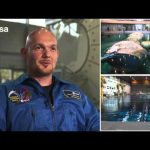
    ESA astronaut Alexander Gerst recounts his training for his Blue Dot mission to the International Space Station in May 2014. Alexander spent over four years learning science, survival techniques, new languages, robotic operations and Space Station systems to prepare for his mission.

    Alexander discusses basic training, overseeing docking of ESA’s Automated Transfer Vehicle space freighter, spacewalk training in swimming pools, the merits of US and Russian spacesuits and the scientific experiments he will conduct.

    Alexander will spend six months on the Space Station performing experiments and maintaining the weightless laboratory. He is part of Expedition 40/41 to be launched May 2014 on a Soyuz spacecraft with cosmonaut commander Maxim Surayev and NASA astronaut Reid Wiseman.