
Astronaut Chris Cassidy, from aboard the International Space Station participated in a Google+ hangout with fellow astronauts at Johnson Space Center and cast members of the new film, “Star Trek Into Darkness” to discuss how work aboard the ISS is turning science fiction into reality. The astronauts and Star Trek cast asked questions of each other and fielded questions from social media followers at several locations, including the Intrepid Museum in New York City (home of the space shuttle Enterprise) and the Smithsonian’s National Air and Space Museum in Washington, DC.
Category: Astronomie
-
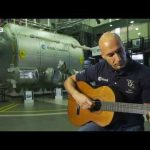
Luca Parmitano guitar solo
ESA astronaut Luca Parmitano plays one of his own compositions on guitar at ESA’s technical heart ESTEC in The Netherlands.
The song doesn’t have a name yet as playing the guitar is a way to relax for Luca after the extensive astronaut training he receives for his Volare mission to the International Space Station.
-
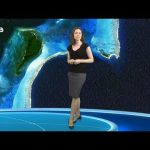
Earth from Space: Great Blue Hole
Earth from Space is presented by Kelsea Brennan-Wessels from the ESA Web-TV virtual studios.
In the sixty-third edition, we look at an underwater sinkhole in the Belize Barrier Reef.Use the following link to view and download the full size image:
http://www.esa.int/Our_Activities/Observing_the_Earth/Earth_from_Space_Great_Blue_Hole -
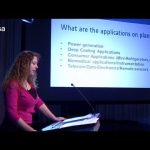
ThermoMag – 1st lecture on Thermoelectricity
Lecture from Anastasiia Prytuliak, European Space Agency postdoctoral research fellow in the Institute Laue Langevin and European Radiation Synchrotron Facility in Grenoble, France about a project called “ThermoMag”, which is devoted to the research and development of energy-harvesting thermoelectric materials.
“ThermoMag” is a project co-funded by the 7th Framework Programme of the European Commission, coordinated by the European Space Agency.
Watch the second lecture: http://www.youtube.com/watch?v=lmHSu5Yh6cE
-

NASA’s Next Budget Advances US Leadership in Space and Science
President Obama’s Fiscal Year 2014 budget request for NASA is a $17.7 billion investment in our nation’s future. NASA’s budget ensures the United States will remain the world’s leader in space exploration and scientific discovery for years to come, while making critical advances in aerospace and aeronautics to benefit the American people.
-
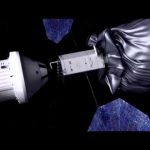
NASA Announces Asteroid Identification, Capture and Sampling Initiative
President Obama’s FY2014 budget request for NASA enables the agency to leverage capabilities in the Human Exploration and Operations, Science and Space Technology Mission Directorates to make significant yet affordable advances in our nation’s capabilities and achieve the space goals set by the Administration. NASA will improve detection and characterization of asteroids, pursue solar electric propulsion demonstration, develop a mechanism to capture an asteroid and redirect it to a stable orbit in the Earth-moon system and begin designing a mission to send humans to it using the Space Launch System rocket and Orion spacecraft.
-
NASA Celebrates Earth Month 2013: NASA Science Eyes
NASA’s fleet of science satellites and research aircraft are at work around the world 24/7 helping scientists discover just how our living planet really works. Take a look at some of the insights and don’t forget to celebrate Earth Day on April 22!
-

NASA Celebrates Earth Month 2013: The View from Orbit
Take a look at the beauty and wonder of our home planet as seen from space by astronauts on the International Space Station. And don’t forget to celebrate Earth Day on April 22!
-
CanSat video
Sequences extracted from the 2012 European competition campaign at Andøya Rocket Range in Norway.
-
Micha Schmidt and Elsa Montagnon talk about their careers at ESA
Micha Schmidt is a Spacecraft Operations Manager at ESA. In this video he talks about his involvement in the Herschel project and the many phases of development that exist in all ESA projects. Micha also talks about his fascination for space as a boy and what a great experience it has been to live in various European countries whilst working for ESA.
Elsa Montagnon is a Spacecraft Operations Manager for the BepiColombo project. Still in the development phase, BepiColombo should be launched in 2015 and hopes to provide more information about Mercury than ever before. In this video Elsa discusses her involvement in the mission, her studies and hobbies, as well as the passion people have at ESA for their projects.
-
Introduction to the International Space Apps Challenge by ESA Astronaut Samantha Cristoforetti
The International Space Apps Challenge (http://spaceappschallenge.org) is a global collaboration of space explorers, held in cities around the world on April 20-21, 2013. In the style of a hackathon, citizen experts will collaborate with space agencies and other partners to further space technology, as well as use space data to solve Earth-bound challenges. Join us on Earth Day weekend!
-
First Light for AMS on This Week @ NASA…
Researchers have published the first findings of the Alpha Magnetic Spectrometer (AMS), a particle physics detector on the International Space Station that searches for various types of unusual cosmic matter. Scientists hope that by measuring cosmic rays, AMS will provide new data about the formation of the Universe, antimatter, and evidence of the mysterious dark matter believed to make up most of the Universe. Also, MATERIALS IN SPACE, OBSERVING EARTH, FARTHEST SUPERNOVA YET, BLOWING IN THE WIND, EARTH MONTH 2013 and more!
-
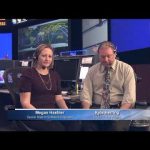
NASA Engineer Shares Software Smarts
Students on NASA’s Digital Learning Network hear from NASA’s Megan Hashier about her role as software Engineer for the International Space Station. Host: Kyle Herring.
-
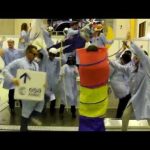
ESTEC Shake
This version of the “Harlem Shake” video, called the “ESTEC Shake”, was filmed on a real ‘electrodynamic shaker’, normally used to test spacecraft at the European Space Agency’s technical centre, ESTEC, in Noordwijk, the Netherlands. One of the major risks faced by satellites stems from the high vibrations they experience during launch. It is essential to test spacecraft and their components under similar conditions on such shakers to make sure they will survive the violent ride into space.
ESA’s Test Centre is the largest centre of its kind in Europe, and one of the largest in the world.The video was filmed by ESTEC volunteers, in their own time, at zero cost, while the shaker unit was being reconfigured. Strict safety, security and cleanroom procedures were followed during filming.
More about ESA’s ESTEC Test Centre
http://www.esa.int/Our_Activities/Space_Engineering/About_ESTEC_Test_Centre2More about the “Shaker”
http://www.esa.int/Our_Activities/Space_Engineering/Electrodynamic_shakersMusic: “Harlem Shake”, by Baauer (Mad Decent), www.maddecent.com
-
All Aboard for Cassidy and Crewmates on This Week @NASA
NASA Flight Engineer Chris Cassidy and his Expedition 35/36 crewmates, Soyuz Commander Pavel Vinogradov, and Russian Flight Engineer Alexander Misurkin, are now safely aboard the International Space Station, where they’ll conduct scientific research through the summer. Also, Dragon’s back; Heatshield Hits Beantown; Stir Welding for SLS; Cassini Hot Spots; Hangout En Espanol; and more!
-
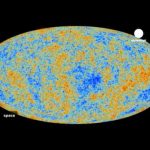
ESA Euronews: Planck maps the dawn of time
Scientists have traced a unique new map of the first light of the universe, and raised profound questions about the Big Bang.The image of the cosmic microwave background they have released was taken by ESA’s Planck satellite, and its results could have a significant impact on the field of cosmology.
“It turns that most of this image, most of this map, fits beautifully our very simple model. At the same time we find some strange things, and this is where it starts to get interesting, because we see some signs of things that do not fit,” explains ESA’s Planck Project Scientist Jan Tauber.
“Roughly speaking the things that we are finding that are not as we expect are features that are across the whole sky. When you look only at the large features on this map you find that that our best fitting model, our best theory has a problem fitting the data, there is a lack of signal that we would expect to see,” he says.
The news that the early universe is not quite as was thought has left the greatest minds in cosmology spinning with excitement.
George Efstathiou, Professor of Astrophysics, University of Cambridge, is a key member of the Planck Science Team.
“The idea that you can actually experimentally test what happened at the Big Bang still amazes me,” he says.
The Big Bang theory remains intact of course, but the concept of inflation could be put to test by the Planck data.
“We see these strange patterns that are not expected in inflationary theory, the simplest inflationary theories,” explains Efstathiou.
“So there’s a real possibility that we have an incomplete picture. It may be that we have been fooled, that inflation didn’t happen. It’s perfectly possible that there was some phase of the universe before the Big Bang actually happened where you can track the history of the universe to a pre-Big Bang period.”
The Planck mission could test ideas about how the early universe was formed.The puzzle is that at small scales the data fits the theoretical model very nicely, but at larger scales the signal from the cosmic microwave background is much weaker than expected.
Efstathiou is looking for answers: “Can we find a theoretical explanation that links together the different phenomena that we have seen, the different little discrepancies, with inflationary theory? That’s where there’s the potential for a paradigm shift, because at the moment there’s no obvious theoretical explanation that links together these anomalies that we have seen. But if you found a theory that links phenomena that were previously unrelated, then that’s a pointer to new physics.”
It appears that the audacious Planck mission really will shed new light on the dawn of time.
-
Planck reveals an almost perfect Universe
Acquired by ESA’s Planck space telescope, the most detailed map ever created of the cosmic microwave background — the relic radiation from the Big Bang — was released today, revealing the existence of features that challenge the foundations of our current understanding of the Universe.
-
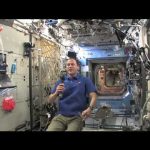
Marshburn’s Space Mash-up with 30 Seconds to Mars
Aboard the International Space Station, Expedition 35 Flight Engineer Tom Marshburn of NASA discussed his mission, research activities and answered social media questions offered by lead singer Jared Leto of the musical rock group “30 Seconds to Mars” during a tour of Mission Control, Houston by the group March 18. The members of the Los Angeles-based group, which was originally formed in 1998, are huge space enthusiasts, and recently had a sample of their music flown to the station on the SpaceX/Dragon cargo ship for the crew’s listening pleasure.
-
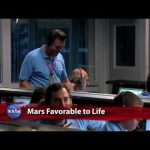
Mars Once Habitable on This Week @NASA
Analysis of the first ever sample of rock powder collected by the Mars Curiosity rover has proven that the Red Planet location it’s exploring once had everything needed to support microbial life including a lakebed filled with not salty or acidic but fresh water. Also, innovative space technology; students help space exploration; women aspiring, inspiring; IceBridge preps; SLS @ TennTech; career day; and more!
-
NASA Mars Curiosity Rover Report — March 15, 2013
A NASA Mars Curiosity rover team member gives an update on developments and status of the planetary exploration mission. The Mars Science Laboratory spacecraft delivered Curiosity to its target area on Mars at 1:31:45 a.m. EDT on Aug. 6, 2012 which includes the 13.8 minutes needed for confirmation of the touchdown to be radioed to Earth at the speed of light. The rover will conduct a nearly two-year prime mission to investigate whether the Gale Crater region of Mars ever offered conditions favorable for microbial life.
Curiosity carries 10 science instruments with a total mass 15 times as large as the science payloads on NASA’s Mars rovers Spirit and Opportunity. Some of the tools, such as a laser-firing instrument for checking rocks’ elemental composition from a distance, are the first of their kind on Mars. Curiosity will use a drill and scoop, which are located at the end of its robotic arm, to gather soil and powdered samples of rock interiors, then sieve and parcel out these samples into the rover’s analytical laboratory instruments.
-
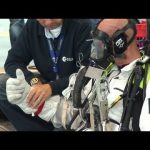
Luca Parmitano Training
In less than three years, Luca has travelled between all five international partners’ training sites, gaining the knowledge and skills required for his mission. His tailored training has taken him to Houston, USA, Star City near Moscow, Russia, Tsukuba near Tokyo, Japan, Montreal, Canada, and the European Astronaut Centre in Cologne, Germany.
Critical tasks are trained over and over. As Soyuz flight engineer, Luca requires a great amount of ‘flying hours’ in the Russian spacecraft simulator, so he trained until he felt at home in the cockpit and can operate Soyuz flawlessly in any situation. During simulations, Luca had his hands at the controls of the spacecraft and wore the Russian Sokol flight suit.
Luca has been taught Space Station systems in full-size mockups, where he familiarised himself with the Station and learnt how everything works. He is trained in all systems and experiment operations scheduled for his mission. He has spent hours getting to know every corner of Europe’s Columbus laboratory, where most of the experiments in which he participates in take place.
Dressed in a spacesuit, Luca also trained to perform spacewalks in one of the largest swimming pools in the world on realistic mockups of the Space Station. -

NASA’s Van Allen Probes Discover Third Belt Around Earth
In a briefing held Feb. 28 at the Johns Hopkins University’s Applied Physics Laboratory, scientists detail the finding by NASA’s Van Allen Probes of a previously-undetected third radiation belt around Earth.
-
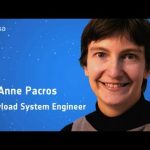
Anne Pacros: Payload system engineer
Academic background series: Anne Pacros is a payload system engineer on the Solar Orbiter mission and finds working in a position where all the threads of the project come together fascinating.
-
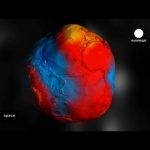
ESA Euronews: Η έλξη της βαρύτητας στη γη
Η βαρύτητα είναι μία θεμελιώδης δύναμη της φύσης, μία αόρατη έλξη που κυβερνά τον πλανήτη, κι αυτό την κάνει ζωτικής σημασίας. Μπορεί να μεταβάλλεται στο χρόνο λόγω της κίνησης της μάζας αλλά και να διαφοροποιείται από τόπο σε τόπο. Πρόκειται για ένα πραγματικό παζλ για τους επιστήμονες.
Η τιμή της βαρύτητας σε ένα μέρος μπορεί να εναλλάσσεται εξαιτίας της παλίρροιας. “Η δράση του φεγγαριού και του ήλιου αλλάζει το πεδίο βαρύτητας και η γη ανταποκρίνεται με ελαστικότητα σε αυτές τις αλλαγές και παραμορφώνεται”, λέει η ειδικός Κάρλα Μπρέιτενμπουργκ. Έτσι, εάν σαρώσει κανείς την γη με έναν ειδικό δορυφόρο για την βαρύτητα, το σχήμα της μοιάζει πραγματικά περίεργο.
“Εδώ και 20 χρόνια θα έλεγα ότι οι επιστήμονες ονειρεύονται μία αποστολή που να προσφέρει υψηλής ποιότητας ανάλυση της βαρύτητας”, τονίζει ο Βόλκερ Λίμπεγκ, διευθυντής του Προγράμματος Εξερεύνησης της γης της ESA.
Ο μόνος τρόπος για να έχουμε μία συνολική εικόνα του πεδίου βαρύτητας είναι να βρεθούμε στο διάστημα, κι αυτό ακριβώς κάνει η ESA με τους δύο δορυφόρους GRACE ανίχνευσης βαρύτητας. Με τα στοιχεία που μεταδίδουν, ειδικοί μπορούν να ανιχνεύσουν την δομή και την ιστορία της γης, ενώ μπορούμε να παρακολουθήσουμε και τις κλιματικές αλλαγές.
“Η μεγάλη καινοτομία του ανιχνευτή βαρύτητας είναι ότι για πρώτη φορά μπορούμε να έχουμε ένα καθολικό πεδίο που έχει την ακρίβεια και την ανάλυση που μας επιτρέπει να εντοπίζουμε τις αλλαγές της μάζας που συνδέονται με την γεωλογική δομή”, αναφέρει η Κάρλα Μπρέιτενμπουργκ.
Η κληρονομιά της αποστολής είναι μία άνευ προηγουμένου σφαιρική έρευνα για την βαρύτητα και την Γη.
-

Ready the Dragon on This Week @NASA
March 1st is the targeted launch date for the next cargo resupply flight to the International Space Station. Liftoff of the SpaceX Dragon spacecraft’s second resupply mission to the ISS is scheduled for 10:10 a.m. Eastern from Cape Canaveral Air Force Station in Florida. Dragon will be loaded with about six tons of crew supplies and materials for science research. Also, Launch the Seedlings!; Curiosity Drills; ISS Social; Hangout with the Crew; Bolden Honored; Aerospace Days; Cady and the Chieftains; and more!
-
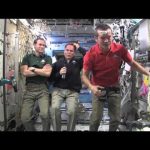
Space Station Hosts First Hangout
Aboard the International Space Station, Expedition 34 Commander Kevin Ford of NASA, Flight Engineer Tom Marshburn of NASA and Flight Engineer Chris Hadfield of the Canadian Space Agency fielded questions from social media during a Google Plus hangout February 22, the first for the station. The three astronauts answered questions from the online community who have been interested to watch and ask questions to astronauts both on orbit and on the ground. People from around the world were able to view the Hangout live on NASA’s YouTube channel and were invited to ask questions by uploading a video question to YouTube with the hashtag #askISS, as well as from followers on Google Plus or Twitter, who were able to ask a question in advance of or during the event using the hashtag #askNASA, or on NASA’s Facebook page.
-

NASA Long-Distance Google+ Hangout to Connect with Space Station
In a first for the agency, NASA hosted a Google+ Hangout live with the International Space Station on Feb. 22, 2013 from 10:30 a.m EST to 11:30 a.m. EST. Google+ Hangouts allow people to chat face-to-face while thousands more can tune in to watch the conversation live on Google+ or YouTube. This unique opportunity connected you, our fans, with astronauts living and working on the orbiting laboratory 240 miles above the Earth.
During the event, several video questions were selected and answered by astronauts on the space station and on the ground. Additionally, NASA asked real-time questions submitted by our followers on Google+, Twitter, and Facebook. During the hangout, astronauts Kevin Ford, Chris Hadfield and Tom Marshburn will answer questions and provide insights about life aboard the station. Station crews conduct a variety of science experiments and perform station maintenance during their six-month stay on the outpost. Their life aboard the station in near-weightlessness requires unique approaches to everyday activities such as eating, sleeping and exercising.
-
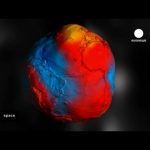
ESA Euronews: La forza di gravità terrestre
La gravità è una delle forze fondamentali della natura, con la sua presa invisibile governa tutto il nostro pianeta: dalle rocce, alle profondità dei mari. Per noi è un punto di riferimento vitale.
Normalmente percepiamo la gravità come un’attrazione costante ma, se si aggiunge della massa extra in un punto, o se la si toglie, il segnale gravitazionale si altera in modo misurabile, seppur minimo. E per la scienza è un rompicapo. La gravità può infatti variare in modi diversi. Può variare nel tempo, a causa dei movimenti della massa, e può variare da un posto all’altro.In questa puntata di Space siamo andati a Trieste, nel nord Italia, dove un gruppo di studenti è alle prese con la gravità. Sottoterra c’è una immensa caverna: la Grotta Gigante. Qui la forza di gravità si riduce sensibilmente il che significa che una massa minore sotto i nostri piedi corrisponde a un’attrazione inferiore verso la Terra.
Il nostro pianeta inoltre, se visto con gli occhi di un satellite in grado di scansionare la gravità, assume davvero una forma molto strana.
Per questo l’unico modo per avere un quadro globale del campo gravitazionale è andare nello spazio. Con questo obiettivo è nata la missione GOCE dell’Agenzia spaziale europea.
Un’opportunità relativamente nuova, quella di utilizzare satelliti per studiare la gravità. Fino al 1995 infatti il campo gravitazionale veniva studiato in alcuni centri come quello di Potzdam, in Germania, tramite pendoli ad alta precisione. -
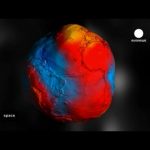
ESA Euronews: El poder de la fuerza de la gravedad en la Tierra
La gravedad es una fuerza fundamental de la naturaleza, una fuerza invisible que domina nuestro planeta, desde sus entrañas rocosas a los océanos. Se trata de un fenómeno de atracción constante, estudiado hace siglos, pero que todavía arroja interrogantes a la comunidad científica. Si eliminamos o añadimo masa en un punto geográfico determinado, cambia la fuerza de la gravedad. Saber exactamente cuánto es complicado, porque varios factores influyen en el fenómeno gravitatorio.
La masa de los cuerpos es un factor determinante. En Trieste, Italia, un grupo de estudiantes indga sobre el fenómeno que Isaac Newton se planteó tres siglos atrás.. La premisa es intrigante. En esta zona hay una gran cueva, llamada Gruta Gigante. La ausencia de masa en el subsuelo reduce la fuerza de la gravedad en la zona. Es decir, si aparcamos un coche que pese una tonelada, aquí pesará cinco gramos menos. Pero la cueva no es el único factor involucrado, explica Carla Breitenburg, profesor de geofísica en la Universidad de Trieste. Un estudiante le preguntó por qué había cambios gravitacionales, si no habían cambiado de lugar en sus mediciones. La respuesta es porque la acción de la Luna y el Sol cambia el campo gravitacional. La forma de la Tierra se estire y encoge con el contínuo flujo de mareas.
La única manera de tener una percepción integral de este fenómeno es desde el espacio. Fue precisamente por esta razón que la Agencia Espacial Europea creó la misión GOCE. La información obtenida por este satélite puede desentrañar elementos importantes, como la presencia de hierro en el subsuelo. Según Carla Breitenburg “el espesor de la corteza puede variar entre 7 kilómetros debajo de los océanos, la zona donde es más delgada, y hasta 70, 75 millas en las zonas más montañosas, como los Andes o el Tíbet”.
Los datos que recoge el satélite GOCE, desde un centro de observación de la Agencia Espacial Europea en Roma, aporta cada vez más información a la comunidad científica. Un miembro del equipo, Bjoern Frommknecht explica que para conseguir mayor precisión del campo gravitatorio de la Tierra, el satélite GOCE vuela más bajo que nunca, “tan cerca como sea posible a la superficie exterior de la atmósfera”, aunque en esa órbita el aire sea un problema. GOCE siempre se mantiene a una altura inferior los satélites convencionales. Ahora pasará a los 268 kilómetros a los 237. Un objetivo importante es mejorar el modelo de geoide, la representación física de la gravedad de la Tierra. Otro es seguir el curso evolutivo del cambio climático, profundizando en lo que sucede debajo de la corteza terrestre.
Los satélites de la misión GRACE estudian precísamente la densidad del hielo en Groenlandia. La medición del geoide es también crucial en sectores complejos como la topografía y la navegación. -
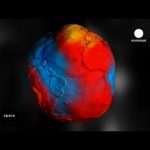
ESA Euronews: Gravity’s grip on Earth
Gravity is one of the fundamental forces of nature, its invisible grip governing our planet – from the rocks inside to the seas on the surface.
In this edition of Space, we begin our adventure in a massive cave in northern Italy, a space beneath the surface of the Earth that is so big it has an effect on the local gravity field. If you parked a car weighing one tonne above this cave, it would weigh five grammes less than elsewhere.
However, getting a grip on gravity on a global scale can only be done from space, and that’s something ESA’s GOCE satellite mission has been doing since 2009. One of the ultimate goals of GOCE is to improve our knowledge of the geoid, a kind of ‘gravity map’ of the planet, that is essential for oceanographers, surveyors, engineers and Earth-science researchers.
Also tracking invaluable information about the Earth’s gravity field is the GRACE mission. While this pair of satellites don’t have the high precision of other missions, they offer something unique: a monthly survey of the gravity field. This US-German mission has been tracking the loss of ice mass over Greenland for the past decade, offering useful evidence for those studying climate change.
-
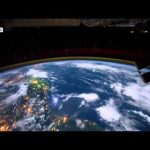
Marillion’s soundtrack for space
Rock band Marillion have a long-standing interest in science and exploration. In particular, guitarist Steve Rothery is fascinated by the images of Earth as seen from the International Space Station. He wrote a piece of music called “Space” some time ago and thought it would make a great accompaniment to video footage taken by astronauts on the Station.
Steve said, “I recorded this about ten years ago but it was never used. Today, my thought was to dedicate it to André Kuipers and all the space station crews past, present and future.”
Earlier, Marillion had sent a compilation of their songs up to the Space Station for ESA astronaut André Kuipers and the Expedition 30/31 crew.
Original music: ‘Space’ by S. Rothery/Marillion) Video previously published by M. König (images courtesy NASA/Image Science & Analysis Laboratory)
-
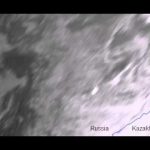
Satellite sees Russian meteor explosion from space
The meteor that exploded over the Urals of central Russia was seen by Eumetsat’s Meteosat-9, at the edge of the satellite view. Hundreds of people were reportedly injured as the meteor’s massive sonic boom caused widespread damage.
Credit: Eumetsat
-
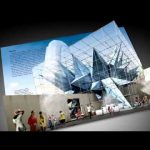
“NASA Spinoff” Here!
The latest edition of NASA’s ” Spinoff” publication is out, highlighting some of the more than 1,800 products derived from NASA space technologies that touch nearly every aspect of our daily lives; from life-saving medical devices to the food we eat. Administrator Charlie Bolden explains why it’s part of NASA’s mission to ensure that the results of the agency’s research and development go on to benefit all of society. There’s more space in your life than you think! To learn more, visit us at spinoff.nasa.gov.
-

Navigating in space
ESA’s Flight Dynamics team uses cutting-edge computational techniques to plan, determine and control complex spacecraft trajectories. They apply fundamental physics and mathematics to 21st century spacecraft orbiting Earth and voyaging deep into our Solar System.
The Flight Dynamics team delivers precise orbital determinations enabling ground controllers to know where the spacecraft are located and prepare the manoeuvres to reach their targets like the Moon, Mars, Venus, a comet or a spacecraft constellation. The Flight Dynamics team also conducts mission analysis — they brainstorm about how robotic spacecraft can reach and return data from anywhere in the Solar System.
Flight dynamics scientists work as part of the team operating every ESA mission, whether in low-Earth orbit or soaring deep into our Solar System. They provide precise orbital calculations, determining where the spacecraft are located, which direction they’re facing, where they’re going and how far they’ve travelled.
This information is vital and is used every day not only by the mission controllers but also by supporting teams such as the Estrack station engineer, who have to know where to point their tracking antennas, what time to start ‘listening’ for a signal and how long a spacecraft will be visible.
-
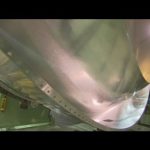
ESA Euronews: La fábrica de cohetes
Paso a paso y pieza a pieza, los ingenieros construyen en este inmenso edificio en los alrededores de París aparatos que pronto pondrán rumbo al espacio.
Cada lanzamiento es un complejo reto técnico en el que todo debe estar perfectamente calibrado. Es el resultado de un largo y cuidadoso trabajo de concepción y construcción que empieza en plantas como la que se encuentra en los alrededores de París, donde se fabrican los componentes del Ariane 5.
Un aparato como éste tiene un tamaño aproximado de 55 metros y un peso de 775
toneladas en el momento de su lanzamiento. La capacidad de carga útil alcanza
las diez toneladas, lo que da una idea de lo que cuesta lanzar, transportar y poner en órbita una nave similar.En estos momentos hay tres cohetes europeos. El Ariane 5 es el mayor, es capaz de levantar diez toneladas de peso y ponerlas en órbita. El Soyuz ruso sólo soporta tres toneladas. Y el Vega, el nuevo cohete europeo, ha sido diseñado para transportar satélites de tonelada y media.
Los expertos de la ESA trabajan también en una actualización de su buque insignia, el Ariane 5ME o Midlife Evolution, más flexible y con una capacidad de carga de hasta 12 toneladas. El hecho de tener mayores prestaciones le permite transportar un satélite de comunicaciones comercial y otro científico.
El siguiente paso será el Ariane 6, que incluirá un motor de reignición. La Agencia Espacial Europea espera así satisfacer a los clientes comerciales sin descuidar la carrera espacial. Su lanzamiento está previsto para 2020.
-
ESA Euronews: No interior da fábrica de foguetes
O lançamento de um foguete é o culminar de um longo e minucioso processo de fabrico e construção que começa em enormes fábricas de foguetes como aquela que existe nos arredores de Paris.
É aqui que o foguete Ariane 5 é literalmente talhado a partir de alumínio sólido e, aos poucos, vai ganhando forma.
“A fim de dar uma ideia da escala, o impulso na descolagem de um foguete como
o Ariane é igual à potência de duas centrais nucleares, e a bomba turbo que alimenta o motor do foguete tem a mesma potência que um comboio TGV”, afirma Michel Freuchet, Director de Foguetes, Astrium.O que sai desta fábrica de foguetes é uma combinação entre potência, escala e engenharia de precisão. Cada lançamento a partir de Kourou na Guiana francesa é cronometrado ao milésimo de segundo.
Neste momento existem três foguetes europeus preparados para voarem para o espaço.
O maior é o Ariane 5, capaz de transportar 10 toneladas para órbita; o Soyuz é o “burro de carga” russo que leva uma carga de 3 toneladas enquanto o Vega é o novo foguete europeu, concebido para transportar uma tonelada e meia de satélites para a órbita terrestre.
No entanto, o Ariane está a ser remodelado – o Ariane 5ME ou Midlife Evolution, vai torná-lo mais flexível devido à capacidade para transportar 12 toneladas.
A capacidade de lançar dois satélites em duas órbitas diferentes é a principal inovação do Ariane 5ME – que conta com uma nova unidade de propulsão na secção superior.
A evolução central ao nível do design foi a criação de uma parte superior com propulsão própria que pode ser ativada já no espaço.
Os engenheiros espaciais que trabalham nos foguetes europeus têm que cumprir as expectativas dos clientes ao planearem designs futuros. O mercado dos foguetes enfrenta uma concorrência crescente do Extremo Oriente assim como de empresas privadas nos Estados Unidos.
Olhando para o futuro, daqui a 10 anos, alguma da nova tecnologia que vemos no Ariane 5, tal como a secção superior com propulsão própria, será incluída no seu sucessor, o Ariane 6.A Agência Espacial Europeia vê esta evolução como uma fase estratégica para fazer face às necessidades dos clientes comerciais e científicos.
-
ESA Euronews: Viaggio nella fabbrica dei razzi spaziali
Ogni lancio spaziale e’ una conquista tecnologica sorprendente. Ma come avviene un lancio spaziale e quali sono le ultime innovazioni nel settore dei lanciatori?
Con Cina ed Estremo Oriente che spingono la competizione e le imprese spaziali private statunitensi in cerca del “prossimo Space Shuttle” lo scenario e’ alquanto vivace.Alla periferia di Parigi, nella fabbrica di lanciatori di Astrium, azienda spaziale tra le piu’ importanti, si costruiscono i vettori Ariane 5 a partire da una lastra di alluminio.
Questo lanciatore e’ alto all’incirca 55 metri, il suo peso al decollo e’ di 775 tonnellate e di solito il carico utile che puo’ essere trasportato in orbita e’ di circa 10 tonnellate.Il Progetto europeo Ariane e’ nato nel 1970 . IL primo Ariane 1 fu lanciato nel 1979 seguito da Ariane 4 nel 1988 e Ariane 5 nel 1996.
Attualmente ci sono tre principali lanciatori europei, pronti per le missioni spaziali. Il piu’ grande e’ Ariane 5, in grado di portare in orbita 10 tonnellate. Il Soyuz e’ il cavallo di battaglia russo la cui capacita’ e’ di 3 tonnellate di carico utile, mentre Vega e’ il nuovo vettore Europeo, ideato per trasportare satelliti di 1 tonnellata e mezzo nella bassa orbita
terrestre.
Anche Ariane pero’ e’ in fase di ammodernamento con il modello Ariane 5ME, Midlife Evolution, piu’ flessibile, potra’ portare un carico doppio con capacita’ aumentata fino a 12 tonnellate.La capacita’ di sganciare due satelliti in orbita, in due diverse posizioni, e’ la principale innovazione di Ariane 5ME che sara’ dotato di un nuovo motore a razzo a combustibile liquido per lo stadio superiore, riaccendibile.
L’Agenzia Spaziale Europea conta su questo lanciatore per portare avanti missioni che siano sia commerciali che scientifiche.
Nel frattempo per agevolare il mercato Ariane 6 dovrebbe portare la tecnologia un passo oltre consentendo lanci di un singolo carico utile. -
ESA Euronews: Les coulisses de la construction des fusées
Moment ultime, chaque lancement est une consécration. Il clot un long processus de conception et de production. Dans le hall d’assemblage d’Astrium près de Paris, les ingénieurs donnent vie au lanceur Ariane 5. Ils le taillent dans l’aluminium et le construisent, pièce après pièce, étage après étage.
Tout l’enjeu est de réussir à doser puissance, démesure et ingéniérie. “La poussée au décollage d’une fusée comme Ariane correspond environ à la puissance de deux centrales nucléaires – deux tranches de centrale nucléaire – et la turbo-pompe qui alimente ce moteur a la puissance d’un TGV,” souligne Michel Freuchet, directeur du programme des lanceurs chez Astrium.
Chaque lancement depuis Kourou en Guyane française est calibrée à la perfection pour faire face à des contraintes de taille. “Le lanceur mesure environ 55 mètres, son poids au décollage fait 775 tonnes et typiquement, la masse de charge utile amenée en orbite est de l’ordre de 10 tonnes,” explique Louis Laurent, directeur des programmes d’Arianespace ; “donc vous voyez le ratio entre la masse utile et la masse qu’il est nécessaire de mettre en oeuvre pour emporter cette charge utile vers l’orbite de transfert
géostationnaire.”Au sol, le corps central d’Ariane 5 est construit à partir d’immenses plaques d’aluminium de haute qualité. L’aluminium a été choisi pour sa meilleure résistance aux températures extrêmement basses de l’hydrogène et de l’oxygène liquides.
A l’heure actuelle, on compte trois principaux lanceurs : le plus gros, Ariane 5 est capable de mettre dix tonnes sur orbite ; son confrère russe Soyouz a lui une charge utile de 3 tonnes tandis que Vega, la nouvelle fusée européenne, est conçue pour placer sur orbite basse, des satellites d’une tonne et demi.
Mais aujourd’hui, Ariane s’apprête à évoluer avec une nouvelle version baptisée 5ME. Sa principale innovation : son étage supérieur sera doté d’un moteur qui pourra être réallumé une fois dans l’espace.
A l’horizon 2020, certaines technologies d’Ariane 5ME comme le moteur réallumable prendront place à bord de sa petite soeur : Ariane 6. -
ESA Euronews: The rocket factory
The launch of a rocket is the crowning moment, the culmination of a long process of careful machining and construction. What comes out of a rocket factory is a unique blend of power, scale and engineering skill.
“To give you an idea of scale, the thrust at liftoff of a rocket like Ariane is like the power of two units of a nuclear power station, and the turbo pump that feeds the rocket engine has the power of a TGV train,” says Michel Freuchet, Head of Launchers at Astrium, near Paris, where the Ariane 5 launcher was born.
Piece by piece, it is hewn from solid aluminium and brought to life. The central structure of Ariane 5 is made from huge sheets of top-grade aluminium. Aluminium is used because it is best suited to withstand the extremely low temperatures of the liquid hydrogen and oxygen propellants. One by one, the panels are machined into shape — with many areas as thin as two milimetres. More than 90% of the aluminium is removed and recycled, leaving behind the perfect central part of each panel.
There are three main European launchers ready to rocket into space.
Ariane 5 is the biggest, capable of lifting 10 tonnes into orbit. Soyuz is the Russian workhorse, with a three-tonne payload capacity, while Vega is the European Space Agency’s new rocket, designed to take 1.5 tonne satellites into low orbit.
Faced with increased competition from the Far East and private companies in the US, the European Space Agency is treating Ariane to a make-over. The Ariane 5 ME, or Midlife Evolution, will be able to combine the launch of communication satellites and scientific missions.
Looking ahead a decade, some of the new technology in Ariane 5 ME will be included in its successor Ariane 6. The European Space Agency sees the evolution as a strategic move to meet the demands of both commercial and scientific customers.
-
NASA: Reaching for New Heights
At NASA, we’ve been a little busy: landing on Mars, developing new human spacecraft, going to the space station, working with commercial partners, observing the Earth and the Sun, exploring our solar system and understanding our universe. And that’s not even everything.