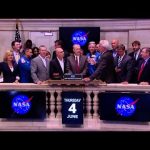
NASA officials and representatives from U.S. commercial space partners rang the closing bell of the New York Stock Exchange Thursday, June 4. NASA’s work with U.S. industry is making commercial research on the space station more accessible and affordable, leading to discoveries not possible on Earth. Commercial companies are already providing cargo transportation services to the orbiting laboratory and will soon launch astronauts once again from the United States. This is stimulating the growth of a robust U.S. commercial space industry with access to low-Earth orbit, creating new jobs and markets.
Blog
-
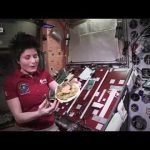
Cucinare nello spazio: riso integrale con pollo alla curcuma
L’astronauta dell’ESA Samantha Cristoforetti sta attualmente vivendo e lavorando a bordo della Stazione Spaziale Internazionale per la missione di lunga durata dell’ASI “Futura”. Vivendo nello spazio a centinaia di km dalla Terra e da casa il cibo è uno degli aspetti fondamentali per un astronauta, anche dal punto di vista psicologico; per questo motivo gli è concesso portare con loro una certa quantità del cosiddetto “bonus food”: piatti e ingredienti di loro scelta che ricordino i loro gusti e i sapori di casa. Abbiamo chiesto a Samantha di mostrarci come riesce a cucinare in microgravità uno di questi piatti: del pollo alla curcuma con riso integrale e piselli.
-

Cooking in space: whole red rice and turmeric chicken
ESA astronaut Samantha Cristoforetti is currently living on board the International Space Station for her long duration mission Futura. Food is an important item in space, also on the psychological side; that’s why astronauts are allowed a certain quantity of the so-called “bonus food” of their choice that reminds them of their home cooking tastes. We asked Samantha to show us how she manages to cook one of her bonus food recipes in microgravity: whole red rice with peas and chicken turmeric.
Make this recipe: http://bit.ly/CookingInSpaceWithSamantha
-
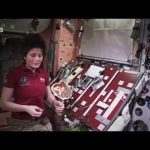
Cooking in space: mackerel, quinoa and leek cream tortilla
ESA astronaut Samantha Cristoforetti is currently living on board the International Space Station for her long duration mission Futura. Food is an important item in space, also on the psychological side; that’s why astronauts are allowed a certain quantity of the so-called “bonus food” of their choice that reminds them of their home cooking tastes. We asked Samantha to show us how she manages to cook one of her bonus food recipes in microgravity: a quinoa salad with dried tomatoes, mackerel and leek cream, all wrapped in a warm tortilla.
Make this recipe: http://bit.ly/CookingInSpaceWithSamantha
-
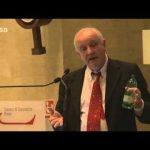
ESA’s Mark Doherty at the International Symposium on Climate Change
Held at the Temple of Hadrian in Rome, Italy, on 27–29 May 2015, the International Symposium on Climate Change reviewed the links between climate change and world development. Experts on a variety of climate- and development-related topics presented over the three-day period, including a talk by ESA’s Mark Doherty on observing climate from space.
Replays of all the symposium sessions are available on our website at: http://www.esa.int/spaceinvideos/Sets/International_Symposium_on_Climate_Change_-_Rome_2015
-

Suit Up – 50 Years of Spacewalks
This NASA documentary celebrates 50 years of extravehicular activity (EVA) or spacewalks that began with the first two EVAs conducted by Russian Alexey Leonov in March 1965 and American astronaut Edward White in June 1965 . The documentary features interviews with NASA Administrator and astronaut, Charles Bolden, NASA Deputy Administrator and spacesuit designer, Dava Newman, as well as other astronauts, engineers, technicians, managers and luminaries of spacewalk history. They share their personal stories and thoughts that cover the full EVA experience– from the early spacewalking experiences, to spacesuit manufacturing, to modern day spacewalks aboard the International Space Station as well as what the future holds for humans working on a tether in space. “Suit Up,” is narrated by actor and fan of space exploration Jon Cryer. Cryer recently traveled to Star City, NASA Headquarters and the Johnson Space Center to film an upcoming Travel Channel documentary series.
-
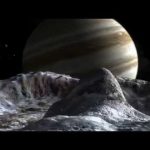
Science Instruments Selected for Europa Mission on This Week @NASA – May 29, 2015
NASA announced May 26, it has selected nine science instruments for a mission to Jupiter’s moon Europa to investigate whether the icy moon has conditions suitable for life. The instruments, targeted for launch aboard a robotic probe in the 2020s, include cameras and spectrometers to collect high-resolution imagery; an ice penetrating radar to measure surface thickness and look for subsurface lakes; and a magnetometer to measure the strength and direction of the moon’s magnetic field, and allow scientists to determine the depth and salinity of the moon’s ocean. The mission will collect data during a series of close flybys of Europa during a three-year period. Also, Commercial Crew update, Space station module relocated, Bolden visits space companies, SLS engine test, Supersonic vehicle test and more!
-
What Happens When Two Black Holes Collide?
This video was an answer to louis’ question: http://thoughty2.com/q/90/what-happens-if-2-black-holes-collide/
Ask Thoughty2 a question at: http://thoughty2.com/ask
Subscribe, New Videos Every Mon & Thurs: http://www.youtube.com/subscription_center?add_user=thoughty2
Read More At: http://thoughty2.com/p/91/what-happens-when-two-black-holes-collide/
Support me on Patreon: http://thoughty2.com/patreon
Facebook: http://thoughty2.com/facebook
Twitter: http://thoughty2.com/twitter
Thoughty2 Merchandise: http://thoughty2.spreadshirt.com
With Special Thanks To:
Morgan, Misha A-Wilson, Katrina Brogan, Michelle & Aaron Finn, Mhmd Haj Ali, Jeff Lee, Lindsay S, Kent Zacherl -
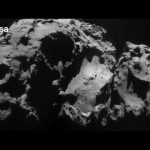
Rosetta update
The Rosetta spacecraft is still orbiting comet 67P/Churyumov-Gerasimenko while it now approaches the Sun. Six months ago Rosetta made history by delivering its Philae lander onto a comet’s surface – something no other space mission has done before.
This video covers the mission’s highlights so far: from its launch in 2004; its journey across the solar system and waking up after deep space hibernation ten years later, its arrival at the selection of a landing site and Philae’s unexpected multiple landings on the comet. It also reviews what we have learnt about the comet to this point.
Credit: ESA, with footage by DLR, licenced under CC-BY 3.0 DE
-

Towel day on the International Space Station
Don’t panic! This is the story of a book, a book called The Hitchiker’s Guide to the Galaxy, a wholly remarkable book.
ESA astronaut Samantha Cristoforetti reads from Douglas Adam’s “The Hitchhiker’s Guide to the Galaxy” for towel day from the European laboratory Columbus on the International Space Station.
The Guide has a few things to say on the subject of towels. A towel, it says, is about the most massively useful thing an interstellar hitchhiker can have.
To all you froods on the mostly harmless planet Earth, happy towel day!
Towel Day is an annual celebration on 25 May, as a tribute to the late author Douglas Adams when fans around the universe proudly carry a towel in his honour.
-
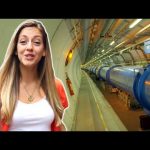
Seeing the Smallest Thing in the Universe
Beyond molecules and atoms, how far down can we see below the wavelength of visible light? What is the smallest possible scale in the universe?
Frog animation by Matt Burns
Facebook: http://www.physicsgirl.org/facebook
Twitter: http://www.physicsgirl.org/twitter
Updates: http://physicsgirl.orgHelp us translate our videos! http://www.youtube.com/timedtext_cs_panel?c=UC7DdEm33SyaTDtWYGO2CwdA&tab=2
Thanks to Kyle Kitzmiller for filming.
Image Credits:
SEM Images: Dartmouth Electron Microscope Facility
Infrared Images: Courtesy NASA/JPL-Caltech
LHC Images: CERN
Historical Particle Collider: INFN-LNF www.lnf.infn.it
Molecule images: IBM
Atom Images: Aneta Stoldona; APSMusic: Michael Miller, Kevin McLeod – “Carefree,” YouTube – “On the Bach”
-
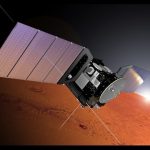
ESAHangout: Mars Express lined up for VMC Schools Campaign
Access full details and regular updates via the MEX blog: http://blogs.esa.int/mex
Prior to flying the campaign orbits on 25/26 May, this will be the final interactive Q&A session with the Mars Express flight control team for participants in the VMC Schools Campaign. Priority for questions will go to school/club participants. Questions can be posted here in the ESA G+ channel or via Twitter using the #VMCSchools hashtag. Start 11:00 EDT / 15:00 GMT / 17:00 CEST http://goo.gl/Yw8P5p
Sign up on the event page:
https://plus.google.com/events/cq9gg046ll071khg316fja1gmrgWatch on YouTube at:
http://www.youtube.com/watch?v=S_Qjoc_7quw -
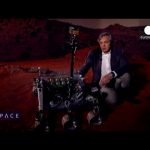
ESA Euronews: Mars mystery – ExoMars mission
The ExoMars 2016 mission will try to answer one of the toughest and most intriguing questions in our Solar System: is there, or has there ever been, life on Mars?
Getting to Mars, landing there safely, and then beginning the search for life is a huge scientific and technical challenge for the large team behind ExoMars, a joint ESA and Roscosmos project to search for life on Mars. It is the world’s biggest ever mission to the red planet.The ExoMars mission could reveal if there is, or has ever been, life on Mars by the end of the decade.
More about ExoMars: http://exploration.esa.int/mars/
This video is also available in the following languages:
Italian: https://www.youtube.com/watch?v=1upALskwxD8
Greek: https://www.youtube.com/watch?v=zfk3oC1Gios
French: https://www.youtube.com/watch?v=p8ZSihhWImg
Hungarian: https://www.youtube.com/watch?v=j0be4f-PPNk
Portuguese: https://www.youtube.com/watch?v=X50TMG0vSnU
German: https://www.youtube.com/watch?v=1wTsARN4Di8
Spanish: https://www.youtube.com/watch?v=6ExT47YH_kU -
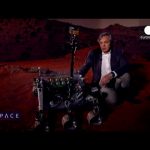
ESA Euronews: ExoMars – L’esplorazione di Marte
Maurizio Capuano e Richard Bessudo fanno il conto alla rovescia per il lancio di una delle più grandi missioni al mondo sul Pianeta Rosso. Fanno parte del team di ExoMars, un progetto congiunto di ESA e di Roscosmos che intende cercare segni di vita su Marte. La prima astronave è quasi pronta.
Maurizio Capuano, manager del programma ExoMars 2016, ThalesAleniaSpace: “Questo è Exomars 2016 che l’anno prossimo arriverà sul pianeta rosso. La parte bassa si metterà in orbita marziana aprendo i suoi pannelli solari per prendere l’energia dal sole, la parte superiore è il cosiddetto lander che atterrerà direttamente sulla superficie marziana completamente autonomo”.
ExoMars è composto da due missioni, che saranno lanciate rispettivamente nel 2016 e nel 2018. Al ThalesAleniaSpace nel sud della Francia, la navicella spaziale è sottoposta a un rigoroso programma di test, visto che le finestre di lancio non sono frequenti, come spiega Richard Bessudo, manager del programma ExoMars Trace Gas Orbiter. “Per andare su Marte occorre ottenere le condizioni favorevoli di congiunzione tra Terra e Marte. Tenuto conto delle orbite dei due pianeti, le congiunzioni favorevoli si riproducono soltanto ogni 26 mesi”.
Una volta su Marte, l’astronave si separa in due parti. Il satellite resta in orbita e il lander si dirige sulla superficie. L’ESA spera che questa capsula porterà a termine il primo atterraggio controllato europeo su Marte.
-
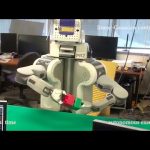
BRETT the Robot learns to put things together on his own
Full Story: http://newscenter.berkeley.edu/2015/05/21/deep-learning-robot-masters-skills-via-trial-and-error/
UC Berkeley researchers have developed algorithms that enable robots to learn motor tasks through trial and error using a process that more closely approximates the way humans learn, marking a major milestone in the field of artificial intelligence. In their experiments, the PR2 robot, nicknamed BRETT for Berkeley Robot for the Elimination of Tedious Tasks, used “deep learning” techniques to complete various tasks without pre-programmed details about its surroundings.
Video footage courtesy of UC Berkeley Robot Learning Lab, edited by Phil Ebiner
http://news.berkeley.edu/2015/05/21/deep-learning-robot-masters-skills-via-trial-and-error/
http://www.berkeley.edu
http://www.facebook.com/UCBerkeley
http://twitter.com/UCBerkeley
http://instagram.com/ucberkeleyofficial
https://plus.google.com/+berkeley -
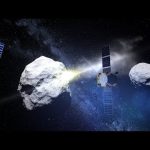
Asteroid Impact Mission
The Asteroid Impact Mission (AIM) is a candidate mission currently undergoing preliminary design work.
Launched in October 2020, AIM would travel to a binary asteroid system – the paired Didymos asteroids, which will come a comparatively close 11 million km to Earth in 2022. The 800 m-diameter main body is orbited by a 170 m moon, informally called ‘Didymoon’.
This smaller body is AIM’s focus: the spacecraft would perform high-resolution visual, thermal and radar mapping of the moon to build detailed maps of its surface and interior structure.
The main AIM spacecraft is planned to carry at least three smaller spacecraft – the Mascot-2 asteroid lander, being provided by DLR (Mascot-1 is already flying on JAXA’s Hayabusa-2), as well as two or more CubeSats. AIM would test optical communications and inter-satellite links in deep space, essential technology for future exploration.
If approved, AIM would also be Europe’s contribution to the larger Asteroid Impact & Deflection Assessment mission: AIDA. In late 2022, the NASA-led part of AIDA will arrive: the Double Asteroid Redirection Test, or DART, probe will approach the binary system – then crash straight into the asteroid moon at about 6 km/s.
AIM is intended to be watching closely as DART hits Didymoon. In the aftermath, it will perform detailed before-and-after comparisons on the structure of the body itself, as well as its orbit, to characterise DART’s kinetic impact and its consequences.
This video is also available in the following languages:
French: https://youtu.be/8GjVhBQsISc
German: https://youtu.be/Sht_Kmaf5sU
Spanish: https://youtu.be/KpmuzduOjhECredits: ESA/ScienceOffice.org
-

How It Works: IBM Watson Health
IBM and its partners are building solutions that will allow individual patients and larger health populations to benefit as providers share and apply insights in real-time. In this video, learn how the IBM Watson Health Cloud can help an avid runner with a heart condition continue to live an active life. This scenario describes the future of health and where things are going, not necessarily what you’d get when you walk into a doctor’s office today. For more information on Watson Health, please visit http://ibm.com/watsonhealth.
IBMers — learn more about Security Intelligence on Think Academy (internal site): https://ibm.biz/IBMThinkAcademy
-
Filastrocche dallo spazio: Samantha legge “Il pianeta di cioccolato”
Fra i libri che l’astronauta Samantha Cristoforetti ha portato a bordo della Stazione Spaziale Internazionale c’è anche “I Viaggi di Giovannino Perdigiorno” di Gianni Rodari.
Sono tante le filastrocche di questa raccolta e Samantha ha deciso di leggerne alcune iniziando questa serie di letture spaziali da “Il pianeta di cioccolato”. Buon ascolto… dallo spazio!
-
Rhymes from space: Samantha reads Gianni Rodari (in Russian)
Among the books that ESA astronaut Samantha Cristoforetti has brought on board the International Space Station there is also the collection of rhymes “I viaggi di Giovannino Perdigiorno” from the famous Italian children’s author Gianni Rodari.
Rodari is also famous in Russia; in this video Samantha reads a Russian version of the story “Il pianeta di cioccolato” (The planet made of chocolate).
Tuck into your bed and… enjoy listening!
-
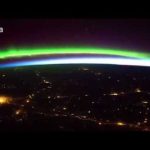
Timelapse: Aurora borealis
Still images taken by ESA astronaut Samantha Cristoforetti on the International Space Station were joined together to create this timelapse.
The astronauts on the Space Station spend as much time as possible on science. During her 40-hour working week Samantha runs many experiments from Italy’s ASI space agency and ESA, and takes part in even more from scientists all over the world.
Samantha is living and working on board the International Space Station as part of the six-strong Expedition 42 and 43 crew. Follow her Futura mission at http://samanthacristoforetti.esa.int.
-
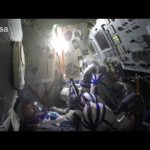
Fire in the Soyuz!
(L-115 days) ESA astronaut Andreas Mogensen and Russian cosmonaut Sergei Volkov take us inside the Soyuz simulator at Star City where they are training for off-nominal situations they could face during their spaceflight. In practice, this includes anything their Soyuz instructor decides to throw at them – including scenarios such as fire or depressurisation.
Andreas is currently training for his 10-day Iriss mission to the International Space Station, set for launch in September 2015.
Connect with Andreas at http://andreasmogensen.esa.int
More videos from Andreas:
https://www.youtube.com/playlist?list=PLbyvawxScNbsCtYE7cHbqq9O6JvA-HPOL -
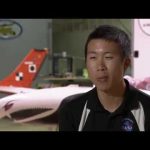
NASA Asian American Pacific Islander History Month – Alex Chin, Armstrong Flight Research Center
Alex Chin is an aerospace engineer in the Aerostructures Research Branch at NASA’s Armstrong Flight Research Center in Edwards, California. He is responsible for planning, executing, and analyzing tests to support structural dynamics research at Armstrong.
-
Schedule changes for space station traffic on This Week @NASA
NASA and its international partners are making changes to the International Space Station’s schedule of arriving and departing spacecraft, following the Russian Federal Space Agency’s preliminary findings on its recent loss of the Progress 59 cargo craft. Exact dates will be announced in the coming weeks, with a Roscosmos update about the Progress 59 investigation expected May 22. The schedule adjustments mean NASA’s Terry Virts and Expedition 43 crewmates, Samantha Cristoforetti of ESA and Russian cosmonaut Anton Shkaplerov – now will return to Earth in June instead of May. NASA’s Kjell Lindgren, who is conducting pre-flight training in Russia with the other members of Expedition 44, now will launch to the station in July. Also, Small satellite launch services, Latest images of Ceres, Europa’s sea salt? Antarctica Ice Shelf Nearing Its Final Act and No major U.S. hurricanes in nine years!
-
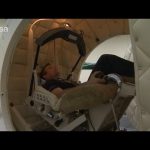
Centrifuge 8G
In his latest video diary, ESA astronaut Andreas Mogensen is back at Star City where he takes a spin in the centrifuge as part of the training for his mission to the International Space Station. In the centrifuge Andreas gets to experience 4G and 8G – a ballistic reentry profile.
Andreas is currently training for his 10-day Iriss mission to the International Space Station, set for launch in September 2015.
Connect with Andreas at http://andreasmogensen.esa.int
More videos from Andreas:
https://www.youtube.com/playlist?list=PLbyvawxScNbsCtYE7cHbqq9O6JvA-HPOL -

International Space Station toilet tour
ESA astronaut Samantha Cristoforetti shows how to use the most unglamorous but often asked-about part of living on the International Space Station: the toilet.
A fan creates suction to avoid smells and floating waste. Solid waste is stored and put in cargo ferries to burn up when the spacecraft leaves the Space Station. The astronaut urine is recycled – into drinking water.
Follow Samantha via http://samanthacristoforetti.esa.int/
-
How To Make Something Invisible – Cool Science Experiment
Check out cool science kits and toys: www.stevespanglerscience.com
If you’ve ever wanted to make something invisible, our science guy Steve Spangler says he has the secret. Our only question is why he has fragile object, safety glasses and a hammer. Steve is with Mark at the invisibility demo table.
Want more experiments like this? Check out http://www.stevespanglerscience.com/experiments
© 2014 Steve Spangler, Inc. all rights reserved About Steve Spangler Science…
Steve Spangler is a celebrity teacher, science toy designer, speaker, author and an Emmy award-winning television personality. Spangler is probably best known for his Mentos and Diet Coke geyser experiment that went viral in. Spangler is the founder of www.SteveSpanglerScience.com, a Denver-based company specializing in the creation of science toys, classroom science demonstrations, teacher resources and home for Spangler’s popular science experiment archive and video collection. Spangler is a frequent guest on the Ellen DeGeneres Show and Denver 9 News where he takes classroom science experiments to the extreme. For teachers, parents or DIY Science ideas – check out other sources of learning:
Join the Science Club and check out other cool science experiments at – http://www.SteveSpanglerScience.com
Sign up to receive a FREE Experiment of the Week- http://www.stevespanglerscience.com/experiment-of-the-week
Attend a Spangler Hands-on Science Workshop for Teachers – http://www.stevespanglerscience.com/training
Watch Steve on Local and National Media Appearances on YouTube at: https://www.youtube.com/user/SpanglerScienceTV
-
International Space Station bathroom tour
Join ESA astronaut Samantha Cristoforetti as she shows how astronauts on the International Space Station keep clean.
From soap to water and cutting your nails, everything is different in space. Samantha demonstrates her ways to ‘shower’ depending on how much time she has.
The astronauts on the Space Station spend as much time as possible on science. During her 40-hour working week Samantha runs many experiments from Italy’s ASI space agency and ESA, and takes part in even more from scientists all over the world.
Samantha is living and working on board the International Space Station as part of the six-strong Expedition 42 and 43 crew. Follow her Futura mission at http://samanthacristoforetti.esa.int.
-
Futura: Mission wrap-up
ESA astronaut Samantha Cristoforetti, from Italy, will shortly be ending her long-duration stay onboard the International Space Station. Launched in November 2014, the Futura mission is the result of a special agreement between NASA and the Italian Space Agency ASI.
During her time in orbit Samantha Cristoforetti has undergone an intensive programme of scientific research, educational and maintenance activities, as well as overseeing the undocking of ESA’s fifth – and last – Automated Transfer Vehicle.
-
NASA Administrator Charles Bolden on Small Business Week
During Small Business Week, NASA Administrator Charles Bolden discusses the importance of small businesses to America’s space program.
-
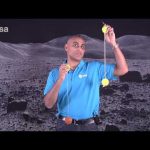
Barycentric balls – classroom demonstration video, VP07a
This video, part of a new series of ESA teaching resources called ‘Teach with space’, shows an experiment that can be performed by teachers in the classroom to demonstrate the concept of a barycentre, or centre of mass, and how objects in orbit around each other move.
-
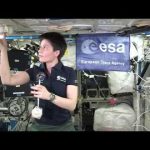
Barycentric balls in space – classroom demonstration video, VP07b
This video, part of a new series of ESA teaching resources called ‘Teach with space’, shows an experiment performed by ESA astronaut Samantha Cristoforetti on the International Space Station demonstrating the concept of a barycentre, or centre of mass, freefall and how objects in orbit around each other move.
-
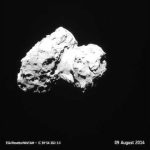
Getting to know Comet 67P/Churyumov-Gerasimenko
This animation of NAVCAM images follows the spacecraft’s approach to the comet from a distance of about 800 km on 1 August to a distance of about 62 km on 22 August 2014.
The movie is a showcase of over one thousand NAVCAM images released today in ESA’s Archive Image Browser: http://imagearchives.esac.esa.int/
More info: http://blogs.esa.int/rosetta/2015/04/29/major-release-of-navcam-images-800-to-30-km/
Credits: ESA/Rosetta/NAVCAM – CC BY-SA IGO 3.0
-
What happens when our computers get smarter than we are? | Nick Bostrom
Artificial intelligence is getting smarter by leaps and bounds — within this century, research suggests, a computer AI could be as “smart” as a human being. And then, says Nick Bostrom, it will overtake us: “Machine intelligence is the last invention that humanity will ever need to make.” A philosopher and technologist, Bostrom asks us to think hard about the world we’re building right now, driven by thinking machines. Will our smart machines help to preserve humanity and our values — or will they have values of their own?
TEDTalks is a daily video podcast of the best talks and performances from the TED Conference, where the world’s leading thinkers and doers give the talk of their lives in 18 minutes (or less). Look for talks on Technology, Entertainment and Design — plus science, business, global issues, the arts and much more.
Find closed captions and translated subtitles in many languages at http://www.ted.com/translateFollow TED news on Twitter: http://www.twitter.com/tednews
Like TED on Facebook: https://www.facebook.com/TEDSubscribe to our channel: http://www.youtube.com/user/TEDtalksDirector
-
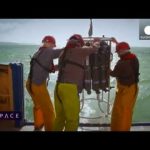
ESA Euronews: A satellite revolution in oceanography
Plymouth is one of England’s historic port cities, a place from which sailors, soldiers and scientists have set off to sea for centuries. Today there’s a new twist to the tale though, as oceanographers now have a huge fleet of satellites in space to add to their list of high quality data sources in order to study and understand our seas.
The field of satellite ocean observation is due to get a boost later this year as ESA’s Sentinel-3 will join the fleet of Earth observers already in orbit. It’s part of Europe’s Copernicus programme, and heralds a new era in ocean observation by offering an uninterrupted flow of data from its speedy polar orbit, now and well into the future.
This video is also available in the following languages:
Spanish: https://youtu.be/zeIcm9wKUzg
French: https://youtu.be/dw5pYO04xJA
German: https://youtu.be/K1BCdQMT24Q
Portuguese: https://youtu.be/xmUbJ0ckaZI
Italian: https://youtu.be/TGY5LY63xKA
Hungarian: https://youtu.be/BbQzTVDhWBI
Greek: https://youtu.be/n_hCQeTqieA -
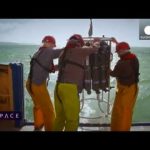
ESA Euronews: Műholdakkal az óceánkutatásért
Az Európai Űrügynökség hamarosan felbocsátja a Sentinel-3 műholdat, amelynek egyik fő feladata az lesz, hogy az óceánokról gyűjtsön adatokat.
Régóta tudjuk hogy az óceánok alapvető fontosságúak a földi élet szempontjából, és ezek szabályozzák az időkárást és a klímát. De most a műholdak segítségével ezt globális léptékben figyelhetjük meg. Egy műhold egy nap alatt annyi adatot szolgáltat az óceánokról, mint egy hajó egy év alatt. Ezeket az ismereteket azonban össze kell vetni a felszínen végzett mérésekkel.
Hogyan is történik mindez: például az űrből megfigyelhető az óceán színe, ami következtetni enged a fitoplankton, egy apró algaféle mennyiségére. Ezek az apró jószágok bocsátják ki a Föld oxigéntermelésének felét, ezek a tengeri ökoszisztéma alapvető építőkockái, ugyanakkor jelzőrendszerként is funkcionálnak, mert nagyon érzékenyen reagálnak a környezet változásaira. Ugyanakkor csak mintavétellel lehet megmondani, hogy mi is az, amit a műhold a a földkörüli pályáról lát.
Ezeknek a kutatásoknak köszönhetően tudjuk, hogyan változik a vízsszint, az óceánok hőmérséklete, az élővilág állapota: ha kellő mennyiségű adat gyűlik össze, abból sokkal inkább megérthetjük a Föld klimatikus viszonyait és folyamatait, mint bármi másból.
-
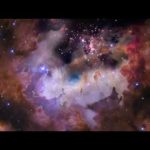
NASA’s Documentary Film: Hubble25 (Abbreviated Version)
In its quarter-century in orbit, the Hubble Space Telescope has transformed the way we understand the Universe, helped us find our place among the stars, and paved the way to incredible advancements in science and technology. The Hubble story is a human story. Hubble overcame much adversity early on in its mission and demonstrated the great heights NASA is capable of achieving against all odds. Much of that is thanks to the “Hubble Heroes”, including scientists, engineers, and the brave astronauts who flew five Space Shuttle missions to service Hubble.
Join NASA Television in celebrating the 25th anniversary of the Hubble Space Telescope in orbit April 24, 2015.
-
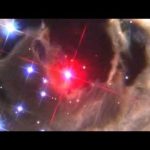
25 years of Hubble on This Week @NASA-April 24, 2015
On April 24, 1990, NASA’s Hubble Space Telescope rode to space aboard space shuttle Discovery – on a mission to do just that – discover. The results over the past 25 years have been nothing short of remarkable.
The storied and historic journey into the cosmos that Hubble’s eyes have taken us on, has led to groundbreaking discoveries, captivated imaginations and given humans a better understanding of our place in the universe. NASA celebrated Hubble’s Silver anniversary with a variety of events including the unveiling of the official Hubble 25th anniversary image at the Newseum in Washington and a gala at the Smithsonian’s National Air and Space Museum, during which many of the astronauts, scientists, engineers, technicians, educators, and others who have contributed to Hubble’s success were honored. Also, NASA celebrates Earth Day, 3-D printed copper engine part and more! -
NASA’s Documentary Film: Hubble25
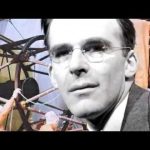
In its quarter-century in orbit, the Hubble Space Telescope has transformed the way we understand the Universe, helped us find our place among the stars, and paved the way to incredible advancements in science and technology. The Hubble story is a human story. Hubble overcame much adversity early on in its mission and demonstrated the great heights NASA is capable of achieving against all odds. Much of that is thanks to the “Hubble Heroes”, including scientists, engineers, and the brave astronauts who flew five Space Shuttle missions to service Hubble.
Join NASA Television in celebrating the 25th anniversary of the Hubble Space Telescope in orbit April 24, 2015.
-
Samantha’s cool Space Station science
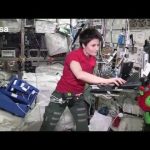
ESA astronaut Samantha Cristoforetti running experiments in weightlessness during her Futura mission for scientists from all over the world. The International Space Station offers three state-of-the-art laboratories where research can be done without gravity. The European Columbus laboratory, the Japanese Kibo and the American Destiny module offer facilities for physics, biology, geophysics and medicine.
Samantha’s 40-hour work week is devoted to science and maintaining the weightless research centre. This video gives a fast-track impression of some of the experiments she worked on. In quick succession we see Samantha working on: exercise machine ARED, measuring her body mass, the robotic droids SPHERES, ESA’s microgravity glovebox, muscle-measurement machine MARES, centrifuge-incubator Kubik, Biolab, Materials Science Laboratory and ejecting miniature satellites called Cubesats into space.
Read more about her science on the Futura website: http://www.esa.int/Our_Activities/Human_Spaceflight/Futura/Space_Station_Science
Follow Samantha via http://samanthacristoforetti.esa.int/
-
Space snack time with Samantha Cristoforetti
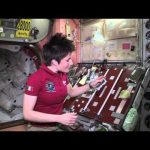
The astronauts on board the International Space Station get hungry from time to time during their long day of work in microgravity. We asked Samantha Cristoforetti, ESA astronaut on board the ISS for the Futura mission, to tell us about the kind of healthy snack she likes to eat during her breaks.