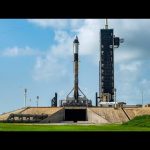
Space Rider is an uncrewed robotic laboratory about the size of two minivans. After launch on Vega-C, this reusable spacecraft will stay in low orbit for about two months, conducting research in microgravity or observing the Earth or deep space. At the end of its mission, Space Rider will return to Earth with its payloads to be unloaded and refurbished for another flight.
Credit: ESA/Frame by Frame
★ Subscribe: http://bit.ly/ESAsubscribe and click twice on the bell button to receive our notifications.
We are Europe’s gateway to space. Our mission is to shape the development of Europe’s space capability and ensure that investment in space continues to deliver benefits to the citizens of Europe and the world. Check out https://www.esa.int/ to get up to speed on everything space related.
Two NASA missions, working in tandem, have made a science discovery on Mars.
In this briefing, science team members from NASA’s InSight Mars lander and the Mars Reconnaissance Orbiter (MRO) missions will explain how data and images – from the Red Planet’s surface and from above – contributed to the discovery. They will share how the two missions worked together to confirm their observations. There also will be an update on InSight’s solar energy status.
Participants:
● Lori Glaze, director of NASA’s Planetary Science Division, NASA Headquarters ● Bruce Banerdt, InSight principal investigator, NASA’s Jet Propulsion Laboratory ● Liliya Posiolova, MRO, orbital science operations lead at Malin Space Science Systems ● Ingrid Daubar, InSight impact science lead, Brown University
New images of the spectacular Phantom Galaxy, M74, showcase the power of space observatories working together in multiple wavelengths. In this case, data from the @NASA / ESA / @canadianspaceagency James Webb Space Telescope and the NASA/ESA Hubble Space Telescope compliment each other to provide a comprehensive view of the galaxy.
We are Europe’s gateway to space. Our mission is to shape the development of Europe’s space capability and ensure that investment in space continues to deliver benefits to the citizens of Europe and the world. Check out https://www.esa.int/ to get up to speed on everything space related.
The series of heatwaves we are currently experiencing in western Europe is a clear sign of human-induced global warming. ESA’s Clement Albergel explains how we monitor these events using satellites such as the Copernicus Sentinel-3 mission and puts them in the context of the long-term climate data record generated via ESA’s Climate Change Initiative.
Credits: ESA
★ Subscribe: http://bit.ly/ESAsubscribe and click twice on the bell button to receive our notifications.
We are Europe’s gateway to space. Our mission is to shape the development of Europe’s space capability and ensure that investment in space continues to deliver benefits to the citizens of Europe and the world. Check out https://www.esa.int/ to get up to speed on everything space related.
Does the Moon inspire you to think creatively or wonder about the mysteries of the universe?
NASA will soon be launching Artemis I, the first flight test of the integrated Orion spacecraft and the Space Launch System (SLS) rocket. Artemis I will fly 40,000 miles beyond the Moon and back, demonstrating our capability to send humans to lunar orbit on the second flight test, Artemis II.
These flight tests will pave the way a new generation of highly talented and diverse corps of astronauts — including the first woman and the first person of color to step foot on the lunar surface during future Artemis missions.
During the Artemis I mission, the Orion spacecraft’s internal and external cameras will capture views of Earth and the Moon as it travels between the two. Are you excited to see some of these Moon Snaps? How about sharing some of your own Moon-inspired art?
In anticipation of this monumental milestone, NASA wants to see, hear, and experience all of your Moon-inspired content — your Moon photographs, your Moon music, your Moon recipes, your Moon nail art, your Moon makeup tutorials. The sky is not the limit!
Learn more about #NASAMoonSnap: nasa.gov/nasamoonsnap Learn more about the Artemis I mission: nasa.gov/specials/artemis-i
Producer: Thalia Patrinos and Sonnet Apple Guest Appearance: Jack Black
ESA’s newest launcher stands nearly 35m tall when its four stages and payload are fully stacked. For its inaugural flight, VV21, the main payload is LARES-2, a scientific mission of @AsiTV.
We are Europe’s gateway to space. Our mission is to shape the development of Europe’s space capability and ensure that investment in space continues to deliver benefits to the citizens of Europe and the world. Check out https://www.esa.int/ to get up to speed on everything space related.
Earth’s oceans are huge heat stores, soaking up 93% of the excess heat from human activity over the past 70 years. Ocean currents redistribute heat around the planet, from the Equator to the poles. Where this ocean heat goes influences weather patterns and regional climate. As well as absorbing heat, oceans are a natural carbon sink, absorbing a quarter of carbon dioxide emissions from human activity. This has led to the acidification of ocean water, threatening marine life.
The amount of heat and carbon dioxide absorbed depends on a number of ocean variables, all of which can be measured from space.
We are Europe’s gateway to space. Our mission is to shape the development of Europe’s space capability and ensure that investment in space continues to deliver benefits to the citizens of Europe and the world. Check out https://www.esa.int/ to get up to speed on everything space related.
In honor of Asian American and Native Hawaiian Pacific Islander Heritage Month, learn about the intersection of food and culture in space from NASA astronaut Sunita “Suni” Williams, whose father immigrated to the U.S. from India, and International Space Station (ISS) food scientist/system manager Xulei Wu, a first-generation Asian American born in China.
Hear their stories about cultural representation in space, the importance of food in Indian and Chinese cultures, and the inclusive standard menu aboard the ISS. What’s one dish you would like to see aboard? Drop your suggestion in the comments below!
Producer/Editor: Lacey Young Art Director: Mark Hailey Music: Universal Production Music
What the President’s budget means for NASA, a record-setting astronaut returns safely to Earth, and the next Commercial Crew mission to the space station … a few of the stories to tell you about – This Week at NASA!
Producer: Andre Valentine Editor: Sonnet Apple Music: Universal Production Music
0:00 Introduction 0:14 The President’s Budget and the State of NASA 1:21 Record-Setting U.S. Astronaut Returns to Earth 1:47 NASA Previews SpaceX Crew-4 Mission 2:16 Final Test Ahead of Artemis I Moon Mission 2:43 Hubble Spots Farthest Star Ever Seen
ESA’s Jupiter Icy Moons Explorer, Juice, is set to embark on an eight-year cruise to Jupiter starting April 2023. The mission will investigate the emergence of habitable worlds around gas giants and the Jupiter system as an archetype for the numerous giant planets now known to orbit other stars.
This animation depicts Juice’s journey to Jupiter and highlights from its foreseen tour of the giant planet and its large ocean-bearing moons. It depicts Juice’s journey from leaving Earth’s surface in a launch window 5–25 April 2023 and performing multiple gravity assist flybys in the inner Solar System, to arrival at Jupiter (July 2031), flybys of the Jovian moons Europa, Callisto and Ganymede, orbital insertion at Ganymede (December 2034), and eventual impact on this moon’s surface (late 2035).
An Ariane 5 will lift Juice into space from Europe’s Spaceport in Kourou. A series of gravity assist flybys of Earth, the Earth-Moon system and Venus will set the spacecraft on course for its July 2031 arrival at Jupiter. These flybys are shown here in order – Earth-Moon (August 2024), Venus (August 2025), Earth (September 2026, January 2029) – interspersed by Juice’s continuing orbits around the Sun. Juice’s flyby of the Earth-Moon system, known as a Lunar-Earth gravity assist (LEGA), is a world first: by performing this manoeuvre – a gravity assist flyby of the Moon followed just 1.5 days later by one of Earth – Juice will save a significant amount of propellant on its journey.
Juice will start its science mission about six months prior to entering orbit around Jupiter, making observations as it approaches its destination. Once in the Jovian system, a gravity assist flyby of Jupiter’s largest moon Ganymede – also the largest moon in the Solar System – will help Juice enter orbit around Jupiter, where the spacecraft will spend four years observing the gas giant and three of its moons: Ganymede, Callisto and Europa.
Juice will make two flybys of Europa (July 2032), which has strong evidence for an ocean of liquid water under its icy shell. Juice will look at the moon’s active zones, its surface composition and geology, search for pockets of liquid water under the surface, and study the plasma environment around Europa, also exploring the moon’s tiny atmosphere and hunting for plumes of water vapour (as have been previously detected erupting to space).
A sequence of Callisto flybys will be used to study this ancient, cratered world that may too harbour a subsurface ocean, also changing the angle of Juice’s orbit with respect to Jupiter’s equator, making it possible to explore Jupiter’s higher latitudes (2032–2034).
A sequence of Ganymede and Callisto flybys will adjust Juice’s orbit – properly orienting it while minimising the amount of propellant expended – so that it can enter orbit around Ganymede in December 2034, making it the first spacecraft to orbit another planet’s moon. Juice’s initial elliptical orbit will be followed by a 5000 km-altitude circular orbit, and later a 500 km-altitude circular orbit.
Ganymede is the only moon in the Solar System to have a magnetosphere. Juice will investigate this phenomenon and the moon’s internal magnetic field, and explore how its plasma environment interacts with that of Jupiter. Juice will also study Ganymede’s atmosphere, surface, subsurface, interior and internal ocean, investigating the moon as not only a planetary object but also a possible habitat.
Over time, Juice’s orbit around Ganymede will naturally decay due to lack of propellant, and it will make a grazing impact onto the surface (late 2035).
The Juice launch itself will be a historical milestone for more reasons than one. It will be the final launch for Ariane 5, ending the launcher’s nearly three-decade run as one of the world’s most successful heavy-lift rockets. Its duties are being taken over by Ariane 6.
We are Europe’s gateway to space. Our mission is to shape the development of Europe’s space capability and ensure that investment in space continues to deliver benefits to the citizens of Europe and the world. Check out https://www.esa.int/ to get up to speed on everything space related.
Join ESA astronaut Matthias Maurer on a 360° fly-through of Europe’s Columbus laboratory, @JAXA | 宇宙航空研究開発機構’s Kibo Module and the Crew Dragon capsule on the International Space Station.
Matthias has been living and working on the International Space Station for around 100 days, following the launch of Crew-3 from @NASA’s Kennedy Space Center in Florida on 11 November 2021. He will spend approximately six months in orbit for his Cosmic Kiss mission. Much of this time is being spent inside the Columbus lab supporting European and international science.
Columbus is ESA’s single largest contribution to the International Space Station and was also the first permanent European research facility in space. In this video you can see the different experiment racks in the module as he flies through, including NASA’s Veggie greenhouses omitting a pink light.
We are Europe’s gateway to space. Our mission is to shape the development of Europe’s space capability and ensure that investment in space continues to deliver benefits to the citizens of Europe and the world. Check out https://www.esa.int/ to get up to speed on everything space related.
Spaceflight participants Yusaku Maezawa and Yozo Hirano and Russian cosmonaut Alexander Misurkin were welcomed to the International Space Station on 8 December 2021 for a 12 day stay in space. Experience their arrival and farewell in 360° as captured by ESA astronaut Matthias Maurer from within the Russian segment.
Also seen in this video are Expedition 66 Commander Anton Shkaplerov, @Roscosmos Mediacosmonaut Pyotr Dubrov and @NASA astronauts Mark Vande Hei, Raja Chari, Tom Marshburn, and Kayla Barron.
Matthias was launched to the International Space Station for his six-month ESA mission known as Cosmic Kiss on 11 November 2021. During his time on board, he will support around 35 European and many more international experiments in orbit.
We are Europe’s gateway to space. Our mission is to shape the development of Europe’s space capability and ensure that investment in space continues to deliver benefits to the citizens of Europe and the world. Check out https://www.esa.int/ to get up to speed on everything space related.
Videoul are SUBTITRĂRI ÎN ROMÂNĂ! Biologul britanic Richard Dawkins și fizicianul americano-canadian Lawrence Krauss au fost în dialog cu fizicianul român Cristian Presură pentru a discuta despre cele mai recente progrese ale științei și a răspunde marilor întrebări ale prezentului. Eveniment organizat de Universitatea Româno-Americană în cadrul „RAU Science Talks”. Multumesc in special lui Raul pentru traducere! #subtitrariinromana
🚩 Thanks to Curiosity Stream for sponsoring today’s video. Go to https://curiositystream.thld.co/historymarche_1121 and use code HISTORYMARCHE to save 25% off today, that’s only $14.99 a year. 👇 Push down for more cool stuff 👇
🚩 This video was produced in collaboration with Medievalists.net, the best place to learn about the Middle Ages for FREE. Enjoy expertly written news, articles and videos – Medievalist.net is where the Middle Ages begin! https://www.medievalists.net/
On Sun. Aug. 29, don’t miss the second launch attempt of a SpaceX Dragon spacecraft to the International Space Station. Live coverage of the mission begins at 2:45 a.m. EDT (06:45 UTC) with liftoff targeted for 3:14 a.m. EDT (07:14 UTC) from Launch Complex 39A at Kennedy Space Center in Florida.
In addition to approximately 2,300 pounds (1,000 kilograms) of science experiments riding aboard the spacecraft, the crew can look forward to assortments of cheese, ice cream, and veggies! Docking to the orbiting lab is targeted for Mon., Aug. 30, at 11 a.m. EDT (15:00 UTC).
LAUNCH UPDATE: Due to weather, today’s SpaceX cargo mission is postponed. The next attempt is Sun. Aug. 29 with our live coverage beginning at 2:45 a.m. EDT (06:45 UTC). Liftoff is targeted for 3:14 a.m. EDT (07:14 UTC).
Join us Sat. Aug. 28 at 3:15 a.m. EDT (07:15 UTC) for live coverage of the next SpaceX mission to the International Space Station! Liftoff of the Falcon 9 rocket and Dragon cargo spacecraft is targeted for 3:37 a.m. EDT (07:37 UTC) from Launch Complex 39A at Kennedy Space Center in Florida.
Riding aboard the spacecraft are approximately 2,300 pounds (1,000 kilograms) of science experiments, including research on osteoporosis, a remote-controlled drug delivery system, and more! Docking to the orbiting lab is targeted for Sun., Aug. 29, at 11 a.m. EDT (15:00 UTC).
Europe’s new launch vehicle, Vega-C, is near completion. Elements will soon be shipped to Kourou for assembly and preparation for Vega-C’s inaugural flight.
This new launcher improves its Vega predecessor by offering more power and versatility at similar cost. This new design allows Vega-C to transport larger and heavier payloads into space making it a world-class competitor on the global launcher market while ensuring Europe’s independent access to space.
We are Europe’s gateway to space. Our mission is to shape the development of Europe’s space capability and ensure that investment in space continues to deliver benefits to the citizens of Europe and the world. Check out https://www.esa.int/ to get up to speed on everything space related.
Undocking from the International Space Station is scheduled at approximately 8:35 p.m. EDT Sat., May 1 (00:35 UTC Sun., May 2). NASA and SpaceX decided to move Crew-1’s undocking from Fri., April 30, following a review of the forecast weather conditions in the splashdown zones off the coast of Florida. Splashdown is now targeted for approximately 2:57 a.m. EDT (6:57 UTC) Sun., May 2.
During their six-month stay in orbit, the crew worked on hundreds of science experiments to benefit humans in space and on Earth. Here are just a few: https://go.nasa.gov/3aoWxGn
Born in Rouen, France, aerospace engineer and commercial pilot Thomas Pesquet was selected for ESA’s Astronaut Corps in 2009. He was launched on his first flight to the International Space Station in November 2016, remaining in space until June 2017 as part of his Proxima mission. He will soon be launched for on his second long-duration mission to the International Space Station called Alpha. Thomas has been training with the Station’s international partners for the new mission, including learning about the Crew Dragon, he will be the first ESA astronaut to fly on this new commercial spacecraft.
We are Europe’s gateway to space. Our mission is to shape the development of Europe’s space capability and ensure that investment in space continues to deliver benefits to the citizens of Europe and the world. Check out https://www.esa.int/ to get up to speed on everything space related.
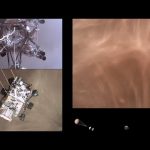
NASA’s Mars 2020 Perseverance mission captured thrilling footage of its rover landing in Mars’ Jezero Crater on Feb. 18, 2021. The real footage in this video was captured by several cameras that are part of the rover’s entry, descent, and landing suite. The views include a camera looking down from the spacecraft’s descent stage (a kind of rocket-powered jet pack that helps fly the rover to its landing site), a camera on the rover looking up at the descent stage, a camera on the top of the aeroshell (a capsule protecting the rover) looking up at that parachute, and a camera on the bottom of the rover looking down at the Martian surface.
The audio embedded in the video comes from the mission control call-outs during entry, descent, and landing.
On October 13, 2020, NASA and international partners from Australia, Canada, Italy, Japan, Luxembourg, the United Arab Emirates and the United Kingdom signed the Artemis Accords agreements for international participation in the agency’s Artemis program, during a virtual meeting of the International Astronautical Congress.
While NASA is leading the Artemis program, international partnerships will play a key role in achieving a sustainable and robust presence on the Moon while preparing to conduct a historic human mission to Mars. International cooperation on Artemis will bolster space exploration and enhance peaceful relationships between nations. The Artemis Accords will also reinforce the principles of the Outer Space Treaty.
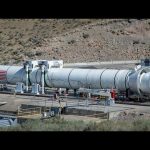
On Wed., Sept. 2., at 2:45 p.m. EDT, we will test the solid rocket boosters for our Space Launch System, the most powerful rocket ever built. This full-scale booster test will take place at the Northrop Grumman facilities in Promontory, Utah, and help engineers evaluate improvements and new materials in the boosters for deep space missions beyond #Artemis III.
This year marks the 100th anniversary of the adoption of the 19th Amendment to the U.S. Constitution, guaranteeing women the right to vote. “Past, Present, and Future of Women in Space,” is an inspirational program to reflect on the stories and contributions of women in space and STEM through the lens of the past, present, and future.
In addition to special guests, you’ll hear from a panel of NASA’s own female “firsts” and pioneers, including astronaut Stephanie Wilson; Clara Ma, NASA’s Curiosity rover naming contest winner; Charlie Blackwell-Thompson, launch director at Kennedy Space Center; and moderator Dr. Christyl Johnson, Deputy Director for Technology and Research Investments at Goddard Space Flight Center.
It turns out Beck, NASA and artificial intelligence have a lot in common!
NASA spacecraft and observatories have been imaging our solar system and our universe for over 60 years. The NASA archives host a wealth of images that showcase and educate. Beck’s latest music videos for the album Hyperspace, created by Osk Studios, use artificial intelligence to interpret our NASA images. We’ve also used our databases of Mars images to train our new Mars rover Perseverance to help it land, drive and explore with autonomy. In this episode of #AskNASA, Beck joins NASA-JPL engineer Farah Alibay and Osk designers Isabelle Albuquerque and Jon Ray to answer social media questions about A.I. in art and science.
Join ESA astronauts Thomas Pesquet and Matthias Maurer at NASA’s Johnson Space Center in Houston, Texas, USA. In part four of this video series, the astronauts discuss taking photos on the International Space Station.
Though mission details and dates are yet to be confirmed, Thomas and Matthias are the next two European astronauts in line for flights. Thomas has flown to the International Space Station before, while Matthias will fly for the first time.
Prior to a mission, astronauts train extensively to ensure they are familiar with the vast array of systems and operations on board. In this video, the pair reflect on the images Thomas took during his first mission and how he plans to approach space photography the second time around.
This video was filmed in June 2020. At that time, the platform Thomas and Matthias were standing on – in front of a full-scale mock-up of the International Space Station – was the only place at NASA’s JSC that they could interact without face masks. Despite this, the pair were required to maintain social distance at all times as a precaution.
We are Europe’s gateway to space. Our mission is to shape the development of Europe’s space capability and ensure that investment in space continues to deliver benefits to the citizens of Europe and the world. Check out http://www.esa.int/ESA to get up to speed on everything space related.
Join ESA astronauts Thomas Pesquet and Matthias Maurer at NASA’s Johnson Space Center in Houston, Texas, USA. In part one of this video series, the two astronauts compare notes on their journey to date as they prepare for missions to the International Space Station.
Though mission details and dates are yet to be confirmed, Thomas and Matthias are the next two European astronauts in line for flights. Thomas has flown to the International Space Station before, while Matthias will fly for the first time.
Prior to a mission, astronauts train extensively to ensure they are familiar with the vast array of systems and operations on board. In this video, the pair discuss how training for a second mission differs from a first mission, the challenges of training during a global pandemic, and how flying to the Station on US commercial crew vehicles may differ from flying on the Russian Soyuz spacecraft.
This video was filmed in June 2020. At that time, the platform Thomas and Matthias were standing on – in front of a full-scale mock-up of the International Space Station – was the only place at NASA’s JSC that they could interact without face masks. Despite this, the pair were required to maintain social distance at all times as a precaution.
We are Europe’s gateway to space. Our mission is to shape the development of Europe’s space capability and ensure that investment in space continues to deliver benefits to the citizens of Europe and the world. Check out http://www.esa.int/ESA to get up to speed on everything space related.
For the first time in history, NASA astronauts have launched from American soil in a commercially built and operated American crew spacecraft on its way to the International Space Station.
The SpaceX Crew Dragon spacecraft carrying NASA astronauts Robert Behnken and Douglas Hurley lifted off at 3:22 p.m. EDT Saturday on the company’s Falcon 9 rocket from Launch Complex 39A at NASA’s Kennedy Space Center in Florida. The crew will have a 19-hour-journey to the space station, arriving on Sunday, May 31.
Watch history unfold on Saturday, May 30, as NASA and SpaceX launch astronauts Robert Behnken and Douglas Hurley to the International Space Station. This mission marks the first time since the retirement of the space shuttle in 2011 that humans will fly to the space station from U.S. soil. The mission’s first launch attempt on Wednesday, May 27 was scrubbed due to weather conditions.
Tune in starting at 11 a.m. EDT as NASA and SpaceX provide joint, live coverage from launch to arrival at the space station. Teams are targeting 3:22 p.m. EDT for the launch of the SpaceX Crew Dragon spacecraft atop a Falcon 9 rocket from historic Launch Complex 39A at NASA’s Kennedy Space Center in Florida. The Crew Dragon is scheduled to dock to the space station on Sunday, May 31.
Recorded May 27, 2020: Watch history unfold on Wednesday, May 27, as NASA and SpaceX launch astronauts Robert Behnken and Douglas Hurley to the International Space Station. This mission marks the first time since the retirement of the space shuttle in 2011 that humans will fly to the space station from U.S. soil.
Tune in starting at 12:15 p.m. EDT as NASA and SpaceX provide joint, live coverage from launch to arrival at the space station. Teams are targeting 4:33 p.m. EDT for the launch of the SpaceX Crew Dragon spacecraft atop a Falcon 9 rocket from historic Launch Complex 39A at NASA’s Kennedy Space Center in Florida. The Crew Dragon is scheduled to dock to the space station at 11:29 a.m. Thursday, May 28.
One day prior to NASA’s mission with SpaceX to launch American astronauts to the International Space Station aboard the Crew Dragon spacecraft, officials will talk about the mission live from NASA’s Kennedy Space Center in Florida.
NASA Administrator Jim Bridenstine, Kennedy Space Center Director Bob Cabana, and astronauts Kjell Lindgren and Nicole Mann will be on hand to talk about the upcoming mission to fly astronauts Douglas Hurley and Robert Behnken to the orbiting laboratory.
Teams are targeting 4:33 p.m. EDT Wednesday, May 27, for the launch of the mission, which will be the first time a commercially built and operated American rocket and spacecraft will carry humans to the space station.
NASA’s mission with SpaceX to launch American astronauts to the International Space Station is cleared to proceed, officials said, following a successful Flight Readiness Review that concluded Friday, May 22, at NASA’s Kennedy Space Center in Florida.
Participants in a news briefing about the mission include:
· NASA Administrator Jim Bridenstine
· NASA Associate Administrator Steve Jurczyk
· Kathy Lueders, manager, NASA Commercial Crew Program
· Kirk Shireman, manager, International Space Station Program
· Benji Reed, director of crew mission management, SpaceX
· Norm Knight, deputy director, NASA Johnson Space Center Flight Operations
NASA and SpaceX are targeting 4:33 p.m. EDT Wednesday, May 27, for the launch of the Demo-2 flight, which will be the first time a commercially built and operated American rocket and spacecraft will carry humans to the space station.
As the COVID-19 pandemic has disrupted lives across the globe, Earth-observing satellites take the pulse of our planet from space. While the global lockdown has had a massive impact on daily life and the economy, there have been environmental benefits that are visible from space. How can we preserve these positives when returning to ‘business as usual’?
★ Subscribe: http://bit.ly/ESAsubscribe and click twice on the bell button to receive our notifications.
We are Europe’s gateway to space. Our mission is to shape the development of Europe’s space capability and ensure that investment in space continues to deliver benefits to the citizens of Europe and the world. Check out http://www.esa.int/ESA to get up to speed on everything space related.
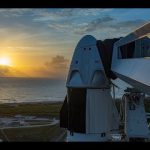
Together with SpaceX, NASA will return human spaceflight to American soil after nearly a decade. SpaceX will launch people into space for the first time ever with astronauts Bob Behnken and Doug Hurley on board Crew Dragon, which will dock to the International Space Station.
Prepare to #LaunchAmerica on May 27: www.nasa.gov/launchamerica
ESA astronaut Luca Parmitano spent 201 days in orbit as part of his Beyond mission to the International Space Station. In this clip, he discusses how astronauts manage the risk of colds and flu on the International Space Station.
We are Europe’s gateway to space. Our mission is to shape the development of Europe’s space capability and ensure that investment in space continues to deliver benefits to the citizens of Europe and the world. Check out http://www.esa.int/ESA to get up to speed on everything space related.
This is the animated storybook tale of the Spitzer spacecraft and its exploits as part of the space telescope superteam known as NASA’s Great Observatories, which also includes Hubble. With its special power to see infrared light, Spitzer revealed a whole side of the universe that had been hidden from our view.
Kids have a very different and refreshing aspect to see life,
see life from their innocent point of view.
When kids try fun activities, trying artificial intelligence.
kids doing various activities. kids and technology. kids with new technology. kids having fun with technology. children take technology as fun. Technology and fun with kids. New era new technology new kinds of fun activities with kids. kids fun activities.
funny kids with technology. artificial intelligence with kids. how kids take artificial inteligence.
Playmobil figures are enjoyed by millions of children around the world, but now two very special figures, in the likeness of ESA’s Luca Parmitano, are flying around Earth with the astronaut himself.
Luca unpacked the two figures that arrived on the Cygnus NG-11 cargo ship in April 2019. The special edition figurines, limited to 25 000 can only be found with copies of the October 2019 Italian edition of Playmobil magazine.
This issue of the magazine is full of space-themed stories to inspire children and set their imaginations racing, while explaining about space exploration, the science behind the International Space Station and what we know about the Universe and what lies beyond our planet.
Playmobil toys are known for helping children develop their imaginations and concentration skills as they invent worlds for these little figures. The magazine and figure collaboration is a partnership between ESA, the Italian space agency ASI and the Italian publisher to celebrate Luca’s achievements and promote learning and foster curiosity and creativity in children.
The Playmobil Luca sports an astronaut ‘Snoopy’ hat, similar to that worn by the real Luca as he will prepare to don his spacesuit for a series of complex spacewalks later in his mission to repair the AMS-02 ‘antimatter hunter’ instrument outside the Space Station. The Snoopy cap holds the headphone and microphone communication so spacewalkers can talk to mission control and their colleagues inside the Space Station.
We are Europe’s gateway to space. Our mission is to shape the development of Europe’s space capability and ensure that investment in space continues to deliver benefits to the citizens of Europe and the world. Check out http://www.esa.int/ESA to get up to speed on everything space related.
Josef Aschbacher, Director of Earth Observation Programmes at ESA, reflects on last year’s ɸ-week, and discusses progress made so far. As this year’s ɸ-week kicks off, he looks to the next steps of how Earth observation and the digital revolution can work together. He also mentions a new AI special interest group on space, and an exciting new challenge for the next ɸ-sat.
We are Europe’s gateway to space. Our mission is to shape the development of Europe’s space capability and ensure that investment in space continues to deliver benefits to the citizens of Europe and the world. Check out http://www.esa.int/ESA to get up to speed on everything space related.