Neil A. Armstrong, commander of the Apollo 11 mission to land on the Moon, reflects on the successful mission and his experience in lunar exploration.
For more information on the Apollo Program, visit https://www.nasa.gov/specials/apollo50th/
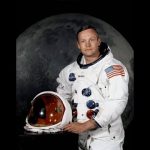
Neil A. Armstrong, commander of the Apollo 11 mission to land on the Moon, reflects on the successful mission and his experience in lunar exploration.
For more information on the Apollo Program, visit https://www.nasa.gov/specials/apollo50th/
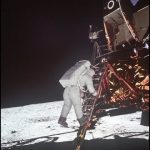
Neil Armstrong and Buzz Aldrin spent more than two hours outside their spacecraft on the Moon. They studied the surface. They collected rocks. After almost a day, they blasted off. They docked with Michael Collins in orbit around the Moon.
For more information on their voyage to the Moon and one small step on the lunar surface for all of mankind, visit https://www.nasa.gov/specials/apollo50th/

On July 20, 1969, humans walked on another world for the first time in history, achieving the goal that President John F. Kennedy had set in 1961, before Americans had even orbited the Earth. After a landing that included dodging a lunar crater and boulder field just before touchdown, Apollo 11 astronauts Neil Armstrong and Buzz Aldrin explored the area around their lunar landing site for more than two hours.
When the lunar module landed at 4:17 p.m EDT, only 30 seconds of fuel remained. Armstrong radioed “Houston, Tranquility Base here. The Eagle has landed.” Mission control erupted in celebration as the tension breaks, and a controller tells the crew “You got a bunch of guys about to turn blue, we’re breathing again.”
For more information on the Apollo Program, visit https://www.nasa.gov/specials/apollo50th/

Foams are ubiquitous in our daily lives: they are used to produce food, detergents and plastics. Foams are inherently unstable in gravity, because the liquid between the bubbles is pulled downwards bursting the bubbles in the process. Experiments on the International Space Station have shown that foams are more stable in microgravity because they remain wet. It has even been possible to make foams from pure water.
Foam research in microgravity allows researchers to better understand the processes and calculate models in the most optimal conditions. This is leading to better production and assembly of products containing foams as well as more effective foam-suppression agents.
Many industrial applications benefit from foam research and development in space: cleaning products, cosmetics, fire-fighting and medicines are just some examples. The quality, texture, taste and shelf-life of food and beverages can be enhanced – from the supermarket to the consumers’ fridge.
“It is a game change for our business” says Cécile Gehin-Delval, from Nestlé Research Laboratories in Orbe, Switzerland.
The step to space research is closer than you might think. Get involved with spaceflight research via www.esa.int/spaceflightAO. Find out about our commercial partnerships and opportunities in human and robotic exploration via www.esa.int/explorationpartners to run your research in microgravity as well.
★ Subscribe: http://bit.ly/ESAsubscribe and click twice on the bell button to receive our notifications.
Check out our full video catalog: http://bit.ly/SpaceInVideos
Follow us on Twitter: http://bit.ly/ESAonTwitter
On Facebook: http://bit.ly/ESAonFacebook
On Instagram: http://bit.ly/ESAonInstagram
On Flickr: http://bit.ly/ESAonFlickr
We are Europe’s gateway to space. Our mission is to shape the development of Europe’s space capability and ensure that investment in space continues to deliver benefits to the citizens of Europe and the world. Check out http://www.esa.int/ESA to get up to speed on everything space related.
Copyright information about our videos is available here: http://www.esa.int/spaceinvideos/Terms_and_Conditions
Our alien friend Paxi went to visit American astronaut Anne McClain on board the International Space Station. Anne explains some of the mental challenges of being an astronaut on the ISS.
★ Subscribe: http://bit.ly/ESAsubscribe and click twice on the bell button to receive our notifications.
Check out our full video catalog: http://bit.ly/SpaceInVideos
Follow us on Twitter: http://bit.ly/ESAonTwitter
On Facebook: http://bit.ly/ESAonFacebook
On Instagram: http://bit.ly/ESAonInstagram
On Flickr: http://bit.ly/ESAonFlickr
We are Europe’s gateway to space. Our mission is to shape the development of Europe’s space capability and ensure that investment in space continues to deliver benefits to the citizens of Europe and the world. Check out http://www.esa.int/ESA to get up to speed on everything space related.
Copyright information about our videos is available here: http://www.esa.int/spaceinvideos/Terms_and_Conditions
#ESAKids
#ISS
#LifeInSpace

ESA astronaut Luca Parmitano has arrived on the International Space Station following a six-hour flight in the Russian Soyuz MS-13 spacecraft alongside NASA astronaut Drew Morgan and Roscosmos cosmonaut Alexander Skvortsov.
The trio were launched from the Baikonur Cosmodrome in Kazakhstan at 16:28 GMT (18:28 CEST) on Saturday 20 July and orbited Earth four times before docking to the Station’s Zvezda service module at 22:50 GMT (00:50 CEST).
This mission to the International Space Station is the second for Luca, the third for Alexander and the first for Drew. They were warmly welcomed by NASA astronauts Christina Koch and Nick Hague and current International Space Station commander Alexey Ovchinin of Roscosmos, bringing the number of humans in orbit to six.
This clip shows highlights from preparations prior to launch, liftoff, docking and hatch opening as the crew start to settle into their new home and workplace.
Luca will live and work in orbit for the six-month duration of his Beyond mission. There, he will support over 50 European experiments and more than 200 international experiments in microgravity.
During the latter part of his mission, Expedition 61, he will take up the role of Space Station commander. He is the first Italian and third European astronaut ever appointed to this role, after ESA astronauts Alexander Gerst in 2018 and Frank De Winne in 2009.
Follow Luca’s Beyond Mission: http://bit.ly/ESALucaParmitano
★ Subscribe: http://bit.ly/ESAsubscribe and click twice on the bell button to receive our notifications.
Check out our full video catalog: http://bit.ly/SpaceInVideos
Follow us on Twitter: http://bit.ly/ESAonTwitter
On Facebook: http://bit.ly/ESAonFacebook
On Instagram: http://bit.ly/ESAonInstagram
On Flickr: http://bit.ly/ESAonFlickr
We are Europe’s gateway to space. Our mission is to shape the development of Europe’s space capability and ensure that investment in space continues to deliver benefits to the citizens of Europe and the world. Check out http://www.esa.int/ESA to get up to speed on everything space related.
Copyright information about our videos is available here: http://www.esa.int/spaceinvideos/Terms_and_Conditions
#ESA
#MissionBeyond
#LucaParmitano
The ride to the International Space Station sees astronauts launched on top of a rocket fuelled by 300 tonnes of propellant. Where on Earth do astronauts take off? When do they experience weightlessness for the first time? And how long does the trip take?
Watch in just over a minute the events from launch to docking. This video is based on a training lesson for ESA astronauts, and it features footage taken from inside the Soyuz spacecraft.
Watch the extended version: http://bit.ly/JourneyToISS
Credits: ESA/NASA/Roscosmos/Google Earth
★ Subscribe: http://bit.ly/ESAsubscribe and click twice on the bell button to receive our notifications.
Check out our full video catalog: http://bit.ly/SpaceInVideos
Follow us on Twitter: http://bit.ly/ESAonTwitter
On Facebook: http://bit.ly/ESAonFacebook
On Instagram: http://bit.ly/ESAonInstagram
On Flickr: http://bit.ly/ESAonFlickr
We are Europe’s gateway to space. Our mission is to shape the development of Europe’s space capability and ensure that investment in space continues to deliver benefits to the citizens of Europe and the world. Check out http://www.esa.int/ESA to get up to speed on everything space related.
Copyright information about our videos is available here: http://www.esa.int/spaceinvideos/Terms_and_Conditions
#ESA
#Soyuz
#InternationalSpaceStation
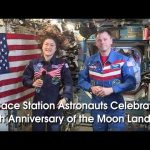
NASA Astronauts Christina Koch and Nick Hague join the world in celebrating the 50th anniversary of the Apollo 11 Moon landing — only, they do it from around 250 miles (~400 km) above the Earth’s surface on board the International Space Station.
The accomplishments of the Apollo program did not only take humans farther than ever before, but they have prepared us to take humans even farther. Learn more about our plans to bring humans to the Moon, Mars and beyond with our Artemis program: https://www.nasa.gov/specials/moon2mars/
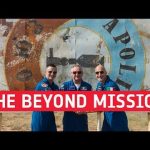
ESA astronaut Luca Parmitano is about to be launched to the International Space Station from the Baikonur Cosmodrome in Kazakhstan.
The six-month Beyond mission will be the Italian astronaut’s second flight to the Space Station.
He will be conducting an extensive series of scientific experiments and has multiple spacewalks planned to repair the antimatter hunter Alpha Magnetic Spectrometer-02. During the second half of his expedition, Luca will become the third European commander of the Space Station.
Follow Luca’s Beyond Mission: http://bit.ly/ESALucaParmitano
★ Subscribe: http://bit.ly/ESAsubscribe and click twice on the bell button to receive our notifications.
Check out our full video catalog: http://bit.ly/SpaceInVideos
Follow us on Twitter: http://bit.ly/ESAonTwitter
On Facebook: http://bit.ly/ESAonFacebook
On Instagram: http://bit.ly/ESAonInstagram
On Flickr: http://bit.ly/ESAonFlickr
We are Europe’s gateway to space. Our mission is to shape the development of Europe’s space capability and ensure that investment in space continues to deliver benefits to the citizens of Europe and the world. Check out http://www.esa.int/ESA to get up to speed on everything space related.
Copyright information about our videos is available here: http://www.esa.int/spaceinvideos/Terms_and_Conditions
#ESA
#LucaParmitano
#MissionBeyond

Thanks to new signage, visitors to NASA Headquarters in Washington, D.C. will be reminded of the contributions of the “hidden figures” essential to the success of early spaceflight. The renaming honors Katherine Johnson, Dorothy Vaughan, and Mary Jackson, who were featured in Margot Lee Shetterly’s book – and the movie – Hidden Figures, as well as all women who honorably serve their country, advancing equality, and contributing to the United States space program. News release: https://go.nasa.gov/HiddenFiguresWay
On June 12, Administrator Jim Bridenstine joined U.S. Senator Ted Cruz of Texas, D.C. Council Chairman Phil Mendelson and author Margot Lee Shetterly for the renaming of the street in front of NASA Headquarters in Washington – E Street SW – to “Hidden Figures Way.”
Learn about NASA’s hidden and modern figures: https://www.nasa.gov/modernfigures

This time-lapse video taken by NASA astronaut Nick Hague squeezes a 30-minute International Space Station trip over a cloudy Earth into 60 seconds, covering the Pacific to the Atlantic.
Learn more about the orbiting laboratory: https://www.nasa.gov/mission_pages/station/main/index.html
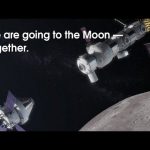
We are building a coalition of nations that can help us get to the Moon quickly and sustainably. Together.
We have a bold vision to go back to the Moon by 2024. As we work towards this goal, we welcome a growing list of international and commercial partners.
It is the partnerships over the last 60 years that have ensured the steady progress. With Mars on the horizon, together we can explore more of our solar system and share in the advances and the knowledge that will come.
We go, together.
More about NASA’s Moon to Mars plans: https://www.nasa.gov/specials/moon2mars/
This video is available for download from NASA’s Image and Video Library:
https://images.nasa.gov/details-NHQ_2019_0528_We%20Go%20Together.html

Did you know there are six humans living in space, and you can see their home from your home? NASA astronaut Nick Hague shares how you can use https://spotthestation.nasa.gov/ to find out when the International Space Station will be visible from your town!
On 11 May 2019, our astronaut Luca Parmitano met with members of the press at our establishment in Frascati, Italy, ahead of his second mission to the International Space Station. Speakers at the event included ESA Director General Jan Wörner, Head of ESA/ESRIN Josef Aschbacher, ESA Director of Human and Robotic Exploration, Italian Space Agency President Giorgio Saccoccia and ESA Utilisation Planning Team Leader Kirsten MacDonell.
Please note: the majority of the conference is in Italian, some of the speakers present in English.
Learn more about Luca’s mission: http://bit.ly/ESABeyondMissionLucaParmitano
★ Subscribe: http://bit.ly/ESAsubscribe and click twice on the bell button to receive our notifications.
Check out our full video catalog: http://bit.ly/SpaceInVideos
Follow us on Twitter: http://bit.ly/ESAonTwitter
On Facebook: http://bit.ly/ESAonFacebook
On Instagram: http://bit.ly/ESAonInstagram
On Flickr: http://bit.ly/ESAonFlickr
We are Europe’s gateway to space. Our mission is to shape the development of Europe’s space capability and ensure that investment in space continues to deliver benefits to the citizens of Europe and the world. Check out http://www.esa.int/ESA to get up to speed on everything space related.
Copyright information about our videos is available here: http://www.esa.int/spaceinvideos/Terms_and_Conditions
#ESA
#LucaParmitano
#MissionBeyond

Our alien friend Paxi, went to visit American astronaut Anne McClain on board the International Space Station. Anne explains to Paxi how astronauts move around in weightlessness on the ISS.
Credits: ESA/NASA
★ Subscribe: http://bit.ly/ESAsubscribe and click twice on the bell button to receive our notifications.
Check out our full video catalog: http://bit.ly/SpaceInVideos
Follow ESA on Twitter: http://bit.ly/ESAonTwitter
On Facebook: http://bit.ly/ESAonFacebook
On Instagram: http://bit.ly/ESAonInstagram
On Flickr: http://bit.ly/ESAonFlickr
ESA is Europe’s gateway to space. Our mission is to shape the development of Europe’s space capability and ensure that investment in space continues to deliver benefits to the citizens of Europe and the world. Check out http://www.esa.int/ESA to get up to speed on everything space related.
Copyright information about our videos is available here: http://www.esa.int/spaceinvideos/Terms_and_Conditions
#ESAKids
#ISS
#Physics

This summer our astronaut Luca Parmitano will fly to the International Space Station from Baikonur Cosmodrome.
The Italian astronaut is currently training at NASA’s Johnson Space Center in Houston, USA, where he is learning Space Station operations in depth.
His second mission is called ‘Beyond’ and includes a spacewalk and running a rich scientific programme as well as seeing Luca take over command of the International Space Station – only the third time a European astronaut holds this role.
Connect with Luca Parmitano at http://lucaparmitano.esa.int/
★ Subscribe: http://bit.ly/ESAsubscribe and click twice on the bell button to receive our notifications.
Check out our full video catalog: http://bit.ly/SpaceInVideos
Follow us on Twitter: http://bit.ly/ESAonTwitter
On Facebook: http://bit.ly/ESAonFacebook
On Instagram: http://bit.ly/ESAonInstagram
On Flickr: http://bit.ly/ESAonFlickr
We are Europe’s gateway to space. Our mission is to shape the development of Europe’s space capability and ensure that investment in space continues to deliver benefits to the citizens of Europe and the world. Check out http://www.esa.int/ESA to get up to speed on everything space related.
Copyright information about our videos is available here: http://www.esa.int/spaceinvideos/Terms_and_Conditions
#ESA
#Astronaut
#BeyondMission
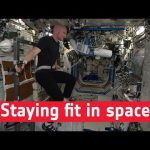
Astronauts work out for around 90 minutes a day onboard the International Space Station to combat the muscle and bone weakening effects of microgravity. But exercise is just as important for mental and physical health on Earth.
Our exercise team lead Nora Petersen explains how exercise specialists work with our astronauts to prepare them for a mission, some of the most important exercises on board and what happens upon an astronaut’s return to get them back in pre-flight shape.
The United Nations World Health Organization marks World Health Day on 7 April every year. The third Sustainable Development Goal underlines the right to health:Ensure healthy lives and promote well-being for all at all ages. On-orbit research, space technology and space applications can help improve health on Earth by monitoring our environment, helping track disease, improving diagnostics, and working on new medicines among other things. The UN is also focusing particularly this year on universal health coverage.
★ Subscribe: http://bit.ly/ESAsubscribe and click twice on the bell button to receive our notifications.
Check out our full video catalog: http://bit.ly/SpaceInVideos
Follow us on Twitter: http://bit.ly/ESAonTwitter
On Facebook: http://bit.ly/ESAonFacebook
On Instagram: http://bit.ly/ESAonInstagram
On Flickr: http://bit.ly/ESAonFlickr
We are Europe’s gateway to space. Our mission is to shape the development of Europe’s space capability and ensure that investment in space continues to deliver benefits to the citizens of Europe and the world. Check out http://www.esa.int/ESA to get up to speed on everything space related.
Copyright information about our videos is available here: http://www.esa.int/spaceinvideos/Terms_and_Conditions
#ESA
#HealthForAll
#space19plus

Managing the health of astronauts orbiting Earth at 28 000 km/h is a challenge, but how will we equip astronauts to stay healthy and deal with any medical emergencies during missions to the Moon or Mars?
Our flight surgeon Sergi Vaquer Araujo discusses how space medicine experts instill astronauts with the skills and knowledge needed to stay healthy on the International Space Station today, as we investigate new technologies that could benefit people on Earth.
The United Nations World Health Organization marks World Health Day on 7 April every year. The third Sustainable Development Goal underlines the right to health:Ensure healthy lives and promote well-being for all at all ages. On-orbit research, space technology and space applications can help improve health on Earth by monitoring our environment, helping track disease, improving diagnostics, and working on new medicines among other things. The UN is also focusing particularly this year on universal health coverage.
★ Subscribe: http://bit.ly/ESAsubscribe and click twice on the bell button to receive our notifications.
Check out our full video catalog: http://bit.ly/SpaceInVideos
Follow us on Twitter: http://bit.ly/ESAonTwitter
On Facebook: http://bit.ly/ESAonFacebook
On Instagram: http://bit.ly/ESAonInstagram
On Flickr: http://bit.ly/ESAonFlickr
We are Europe’s gateway to space. Our mission is to shape the development of Europe’s space capability and ensure that investment in space continues to deliver benefits to the citizens of Europe and the world. Check out http://www.esa.int/ESA to get up to speed on everything space related.
Copyright information about our videos is available here: http://www.esa.int/spaceinvideos/Terms_and_Conditions
#ESA
#HealthForAll
#space19plus
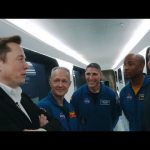
On the latest Watch this Space, NASA Administrator Jim Bridenstine chats with SpaceX CEO and Chief Designer Elon Musk during a tour of Launch Complex 39A just before the Demo-1 launch at the Kennedy Space Center in Florida. The historic Demo-1 mission launched at 2:49 a.m. EDT on Saturday, March 2 and was the first launch of a commercially built and operated American spacecraft and space system designed for humans as part of NASA’s Commercial Crew Program.
Learn more about the Commercial Crew program: https://blogs.nasa.gov/commercialcrew/.
Join Paxi on a trip to the Moon!
In this video, targeted at children aged between 6 and 12 years, Paxi explores what humans need to live on the Moon.
The adventures of Paxi are also available in the following languages:
🇨🇿 https://youtu.be/x9MqiQoIzJc
🇩🇰 https://youtu.be/nhElPPLwW5M
🇳🇱 https://youtu.be/8popaYvkhb4
🇫🇮 https://youtu.be/LobWAO6a-Hk
🇫🇷 https://youtu.be/xzeL-TZz_Qg
🇩🇪 https://youtu.be/DaAUE1R9pn4
🇮🇹 https://youtu.be/pdOzAzA6SfQ
🇳🇴 https://youtu.be/GzRdVAbJaDQ
🇵🇱 https://youtu.be/DYdAR2F7KTY
🇵🇹 https://youtu.be/W2Y2RMEacDQ
🇷🇴 https://youtu.be/2jVsuVZbez8
🇪🇸 https://youtu.be/xd1a0BHZ2uo
🇸🇪 https://youtu.be/_rpxtATdMvE
★ Subscribe: http://bit.ly/ESAsubscribe and click twice on the bell button to receive our notifications.
Check out our full video catalog: http://bit.ly/SpaceInVideos
Follow ESA on Twitter: http://bit.ly/ESAonTwitter
On Facebook: http://bit.ly/ESAonFacebook
On Instagram: http://bit.ly/ESAonInstagram
On Flickr: http://bit.ly/ESAonFlickr
ESA is Europe’s gateway to space. Our mission is to shape the development of Europe’s space capability and ensure that investment in space continues to deliver benefits to the citizens of Europe and the world. Check out http://www.esa.int/ESA to get up to speed on everything space related.
Copyright information about our videos is available here: http://www.esa.int/spaceinvideos/Terms_and_Conditions
#Paxi
#ESAKids
#Moon
By cultivating human endothelial cells in space, researchers are gaining knowledge about the way our blood vessels function. This could help prevent and treat diseases such as atherosclerosis, hypertension, diabetes and thrombosis here on Earth, while keeping astronauts healthy in space.
In this video, biochemist and molecular biologist Dr Markus Wehland discusses the Spheroids experiment, which ran on the International Space Station during ESA astronaut Tim Peake’s Principia mission in 2016.
Cells cultivated in microgravity during this experiment assembled into globular and tubular structures. These structures were similar to the inner lining of blood vessels inside our bodies, but had never been achieved before by scientists cultivating cells on Earth.
Knowledge about cell growth and structure gained through this study could aid the development of tissue engineering techniques to replace damaged blood vessels in patients. It could also improve the efficiency and safety of drugs that help regulate vessel development.
It is good news for those affected by cardiovascular disease and a great example of the way in which research in microgravity is enhancing life on Earth.
The step to space research is closer than you might think. Get involved with spaceflight research via www.esa.int/spaceflightAO. Find out about our commercial partnerships and opportunities in human and robotic exploration via www.esa.int/explorationpartners to run your research in microgravity as well.
★ Subscribe: http://bit.ly/ESAsubscribe and click twice on the bell button to receive our notifications.
Check out our full video catalog: http://bit.ly/SpaceInVideos
Follow ESA on Twitter: http://bit.ly/ESAonTwitter
On Facebook: http://bit.ly/ESAonFacebook
On Instagram: http://bit.ly/ESAonInstagram
On Flickr: http://bit.ly/ESAonFlickr
ESA is Europe’s gateway to space. Our mission is to shape the development of Europe’s space capability and ensure that investment in space continues to deliver benefits to the citizens of Europe and the world. Check out http://www.esa.int/ESA to get up to speed on everything space related.
Copyright information about our videos is available here: http://www.esa.int/spaceinvideos/Terms_and_Conditions
#ESA
#Exploration
#Health
(Watch this interview in English: https://youtu.be/oXeetYA2ods)
Nur wenige Stunden nach dem ESA-Astronaut Alexander Gerst von seiner Horizons-Mission auf der Internationalen Raumstation ISS zurückgekehrt ist, gibt er ein kurzes Interview in der Forschungseinrichtung :envihab auf dem Campus des Deutschen Zentrums für Luft- und Raumfahrt in Köln.
Alexander Gerst kehrte am 20. Dezember 2018 zusammen mit den Besatzungsmitgliedern Serena Auñón- Chancellor und Sergei Prokopyev in der Sojus MS-09 auf die Erde zurück – demselben Raumschiff, dass sie am 6. Juni 2018 zur Station brachte.
Die Landung des Trios in der kasachischen Steppe markierte nach über sechs Monaten im Weltraum den erfolgreichen Abschluss der so genannten ISS Expedition 56/57. In dieser Zeit führte Alexander Gerst über 60 europäische Experimente durch, wurde der zweite europäische Kommandant der Internationalen Raumstation, nahm sechs Raumtransporter in Empfang, installierte die erste kommerzielle Forschungsanlage im Columbus-Labor der ESA, sendete eine wichtige Botschaft zum Klimawandel für Delegierte der COP24-Klimakonferenz, machte Echtzeitaufnahmen von einem Sojus-Startabbruch und vieles mehr.
Horizons war Alexander Gersts zweite Mission auf der Internationalen Raumstation – die erste im Jahr 2014 trug den Namen Blue Dot. Er hat nun 363 volle, allerdings nicht aufeinanderfolgende Tage im Weltraum verbracht (an seinem 364. Tag kehrte er nach Hause zurück).
In Köln angekommen, wird Alexander Gerst eine Vielzahl an Bord der ISS durchgeführter wissenschaftlich-technischer Experimente auf der Erde mit dem Ziel der vergleichenden Betrachtung und Bewertung der Daten wiederholen. Hinzu kommen medizinische Untersuchungen sowie viel Sport und körperliches Training zum Zwecke der Regenerierung und Rehabilitation.
★ Subscribe: http://bit.ly/ESAsubscribe and click twice on the bell button to receive our notifications.
Check out our full video catalog: http://bit.ly/SpaceInVideos
Follow ESA on Twitter: http://bit.ly/ESAonTwitter
On Facebook: http://bit.ly/ESAonFacebook
On Instagram: http://bit.ly/ESAonInstagram
On Flickr: http://bit.ly/ESAonFlickr
ESA is Europe’s gateway to space. Our mission is to shape the development of Europe’s space capability and ensure that investment in space continues to deliver benefits to the citizens of Europe and the world. Check out http://www.esa.int/ESA to get up to speed on everything space related.
Copyright information about our videos is available here: http://www.esa.int/spaceinvideos/Terms_and_Conditions
(A German version of this interview is available here: https://youtu.be/Rhv-6TXTSX4)
Just hours after returning from his Horizons mission on the International Space Station, ESA astronaut Alexander Gerst gives a short interview at the German Aerospace Centre’s ‘:envihab’ facility in Cologne, Germany.
Alexander returned to Earth alongside crew mates Serena Auñón-Chancellor and Sergei Prokopyev on 20 December 2018 in the same Soyuz MS-09 spacecraft that flew them to the Station on 6 June 2018.
The trio’s landing in the Kazakh steppe marked the successful conclusion of over six months in space during which Alexander conducted over 60 European experiments, became the second ever European commander of the International Space Station, welcomed six resupply vehicles, installed the first commercial facility for research in the Columbus laboratory, delivered an important message on climate change for leaders at the COP24 climate change conference, captured real-time footage of a Soyuz launch abort and much, much more.
#Horizons was Alexander’s second mission to the International Space Station – the first was Blue Dot in 2014.
Now back in Cologne, Alexander will take his time to readapt to Earth’s gravity supported by ESA’s team of space medicine experts. He will also continue to provide ground-based data for researchers to support experiments performed in space.
Follow Alexander on social media via http://bit.ly/AlexanderGerstESA and on http://bit.ly/HorizonsBlogESA
★ Subscribe: http://bit.ly/ESAsubscribe and click twice on the bell button to receive our notifications.
Check out our full video catalog: http://bit.ly/SpaceInVideos
Follow ESA on Twitter: http://bit.ly/ESAonTwitter
On Facebook: http://bit.ly/ESAonFacebook
On Instagram: http://bit.ly/ESAonInstagram
On Flickr: http://bit.ly/ESAonFlickr
ESA is Europe’s gateway to space. Our mission is to shape the development of Europe’s space capability and ensure that investment in space continues to deliver benefits to the citizens of Europe and the world. Check out http://www.esa.int/ESA to get up to speed on everything space related.
Copyright information about our videos is available here: http://www.esa.int/spaceinvideos/Terms_and_Conditions
![How do astronauts return to Earth? [with Closed Captions]](https://video.kidibot.ro/wp-content/uploads/2021/07/10518-how-do-astronauts-return-to-earth-with-closed-captions-150x150.jpg)
[TURN CC ON!]
The ride home from the International Space Station sees the astronauts brake from 28 800 km/h to a standstill at touchdown in barely three hours. How does the Soyuz spacecraft reenter the atmosphere? And how does the capsule land?
Watch in just two minutes the sequence of events from farewell to landing. This video is based on a training lesson for ESA astronauts, and it features dramatic footage of actual landings.
To find out more, watch the extended version: https://www.youtube.com/watch?v=-l7MM9yoxII
Credits:
ESA; NASA; Roscosmos; S.P. Korolev Rocket; Space Corporation Energia; Aerospace Search and Rescue Service of the Russian Federation.
★ Subscribe: http://bit.ly/ESAsubscribe and click twice on the bell button to receive our notifications.
Check out our full video catalog: http://bit.ly/SpaceInVideos
Follow ESA on Twitter: http://bit.ly/ESAonTwitter
On Facebook: http://bit.ly/ESAonFacebook
On Instagram: http://bit.ly/ESAonInstagram
On Flickr: http://bit.ly/ESAonFlickr
ESA is Europe’s gateway to space. Our mission is to shape the development of Europe’s space capability and ensure that investment in space continues to deliver benefits to the citizens of Europe and the world. Check out http://www.esa.int/ESA to get up to speed on everything space related.
Copyright information about our videos is available here: http://www.esa.int/spaceinvideos/Terms_and_Conditions
Experience magical moments from ESA astronaut Alexander Gerst’s Horizons mission in this time-lapse of highlights from space.
Combining thousands of images taken by Alexander over more than six months, this Ultra High Definition video provides a glimpse into spacecraft operations and the beauty of Earth as seen from the International Space Station.
Marvel at orbital sunrises, dancing auroras, city lights, oceans, clouds, the Milky Way, the release of cargo vehicles, a Soyuz launch and more against the thin band of atmosphere that surrounds our planet.
Watch in 4K resolution for the best effect and find even more of Alexander’s images on Flickr at https://www.flickr.com/photos/astro_alex/
Music is Quantum and Time by Igor Dvorkin, Duncan Pittock and Ellie Kidd sourced from the Audio Network library.
Follow Alexander and the #Horizons mission on social media via http://bit.ly/AlexanderGerstESA and on http://bit.ly/HorizonsBlogESA
★ Subscribe: http://bit.ly/ESAsubscribe and click twice on the bell button to receive our notifications.
Check out our full video catalog: http://bit.ly/SpaceInVideos
Follow ESA on Twitter: http://bit.ly/ESAonTwitter
On Facebook: http://bit.ly/ESAonFacebook
On Instagram: http://bit.ly/ESAonInstagram
On Flickr: http://bit.ly/ESAonFlickr
ESA is Europe’s gateway to space. Our mission is to shape the development of Europe’s space capability and ensure that investment in space continues to deliver benefits to the citizens of Europe and the world. Check out http://www.esa.int/ESA to get up to speed on everything space related.
Copyright information about our videos is available here: http://www.esa.int/spaceinvideos/Terms_and_Conditions
This is what three astronauts being launched into space looks like – seen from space. ESA astronaut Alexander Gerst took this time-lapse sequence from the International Space Station’s Cupola observatory on 3 December 2018.
Inside the Soyuz MS-11 spacecraft were NASA astronaut Anne McClain, Canadian Space Agency astronaut David Saint-Jacques and Roscosmos astronaut and Soyuz commander Oleg Konenenko. The trio blasted into orbit at 11:31 GMT from the Baikonur cosmodrome in Kazakhstan and docked with the International Space Station just six hours later.
Spacecraft are launched after the Space Station flies overhead. This allowed Alexander to set up a camera to take regular pictures at intervals that are played back to create this video.
The rocket leaves behind a trail of exhaust as it gains altitude and passes through the layers of Earth’s atmosphere.
Download the video from ESA’s space in videos: http://www.esa.int/spaceinvideos/Videos/2018/12/Soyuz_spacecraft_launch_timelapse_seen_from_space
Follow Alexander and the #Horizons mission on social media via http://bit.ly/AlexanderGerstESA and on http://bit.ly/HorizonsBlogESA.
Credits: ESA/NASA.
★ Subscribe: http://bit.ly/ESAsubscribe and click twice on the bell button to receive our notifications.
Check out our full video catalog: http://bit.ly/SpaceInVideos
Follow ESA on Twitter: http://bit.ly/ESAonTwitter
On Facebook: http://bit.ly/ESAonFacebook
On Instagram: http://bit.ly/ESAonInstagram
On Flickr: http://bit.ly/ESAonFlickr
ESA is Europe’s gateway to space. Our mission is to shape the development of Europe’s space capability and ensure that investment in space continues to deliver benefits to the citizens of Europe and the world. Check out http://www.esa.int/ESA to get up to speed on everything space related.
Copyright information about our videos is available here: http://www.esa.int/spaceinvideos/Terms_and_Conditions
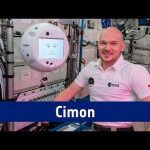
ESA astronaut Alexander Gerst welcomed a new face to the Columbus laboratory, thanks to the successful commissioning of technology demonstration Cimon. Short for Crew Interactive Mobile CompanioN, Cimon is a 3D-printed plastic sphere designed to test human-machine interaction in space.
Developed and built by Airbus in Friedrichshafen and Bremen, Germany, on behalf of German Space Agency DLR, Cimon uses artificial intelligence software by IBM Watson. Its scientific aspects are overseen by researchers at Ludwig Maximilians University Clinic in Munich.
This video shows Alexander’s first interactions with Cimon on board the International Space Station. After introducing himself, where he comes from and what he can do, Cimon tests his free-flying abilities, helps Alexander with a procedure and even plays Alexander’s favourite song ‘Man Machine’ by Kraftwerk. In fact, Cimon likes the music so much, he does not want to stop.
Happy with his initial outing, both Cimon’s developers and Alexander hope to see Cimon back in action again soon. While no further sessions are planned during the Horizons mission at this stage, it could mark the beginning of exciting collaboration between astronauts, robotic assistants and possible future artificial intelligence in space.
Follow Alexander and the #Horizons mission on social media via http://bit.ly/AlexanderGerstESA and on http://bit.ly/HorizonsBlogESA.
★ Subscribe: http://bit.ly/ESAsubscribe
Check out our full video catalog: http://bit.ly/SpaceInVideos
Follow ESA on Twitter: http://bit.ly/ESAonTwitter
On Facebook: http://bit.ly/ESAonFacebook
On Instagram: http://bit.ly/ESAonInstagram
On Flickr: http://bit.ly/ESAonFlickr
ESA is Europe’s gateway to space. Our mission is to shape the development of Europe’s space capability and ensure that investment in space continues to deliver benefits to the citizens of Europe and the world. Check out http://www.esa.int/ESA to get up to speed on everything space related.
Copyright information about our videos is available here: http://www.esa.int/spaceinvideos/Terms_and_Conditions

After a 24-hour journey from Bremen, Germany with stops in Hamburg and Portsmouth, USA, the European Service Module landed on 6 November 2018 at Kennedy Space Center in Florida.
The shipment from Bremen to Florida is just the beginning – the first leg of an exciting journey that will boost the spacecraft to lunar orbit and back.
The first service module is a key component that will see #Orion around the Moon for Exploration Mission-1. It will make the powerful burns required to enter and exit lunar orbit as well as softer burns to allow for space manoeuvring and course correction.
After years of designing, building, and testing in Europe, the powerhouse that will propel NASA’s Orion spacecraft to the Moon will be mated with the rest of the spacecraft to undergo final testing before flight.
ESA’s partnership with NASA takes the European effort to the global stage. For the first time, NASA will use a European-built system as a critical element to power an American spacecraft, extending the international cooperation of the International Space Station into deep space.
Find out more about Orion and ESM: http://www.esa.int/orion
★ Subscribe: http://bit.ly/ESAsubscribe
Check out our full video catalog: http://bit.ly/SpaceInVideos
Follow ESA on Twitter: http://bit.ly/ESAonTwitter
On Facebook: http://bit.ly/ESAonFacebook
On Instagram: http://bit.ly/ESAonInstagram
On Flickr: http://bit.ly/ESAonFlickr
ESA is Europe’s gateway to space. Our mission is to shape the development of Europe’s space capability and ensure that investment in space continues to deliver benefits to the citizens of Europe and the world. Check out http://www.esa.int/ESA to get up to speed on everything space related.
Copyright information about our videos is available here: http://www.esa.int/spaceinvideos/Terms_and_Conditions
Timelapse of the Russian Progress MS-10 cargo spacecraft launched on 16 November 2018 at 18:14 GMT from Baikonur cosmodrome, Kazakhstan, taken by ESA astronaut Alexander Gerst from the International Space Station.
The spacecraft was launched atop a Soyuz rocket with 2564 kg of cargo and supplies. Flying at 28 800 km/h, 400 km high, the International Space Station requires regular supplies from Earth such as this Progress launch. Spacecraft are launched after the Space Station flies overhead so they catch up with the orbital outpost to dock, in this case two days later on 18 November 2018.
The images were taken from the European-built Cupola module with a camera set to take pictures at regular intervals. The pictures are then played quickly after each other at 8 to 16 times normal speed. The video shows around 15 minutes of the launch at normal speed.
The Progress spacecraft delivered food, fuel and supplies, including about 750 kg of propellant, 75 kg of oxygen and air and 440 l of water.
Some notable moments in this video are:
00:07 Soyuz-FG rocket booster separation.
00:19 Core stage separation.
00:34:05 Core stage starts burning in the atmosphere as it returns to Earth after having spent all its fuel.
00:34:19 Progress spacecraft separates from rocket and enters orbit to catch up with the International Space Station.
Download the video: http://bit.ly/ProgressLaunchTimelapseSeenFromSpace
Score – ‘Empire’s Dawn 2’ by Terry Devine – King: https://www.audionetwork.com/browse/m/track/empires-dawn-2_14574
Follow Alexander and the #Horizons mission on social media via http://bit.ly/AlexanderGerstESA and on http://bit.ly/HorizonsBlogESA.
Credits: ESA/NASA.
★ Subscribe: http://bit.ly/ESAsubscribe
Check out our full video catalog: http://bit.ly/SpaceInVideos
Follow ESA on Twitter: http://bit.ly/ESAonTwitter
On Facebook: http://bit.ly/ESAonFacebook
On Instagram: http://bit.ly/ESAonInstagram
On Flickr: http://bit.ly/ESAonFlickr
ESA is Europe’s gateway to space. Our mission is to shape the development of Europe’s space capability and ensure that investment in space continues to deliver benefits to the citizens of Europe and the world. Check out http://www.esa.int/ESA to get up to speed on everything space related.
Copyright information about our videos is available here: http://www.esa.int/spaceinvideos/Terms_and_Conditions
Since the very first module Zarya launched from Baikonur Cosmodrome on 20 November 1998, the International Space Station has delivered a whole new perspective on this planet we call home. Join us as we celebrate 20 years of international collaboration and research for the benefit of Earth with ESA astronaut Alexander Gerst’s longest timelapse yet.
In just under 15 minutes, this clip takes you from Tunisia across Beijing and through Australia in two trips around the world. You can follow the Station’s location using the map at the top right-hand-side of the screen alongside annotations on the photos themselves.
This timelapse comprises approximately 21 375 images of Earth all captured by Alexander from the International Space Station and shown 12.5 times faster than actual speed.
Music is Orbital Horizons, an original composition by Los Angeles-based musician Matt Piper.
Participate in further Space Station celebrations via social media using hashtag #SpaceStation20th.
Download this video: http://bit.ly/LongestTLFromISS
Follow Alexander and the Horizons mission on social media via http://bit.ly/AlexanderGerstESA and on http://bit.ly/HorizonsBlogESA.
★ Subscribe: http://bit.ly/ESAsubscribe
Check out our full video catalog: http://bit.ly/SpaceInVideos
Follow ESA on Twitter: http://bit.ly/ESAonTwitter
On Facebook: http://bit.ly/ESAonFacebook
On Instagram: http://bit.ly/ESAonInstagram
On Flickr: http://bit.ly/ESAonFlickr
ESA is Europe’s gateway to space. Our mission is to shape the development of Europe’s space capability and ensure that investment in space continues to deliver benefits to the citizens of Europe and the world. Check out http://www.esa.int/ESA to get up to speed on everything space related.
Copyright information about our videos is available here: http://www.esa.int/spaceinvideos/Terms_and_Conditions
On Thurs., Oct. 11, 2018, Nick Hague’s planned launch to the International Space Station aboard a Soyuz spacecraft ended minutes later in a safe landing on Earth, after an issue with the rocket’s booster: https://youtu.be/LUwnLFKfuBE He answered questions for the first time on Oct. 16, in a Facebook Live event with NASA’s followers.
Learn more about the incident: https://www.nasa.gov/feature/astronaut-cosmonaut-safe-after-abort-during-launch-to-international-space-station
Learn more about astronaut Nick Hague: https://www.nasa.gov/astronauts/biographies/tyler-nick-hague
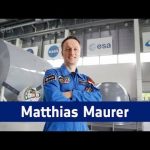
German citizen, Matthias Maurer, officially graduated as an ESA astronaut on Tuesday 25 September 2018 at the European Astronaut Centre in Cologne, Germany. Having completed basic and pre-assignment training, he is now qualified to go to space.
From in the classroom to underwater, across Europe, China and beyond, this clip showcases a few highlights from a challenging and rewarding three-year programme.
Send your congratulatory messages to Matthias in the comment section below.
Follow Matthias on Twitter: https://twitter.com/Explornaut
★ Subscribe: http://bit.ly/ESAsubscribe
Check out our full video catalog: http://bit.ly/SpaceInVideos
Follow ESA on Twitter: http://bit.ly/ESAonTwitter
On Facebook: http://bit.ly/ESAonFacebook
On Instagram: http://bit.ly/ESAonInstagram
On Flickr: http://bit.ly/ESAonFlickr
ESA is Europe’s gateway to space. Our mission is to shape the development of Europe’s space capability and ensure that investment in space continues to deliver benefits to the citizens of Europe and the world. Check out http://www.esa.int/ESA to get up to speed on everything space related.
Copyright information about our videos is available here: http://www.esa.int/spaceinvideos/Terms_and_Conditions
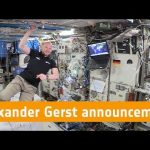
ESA astronaut Alexander Gerst launches the 2018/19 European Astro Pi Challenge; an ESA Education project run in collaboration with the Raspberry Pi Foundation. He invites students and young people to conduct their own scientific investigations in space, by writing computer programs that run on Raspberry Pi computers on board the International Space Station.
★ Subscribe: http://bit.ly/ESAsubscribe
Check out our full video catalog: http://bit.ly/SpaceInVideos
Follow ESA on Twitter: http://bit.ly/ESAonTwitter
On Facebook: http://bit.ly/ESAonFacebook
On Instagram: http://bit.ly/ESAonInstagram
On Flickr: http://bit.ly/ESAonFlickr
ESA is Europe’s gateway to space. Our mission is to shape the development of Europe’s space capability and ensure that investment in space continues to deliver benefits to the citizens of Europe and the world. Check out http://www.esa.int/ESA to get up to speed on everything space related.
Copyright information about our videos is available here: http://www.esa.int/spaceinvideos/Terms_and_Conditions
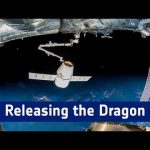
This timelapse video shows still pictures taken from the International Space Station of the departing #Dragon supply spacecraft. Played in quick succession the video displays faster than real life but in 4K resolution.
The Dragon spacecraft was released from the Station’s robotic arm at 18:38 GMT on 3 August 2018. Thrusters fired to increase its distance from the Space Station and the spacecraft started its deorbit and return to Earth, splashing down in the Pacific Ocean less than seven hours after release.
The International Space Station flies at 28 800 km/h above our planet doing a complete orbit in around 90 minutes – during release operations the sun set and rose above the horizon many times.
As Dragon faded into the distance it flew over a stormy part of Earth – lightning flashes can be seen many kilometres below.
Dragon is the only spacecraft that can return to Earth with scientific cargo aside from the Soyuz spacecraft that ferries astronauts to space and back – this flight carried over 1700 kg of cargo.
Watch the release of Cygnus here: https://youtu.be/bttU_rKoti0
★ Subscribe: http://bit.ly/ESAsubscribe
Follow Alexander and the Horizons mission on social media via http://bit.ly/AlexanderGerstESA and on http://bit.ly/HorizonsBlogESA.
Check out our full video catalog: http://bit.ly/SpaceInVideos
Follow ESA on Twitter: http://bit.ly/ESAonTwitter
On Facebook: http://bit.ly/ESAonFacebook
On Instagram: http://bit.ly/ESAonInstagram
On Flickr: http://bit.ly/ESAonFlickr
ESA is Europe’s gateway to space. Our mission is to shape the development of Europe’s space capability and ensure that investment in space continues to deliver benefits to the citizens of Europe and the world. Check out http://www.esa.int/ESA to get up to speed on everything space related.
Copyright information about our videos is available here: http://www.esa.int/spaceinvideos/Terms_and_Conditions
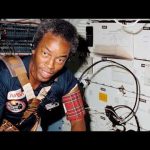
On August 30, 1983, mission specialist Guion “Guy” Bluford became the first African-American astronaut to fly in space. The dramatic night launch of space shuttle Challenger on the STS-8 mission (https://go.nasa.gov/2N8y4e8), 35 years ago today, marked an important milestone in American history. Bluford, who flew on three more shuttle missions during his NASA career, reflects on the significance of his first space flight.

Ever wondered what it feels like to fly from Alaska to the Andes in 260 seconds? ESA astronaut Alexander Gerst captured this timelapse footage of Alaska, the USA and South America while orbiting Earth on board the International Space Station.
This timelapse is made up of 6,375 images shown 12.5 times faster than actual speed. Music is Our Oasis by Miriam Speyer, sourced from Audio Network Limited.
★ Subscribe: http://bit.ly/ESAsubscribe
Follow Alexander and the Horizons mission on social media via http://bit.ly/AlexanderGerstESA and on http://bit.ly/HorizonsBlogESA.

Māori, as native New Zealanders, refer to their islands as “Aotearoa” or “the land of the long white cloud”. This timelapse from ESA astronaut Alexander Gerst shows Australia and New Zealand shrouded in cloud from the unique viewpoint of the International Space Station.
Comprised of 5,175 photos, this timelapse is 12.5 times faster than actual speed and is set to the soundtrack “Try or Die” sourced from Audio Network Limited.
★ Subscribe: http://bit.ly/ESAsubscribe
Follow Alexander and the Horizons mission on social media via http://bit.ly/AlexanderGerstESA and on http://bit.ly/HorizonsBlogESA.
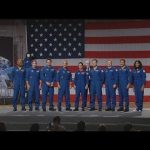
Astronauts named to the first commercial crew flights, using Earth science data to benefit society, and California wildfires seen from space … a few of the stories to tell you about – This Week at NASA!
This video is available for download from NASA’s Image and Video Library: https://images.nasa.gov/details-NHQ_2018_0803_Astronauts%20Assigned%20to%20First%20Commercial%20Crew%20Flights%20on%20This%20Week%20@NASA%20%E2%80%93%20August%203,%202018.html
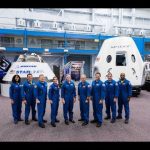
NASA announces the men and women who will be on board the first flights of the new spaceships built by Boeing and SpaceX when Americans are once again launched into space from the USA.
News release: https://go.nasa.gov/2KoGhVS
The nine astronauts targeted to make the first flights on the Boeing CST-100 Starliner and SpaceX Crew Dragon share their thoughts about the assignment and the importance of this new capability to support the International Space Station as part of the nation’s overall space exploration plan.
More about the Commercial Crew Program: https://go.nasa.gov/1EIx5m6
![Nachricht an meine Enkelkinder [with Closed Captions]](https://video.kidibot.ro/wp-content/uploads/2020/03/6507/nachricht-an-meine-enkelkinder-with-closed-captions-150x150.jpg)