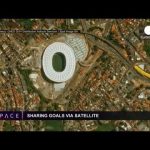
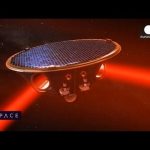
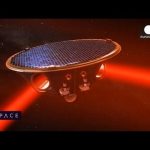
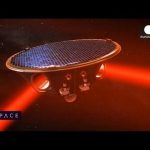
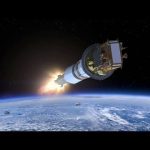
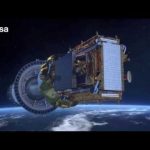
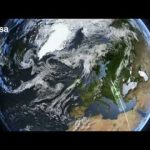
Com a chegada do Mundial o planeta irá recorrer à tecnologia espacial para reproduzir os acontecimentos em direto, a partir do Brasil. Milhares de adeptos testemunharão o evento ao vivo, mas são muitos mais os que irão assistir a tudo através da televisão. Estima-se que mais de 3,2 mil milhões de pessoas acompanhem a cobertura televisiva – quase metade da população do planeta terra. O Campeonato do Mundo é transmitido através do que os operadores de satélite chamam de transmissão de “uso ocasional.” É esse o nome para largura de banda alocada juntamente com transmissões regulares para cobrir eventos especiais em direto. O período de duração do Mundial será atarefado. “Independentemente da tecnologia usada nas casas para receber sinal de televisão, os satélites serão utilizados”, sublinha Xavier Lobao, chefe de Projetos de Telecomunicações Futuras na Agência Espacial Europeia.
Scientists are getting closer than ever to understanding the origins of the Universe. For the first time, they have glimpsed behind the veil that covers the ‘Big Bang’ with the announcement that the Background Imaging of Cosmic Extragalactic Polarisation — BICEP2 — experiment at the South Pole had spotted the footprints of something called primordial gravitational waves. These waves may be a sign that a theory known as cosmic inflation can be confirmed. For those studying the Big Bang — the beginning of the Universe — this is big news.
Segíthetnek-e a gravitációs hullámok megérteni az univerzum kezdetét? Ez még mindig nagy kérdés, ezért izgatják annyira az elsődleges gravitációs hullámok a tudósokat.
Πλησιάζουμε περισσότερο από ποτέ στην κατανόηση της προέλευσης του σύμπαντος. Για πρώτη φορά αφαιρούμε το πέπλο που καλύπτει το Big Bang. Τι καταλαβαίνουμε λοιπόν για τη γέννηση του κόσμου.
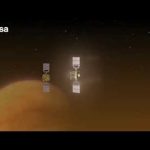
Visualisation of the Venus Express aerobraking manoeuvre, which will see the spacecraft orbiting Venus at an altitude of around 130 km from 18 June to 11 July. In the month before, the altitude will gradually be reduced from around 200 km to 130 km. If the spacecraft survives and fuel permits, the elevation of the orbit will be raised back up to approximately 450 km, allowing operations to continue for a further few months. Eventually, however, the spacecraft will plunge back into the atmosphere and the mission will end.
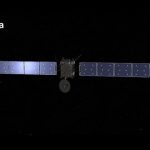
Rosetta is about to put on the brakes to ensure that it is on target for comet 67P/Churyumov-Gerasimenko.
This video explains the crucial orbit correction manoeuvres that are required to slow down Rosetta’s speed, relative to the comet, from 750 metres per second to just one metre per second between 21 May and 5 August. By then, nine thruster burns (including one test burn in early May) will have reduced the distance between them from one million kms to just under 200 kms.
We also see the first images of the comet from the spacecraft’s OSIRIS camera (Optical, Spectroscopic and Infrared Remote Imaging System), taken between 24 March and 4 May 2014. As the spacecraft gets closer to the comet, further images will improve the orbital corrections and provide more details about the comet’s shape, size and rotation.
MIRO, built by an international team for the European Space Agency, will start taking measurements from late May onwards and will measure gases released from the comet as it approaches the Sun.
2014 is a special year: the space community is celebrating the anniversary of the construction of Europe as a space power and 50 years of unique achievements in space.
It started with the creation of two entities, entering into force in 1964, the European Launcher Development Organisation (ELDO) and the European Space Research Organisation (ESRO).
A little more than a decade later, the European Space Agency (ESA) would be established, replacing these two organisations and since then serving European cooperation and innovation.
This video recalls the importance of Europe efforts in space and its successes with now a guaranteed and independent access to space and several programs covering all possible areas from Science, to Earth Observation, Human Spaceflight, Telecom and Navigation.
In this edition of Space we look back at the past 50 years of space in Europe; five decades of discovery, drama and innovation that have had a profound impact on how we see ourselves and our planet. Historian John Krige gives his insight on how Europe’s space sector has evolved, while veteran space scientists recount their experiences in major missions and launches.
Idén ötven éve indult el a közös európai űrprogram. A nehezen összekovácsolt tudományos együttműködés az egyik remek példa arra, amikor Európa működik.
Ötven évvel ezelőtt a világ már az űrverseny lázában égett. A Szputnyik elküldte az első jeleket, Jurij Gagarin már járt az űrben, az Egyesült Államok és a Szovjetunió vetélkedése hajtotta a tudományt előre.
*Azt hittük, vége a világnak*
– A világ elképesztően törékeny, veszélyes hely volt – jellemezte az időszakot John Krige, a Georgia Institute of Technology történésze. – A szuperhatalmak vetélkedése talán akkor volt a csúcson, a kubai rakétaválság idején. Én fiatalember voltam, és egész biztosan azt gondoltam, hogy az lesz a világ vége. Szerintem nem voltam ezzel egyedül.
Ebben a feszült helyzetben lépett fel két európai fizikus, az olasz Eduardo Arnaldi és a francia Pierre Auger, akik szentül hittek abban, hogy a rakétáknak és a műholdaknak a tudományt kell szolgálniuk, nem a kardcsörtetést.
– Azok az országok, amelyek a közös európai űrprogramba belevágtak, húsz évvel korábban gyilkos háborút vívtak egymással – magyarázta Roger-Maurice Bonnet, az Európai Űrügynökség (ESA) volt tudományos igazgatója. – Ezek az országok összegyűltek, és úgy döntöttek, olyan közös nyelvet fognak használni, amelyen nem lehet őket egymásra uszítani – a tudomány nyelvét.
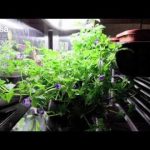
Growing plants for food was a significant step in the history of mankind. Growing plants for food in space and on other planets will be necessary for exploration of our Universe.
Javier Medina from the Spanish research council CSIC explains the attraction of plants for human exploration to supply oxygen and food.
He introduces current and future experiments on the International Space Station into plants and explains the logic of these greenhouses in space.
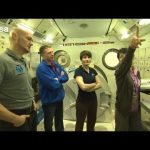
ESA astronauts have to train with all International Space Station partners: we often see images of them training at Star City in Russia or in Houston, in the US, but they also have to go to Japan during the preparations for their mission.
ESA astronauts Alexander Gerst and Samantha Cristoforetti were recently in Tsukuba, at the Japanese Aerospace Exploration Centre.
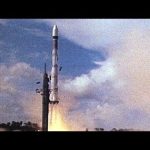
Sentinel-1A, the first satellite for Europe’s environmental monitoring Copernicus programme, is being launched from Europe’s Spaceport in Kourou, French Guiana on 3 April 2014. It will be lofted into orbit on a Soyuz rocket.
This animation shows some of the critical stages delivering Sentinel-1 into orbit around Earth. After separating from the Fregat upper stage, the satellite takes around 10 hours to deploy its 12 m-long radar and two 10 m-long solar wings. This deployment sequence is unique, choreographed to ensure that both deploy in the safest possible way. This approach also allows power from the wings to be available as soon as possible so that the satellite is independent.
Delivering vital information for numerous operational services, from monitoring ice in the polar oceans to tracking land subsidence, Sentinel-1 will play a key role in the largest civil Earth-observation programme ever conceived.
The animation is set to a track called Sentinel by Mike Oldfield, a world-renowned musician and big space fan.
Credits:
Graphics: ESA/ATG medialab; Music written by M. Oldfield/copyright EMI Virgin
The launch of the first Sentinel-1 satellite marks a new paradigm in Earth observation focusing on operational missions to support users for decades to come. This first satellite for Europe’s environmental monitoring Copernicus programme carries an advanced radar to image Earth’s surface no matter what the weather or if it is day or night. Olaf Trieschmann from the European Maritime Safety Agency talks about the need for radar satellites and how data from Sentinel-1 will be used to monitor oil spills and for maritime surveillance. ESA’s Josef Aschbacher talks about how the wide range of services offered through Copernicus will make a step change in the way we manage the environment.
In early April, Sentinel-1A will be launched from Europe’s Spaceport in French Guiana on a Soyuz launcher. The radar mission is the first of the Copernicus programme, providing an all-weather, day-and-night supply of imagery for Copernicus user services.
Accurate information about the environmental is crucial. It helps to understand how our planet and climate are changing, the role human activity play in these changes and how this affects our daily lives. Responding to these challenges, the EU and ESA have developed an Earth observation programme called Copernicus, formerly known as Global Monitoring for Environment and Security, – a programme that becomes operational with the launch of Sentinel-1A.
The recent floods in the UK saw a lot of the management of that disaster made possible by using information from satellites. But how? In this edition of Space we find out.
Flooding affects thousands of people every year across Europe, and this year one of them just happened to be a flood scientist – Spanish Research Fellow at Reading University in England, Javier García-Pintado.
His back garden looks onto the Thames, he explains: “This is the bank of the Thames, and this areas was severely affected by the recent flooding. Specifically in this little bit of land we are a tiny bit higher, and we didn’t have any problems, but our neighbours around here certainly did.”
García-Pintado knew his young family was safe at home, because he could count on his expert knowledge; his day job is using satellite data to improve flood models.
“As hydrologists we were pretty confident that this property wouldn’t have a problem, and we told our neighbours,” he told euronews.
Not everyone has a neighbour as knowledgeable as Javier, nor were they as lucky.
The whole area west of London was affected as England and Wales lived through their wettest winter in almost 250 years.
World-renowned musician Mike Oldfield, composer of the music used in ESA’s Sentinel-1 video, is a big space fan. From his home, Mike and his two sons (the future generation of space scientists and explorers) sent this message to ESA and the Sentinel-1 team with best wishes for the upcoming launch.
Sentinel-1 is an important mission, its launch will mark a new shift in Earth observation, focusing on operational missions to support users for decades to come. This first mission carries an advanced radar sensor to image Earth’s surface through cloud and rain and regardless of whether it is day or night.
Discover more about our planet with the Earth from Space video programme. In this special edition, ESA astronaut Luca Parmitano joins the show to share his view of Earth from space while on the International Space Station.
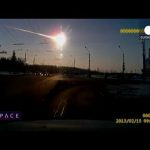
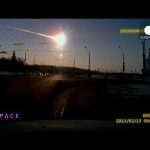
How real is the threat of an asteroid hitting Earth, and is there anything we can do to prevent it from happening? Asteroid impacts are nothing new. Only last year, one exploded over the city of Chelyabinsk in Russia injuring 1500 people and damaging some 7,000 buildings.
“It was a pretty nasty event, luckily nobody was killed, but it just shows the sort of force that these things have,” says Alan Harris, Senior Scientist, DLR Institute of Planetary Research Berlin.
While there was surprise nobody saw it coming, the asteroid itself wasn’t that big, measuring no more than 20 metres across. It was tricky to spot, arriving into Earth’s atmosphere backlit by the Sun.
In fact, much bigger threats lurk out in space. Just a few days ago another asteroid 270 metres wide passed near Earth. That kind of object could cause much more damage.
“Something with the size of a hundred metres for instance, which still isn’t very big, you’re talking about something that would fit into a football field, and that could actually completely destroy an urban area in the worst case. So those are the things that we’re really looking out for, and that we’re trying to find ways to tackle,” says Harris.
Action to address the asteroid threat is already underway. Earlier in February, space scientists and policy experts from all the major space-faring nations held talks to create a framework for action.
Qual é o perigo real das colisões de asteroides e satélites? A cidade de Chelyabinsk, na Rússia, viveu momentos dramáticos há um ano, com a explosão de um asteróide. O fenómeno deixou 15 pessoas feridas e mais de sete mil edifícios danificados. Foi surpreendente e ninguém estava à espera.
Não era um grande asteroide, com cerca de 20 metros de diâmetro, e entrou na atmosfera ofuscado pelo Sol. Há poucos dias, um asteroide com 270 metros de diâmetro passou perto da Terra.
O impacto de um objeto como este pode significar uma verdadeira catástrofe: “Algo com cerca de cem metros, por exemplo, que não é muito grande, estamos a falar de algo que cabe num campo de futebol, pode destruir por completo uma área urbana, no pior dos casos.
São esses asteróides que procuramos e estamos a estudar meios de os neutralizar”, explica Alan Harris, do Instituto de Estudos Planetários de Berlim. O trabalho já está em marcha.
No início de fevereiro, este encontro reuniu cientistas espaciais e especialistas políticos da maioria das potências espaciais do planeta, com o objetivo de criar um quadro de ação. “No ano passado, estávamos ainda numa situação em que, se um asteróide estivesse a ameaçar a terra, não teríamos um processo de reação.
Valós-e veszélye annak, hogy aszteroidák és műholdak ütköznek össze az űrben? Drámai pillanat volt, amikor egy aszteroida fölrobbant az oroszországi Cseljabinszk fölött, egy évvel ezelőtt. A robbanásban 1500 ember megsérült, és több mint 7000 épület megrongálódott.
Meglepő módon senki nem látta, hogy az aszteroida közelít. Nem volt nagy, csak húsz méter széles, és úgy érkezett a légkörbe, hogy a Nap hátulról megvilágította. A világűrben sokkal nagyobb veszélyek is leselkednek ránk. Néhány nappal ezelőtt egy 270 méter széles aszteroida haladt el nem messze a Földtől. Egy ilyen tárgy sokkal nagyobb károkat okozhat.
– Egy néhány száz méter nagyságú tárgy, amely még mindig nem számít igazán nagynak, hiszen olyasmiről beszélünk, ami egy futballpályán elfér, legrosszabb esetben teljesen elpusztíthat egy lakóövezetet. Ezekre az esetekre próbálunk fölkészülni, és kitalálni, hogyan előzzük meg őket – mondja Alan Harris brit kutató.
Már tettek is lépéseket azért, hogy elhárítsák az aszteroidaveszélyt. Február elején a nagy űrkutató nemzetek tudósai és szakértői tanácskoztak, hogy akciótervet dolgozzanak ki. A csoportot az ENSZ támogatja. Miközben a tudósok azon dolgoznak, hogy fölfedezzék a Föld közelében lévő aszteroidákat, ez a csoport dönt arról, mi a teendőnk, ha komoly veszély alakul ki.
Es wird passieren, ob wir wollen oder nicht: Eines Tages wird ein Asteroid die Erde treffen, die Zerstörung könnte enorm sein. Was lässt sich dagegen tun? Im vergangenen Jahr erhielten wir einen kleinen Vorgeschmack, welch zerstörerische Wucht ein Asteroidentreffer auf der Erde haben kann. Über der russischen Stadt Tscheljabinsk explodierte ein solches Himmelsgeschoss. 1500 Menschen wurden verletzt, 7000 Gebäude beschädigt.
Alan Harris arbeitet am Deutschen Zentrum für Luft- und Raumfahrt in Berlin. Er erinnert sich an Tscheljabinsk: “Das war ein ziemlich heftiges Ereignis, bei dem zum Glück niemand umkam. Doch es zeigte, welche Kraft diese Dinger haben.”
Vor allem aber hat niemand den Einschlag kommen seien. Mit seinen rund 19 Metern Durchmesser war der Asteroid nicht sonderlich groß, es war praktisch unmöglich, ihn gegen die Sonne zu entdecken. Dabei gibt es tausende deutlich größere Asteroiden in Umlaufbahnen rund um die Erde, und nicht wenige von ihnen könnten zu einer Gefahr für uns werden.
Harris: “Ein Hundert-Meter-Asteroid wäre noch nicht ein mal sonderlich groß, er würde auf ein Fußballfeld passen, und doch könnte er im schlimmsten Fall eine ganze Großstadt vernichten. Das sind die Dinger, nach denen wir Ausschau halten, und wir müssen Wege finden, mit ihnen umzugehen.”
*Mensch gegen Meteor*
Um diese Wege zu finden, wurde am Raumfahrtzentrum der ESA in Darmstadt eine Expertengruppe zur Asteroidenabwehr ins Leben gerufen. An ihr sind Forscher aus den wichtigsten Raumfahrtnationen beteiligt.
The exploits of comet-hunting spacecraft Rosetta are generating intense interest as it speeds towards a dramatic climax this autumn.
The craft will catch up with comet 67p/Churyumov–Gerasimenko, fly alongside, and put a lander on its surface. Throughout this fantastic voyage, Euronews will have special access to the engineers and scientists who are making it happen.
On 20th January Rosetta woke up from two and a half years of hibernation. It was a moment of extreme tension for everyone at ESA’s European Space Operations Centre in Darmstadt, Germany. Strained, nervous faces searched for a signal from a probe in deep space.
After some 45 minutes of anxiety the all-important first signal came through. The scientists burst into energetic applause.
Hace unos días, la sonda Rosetta se reactivó tras casi dos años y medio de hibernación. La comunidad científica del mundo entero estaba pendiente de la sala de control en el momento en el que Rosetta, tras reactivarse, enviaba su señal de confirmación.
A ocho cientos millones de kilómetros, en algún lugar del espacio, Rosetta se despertaba.
Este proceso tardó varias horas, a las 18:18 de la tarde, hora central europea, el equipo del Centro de Operaciones de la Agencia Espacial Europea, en Darmstadt, Alemania, estallaba de alegría.
Pár nappal ezelőtt az Európai Űrügynökség sikeresen felébresztette a hibernációból a Rosetta nevű műholdat, amely hamarosan egyedülálló küldetésre indul: leszállóegységet próbál ereszteni egy üstökös felszínére.
2014. január huszadikán a világ szeme az Európai Űrügynökség csapatára szegeződött, amint arra vártak, hogy az űreszköz válaszoljon.
Newly hired ESA staff met for an information day at the European Astronaut Centre and were introduced to particular aspects of the ESA working culture.
Earth from Space is presented by Kelsea Brennan-Wessels from the ESA Web-TV virtual studios. Mount Kilimanjaro in Tanzania and the plains in southern Kenya are pictured in a false-colour image featured in the ninetieth edition.
Video highlight showing receipt of signal from ESA’s Rosetta comet chaser after 31 months of deep-space hibernation. Teams at ESA’s operations centre in Darmstadt, Germany, leapt for joy as the signal was confirmed via NASA’s 70m tracking stations in California and Australia.
ESA Director General Jean-Jacques Dordain met with media at the traditional start-of-year briefing on the activities and challenges for 2014. Friday 17 January, ESA-HQ Daumesnil, Paris
At 10:00 UTC on 20 January 2014, ESA’s comet-chasing Rosetta spacecraft will wake up from 31 months in deep space hibernation. Save the date and join the adventure — enter our #wakeuprosetta contest by adding your wake up shout video to the Rosetta Mission Facebook page http://www.facebook.com/rosettamission.
Az üstökösök évszázadok óta felcsigázták az emberek fantáziáját. Az Európai Űrügynökség Rosetta nevű missziója megkísérel műszereket eljuttatni egy üstökös felszínére.
Szénből, porból és vízjégből álló égitestek, amelyek a Naphoz közelítve annak fénye miatt csóvát fejlesztenek a maguk mögött húzott törmelékből. Több okból is érdekesek a tudomány számára, de a legizgalmasabb kérdés, hogy van-e közük a földi élet eredetéhez.
A Space üstökösvadász stábjának első útja Jénába, a türingiai tartományi csillagvizsgálóba vezet. A tudósok itt azon dolgoznak, hogy megállapítsák, mi maradt a darabjaira hullott ISON üstökösből. A gyanú az volt, hogy az égitest megsemmisült, de kérdéses volt, hogy a magnak maradtak-e látható darabkái. Azonban napfelkeltéig a tudósoknak nem sikerült megpillantaniuk az ISON maradványait.
Mindeközben Svájcban a berni egyetem kutatói vízjégből, folyékony nitrogénből és szénből mesterséges üstököst állítanak elő. Az így elkészült mintával vákuumkamrában kísérleteznek: arra kíváncsiak, milyen folyamatok mennek végbe egy üstökös felszínén.
Mindezek a kísérletek és megfigyelések csak előkészületek az igazi nagy dobásra: az Európai Űrközpont Rosetta fedőnevű missziója megkísérel műszereket eljuttatni egy üstökös felszínére, és onnan mintákat szállítani.
Ez azért tölti el lelkesedéssel a tudósokat, mert az utolsó hasonló akció, a NASA Csillagpor (Stardust) nevű küldetése meglepő eredményeket hozott. Akkor egy szondát reptettek át a Halley üstökös csóváján, és az így megszerzett minta glicint, egy fontos, DNS-alkotó aminosavat is tartalmazott. Tehát nem életet, de az élet egyik fontos alkotóelemét – ez pedig felveti az üstökösök szerepét a földi élet kialakulásában.
– A földi élethez meghatározott típusú, úgynevezett balkezes aminosavak szükségesek. A kémia elő tud állítani bal és jobbekezes aminosavakat is, de az élet ezek közül csak a balkezeseket használja és szeretnénk érteni, hogy miért – magyarázta az Euronews riporterének Hermann Böhnhardt, a Max Planck Intézet kutatója – Nem tudjuk, de szeretnénk tudni, hogy az üstökösökben található aminosavak jobb vagy balkezesek, mert ha balkezesek, akkor ez újabb arra utaló jel, hogy talán az élet, vagy legalábbis annak alkotóelemei az űrből kerültek a Földre.
A tudományos közösség abban reménykedik, hogy az üstökösöket érintő kérdések sokaságára kapnak választ 2014-ben, ha a Rosetta misszója sikerrel zárul.
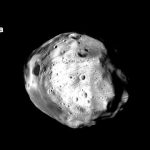
The innermost moon of Mars, Phobos, is seen here in full 360 degree glory. The images were taken by the High Resolution Stereo Camera (HRSC) on ESA’s Mars Express at various times throughout the mission’s 10 years.
The moon’s parallel sets of grooves are perhaps the most striking feature, along with the giant 9 km-wide Stickney impact crater that dominates one face of the 27 x 22 x 18 km moon.
The origin of the moon’s grooves is a subject of much debate. One idea assumes that the crater chains are associated with impact events on the moon itself.
Another idea suggests they result from Phobos moving through streams of debris thrown up from impacts 6000 km away on the surface of Mars, with each ‘family’ of grooves corresponding to a different impact event.
Mars Express has imaged Phobos from a wide range of distances, but will make its closest flyby yet on 29 December 2013, at just 45 km above the moon.
Although this is too close to take images, gravity experiments will give insight into the interior structure of Phobos.
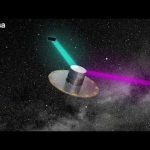
ESA’s Gaia mission will produce an unprecedented 3D map of our Galaxy by mapping, with exquisite precision, the position and motion of a billion stars. The key to this is the billion-pixel camera at the heart of its dual telescope. This animation illustrates how the camera works.
Gaia is ESA’s billion-star surveyor, designed to provide a precise 3D map of our Milky Way galaxy in order to understand its composition, formation and evolution.
Visualisation of how the Rosetta spacecraft wakes up from deep space hibernation, 673 million kilometres from the Sun, on 20 January 2014.
Prior to entering hibernation on 8 June 2011, Rosetta was oriented so that its solar arrays faced the Sun, and it began rotating once per minute for stability. The only devices left running were its computer and several heaters.
Rosetta’s computer is programmed to carry out a sequence of events to re-establish contact with the Earth on 20 January, starting with an ‘alarm clock’ at 10:00 GMT. Immediately after, the star trackers begin to warm up. Around 6 hours later the thrusters are fired and the slow rotation stops. A slight adjustment is made to Rosetta’s orientation to ensure that the solar arrays now face the Sun. Then the star trackers switch on to determine its attitude. The spacecraft rotates towards Earth, and the transmitter is switched on. Then Rosetta’s high-gain antenna points to Earth and the signal is sent. The journey takes 45 minutes before the signal is received and mission controllers can begin to check Rosetta’s health, ready for the next phase of the mission.
The first opportunity for receiving a signal on Earth is between 17:30 GMT and 18:30 GMT.
#WakeUpRosetta – What do you do Mondays at 10 am? At 10:00 UTC on 20 January 2014, ESA’s comet-chasing Rosetta spacecraft will wake up from 31 months in deep-space hibernation. Save the date and join the adventure. More info at www.esa.int/rosetta.
Innovation through space, now in the UK – check out the ESA BIC Harwell. The ESA Business Incubation Centre – ESA BIC Harwell, is located in the UK, and is managed by the Science and Technology Facilities Council (STFC).
ESA BIC Harwell provides a unique opportunity to access world class scientific facilities and research including that of the Diamond Light Source and STFC’s Rutherford Appleton Laboratory (RAL) — home to its internationally renowned space science department RAL Space, the world’s most powerful pulsed neutron source ISIS and the Central Laser Facility.
The BIC is also the location of the UK ESA Centre and the International Space Innovation Centre (ISIC), which brings together the best of the British space sector, industry and academia in collaboration with international partners.