Acompanhe o Paxi na sua viagem ao Planeta Vermelho para investigar se existem marcianos e ficar a conhecer as missões ExoMars da Agência Espacial Europeia.
Tag: European Space Agency
-
Paxi – Den røde planeten
Bli med på reisen til den røde planeten for å finne ut om marsboerne eksisterer, og lær mer om ExoMars-oppdragene til Det europeiske romfartsbyrået.
-

Paxi – Finnes det marsboere
Bli med Paxi til Mars og utforsk planetens tørre elveleier, vulkaner og polaris.
-

Paxi – Existují Marťané?
Přidejte se k Paximu na jeho cestě k rudé planetě, prozkoumejte, zda existují Marťané, a seznamte se s misemi ExoMars Evropské vesmírné agentury.
-

Paxi – Gibt es Marsbewohner?
Begleite Paxi auf seiner Reise zum Roten Planeten und du erfährst, ob es Marsmännchen wirklich gibt und welchen Zweck die ExoMars-Missionen der Europäischen Weltraumorganisation haben.
-

Paxi – I marziani esistono?
Partite con Paxi nel suo viaggio sul pianeta rosso, per scoprire se esistono i marziani e per saperne di più sulle missioni ExoMars dell’Agenzia Spaziale Europea.
-

Paxi – Bestaan er Marsbewoners?
Ga met Paxi mee op zijn reis naar de Rode Planeet om te onderzoeken of marsmannetjes echt bestaan en ontdek wat de ExoMars-missies van het European Space Agency onderzoeken.
-

Paxi – Y a-t-il des martiens?
Rejoins Paxi dans son voyage vers la Planète rouge pour l’aider à découvrir si les Martiens existent et en savoir plus sur les missions ExoMars de l’Agence spatiale européenne.
-

Paxi – Onko marsilaisia olemassa?
Lähde Paxin mukaan punaiselle planeetalle tutkimaan, onko marsilaisia olemassa, ja tutustu Euroopan avaruusjärjestön ExoMars-ohjelmaan.
-

Paxi – Findes marsmænd i virkeligheden?
Tag med Paxi til den røde planet for at undersøge, om der findes marsmænd, og få mere at vide om Den Europæiske Rumorganisations ExoMars-missioner.
-
Paxi – Tajemství Rudé planety
Následujte Paxiho na jeho cestě na Mars, kde bude zkoumat vyschlá koryta řek, sopky a polární ledové čepice.
-
Paxi – Geheimnisse des Roten Planeten
Folge Paxi zum Mars, wo er die trockenen Flussbetten, einen beeindruckenden Vulkan und die polaren Eiskappen des Planeten erforschen wird.
-
Paxi – Punaisen planeetan salaisuudet
Lähde Paxin mukaan Marsiin, jossa hän tutkii planeetan kuivia joenuomia, tulivuoria ja napajäätiköitä.
-
Paxi – Geheimen van de Rode Planeet
Volg Paxi op zijn reis naar Mars, waar hij de droge rivierbeddingen, de vulkaan en de ijskappen op de polen gaat verkennen.
-
Paxi – I segreti del Pianeta Rosso
Seguite Paxi nel suo viaggio su Marte, all’esplorazione dei vulcani, degli alvei asciutti dei fiumi e delle calotte polari del pianeta.
-
Paxi – Secrets de la Planète Rouge
Suis Paxi dans son voyage vers Mars pour explorer avec lui des rivières asséchées, un volcan et des calottes de glace polaire.
-

Welcome Back to Earth
Expedition 47 Commander Tim Kopra of NASA, Soyuz Commander Yuri Malenchenko of Roscosmos and Flight Engineer Tim Peake of ESA (European Space Agency) were greeted in a traditional ceremony in Kazakhstan June 18, a few hours after their safe return to Earth from a 186 day mission on the International Space Station.
-
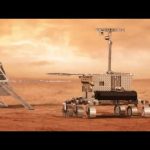
ExoMars – building on past missions to Mars
The ExoMars 2016 spacecraft will build on past missions to Mars. From the pioneering Viking missions onwards, our knowledge of Mars has been transformed and we now have an extraordinarily detailed picture of the planet. There are dust storms, polar ice caps and four distinct seasons. Mars has the largest volcanic mountain in our solar system and a canyon stretching over 5000 kilometres.
This film covers what we have learnt in particular from Europe’s Mars Express mission. Since its arrival in 2003, it has found evidence of water on Mars, discovered methane in the planet’s atmosphere, mapped the structure and composition of the south polar ice cap, discovered auroras and made the closest ever flybys of Phobos, one of Mars’ two moons. Mars Express also helped scientists select the landing site for the NASA Mars Curiosity rover, which arrived in Gale crater in 2012.
More remains to be learnt from Mars. Not least, whether the methane results from geological activity or past or present life.
Read more about ExoMars:
http://www.esa.int/exomars -
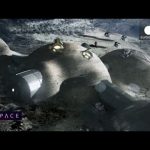
ESA Euronews: Un village sur la Lune ?
Le directeur général de l’Agence spatiale européenne dit vouloir construire une base permanente sur la Lune. Ce projet incroyable prend peu à peu forme à mesure que les scientifiques européens commencent à sérieusement y réfléchir. Nous avons rencontré quelques-uns de ceux qui pourraient faire de ce rêve, une réalité, notamment au Centre européen des astronautes à Cologne.
“J’ai l’intention de construire une base permanente sur la Lune : ce sera une station ouverte pour différents Etats participants, des pays des quatre coins du monde,” explique posément le nouveau directeur général de l’Agence spatiale européenne.
-
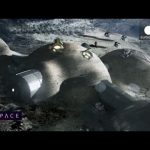
ESA Euronews: Bald ein Dorf auf dem Mond?
Die Europäische Weltraumorganisation ESA will ein tollkühnes Projekt in Angriff nehmen: Sie will ein Dorf auf dem Mond bauen. Die permanente Station soll an dem Ort entstehen, an dem einst die Russen landeten und die Amerikaner erste Schritte machten. ESA-Chef Jan Woerner hat eine Vision: “Ich will eine permanente Mondstation bauen. Es wäre eine offene Station für mehrere Länder aus der ganzen Welt.”
Die Apollo-Ära hat gezeigt, dass Träume Wirklichkeit werden können. Die Forscher damals hatten ein klares Ziel vor Augen: die Mondlandung. ESA-Astronaut Andreas Mogensen scheint zuversichtlich: “In den 1960er Jahren haben sie das innerhalb von zehn Jahren geschafft. Heute sind wir technologisch gesehen viel weiter. Wir können es also noch einmal machen.”
Die Mondstation würde die Internationale Raumstation, ISS, ablösen. Sie wäre das neue gemeinsame Raumfahrt-Projekt, an dem alle teilnehmen könnten. “Die Amerikaner, die Russen, die Chinesen, die Inder und die Japaner werden mitmachen. Und andere Länder werden ebenfalls etwas beisteuern,” so Woerner.
-
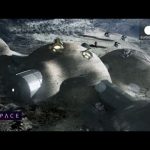
ESA Euronews: Holdbázis – egy hosszú út kezdete
– Feltett szándékom egy állandó bázisállomás építése a Holdra – mondja az Európai Űrügynökség vezetője, Jan Woerner. – Ez egy közös bázis lenne a partnereinkkel, amit a világ más országaival közösen építenénk és használnánk. Benne lesznek az amerikaiak, az oroszok, a kínaiak az indiaiak, a japánok és kisebb hozzájárulással más országok is.
A jelenlegi helyzetben a Holdbázis álomnak tűnik – de az Apolló-program során már kiderült, hogy megfelelő költségvetés mellett óriási technológiai ugrások lehetségesek. A tervek szerint ez lenne az új globális űrprojekt a Nemzetközi Űrállomás után.
-
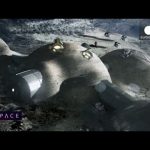
ESA Euronews: Si torna sulla Luna
Tornare sulla Luna? La prossima tappa dell’esplorazione spaziale, dopo l’esperienza della Stazione Spaziale Internazionale, prevede molto di più. L’Agenzia spaziale europea ha un nuovo obiettivo: costruire una base permanente sulla luna.
I russi furono i primi a lanciare una missione sulla luna mentre gli americani i primi a camminare sulla sua superficie. Oggi la luna continua ad essere al centro di ambiziose ricerche come ci conferma anche il direttore generale dell’Agenzia spaziale europea Jan Wörner. Una base internazionale, una stazione aperta ai diversi Stati membri dell’Agenzia e ai paesi di tutto il mondo.
Un sogno animato dalla stessa passione che ha portato il primo uomo sulla Luna. Certo finora nessuno ha mai realizzato un progetto simile. Dalla missione spaziale Apollo sono stati fatti passi da gigante.
-
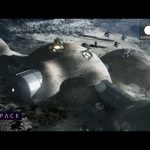
ESA Euronews: Como a ESA pretende construir uma aldeia na Lua
O homem que está à frente da Agência Espacial Europeia (ESA) tem um ambicioso objetivo: construir uma base permanente na Lua. É no Centro Europeu de Astronautas em Colónia, na Alemanha, que estão a ser dados os primeiros passos nessa direção.
Em 1959, os russos conseguiram aterrar uma nave não tripulada na Lua; dez anos mais tarde, os americanos passearam na sua superfície. Hoje em dia, o plano é ficar. _”O meu objetivo é construir uma base permanente na Lua. Uma estrutura aberta à participação de diferentes países”_, declara Jan Wörner, diretor geral da ESA. A ideia é criar um projeto global à semelhança da Estação Espacial Internacional.
O Centro Europeu de Astronautas em Colónia organizou um workshop precisamente sobre como erguer uma espécie de pequena aldeia sobre a superfície lunar. A presença de certos metais, minerais e de água gelada pode representar um contributo valioso. Segundo Bernard Foing, diretor do Grupo Internacional de Exploração Lunar, _”a Lua tem imensos recursos. Encontrámos gelo nos polos, encontrámos áreas que estão quase constantemente expostas ao Sol. São zonas que nos podem fornecer recursos para utilizarmos na construção ou na manutenção da vida dos astronautas na base lunar.”_
-
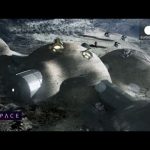
ESA Euronews: ¿Listos para construir una base permanente en la Luna?
La nueva cúpula de la Agencia Espacial Europea (ESA) quiere construir una base permanente en la Luna. El lugar donde hace medio siglo los rusos llegaron por primera vez y los estadounidenses dieron sus primeros pasos. Se trata de un proyecto muy ambicioso en el que ya está trabajando el Centro Europeo de Astronautas con sede en la ciudad alemana de Colonia.
“Mi intención es construir una base permanente en la luna, una estación abierta a diferentes estados miembros de todo el mundo”, asegura Jan Woerner, director de la ESA.
-
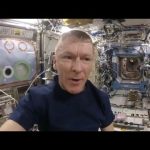
ISS reboost
Ever wondered what happens inside the International Space Station during a reboost? ESA astronaut Tim Peake filmed inside during last week’s firing of the Progress thrusters.
Even at 400 km, there are still enough molecules of the atmosphere to create some ‘atmospheric drag’, which causes the Station to drop by about 2 km a month. Because of this we need to raise the Station’s orbit every so often. On 17 February the engines of the Progress M-29M spacecraft that is docked to the aft port of the Zvezda module were fired for 11 minutes.
The burn primarily focused on raising the Station’s perigee, making the orbit more circular.
Pre-reboost: 398.2 x 407.4 km – inclination 51.64° – Period: 92.62min
Post-reboost: 402.1 x 406.9 km – inclination 51.64° – Period: 92.66minMore about the Principia mission: http://www.esa.int/principia
-
Philae facing eternal hibernation
15 months after Philae made its historic landing on a comet, its legacy is enormous even if Rosetta’s lander is facing eternal hibernation.
Mission teams are now looking ahead to the grand finale: making a controlled impact of the Rosetta orbiter on the comet next September.Rosetta arrived at Comet 67P/Churyumov–Gerasimenko on 6 August 2014 and Philae was delivered to the surface on 12 November. After touching down Philae bounced several times and completed 80% of its planned first science sequence before falling into hibernation.
A contact was made with the lander on 13 June and intermittent contacts were made up to 9 July. However the results of Philae mission are unique and complement all the science harvested by the orbiter Rosetta who is continuing its quest before being sent directly to the surface of 69P late September.
-

Sentinels for Copernicus
On 16 February 2016 at 18:57 CET (17:57 GMT), Sentinel-3A will be launched on top of a Rockot from the Russian Plesetsk Cosmodrome.
This satellite will be the third Sentinel for the Copernicus Programme. Copernicus is the most ambitious Earth Observation programme to date. It will provide accurate, timely and easily accessible information to improve the management of the environment, understand and mitigate the effects of climate change and ensure civil security. This initiative is headed by the European Commission (EC) in partnership with the European Space Agency.
ESA coordinates the delivery of data and is developing a new family of satellites, the Sentinels, specifically for the operational needs of Copernicus. The EC, acting on behalf of the European Union, is responsible for the overall initiative, setting requirements and managing the services. These services fall into six main categories: land management, the marine environment, atmosphere, emergency response, security and climate change.
This video explains what the Sentinels represent within Copernicus.
-
Sentinel-3: Technology and heritage
ESA’s new Earth observation satellite Sentinel-3A will soon be launched into orbit. Once more the European Space Agency proves it is on the forefront of monitoring our environment and the climate.
Using state of the art and proven technology the Sentinel-3 satellite is a fabulous piece of engineering set to play a key role in the European Commission’s Copernicus programme. However this technological piece of craftsmanship is only possible as the result of earlier scientific missions such as ERS, Envisat and Cryosat, with Sentinel-3 building on their heritage.
More about Sentinel-3:
http://www.esa.int/sentinel-3 -
ESA Euronews: O gigantesco mundo dos nanossatélites
Os nanossatélites são pequenos cubos que prometem determinar o futuro da exploração espacial, desde as incursões a Marte até à observação de asteróides potencialmente perigosos para a Terra. No Centro Espacial Mektory de Tallin, na Estónia, um grupo de estudantes está precisamente a construir um destes concentrados de tecnologia.
Também conhecidos como cubesats, os nanossatélites abrem um sem número de possibilidades na aventura espacial. Daí que o seu desenvolvimento desperte o interesse tanto das grandes agências espaciais, como das universidades, como esta na capital estoniana, que integra o centro de inovação Mektory.
-
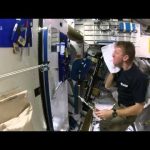
Tim Peake’s space shower
ESA astronaut Tim Peake washes on the International Space Station during his six-month Principia mission.
There is no shower on the Space Station so astronauts use wet towels to keep clean. The towels are packed as waste in returning cargo vessels.
More about Principia: http://www.esa.int/Principia
Follow Tim on social media via: http://timpeake.esa.int -
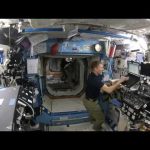
Saturday cleaning day on Space Station
ESA astronaut Tim Peake shows the cleaning duties on the International Space Station. Every Saturday all astronauts living in the weightless research laboratory spend the morning cleaning.
Tim’s six-month mission in space is called Principia: www.esa.int/Principia
Follow Tim via: http://timpeake.esa.int
-
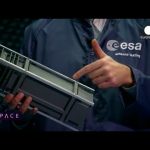
ESA Euronews: CubeSat, a satellite in a shoe box
Tiny satellites the size of a small cube, jam-packed with the most advanced nanotechnologies: is this the future of Space missions?
To find out, ESA Euronews went to Tallin, Estonia, where students at the Mektory Space Centre are preparing the launch of their first nanosatellite.
Nanosatellites – tiny cubes of 10cm x 10cm x 10cm, full of nanotechnologies — are going to be more and more important in the future of space exploration, from Mars missions, to the surveillance of asteroids, which could potentially be dangerous for our planet.
Also known as ‘CubeSats’ these tiny satellites open up a whole world of possibilities for those who want to explore space.
This video is also available in the following languages:
French: https://www.youtube.com/watch?v=RFVJ0ZGW2nI
German: https://www.youtube.com/watch?v=rOdjO5bhoiU
Italian: https://www.youtube.com/watch?v=5cP0baTNDYo
Spanish: https://www.youtube.com/watch?v=NlZSt0WfMTo
Portuguese: https://www.youtube.com/watch?v=6tM5AXZtY18
Greek: https://www.youtube.com/watch?v=WIIVLxcOlT0
Hungarian: https://www.youtube.com/watch?v=XAlfhpzadWc -
ESA Euronews: De mi az a nanoműhold?
A nanoműholdak egyre fontosabbak lesznek az űrkutatásban, a Mars megfigyelésétől a Földre veszélyt jelentő aszteroidák felkutatásáig. A bennük rejlő potenciált mindenki igyekszik kiaknázni, a nagy űrügynökségektől a tudományos diákkörökig. Ez a helyzet a Mektory Űrközpontban, az észt főváros, Talinn műszaki egyetemén, ahol a diákok az első nanoműholdjuk Föld körüli pályára állítását készítik elő.
– Azt hittem, soha nem fogok műholdat építeni, hiszen ilyesmit csak a NASA-nál csinálnak. Most meg műholdat építek az egyetemi laborban – hitetlenkedett az Euronewsnak Marta Hang, az űrközpont programasszisztense.
A Mektory nanoműhold-programja egy nemzetközi egyetemi kezdeményezés, amelyben az oktatók és a hallgatók együttműködnek az űrkutatásban érdekelt és más technológiai cégekkel. A cél az, hogy felkészítsék a hallgatókat arra, hogy az űriparban helyezkedjenek el. A csapat jelenleg az első űrküldetését tervezi.
– Egy kockaműholdat fejlesztünk, amely egy egységből áll, és távérzékelési célokat szolgál, vagyis képeket készít majd a Földről – magyarázza a Mektory Űrközpont igazgatója, Mart Vihmand.
-
Space debris story (2013)
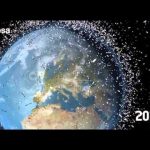
The story of space debris highlighting how the unintended consequences of intense spaceflight activity during the past 60 years has resulted in a growing population of debris objects that pose hazards to safe space navigation. In 2013, experts estimate that 29 000 objects larger than 10 cm were orbiting Earth.
The video also highlights the current state of debris mitigation measures and presents several concepts for removing defunct satellites from economically vital orbits now being studied by space agencies and industry across Europe.
This video was produced for the 6th European Conference on Space Debris, 22-25 April 2013.
-
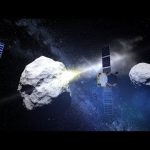
Asteroid Impact Mission (Spanish)
La misión AIM (Asteroid Impact Mission), candidata a ser desarrollada, actualmente en fase de diseño preliminar.
AIM se lanzaría en octubre de 2020 y su objetivo es viajar al sistema binario de asteroides Dídimos para estudiar la luna Didymoon. El sistema Didimos cuenta con un cuerpo principal de unos 800 metros de diámetro y una luna que orbita alrededor de este cuerpo principal, de unos 170 metros de diámetro aproximadamente, está luna se la conoce con el nombre de Didymoon. El sistema Didimos se aproximará a 11 millones de kilómetros de la tierra en 2022.
AIM escaneará la pequeña Didymoon en detalle con su cámara VIS, con imágenes térmicas y un radar de alta resolución para construir mapas detallados de su superficie y estructura interior.
La nave principal de AIM llevará al menos tres sondas más pequeñas – el módulo de aterrizaje, Mascot-2, desarrollado por el Centro Aeroespacial Alemán (Mascot-1 ya está volando en la misión Hayabusa-2 de JAXA), así como dos o más CubeSats. Así, AIM pondría a prueba las comunicaciones ópticas y los enlaces inter-satelitales en el espacio profundo, una tecnología que será esencial para la exploración futura del espacio.
Si se aprueba, AIM también será la contribución europea a la misión AIDA, Asteroid Impact and Deflection Assessment. En 2022, la sonda DART (Double-Asteroid Redirection Test), parte dirigida por la NASA, llegará al sistema binario y se estrellará contra Didymoon a una velocidad de unos 6 km/s.
El impacto será observado por AIM y por sus CubeSats. A través de las imágenes de alta resolución de AIM se evaluará el tamaño y la profundidad del cráter tras el impacto. AIM realizará una segunda fase de mediciones para comparar detalladamente la estructura del objeto, así como su órbita al rededor del asteroide mayor, antes y después del impacto.
This video is also available in the following languages:
English: https://youtu.be/h4lpu8HbpFY
French: https://youtu.be/8GjVhBQsISc
German: https://youtu.be/Sht_Kmaf5sUCredit: ESA/ScienceOffice.org
-
ESA Euronews: Φως στα μυστικά του Δία
Καλώς ήλθατε στο νέο επεισόδιο του Space. Προσπαθήστε να φανταστείτε ένα ηλιακό μοντέλο στο οποίο κάποιοι πλανήτες θα έχουν κάτω από την επιφάνεια περισσότερο νερό από ότι υπάρχει στη γη.
Αυτός είναι ο επόμενος στόχος της Ευρωπαϊκής Υπηρεσίας Διαστήματος. Θα επανέλθουμε στο θέμα, αφού πρώτα μάθουμε κάποια διαστημικά νέα.
-

ESA – Space to Relax / Fly with Samantha to…
ESA astronaut Samantha Cristoforetti photographs stunning Earth images of Lufthansa worldwide destinations during her Futura mission onboard the ISS. An ESA for Lufthansa inflight film.
Music by Jeff Woodall.
Images: ESA/NASA.
-
Space Station Astronauts Make Safe Landing on This Week @NASA – September 11, 2015
Aboard the International Space Station, the Expedition 45 crew – including new Commander Scott Kelly and Kjell Lindgren of NASA, said goodbye to Gennady Padalka of the Russian Federal Space Agency, Andreas Mogensen of ESA (European Space Agency) and Aidyn Aimbetov of the Kazakh Space Agency (Kazcosmos) as the trio climbed aboard their Soyuz spacecraft for the return trip to Earth. The Soyuz landed safely in Kazakhstan on Sept. 11 Eastern time, Sept. 12 in Kazakhstan — closing out a 168-day mission for Padalka and an 8-day stay on the station for Mogensen and Aimbetov. Also, First Orion crew module segments welded, SLS Launch Vehicle Stage Adapter, New Ceres imagery, New Horizons update, 9/11 tribute and National Preparedness Month!
-
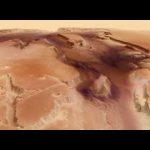
The floodwaters of Mars
Travel across the dramatic flood plains of Mars to celebrate ten years of imaging the Red Planet with Mars Express
Ten years ago, on 14 January 2004, Mars Express took its very first images of Mars in colour and in 3D.
To mark the occasion, the team produced a fly-through movie of the ancient flood plain Kasei Valles. The movie is based on the 67-image mosaic released as part of the ten-years-since-launch celebrations in June 2013. See http://www.esa.int/Our_Activities/Space_Science/Mars_Express/The_floodwaters_of_Mars.
The scene spans 987 km in the north–south direction, 19–36°N, and 1550 km in the east–west direction (280–310°E). It covers 1.55 million square kilometres, an area equivalent to the size of Mongolia.
Kasei Valles is one of the largest outflow channel systems on Mars, created during dramatic flood events. From source to sink, it extends some 3000 km and descends 3 km.
Kasei Valles splits into two main branches that hug a broad island of fractured terrain — Sacra Mensa — rising 2 km above the channels that swerve around it. While weaker materials succumbed to the erosive power of the fast-flowing water, this hardier outcrop has stood the test of time.
Slightly further downstream, the flood waters did their best to erase the 100 km-wide Sharonov crater, crumpling its walls to the south. Around Sharonov many small streamlined islands form teardrop shapes rising from the riverbed as water swept around these natural obstacles.
The Planetary Science and Remote Sensing Group at Freie Universität Berlin produced the movie. The processing of the High Resolution Stereo Camera image data was carried out at the DLR German Aerospace Center.
Credit: ESA/DLR/FU Berlin (G. Neukum) / Music: Crabtambour
-
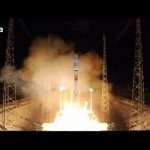
Timelapse film Soyuz flight VS06, with Gaia
Soyuz flight VS06, with the Gaia space observatory, lifted off from Europe’s Spaceport, French Guiana, on 19 December 2013. This timelapse movie shows Gaia sunshield deployment test, the transfer of the Soyuz from the assembly building to the launch pad and the lift off.
ESA–S. Corvaja, M. Pedoussaut, 2013