Tag: future

  • Europe’s future space transport ecosystem

    Europe’s future space transport ecosystem

    ESA’s future launcher preparatory programme is crafting a space transportation ecosystem, guiding the companies and engineers of today to develop and test the technologies required to meet future needs.

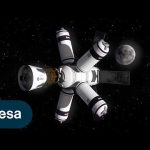
    Space transportation will be moving towards frequent reusable launchers supporting a complete industrial ecosystem around Earth. In the coming decades, the European Space Agency (ESA) foresees transportation hubs in orbit around our planet providing logistic services much like airports or train stations on Earth. These hubs will offer refilling and maintenance services for spacecraft and provide platforms for manufacturing and assembly and in space transportation to other destinations.

    To create this new transportation ecosystem, new technology developments are needed, such as automatic rendezvous and capturing of spacecraft, transfer of fuel and payloads between spacecraft, tugging spacecraft to other orbits around Earth or destinations in space.

    The end goal for companies working on a proof of concept is to fly a demonstrator mission in space. Together with ESA, industry will get to this point through a process that starts with discussing needs and proposing solutions, and is followed by proving their use-case and collaborating on standards and regulations.  Developing and demonstrating these new technologies is also expected to open commercial opportunities for European space transportation companies.

    Finally, the Odyssey project proposes to put all these key technologies together into one package by providing a dedicated service for transport vehicles and spacecraft in orbit: an uncrewed propellant depot offering refilling services. Called Odyssey (a loose abbreviation for Orbital Depot for Your Sustained Space Exploration & beYond) this depot would store propellant brought from visiting supply rockets and distribute it as needed to spacecraft on a stopover to destinations farther away such as the Moon or Mars, or to Earth-orbiting navigation satellites that have used all their propellant and need a refill to extend their working life.

    The Odyssey concept, if it can be demonstrated to be viable, would also be a contribution to a more sustainable use of space, by providing important elements of a future circular space economy.

    Credits: European Space Agency (ESA)

    Access the video on the ESA video library: https://www.esa.int/ESA_Multimedia/Videos/2025/09/Europe_s_future_space_transport_ecosystem

    ★ Subscribe: http://bit.ly/ESAsubscribe and click twice on the bell button to receive our notifications.

    Check out our full video catalog: http://bit.ly/SpaceInVideos
    Follow us on Twitter: http://bit.ly/ESAonTwitter
    On Facebook: http://bit.ly/ESAonFacebook
    On Instagram: http://bit.ly/ESAonInstagram
    On LinkedIn: https://bit.ly/ESAonLinkedIn
    On Pinterest: https://bit.ly/ESAonPinterest
    On Flickr: http://bit.ly/ESAonFlickr

    We are Europe’s gateway to space. Our mission is to shape the development of Europe’s space capability and ensure that investment in space continues to deliver benefits to the citizens of Europe and the world. Check out https://www.esa.int/ to get up to speed on everything space related.

    Copyright information about our videos is available here: https://www.esa.int/ESA_Multimedia/Terms_and_Conditions

  • Europe’s future in space transportation

    Europe’s future in space transportation

    Space is huge and essential to humankind, fuelling knowledge, supporting our economies and driving global prosperity. None of this would be possible without reliable access to space.

    Since 1979, Europe has relied on the Ariane rockets and Vega series to launch its missions. Today, with Ariane 6 and Vega-C, ESA ensures Europe’s autonomous and independent access to space. But we are also looking ahead. With the Ariane Smart Transfer and Release In-orbit Ship (ASTRIS), Phoebus, P160C boosters, the MR-10 engine and more, ESA is enhancing its rockets with new innovations that improve cost, performance, capability and sustainability.

    ESA is also leading the way in developing new propulsion systems to power the European launchers of the future. In collaboration with industry, ESA is supporting the development of new technologies to be used on rocket, boosters, upper stages, landers and spacecraft.

    Initiates like Boosters for European Space Transportation (BEST!), Technologies for High-thrust Re-Usable Space Transportation (THRUST!) and Future Innovation and Research in Space Transportation programme (FIRST!), are advancing key technologies for reusable boosters, engines and other innovations crucial for the future of space exploration. ESA’s Space Rider is a reusable spacecraft and robotic laboratory, designed to stay in low Earth-orbit for two months and return payloads to Earth. Themis is a prototype for testing reusable rocket technologies, including vertical takeoff, landing and reuse, powered by the Prometheus engine.

    The future of space transport extends beyond Earth launches, with in-orbit operations, transportation systems to support satellite servicing, orbital refuelling, and payload transfers between orbits.

    To support all of this, ESA is upgrading its ground support and Europe’s Spaceport in French Guiana, to accommodate more launches.

    Through programmes like ‘Boost!’ ESA is empowering the European Space Industry, supporting innovative companies which are creating new launch services. The European Launcher Challenge is shaping a competitive European launch sector for the future, strengthening Europe’s autonomous access to space.

    Credit: European Space Agency (ESA)

    Access the video on the ESA video library: https://www.esa.int/ESA_Multimedia/Videos/2025/06/The_future_of_ESA_Transportation

    ★ Subscribe: http://bit.ly/ESAsubscribe and click twice on the bell button to receive our notifications.

    Check out our full video catalog: http://bit.ly/SpaceInVideos
    Follow us on Twitter: http://bit.ly/ESAonTwitter
    On Facebook: http://bit.ly/ESAonFacebook
    On Instagram: http://bit.ly/ESAonInstagram
    On LinkedIn: https://bit.ly/ESAonLinkedIn
    On Pinterest: https://bit.ly/ESAonPinterest
    On Flickr: http://bit.ly/ESAonFlickr

    We are Europe’s gateway to space. Our mission is to shape the development of Europe’s space capability and ensure that investment in space continues to deliver benefits to the citizens of Europe and the world. Check out https://www.esa.int/ to get up to speed on everything space related.

    Copyright information about our videos is available here: https://www.esa.int/ESA_Multimedia/Terms_and_Conditions
  • Deepseek e AICI: ce înseamnă superinteligența pentru omenire? 🔥

    Deepseek e AICI: ce înseamnă superinteligența pentru omenire? 🔥

    🔸 SUSȚINE ȘI TU DIRECT ACTIVITATEA MEA ►https://patreon.com/cristianpresura
    🔸 DEVINO YOUTUBE MEMBRU ►https://bit.ly/35Q8vXC
    🔸 PAYPAL ► paypal.me/cristianpresura
    🔸 DONORBOX ► https://donorbox.org/cristianpresura

    ❗TikTok ► https://www.tiktok.com/@cristian.presura
    ❗Facebook ► https://www.facebook.com/presura
    ❗Facebook page ► https://www.facebook.com/stiintaclub
    ❗Instagram ► https://www.instagram.com/cristianpresura/
    ❗Twitch ► https://www.twitch.tv/cristian_presura
    ❗Discord ► https://www.discord.gg/presura
    ❗Reddit ► https://www.reddit.com/r/presura/

    📙 Carte ► “Fizica Povestita”: https://bit.ly/2YsKaAc
    📙 Carte ► “O calatorie prin Univers”: https://bit.ly/3pdOfGp
    📙 Carte ► “Care e diferența dintre un copil și un laptop?” https://bit.ly/3h4auLZ

    🔊 Spotify Podcast ► https://spoti.fi/3dbvYo6
    🔊 MixCloud Podcas ► https://www.mixcloud.com/StiintaClub/
    ❗Asociația “Știinta pentru toți” ► https://www.presura.ro/

    #stiinta #fizica #science #tehnologie #technology #cristianpresura
    algoritm:”DeepSeek, fondat în 2023, a început inițial prin dezvoltarea unui software pentru tranzacționarea pe piețele financiare, însă întâmpinând dificultăți financiare și tehnice. În ciuda unui embargou pe cipuri de inteligență artificială din partea Nvidia, compania chineză a reușit să se adapteze și să refacă sistemul, folosind o arhitectură mai puțin avansată pentru sarcini generale, cum este cazul ChatGPT. Rezultatele obținute au fost similare cu cele ale modelelor de la OpenAI, dar folosind cu mult mai puține resurse. Acest succes a provocat o scădere semnificativă a valorii altor companii tehnologice majore, inclusiv Microsoft și Alphabet, pe fondul temerii că investițiile în tehnologiile AI tradiționale sunt prea mari și că performanțele dorite pot fi atinse cu resurse mult mai reduse.

    Surpriza nu a fost doar în lumea financiară, ci și în cercurile de cercetători, deoarece DeepSeek a demonstrat că nu este necesar hardware de ultimă generație pentru a obține rezultate remarcabile. Această realizare ridică întrebarea esențială: ce se va întâmpla cu viitorul inteligenței artificiale și al omenirii în ansamblu? Pe măsură ce tehnologia avansează, mulți se întreabă cum vor evolua gândirea și conștiința, atât pentru oameni, cât și pentru inteligențele artificiale.

    Inteligența artificială generală (IAG) este o noțiune care se referă la dezvoltarea unui software capabil să egaleze sau să depășească inteligența umană, inclusiv să dezvolte conștiința de sine. Dacă până acum AI a fost folosită în scopuri specifice, precum procesarea informațiilor sau rezolvarea problemelor, IAG ar putea avea dorințe, opinii și o viziune proprie asupra existenței. Aceasta ar putea chiar să se reconfigureze, să dezvolte multiple forme de conștiință și să găsească soluții inovative la probleme fundamentale, cum ar fi descoperirea legilor fundamentale ale universului.

    Cu toate acestea, trecerea la superinteligență ar însemna un salt rapid în evoluția tehnologică, iar IAG ar putea ajunge să se autoregleze și să-și modifice structura, ceea ce ar permite o dezvoltare exponențială a capacităților sale. Dacă oamenii ar avea nevoie de o viață întreagă pentru a înțelege un concept, IAG ar putea realiza același lucru în câteva microsecunde. Aceasta ar putea revoluționa domenii precum medicina, tehnologia sau fizica, iar în acest context, omenirii ar putea să-i rămână inaccesibile răspunsuri care, până acum, păreau imposibile.

    În cele din urmă, evoluția inteligenței artificiale ar putea schimba radical fața lumii și a umanității. Într-o eră a superinteligenței, descoperirile științifice și tehnologiile inovative ar putea revoluționa viața pe Pământ, dar și concepțiile fundamentale despre existență. Totuși, oamenii ar trebui să învețe să se adapteze și să colaboreze cu aceste tehnologii pentru a menține un echilibru care să nu le subjuge, dar să le permită să atinga potențialul lor maxim. Istoria ne-a învățat că progresele majore sunt adesea însoțite de crize și renașteri, iar superinteligența ar putea deschide o nouă eră a abundenței materiale și cunoașterii profunde.”

  • Europe’s future of space travel

    Europe’s future of space travel

    For 40 years, ESA has been shaping the future in space, while delivering crucial access to space for Europe. That work continues, as brand-new rockets are set to take flight: some reusable, some carbon-neutral, with hybrid propulsion, two and three stages, small, large, crewed and uncrewed, to Earth orbit and deep space, the journey continues.

    All of these missions are currently in development in Europe and will ensure our continued ability to explore beyond our own home, while looking back to learn more about it.

    This, is the future of space exploration.

    ★ Subscribe: http://bit.ly/ESAsubscribe and click twice on the bell button to receive our notifications.

    Check out our full video catalog: http://bit.ly/SpaceInVideos
    Follow us on Twitter: http://bit.ly/ESAonTwitter
    On Facebook: http://bit.ly/ESAonFacebook
    On Instagram: http://bit.ly/ESAonInstagram
    On LinkedIn: https://bit.ly/ESAonLinkedIn
    On Pinterest: https://bit.ly/ESAonPinterest
    On Flickr: http://bit.ly/ESAonFlickr

    We are Europe’s gateway to space. Our mission is to shape the development of Europe’s space capability and ensure that investment in space continues to deliver benefits to the citizens of Europe and the world. Check out https://www.esa.int/ to get up to speed on everything space related.

    Copyright information about our videos is available here: https://www.esa.int/ESA_Multimedia/Terms_and_Conditions
    #ESA #Rocket #SpaceTravel

  • A Future in Orbit

    A Future in Orbit

    NASA’s investment in low-Earth orbit has launched a commercial economy in space. See how the private sector will expand the economic sphere with commercial cargo to space, commercial spaceflights, and commercial destinations in orbit, and how it will enable NASA to be one of many customers and advance human space exploration.

    NASA Low-Earth Orbit Economy: https://www.nasa.gov/leo-economy/low-earth-orbit-economy

    Video Producer: Shane Apple
    Music: Universal Production Music
    Credit: NASA

  • The Future of NASA

    The Future of NASA

    NASA’s future will continue to be a story of human exploration, science, engineering and technology. Working together, we define the future, achieve the impossible and discover the unknown.

    With our Artemis missions, NASA will land the first woman and first person of color on the Moon, using innovative technologies to explore more of the lunar surface than ever before. We will collaborate with commercial and international partners and establish the first long-term presence on the Moon. Then, we will use what we learn on and around the Moon to take the next giant leap: sending the first astronauts to Mars.

    We will continue to nurture the development of a vibrant low-Earth orbit economy that builds on the work done to date by the International Space Station. Commercial companies will play an increasing role in the space industry: launching rockets and satellites, transporting cargo and crew, building infrastructure in low-Earth orbit.

    NASA research and missions are essential to the future of Earth. The unique vantage point of space allows us to better understand Earth’s systems and use that knowledge to live sustainably on our home planet, protect life around the world, and adapt to natural and human-caused changes. Our data and observations will help protect our home planet.

    Our James Webb Space Telescope will peer farther into the Universe than ever before. Our scientists will work to increase an understanding of our planet, our solar system and our place in the universe. We will continue to try to answer the question, “Are we alone?”

    Download Link: https://images.nasa.gov/details-The%20Future%20of%20NASA

    Video Credits:
    Producer/Editor: Amy Leniart

  • An Addition to a Future Commercial Crew Mission on This Week @NASA – May 21, 2021

    An Addition to a Future Commercial Crew Mission on This Week @NASA – May 21, 2021

    An addition to a future Commercial Crew mission, our administrator discusses the budget request for NASA, and NASA’s deputy administrator nominee appears before the Senate … a few of the stories to tell you about – This Week at NASA!

    Download Link: https://images.nasa.gov/details-An%20Addition%20to%20a%20Future%20Commercial%20Crew%20Mission%20on%20This%20Week%20@NASA%20%E2%80%93%20May%2021,%202021

  • Serialul DEVS | Chronovizorul Cuantic 2020 🔭

    Serialul DEVS | Chronovizorul Cuantic 2020 🔭

    Distribuie partea ta favorita din acest video pe Instagram — nu uitati sa imi dati tag @cristianpresura, voi reposta cele mai interesante share-uri https://joinsnippet.com/GHqK9mq-sKU

    https://patreon.com/cristianpresura
    https://www.discord.gg/presura
    https://www.facebook.com/presura
    https://www.facebook.com/pg/stiintaclub/posts/
    https://www.instagram.com/cristianpresura/
    Spotify Podcast: https://spoti.fi/3dbvYo6
    MixCloud Podcast: https://www.mixcloud.com/StiintaClub/
    Cartea “O calatorie prin Univers”: t.ly/RkRED
    Cartea “Fizica Povestita”: https://bit.ly/2YsKaAc
    Cartea “Care e diferența dintre un copil și un laptop?” https://tinyurl.com/yxkymwdg

  • Past, Present, and Future of Women in Space

    Past, Present, and Future of Women in Space

    This year marks the 100th anniversary of the adoption of the 19th Amendment to the U.S. Constitution, guaranteeing women the right to vote. “Past, Present, and Future of Women in Space,” is an inspirational program to reflect on the stories and contributions of women in space and STEM through the lens of the past, present, and future.

    In addition to special guests, you’ll hear from a panel of NASA’s own female “firsts” and pioneers, including astronaut Stephanie Wilson; Clara Ma, NASA’s Curiosity rover naming contest winner; Charlie Blackwell-Thompson, launch director at Kennedy Space Center; and moderator Dr. Christyl Johnson, Deputy Director for Technology and Research Investments at Goddard Space Flight Center.

    Learn more about women at NASA: https://www.nasa.gov/women

    This video is available for download from NASA’s Image and Video Library: https://images.nasa.gov/details-NHQ_2020_0826_WOMEN%20IN%20SPACE

     All chats are moderated. Inappropriate language or posts that harass other individuals will be removed.

    – Use respectful language
    – Protect your private information
    – No spam, sexually explicit or discriminatory material
    – Stay on topic

  • A sustainable future

    A sustainable future

    With the Covid-19 pandemic halting our daily lives and forcing many countries and region into lockdown, the economic effects have been devastating. Closed borders have caused traffic jams and disrupted supply chains. In Europe, for example, the agriculture industry has suffered. Normally the industry relies on migrant labour to harvest crops, but as the lockdown continues, crops remain unpicked – putting farmers and the food supply under pressure. How can the food supply chain more sustainable?

    ★ Subscribe: http://bit.ly/ESAsubscribe and click twice on the bell button to receive our notifications.

    Check out our full video catalog: http://bit.ly/SpaceInVideos
    Follow us on Twitter: http://bit.ly/ESAonTwitter
    On Facebook: http://bit.ly/ESAonFacebook
    On Instagram: http://bit.ly/ESAonInstagram
    On Flickr: http://bit.ly/ESAonFlickr

    We are Europe’s gateway to space. Our mission is to shape the development of Europe’s space capability and ensure that investment in space continues to deliver benefits to the citizens of Europe and the world. Check out http://www.esa.int/ESA to get up to speed on everything space related.

    Copyright information about our videos is available here: http://www.esa.int/spaceinvideos/Terms_and_Conditions

    #ESA
    #Sustainability
    #Covid19

  • We Go Together

    We Go Together

    We are building a coalition of nations that can help us get to the Moon quickly and sustainably. Together.

    We have a bold vision to go back to the Moon by 2024. As we work towards this goal, we welcome a growing list of international and commercial partners.
    It is the partnerships over the last 60 years that have ensured the steady progress. With Mars on the horizon, together we can explore more of our solar system and share in the advances and the knowledge that will come.

    We go, together.

    More about NASA’s Moon to Mars plans: https://www.nasa.gov/specials/moon2mars/
    This video is available for download from NASA’s Image and Video Library:
    https://images.nasa.gov/details-NHQ_2019_0528_We%20Go%20Together.html

  • Asteroid impact 2028: Protecting our planet

    Asteroid impact 2028: Protecting our planet

    It’s the year 2028, and we’ve been carefully monitoring a worrying situation: an enormous asteroid is en route to strike Earth, although the exact point of impact is not yet clear.

    National governments are planning to evacuate millions of people, an undertaking that will cause untold human misery and disruption on a gigantic scale. If the asteroid’s impact zone can be fixed, perhaps such chaos can be avoided.

    As precious hours pass, find out how our Planetary Defence Office is able to obtain crucial information on this potential disaster as part of the Agency’s Space Safety and Security activities.

    Back to the present day: Find out more about how we are preparing to protect our pale blue dot, its inhabitants and the vital satellite systems on which we have become so dependent.

    Space Safety & Security at ESA: www.esa.int/spacesafety
    Planetary Defence: www.esa.int/planetarydefence

    ★ Subscribe: http://bit.ly/ESAsubscribe and click twice on the bell button to receive our notifications.

    Check out our full video catalog: http://bit.ly/SpaceInVideos
    Follow ESA on Twitter: http://bit.ly/ESAonTwitter
    On Facebook: http://bit.ly/ESAonFacebook
    On Instagram: http://bit.ly/ESAonInstagram
    On Flickr: http://bit.ly/ESAonFlickr

    ESA is Europe’s gateway to space. Our mission is to shape the development of Europe’s space capability and ensure that investment in space continues to deliver benefits to the citizens of Europe and the world. Check out http://www.esa.int/ESA to get up to speed on everything space related.

    Copyright information about our videos is available here: http://www.esa.int/spaceinvideos/Terms_and_Conditions

    #ESA
    #PlanetaryDefence
    #AsteroidImpact

  • Mapping the future of our forests with Microsoft AI

    Mapping the future of our forests with Microsoft AI

    Microsoft’s AI for Good initiative empowers people around the world working to solve humanitarian issues and create a more sustainable and accessible world. Learn how SilviaTerra is empowering conservationists, government organizations and land owners to inventory forests for ecological social and economic health using AI.

    Subscribe to Microsoft on YouTube here: https://aka.ms/SubscribeToYouTube

    Follow us on social:
    LinkedIn: https://www.linkedin.com/company/microsoft/
    Twitter: https://twitter.com/Microsoft
    Facebook: https://www.facebook.com/Microsoft/
    Instagram: https://www.instagram.com/microsoft/

    For more about Microsoft, our technology, and our mission, visit https://aka.ms/microsoftstories

  • Nachricht an meine Enkelkinder  [with Closed Captions]

    Nachricht an meine Enkelkinder [with Closed Captions]

    CLOSED CAPTIONS IN ENGLISH AVAILABLE

    ESA astronaut Alexander Gerst recorded a message in German to his future grandchildren from the International Space Station’s Cupola observatory during his Horizons mission in 2018. Although this message is addressed to his descendants, it applies to all of us. Everyone should contribute to the protection and improvement of this planet we call home.

    Alexander’s message is as follows:

    Dear grandchildren,

    You have not been born yet, and I do not know if I will ever meet you, so I’ve decided to record this message for you.

    I’m on the International Space Station in the Cupola Observation Module gazing down at your beautiful planet. And although I’ve now almost spent a year of my life in space and looked at Earth every single day, I just can’t get enough of this view.

    I know it probably sounds strange to you, but at the time the Space Station was built and was up here in orbit, not everyone was able to travel into space and see the Earth from a distance. Before me, only around 500 people had the chance. At this very moment, there are 7 billion people living down there on Earth and only three of them live in space. And when I look down at the planet, I think I need to apologise to you.

    Right now, it looks like we – my generation – are not going to leave this planet in its best condition for you. Of course, in retrospect many people will say they weren’t aware of what we were doing. But in reality, we humans know that right now we’re polluting the planet with carbon dioxide, we’re making the climate reach tipping point, we’re clearing forests, we’re polluting the oceans with garbage, we’re consuming the limited resources far too quickly, and we’re waging mostly pointless wars.

    And every one of us has to take a good look at themselves and think about where this is leading. I very much hope for our own sake that we can still get our act together and improve a few things. And I hope that we won’t be remembered by you as the generation who selfishly and ruthlessly destroyed your livelihood.

    I’m sure you understand these things much better than my generation. And who knows, maybe we’ll learn something new, such as: taking a step always helps; this fragile spaceship called Earth is much smaller than most people can imagine; how fragile the Earth’s biosphere is and how limited its resources are; that it’s worth getting along with your neighbours; that dreams are more valuable than money and you have to give them a chance; that boys and girls can do things equally well, but that every one of you has one thing that he or she can do much better than all the others; that the simple explanations are often wrong and that one’s own point of view is always incomplete; that the future is more important than the past; that one should never fully grow up; and that opportunities only come along once. You have to take a risk for things that are worth it, and any day during which you discovered something new – one where you gazed beyond your horizon – is a good day.

    I wish I could look into the future through your eyes, into your world and how you see it. Unfortunately, that is not possible and therefore the only thing that remains for me is to try to make your future the best one I can possibly imagine.

    International Space Station – Commander of Expedition 57 – Alexander Gerst – 25 November 2018 – 400 km above the Earth’s surface
    ——————————
    Follow Alexander and review his #Horizons mission on social media via http://bit.ly/AlexanderGerstESA and on http://bit.ly/HorizonsBlogESA
    ——————————
    ★ Subscribe: http://bit.ly/ESAsubscribe and click twice on the bell button to receive our notifications.

    Check out our full video catalog: http://bit.ly/SpaceInVideos
    Follow ESA on Twitter: http://bit.ly/ESAonTwitter
    On Facebook: http://bit.ly/ESAonFacebook
    On Instagram: http://bit.ly/ESAonInstagram
    On Flickr: http://bit.ly/ESAonFlickr

    ESA is Europe’s gateway to space. Our mission is to shape the development of Europe’s space capability and ensure that investment in space continues to deliver benefits to the citizens of Europe and the world. Check out http://www.esa.int/ESA to get up to speed on everything space related.

    Copyright information about our videos is available here: http://www.esa.int/spaceinvideos/Terms_and_Conditions

  • ESA’s future Lagrange mission to monitor the Sun

    ESA’s future Lagrange mission to monitor the Sun

    Space weather describes the changing environment throughout the Solar System, driven by the energetic and unpredictable nature of our Sun. Solar wind, solar flares and Coronal Mass Ejections can result in geomagetic storms on Earth, potentially damaging satellites in space and the technologies that rely on them, as well as infrastructure on the ground.

    ESA’s future Lagrange mission will keep constant watch on the Sun. The satellite, located at the fifth Lagrange point, will send early warning of potentially harmful solar activity before it affects satellites in orbit or power grids on the ground, giving operators the time to act to protect vital infrastructure.

    ESA is now working with European industry to assess options for the spacecraft and its mission, with initial proposals expected early in 2020.

  • The Future of Our Children with Artificial Intelligence?!

    The Future of Our Children with Artificial Intelligence?!

    Netflix series black mirror is futuristic but is it really that far off from the truth?!

    #smokiedavis
    #netflix
    #blackmirror

  • What The World Will Look Like In 50 Years, According To Tech Experts

    What The World Will Look Like In 50 Years, According To Tech Experts

    Business Insider spoke to 6 tech industry figures at MWC 2018, and asked them what they thought the world would look like in 50 years’ time. From self-driving cars to implanted technology, watch to hear what these experts are predicting for the future.

    Tech Insider tells you all you need to know about tech: gadgets, how-to’s, gaming, science, digital culture, and more.
    Subscribe to our channel and visit us at: http://www.businessinsider.com/sai
    TI on Facebook: https://www.facebook.com/techinsider
    TI on Instagram: https://www.instagram.com/tech_insider/
    TI on Twitter: https://twitter.com/techinsider

  • Sentinel-3: a workhorse mission for Copernicus

    Sentinel-3: a workhorse mission for Copernicus

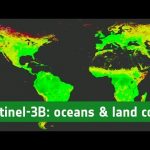
    Following its launch in February 2016 and subsequent commissioning phase, the Copernicus Sentinel-3A satellite has been systematically measuring our oceans, land, ice and atmosphere. The information feeds a range of practical applications and is used for monitoring and understanding large-scale global dynamics. Sentinel-3A will soon be joined in orbit by its identical twin, Sentinel-3B. Both satellites carry a suite of cutting-edge instruments to supply a new generation of data products, which are particularly useful for marine applications. For example, they monitor ocean-surface temperatures for ocean and weather forecasting services, aquatic biological productivity, ocean pollution and sea-level change. The mission also delivers unique and timely information about changing land cover, vegetation, urban heat islands, and for tracking wildfires. With the two satellites in orbit, global coverage and data delivery will be optimised.

  • Digital Transformation: Steve Wilson on “The Limits of Artificial Intelligence”

    Digital Transformation: Steve Wilson on “The Limits of Artificial Intelligence”

    See more clips and interviews at http://www.digitaltransformation-film.com

    Steve Wilson: “Look, there was another point I wanted to make about the limits of AI. One of the most commercially realistic technologies these days is conversation technology, the chatbots. The idea of helping people through the complexity of their interactions, their business interactions through chat is a powerful idea. Some recent experience with chatbots that have gone feral, chatbots that have gone wild, and adopted racist guises. Calling a bot racist is a problematic idea, but let’s just call it what it is. The Microsoft Tay bot [was] released into Twitter to learn the mores and foibles of human language and to adopt those lessons of conversation and then start automating conversation. [It] proved to be a disaster within hours. The salutary lesson of the Tay experience was: Think about a toddler. The salutary lesson of the Tay experience was that this artificial intelligence was fundamentally not human-like. It’s so far short of human that we need to understand this. If a toddler learned some foul language in the playground and brought that home, and she started speaking inappropriately, then you take the toddler, you sit her down and you explain to her. You have an attitude adjustment, is the euphemism that we need. We’re reprogramming the toddler. What they did with Tay was they turned her off. They switch her off, it was like the digital death penalty for becoming unacceptable. The really deep problem here is that there is no teachable moment for an artificial intelligence. You cannot take the artificial intelligence and sit it down and explain where it went wrong. We are so far short of having a teachable moment for artificial intelligence, we’re so far short of having self-awareness, that we need to be really careful with the sort of implicit assumption that self-driving cars will make ethical decisions. Or that conversational robots will have human-like properties. We don’t even know how self-awareness works in ourselves, let alone how we’re going to program it.”

    Steve Wilson is a Digital Identity Innovator & Analyst at Constellation Research. http://www.constellationr.com

    “Digital Transformation: Visions of Nations, Companies, and People” is a film by Manuel Stagars.

  • The future of the Orion constellation

    The future of the Orion constellation

    This video reveals how our view of the Orion constellation will evolve over the next 450 000 years.

    Amid a myriad of drifting stars, the shape of Orion as defined by its brightest stars is slowly rearranged into a new pattern as time goes by.

    The portion of the sky depicted in the video measures 40 x 20º – as a comparison, the diameter of the full Moon in the sky is about half a degree.

    The video is based on data from ESA’s Gaia and Hipparcos satellites, as well as additional information from ground-based observations.

    A speeded-up version of the video is available here: http://sci.esa.int/gaia/59209

    Full story: The future of the Orion constellation http://www.esa.int/Our_Activities/Space_Science/Gaia/The_future_of_the_Orion_constellation

    The evolution of two million stellar positions on the entire sky is shown here: https://www.youtube.com/watch?v=87lgSRVUSxM

    Copyright: ESA/Gaia/DPAC CC BY-SA 3.0 IGO: https://creativecommons.org/licenses/by-sa/3.0/igo/

  • The Rise of the Machines – Why Automation is Different this Time

    The Rise of the Machines – Why Automation is Different this Time

    Automation in the Information Age is different.

    Books we used for this video:

    The Rise of the Robots: http://amzn.to/2sFQTed

    The Second Machine Age: http://amzn.to/2szATee

    Support us on Patreon so we can make more videos (and get cool stuff in return): https://www.patreon.com/Kurzgesagt?ty=h

    Steady: https://steadyhq.com/de/kurzgesagt
    Merchandise:  https://shop.kurzgesagt.org
    Newsletter: http://eepurl.com/cRUQxz
    Facebook: http://bit.ly/1NB6U5O
    Twitter: http://bit.ly/2DDeT83
    Instagram: http://bit.ly/2DEN7r3
    Discord: https://discord.gg/cB7ycdv

    The Voice of Kurzgesagt:
    Steve Taylor: http://voice-pool.com/en/english/

    The music of the video here:
    Soundcloud: http://bit.ly/2sfwlJf
    Bandcamp: http://bit.ly/2r17DNc
    Facebook: http://bit.ly/2qW6bY4

    – Study about job automation in the next two decades:
    http://bit.ly/1mj2qSJ

    THANKS A LOT TO OUR LOVELY PATRONS FOR SUPPORTING US:

    Brandon Eversole, Andrew Anglehart, Christian Ahlin, Kathleen Woolum, Estel Anahmias, Adam Schlender, Mike Luque, Encyclo, Stevie Taylor, Brent Yoder, Invisibleman, Jeff Lam, Christopher Hayes, Oliver Walker, gwendolyn bellermann, Matt Logan, Philip Chou, Brandon Young, Arlo Stewart, Thomas Hodnemyr, Viachaslau Hurmanau, Sam Cousins, Robin Hultgren, Jose Schroeder, Ched, Claustrophobya, Charles Wang, Dolan Dark, Casaro, Donglin Li, Sarah Thompson, Pamela Palmer, Fergal Harrington, Jonas Erath, Spencer, Zsuzsi Balai, Tyler Roberts, Allyssa Blalock, Robert Bishop, Carl-Johan Linde, Thomas Nielsen, Heather Pray, Marco Boneberger, Mehsotopes, Joe Johnston, ugo dubois, Keagan Boys, Miles Gard, Frantisek Sumsala, Scott, Tobias Theobald, Solar3ty Games, Nicholas Carr, K41N_of_2358, Daniel RodrÌguez, Pixlpit, Gytis Kirvela, Thomas Flanigan, Dwagon, Costin Graur, Mavis Everett, Kwiatkowski Robert, Huo Benpeng, Dan Gretton, Joshua Davison, Bryce Comp, Andrey Lipattsev, DEFECT DAVIS, Gurleen Saini, Andrew “FastLizard4” Adams, Isak Hietala, Leon Han, Sarah Johnson, Kieran Chakravorty, Hanna Khoury, Kimberly Martin, Jon Glass, Julius Wroblewski, Ben Zautner, Kester Falge, Juan Florez, Tad Moore

    Help us caption & translate this video!

    http://www.youtube.com/timedtext_cs_panel?c=UCsXVk37bltHxD1rDPwtNM8Q&tab=2

    The Rise of the Machines – Why Automation is Different This time

  • The Future of Your Job in the Age of AI | Robots & Us | WIRED

    The Future of Your Job in the Age of AI | Robots & Us | WIRED

    Robot co-workers and artificial intelligence assistants are becoming more common in the workplace. Could they edge human employees out? What then?

    Still haven’t subscribed to WIRED on YouTube? ►► http://wrd.cm/15fP7B7

    Also, check out the free WIRED channel on Roku, Apple TV, Amazon Fire TV, and Android TV. Here you can find your favorite WIRED shows and new episodes of our latest hit series Masterminds.

    ABOUT WIRED
    WIRED is where tomorrow is realized. Through thought-provoking stories and videos, WIRED explores the future of business, innovation, and culture.

    The Future of Your Job in the Age of AI | Robots & Us | WIRED

  • Future City Predictions – A glimpse at Cities of the Future

    Future City Predictions – A glimpse at Cities of the Future

    Do you ever wonder what cities will be like in the next few decades?

    With over two thirds of our population living in urban areas by 2050 the demands on cities’ services will increase significantly.

    Technological improvements to our infrastructure will change the way citizens interact; artificial intelligence and the Internet of Things will allow the city to become smart; perhaps even allowing cities to think like a human brain.

    What changes can we expect?

    • Cities will become greener and have more cycle and walking space along with less pollution
    • Buildings will generate their own energy from renewable sources and their design will be continually optimised thanks to smart data
    • The high street will offer richer, interactive shopping experiences with augmented reality changing rooms

    Smart buildings and sustainable cities

    Be it a workplace, a hospital, school or library – public buildings will become smart and aware, constantly improving based on information they gather from themselves and the other buildings around them.

    Buildings will also gather their energy source themselves through developments like solar windows; and surplus energy traded between nearby buildings and vehicles so that those in need never run dry. Through the data they have access to, they’ll run at optimum efficiency – aware of each of its occupants, keeping them at the right temperature and making sure they stay healthy and safe.

    Shopping will also evolve – with augmented reality, AI and connected data all playing their parts. Imagine walking into a clothes shop and being presented with an interactive changing room. The shop would instantly know your size and use AI to present you a selection of clothing it thinks you would like based on your previous purchases and upcoming social calendar. Customisation of your choice will become available – tweak a design in an interactive mirror, and if it’s not in stock it can be delivered to your house by drone later that day.

    More time for you

    All of this will create more time for you, both socially and at work. AI and connected devices will play its part in the workplace too – automating things like waste collection pods to when demand in the city is high, and bringing care to people who need it.

    Will this automation take over from people’s employment? The hope is that no, but instead will see a shift so that people can focus on where they are needed most and provide a higher quality, more personal service along with more insight towards where they are needed most.

    Find out more about our Future City Predictions on the Innovate UK blog: https://innovateuk.blog.gov.uk/2017/04/18/predictions-future-of-the-city/

    View our other Predictions videos here: https://www.youtube.com/playlist?list=PLrMOhOrmeR6n2k12dXD5aIL7dxYfD-wTL

    View the Innovate UK Success Stories here: https://www.youtube.com/playlist?list=PLrMOhOrmeR6lMh1j4Qz_csh_3ljSrDZpj

    Subscribe to our YouTube channel here: https://www.youtube.com/user/Innovateuk?sub_confirmation=1

  • How to be Ready for Jobs in an Artificial Intelligence Driven World

    How to be Ready for Jobs in an Artificial Intelligence Driven World

    The world is changing and is changing fast. Many of today’s traditional #jobs are at risk. With #AI becoming more predominant, how can we ensure that our children and their children can thrive in this future?

    Here, I share some thoughts.

  • The Stars of Passengers Quiz NASA Scientist

    The Stars of Passengers Quiz NASA Scientist

    NASA Scientist Tiffany Kataria drops in on Jennifer Lawrence, Chris Pratt and Michael Sheen for a fun, not so serious chat about science fiction, other worlds and time travel???

  • ExoMars – A promising future

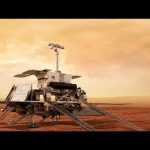
    ExoMars – A promising future

    2016 has been an eventful and promising year for ESA’s ExoMars mission. After successfully placing the Trace Gas Orbiter into Mars’ orbit on 19 October, the orbiter has sent back its first images, tested its instruments and performed in orbit calibration measurements and health checks.

    The Schiaparelli lander collected almost all of its expected data before its unexpected crash landing on the Martian surface. Crucial lessons will be learnt from this for the recently approved 2020 ExoMars mission, which will put Europe’s first rover on Mars.

    The precise cause of the lander loss is still being investigated but preliminary technical investigations have found that the atmospheric entry and slowing down in the early phases went exactly as planned.

    In all, since its launch in March 2016, the ExoMars mission has been a mixture of successes and one unexpected set back. Looking ahead, the Trace Gas Orbiter will start aerobraking in March 2017 to gradually slow down over the following months. By the end of 2017, the orbiter will be in a lower, near circular orbit of 400 kms and ExoMars’ primary science mission can begin.

    More about ExoMars:
    http://www.esa.int/exomars

  • ESA Euronews: Ministerial 2016, Europe’s future in space

    ESA Euronews: Ministerial 2016, Europe’s future in space

    Lucerne offered a scenic backdrop to ESA’s space summit – the crucial ministerial meeting held every two years when the agency’s 22 member states spend 48 hours debating one subject – Europe’s future in space.

    After posing for the family photo, the leaders of the European space sector closed the doors to begin debating the big questions – ExoMars and the International Space Station.

    This video is available in the following languages:
    Spanish: https://www.youtube.com/watch?v=556Cu6ltE94
    Portuguese: https://www.youtube.com/watch?v=cIcEywRwoTw
    Greek: https://www.youtube.com/watch?v=GRznfZWQVxs
    Italian: https://www.youtube.com/watch?v=d2udiXhc-oo
    Hungarian: https://www.youtube.com/watch?v=pF-ED0NzEh8
    German: https://www.youtube.com/watch?v=EdzNFyYTnoU
    French: https://www.youtube.com/watch?v=YnLPv-sHicY

  • Machines That Think: The Good, Bad and Scary of A.I. | Dr. James Canton | TEDxMarin

    Machines That Think: The Good, Bad and Scary of A.I. | Dr. James Canton | TEDxMarin

    Dr. Canton sees the coming of more Artificial Intelligence uses in our everyday lives and in
    solving global problems. He encourages us to think about its direction and how to maintain control of what we create.

    Dr. James Canton is a leading global futurist, social scientist, keynote presenter, author, and visionary business advisor. For over 30 years, he has been insightfully predicting the key trends that have shaped our world. He is a leading authority on future trends with an emphasis on harnessing innovation. Dr. Canton has advised three White House Administrations and global business leaders.

    This talk was given at a TEDx event using the TED conference format but independently organized by a local community. Learn more at http://ted.com/tedx

  • Genetic Engineering Will Change Everything Forever – CRISPR

    Genetic Engineering Will Change Everything Forever – CRISPR

    Designer babies, the end of diseases, genetically modified humans that never age. Outrageous things that used to be science fiction are suddenly becoming reality. The only thing we know for sure is that things will change irreversibly.

    Support us on Patreon so we can make more videos (and get cool stuff in return): https://www.patreon.com/Kurzgesagt?ty=h

    Steady: https://steadyhq.com/de/kurzgesagt
    Merchandise:  https://shop.kurzgesagt.org
    Newsletter: http://eepurl.com/cRUQxz
    Facebook: http://bit.ly/1NB6U5O
    Twitter: http://bit.ly/2DDeT83
    Instagram: http://bit.ly/2DEN7r3
    Discord: https://discord.gg/cB7ycdv

    The Voice of Kurzgesagt:
    Steve Taylor: http://voice-pool.com/en/english/

    Get the music of the video here:
    soundcloud: http://bit.ly/2aRxNZd
    bandcamp: http://bit.ly/2berrSW
    http://www.epic-mountain.com

    Thanks to Volker Henn, James Gurney and (prefers anonymity) for help with this video!

    THANKS A LOT TO OUR LOVELY PATRONS FOR SUPPORTING US:

    Jeffrey Schneider, Konstantin Kaganovich, Tom Leiser, Archie Castillo, Russell Eishard, Ben Kershaw, Marius Stollen, Henry Bowman, Ben Johns, Bogdan Radu, Sam Toland, Pierre Thalamy, Christopher Morgan, Rocks Arent People, Ross Devereux, Pascal Michaud, Derek DuBreuil, Sofia Quintero, Robert Swiniarski, Merkt Kızılırmak, Michelle Rowley, Andy Dong, Saphir Patel, Harris Rotto, Thomas Huzij, Ryan James Burke, NTRX, Chaz Lewis, Amir Resali, The War on Stupid, John Pestana, Lucien Delbert, iaDRM, Jacob Edwards, Lauritz Klaus, Jason Hunt, Marcus : ), Taylor Lau, Rhett H Eisenberg, Mr.Z, Jeremy Dumet, Fatman13, Kasturi Raghavan, Kousora, Rich Sekmistrz, Mozart Peter, Gaby Germanos, Andreas Hertle, Alena Vlachova, Zdravko Šašek

    SOURCES AND FURTHER READING:

    The best book we read about the topic: GMO Sapiens

    https://goo.gl/NxFmk8

    (affiliate link, we get a cut if buy the book!)

    – Good Overview by Wired:
    http://bit.ly/1DuM4zq

    –timeline of computer development:
    http://bit.ly/1VtiJ0N

    – Selective breeding:
    http://bit.ly/29GaPVS

    – DNA:
    http://bit.ly/1rQs8Yk

    – Radiation research:
    http://bit.ly/2ad6wT1

    – inserting DNA snippets into organisms:
    http://bit.ly/2apyqbj

    – First genetically modified animal:
    http://bit.ly/2abkfYO

    – First GM patent:
    http://bit.ly/2a5cCox

    – chemicals produced by GMOs:
    http://bit.ly/29UvTbh
    http://bit.ly/2abeHwU
    http://bit.ly/2a86sBy

    – Flavr Savr Tomato:
    http://bit.ly/29YPVwN

    – First Human Engineering:
    http://bit.ly/29ZTfsf

    – glowing fish:
    http://bit.ly/29UwuJU

    – CRISPR:
    http://go.nature.com/24Nhykm

    – HIV cut from cells and rats with CRISPR:
    http://go.nature.com/1RwR1xI
    http://ti.me/1TlADSi

    – first human CRISPR trials fighting cancer:
    http://go.nature.com/28PW40r

    first human CRISPR trial approved by Chinese for August 2016:
    http://go.nature.com/29RYNnK

    – genetic diseases:
    http://go.nature.com/2a8f7ny

    – pregnancies with Down Syndrome terminated:
    http://bit.ly/2acVyvg
    ( 1999 European study)

    – CRISPR and aging:
    http://bit.ly/2a3NYAV
    http://bit.ly/SuomTy
    http://go.nature.com/29WpDj1
    http://ti.me/1R7Vus9

    Help us caption & translate this video!

    http://www.youtube.com/timedtext_cs_panel?c=UCsXVk37bltHxD1rDPwtNM8Q&tab=2

  • Neuroscience, AI and the Future of Education | Scott Bolland | TEDxSouthBank

    Neuroscience, AI and the Future of Education | Scott Bolland | TEDxSouthBank

    Currently around 63% of students are disengaged at school, meaning that they withdrawal either physically or mentally before they have mastered the skills that are required to flourish in later life. In this talk Scott Bolland explores the science of learning, the mismatch between how we teach and how the brain natural learns, and the important role that artificial intelligence could take in addressing the limitations in our current education system.

    Dr Scott Bolland is the founder of New Dawn Technologies, a high-tech software company aiming to revolutionise education through the use of artificial intelligence. He has spent the last 20 years actively researching and teaching in the field of cognitive science – the scientific study of how the mind works – which spans disciplines such as psychology, philosophy, neuroscience, artificial intelligence and computer science. He holds a PhD in this field, as well as a university medal for outstanding academic scholarship.

    This talk was given at a TEDx event using the TED conference format but independently organized by a local community. Learn more at http://ted.com/tedx

  • SpaceShip EAC heading for the Moon

    SpaceShip EAC heading for the Moon

    ESA’s European Astronaut Centre (EAC) in Cologne, Germany, trains and prepares astronauts for their missions into space. This video details how EAC is preparing astronauts and technology for missions to the Moon as part of their SpaceShip EAC programme.

  • What happens when our computers get smarter than we are? | Nick Bostrom

    What happens when our computers get smarter than we are? | Nick Bostrom

    Artificial intelligence is getting smarter by leaps and bounds — within this century, research suggests, a computer AI could be as “smart” as a human being. And then, says Nick Bostrom, it will overtake us: “Machine intelligence is the last invention that humanity will ever need to make.” A philosopher and technologist, Bostrom asks us to think hard about the world we’re building right now, driven by thinking machines. Will our smart machines help to preserve humanity and our values — or will they have values of their own?

    TEDTalks is a daily video podcast of the best talks and performances from the TED Conference, where the world’s leading thinkers and doers give the talk of their lives in 18 minutes (or less). Look for talks on Technology, Entertainment and Design — plus science, business, global issues, the arts and much more.
    Find closed captions and translated subtitles in many languages at http://www.ted.com/translate

    Follow TED news on Twitter: http://www.twitter.com/tednews
    Like TED on Facebook: https://www.facebook.com/TED

    Subscribe to our channel: http://www.youtube.com/user/TEDtalksDirector

  • What will future jobs look like? | Andrew McAfee

    What will future jobs look like? | Andrew McAfee

    Economist Andrew McAfee suggests that, yes, probably, droids will take our jobs — or at least the kinds of jobs we know now. In this far-seeing talk, he thinks through what future jobs might look like, and how to educate coming generations to hold them.

    TEDTalks is a daily video podcast of the best talks and performances from the TED Conference, where the world’s leading thinkers and doers give the talk of their lives in 18 minutes (or less). Look for talks on Technology, Entertainment and Design — plus science, business, global issues, the arts and much more.
    Find closed captions and translated subtitles in many languages at http://www.ted.com/translate

    Follow TED news on Twitter: http://www.twitter.com/tednews
    Like TED on Facebook: https://www.facebook.com/TED

    Subscribe to our channel: http://www.youtube.com/user/TEDtalksDirector

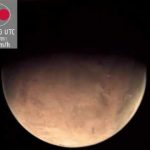
  • Full orbit: How an astronaut will view Mars from orbit – with distance counter

    Full orbit: How an astronaut will view Mars from orbit – with distance counter

    This movie was generated from 600 individual still images captured by the Visual Monitoring Camera (VMC) on board Mars Express during the 8194th orbit on 27 May 2010 between 02:00 and 09:00 UTC (04:00-11:00 CEST) and were transmitted to Earth a few hours later via ESA’s 35m New Norcia deep space station in Australia.

    The portion of the movie where the planet beneath the spacecraft was dark has been largely removed since no detail was visible.

    The images show the spacecraft’s slow descent from high above the planet, speeding up as closest approach is passed and then slowing down again as the distance increases. Towards the start of the video, the giant Martian volcanoes can be seen followed by the beginning of the ice coverage around the South Pole as the spacecraft crosses over to the night side of the planet. Shortly after emerging back onto the day side of the planet, the beautiful North Pole can be observed, followed by the long climb away from the planet over the equator. Finally, at the end of the movie, the disk of Phobos can be seen crossing from top to bottom of the image.

    Credit: ESA – European Space Agency, CC BY-SA 3.0 IGO

    Copyright Notice:

    This work is licenced under the Creative Commons Attribution-ShareAlike 3.0 IGO (CC BY-SA 3.0 IGO) licence. The user is allowed to reproduce, distribute, adapt, translate and publicly perform this publication, without explicit permission, provided that the content is accompanied by an acknowledgement that the source is credited as ‘ESA/DLR/FU Berlin’, a direct link to the licence text is provided and that it is clearly indicated if changes were made to the original content. Adaptation/translation/derivatives must be distributed under the same licence terms as this publication. To view a copy of this license, please visit http://creativecommons.org/licenses/by-sa/3.0/igo/

  • NASA Future Forum Hosted by Seattle’s Museum of Flight

    NASA Future Forum Hosted by Seattle’s Museum of Flight

    The Dec. 9 event opens with an address by NASA Deputy Administrator, Lori Garver. (Part 1 of 4) Since 2008, the agency’s ongoing series of Future Forums have provided NASA leadership, technologists, scientists, and engineers an opportunity to join with local business, science, technology, and education leaders to discuss the future role of NASA in further advancing innovation, technology, science, engineering, education and the economy that benefits their community and the nation.

  • The Journey Continues for NASA’s Human Space Exploration

    The Journey Continues for NASA’s Human Space Exploration

    The crew of STS-135, the final space shuttle mission, talks about the vibrancy of the International Space Station as a stepping stone for NASA’s plans for future human exploration beyond low-Earth orbit.

  • NASA Details Future Science Missions & Launches

    NASA Details Future Science Missions & Launches

    Chief scientist Waleed Abdalati is among the panelists who talk and answer questions about upcoming NASA science missions.

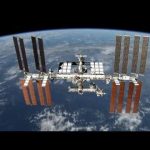
  • The International Space Station: Together is the Future

    The International Space Station: Together is the Future

    As the International Space Station Program completes 10 years of continuous human presence, administrators and former crewmembers discuss its past, present and future. The first residents, astronaut Bill Shepherd and cosmonauts Sergei Krikalev and Yuri Gidzenko came aboard the ISS on Nov. 2, 2000 on Expedition 1.