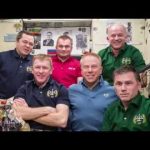
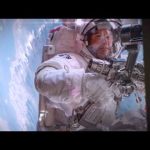
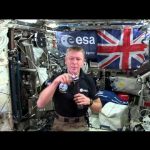
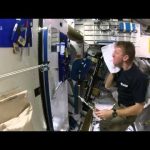
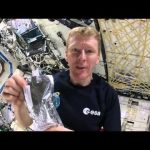
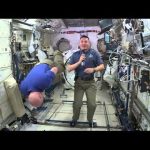
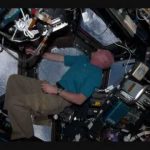
ESA astronaut Tim Peake set out to discover if he could make himself dizzy on board the International Space Station. His NASA crewmate Tim Kopra lent a hand to put Tim in a spin.
When astronauts first arrive in space, they usually feel pretty rough for about the first 24 hours. They report feeling dizzy, disorientated and sometimes nauseous. This has to do with the vestibular system. In microgravity the fluid in the inner ear is floating and so the brain is getting mixed signals compared to what the eyes are seeing. After about 24 to 48 hours, the brain starts relying more on information that is coming from the eyes. Once this happens, in theory, their brain is better able to cope with all kinds of different orientations and of course spinning…
Put your 3D glasses on and take this narrated tour of the International Space Station. Visit all the modules of humankind’s weightless laboratory orbiting Earth 400 km above.
Zet je 3D-bril op en ga mee op deze becommentarieerde rondleiding door het internationale ruimtestation ISS. Breng een bezoekje aan alle modules van het gewichtloze laboratorium dat op 400 kilometer hoogte rondjes om de aarde draait.
Footage of NASA Astronaut Kate Rubins training with her Expedition 48/49 crewmates in preparation for their upcoming mission to the International Space Station. Rubins, Anatoly Ivanishin of Roscosmos and Takuya Onishi of the Japan Aerospace Exploration Agency launch June 24 from the Baikonur Cosmodrome in Kazakhstan for a four-month tour aboard the ISS.
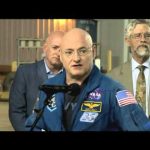
An agency wide All-Hands event on May 25 at NASA Headquarters featured Deputy Administrator Dava Newman and retired NASA astronaut Scott Kelly, reflecting on Kelly’s one-year mission aboard the International Space Station. The event, shown on NASA TV and the agency’s website, also featured video highlights of the mission and questions from employees watching at NASA centers around the country. During the unprecedented ISS mission, Kelly and Mikhail Kornienko of Roscosmos collected critical data on how the human body responds to long duration space flight.
On May 16, the International Space Station completed its 100,000th orbit of Earth since the launch of the first component on Nov. 20, 1998. In that time, the station has traveled more than 2.6 billion miles – which is roughly the equivalent of about 10 round trips between Earth and Mars, at the average distance between the two planets. The space station zips around our planet at 17,500 miles per hour – completing each orbit in just 90 minutes – giving the crew onboard the unique opportunity to experience 16 sunrises and sunsets per day and to capture some great images of Earth. Also, CubeSats Deployed from ISS, Humans to Mars Summit 2016, Orion’s Water Drop Test “Passengers”, There’s No Place Like Space and more!
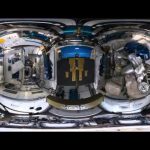
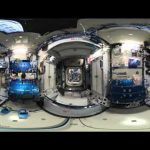
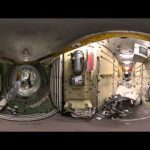
Explore the International Space Station’s Tranquility module from all angles on your mobile phone or headset
Node-3 Tranquility provides life-support for the International Space Station. Part of Tranquility is ESA’s Cupola observation module, a seven-window dome-shaped structure from where the Space Station’s robotic arm, Canadarm 2, is operated as it offers a panoramic view of space and Earth. Launched on Space Shuttle flight STS-130 in February 2010, Node-3 was attached to the port side of Node-1 Unity. Read more on ESA’s Node-3 minisite: http://www.esa.int/Our_Activities/Human_Spaceflight/Node-3_Cupola
Explore Node 3 in Flickr, Facebook or YouTube format with your mobile phone and virtual-reality headset, or take the full tour including all Space Station modules with videos and extra information below. This is the final Space Station module in 360°.
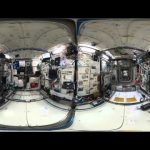
Explore Japan’s Kibo space laboratory with your mobile phone or VR headset in this panorama.
This 360° panorama lets you explore the International Space Station’s seventh module, Kibo. It was launched in three parts in 2008 and 2009 aboard Space Shuttles Atlantis and Endeavour.
The laboratory is renowned for its volume and extra features such as its external robotic arm, an airlock to send experiments outside, and an external facility to expose experiments to space. Nanosats can be launched from Kibo through the airlock, making the Station a base for deploying satellites as well as a weightless research centre for biology, physics and medicine.
Explore Kibo in YouTube, Flickr or Facebook format with your mobile phone and virtual-reality headset, or take the full tour including all Space Station modules with videos and extra information below. We will release a new Space Station module in 360° every week on Thursday.
Explore Europe’s Columbus space laboratory with your mobile phone or VR headset in this panorama.
This 360° panorama lets you explore the International Space Station’s sixth module, Columbus. It was launched on 7 February 2008 on Space Shuttle Atlantis. The laboratory is ESA’s largest single contribution to the Station, and Europe’s first permanent research facility in space.
The state-of-the-art facility offers 75 cubic metres of workspace and contains a suite of research equipment. External platforms support experiments and applications in space science, Earth observation and technology.
Columbus offers European scientists full access to a weightless environment that cannot be duplicated on Earth.
Explore Columbus in Flickr, Facebook or YouTube format with your mobile phone and virtual-reality headset, or take the full tour including all Space Station modules with videos and extra information below. We will release a new Space Station module in 360° every week on Thursday.
ESA astronaut Tim Peake shares his views of Earth and his six-month Principia mission while on the International Space Station. Narrated by Tim himself taken from interviews while in space, this video shows the best views, experiments and shares the experience of Tim’s life in space.
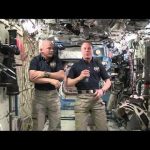
Aboard the International Space Station, Expedition 47 Commander Tim Kopra and Flight Engineer Jeff Williams of NASA discussed the pace of research on the orbital lab and recent cargo vehicle deliveries in an in-flight interview April 7 with NBC News’ website Today.com. Kopra is in the second half of a six-month mission on the station while Williams, who is in his third long duration flight on the complex, is nearing the completion of the first month of his half-year stay on the outpost.
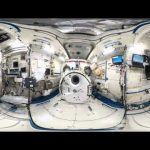
Explore the International Space Station’s Harmony module in this full panorama with your mobile phone or VR headset.
This 360° panorama lets you explore the International Space Station’s fifth module, Harmony. It was launched on 23 October 2007 aboard Space Shuttle Discovery to link the Columbus, Kibo and Destiny laboratories.
Harmony was developed for NASA under an ESA contract with European industry. Its structure is based on that of the Multi-Purpose Logistics Modules and the Europe’s Columbus.
Explore Harmony in YouTube, Flickr or Facebook format with your mobile phone and virtual-reality headset, or take the full tour including all Space Station modules with videos and extra information below. We will release a new Space Station module in 360° every week on Thursday.
Explore NASA’s space laboratory for the International Space Station from every angle in this panorama.
This 360° panorama lets you explore the International Space Station’s fourth module, Destiny. Launched on 7 February 2001 on Space Shuttle Atlantis, the American module is the heart of the non-Russian part of the Station according to ESA astronaut Samantha Cristoforetti (who took the pictures to create this view). The module allows experiments to be performed in many disciplines, from biology to physics, including a rack for burning liquids in weightlessness and the European Microgravity Science Glovebox.
Explore Destiny in Flickr, Facebook or YouTube format with your mobile phone and virtual-reality headset, or take the full tour including all Space Station modules with videos and extra information below. We will release a new Space Station module in 360° every week on Thursday.
Explore the heart of the Russian segment of the International Space Station in this global view.
This 360° panorama allows you to explore the International Space Station’s third module, Zvezda. Launched on 12 July 2000, the Russian module supplies life support for the Station and crewquarters. All five of Europe’s Automated Transfer Vehicles docked with the module.
The images to create this view were taken by ESA astronaut Samantha Cristoforetti during her Futura mission in 2015; the cosmonaut in the picture is Gennady Padalka.
Explore Zvezda in Flickr, Facebook or YouTube format with your mobile phone and virtual-reality headset, or take the full tour including all Space Station modules with videos and extra information below. We will release a new Space Station module in 360° every week on Thursday.
Gyroscopes form an important in keeping the International Space Station and satellites pointing the right way as they orbit our planet.
ESA astronaut Tim Peake shows how gyroscopes can be used to keep spacecraft stable during his six-month Principia mission.
There is no up or down in space. Satellites track their pointing direction using the same approach as on submarines and aircraft: fast-spinning gyroscopes that maintain a fixed orientation in the same way as a child’s spinning top. The International Space Station has four big gyroscopes which are used for stabilization of the Station.
“If I have seen further, it is by standing on the shoulders of giants” is the famous quote by renowned scientist Sir Isaac Newton. This is particularly apt as a title for this video summary of ESA astronaut Tim Peake’s Principia mission – named after Newton’s monumental work Philosophiae Naturalis Principia and now building on the work of previous European astronaut missions, while being supported by a huge team of scientists and engineers on the ground.
The music accompanying this video was chosen by Tim, coming from the soundtrack of one of his favourite films, the 2004 movie Layer Cake. This piece is called ‘Drive to the Boatyard’, by internationally known British film composer Ilan Eshkeri. Ilan provided a slightly extended piece specially for ESA.
Tim comments: “I’m delighted with this video, which captures the essence of human spaceflight and natural beauty of our planet from space – all put to Ilan’s inspiring soundtrack!”
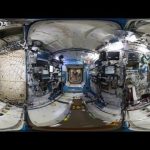
Explore the Space Station’s first module with your mobile phone or virtual-reality headset
This 360° video allows you to explore the International Space Station’s first module, Zarya. Launched on 20 November 1998, it was joined three weeks later by the US Unity module. Also known as the Functional Cargo Block, the module is now mainly used for storage.
ESA astronaut Samantha Cristoforetti took the pictures to form these images in June 2015 at the end of her 199-day Futura mission.
Explore this module in Flickr, Facebook or Youtube format with your mobile phone or take the full International Space Station tour on the ESA website with videos and extra information.
After spending nearly a year aboard the International Space Station — conducting a host of biomedical and psychological research on the impacts of long-duration spaceflight on the human body, NASA’s Scott Kelly and Mikhail Kornienko of the Russian space agency Roscosmos wrapped up their historic mission on March 1 – with a safe parachute landing in Kazakhstan . Just over a day, later – at Houston’s Ellington Field, near Johnson Space Center, a host of family, colleagues and VIPs welcomed Kelly back to the United States, including Second Lady of the United States Dr. Jill Biden, Assistant to the President for Science and Technology Dr. John P. Holdren, and NASA Administrator Charles Bolden. There were cheers, embraces and expressions of appreciation for his efforts to help advance deep space exploration and America’s Journey to Mars. Also, Next ISS crew heads to launch site, “Low boom” aircraft, Orion Service Module’s solar array wing deployment and more!
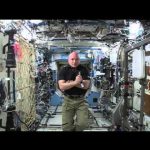
Aboard the International Space Station, Expedition 46 Commander Scott Kelly of NASA reflected on his year aboard the orbital laboratory and the accomplishments he and Russian cosmonaut Mikhail Kornienko of Roscosmos have chalked up during their year-long mission in an in-flight interview recorded Jan. 28 with NASA Public Affairs Officer Rob Navias of the Johnson Space Center in Houston. Kelly and Kornienko are scheduled to land March 1, U.S. time (March 2, Kazakhstan time) in a Russian Soyuz spacecraft to complete a 340-day mission in which they collected valuable biomedical data on the long duration effects of weightlessness that will be used to formulate a human mission to Mars.
ESA astronaut Tim Peake shows the cleaning duties on the International Space Station. Every Saturday all astronauts living in the weightless research laboratory spend the morning cleaning.
Tim’s six-month mission in space is called Principia: www.esa.int/Principia
In 2015, NASA explored the expanse of our solar system and beyond, and the complex processes of our home planet, while also advancing the technologies for our journey to Mars, and new aviation systems as the agency reached new milestones aboard the International Space Station. Here’s a look at some of the top NASA stories of the year!
Aboard the International Space Station, Expedition 44 Flight Engineers Scott Kelly and Kjell Lindgren of NASA discussed their life and research aboard the orbital outpost in an in-flight interview Aug. 17 with the CBS Radio Network. Kelly is completing the fifth month of his year-long mission on the station with Russian cosmonaut Mikhail Kornienko to gather valuable biomedical data that will be used to formulate a human mission to Mars, while Lindgren is completing the first month of a five-month mission on the laboratory.
Join ESA astronaut Samantha Cristoforetti for a guided tour of the International Space Station’s crew quarters – the bedroom.
After a day’s work running experiments and maintaining the weightless research centre astronauts can retreat to their private quarters that is no larger than a changing room. In this small space they can store personal items, use a laptop for internet and float to sleep in their sleeping bag.
NASA and its international partners are making changes to the International Space Station’s schedule of arriving and departing spacecraft, following the Russian Federal Space Agency’s preliminary findings on its recent loss of the Progress 59 cargo craft. Exact dates will be announced in the coming weeks, with a Roscosmos update about the Progress 59 investigation expected May 22. The schedule adjustments mean NASA’s Terry Virts and Expedition 43 crewmates, Samantha Cristoforetti of ESA and Russian cosmonaut Anton Shkaplerov – now will return to Earth in June instead of May. NASA’s Kjell Lindgren, who is conducting pre-flight training in Russia with the other members of Expedition 44, now will launch to the station in July. Also, Small satellite launch services, Latest images of Ceres, Europa’s sea salt? Antarctica Ice Shelf Nearing Its Final Act and No major U.S. hurricanes in nine years!
A few days after his one-year mission to study the effects of long duration spaceflight on the human body began aboard the International Space Station, Expedition 43 Flight Engineer Scott Kelly was congratulated by NASA Administrator Charlie Bolden from Washington DC. Also on the call – Kelly’s twin brother and former astronaut Mark. The pair will be studied during the mission as part of a science investigation. White House science advisor John Holdren also joined the call and echoed the importance of the mission. Kelly and Russian cosmonaut Mikhail Kornienko will conduct the one-year research mission through March 2016. Also, Super typhoon seen from space, Asteroid mission milestone, LDSD spin test and Sniffing the history of the Martian atmosphere!
NASA Administrator Charles Bolden, speaking during his Feb. 2 “State of NASA” address at Kennedy Space Center in Florida after the release of President Obama’s Fiscal Year 2016 $18.5 billion budget proposal for NASA said, “I can unequivocally say that the State of NASA is strong.” The proposed budget is a half-billion-dollar increase over last year’s enacted budget, which, the Administrator noted, “is a clear vote of confidence to you – the employees of NASA and the ambitious exploration program you are executing.” The budget facilitates NASA’s plan moving forward, which includes development of new vehicles and technologies needed for unprecedented human missions to an asteroid and to Mars, commercial partnerships to provide transportation to and from the International Space Station from the United States and research on the station for the benefit of future deep space travelers and people living on our home planet. Also, New views of Pluto, Soil moisture mission underway and Virginia Aerospace Day!
How does an astronaut return to Earth from the International Space Station? What does it feel like to re-enter the atmosphere? How does the Soyuz capsule function? Watch and find out. This video is based on an actual lesson delivered to the ESA astronaut class of 2009 (also known as the #Shenanigans09) during their ESA Basic Training. It features interviews with astronauts who have flown on the Soyuz and dramatic footage of actual landings.
Produced by the ESA Human Spaceflight and Operations (HSO) Astronaut Training Division, Cologne, Germany, in collaboration with the HSO Strategic Planning and Outreach Office, Noordwijk, The Netherlands, with special support from Roskosmos.
Content Design: Stephane Ghiste, Dmitriy Churkin, Raffaele Castellano, Matthew Day (HSO-UT)
Animation & Video Editing: Raffaele Castellano (HSO-UT), HSO-K
Project Coordination: Matthew Day, Stephane Ghiste, Dmitriy Churkin (HSO-UT)
Special thanks to:
Martin Schweiger (Orbiter software: http://orbit/medphys.ucl.ac.uk/)
Nikita Vtyurin, Andrew Thielmann (Orbiter Soyuz model)
Lionel Ferra (HSO-UT)
Oleg Polovnikov (HSO-UT)
Frank De Winne (HSO-A)
Paolo Nespoli (HSO-A)
Antonio Rodenas Bosque (HSO-UT)
NASA
ROSCOSMOS
S.P. Korolev Rocket and Space Corporation Energia
Aerospace Search and Rescue Service of the Russian Federation
Parachute footage: Cambridge University Spaceflight
Surfer footage: copyright Red Bull Media House
Footage from inside Soyuz capsule courtesy of RSC Energia has limited rights:
a) These data are submitted with Limited Rights under Agreement among the Government of Canada, Governments of Member States of the European Space Agency, the Government of Japan, the Government of the Russian Federation and the Government of the United States of America concerning co-operation on the civil International Space Station.
These data may be used by the receiving co-operating agency and its contractors and subcontractors, provided that such data shall be used, duplicated or disclosed only for the following purposes, which are related to the Cooperating Agency Space Station Program for ISS:
1) Use for ESA astronaut training
2) Use for educational purposes
These data shall not be used by persons or entities other than the receiving Cooperating Agency, its contractors or subcontractors, or for any other purposes, without the prior written permission of the furnishing partner state, acting through its cooperating agency.
b) This notice shall be marked on any reproduction of these data in whole or part.
Captions available in English, French, German, Italian, Russian, Romanian (with thanks to Alexa Mirel) and Spanish. Click on the CC button to switch between languages.
Italian astronaut Luca Parmitano and NASA astronaut Chris Cassidy were hard at work outside the International Space Station (ISS) for the second time, when water started to leak into Luca Parmitano’s space suit helmet, immediately resulting in the duo heading back to the Quest Airlock to terminate the EVA. Luca and Chris explain the events that happened during EVA # 23.
In a first for the agency, NASA hosted a Google+ Hangout live with the International Space Station on Feb. 22, 2013 from 10:30 a.m EST to 11:30 a.m. EST. Google+ Hangouts allow people to chat face-to-face while thousands more can tune in to watch the conversation live on Google+ or YouTube. This unique opportunity connected you, our fans, with astronauts living and working on the orbiting laboratory 240 miles above the Earth.
During the event, several video questions were selected and answered by astronauts on the space station and on the ground. Additionally, NASA asked real-time questions submitted by our followers on Google+, Twitter, and Facebook. During the hangout, astronauts Kevin Ford, Chris Hadfield and Tom Marshburn will answer questions and provide insights about life aboard the station. Station crews conduct a variety of science experiments and perform station maintenance during their six-month stay on the outpost. Their life aboard the station in near-weightlessness requires unique approaches to everyday activities such as eating, sleeping and exercising.
This video was specially recorded during Sir Elton John’s Million Dollar Piano Show in Las Vegas, on 17 April 2012, 40 years to the day after his single Rocket Man was released around the world.
Continuing the celebration of ESA astronaut André Kuipers’ music in space, British rock legend Sir Elton sent a special message to ESA, André and the crew of the ISS on the 40th anniversary of this classic song.
Sir Elton said, “When I was a boy Dan Dare was a comic book hero, and space travel just a romantic idea, not a reality. I was 14 years old when Yuri Gagarin became the first man in space; my songwriting partner Bernie Taupin was just 11. Bernie and I did not meet until 1967, and two years after we met, Neil Armstrong became the first man to step on to the moon.
“Our generation was smitten with the glory and excitement of space travel. ‘Rocket Man’ – and indeed ‘Dan Dare’ on the Rock of the Westies album – came from those boyhood dreams of travelling beyond the stars and looking back on Earth.
“Not long after the Rocket Man single was released, my band and I were invited to the NASA headquarters in Texas and shown around by Al Worden, Apollo 15 command module pilot. It was thrilling to find that real astronauts liked our song, Rocket Man, which was about an imaginary astronaut.
“Now, 40 years later, it’s amazing to hear from the astronauts at the European Space Agency that they like the song and that it has been on the playlist on the International Space Station. I send my best wishes to ESA and all the crew, and my thanks for keeping those boyhood dreams alive.”
André said, “This song has been an inspiration to many people who are interested in space, and especially those who wanted to become astronauts, including myself. It is certainly one of the most played songs here on the ISS, and we know it will accompany more astronauts into space in the future.”
Rocket Man appeared on Elton John’s album Honky Château, released also 40 years ago next week, on 19 May 1972.
Video copyright ESA/Rocket Music
Rocket Man written by E. John and B. Taupin
Music and concert excerpts, courtesy Rocket Music
Video produced by ESA/J. Makinen
ESA astronaut André Kuipers’ stay on the International Space Station (ISS) started on 23 December 2011 and continues until 1 July 2012. Apart from his demanding tasks as Flight Engineer for Expeditions 30/31, André is providing us with amazing imagery of Earth and of life and work on the ISS. For the first time, digital 3D still photos have been taken of cosmonauts carrying out extravehicular activities in their spacesuits. This short clip collects a selection of 3D images footage taken with the Erasmus Recording Binocular (ERB-2) and some 3D stills from a Fuji W3 camera. Stereoscopic images are a unique tool for providing viewers with a sense of presence in the constrained and dense habitat in which the astronauts live.
Stereoscopic 3D glasses are required to properly enjoy the full 3D effect of this footage.
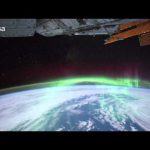
André took this video of Aurora Australis from the European Cupola module in the Space Station. The beautiful phenomenon is caused by bursts of particles from the Sun pouring down Earth’s magnetic field into the atmosphere.
YouTube Space Lab is a campaign initiated by YouTube, NASA, Space Adventures and Lenovo that challenges students around the world to design a science experiment for the International Space Station.
The winning experiments will be conducted in space on the International Space Station, making it the Universe’s largest science lesson, streamed live for the world to see via YouTube.
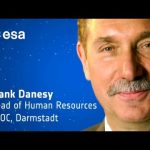
‘How do I become an astronaut?’ is a question that Frank Danesy has been asked many, many times. In this video Frank talks about the qualities needed to become an astronaut, the selection campaigns and the rigorous training involved for the lucky few who are eventually chosen.
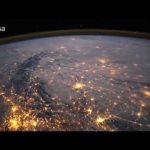
Western Europe in timelapse as seen from the International Space Station by ESA astronaut André Kuipers, during his long-duration mission to the ISS, PromISSe
The 42-piece DSS Aarlanderveen orchestra played an inspiring tribute to André Kuipers at their annual ‘Wish concert’ on 11 February 2012. Each year the orchestra take ‘wish’ requests from Dutch celebrities, but this year the orchestra wanted to perform something very special for Wensconcert 2012, and uniquely decided to dedicate their ‘wish’ spot to André. They chose the Jupiter hymn from Holst’s ‘The Planets’ suite, one of André’s favourite pieces. Afterwards the audience was treated to a message received from the ISS, in which André said: “Oh how nice! I have this music up here with me. I’m very honoured to have such a beautiful piece dedicated to me. Warmest thanks for that.”
The DSS Aarlanderveen orchestra is based in Aarlanderveen, near Alphen aan den Rijn, in the Netherlands. Leading the orchestra on the night was Danny Oosterman, a well-known Dutch conductor, cornet and trumpet player, and instructor at the Conservatorium van Amsterdam and the Utrechts Conservatorium.