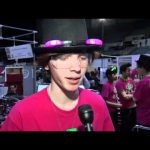
The annual FIRST Robotics competition is in full swing with some 60-thousand high school students competing in regional challenges using robots they built in six weeks from a common kit of parts. NASA is the largest sponsor of the national FIRST program, supporting five regional competitions and more than 280 teams. Since January, high school FIRST Robotics teams across the country have worked tirelessly to build, program and test robots in preparation for this year’s challenge called Rebound Rumble.
Tag: NASA
-
Supply Mission to Station on This Week @ NASA
The European Space Agency has successfully launched its third Automated Transfer Vehicle. The cargo ferry, named Edoardo Amaldi for the Italian physicist and spaceflight pioneer, was sent on its way to the International Space Station atop an Ariane 5 rocket from Europe’s Spaceport in Kourou, French Guiana. The ATV brings essential supplies and propellant to the ISS, as well as the ability to re-boost the station’s altitude. ATV Edoardo Amaldi follows the two highly successful supply missions carried out by ATV Jules Verne in March 2008 and ATV Johannes Kepler in February of last year. Also, members of the International Space Station’s Expedition 32 crew discuss their upcoming mission aboard the orbiting laboratory with the media, Engineers at the Marshall Space Flight Center test fire a scaled down solid rocket booster for NASA’s Space Launch System, or SLS, the 100th anniversary of the birth of a space pioneer and more!
-
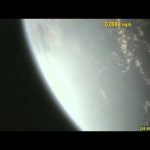
“Riding the Booster” Never Sounded Better
From launch to landing, a space shuttle’s solid rocket booster journey is captured, with sound mixed and enhanced by Skywalker Sound.
-
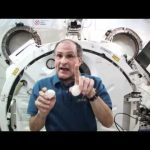
Angry Birds & Pigs Go Weightless!!!
In cooperation with NASA, Finland-based Rovio Entertainment, creator of the Angry Birds franchise, has announced its newest game, “Angry Birds Space.” Game developers have incorporated concepts of human space exploration into the new game. From the weightlessness of space to the gravity wells of nearby planets, players use physics as they explore the various levels of the game set both on planets and in microgravity. Aboard the International Space Station, Flight Engineer Don Pettit of NASA created a video using Angry Birds Space to explain how physics works in space, including demonstrating trajectories in microgravity by catapulting an Angry Bird through the space station.
-
NASA African-American History Month Profile – Darrius Lewis
Darrius Lewis is an Emergency Preparedness Officer and Continuity of Operations Program Manager at NASA Headquarters. He is responsible for overseeing the Continuity Of Operations Program at NASA Headquarters as well as the functionality of the Emergency Notification System. He is charged with strategically planning for man-made and natural disasters to minimize any impact to NASA personnel, so that NASA workers and leadership can continue to conduct the business of NASA.
-

NASA African-American History Month Profile- Rhonda Baker
Rhonda Baker is the Associate Director for Center Operations at Ames Research Center. She has been working in Federal government positions since the age of 16. She came to Ames as a procurement specialist in 1998, and worked in support of several research areas, including the NASA Astrobiology Institute (NAI). She is now the Associate Director for Center Operations at Ames Research Center.
-
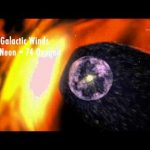
ScienceCasts: Alien Matter in the Solar System
“Alien matter” detected by a NASA spacecraft orbiting Earth shows that the chemical make-up of our solar system differs from that of the surrounding galaxy. Researchers discuss the possible meaning of this mismatch in this week’s ScienceCast video.
Visit http://science.nasa.gov/ for more. -

PromISSe launch campaign – now in 3D!
Follow ESA astronaut André Kuipers and his crewmates, NASA astronaut Donald Pettit and Roscosmos cosmonaut Oleg Kononeko, on their journey from Baikonur cosmodrome, in Kazakhstan, up to their launch onboard a Soyuz TMA-03M spacecraft to the International Space Station (ISS).
On 21 December 2011, André embarked on ESA’s fourth long-duration mission to the ISS, “PromISSe”. During his five months onboard this human outpost in space, Andre is serving as a flight engineer for Expedition 30.
This exceptional 3D video shows some of the main events before launch, including: the city of Baikonur, the avenue of cosmonauts with the tree once planted by Yuri Gagarin, the Gagarin Museum, the roll-out of Soyuz in the early morning hours, the vertical erection of the rocket on the launch pad, the pre-launch press conference, the ready-to-fly report of the crew commander, and of course – the amazing light show of a night launch from the Gagarin launch pad in Baikonur.
Stereoscopic 3D glasses are required to properly enjoy the full 3D effect of this footage.
André and his fellow crew members will return to Earth by the end of May 2012.
-

NASA’s GRAIL Twins to Welcome 2012 at Moon
NASA’s two Gravity Recovery And Interior Laboratory (GRAIL) spacecraft are closing in on their quarry, the moon. The mission plans New Year’s Eve and New Year’s Day main engine burns to place the twin spacecraft in lunar orbit. http://www.nasa.gov/grail
-
NASA’s GRAIL Twins to Welcome 2012 at Moon
NASA’s two Gravity Recovery And Interior Laboratory (GRAIL) spacecraft are closing in on their quarry, the moon. The mission plans New Year’s Eve and New Year’s Day main engine burns to place the twin spacecraft in lunar orbit. http://www.nasa.gov/grail
-

Discovery, Innovation and New Destinations Highlight “This Year @NASA”
From understanding our Earth, to new clues about possible life elsewhere. From fostering life-changing research in space, to sharing our vision of the future with those destined to journey there.
From the end of one monumental mission, to the beginning of a new era in the human exploration of our solar system. “This Year @NASA” looks back at the stories that made 2011 — and help frame our path ahead. -

NASA’s Orion: From Factory to Flight
NASA is making steady progress on building the Orion spacecraft, which will take astronauts deeper into space than ever before. Take a look at the latest achievements and milestones in “Orion: From Factory to Flight” as Orion gets ready for its first orbital test flight in 2014.
-
New Crew Sets Sights on Station on “This Week @NASA”
At the Baikonour Cosmodrome in Kazakhstan, training continues for the next residents of the International Space Station. Expedition 30 Soyuz Commander Oleg Kononenko, NASA Flight Engineer Don Pettit and European Space Agency Flight Engineer Andre Kuipers, are reviewing flight procedures and making other preparations in advance of their upcoming launch to the orbiting laboratory scheduled for on Dec. 21. Also, next-gen tests; Dawn’s new orbit; and, Third Rock rolls out.Plus, Cleveland tech showcase; Explorer moves; “Sully” at the sim; FIRST Lego; “Operation Cookies,” and more.
-

NASA Future Forum Hosted by Seattle’s Museum of Flight
The Dec. 9 event opens with an address by NASA Deputy Administrator, Lori Garver. (Part 1 of 4) Since 2008, the agency’s ongoing series of Future Forums have provided NASA leadership, technologists, scientists, and engineers an opportunity to join with local business, science, technology, and education leaders to discuss the future role of NASA in further advancing innovation, technology, science, engineering, education and the economy that benefits their community and the nation.
-
Mars Rover Launches on This Week @NASA
The NASA Mars Science Laboratory launched from the Cape Canaveral Air Force Station in Florida, beginning its journey to the Red Planet. When it arrives at Gale Crater next August, Curiosity rover’s ten instruments will investigate whether that area of Mars could ever have sustained microbial life. Also, ISS spinoff; Bolden on tour: lander test; best of the feds; money saver; high-flying feast, and more.
-

NASA Spinoffs Benefit All of Us (Including Santa!)
Elf 6409EF from Sony Pictures new film, “Arthur Christmas,” cites how spinoffs of NASA-developed space technologies are making our lives better here on Earth.
-
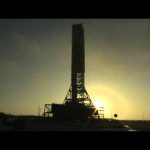
NASA’s Mobile Launcher Moved to Launch Pad
The mobile launcher that’ll support NASA’s Space Launch System (SLS) has moved from the Vehicle Assembly Building to Launch Pad 39B at the Kennedy Space Center in Florida. The 355-foot-tall ML, which took about two years to construct, is
being modified to support the heavy-lift rocket that will launch astronauts farther into space than ever before. SLS also will create high-quality jobs here at home, and provide the cornerstone for America’s future human space exploration efforts. -

NASA Heroes Awarded Congressional Gold Medal
The Gold Medal, Congress’s highest expression of national appreciation for distinguished achievements and contributions, is presented to four storied NASA astronauts: John Glenn, Neil Armstrong, Michael Collins, and Buzz Aldrin. The Capitol Hill award ceremony was hosted by House and Senate leaders of both parties.
-
What’s Up @NASA?
NASA enters the next era of spaceflight that includes developing plans to build a new rocket to send astronauts beyond low Earth orbit.
The Space Launch System, or SLS, will power the Orion spacecraft to whatever destination NASA chooses, whether it be a near-Earth asteroid, the moon, or Mars. -

NASA Recruits New Astronauts Via Web
NASA unveils its new, online application process for those wishing to become NASA astronauts. In this video that appears on the application site, Administrator and former astronaut Charles Bolden urges candidates to join NASA’s astronauts Class of 2013 and be part of our nation’s future space exploration effort. To learn more: www.astronauts.nasa.gov
-

Asteroid News from NASA’s WISE Satellite Headlines the Latest Episode of This week at NASA
Also: Deputy Administrator Lori Garver delivers keynote at Space Launch System Industry Day; flight teams compete for the title, most fuel-efficient aircraft in the world, James Webb Space Telescope gets a new coat; President Obama visit Ames’ Moffett Field; Casualty Drills at Wallops; Dryden honors shuttle workers; Profile: Astronomer Rosa Diaz, and three 135 crew members visit Glenn.
-
NASA’s GRAIL Spacecraft Launches on Lunar Mission
NASA’s GRAIL spacecraft launched to the moon aboard a United Launch Alliance Delta II rocket on Sept. 10, 2011, from Cape Canaveral Air Force Station, Fla.
GRAIL’s primary science objectives are to determine the structure of the lunar interior, from crust to core, and to advance understanding of the thermal evolution of the moon.
-
Sept. 11, 2001 Video From the International Space Station
On Sept. 11, 2001, NASA astronaut, Frank Culbertson, was the lone American not on the planet. Culbertson and two Russian cosmonauts were orbiting the Earth aboard the International Space Station as members of the Expedition 3 crew. Included is video captured by Culbertson and crew as they flew over New York City just after the attacks on the World Trade Center. Included is additional footage aboard the ISS, as well as interview excerpts of Culbertson’s recollections ten years later.
-
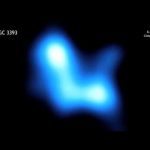
NASA’s Chandra Finds “Nearby” Black Holes
Astronomers using NASA’s Chandra X-ray Observatory have discovered the first pair of supermassive black holes in a spiral galaxy similar to the Milky Way. Approximately 160 million light years from Earth, the pair is the nearest known such phenomenon. The black holes are located near the center of the spiral galaxy NGC 3393. Separated by only 490 light years, the black holes are likely the remnant of a merger of two galaxies of unequal mass a billion or more years ago.
-
Tribute to the Space Shuttle from the European astronauts
Space Shuttle is perhaps the most complex technological system ever built. In 30 years, it has flown 135 times and helped humankind to dispatch and partially even return many satellites and deep-space probes, to build the International Space Station and to conduct out-of-this-world science. The Shuttle has transported also 24 European astronauts to Earth orbit on 25 missions.
This video highlights these flights with European flavour – from STS-9 in 1983 to STS-134 in last May. -
Opportunity Rover Reaches Martian Crater on This Week @NASA
NASA’s Mars Rover Opportunity has reached its next destination. Three years after climbing out of Victoria crater, Opportunity has completed an eleven-mile trek to the rim of Endeavour crater at a spot informally named “Spirit Point” after the rover’s decommissioned twin.
At 14 miles in diameter, Endeavour has ridges along its western rim that expose rock outcrops older than any Opportunity has seen so far. Also, Future Forum; shuttles nose-to-nose; hydro basin; women of WISH; STEM forum; and engineering interns. Plus, NASA Art! -
Juno to Jupiter on This Week @NASA
The successful liftoff of the Juno spacecraft from the Kennedy Space Center begins a five-year cruise to the planet Jupiter to investigate the planet’s structure, atmosphere and magnetosphere.
It will also provide detailed images of Jupiter’s surface and capture the first high-resolution views of its poles. Also, possible Martian water flows; Vesta’s new look; oxygen in space; and, Columbia debris. Plus, HQ crew visit; Russians spacewalk; SOFIA ambassadors; new Apollo 15 book; and dunk tank for food. -
Juno Mission Launches to Jupiter
NASA’s Juno spacecraft is on its way to Jupiter after being launched aboard an Atlas V rocket from the Cape Canaveral Air Force Station, Florida on August 5 at 11:25 a.m. Eastern. The solar-powered spacecraft will arrive at Jupiter in July 2016 and orbit its poles 33 times to find out more about the gas giant’s interior, atmosphere and aurora. Scientists believe Jupiter holds the key to better understanding the origins of our solar system.
-
NASA’s MRO Sees Possible Martian Water Flows
Observations from NASA’s Mars Reconnaissance Orbiter, MRO, have revealed possible flowing water during the warmest months on Mars. Scientists discuss the findings at a NASA Headquarters news briefing held August 4, 2011.
Dark, finger-like features appear and extend down some Martian slopes during late spring through summer, fade in winter, and return during the next spring. Repeated observations have tracked the seasonal changes in these recurring features on several steep slopes in the middle latitudes of Mars’ southern hemisphere. -

STS-135: Final Launch of the Space Shuttle Program
Space shuttle Commander Chris Ferguson and crewmates Pilot Doug Hurley, and Mission Specialists Sandy Magnus and Rex Walheim are on their way to the International Space Station after launching from NASA’s Kennedy Space Center at 11:29 a.m. EDT on Friday, July 8. STS-135 is the final mission of NASA’s Space Shuttle Program.
The 12-day mission will deliver the Raffaello multi-purpose logistics module filled with more than 8,000 pounds of supplies and spare parts to sustain space station operations after the shuttles are retired. STS-135 is the 135th shuttle flight, the 33rd flight for Atlantis and the 37th shuttle mission dedicated to station assembly and maintenance, -
The Journey Continues for NASA’s Human Space Exploration
The crew of STS-135, the final space shuttle mission, talks about the vibrancy of the International Space Station as a stepping stone for NASA’s plans for future human exploration beyond low-Earth orbit.
-
NASA Details Future Science Missions & Launches
Chief scientist Waleed Abdalati is among the panelists who talk and answer questions about upcoming NASA science missions.
-
Solving Aviation’s Challenges Through NASA Innovation
Ed Waggoner, director of the Integrated Systems Research Program, and John Cavolowsky, director of the Airspace Systems Program, discuss what’s next for NASA in the field of aeronautics research during a briefing to the news media at NASA’s Kennedy Space Center.
-
The Space Shuttle (Narrated by William Shatner)
An idea born in unsettled times becomes a feat of engineering excellence. The most complex machine ever built to bring humans to and from space and eventually construct the next stop on the road to space exploration.
-
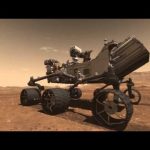
Mars Science Laboratory Curiosity Rover Animation
This 11-minute animation depicts key events of NASA’s Mars Science Laboratory mission, which will launch in late 2011 and land a rover, Curiosity, on Mars in August 2012. A shorter 4-minute version of this animation, with narration, is also available on our youtube page.
-
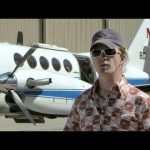
Final Shuttle Rollout on This Week @NASA
The final rollout of the Space Shuttle Program has brought Atlantis from the Vehicle Assembly Building to Launch Pad 39A at the Kennedy Space Center for the liftoff of STS-135 targeted for July 8. Mated to its external tank and solid rocket boosters, the orbiter traveled the 3.4-miles atop a crawler-transporter at a top speed of less than a mile an hour. Also, farewell to Spirit; cave research; lunabotics, and aviation history revisited.
-
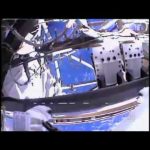
STS-134: Space Shuttle Endeavour’s last Mission
The best of the best, it’s a compilation of the featured moments captured by NASA Television during the mission of Endeavour and its six-man crew to the International Space Station.
-
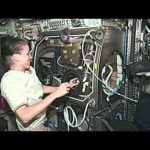
Aquarius Nears on This Week @NASA
Scientists from Argentina, Brazil, Canada, France and Italy were at NASA Headquarters in Washington to discuss their upcoming international spacecraft mission, Aquarius/SAC-D. Scheduled to launch June 9th, the spacecraft’s primary instrument will scan the world’s oceans to measure surface salinity, important to ocean circulation and climate. Also, Atlantis’ final rollover; Bolden checks out Juno; lowering the booms; astronauts as aquanauts; Houston’s hero; a new STORRM on station; Goddard open house; and remembering JFK’s challenge to America.
-
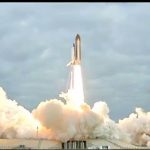
“Endeavour” roars up to sky with Roberto Vittori and AMS-02
Space Shuttle “Endeavour” was launched to space at 14:56 CEST (12:56 GMT) on 16 May from Kennedy Space Center in Florida.
The 16-day-long STS-134 mission will deliver AMS-02, a big cosmological instrument to the Space Station and its crew includes ESA’s Italian astronaut Roberto Vittori. This is the last flight of “Endeavour”. -

STS-134 Gets New Launch Date on This Week @NASA
The launch of space shuttle Endeavour on STS-134 has been rescheduled for May 16th. Launch is scheduled for 8:56 a.m. Eastern. Also, NASA’s Gravity Probe B mission confirms two aspects of Albert Einstein’s theory of general relativity. Plus, two Mercury explorers honored; Young innovators recognized; ISS honored; NextGen Day; rotocraft research; FIRST finals; and HQ Cyber Café.