Copernicus Sentinel-2 takes us over El Salvador, the smallest and most densely populated country in Central America, in this week’s edition of the Earth from Space programme.
We are Europe’s gateway to space. Our mission is to shape the development of Europe’s space capability and ensure that investment in space continues to deliver benefits to the citizens of Europe and the world. Check out http://www.esa.int/ESA to get up to speed on everything space related.
This time-lapse video taken by NASA astronaut Nick Hague squeezes a 30-minute International Space Station trip over a cloudy Earth into 60 seconds, covering the Pacific to the Atlantic.
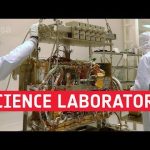
The ExoMars rover’s Analytical Laboratory Drawer (ALD) was integrated into the rover at Airbus, Stevenage, UK in May 2019. The video is shown at 18 times real speed; in reality the sequence of events took around 11.5 minutes.
The ExoMars rover, named Rosalind Franklin, will be the first of its kind to both roam the Mars surface and to study it at depth. Rosalind Franklin will drill down to two metres into the surface to sample the soil, analyse its composition and search for evidence of past – and perhaps even present – life hidden underground. A miniature laboratory inside the rover – the ALD – will analyse the samples with three different instruments, with some baked in the onboard oven to release gases for analysis, a technique used to search for traces of organic compounds.
The rover will relay its data back to Earth via the ExoMars Trace Gas Orbiter, which is already conducting its science mission from Mars orbit.
The ExoMars programme is a joint endeavour between ESA and Roscosmos.
We are Europe’s gateway to space. Our mission is to shape the development of Europe’s space capability and ensure that investment in space continues to deliver benefits to the citizens of Europe and the world. Check out http://www.esa.int/ESA to get up to speed on everything space related.
We are building a coalition of nations that can help us get to the Moon quickly and sustainably. Together.
We have a bold vision to go back to the Moon by 2024. As we work towards this goal, we welcome a growing list of international and commercial partners.
It is the partnerships over the last 60 years that have ensured the steady progress. With Mars on the horizon, together we can explore more of our solar system and share in the advances and the knowledge that will come.
Did you know there are six humans living in space, and you can see their home from your home? NASA astronaut Nick Hague shares how you can use https://spotthestation.nasa.gov/ to find out when the International Space Station will be visible from your town!
In this week’s edition of the Earth from Space programme from the Living Planet Symposium in Milan, we feature a Copernicus Sentinel-2 image of the Po Valley.
We are Europe’s gateway to space. Our mission is to shape the development of Europe’s space capability and ensure that investment in space continues to deliver benefits to the citizens of Europe and the world. Check out http://www.esa.int/ESA to get up to speed on everything space related.
One of the causalities of climate change is the diminishing ice cover, affecting our planet in a number of ways. Our satellites observe the planet’s cryosphere and provide key information to understand and respond to global thawing.
★ Subscribe: http://bit.ly/ESAsubscribe and click twice on the bell button to receive our notifications.
We are Europe’s gateway to space. Our mission is to shape the development of Europe’s space capability and ensure that investment in space continues to deliver benefits to the citizens of Europe and the world. Check out http://www.esa.int/ESA to get up to speed on everything space related.
Forging state-of-the-art space technologies, our Earth Explorer satellite missions continue to surpass expectations with a range of interesting and complementary results that go beyond their original goals. In this video, learn how each mission is contributing to Earth science, and changing the way we look at our beloved planet.
★ Subscribe: http://bit.ly/ESAsubscribe and click twice on the bell button to receive our notifications.
We are Europe’s gateway to space. Our mission is to shape the development of Europe’s space capability and ensure that investment in space continues to deliver benefits to the citizens of Europe and the world. Check out http://www.esa.int/ESA to get up to speed on everything space related.
On 11 May 2019, our astronaut Luca Parmitano met with members of the press at our establishment in Frascati, Italy, ahead of his second mission to the International Space Station. Speakers at the event included ESA Director General Jan Wörner, Head of ESA/ESRIN Josef Aschbacher, ESA Director of Human and Robotic Exploration, Italian Space Agency President Giorgio Saccoccia and ESA Utilisation Planning Team Leader Kirsten MacDonell.
Please note: the majority of the conference is in Italian, some of the speakers present in English.
We are Europe’s gateway to space. Our mission is to shape the development of Europe’s space capability and ensure that investment in space continues to deliver benefits to the citizens of Europe and the world. Check out http://www.esa.int/ESA to get up to speed on everything space related.
Developing a space mission is a long process that involves a lot of tests, sometimes in harsh environments. An airborne campaign was recently carried out in the Arctic between Greenland, Iceland and Svalbard. Enduring temperatures of 30 degrees below zero, a team tested an airborne version of an imaging microwave radiometer to support the development of a potential satellite mission for Europe’s Copernicus programme.
★ Subscribe: http://bit.ly/ESAsubscribe and click twice on the bell button to receive our notifications.
We are Europe’s gateway to space. Our mission is to shape the development of Europe’s space capability and ensure that investment in space continues to deliver benefits to the citizens of Europe and the world. Check out http://www.esa.int/ESA to get up to speed on everything space related.
It’s the year 2028, and we’ve been carefully monitoring a worrying situation: an enormous asteroid is en route to strike Earth, although the exact point of impact is not yet clear.
National governments are planning to evacuate millions of people, an undertaking that will cause untold human misery and disruption on a gigantic scale. If the asteroid’s impact zone can be fixed, perhaps such chaos can be avoided.
As precious hours pass, find out how our Planetary Defence Office is able to obtain crucial information on this potential disaster as part of the Agency’s Space Safety and Security activities.
Back to the present day: Find out more about how we are preparing to protect our pale blue dot, its inhabitants and the vital satellite systems on which we have become so dependent.
Space Safety & Security at ESA: www.esa.int/spacesafety
Planetary Defence: www.esa.int/planetarydefence
★ Subscribe: http://bit.ly/ESAsubscribe and click twice on the bell button to receive our notifications.
ESA is Europe’s gateway to space. Our mission is to shape the development of Europe’s space capability and ensure that investment in space continues to deliver benefits to the citizens of Europe and the world. Check out http://www.esa.int/ESA to get up to speed on everything space related.
Our alien friend Paxi, went to visit American astronaut Anne McClain on board the International Space Station. Anne explains to Paxi how astronauts move around in weightlessness on the ISS.
Credits: ESA/NASA
★ Subscribe: http://bit.ly/ESAsubscribe and click twice on the bell button to receive our notifications.
ESA is Europe’s gateway to space. Our mission is to shape the development of Europe’s space capability and ensure that investment in space continues to deliver benefits to the citizens of Europe and the world. Check out http://www.esa.int/ESA to get up to speed on everything space related.
This summer our astronaut Luca Parmitano will fly to the International Space Station from Baikonur Cosmodrome.
The Italian astronaut is currently training at NASA’s Johnson Space Center in Houston, USA, where he is learning Space Station operations in depth.
His second mission is called ‘Beyond’ and includes a spacewalk and running a rich scientific programme as well as seeing Luca take over command of the International Space Station – only the third time a European astronaut holds this role.
We are Europe’s gateway to space. Our mission is to shape the development of Europe’s space capability and ensure that investment in space continues to deliver benefits to the citizens of Europe and the world. Check out http://www.esa.int/ESA to get up to speed on everything space related.
Our astronaut Thomas Pesquet is back at NASA’s Johnson Space Center in Houston, USA.
His first mission to the International Space Station ended in June 2017. He is now working to prepare for a his next assignment. Currently Thomas is sharing his spaceflight experience with other astronauts and engineers, acting for example as a CapCom.
We are Europe’s gateway to space. Our mission is to shape the development of Europe’s space capability and ensure that investment in space continues to deliver benefits to the citizens of Europe and the world. Check out http://www.esa.int/ESA to get up to speed on everything space related.
Astronauts work out for around 90 minutes a day onboard the International Space Station to combat the muscle and bone weakening effects of microgravity. But exercise is just as important for mental and physical health on Earth.
Our exercise team lead Nora Petersen explains how exercise specialists work with our astronauts to prepare them for a mission, some of the most important exercises on board and what happens upon an astronaut’s return to get them back in pre-flight shape.
The United Nations World Health Organization marks World Health Day on 7 April every year. The third Sustainable Development Goal underlines the right to health:Ensure healthy lives and promote well-being for all at all ages. On-orbit research, space technology and space applications can help improve health on Earth by monitoring our environment, helping track disease, improving diagnostics, and working on new medicines among other things. The UN is also focusing particularly this year on universal health coverage.
★ Subscribe: http://bit.ly/ESAsubscribe and click twice on the bell button to receive our notifications.
We are Europe’s gateway to space. Our mission is to shape the development of Europe’s space capability and ensure that investment in space continues to deliver benefits to the citizens of Europe and the world. Check out http://www.esa.int/ESA to get up to speed on everything space related.
The first ever Spin Your Thesis! Human Edition campaign took place in DLR’s Short Arm Human Centrifuge facility in Cologne, Germany. Three teams comprised of 16 students from seven different universities participated in this new ESA Education’s hands-on programme for graduate students.
The Music For Space team from Hungarian and French universities used scientific methods to find the perfect tailored music for astronauts which should help physiologically and phsychologically during long spaceflights, thus merging science and art to help reduce stress.
★ Subscribe: http://bit.ly/ESAsubscribe and click twice on the bell button to receive our notifications.
ESA is Europe’s gateway to space. Our mission is to shape the development of Europe’s space capability and ensure that investment in space continues to deliver benefits to the citizens of Europe and the world. Check out http://www.esa.int/ESA to get up to speed on everything space related.
Managing the health of astronauts orbiting Earth at 28 000 km/h is a challenge, but how will we equip astronauts to stay healthy and deal with any medical emergencies during missions to the Moon or Mars?
Our flight surgeon Sergi Vaquer Araujo discusses how space medicine experts instill astronauts with the skills and knowledge needed to stay healthy on the International Space Station today, as we investigate new technologies that could benefit people on Earth.
The United Nations World Health Organization marks World Health Day on 7 April every year. The third Sustainable Development Goal underlines the right to health:Ensure healthy lives and promote well-being for all at all ages. On-orbit research, space technology and space applications can help improve health on Earth by monitoring our environment, helping track disease, improving diagnostics, and working on new medicines among other things. The UN is also focusing particularly this year on universal health coverage.
★ Subscribe: http://bit.ly/ESAsubscribe and click twice on the bell button to receive our notifications.
We are Europe’s gateway to space. Our mission is to shape the development of Europe’s space capability and ensure that investment in space continues to deliver benefits to the citizens of Europe and the world. Check out http://www.esa.int/ESA to get up to speed on everything space related.
Air pollution is a global environmental health problem that is responsible for millions of people dying prematurely every year. In cities and towns, traffic pumps pollutants such as nitrogen oxides and carbon monoxide directly into the air we breathe, which can increase the risk of cardiovascular and respiratory diseases, for example. Governments and decision-makers rely heavily on satellite data, such as that from the Copernicus Sentinel-5P mission, and computer models to show how pollution accumulates and how it is carried in the air so that they can develop appropriate mitigation strategies.
The United Nations World Health Organization marks World Health Day on 7 April every year. The third Sustainable Development Goal underlines the right to health: Ensure healthy lives and promote well-being for all at all ages. On-orbit research, space technology and space applications can help improve health on Earth by monitoring our environment, helping track disease, improving diagnostics, and working on new medicines among other things. The UN is also focusing particularly this year on universal health coverage.
★ Subscribe: http://bit.ly/ESAsubscribe and click twice on the bell button to receive our notifications.
ESA is Europe’s gateway to space. Our mission is to shape the development of Europe’s space capability and ensure that investment in space continues to deliver benefits to the citizens of Europe and the world. Check out http://www.esa.int/ESA to get up to speed on everything space related.
Satellites provide vast quantities of data. While these data are processed and used by scientists and analysts to understand and monitor Earth, they are also carefully archived. Through its Heritage Data Programme, we ensures the preservation of and access to archived Earth observation satellite data for scientists, policy makers and value-adding companies. This allows us to look back at the history of planet Earth, and plan for the future.
★ Subscribe: http://bit.ly/ESAsubscribe and click twice on the bell button to receive our notifications.
We are Europe’s gateway to space. Our mission is to shape the development of Europe’s space capability and ensure that investment in space continues to deliver benefits to the citizens of Europe and the world. Check out http://www.esa.int/ESA to get up to speed on everything space related.
The Solar Orbiter spacecraft is undergoing important pre-launch tests at the IABG National Space Centre in Ottobrunn, Germany, ahead of its launch, scheduled for February 2020.
The mission will study the Sun, but first the spacecraft must pass vibration, acoustic and shock tests. This will ensure the spacecraft can withstand the stresses of lift off and the extreme environments it will encounter while in orbit around the Sun – from the coldness of space, 150 million km away, to temperatures up to 500 ºC reached when it will be a mere 46 million km away, closer than Mercury.
Solar Orbiter is an ESA-led mission with strong NASA participation. The spacecraft was built and is being tested by Airbus.
This film contains interviews with César García, ESA Solar Orbiter Project Manager, and Ian Walters, Solar Orbiter Project Manager at Airbus Defence and Space.
ESA is Europe’s gateway to space. Our mission is to shape the development of Europe’s space capability and ensure that investment in space continues to deliver benefits to the citizens of Europe and the world. Check out http://www.esa.int/ESA to get up to speed on everything space related.
During an interview with ABC News on April 1, 2019, NASA Astronaut Anne McClain addressed a question about what would have been the first all-female spacewalk during Women’s History Month. Based on McClain’s recommendation, NASA changed assignments to protect the safety of the crew and the timing of the mission.
How do you build a spaceship? It’s not easy – because space is hard. It’s endless vacuum, hot and cold at the same time, streaked with radiation – and you have to fly at eight kilometres per second just to get there. It takes clever engineering – and costly research and development – to operate in orbit. Space is risky, but past payoffs have been vast. Our track record lets us manage that risk, balancing it with chances for rich rewards.
We are Europe’s space agency, enabling its 22 Member States to achieve results that no individual nation can match. we combines space mission development with supporting labs, test and operational facilities plus in-house experts covering every aspect of space, supported through the our Basic Activities.
For our Space19+ set for the end of this year, we are asking Europe’s space ministers for a substantial investment for Basic Activities, to modernise infrastructure and speed up R&D cycles, helping to support a new generation of space missions as efficiently as possible.
★ Subscribe: http://bit.ly/ESAsubscribe and click twice on the bell button to receive our notifications.
ESA is Europe’s gateway to space. Our mission is to shape the development of Europe’s space capability and ensure that investment in space continues to deliver benefits to the citizens of Europe and the world. Check out http://www.esa.int/ESA to get up to speed on everything space related.
Marking World Water Day, this week’s edition of the Earth from Space programme features Lake Chad at the southern edge of the Sahara, where water supplies are dwindling.
ESA is Europe’s gateway to space. Our mission is to shape the development of Europe’s space capability and ensure that investment in space continues to deliver benefits to the citizens of Europe and the world. Check out http://www.esa.int/ESA to get up to speed on everything space related.
UN Sustainable Goal 6 is crystal clear: Water for all by 2030.
For World Water Day we take a look at ways that space can help this global challenge. While Earth-observing satellites monitor our precious water resources, technologies developed for human space missions also serve global needs in harsh environments here on Earth.
★ Subscribe: http://bit.ly/ESAsubscribe and click twice on the bell button to receive our notifications.
ESA is Europe’s gateway to space. Our mission is to shape the development of Europe’s space capability and ensure that investment in space continues to deliver benefits to the citizens of Europe and the world. Check out http://www.esa.int/ESA to get up to speed on everything space related.
Climate change is high on the global agenda.
To tackle climate change, a global perspective is needed and this can be provided by satellites. Their data is key if we want to prepare ourselves for the consequences of climate change. While our Earth Explorers gather data to understand how our planet works and understand the impact that climate change and human activity are having on the planet, the European Union’s Copernicus Sentinels provide systematic data for environmental services that help adapt to and mitigate change.
The video offers an overview of how European satellites keep watch over our world. It includes interviews with Josef Aschbacher, our Director of Earth Observation Programmes, and Michael Rast, our Earth Observation Senior Advisor.
★ Subscribe: http://bit.ly/ESAsubscribe and click twice on the bell button to receive our notifications.
ESA is Europe’s gateway to space. Our mission is to shape the development of Europe’s space capability and ensure that investment in space continues to deliver benefits to the citizens of Europe and the world. Check out http://www.esa.int/ESA to get up to speed on everything space related.
With this webinar about CubeSats in the context of space debris, we want to raise awareness of the space debris problem to the CubeSat community, present the Space Debris Mitigation (SDM) requirements and what they mean for CubeSats, discuss Post Mission Disposal (PMD) technologies, and finally, close the gap between the community and ESA to attempt involving it more in future events
★ Subscribe: http://bit.ly/ESAsubscribe and click twice on the bell button to receive our notifications.
ESA is Europe’s gateway to space. Our mission is to shape the development of Europe’s space capability and ensure that investment in space continues to deliver benefits to the citizens of Europe and the world. Check out http://www.esa.int/ESA to get up to speed on everything space related.
ESA is Europe’s gateway to space. Our mission is to shape the development of Europe’s space capability and ensure that investment in space continues to deliver benefits to the citizens of Europe and the world. Check out http://www.esa.int/ESA to get up to speed on everything space related.
Satellites provides us with large volumes of spatio-temporal data, creating great opportunities for innovative entrepreneurs. ESA’s Business Applications programme is supporting European projects to turn these data into solutions for a wide range of socio-economic situations, as well as jobs and products. This video highlights three concrete examples: automated trains, rehabilitation and money transfers in isolated areas.
★ Subscribe: http://bit.ly/ESAsubscribe and click twice on the bell button to receive our notifications.
ESA is Europe’s gateway to space. Our mission is to shape the development of Europe’s space capability and ensure that investment in space continues to deliver benefits to the citizens of Europe and the world. Check out http://www.esa.int/ESA to get up to speed on everything space related.
Everybody is talking about 5G, the new generation of wireless communication. We are at the start of a revolution in connectivity for everything, everywhere, at all times.
Space plays at important roll in this revolution. We need satellites to ensure businesses and citizens can benefit smoothly from 5G.
★ Subscribe: http://bit.ly/ESAsubscribe and click twice on the bell button to receive our notifications.
ESA is Europe’s gateway to space. Our mission is to shape the development of Europe’s space capability and ensure that investment in space continues to deliver benefits to the citizens of Europe and the world. Check out http://www.esa.int/ESA to get up to speed on everything space related.
Satellites bring immense benefits to everyone on Earth. From monitoring our changing planet and increasingly severe natural disasters, to providing resilient telecom networks and delivering services such as precise navigation that help economies grow and humans in need, satellites are the ‘eyes and ears’ in space that help us to help ourselves. Increasing opportunities in our fast-changing, interconnected world contrast with threats from climate change and an unpredictable environment, and cutting-edge space-based applications are part of the solution. Now is the time for decisions.
Science & Exploration, Applications for Earth, Space Safety & Security and Enabling & Support – these are ESA’s four emblematic pillars of inspiration for Space19+, the Council at ministerial level in November 2019. This is a crucial opportunity to secure new investment to ensure Europe’s leadership in global space endeavours and bring the future down to all of us on Earth. ESA’s proposals range from hunting asteroids and the exploration of icy moons to 5G (5th generation) satellite-based communication for everyone. And did we mention we’re working hard to safeguard our planet?
ESA is Europe’s gateway to space. Our mission is to shape the development of Europe’s space capability and ensure that investment in space continues to deliver benefits to the citizens of Europe and the world. Check out http://www.esa.int/ESA to get up to speed on everything space related.
ESA is Europe’s gateway to space. Our mission is to shape the development of Europe’s space capability and ensure that investment in space continues to deliver benefits to the citizens of Europe and the world. Check out http://www.esa.int/ESA to get up to speed on everything space related.
Rocket engines for Ariane 6 are being tested and qualified at the German Aerospace Center in Lampoldshausen, Germany.
Several of the facilities on site have been modified for Ariane 6 and a new facility will soon test the launcher’s complete upper stage, simulating as far as possible the conditions it will experience in flight. With testing and development at full pace, Ariane 6 is taking shape for its maiden voyage.
ESA is Europe’s gateway to space. Our mission is to shape the development of Europe’s space capability and ensure that investment in space continues to deliver benefits to the citizens of Europe and the world. Check out http://www.esa.int/ESA to get up to speed on everything space related.
ESA is Europe’s gateway to space. Our mission is to shape the development of Europe’s space capability and ensure that investment in space continues to deliver benefits to the citizens of Europe and the world. Check out http://www.esa.int/ESA to get up to speed on everything space related.
ESA is Europe’s gateway to space. Our mission is to shape the development of Europe’s space capability and ensure that investment in space continues to deliver benefits to the citizens of Europe and the world. Check out http://www.esa.int/ESA to get up to speed on everything space related.
ESA is Europe’s gateway to space. Our mission is to shape the development of Europe’s space capability and ensure that investment in space continues to deliver benefits to the citizens of Europe and the world. Check out http://www.esa.int/ESA to get up to speed on everything space related.
By cultivating human endothelial cells in space, researchers are gaining knowledge about the way our blood vessels function. This could help prevent and treat diseases such as atherosclerosis, hypertension, diabetes and thrombosis here on Earth, while keeping astronauts healthy in space.
In this video, biochemist and molecular biologist Dr Markus Wehland discusses the Spheroids experiment, which ran on the International Space Station during ESA astronaut Tim Peake’s Principia mission in 2016.
Cells cultivated in microgravity during this experiment assembled into globular and tubular structures. These structures were similar to the inner lining of blood vessels inside our bodies, but had never been achieved before by scientists cultivating cells on Earth.
Knowledge about cell growth and structure gained through this study could aid the development of tissue engineering techniques to replace damaged blood vessels in patients. It could also improve the efficiency and safety of drugs that help regulate vessel development.
It is good news for those affected by cardiovascular disease and a great example of the way in which research in microgravity is enhancing life on Earth.
The step to space research is closer than you might think. Get involved with spaceflight research via www.esa.int/spaceflightAO. Find out about our commercial partnerships and opportunities in human and robotic exploration via www.esa.int/explorationpartners to run your research in microgravity as well.
★ Subscribe: http://bit.ly/ESAsubscribe and click twice on the bell button to receive our notifications.
ESA is Europe’s gateway to space. Our mission is to shape the development of Europe’s space capability and ensure that investment in space continues to deliver benefits to the citizens of Europe and the world. Check out http://www.esa.int/ESA to get up to speed on everything space related.
The Copernicus Sentinel-2A satellite takes us over part of northeast Kenya – an area east of the East African Rift in this week’s edition of the Earth from Space programme.
ESA is Europe’s gateway to space. Our mission is to shape the development of Europe’s space capability and ensure that investment in space continues to deliver benefits to the citizens of Europe and the world. Check out http://www.esa.int/ESA to get up to speed on everything space related.
Following the launch of Aeolus on 22 August 2018, scientists have been busy fine-tuning and calibrating this latest Earth Explorer satellite. Aeolus carries a revolutionary instrument, which comprises a powerful laser, a large telescope and a very sensitive receiver. It works by emitting short, powerful pulses – 50 pulses per second – of ultraviolet light from a laser down into the atmosphere. The instrument then measures the backscattered signals from air molecules, dust particles and water droplets to provide vertical profiles that show the speed of the world’s winds in the lowermost 30 km of the atmosphere. These measurements are needed to improve weather forecasts. As part of the working being done to calibrate this novel mission, scientists have been taking similar measurements from an aircraft carrying an airborne version of Aeolus’ instrument. The pilot flies the plane under the satellite as it orbits above so that measurements of wind can be compared.
ESA is Europe’s gateway to space. Our mission is to shape the development of Europe’s space capability and ensure that investment in space continues to deliver benefits to the citizens of Europe and the world. Check out http://www.esa.int/ESA to get up to speed on everything space related.
The second part of the ExoMars programme is ongoing.
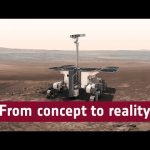
In Stevenage, UK, a rover is being built that will carry a drill and a suite of instruments dedicated to exobiology and geochemistry research. It will be the first mission to combine the capability to move across the surface and to study Mars at depth.
The primary goal of the ExoMars programme is to address the question of whether life has ever existed on the red planet.
The first part of the programme was launched in March 2016 with the Trace Gas Orbiter. The second part is planned for launch in 2020 and comprises the rover and surface science platform
ExoMars is a joint endeavour between ESA and the Russian space agency, Roscosmos.
★ Subscribe: http://bit.ly/ESAsubscribe and click twice on the bell button to receive our notifications.
ESA is Europe’s gateway to space. Our mission is to shape the development of Europe’s space capability and ensure that investment in space continues to deliver benefits to the citizens of Europe and the world. Check out http://www.esa.int/ESA to get up to speed on everything space related.