Aboard the International Space Station, the Expedition 45 crew – including new Commander Scott Kelly and Kjell Lindgren of NASA, said goodbye to Gennady Padalka of the Russian Federal Space Agency, Andreas Mogensen of ESA (European Space Agency) and Aidyn Aimbetov of the Kazakh Space Agency (Kazcosmos) as the trio climbed aboard their Soyuz spacecraft for the return trip to Earth. The Soyuz landed safely in Kazakhstan on Sept. 11 Eastern time, Sept. 12 in Kazakhstan — closing out a 168-day mission for Padalka and an 8-day stay on the station for Mogensen and Aimbetov. Also, First Orion crew module segments welded, SLS Launch Vehicle Stage Adapter, New Ceres imagery, New Horizons update, 9/11 tribute and National Preparedness Month!
Tag: space
-
Making space work for you
The European Space Agency’s ARTES programme for Advanced Research in Telecommunications Systems, helps to create products, services and infrastructures that benefit millions of people worldwide and make a major contribution to the European economy.
The economic engine of the space industry is satellite communications, generating over $140 billion a year in global revenues. The ARTES programme exists to support innovation, helping to transform research and development into commercial products and services.
ESA’s telecom programmes often take the form of public–private partnerships. ESA joins forces with industry to share the cost and risk, resulting in faster and more innovative technological advances than if either undertook the project alone.
The most recent high-profile telecom programmes are Alphasat, the largest European telecom satellite ever built and the European Data Relay System, a groundbreaking space and ground infrastructure that uses laser links to send data at unprecedented speeds.
ARTES also promotes the use of satellites in new and imaginative ways. Satellite communications can be applied in areas as diverse as healthcare, education, transport and security to deliver services and improve daily life.
-
NASA International Space Station Crew Discuss Life In Space With CBS Radio
Aboard the International Space Station, Expedition 44 Flight Engineers Scott Kelly and Kjell Lindgren of NASA discussed their life and research aboard the orbital outpost in an in-flight interview Aug. 17 with the CBS Radio Network. Kelly is completing the fifth month of his year-long mission on the station with Russian cosmonaut Mikhail Kornienko to gather valuable biomedical data that will be used to formulate a human mission to Mars, while Lindgren is completing the first month of a five-month mission on the laboratory.
-
New Horizons arrives at Pluto on This Week @NASA – July 17, 2015
After a nearly decade-long journey, NASA’s New Horizons spacecraft arrived at Pluto on July 14 – passing by at a mere 7,750 miles above the surface … resulting in an absolutely breathtaking image – the closest ever of Pluto. Initial congratulations included a Twitter post from the White House … and from iconic figures in the scientific community. The so-called “data waterfall” released by New Horizons contains so many astounding images and detailed information about Pluto that investigators anticipate it will take about 16 months to send it all back to Earth. Also, Mariner 4 Mars flyby anniversary, Newman sworn-in, New wildfire detection tool, Expedition 44/45 prepares for launch and 40th anniversary of Apollo-Soyuz!
-
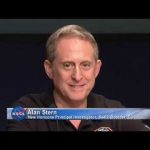
NASA News Conference on the New Horizons Mission
NASA officials and team members of the historic New Horizons mission to Pluto provide an update and share the latest developments on the spacecraft during a news conference from NASA headquarters.
-
ESA’s Space Operations Centre – the ESOC music video
ESA’s European Space Operations Centre links people with spacecraft travelling to the frontiers of human knowledge. Our world is about systems, communication and exploration; our passion is for humanity’s voyages into the Universe. And even the grandest journey begins with just a few steps.
-
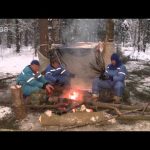
ESA astronaut Tim Peake winter survival training
ESA astronaut Tim Peake during winter survival training in Russia.
All astronauts go through winter survival training. There is always the possibility that a Soyuz spacecraft could land in a remote, cold area. Tim has to learn to survive in harsh climates while waiting for rescue.Tim is training for his mission to the International Space Station set to be launched on a Soyuz spacecraft from Baikonur Cosmodrome in Kazakhstan in December 2015.
-
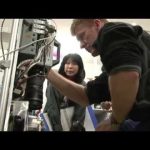
ESA astronaut Tim Peake training in Japan
ESA astronauts train with all International Space Station partners including onsite training in USA, Europe, Canada and Japan.
ESA astronaut Tim trained in Tsukuba at the Japanese Aerospace Exploration Centre on Japanes experiments and the Japanese space laboratory Kibo.
Tim is preparing for his mission to the International Space Station set to be launched on a Soyuz spacecraft from Baikonur Cosmodrome in Kazakhstan in December 2015.
-
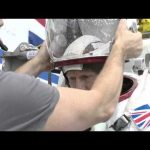
ESA astronaut Tim Peake spacewalk training
ESA astronaut Tim Peake during spacewalk training in Houston, USA.
Training underwater on life-size mockups of the Space Station is one way astronauts prepare for their missions as working in water resembles working in space.Tim is training for his mission to the International Space Station set to be launched on a Soyuz spacecraft from Baikonur Cosmodrome in Kazakhstan in December 2015.
-
What Happens When Two Black Holes Collide?
This video was an answer to louis’ question: http://thoughty2.com/q/90/what-happens-if-2-black-holes-collide/
Ask Thoughty2 a question at: http://thoughty2.com/ask
Subscribe, New Videos Every Mon & Thurs: http://www.youtube.com/subscription_center?add_user=thoughty2
Read More At: http://thoughty2.com/p/91/what-happens-when-two-black-holes-collide/
Support me on Patreon: http://thoughty2.com/patreon
Facebook: http://thoughty2.com/facebook
Twitter: http://thoughty2.com/twitter
Thoughty2 Merchandise: http://thoughty2.spreadshirt.com
With Special Thanks To:
Morgan, Misha A-Wilson, Katrina Brogan, Michelle & Aaron Finn, Mhmd Haj Ali, Jeff Lee, Lindsay S, Kent Zacherl -
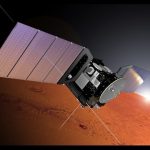
ESAHangout: Mars Express lined up for VMC Schools Campaign
Access full details and regular updates via the MEX blog: http://blogs.esa.int/mex
Prior to flying the campaign orbits on 25/26 May, this will be the final interactive Q&A session with the Mars Express flight control team for participants in the VMC Schools Campaign. Priority for questions will go to school/club participants. Questions can be posted here in the ESA G+ channel or via Twitter using the #VMCSchools hashtag. Start 11:00 EDT / 15:00 GMT / 17:00 CEST http://goo.gl/Yw8P5p
Sign up on the event page:
https://plus.google.com/events/cq9gg046ll071khg316fja1gmrgWatch on YouTube at:
http://www.youtube.com/watch?v=S_Qjoc_7quw -

International Space Station toilet tour
ESA astronaut Samantha Cristoforetti shows how to use the most unglamorous but often asked-about part of living on the International Space Station: the toilet.
A fan creates suction to avoid smells and floating waste. Solid waste is stored and put in cargo ferries to burn up when the spacecraft leaves the Space Station. The astronaut urine is recycled – into drinking water.
Follow Samantha via http://samanthacristoforetti.esa.int/
-
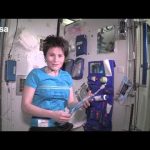
International Space Station bathroom tour
Join ESA astronaut Samantha Cristoforetti as she shows how astronauts on the International Space Station keep clean.
From soap to water and cutting your nails, everything is different in space. Samantha demonstrates her ways to ‘shower’ depending on how much time she has.
The astronauts on the Space Station spend as much time as possible on science. During her 40-hour working week Samantha runs many experiments from Italy’s ASI space agency and ESA, and takes part in even more from scientists all over the world.
Samantha is living and working on board the International Space Station as part of the six-strong Expedition 42 and 43 crew. Follow her Futura mission at http://samanthacristoforetti.esa.int.
-
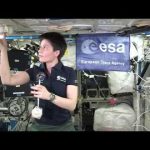
Barycentric balls in space – classroom demonstration video, VP07b
This video, part of a new series of ESA teaching resources called ‘Teach with space’, shows an experiment performed by ESA astronaut Samantha Cristoforetti on the International Space Station demonstrating the concept of a barycentre, or centre of mass, freefall and how objects in orbit around each other move.
-
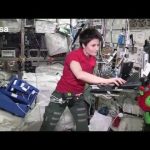
Samantha’s cool Space Station science
ESA astronaut Samantha Cristoforetti running experiments in weightlessness during her Futura mission for scientists from all over the world. The International Space Station offers three state-of-the-art laboratories where research can be done without gravity. The European Columbus laboratory, the Japanese Kibo and the American Destiny module offer facilities for physics, biology, geophysics and medicine.
Samantha’s 40-hour work week is devoted to science and maintaining the weightless research centre. This video gives a fast-track impression of some of the experiments she worked on. In quick succession we see Samantha working on: exercise machine ARED, measuring her body mass, the robotic droids SPHERES, ESA’s microgravity glovebox, muscle-measurement machine MARES, centrifuge-incubator Kubik, Biolab, Materials Science Laboratory and ejecting miniature satellites called Cubesats into space.
Read more about her science on the Futura website: http://www.esa.int/Our_Activities/Human_Spaceflight/Futura/Space_Station_Science
Follow Samantha via http://samanthacristoforetti.esa.int/
-
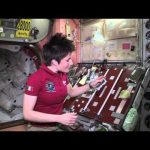
Space snack time with Samantha Cristoforetti
The astronauts on board the International Space Station get hungry from time to time during their long day of work in microgravity. We asked Samantha Cristoforetti, ESA astronaut on board the ISS for the Futura mission, to tell us about the kind of healthy snack she likes to eat during her breaks.
-
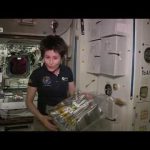
Space food and the good side of lipid fat
We could call them the good, the bad and the ugly! No, we are not talking of spaghetti westerns… Instead, we are talking about a type of fat called lipids. Often we speak badly about them, but some are essential to our health as they reduce chronic inflammation, help lower ‘bad’ cholesterol – LDL – and are a valuable aid in the prevention of cardiovascular disease.
We asked Samantha Cristoforetti, ESA astronaut on board of the International Space Station for the Futura mission, to tell us about which king of healthy fats she and the other astronauts can enjoy while on orbit.
-

International Space Station Astronauts Conduct Third Spacewalk in Eight Days
Outside the International Space Station, Expedition 42 Commander Barry Wilmore and Flight Engineer Terry Virts of NASA conducted their third spacewalk in eight days March 1 to install antennas and communications gear that will be used to provide rendezvous and navigational information to visiting vehicles approaching the complex in the future, including the new U.S. commercial crew vehicles. Wilmore and Virts installed about 400 feet of cable along the truss of the station as part of the new Common Communications for Visiting Vehicles (C2V2) system. In two previous spacewalks on Feb. 21 and Feb. 25, the two astronauts rigged cables for new International Docking Adapter ports that will be delivered to the complex this year and lubricated the grappling end of the Canadian-built Canadarm2 robotic arm.
-
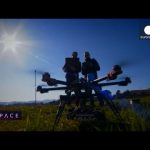
ESA Euronews: Taking space tech down to Earth
This month’s Space focuses on startups in Europe that are finding everyday Earthly applications for space innovations.
There’s a long tradition of transferring technology from one sector to another to improve life on our planet, and in the case of space that can lead to some unlikely links between science success stories such as the Philae lander, and the hunt for bedbugs in hotel rooms, or between the Smart-1 moon mission and the efficiency of geothermal energy. We visit two of the 11 ESA business incubation centres around Europe, one in Barcelona, the other near Oxford.
ESA Euronews is also available in the following languages:
French: http://youtu.be/pzKfXTxrtCY
German: http://youtu.be/EtbUUJ_6Uno
Hungarian: http://youtu.be/SCqU49qNiqo
Italian: http://youtu.be/dt87rFBw8EA
Greek: http://youtu.be/TBbZ4yF3bY8
Portuguese: http://youtu.be/8Xu-wAG-XTg
Spanish: http://youtu.be/5Rr2fKSpEDc -
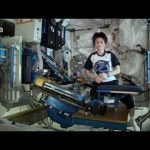
Exercise in space with Samantha Cristoforetti!
ESA astronaut Samantha Cristoforetti, currently living and working on the International Space Station, shows us the ‘space gym’. Starting with ARED, the Advanced Resistive Exercise Device.
-
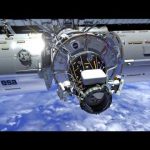
NASA Holds Expedition 42 Space Walk Briefing from Johnson Space Center in Houston
As two NASA astronauts from the International Space Station’s Expedition 42 crew prepare to venture outside the orbital complex on Friday, Feb. 20, NASA Television provided a preview news briefing on Wednesday, Feb. 18. The preview briefing was held at NASA’s Johnson Space Center in Houston with the following panelists:
Kenneth Todd, International Space Station Operations and Integration manager
Tomas Gonzalez-Torres, Expedition 42 lead flight director
Karina Eversley, Extravehicular Activity (EVA) # 29 officer
Sarah Korona, EVA # 30 officer
Arthur Thomason, EVA # 31 officer
Expedition 42 Commander Barry Wilmore and Flight Engineer Terry Virts will exit the station from the Quest airlock for each of the three spacewalks around 7:10 a.m. NASA TV coverage of the approximately six-and-a-half hour spacewalks will begin at 6 a.m.Built by Boeing under contract to NASA, the International Docking Adapters are a critical component of the station’s reconfiguration to ensure long-term docking ports for future commercial crew and other visiting spacecraft. They will permit the standard station crew size to grow from six to seven, potentially doubling the amount of time devoted to research aboard the orbiting laboratory.
The two new docking adapters will be launched to the station on a pair of SpaceX Dragon cargo spacecraft this year. Astronauts will install the first of two adapters on Pressurized Mating Adapter-2 on the forward end of the station’s Harmony module during a future spacewalk. The second adapter will be installed on Pressurized Mating Adapter-3 after it is relocated robotically to the space-facing port of Harmony later this year.
The spacewalks will be the 185th, 186th and 187th in support of space station assembly and maintenance. Wilmore has conducted one spacewalk in his career last October. The spacewalks will be the first of Virts’ career.
-
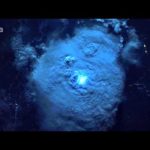
Striking lightning from space
Lightning illuminates the area they strike on Earth but their flash can be seen from space too. This timelapse was made from 49 images taken 400 km above Earth in 2012 by an astronaut on the International Space Station travelling at 28 800 km/h. At these distances a camera flash is pointless, but our planet moves by so quickly images can end up being blurred.
ESA’s Nightpod camera aid compensates for the motion of the Station. The target stays firmly centred in frame so the final image is in focus. Astronauts can set up the device to take ultra-sharp images automatically using off-the-shelf cameras.
The steady progression of frames seen in this video with the target staying in centre frame would be nearly impossible without Nightpod.
-

Space Station Crew Discusses Life in Space With Students and NASA Administrator Charles Bolden
Aboard the International Space Station, Expedition 42 Commander Barry Wilmore and Flight Engineer Terry Virts of NASA discussed their mission and life and research on the complex during an in-flight chat Jan. 21 with NASA Administrator Charles Bolden, officials of the White House Office of Science and Technology Policy and middle and high school students. The unique discussion was part of the third annual State of Science Technology, Engineering and Math event (SoSTEM), a type of science fair that included students from schools in Maryland, Virginia and Washington.
-
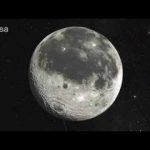
Destination: Moon
This 8-minute film gives an overview of the past, present, and future of Moon exploration, from the Lunar cataclysm to ESA’s vision of what Lunar exploration could be.
Why is the Moon important for science? What resources does the Moon have? Is there water? Why should we go back and how will we do it?
-
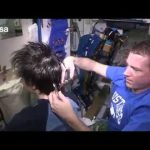
Samantha’s haircut at Terry’s space salon
On the International Space Station, ESA astronaut Samantha Cristoforetti gets a haircut from colleague NASA astronaut Terry Virts while cosmonaut Anton Shkaplerov assists with the vacuum cleaner, making sure that no hair cuttings float off.
Samantha posted updates about the haircut on Twitter. She started off saying: “New Year, time for a haircut. Setting up shop at ‘Chez Terry’”. Commenting on this image she said: “While master @AstroTerry cuts, apprentice @AntonAstrey is at the vacuum cleaner”.
Samantha Cristoforetti is currently living and working on board the International Space Station as part of the six-strong Expedition 42 crew. Follow her Futura mission at samanthacristoforetti.esa.int.
-

NASA International Space Station Briefing of the Cloud-Aerosol Transport System (CATS)
NASA held an Earth Science Briefing from the Kennedy Space Center about the Cloud-Aerosol Transport System (CATS) mission aboard the SpaceX CRS-5 Dragon cargo resupply spacecraft. The research will characterize and measure the worldwide distribution of clouds and aerosols — the tiny particles that make up haze, dust, air pollutants and smoke; model organism research using fruit flies to study the biological effects of spaceflight; and, a new study using flatworms to better understand wound healing in space.
The fifth SpaceX cargo mission to the International Space Station (ISS) under NASA’s Commercial Resupply Services contract will carry more than 3,700 pounds of scientific experiments, technology demonstrations and supplies, including critical materials to support 256 science and research investigations that will take place on the space station during ISS Expeditions 42 and 43.
-
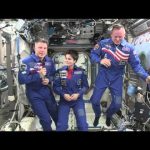
NASA Space Station Crew Discusses Life In Space With The Media
Aboard the International Space Station, Expedition 42 Commander Barry Wilmore and Flight Engineer Terry Virts of NASA and Flight Engineer Samantha Cristoforetti of the European Space Agency discussed the progress of their research, other work on the orbital outpost and upcoming spacewalks in February by Wilmore and Virts in a pair of in-flight interviews Jan. 6 with the Associated Press and KGO-TV, San Francisco. Wilmore has been aboard the complex since September, while Virts and Cristoforetti arrived on the station in late November
-
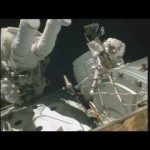
NASA Astronauts Conduct Space Walk To Make Important Repairs On International Space Station
Outside the International Space Station, Expedition 41 Flight Engineers Reid Wiseman and Barry Wilmore of NASA replaced a voltage regulation device and relocated camera and television equipment during a spacewalk Oct. 15, the second excursion outside the Quest airlock by station astronauts in U.S. spacesuits in as many weeks. The voltage regulator, called a Sequential Shunt Unit, failed in May, taking down one of eight power channels for station systems. Its replacement brought the station’s electrical output back to full capacity. The repositioning of the camera and television equipment was the first step in a major reconfiguration of station systems and modules to accommodate next year’s delivery of new docking adapters that will be used by commercial crew vehicles later this decade. The spacewalk was the 183rd in support of station assembly and maintenance, the second by Wiseman and the first for Wilmore.
-
ESA-ESTEC Open Day 2014
Sunday 5 October saw thousands of visitors converge on the European Space Agency’s technical heart for its annual Open Day. Touring across the site, they met astronauts, viewed spacecraft and inspected test facilities – and came face to face with a spectacular new world.
-
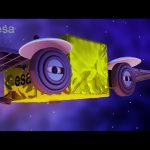
ESA presents… Clean Space
Clean Space is the European Space Agency’s initiative to safeguard the terrestrial and orbital environments, while boosting the innovation and competitiveness of Europe’s space sector. This animated guide follows a newly-launched satellite as it first enters orbit, in the process explaining the various branches of the Clean Space effort and the different future Clean Space aims to build.
Now with English, French, German, Dutch, Italian, Greek, Romanian and Swedish subtitles. More languages will be added as they become available.
-
The Physics of Space Battles
How scientifically accurate is your favorite sci-fi space battle?
Viewers like you help make PBS (Thank you 😃) . Support your local PBS Member Station here: https://to.pbs.org/PBSDSDonate
Subscribe to It’s Okay To Be Smart: http://bit.ly/iotbs_sub
Joseph Shoer has several extensive, in-depth articles on the physics of space warfare:
http://josephshoer.com/blog/2009/12/thoughts-on-space-battles/
http://josephshoer.com/blog/2010/07/projecting-space-battle-physics/Space warfare: Almost everything you know is probably wrong http://www.escapistmagazine.com/forums/read/18.100198-Space-Warfare-Almost-Everything-You-Know-Is-Probably-Wrong
Is space warfare really practical? http://www.escapistmagazine.com/forums/read/18.846407-Is-space-warfare-really-practical-except-lasers
Zero-g dogfighting for dummies: http://www.citizenstarnews.com/news/zero-g-dogfighting-dummies
Projectile weapons vs. directed energy weapons: http://forum.gateworld.net/threads/17263-Projectile-Weapons-vs-Directed-Energy-Weapons
Nukes in space: http://www.projectrho.com/public_html/rocket/spacegunconvent.php
Effects of radiation weapons in space: http://www.projectrho.com/public_html/rocket/radiation.php#effects
Could the Death Star really destroy a planet? http://www.universetoday.com/92746/could-a-death-star-really-destroy-a-planet/
“Sir Isaac Newton is the deadliest son of a b***h in space” https://www.youtube.com/watch?v=hLpgxry542M
Produced by PBS Digital Studios: http://www.youtube.com/user/pbsdigitalstudios
Joe Hanson – Host and writer
Joe Nicolosi – Director
Amanda Fox – Producer, Spotzen IncKate Eads – Associate Producer
Katie Graham – Director of Photography
Editing/Motion Graphics – Andrew Matthews/Kirby Conn
Gaffers – John Knudsen/Philip Sheldon
Post-production intern – Dalton AllenTheme music:
“Ouroboros” by Kevin MacLeodStock images via Shutterstock
———–
Join us on Patreon!
https://patreon.com/itsokaytobesmartTwitter
http://www.twitter.com/DrJoeHanson
http://www.twitter.com/okaytobesmartInstagram
http://www.instagram.com/DrJoeHanson
http://www.instagram.com/okaytobesmartMerch
https://store.dftba.com/collections/its-okay-to-be-smart -
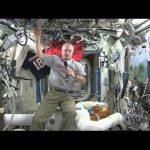
NASA Space Station Commander Discusses Life And Work Floating In Space with Denver Media
Aboard the International Space Station, Expedition 40 Commander Steve Swanson of NASA discussed life and research on the orbital outpost during an in-flight interview July 17 with KDVR-TV in Denver. Swanson, who is a native of Steamboat Springs, Colorado, arrived on the station in late March, became station commander in May and will remain in orbit until mid-September when he will return to Earth in a Russian Soyuz spacecraft.
-
Space Experts Discuss the Search for Life in the Universe at NASA
NASA space-based observatories are making unprecedented new discoveries and revealing worlds never before seen. During a televised panel discussion of leading science and engineering experts at NASA Headquarters on Monday, July 14, a scientific and technological roadmap to lead to the discovery of potentially habitable worlds among the stars was addressed. The agency’s next step, the James Webb Space Telescope (Webb telescope), was featured as a new tool that will continue to help scientists rewrite scientific textbooks long after its scheduled launch in 2018.
-
Space timelapse over Brazil
ESA astronaut Alexander Gerst recorded this timelapse from the International Space Station as it flew over Brazil and the Atlantic Ocean at speeds of 28 800 km/h, 400 km above our planet.
Read more about the Blue Dot:
http://www.esa.int/bluedotConnect with Alexander Gerst:
http://alexandergerst.esa.int -
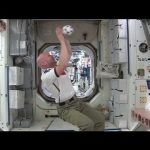
Space gooooooaaaal
In true World Cup spirit ESA astronaut Alexander Gerst and NASA astronauts Reid Wiseman and Steve Swanson play a friendly game of football, celebrating their goals as only they can while living in the International Space Station.
Recorded during their time-off over the weekend the astronaut-footballers enjoyed some weightless football fun.
During Alexander’s six-month Blue Dot mission on the Space Station he will run over 100 experiments that cannot be done anywhere else on Earth – just like these celebrations.
Credit: NASA
-
50 years serving European cooperation and innovation
2014 is a special year: the space community is celebrating the anniversary of the construction of Europe as a space power and 50 years of unique achievements in space.
It started with the creation of two entities, entering into force in 1964, the European Launcher Development Organisation (ELDO) and the European Space Research Organisation (ESRO).
A little more than a decade later, the European Space Agency (ESA) would be established, replacing these two organisations and since then serving European cooperation and innovation.
This video recalls the importance of Europe efforts in space and its successes with now a guaranteed and independent access to space and several programs covering all possible areas from Science, to Earth Observation, Human Spaceflight, Telecom and Navigation.
-
NASA Space Station Crew Discusses Life in Space with Idaho Students and Educators
Aboard the International Space Station, Expedition 39 Flight Engineers Rick Mastracchio and Steve Swanson of NASA discussed their daily work and research on the orbital laboratory with students at Boise State University in Idaho and educators, including former educator-astronaut Barbara Morgan, during an in-flight educational event May 6. Mastracchio is in the final week of his six-month mission on the station, heading for a landing in his Soyuz return craft in Kazakhstan on May 13, U.S. time. Swanson, who will become station commander on May 12, will remain aboard the complex until mid-September.
-
ESA Euronews: Europe’s 50 year space odyssey
In this edition of Space we look back at the past 50 years of space in Europe; five decades of discovery, drama and innovation that have had a profound impact on how we see ourselves and our planet. Historian John Krige gives his insight on how Europe’s space sector has evolved, while veteran space scientists recount their experiences in major missions and launches.
-
ESA Euronews: Közös űrprogram – amikor Európa működik
Idén ötven éve indult el a közös európai űrprogram. A nehezen összekovácsolt tudományos együttműködés az egyik remek példa arra, amikor Európa működik.
Ötven évvel ezelőtt a világ már az űrverseny lázában égett. A Szputnyik elküldte az első jeleket, Jurij Gagarin már járt az űrben, az Egyesült Államok és a Szovjetunió vetélkedése hajtotta a tudományt előre.
*Azt hittük, vége a világnak*
– A világ elképesztően törékeny, veszélyes hely volt – jellemezte az időszakot John Krige, a Georgia Institute of Technology történésze. – A szuperhatalmak vetélkedése talán akkor volt a csúcson, a kubai rakétaválság idején. Én fiatalember voltam, és egész biztosan azt gondoltam, hogy az lesz a világ vége. Szerintem nem voltam ezzel egyedül.
Ebben a feszült helyzetben lépett fel két európai fizikus, az olasz Eduardo Arnaldi és a francia Pierre Auger, akik szentül hittek abban, hogy a rakétáknak és a műholdaknak a tudományt kell szolgálniuk, nem a kardcsörtetést.
– Azok az országok, amelyek a közös európai űrprogramba belevágtak, húsz évvel korábban gyilkos háborút vívtak egymással – magyarázta Roger-Maurice Bonnet, az Európai Űrügynökség (ESA) volt tudományos igazgatója. – Ezek az országok összegyűltek, és úgy döntöttek, olyan közös nyelvet fognak használni, amelyen nem lehet őket egymásra uszítani – a tudomány nyelvét.
-
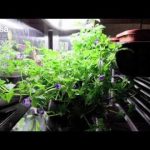
Plants in space
Growing plants for food was a significant step in the history of mankind. Growing plants for food in space and on other planets will be necessary for exploration of our Universe.
Javier Medina from the Spanish research council CSIC explains the attraction of plants for human exploration to supply oxygen and food.
He introduces current and future experiments on the International Space Station into plants and explains the logic of these greenhouses in space.
More about plant experiments on the International Space Station:
http://www.esa.int/Our_Activities/Human_Spaceflight/Research/Plants