This video summarises advice given by ESA astronauts during the ESA Astronaut Careers Fair on 22 April 2021. Samantha Cristoforetti, Thomas Reiter and André Kuipers have all flown in space as ESA astronauts and offer their perspectives on the selection process and the work and life of an astronaut.
See the astronaut vacancy notice and other opportunities to work at ESA at https://jobs.esa.int
★ Subscribe: http://bit.ly/ESAsubscribe and click twice on the bell button to receive our notifications.
We are Europe’s gateway to space. Our mission is to shape the development of Europe’s space capability and ensure that investment in space continues to deliver benefits to the citizens of Europe and the world. Check out https://www.esa.int/ to get up to speed on everything space related.
This timelapse was filmed under the stars on the Ariane 6 launch base at Europe’s Spaceport in French Guiana.
Preparations are under way for the arrival of Ariane 6, Europe’s next-generation launch vehicle. Imagine yourself stepping out of the launcher assembly building or standing on the launch pad in front of the 90-metre high mobile gantry, to look at the stars.
Ariane 6, developed by ESA, has two versions depending on the required performance. This rocket will be capable of a wide range of missions to guarantee independent access to space for Europe and continue four decades of the Ariane adventure.
Credits: ESA – @CNES – @arianespace
★ Subscribe: http://bit.ly/ESAsubscribe and click twice on the bell button to receive our notifications.
We are Europe’s gateway to space. Our mission is to shape the development of Europe’s space capability and ensure that investment in space continues to deliver benefits to the citizens of Europe and the world. Check out https://www.esa.int/ to get up to speed on everything space related.
The Copernicus Sentinel-2 mission takes us over Morbihan – a French department in the south of Brittany, in this edition of the Earth from Space programme.
We are Europe’s gateway to space. Our mission is to shape the development of Europe’s space capability and ensure that investment in space continues to deliver benefits to the citizens of Europe and the world. Check out https://www.esa.int/ to get up to speed on everything space related.
To celebrate the premiere of @Coldplay’s latest single ‘Higher Power’, the band linked up for an extraterrestrial video chat with French ESA astronaut Thomas Pesquet, who is currently on a six-month mission on board the International Space Station. A specially recorded performance of Higher Power – featuring dancing alien holograms – was beamed up to Thomas, who gave the track its very first play on board the Station. The song’s premiere followed a conversation which took in similarities between life on tour and life on the Space Station, how planet Earth looks from space and its fragility; and how Thomas listens to music in microgravity.
We are Europe’s gateway to space. Our mission is to shape the development of Europe’s space capability and ensure that investment in space continues to deliver benefits to the citizens of Europe and the world. Check out https://www.esa.int/ to get up to speed on everything space related.
Europe’s new launch vehicle, Vega-C, is near completion. Elements will soon be shipped to Kourou for assembly and preparation for Vega-C’s inaugural flight.
This new launcher improves its Vega predecessor by offering more power and versatility at similar cost. This new design allows Vega-C to transport larger and heavier payloads into space making it a world-class competitor on the global launcher market while ensuring Europe’s independent access to space.
We are Europe’s gateway to space. Our mission is to shape the development of Europe’s space capability and ensure that investment in space continues to deliver benefits to the citizens of Europe and the world. Check out https://www.esa.int/ to get up to speed on everything space related.
We are Europe’s gateway to space. Our mission is to shape the development of Europe’s space capability and ensure that investment in space continues to deliver benefits to the citizens of Europe and the world. Check out https://www.esa.int/ to get up to speed on everything space related.
A timelapse from various angles of the launch of @SpaceX Falcon 9 with Crew Dragon Endeavour leaving Earth from Kennedy Space Center in Florida, USA.
The rocket lifted off at 10:49 BST (11:49 CEST, 05:49 local time) on 23 April 2021 from Launchpad 39A in Cape Canaveral with ESA astronaut Thomas Pesquet, @NASA astronauts Megan McArthur and Shane Kimbrough, and @JAXA | 宇宙航空研究開発機構 astronaut Akihiko Hoshide. On 24 April at 11:08 CEST the Crew-2 caught up with the International Space Station and docked with its Harmony module, marking the start of Thomas’ Alpha mission.
Thomas is the first ESA astronaut to fly in space in a vehicle other than the Russian Soyuz or the US Space Shuttle, and the first ESA astronaut to leave Earth from Florida, USA, in over a decade. This is his second flight, his first mission called Proxima saw Thomas fly to the Space Station on a Soyuz from Baikonur in Kazakhstan and his expedition broke records for amount of hours spent on research at the time.
We are Europe’s gateway to space. Our mission is to shape the development of Europe’s space capability and ensure that investment in space continues to deliver benefits to the citizens of Europe and the world. Check out https://www.esa.int/ to get up to speed on everything space related.
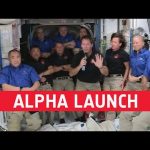
Highlights of the launch and first day in space of ESA astronaut Thomas Pesquet on the Alpha mission.
On 24 April at 11:08 CEST the Crew Dragon spacecraft with ESA astronaut Thomas Pesquet, @NASA astronauts Megan McArthur and Shane Kimbrough, and @JAXA | 宇宙航空研究開発機構 astronaut Akihiko Hoshide docked with the International Space Station’s Node-2 Harmony module, marking the start of ESA’s six-month mission Alpha.
The crew spent around 23 hours orbiting Earth and catching up with the International Space Station after their launch on 23 April at 10:49 BST (11:49 CEST, 05:49 local time). The launch to docking went smoothly in Crew Dragon Endeavour.
Thomas is the first ESA astronaut to fly in space in a vehicle other than the Russian Soyuz or the US Space Shuttle, and the first ESA astronaut to leave Earth from Florida, USA, in over a decade. This is his second flight, his first mission called Proxima saw Thomas fly to the Space Station on a Soyuz from Baikonur in Kazakhstan and his expedition broke records for amount of hours spent on research at the time.
We are Europe’s gateway to space. Our mission is to shape the development of Europe’s space capability and ensure that investment in space continues to deliver benefits to the citizens of Europe and the world. Check out https://www.esa.int/ to get up to speed on everything space related.
ESA Director General Josef Aschbacher congratulates the Dragon Crew 2 shortly after they enter the Space Station. ESA astronaut Thomas Pesquet, @NASA astronauts Megan McArthur and Shane Kimbrough, and @JAXA-HQ astronaut Akihiko Hoshide arrived at the Station one day after their launch on 23 April at 10:49 BST (11:49 CEST, 05:49 local time).
Thomas is the first ESA astronaut to fly in space in a vehicle other than the Russian Soyuz or the US Space Shuttle, and the first ESA astronaut to leave Earth from Florida, USA, in over a decade. This is his second flight, his first mission called Proxima saw Thomas fly to the Space Station on a Soyuz from Baikonur in Kazakhstan and his expedition broke records for amount of hours spent on research at the time.
We are Europe’s gateway to space. Our mission is to shape the development of Europe’s space capability and ensure that investment in space continues to deliver benefits to the citizens of Europe and the world. Check out https://www.esa.int/ to get up to speed on everything space related.
Our planet is surrounded by spacecraft helping us study our changing climate, save lives following disasters, deliver global communication and navigation services and help us answer important scientific questions.
But these satellites are at risk. Accidental collisions between objects in space can produce huge clouds of fast-moving debris that can spread and damage additional satellites with cascading effect.
In this animation, find out how teams at ESA’s European Space Operations Centre in Darmstadt, Germany, take action to keep satellites safe after receiving an alert warning of a possible collision between an active satellite and a piece of space debris.
When the alert is raised, ESA experts determine the risk of a collision and plan a collision avoidance manoeuvre that can be used to get the satellite out of harm’s way if necessary.
Additional observations of the piece of space debris help the team better understand its path and the risk of collision. If that risk remains too high (typically 1 in 10 000), the planned manoeuvre is carried out to temporarily change the orbit of the satellite until the threat has passed.
Each manoeuvre comes at a price. They take skill and time to plan, cost precious fuel – shortening the lifetime of the mission – and often require instruments to be temporarily shut off, preventing them from collecting important data.
While most alerts do not end up requiring evasive action, the number of alerts is rapidly increasing. Hundreds are already issued every week. Several companies have begun to launch large constellations into low-Earth orbit to provide global internet access. They have great benefits, but could be a source of huge disruption if we do not change our behaviour.
In just a few years, our current methods for avoiding collisions in space will no longer be enough. To safeguard humankind’s continued access to space for future generations, ESA is developing technologies for an automated collision avoidance system.
We are Europe’s gateway to space. Our mission is to shape the development of Europe’s space capability and ensure that investment in space continues to deliver benefits to the citizens of Europe and the world. Check out https://www.esa.int/ to get up to speed on everything space related.
The launch of Sputnik, humankind’s first satellite, in 1957 marked the dawn of a new era for the people of the ‘Pale Blue Dot’.
Decades later, our planet is now surrounded by spacecraft carrying out extraordinary work to study our changing climate, save lives following disasters, deliver global communication and navigation services and help us answer important scientific questions.
But these satellites are at risk. Accidental collisions between objects in space can produce huge clouds of fast-moving debris. These clouds can spread and damage additional satellites with cascading effect, eventually making the most useful orbits around Earth no longer safe for spacecraft or people.
Satellites today have to carry out collision avoidance manoeuvres to avoid possible impact with debris. These are costly, and hundreds of collision avoidance alerts are already issued every week. [add para space}
And this is nothing compared to what is coming. Several companies have begun to launch mega-constellations into low-Earth orbit to provide global internet access. They have great benefits, but could be a source of huge disruption if we do not change our behaviour.
Our current methods for avoiding collisions in space will become inadequate in just a few years – and even compliance with space debris mitigation guidelines may no longer be enough.
It’s time to act.
ESA is developing technologies for an automated collision avoidance system, as well as methods for refuelling, repairing and upgrading satellites in orbit, extending the lifetime of missions and potentially reducing the number of new satellites that need to be launched.
ESA is also working on debris removal missions that will fly up to dead spacecraft and debris objects, capture them and move them to safety – either by sending them down to burn up in Earth’s atmosphere or up into ‘graveyard orbits’.
By reaching into space, we have brought huge benefits down to Earth, providing technologies that enrich our societies, connect people in previously unimaginable ways and give us an incredible perspective and understanding of our planet.
We know what will happen if we continue on our current path, but we also know exactly what we need to do to change that fate and ensure humankind’s access to space is guaranteed for future generations.
We are Europe’s gateway to space. Our mission is to shape the development of Europe’s space capability and ensure that investment in space continues to deliver benefits to the citizens of Europe and the world. Check out https://www.esa.int/ to get up to speed on everything space related.
More than two billion smartphones, with users worldwide are now making use of Europe’s Galileo navigation satellite constellation. But how do satellites thousands of kilometres away in space manage to tell you where you are and where you’re going? Simply being so far away is part of the answer – learn the details of the world’s most precise navigation system in this new video.
★ Subscribe: http://bit.ly/ESAsubscribe and click twice on the bell button to receive our notifications.
We are Europe’s gateway to space. Our mission is to shape the development of Europe’s space capability and ensure that investment in space continues to deliver benefits to the citizens of Europe and the world. Check out https://www.esa.int/ to get up to speed on everything space related.
In 2008, Thomas Pesquet applied to become an ESA astronaut. On 22 April 2021, he will fly his second mission to the International Space Station. In this video Thomas shares how he found his way to space, and encourages viewers to follow their passions as ESA seeks its next class of astronauts.
Nobody is perfect on their first attempt at a task, but Thomas says the only way to improve is to try and keep trying. Though becoming an astronaut seemed a distant dream when he was younger, by continuing to challenge himself and learn along the way he developed the skills he needed to put himself forward and become one of a small group who have travelled to space.
Whatever your passion, his advice is universal: try your best, and if you don’t succeed it doesn’t matter. What does matter is perseverance.
We are Europe’s gateway to space. Our mission is to shape the development of Europe’s space capability and ensure that investment in space continues to deliver benefits to the citizens of Europe and the world. Check out https://www.esa.int/ to get up to speed on everything space related.
Thomas Pesquet a postulé en 2008 pour devenir un astronaute de l’ESA. Le 22 avril 2021, il décollera à destination de la Station spatiale internationale pour sa deuxième mission. Thomas partage dans cette vidéo la manière dont il s’est frayé un chemin vers l’espace, et encourage son audience à suivre la passion qui les anime alors que l’ESA est à la recherche de sa prochaine classe d’astronautes.
Personne n’est parfait la première fois qu’il effectue une tâche, mais Thomas explique que la seule manière de s’améliorer, c’est d’essayer et de continuer à essayer. Même si devenir astronaute semblait un rêve lointain quand il était plus jeune, c’est en se mettant continuellement au défi et en apprenant au fil du temps qu’il a développé les compétences nécessaires pour se présenter et faire partie du petit groupe de personnes qui sont allées dans l’espace.
Son conseil s’applique quelle que soit votre passion : faites de votre mieux, et si vous ne réussissez pas, ce n’est pas grave. Ce qui importe, c’est la persévérance.
Rendez-vous sur le https://bit.ly/YourWayToSpace pour en savoir plus sur comment devenir un astronaute de l’ESA et découvrir les autres opportunités de carrière à l’ESA.
★ Subscribe: http://bit.ly/ESAsubscribe and click twice on the bell button to receive our notifications.
We are Europe’s gateway to space. Our mission is to shape the development of Europe’s space capability and ensure that investment in space continues to deliver benefits to the citizens of Europe and the world. Check out https://www.esa.int/ to get up to speed on everything space related.
On 20 April 2021, ESA will host the 8th European Conference on Space Debris from Darmstadt, in Germany. Scientists, engineers, industry experts and policy makers will spend the virtual four day conference discussing the latest issues surrounding space debris. They will exchange the latest research, try to come up with solutions for potential problems and define the future direction of any necessary action.
There are currently over 129 million objects larger than a millimetre in orbits around Earth. These range from inactive satellites to flakes of paint. But no matter how small the item of debris, anything travelling up to 56 000 km/h in an orbit is dangerous if it comes into contact with the many satellites that connect us around the world, be it for GPS, mobile phone data or internet connectivity. The solution is to take action before it’s too late. This is why ESA has commissioned ClearSpace-1 – the world’s first mission to remove space debris – for launch in 2025.
We are Europe’s gateway to space. Our mission is to shape the development of Europe’s space capability and ensure that investment in space continues to deliver benefits to the citizens of Europe and the world. Check out https://www.esa.int/ to get up to speed on everything space related.
ESA Director General Josef Aschbacher spoke to journalists on 7 April 2021 to introduce ESA Agenda 2025, setting out ESA’s strategic priorities and goals.
We are Europe’s gateway to space. Our mission is to shape the development of Europe’s space capability and ensure that investment in space continues to deliver benefits to the citizens of Europe and the world. Check out https://www.esa.int/ to get up to speed on everything space related.
We are Europe’s gateway to space. Our mission is to shape the development of Europe’s space capability and ensure that investment in space continues to deliver benefits to the citizens of Europe and the world. Check out https://www.esa.int/ to get up to speed on everything space related.
For the fourth time since 1978, ESA is recruiting new astronauts. Applications open 31 March and close 28 May 2021. Four new members of the European astronaut corps will be selected. Around 20 of the best remaining candidates will also be selected to a newly-established astronaut reserve, whose members may be called upon to fulfil specific missions. ESA’s last call for new astronauts was in 2008, when six candidates were appointed. They were joined by a further one candidate in 2015.
We are Europe’s gateway to space. Our mission is to shape the development of Europe’s space capability and ensure that investment in space continues to deliver benefits to the citizens of Europe and the world. Check out https://www.esa.int/ to get up to speed on everything space related.
The Copernicus Sentinel-2 mission takes us over part of the Amazon rainforest in the Amazonas – the largest state in Brazil, in this edition of the Earth from Space programme.
We are Europe’s gateway to space. Our mission is to shape the development of Europe’s space capability and ensure that investment in space continues to deliver benefits to the citizens of Europe and the world. Check out https://www.esa.int/ to get up to speed on everything space related.
Watch the replay of the virtual press event in which ESA astronaut Thomas Pesquet talks about his upcoming ‘Alpha’ mission to the International Space Station.
Set to launch on 22 April, Thomas will be the first ESA astronaut to fly on a @SpaceX Crew Dragon being launched on a Falcon 9 rocket from Florida, USA. In this event we will also hear from ESA ISS Utilisation Planning Team Leader Kirsten MacDonell, and Head of the ESA Human and Robotic Exploration Strategy & Coordination Group Didier Schmitt.
We are Europe’s gateway to space. Our mission is to shape the development of Europe’s space capability and ensure that investment in space continues to deliver benefits to the citizens of Europe and the world. Check out https://www.esa.int/ to get up to speed on everything space related.
Born in Rouen, France, aerospace engineer and commercial pilot Thomas Pesquet was selected for ESA’s Astronaut Corps in 2009. He was launched on his first flight to the International Space Station in November 2016, remaining in space until June 2017 as part of his Proxima mission. He will soon be launched for on his second long-duration mission to the International Space Station called Alpha. Thomas has been training with the Station’s international partners for the new mission, including learning about the Crew Dragon, he will be the first ESA astronaut to fly on this new commercial spacecraft.
We are Europe’s gateway to space. Our mission is to shape the development of Europe’s space capability and ensure that investment in space continues to deliver benefits to the citizens of Europe and the world. Check out https://www.esa.int/ to get up to speed on everything space related.
In preparation for his second mission to the International Space Station, ESA astronaut Thomas Pesquet is training for possible spacewalks at @NASA’s Johnson Space Center. His second six-month mission is called Alpha and will see Thomas launch as part Crew-2 on the @SpaceX Dragon spacecraft with NASA astronaut Megan Behnken and Shane Kimbrough and @JAXA | 宇宙航空研究開発機構 astronaut Aki Hoshide.
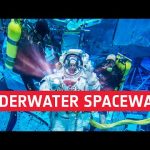
Watch this underwater spacewalk training session in 4K with audio from the astronauts and “mission control” recorded on 2 December 2020. Thomas is moved into position on a functional mockup of the International Space Station’s robotic arm to install hardware.
Astronauts practice spacewalks in NASA’s Neutral Buoyancy Laboratory. The training pool is the largest indoor swimming pool in the world, holding over 23 million litres of water, but it is still not large enough to hold the complete Space Station. Instead, specific parts of the Station structure are used as needed for training.
Training underwater is as close as it gets to experiencing weightlessness on Earth so spending time in a full spacesuit is used to practise techniques for spacewalks and neutral buoyancy is substituted for microgravity. Support and training divers are on hand to guide the astronauts during their tasks. In space, the astronauts are aided by mission control and colleague astronauts on the Station.
Extra Vehicular Activities (known as EVAs or spacewalks) are the most challenging tasks for an astronaut. When venturing from their spacecraft in a self-contained spacesuit to carry out repairs or install new equipment outside the International Space Station safety and efficiency are vital.
It might be relaxing and soothing to watch this underwater spacewalk at home, but spacewalks are marathons that require concentration and physical exertion for six hours at a time, with no food or bathroom breaks.
We are Europe’s gateway to space. Our mission is to shape the development of Europe’s space capability and ensure that investment in space continues to deliver benefits to the citizens of Europe and the world. Check out https://www.esa.int/ to get up to speed on everything space related.
French ESA astronaut Thomas Pesquet will soon begin his second mission to the International Space Station. Called Alpha, the mission will begin with the second operational flight of the SpaceX Crew Dragon, launched from Cape Canaveral in Florida, USA. Thomas will be the first ESA astronaut to fly in this spacecraft, which will remain docked to the Space Station for around six months before returning the crew to Earth.
We are Europe’s gateway to space. Our mission is to shape the development of Europe’s space capability and ensure that investment in space continues to deliver benefits to the citizens of Europe and the world. Check out https://www.esa.int/ to get up to speed on everything space related.
We are Europe’s gateway to space. Our mission is to shape the development of Europe’s space capability and ensure that investment in space continues to deliver benefits to the citizens of Europe and the world. Check out https://www.esa.int/ to get up to speed on everything space related.
This timelapse video shows the hot firing model of the Ariane 6 upper stage being installed on the P5.2 test stand at the @DLR German Aerospace Center in Lampoldshausen, Germany on 16 February 2021.
After arrival from the @ArianeGroup facilities in Bremen, this 5.4 m-diameter upper stage was hoisted out of its container, tilted vertical and installed on the test stand.
Tests will simulate all aspects of flight including stage preparation such as fuelling with liquid oxygen and liquid hydrogen, and draining its tanks.
Data will be gathered on non-propulsive ballistic phases, tank pressurisation to increase performance, Vinci engine reignitions, exhaust nozzle manoeuvres, ending with passivation where all remaining internal energy is removed. Tests will typically last about 18 hours each.
★ Subscribe: http://bit.ly/ESAsubscribe and click twice on the bell button to receive our notifications.
We are Europe’s gateway to space. Our mission is to shape the development of Europe’s space capability and ensure that investment in space continues to deliver benefits to the citizens of Europe and the world. Check out https://www.esa.int/ to get up to speed on everything space related.
The Copernicus Sentinel-2 mission, takes us over the Galápagos Islands – a volcanic archipelago situated some 1000 km west of Ecuador in the Pacific Ocean, in this edition of the Earth from Space programme.
We are Europe’s gateway to space. Our mission is to shape the development of Europe’s space capability and ensure that investment in space continues to deliver benefits to the citizens of Europe and the world. Check out https://www.esa.int/ to get up to speed on everything space related.
Watch the replay of the briefing to media representatives to learn more about the next spaceflight of ESA astronaut Samantha Cristoforetti.
During the event, Samantha was joined by ESA Director General Josef Aschbacher, ESA Director of Human and Robotic Exploration David Parker, and Italian space agency president Giorgio Saccoccia.
Samantha is a member of ESA’s astronaut class of 2009. During her firs mission ‘Futura’ in 2014t m–15, she spent 200 days in space, carrying out science and operations on the International Space Station as a flight engineer for Expeditions 42 and 43. She now looks forward to returning to the ISS, her “home away from home.”
★ Subscribe: http://bit.ly/ESAsubscribe and click twice on the bell button to receive our notifications.
We are Europe’s gateway to space. Our mission is to shape the development of Europe’s space capability and ensure that investment in space continues to deliver benefits to the citizens of Europe and the world. Check out https://www.esa.int/ to get up to speed on everything space related.
We are Europe’s gateway to space. Our mission is to shape the development of Europe’s space capability and ensure that investment in space continues to deliver benefits to the citizens of Europe and the world. Check out https://www.esa.int/ to get up to speed on everything space related.
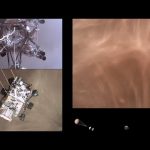
NASA’s Mars 2020 Perseverance mission captured thrilling footage of its rover landing in Mars’ Jezero Crater on Feb. 18, 2021. The real footage in this video was captured by several cameras that are part of the rover’s entry, descent, and landing suite. The views include a camera looking down from the spacecraft’s descent stage (a kind of rocket-powered jet pack that helps fly the rover to its landing site), a camera on the rover looking up at the descent stage, a camera on the top of the aeroshell (a capsule protecting the rover) looking up at that parachute, and a camera on the bottom of the rover looking down at the Martian surface.
The audio embedded in the video comes from the mission control call-outs during entry, descent, and landing.
For the first time in over a decade, the European Space Agency (ESA) is seeking new astronauts. This one-hour-long briefing with ESA experts and astronauts outlines the selection criteria and desirable traits for astronauts. It also provides further detail around the Parastronaut Feasibility Project and astronaut reserve, as well as ESA’s vision for the next 10 years of human and robotic exploration.
Participants: Matthias Maurer, ESA astronaut Fabio Favata, Head of Strategy, Planning and Coordination Office Sergi Vaquer Araujo, Senior Flight Surgeon Rosario Martin-Sanchez, Head of Social Security & Related Policies Unit
Moderator: Emmet Fletcher, Communication Department
We are Europe’s gateway to space. Our mission is to shape the development of Europe’s space capability and ensure that investment in space continues to deliver benefits to the citizens of Europe and the world. Check out https://www.esa.int/ to get up to speed on everything space related.
For the first time in over a decade, the European Space Agency (ESA) is seeking new astronauts. This one-hour-long briefing with ESA experts and astronauts outlines the selection criteria and desirable traits for astronauts. It also provides further detail around the Parastronaut Feasibility Project and astronaut reserve, as well as ESA’s vision for the next 10 years of human and robotic exploration.
Participants: Luca Parmitano, ESA astronaut Ersilia Vaudo-Scarpetta, Chief Diversity Officer Josef Aschbacher, future ESA Director General Sara Pastor, I-Hab Gateway module Team Leader Antonella Costa, Human Resources Business Partner
Moderator: Fabrizio L’Abbate, Communication Department
We are Europe’s gateway to space. Our mission is to shape the development of Europe’s space capability and ensure that investment in space continues to deliver benefits to the citizens of Europe and the world. Check out https://www.esa.int/ to get up to speed on everything space related.
For the first time in over a decade, the European Space Agency (ESA) is seeking new astronauts. This one-hour-long briefing with ESA experts and astronauts outlines the selection criteria and desirable traits for astronauts. It also provides further detail around the Parastronaut Feasibility Project and astronaut reserve, as well as ESA’s vision for the next 10 years of human and robotic exploration.
Participants: Samantha Cristoforetti, ESA astronaut Alexander Gerst, ESA astronaut Josef Aschbacher, future ESA Director General Chiara Manfletti, Head of Policy and Programme Coordination Department Rüdiger Seine, Space Training Team Leader Dagmar Boos, Head of Human Resources Competence and Policy Centre
Moderator: Jules Grandsire, Communication Department
We are Europe’s gateway to space. Our mission is to shape the development of Europe’s space capability and ensure that investment in space continues to deliver benefits to the citizens of Europe and the world. Check out https://www.esa.int/ to get up to speed on everything space related.
Voor het eerst in 11 jaar tijd is de Europese ruimtevaartorganisatie (ESA) op zoek naar nieuwe astronauten. De rekruten zullen aan de zijde van bestaande ESA astronauten werken, nu Europa een nieuw tijdperk van ruimteverkenning ingaat.
Sprekers zijn onder meer ESA-astronaut André Kuipers, Low Earth Orbit Exploration Group Leader, hoofd European Astronaut Centre Frank De Winne, Science Coordinator for Human Research, Human and Robotic Exploration Programme Angelique Van Ombergen, hoofd Talent Acquisition Section Lucy van der Tas.
We are Europe’s gateway to space. Our mission is to shape the development of Europe’s space capability and ensure that investment in space continues to deliver benefits to the citizens of Europe and the world. Check out https://www.esa.int/ to get up to speed on everything space related.
For the first time in over a decade, the European Space Agency (ESA) is seeking new astronauts. This one-hour-long briefing with ESA experts and astronauts outlines the selection criteria and desirable traits for astronauts. It also provides further detail around the Parastronaut Feasibility Project and astronaut reserve, as well as ESA’s vision for the next 10 years of human and robotic exploration.
Participants: Jan Wörner, ESA Director General Samantha Cristoforetti, ESA astronaut Tim Peake, ESA astronaut David Parker, ESA Director of Human and Robotic Exploration Frank De Winne, Head of the European Astronaut Centre Jennifer Ngo-Anh, ESA Research and Payloads Programme Coordinator Lucy van der Tas, ESA Head of Talent Acquisition
Moderator: Ninja Menning, Communication Department
We are Europe’s gateway to space. Our mission is to shape the development of Europe’s space capability and ensure that investment in space continues to deliver benefits to the citizens of Europe and the world. Check out https://www.esa.int/ to get up to speed on everything space related.
The Copernicus Sentinel-2 mission, takes us over the algal blooms swirling around the Pacific Ocean, just off the coast of Japan, in this edition of the Earth from Space programme.
We are Europe’s gateway to space. Our mission is to shape the development of Europe’s space capability and ensure that investment in space continues to deliver benefits to the citizens of Europe and the world. Check out https://www.esa.int/ to get up to speed on everything space related.
From the @Airbus integration halls in Bremen, Germany, this replay of a live event shows a sneak peek of the two European Service Modules that will power astronauts to the Moon and back as part of @NASA’s Orion spacecraft.
Orion is NASA’s next exploration spacecraft to send astronauts farther into space than ever before, beyond the Moon to asteroids and even Mars.
ESA has contracted and is overseeing the development of the European Service Module, the part of the Orion spacecraft that provides air, electricity and propulsion. Much like a train engine pulls passenger carriages and supplies power, the European Service Module will power the Orion crew module to its destination and back to Earth.
The programme includes Andreas Hammer, Head of @Airbus Defence and Space Exploration showing the European Service Modules in production, ESA Director General Jan Wörner announcing future developments, a statement by ESA’s head of European Service Module programme Philippe Deloo, a statement by Airbus head of European Service Module programme Didier Radola, a Moon missions overview with ESA astronaut Alexander Gerst and ESA’s head of Space Transportation Nico Dettmann on how ESA is building Orion with industry.
★ Subscribe: http://bit.ly/ESAsubscribe and click twice on the bell button to receive our notifications.
We are Europe’s gateway to space. Our mission is to shape the development of Europe’s space capability and ensure that investment in space continues to deliver benefits to the citizens of Europe and the world. Check out https://www.esa.int/ to get up to speed on everything space related.
The Copernicus Sentinel-2 mission, ahead of World Wetlands Day, takes us over Lake Titicaca – one of the largest lakes in South America and a designated Ramsar site of International Importance – in this edition of the Earth from Space programme.
We are Europe’s gateway to space. Our mission is to shape the development of Europe’s space capability and ensure that investment in space continues to deliver benefits to the citizens of Europe and the world. Check out https://www.esa.int/ to get up to speed on everything space related.
ESA astronaut Matthias Maurer is preparing for his mission to the International Space Station, scheduled for launch in late 2021. This mission is known as Cosmic Kiss.
In this video log from his current training base at NASA’s Johnson Space Center in Houston, Texas, USA, Matthias shows a space food tasting session and shares how astronauts maintain their fitness for a safe return to Earth.
Astronauts exercise for two hours a day, six days a week while on the International Space Station to combat muscle and bone loss caused by an extended stay in microgravity. Diet also plays an important role in maintaining physical and mental wellbeing.
Due to the current situation with COVID-19, all personnel are required to adhere to special safety precautions while training. These include wearing a mask – as seen in the clip.
Matthias will continue his training for Cosmic Kiss at partner agencies around the world over the next weeks and months. Stay tuned for further footage of his training and experiences.
We are Europe’s gateway to space. Our mission is to shape the development of Europe’s space capability and ensure that investment in space continues to deliver benefits to the citizens of Europe and the world. Check out https://www.esa.int/ to get up to speed on everything space related.
Did you know that in microgravity we are preparing one of the most promising fuels for the future?
Microgravity is helping to find answers and models to refine the processes needed to efficiently burn solid fuel like iron dust. Are we witnessing the rise of a new “Iron Age”? Could we use metal powders instead of petrol to fuel our cars?
Solid fuels are used for burning a match, lighting a sparkler on New Year’s Eve as well as the fuel inside the boosters of Ariane and of other rockets. But metals such as iron can also burn, in powder form, and are entirely smokeless and carbon free.
Metals could be produced using clean energy, such as from solar cells or wind turbines. That electricity is stored as chemical energy in the metal powder at energy densities that are competitive with fossil fuels. This has the potential to reduce greenhouse gasses emission globally, but a barrier to implementing this technology is the development of combustion systems that can efficiently burn the metal fuels, which requires a solid understanding of their combustion physics.
To understand the physics of metal fuel combustion, a cluster of iron powder needs to be suspended for about 30 seconds, the time needed to observe and study how a flame propagates. Researchers used sounding rockets and parabolic flights to run experiments in weightlessness and to validate existing models, yielding promising results.
The density of iron particles and the composition of gases in the combustion chamber are essential parameters, like in a petrol car engine. Microgravity allows for the study of the laws of flame propagation, to optimise parameters in industrial burner designs, and reduce impact on the environment.
These space experiments also help us understand similar phenomena, such as the spreading of contagious microbes and forest fires.
In a vote of confidence for the technique a student team at TU Eindhoven in The Netherlands worked with industrial partners to design a metal combustion facility now installed at Swinkels Family Brewers, subsidised by the Dutch province of Noord-Brabant, used to produce steam for the brewing process.
The step to space research is closer than you might think. Get involved with spaceflight research via https://www.esa.int/spaceflightAO. Find out about our commercial partnerships and opportunities in human and robotic exploration via https://www.esa.int/explorationpartners to run your research in microgravity as well.
★ Subscribe: http://bit.ly/ESAsubscribe and click twice on the bell button to receive our notifications.
We are Europe’s gateway to space. Our mission is to shape the development of Europe’s space capability and ensure that investment in space continues to deliver benefits to the citizens of Europe and the world. Check out https://www.esa.int/ to get up to speed on everything space related.