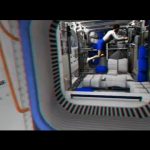
Put your 3D glasses on for this virtual visit of the International Space Station’s modules. Float through the space laboratories and connecting modules from the perspective of an astronaut.
Tag: the
-
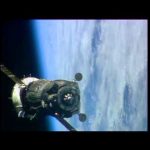
Soyuz hooks up to the station
After launching earlier in the day in their Soyuz spacecraft from the Baikonur Cosmodrome in Kazakhstan, Expedition 38/39 Soyuz Commander Mikhail Tyurin of the Russian Federal Space Agency (Roscosmos), Flight Engineer Rick Mastracchio of NASA and Flight Engineer Koichi Wakata of the Japan Aerospace Exploration Agency arrived at the International Space Station on Nov. 7; docking their craft to the Rassvet module on the Russian segment of the complex.
-
Parrot vs Child: The Intelligence Test | Extraordinary Animals | Earth
It’s Griffin versus the nursery school children in another bird brain test for this Extraordinary Animal.
Subscribe to BBC Earth: http://bit.ly/BBCEarthSubBBC Earth YouTube Channel: http://www.youtube.com/BBCEarth
BBC Earth Facebook http://www.facebook.com/bbcearth (ex-UK only)
BBC Earth Twitter http://www.twitter.com/bbcearthVisit http://www.bbcearth.com for all the latest animal news and wildlife videos
This is a channel from BBC Studios who help fund new BBC programmes.
-
ESA Euronews: Mapping the Milky Way
It has spawned a host of songs from crooners to alternative rock bands. One of the best loved chocolate bars in the United Kingdom is named after it. Yet how much to we really know about the Milky Way and just how important is it?
We could be close to many answers about the galaxy thanks to a new satellite named Gaia, being launched by the European Space Agency.
“One fundamental step to understand our universe is to understand our closer universe, which is the galaxy,” explained Guiseppe Sarri who is the project manager of ESA’s Gaia project.
Gaia will scan the sky with powerful new eyes, mapping the Milky Way in unprecedented detail. It will help produce a detailed 3D image of the galaxy, something which has never been done before.
-
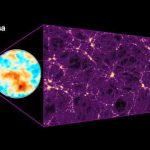
Planck’s view of the Universe
This animation highlights some of the many discoveries made by ESA’s Planck space telescope over its 4.5 year observing career, from new discoveries in our home Milky Way Galaxy stretching back to the first few moments after the Big Bang 13.82 billion years ago.
Credits: ESA
Read more on the ESA website:
http://www.esa.int/Our_Activities/Space_Science/Planck/Celebrating_the_legacy_of_ESA_s_Planck_mission -

How The Economic Machine Works by Ray Dalio
Economics 101 — “How the Economic Machine Works.”
Created by Ray Dalio this simple but not simplistic and easy to follow 30 minute, animated video answers the question, “How does the economy really work?” Based on Dalio’s practical template for understanding the economy, which he developed over the course of his career, the video breaks down economic concepts like credit, deficits and interest rates, allowing viewers to learn the basic driving forces behind the economy, how economic policies work and why economic cycles occur.
To learn more about Economic Principles visit: http://www.economicprinciples.org.
[Also Available In Chinese] 经济这台机器是怎样运行的: http://www.youtube.com/watch?v=-ZbeYejg9Pk
[Also Available In Russian] Как действует экономическая машина. Автор: Рэй Далио (на русском языке): http://youtu.be/8BaNOlIfMLE
For more from Ray:
Principles | #1 New York Times Bestseller: https://amzn.to/2JMewHb
Buy his new book, Principles for Success: https://amzn.to/34lgnNJ
Connect with him on Facebook: https://www.facebook.com/raydalio
Follow him on Twitter: https://www.twitter.com/raydalio
Follow him on Linkedin: https://www.linkedin.com/raydalio
Follow him on Instagram: https://www.instagram.com/raydalio/
Download his free iOs app: https://principles.app.link/PFS -
LADEE To The Moon and Remembering Gordon Fullerton on This Week @NASA
NASA prepares for the launch of the Lunar Atmosphere and Dust Environment Explorer or LADEE probe to the moon. Also, a new crew of ISS Astronauts meet the Media, and the Spitzer and WISE Telescopes get ready to help in the search for asteroids. These stories and more on This Week @NASA
-
Winter at the Concordia station in Antarctica
The long Antarctic winter is turning to spring at the Franco-Italian Concordia research station, which has resisted the brutal forces of nature about 1200 km inland on top of an icy plateau 3000 m above sea level. During winter, the Sun doesn’t rise above the horizon for about three months, and temperatures can drop down to -80°C.
This video shows the harsh but beautiful landscape around the station on one of the last sunny days in May and then how the darkness engulfed Concordia with its 12-strong winter-over team. Finally the Sun returned on 10 August — a memorable moment for the men and women who keep the station running and conduct the scientific work in those difficult, almost space-like conditions.
The video was shot by Olivier Delanoe and it includes excerpts from the letters sent by Antonio Litterio to ESA’s Concordia blog.
-
The Soyuz launch sequence explained
What are the parts of the Soyuz rocket? What are the stages into orbit? What is the launch sequence? Watch and find out. This video has been produced from an actual lesson delivered to the ESA astronaut class of 2009 (also known as the #Shenanigans09) during their ESA Basic Training in 2009-2010
This video is a joint production of the ESA Human Spaceflight & Operation Astronaut Training Division & Promotion Office
Note: Subtitles are available for English, Italian, Russian and German. Click on the caption button to choose.
Technical Experts: Stephane Ghiste, Dmitriy Churkin
Content Design: Stephane Ghiste, Dmitriy Churkin, Pascal Renten, Simon Trim, Matthew Day
Video Production & Editing: Pascal Renten, Simon Trim, Andrea Conigli
Narration Voice: Bernard Oattes
Project Co-ordination: Loredana Bessone, Matthew DaySpecial Thanks to:
Massimo Sabbatini, Guillaume Weerts ESA Human Spaceflight & Operation Promotion Office
Martin Schweiger (for use of his Orbiter software: http://orbit.medphys.ucl.ac.uk)
Nikita Vtyurin, Andrew Thielmann (Orbiter Soyuz model)
Iacopo Baroncini (Soyuz model)
Joey P. Wade (Google Earth Soyuz models)
NASA
ROSCOSMOSWatch Part 2: Soyuz rendezvous and docking explained
https://www.youtube.com/watch?v=M2_NeFbFcSwWatch Part 3: Soyuz undocking, reentry and landing explained
https://www.youtube.com/watch?v=-l7MM9yoxII -
ESA Euronews: The Mars detectives
Europe’s off to Mars. Again. We have sent robots to fly over Mars, crawl over Mars and soon to dig down into Mars – searching for signs that once, perhaps deep in the past, this planet may have been home to life. It might be an obvious choice, but still a puzzle, and one that we’re only just beginning to piece together. And finding evidence of life will require the skill of the finest detectives.
This is a mystery that Europe’s ExoMars mission is ready to solve. In 2016 it will have a satellite in orbit around Mars, designed to test for methane, and by 2018 this rover will be rolling around the Red Planet. The mission will be the first to set out with the direct intention of finding signs of life, now, and in the past.
-
ATV-4’s 6 million km voyage to the International Space Station
ATV Albert Einstein ESA’s automated support and supply ferry for the International Space Station was launched by an Ariane 5 launcher on 6 June 2013. After travelling over 6 million kms over the course of ten days it caught up with the International Space Station on 15 June and docked with the orbital outpost only 11 mm of absolute centre.
ESA astronaut Luca Parmitano oversaw docking and unloading of Albert Einstein’s cargo as part of his six-month Volare mission on the International Space Station. -
Visit ESA’s Pavilion at the Paris Air and Space Show 2013
The 50th International Paris Air & Space Show at Le Bourget opened its doors on Monday 17 June.
The Agency’s pavilion, situated between the full-size models of the Ariane 1 and Ariane 5 launchers, features the wealth of ESA programmes across all space domains, and focus on recent and upcoming launches and their results. This year, the emphasis is on space as a driver of competitiveness and growth. -

Steven Spielberg’s A.I.-ARTIFICIAL INTELLIGENCE (2001) – The Flesh Fair
As a “celebration of life,” future mankind makes symbolic spectacle of the destruction of artificiality.
Copyright 2002 Dreamworks and Warner Bros. All rights reserved.
-

NASA’s Newest View of the Sun
NASA hosts a news update about the June 26 launch of the Interface Region Imaging Spectrograph (IRIS) mission from Vandenberg Air Force Base in California.
IRIS is a NASA Small Explorer Mission to observe how solar material moves in a dynamic million-degree atmosphere that drives the solar wind around the Sun’s atmosphere. The region is the origin of most of the ultraviolet solar emission that impacts the near-Earth space environment and Earth’s climate.
-
NASA Television Covers the Launch of the Next ISS Crew
Expedition 36/37 Soyuz Commander Fyodor Yurchikhin of the Russian Federal Space Agency (Roscosmos), NASA Flight Engineer Karen Nyberg and Flight Engineer Luca Parmitano of the European Space Agency launched on the Russian Soyuz TMA-09M spacecraft on May 29, Kazakh time (May 28, U.S. time) from the Baikonur Cosmodrome in Kazakhstan to begin an accelerated six-hour journey to the International Space Station. Once aboard, the trio will start a five and a half month mission, joining station Commander Pavel Vinogradov of Roscosmos, Flight Engineer Chris Cassidy of NASA and Russian Flight Engineer Alexander Misurkin, who have been on the station since late March. The footage includes the crew’s pre-launch ceremonial activities at their Cosmonaut Hotel crew quarters, their departure from the Cosmonaut Hotel to their suit up facility in the Cosmodrome, the
-
The Oklahoma Storms As Seen From Space on This Week @NASA
Also, NASA Administrator Charlie Bolden received updates on the important work being on done at the agency’s California centers, , a New Crew Prepares for Launch to the International Space Station, and a look at Dream Chaser Flight Simulations. These and other stories on This Week @NASA
-
Introduction to the International Space Apps Challenge by ESA Astronaut Samantha Cristoforetti
The International Space Apps Challenge (http://spaceappschallenge.org) is a global collaboration of space explorers, held in cities around the world on April 20-21, 2013. In the style of a hackathon, citizen experts will collaborate with space agencies and other partners to further space technology, as well as use space data to solve Earth-bound challenges. Join us on Earth Day weekend!
-

Ready the Dragon on This Week @NASA
March 1st is the targeted launch date for the next cargo resupply flight to the International Space Station. Liftoff of the SpaceX Dragon spacecraft’s second resupply mission to the ISS is scheduled for 10:10 a.m. Eastern from Cape Canaveral Air Force Station in Florida. Dragon will be loaded with about six tons of crew supplies and materials for science research. Also, Launch the Seedlings!; Curiosity Drills; ISS Social; Hangout with the Crew; Bolden Honored; Aerospace Days; Cady and the Chieftains; and more!
-
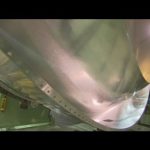
ESA Euronews: The rocket factory
The launch of a rocket is the crowning moment, the culmination of a long process of careful machining and construction. What comes out of a rocket factory is a unique blend of power, scale and engineering skill.
“To give you an idea of scale, the thrust at liftoff of a rocket like Ariane is like the power of two units of a nuclear power station, and the turbo pump that feeds the rocket engine has the power of a TGV train,” says Michel Freuchet, Head of Launchers at Astrium, near Paris, where the Ariane 5 launcher was born.
Piece by piece, it is hewn from solid aluminium and brought to life. The central structure of Ariane 5 is made from huge sheets of top-grade aluminium. Aluminium is used because it is best suited to withstand the extremely low temperatures of the liquid hydrogen and oxygen propellants. One by one, the panels are machined into shape — with many areas as thin as two milimetres. More than 90% of the aluminium is removed and recycled, leaving behind the perfect central part of each panel.
There are three main European launchers ready to rocket into space.
Ariane 5 is the biggest, capable of lifting 10 tonnes into orbit. Soyuz is the Russian workhorse, with a three-tonne payload capacity, while Vega is the European Space Agency’s new rocket, designed to take 1.5 tonne satellites into low orbit.
Faced with increased competition from the Far East and private companies in the US, the European Space Agency is treating Ariane to a make-over. The Ariane 5 ME, or Midlife Evolution, will be able to combine the launch of communication satellites and scientific missions.
Looking ahead a decade, some of the new technology in Ariane 5 ME will be included in its successor Ariane 6. The European Space Agency sees the evolution as a strategic move to meet the demands of both commercial and scientific customers.
-
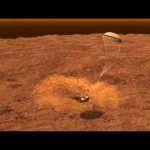
The Huygens experience
A new rendering of Huygens descent and touchdown created using real data recorded by the probe’s instruments as it descended to the surface of Titan, Saturn’s largest moon, on 14 January 2005.
The animation takes into account Titan’s atmospheric conditions, including the Sun and wind direction, the behaviour of the parachute (with some artistic interpretation only on the movement of the ropes after touchdown), and the dynamics of the landing itself. Even the stones immediately facing Huygens were rendered to match the photograph of the landing site returned from the probe, which is revealed at the end of the animation.
Split into four sequences, the animation first shows a wide-angle view of the descent and landing followed by two close-ups of the touchdown from different angles, and finally a simulated view from Huygens itself — the true Huygens experience.
This animation was released on the eighth anniversary of Huygen’s touchdown on Titan as a Space Science Image of the Week feature.Animation: ESA–C. Carreau/Schröder, Karkoschka et al (2012). Image from Titan’s surface: ESA/NASA/JPL/University of Arizona
-
A day in the life…Our Young Graduate Trainees share their work experience
ESA Young Graduate Trainees of the year 2011/2012 speak about their work experiences at ESA.
-
Meet ESA, the space agency for Europe
You, together with your 500 million fellow citizens from ESA’s 20* European member nations, are the collective owners of one of the world’s leading space agencies.
The European Space Agency is an intergovernmental organisation, a cooperative coming together of its Member States in their national interest and common good.
This new video offers a quick introduction: Europe, meet ESA.
(*As of February 2015, 22 Member States)
-
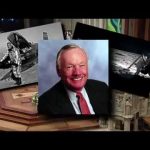
The Nation says Farewell to Neil Armstrong on This Week @ NASA
NASA Administrator Charles Bolden joined other agency officials and dignitaries at the Washington National Cathedral to honor the life and career of astronaut Neil Armstrong, the first man to walk on the moon, who died Aug. 25. The memorial was broadcast live on NASA Television and streamed on nasa.gov and the National Cathedral’s website.
-

50 Years of Exploration: The Golden Anniversary of NASA
Premiered in 2008 at NASA’s Golden Anniversary Gala held at the Smithsonian National Air and Space Museum’s Udvar-Hazy Center in Chantilly, Va., this 13-and-a-half-minute video produced by NASA TV highlights the agency’s historic half-century milestones, including the landing of Apollo 11’s Neil Armstrong and Buzz Aldrin on the moon in 1969.
-

The Concurrent Design Facility (CDF) – An Innovative Teamworking Method
Traditionally, engineers faced with the task of designing a new, complex system or structure – a car, an aircraft or a satellite – work sequentially, one step at a time, passing the design from engineer to engineer. This is inefficient and consumes time and resources.
For more than a decade, many of ESA’s sophisticated spacecraft have been designed with the help of the CDF, making use of very advanced iterative techniques – hence its title ‘concurrent’.
Concurrent engineering puts all related engineers, with all their brain power and required tools together with the final user representative – or customer – in the same location at the same time. This allows for iterative design at a fast pace, with customer and designers agreeing requirements and taking decisions in real time to ensure the best design for the right cost and an acceptable risk.
This process has been developed and honed so it is now common to produce a risk assessed conceptual space mission design complete with various options and including scheduling, testing and operations in a matter of weeks.
-
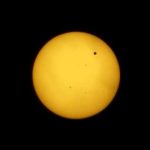
Transiting the midnight sun
Time lapse movie of the transit of Venus, as seen from the land of the midnight sun in Svalbard. Interference from cloud gives an eerie feel to the scene.
Credits: ESA – Andy Oates
-

Earth from Space: The future of Earth observation
Earth from Space is presented by Kelsea Brennan-Wessels from the ESA Web-TV virtual studios.
In the nineteenth edition we look at an example of what a high-resolution image could look like from the future Sentinel-2 mission — envisaged for launch next year. The mockup was constructed using 82 images from the German RapidEye satellites.
-

The Spangler Effect – April Fools Day Science! Season 01 Episode 09
On this episode of The Spangler Effect, Steve shares a few of his favorite science pranks to pull on April Fools Day! With a magnet, baby diaper, spray can and a Starbucks cup, you too can have your own fun on April 1st!
Watching on a mobile device? Check out the Water Gel episode at http://www.youtube.com/watch?v=XesjdbwbNJQ#t=2m45s
Looking for Water Gel? Check out http://www.stevespanglerscience.com/product/water-gel
Need a Neodymium Magnet? Check out http://www.stevespanglerscience.com/product/neodymium-magnet
-
ESA Euronews: The mysteries of Mercury
Mercury has always been something of a puzzle for planetary scientists. Its close position to the Sun means it is very difficult to observe, but now a series of satellites is getting up close to this fascinating planet. The European Space Agency’s BepiColombo mission is among them, and it will offer an unprecedented level of information about the mysterious world of Mercury.
-
“Riding the Booster” Never Sounded Better
From launch to landing, a space shuttle’s solid rocket booster journey is captured, with sound mixed and enhanced by Skywalker Sound.
-
We Are the Explorers
Why do we explore? Simply, it is part of who we are, something we’ve done throughout history. NASA’s new video, “We Are the Explorers,” looks at that tradition of reaching for things just beyond our grasp, and how it’s helping lay the foundation for our greatest journeys ahead.
-
ESA Euronews: The sounds of space
There are many links between music and space. Astronauts like Frank De Winne take their favourite rock music with them to orbit, while musicians on Earth often take inspiration from the stars in their work. Some astrophysicists have transposed plasma waves and electron beams into audible sound.
-
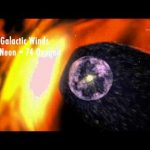
ScienceCasts: Alien Matter in the Solar System
“Alien matter” detected by a NASA spacecraft orbiting Earth shows that the chemical make-up of our solar system differs from that of the surrounding galaxy. Researchers discuss the possible meaning of this mismatch in this week’s ScienceCast video.
Visit http://science.nasa.gov/ for more. -

M16, the Eagle Nebula
This stunning movie shows the Eagle Nebula from the iconic 1995 Hubble image of the Pillars of Creation through to the latest multi-wavelength composite.
Credits: far-infrared: ESA/Herschel/PACS/SPIRE/Hill, Motte, HOBYS Key Programme Consortium; ESA/XMM-Newton/EPIC/XMM-Newton-SOC/Boulanger; optical: MPG/ESO; near-infrared/VLT/ISAAC/McCaughrean & Andersen/AIP/ESO
-
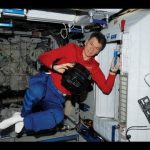
Visit the ISS in 3D with Paolo Nespoli
Paolo Nespoli spent 6 months on-board the International Space Station from Dec 2010 through to May 2011.
In this video he shot using ESA’s Erasmus Recording Binocular (ERB-2) stereoscopic camera during various phases of his MagISStra mission, he caught some moments that depict the work astronauts carry out on the ISS: from educational activities, to scientific experiments and physical training, also demonstrating the way astronauts move in weightlessness through the various modules. ERB-2 is the first camera to transmit 3D images live from space.ESA would like to thank all the astronauts featured in the film: NASA astronauts Catherine (Cady) Coleman, Ron Garan, Scott Kelly and the united ISS Expedition 26-27 and STS-134 crew including ESA astronaut R. Vittori.
-
Sept. 11, 2001 Video From the International Space Station
On Sept. 11, 2001, NASA astronaut, Frank Culbertson, was the lone American not on the planet. Culbertson and two Russian cosmonauts were orbiting the Earth aboard the International Space Station as members of the Expedition 3 crew. Included is video captured by Culbertson and crew as they flew over New York City just after the attacks on the World Trade Center. Included is additional footage aboard the ISS, as well as interview excerpts of Culbertson’s recollections ten years later.
-
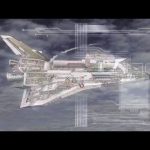
Tribute to the Space Shuttle from the European astronauts
Space Shuttle is perhaps the most complex technological system ever built. In 30 years, it has flown 135 times and helped humankind to dispatch and partially even return many satellites and deep-space probes, to build the International Space Station and to conduct out-of-this-world science. The Shuttle has transported also 24 European astronauts to Earth orbit on 25 missions.
This video highlights these flights with European flavour – from STS-9 in 1983 to STS-134 in last May. -

STS-135: Final Launch of the Space Shuttle Program
Space shuttle Commander Chris Ferguson and crewmates Pilot Doug Hurley, and Mission Specialists Sandy Magnus and Rex Walheim are on their way to the International Space Station after launching from NASA’s Kennedy Space Center at 11:29 a.m. EDT on Friday, July 8. STS-135 is the final mission of NASA’s Space Shuttle Program.
The 12-day mission will deliver the Raffaello multi-purpose logistics module filled with more than 8,000 pounds of supplies and spare parts to sustain space station operations after the shuttles are retired. STS-135 is the 135th shuttle flight, the 33rd flight for Atlantis and the 37th shuttle mission dedicated to station assembly and maintenance,