Learn about what physics actually is, why it’s awesome, and why you should come with me on a ride through understanding the wacky universe in which we live.
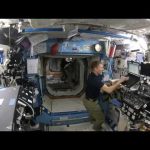
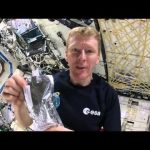
ESA astronaut Tim Peake shows the cleaning duties on the International Space Station. Every Saturday all astronauts living in the weightless research laboratory spend the morning cleaning.
Tim’s six-month mission in space is called Principia: www.esa.int/Principia
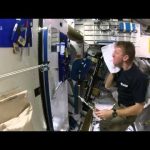
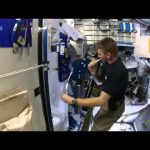
ESA astronaut Tim Peake brushing his teeth in space during his six-month Principia mission on the International Space Station. A morning and evening ritual even astronauts cannot escape.
Tiny satellites the size of a small cube, jam-packed with the most advanced nanotechnologies: is this the future of Space missions?
To find out, ESA Euronews went to Tallin, Estonia, where students at the Mektory Space Centre are preparing the launch of their first nanosatellite.
Nanosatellites – tiny cubes of 10cm x 10cm x 10cm, full of nanotechnologies — are going to be more and more important in the future of space exploration, from Mars missions, to the surveillance of asteroids, which could potentially be dangerous for our planet.
Also known as ‘CubeSats’ these tiny satellites open up a whole world of possibilities for those who want to explore space.
A nanoműholdak egyre fontosabbak lesznek az űrkutatásban, a Mars megfigyelésétől a Földre veszélyt jelentő aszteroidák felkutatásáig. A bennük rejlő potenciált mindenki igyekszik kiaknázni, a nagy űrügynökségektől a tudományos diákkörökig. Ez a helyzet a Mektory Űrközpontban, az észt főváros, Talinn műszaki egyetemén, ahol a diákok az első nanoműholdjuk Föld körüli pályára állítását készítik elő.
– Azt hittem, soha nem fogok műholdat építeni, hiszen ilyesmit csak a NASA-nál csinálnak. Most meg műholdat építek az egyetemi laborban – hitetlenkedett az Euronewsnak Marta Hang, az űrközpont programasszisztense.
A Mektory nanoműhold-programja egy nemzetközi egyetemi kezdeményezés, amelyben az oktatók és a hallgatók együttműködnek az űrkutatásban érdekelt és más technológiai cégekkel. A cél az, hogy felkészítsék a hallgatókat arra, hogy az űriparban helyezkedjenek el. A csapat jelenleg az első űrküldetését tervezi.
– Egy kockaműholdat fejlesztünk, amely egy egységből áll, és távérzékelési célokat szolgál, vagyis képeket készít majd a Földről – magyarázza a Mektory Űrközpont igazgatója, Mart Vihmand.
The story of space debris highlighting how the unintended consequences of intense spaceflight activity during the past 60 years has resulted in a growing population of debris objects that pose hazards to safe space navigation. In 2013, experts estimate that 29 000 objects larger than 10 cm were orbiting Earth.
The video also highlights the current state of debris mitigation measures and presents several concepts for removing defunct satellites from economically vital orbits now being studied by space agencies and industry across Europe.
This video was produced for the 6th European Conference on Space Debris, 22-25 April 2013.
Earth from Space is presented by Malì Cecere from the ESA Web-TV virtual studios. The one hundred seventieth edition features a Sentinel-2 satellite image of Bahrain and surroundings
NASA’s Director of Planetary Science, Jim Green, discusses the Jan. 20 Astronomical Journal science paper that points to the possibility of a new “Planet 9” in our solar system beyond Pluto, examining the scientific process and inviting you to have a front row seat to our exploration of the solar system.
1 tablespoon of olive oil destroys half an acre of waves on this lake. What The Physics?!
Subscribe: http://youtube.com/whatthephysics?sub…
↓Want more info?↓
Special thanks:
Tyler Howe
Ari Daniel
Lissy Herman
Kurt Kolasinski
David Allara
Patrick Lake
Ryan Mckell
Lauren Aguirre
Kristine Allington
Anna Rothschild
Allison Eck
Lauren Miller
Peter Behroozi
Fred Behroozi
Daniel Rosenberg
Kesto Productions
MEDIA CREDITS:
Music provided by APM:
C’est La Vie
Magician’s Waltz a
Little Jynx
Aquatic Flora
Sound effects:
Freesound.org
Images:
Burnt Biscotti (Anna Ginsberg)
Gangster Benjamin Franklin from Compton (Philip Taylor)
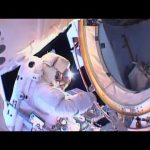
On 15 January ESA astronaut Tim Peake and NASA astronaut Tim Kopra stepped outside of the International Space Station to replace a failed power regulator and install cabling.
The meticulously planned and executed sortie was stopped early after Tim Kopra reported a small amount of water building up in his helmet. The two Tims worked in close cooperation with each other to return to the Space Station, with NASA commander Scott Kelly and cosmonaut Sergei Volkov waiting inside to help them out of their suits.
They left the confines of the weightless research laboratory at 12:48 GMT after their five-hour preparations to don their spacesuits and purge their bodies of nitrogen to avoid decompression sickness.
Tim Kopra went first to the far end of the Station’s starboard truss, with Tim Peake following with the replacement Sequential Shunt Unit. Swapping the suitcase-sized box was a relatively simple task but one that needed to be done safely while the clock was ticking.
With their main task complete, the Tims separated for individual jobs for the remainder of their time outside but was told by Mission Control to return to the airlock earlier than planned.
The 4 hour 43 minute spacewalk was the first for a British astronaut. The spacewalk officially ended at 17:31 GMT when the Tims began the repressurisation of the Quest airlock.
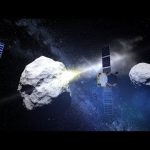
La misión AIM (Asteroid Impact Mission), candidata a ser desarrollada, actualmente en fase de diseño preliminar.
AIM se lanzaría en octubre de 2020 y su objetivo es viajar al sistema binario de asteroides Dídimos para estudiar la luna Didymoon. El sistema Didimos cuenta con un cuerpo principal de unos 800 metros de diámetro y una luna que orbita alrededor de este cuerpo principal, de unos 170 metros de diámetro aproximadamente, está luna se la conoce con el nombre de Didymoon. El sistema Didimos se aproximará a 11 millones de kilómetros de la tierra en 2022.
AIM escaneará la pequeña Didymoon en detalle con su cámara VIS, con imágenes térmicas y un radar de alta resolución para construir mapas detallados de su superficie y estructura interior.
La nave principal de AIM llevará al menos tres sondas más pequeñas – el módulo de aterrizaje, Mascot-2, desarrollado por el Centro Aeroespacial Alemán (Mascot-1 ya está volando en la misión Hayabusa-2 de JAXA), así como dos o más CubeSats. Así, AIM pondría a prueba las comunicaciones ópticas y los enlaces inter-satelitales en el espacio profundo, una tecnología que será esencial para la exploración futura del espacio.
Si se aprueba, AIM también será la contribución europea a la misión AIDA, Asteroid Impact and Deflection Assessment. En 2022, la sonda DART (Double-Asteroid Redirection Test), parte dirigida por la NASA, llegará al sistema binario y se estrellará contra Didymoon a una velocidad de unos 6 km/s.
El impacto será observado por AIM y por sus CubeSats. A través de las imágenes de alta resolución de AIM se evaluará el tamaño y la profundidad del cráter tras el impacto. AIM realizará una segunda fase de mediciones para comparar detalladamente la estructura del objeto, así como su órbita al rededor del asteroide mayor, antes y después del impacto.
NASA is on a Journey to Mars and commercial space is a key component of our strategy to send American astronauts to the Red Planet in the 2030s.
In 2010 when President Obama laid out his vision for space exploration, it may have been hard to believe that six years later we’d be regularly transporting cargo to the International Space Station on commercial spacecraft, or that we’d be on the verge of returning launches of American astronauts to the Station from U.S. soil on the spacecraft built by American companies.
Today, that’s our reality.
SpaceX and Orbital ATK are the first commercial space companies to deliver cargo to the ISS.
We’ve also ordered the first missions from SpaceX and The Boeing Company — the first American companies that will carry American astronauts to space. The first astronauts are now training for test flights aboard commercial spacecraft in preparation for those missions.
We are closer than ever before to sending American astronauts to Mars. We’re “insourcing” American jobs and empowering American entrepreneurs and innovators to expand the new commercial market in low-earth orbit.
Today, we’re marking another significant milestone. We are announcing the companies that will continue our successful commercial cargo program until at least 2024. This phase of the program will allow us to continue using the Space Station as our springboard to the rest of the solar system and a test bed for human health in space.
Our investment in commercial space is creating jobs and it’s bringing us closer to sending American astronauts to Mars. With the commercial cargo successes to date and our announcement today – I am very confident that commercial space will continue to propel our nation into the future – we’ll continue to Launch America.
New NASA astrophysics findings were highlighted at the 227th American Astronomical Society meeting, Jan. 4-8 in Kissimmee, Florida. The findings, which ranged from runaway stars to a burping galaxy, were made with the help of several NASA observation instruments, including the Spitzer Space Telescope, the Wide-field Infrared Survey Explorer, the Chandra X-ray Observatory, the Nuclear Spectroscopic Telescope Array and others. Also, Next space station crew preparing for mission, Economical new era of aviation, A new level of coral reef studies and more!
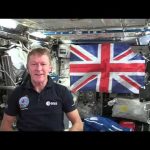
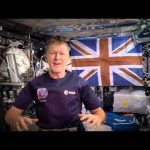
Message from British ESA astronaut Tim Peake aboard the International Space Station to Her Majesty Queen Elizabeth II of the United Kingdom of Great Britain and Northern Ireland, 31 December 2015.
Tim Peake is spending six months in space to run experiments for scientists on Earth and maintain humanity’s research station 400 km above our planet.
2015 was an incredible year for aeronautics research, human exploration, earth science, space science, and technology. We can’t wait to show you what we have in store for 2016.
ESA astronaut Tim Peake wishes Earth a happy new year from the International Space Station.
Tim is spending six months in space to maintain the Space Station and run experiments for scientists on Earth. His Principia mission will see him perform over 30 experiments for European scientists alone.
Follow Tim and his mission via timpeake.esa.int.
Mars is not the only place to explore during holidays. Follow our little Robot as he surveys his new surroundings. This holiday house is full of NASA treats… see if you can spot them all.
From our family to yours… Season’s Greetings, from NASA.
The work NASA does, and will continue in 2016, helps the United States maintain its world leadership in space exploration and scientific discovery. The agency will continue investing in its journey to Mars, returning human spaceflight launches from American soil, fostering groundbreaking technology development, breakthroughs in aeronautics and bringing to every American the awe-inspiring discoveries and images captured by NASA’s missions in our solar system and beyond.
For more about NASA’s missions, research and discoveries, visit:
In 2015, NASA explored the expanse of our solar system and beyond, and the complex processes of our home planet, while also advancing the technologies for our journey to Mars, and new aviation systems as the agency reached new milestones aboard the International Space Station. Here’s a look at some of the top NASA stories of the year!
The ESA Moon Challenge is an International Student Contest for Lunar Exploration, and this video contains parts of 22 different simulations that teams have submitted.
Universities from across the world participated in this challenge as part of the Symposium Moon 2020-2030: A new Era of Human and Robotic Exploration.
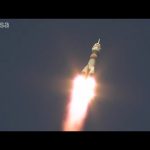
ESA astronaut Tim Peake, NASA astronaut Tim Kopra and commander Yuri Malenchenko were launched into space 15 Decemeber 11:03 GMT from Baikonur cosmodrome, Kazakhstan.
The launch marks the start of Tim Peake’s six-month Principia mission on the International Space Station running over 30 scientific experiments for ESA.
ESA astronaut Tim Peake, NASA astronaut Tim Kopra and commander Yuri Malenchenko were launched into space 15 Decemeber 11:03 GMT from Baikonur cosmodrome, Kazakhstan.The launch marks the start of Tim Peake’s six-month Principia mission on the International Space Station running over 30 scientific experiments for ESA.Follow Tim Peake viatimpeake.esa.int and follow the whole mission on ESA’sPrincipia blog.
How is the chemical energy of gasoline transformed into kinetic energy of a moving car? And where does that kinetic energy go when the car crashes into something and stops moving?
On Dec. 11 aboard the International Space Station, NASA’s Kjell Lindgren, Russian cosmonaut Oleg Kononenko and Kimiya Yui of the Japan Aerospace Exploration Agency, bid farewell to crew members remaining on the station — including Commander Scott Kelly, NASA’s one-year mission astronaut. The returning members of Expedition 45 then climbed aboard their Soyuz spacecraft for the trip back to Earth. They safely touched down hours later in Kazakhstan – closing out a 141-day stay in space. Also, Next space station crew prepares for launch, Supply mission arrives at space station, Quantum computing lab and more!
NASA Television’s newest offering, NASA TV UHD, brings ultra-high definition video to a new level with the kind of imagery only the world’s leader in space exploration could provide.
Using an array of six 4K+ cameras, Harmonic documented the Dec. 6 launch of Orbital ATK’s commercial resupply mission to the International Space Station from Cape Canaveral Air Force Station in Florida. Capturing footage at Ultra High Definition with high frame rate and in high dynamic range (HDR) options.
The company then post-produced the footage into a program showcasing the entire launch process for airing on NASA TV UHD.
A Dec. 2 event with the House of Representatives Committee on Science, Space and Technology, featured a live chat with NASA’s Scott Kelly and Kjell Lindgren from onboard the International Space Station. Kelly and Lindgren answered questions from Texas Representative and Chairperson Lamar Smith and other committee members, about life on the station and the research on the orbital laboratory. Kelly is in the ninth month of his year-long mission with Russian cosmonaut Mikhail Kornienko to gather biomedical data that will help formulate a human mission to Mars, while Lindgren is preparing to return to Earth Dec. 11 to complete a 141-day mission. Also, Next space station crew preparing for launch, Orion powerhouse ready for testing, Anniversary of Orion’s first flight test, Your planet is changing. We’re on it, and Preparing Earth observation tool for space station!
The green light has been given for all users to have open access to all of the data from ESA’s Sentinel-2A satellite, launched in June for the Copernicus programme.
This video celebrates Sentinel-2A’s life, from its birth to what it has become today, and what it can give us tomorrow.
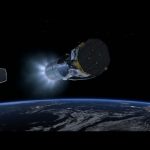
ESA’s LISA Pathfinder mission is a technology demonstrator that will pave the way for future spaceborne gravitational-wave observatories. It will operate about 1.5 million km from Earth towards the Sun, orbiting the first Sun–Earth ‘Lagrangian point’, L1.
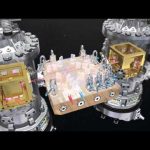
The animation of the spacecraft build-up begins with two freely falling test masses. Between them lies the central component of LISA Pathfinder’s payload: the 20 x 20 cm optical bench interferometer. A set of 22 mirrors and beam-splitters directs laser beams across the bench. There are two beams: one reflects off the two free-falling test masses while the other is confined to the bench. By comparing the length of the different paths covered by the beams, it is possible to monitor changes accurately in distance and orientation between the two test masses.
A box surrounds the two masses without touching them, shielding them from outside influence and constantly applying tiny adjustments to its position. This internal payload is housed in a central cylinder, isolating the test masses from the other components of the science payload and spacecraft.
The solar array provides power to the instrumentation and acts as a thermal shield. Microthrusters control the spacecraft to keep the master test mass centred in its housing, opposing the force of the solar radiation pressure – the main source of ‘noise’ – impinging on the solar array.
Although LISA Pathfinder is not aimed at the detection of gravitational waves themselves, it will prove the innovative technologies needed to do so. It will demonstrate that the two independent masses can be monitored as they free-fall through space, reducing external and internal disturbances to the point where the relative test mass positions would be more stable than the expected change caused by a passing gravitational wave, equal to much less than the size of an atom.
LISA Pathfinder’s name, Laser Interferometer Space Antenna, clearly indicates the role of precursor that this mission plays. Its goal is to validate the technology required to detect gravitational waves from space. Gravitational waves will open a new door in our understanding of the Universe, and at the same time help to verify Einstein’s General Theory of Relativity. LISA Pathfinder will be launched early December 2015 on a Vega rocket from Kourou in French Guiana.
Tim Peake is the first British astronaut to be selected as a member of ESA’s European Astronaut Corps. With a background in flight dynamics, he served in the British Air Corps as flight commander, helicopter instructor and test pilot.
Scheduled to fly to the ISS in late 2015, he’ll be staying in orbit for five months. He also has close ties with the UK Space Agency, working on the development of its microgravity research programme.
We have all heard of climate change, but what’s really happening to our planet now, in November 2015? As the COP21 summit in Paris looms in December, we set out to establish some of the scientific fundamentals, and hear how space technology is being used to get a truly global view of Earth’s vital signs.
Near Les Deux Alps in the French Alps, some 3,200 metres above sea level, we look at how satellite data and glacier measurements can help us to understand the effects of global warming with remote sensing scientist Jean-Pierre Dedieu.