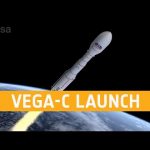
Enjoy the inaugural flight of ESA’s new Vega-C rocket. The principal payload of this flight is LARES-2, a scientific mission of the @AsiTV. Also onboard are six European research CubeSats.
We are Europe’s gateway to space. Our mission is to shape the development of Europe’s space capability and ensure that investment in space continues to deliver benefits to the citizens of Europe and the world. Check out https://www.esa.int/ to get up to speed on everything space related.
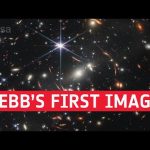
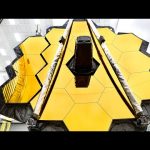
NASA revealed the first five full-color images and spectrographic data from the world’s most powerful space telescope, the James Webb Space Telescope, a partnership with ESA (European Space Agency), and CSA (Canadian Space Agency). The world got its first look at the full capabilities of the mission at a live event streamed from the agency’s Goddard Space Flight Center in Greenbelt, Maryland, on July 12, 2022.
The event showcased these targets: – Carina Nebula: A landscape speckled with glittering stars and cosmic cliffs – Stephan’s Quintet: An enormous mosaic with a visual grouping of five galaxies – Southern Ring Nebula: A nebula with rings of gas and dust for thousands of years in all directions – WASP 96-b: A distinct signature of water in the atmosphere of an exoplanet orbiting a distant Sun-like star – SMACS 0723: The deepest and sharpest infrared image of the distant universe to date
The full set of the telescope’s first full-color images and spectroscopic data are available at: https://nasa.gov/webbfirstimages
Webb’s first observations were selected by a group of representatives from NASA, ESA, CSA, and the Space Telescope Science Institute:
– WASP-96b: Webb’s detailed observation of this hot, puffy planet outside our solar system reveals the clear signature of water, along with evidence of haze and clouds that previous studies of this planet did not detect. With Webb’s first detection of water in the atmosphere of an exoplanet, it will now set out to study hundreds of other systems to understand what other planetary atmospheres are made of.
– Carina Nebula: Webb’s look at the ‘Cosmic Cliffs’ in the Carina Nebula unveils the earliest, rapid phases of star formation that were previously hidden. Looking at this star-forming region in the southern constellation Carina, as well as others like it, Webb can see newly forming stars and study the gas and dust that made them.
– Southern Ring: This planetary nebula, an expanding cloud of gas that surrounds a dying star, is approximately 2,000 light years away. Here, Webb’s powerful infrared eyes bring a second dying star into full view for the first time. From birth to death as a planetary nebula, Webb can explore the expelling shells of dust and gas of aging stars that may one day become a new star or planet.
– Stephan’s Quintet: Webb’s view of this compact group of galaxies, located in the constellation Pegasus, pierced through the shroud of dust surrounding the center of one galaxy, to reveal the velocity and composition of the gas near its supermassive black hole. Now, scientists can get a rare look, in unprecedented detail, at how interacting galaxies are triggering star formation in each other and how the gas in these galaxies is being disturbed.
– SMACS 0723: Webb has delivered the deepest and sharpest infrared image of the distant Universe so far – and in only 12.5 hours. This new image, a color composite of multiple exposures each about two hours long, is approximately the size of a grain of sand held at arm’s length. This deep field uses a lensing galaxy cluster to find some of the most distant galaxies ever detected. This image only scratches the surface of Webb’s capabilities in studying deep fields and tracing galaxies back to the beginning of cosmic time.
We are Europe’s gateway to space. Our mission is to shape the development of Europe’s space capability and ensure that investment in space continues to deliver benefits to the citizens of Europe and the world. Check out https://www.esa.int/ to get up to speed on everything space related.
ESA’s newest launcher stands nearly 35m tall when its four stages and payload are fully stacked. For its inaugural flight, VV21, the main payload is LARES-2, a scientific mission of @AsiTV.
We are Europe’s gateway to space. Our mission is to shape the development of Europe’s space capability and ensure that investment in space continues to deliver benefits to the citizens of Europe and the world. Check out https://www.esa.int/ to get up to speed on everything space related.
Você sabia que a NASA nasceu de um vexame? Em 1957, a União Soviética já havia lançado o satélite artificial Sputnik e mandado um cachorro para o espaço. Para não ficar para trás na corrida espacial, os Estados Unidos lançaram um foguete, mas a espaçonave se espatifou no chão.
CRÉDITOS Direção e apresentação: Iberê Thenório Direção executiva: Mari Fulfaro Direção de Conteúdo: Fernando A. Souza Direção de Produção: Tiago César Silva Coordenação de Planejamento: Marcel Albert Coordenação de Edição: Thaís Paneto Coordenação de Comunicação: Noelle Marques Produção de Conteúdo: Iberê Thenório e R. Pena Spinelli Consultoria Técnica: Arthur Lasak Okuda, Luiza Egger e Vitor Moreira Câmera: Matheus Fractal Edição e finalização: Fernando Pasquarelli Apoio: ASUS INTEL
The ESA/ @JAXA-HQ BepiColombo mission has made its second gravity assist of planet Mercury, capturing new close-up images as it steers closer towards Mercury orbit in 2025.
The closest approach took place at 09:44 UTC (11:44 CEST) on 23 June 2022, about 200 km above the planet’s surface. Images from the spacecraft’s three monitoring cameras (MCAM), along with scientific data from a number of instruments, were collected during the encounter.
We are Europe’s gateway to space. Our mission is to shape the development of Europe’s space capability and ensure that investment in space continues to deliver benefits to the citizens of Europe and the world. Check out https://www.esa.int/ to get up to speed on everything space related.
Ready to showcase the Webb space telescope’s first full-color images, back in touch with a spacecraft on an important mission to the Moon, and our Artemis I Moon rocket and spacecraft move a step closer to launch … a few of the stories to tell you about – This Week at NASA!
Producer: Andre Valentine Editor: Lacey Young Music: Universal Production Music Credit: NASA
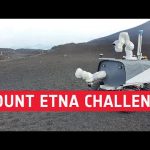
This concluding part of ESA’s ‘Analog-1’ project took place as part of a larger multi-agency, multi-rover campaign, organised by the @DLR. The Autonomous Robotic Networks to Help Modern Societies, ARCHES, project probed the ability of autonomous robots to collaborate and share data on a networked basis.
ESA’s four-wheeled, two-armed Interact rover was built by the Agency’s Human Robot Interaction Lab and modified for the rugged slopes of the volcano. This robot formed part of a team consisting of two DLR rovers – Lightweight Rover Units 1 and 2 – along with a fixed ‘lunar’ lander supplying WiFi and power to the rovers, plus a drone for surface mapping. The Karlsruhe Institute of Technology contributed the centipede-like Scout crawler, optimised for tough terrain, which could also serve as a relay between Interact and the lander, boosting its effective area of operations.
We are Europe’s gateway to space. Our mission is to shape the development of Europe’s space capability and ensure that investment in space continues to deliver benefits to the citizens of Europe and the world. Check out https://www.esa.int/ to get up to speed on everything space related.
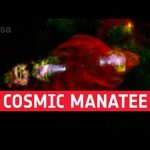
ESA’s XMM-Newton has X-rayed this beautiful cosmic creature, known as the Manatee Nebula, pinning down the location of unusual particle acceleration in its ‘head’.
The Manatee Nebula, or W50, is thought to be a large supernova remnant created when a giant star exploded around 30 000 years ago, flinging its shells of gases out across the sky. It is one of the largest such features known, spanning the equivalent size of four full Moons.
Unusually for a supernova remnant, a black hole remains in its core. This central ‘microquasar’, known as SS 433, emits powerful jets of particles travelling at speeds close to a quarter the speed of light that punch through the gassy shells, creating the double-lobed shape.
SS 433 is identified by the red dot in the middle of the image. The X-ray data acquired by XMM-Newton are represented in yellow (soft X-rays), magenta (medium energy X-rays) and cyan (hard X-ray emission), while red is radio and green optical wavelengths imaged by the Very Large Array and the Skinakas Observatory in Greece, respectively. @NASA NuSTAR and Chandra data were also used for the study (not shown in this image).
The nebula attracted attention in 2018 when the High-Altitude Water Cherenkov Observatory, which is sensitive to very high energy gamma-ray photons, revealed the presence of highly energetic particles (hundreds of tera electron volts), but could not pinpoint from where within the Manatee the particles were originating.
XMM-Newton was crucial in homing in on the region of particle acceleration in the X-ray jet blasting from the Manatee’s head, which begins about 100 light years away from the microquasar (represented by the magneta and cyan colours towards the left side SS 433) and extends to approximately 300 light years (coinciding with the radio ‘ear’ where the shock terminates).
Samar Safi-Harb of the University of Manitoba, Canada, who led the study, says “thanks to the new XMM-Newton data, supplemented with NuSTAR and Chandra data, we believe the particles are getting accelerated to very high energies in the head of the Manatee through an unusually energetic particle acceleration process. The black hole outflow likely made its way there and has been re-energized to high-energy radiation at that location, perhaps due to shock waves in the expanding gas clouds and enhanced magnetic fields.”
The nebula acts as a nearby laboratory for exploring a wide range of astrophysical phenomena associated with the outflows of many galactic and extragalactic sources and will be subject to further investigation. Furthermore, follow-up studies by ESA’s future Athena X-ray observatory will provide even more sensitive details about the inner workings of this curious cosmic Manatee.
Credits: S. Safi-Harb et al (2022)
★ Subscribe: http://bit.ly/ESAsubscribe and click twice on the bell button to receive our notifications.
We are Europe’s gateway to space. Our mission is to shape the development of Europe’s space capability and ensure that investment in space continues to deliver benefits to the citizens of Europe and the world. Check out https://www.esa.int/ to get up to speed on everything space related.
“After Euclid’s lifetime, it will just be floating in space. What if future beings found Euclid? How would they know anything about the humanity of the people?” – Tom Kitching, lead scientist of Euclid’s VIS instrument.
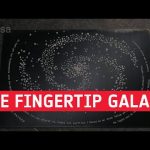
The team behind ESA’s Euclid mission has come together to create something special – a personal and collective galaxy-shaped fingerprint painting that has been attached to the spacecraft ready to launch into space. The collaborative nature of the artwork reflects the collaborative nature of the Euclid project overall; in both cases, people have come together to build something unique.
The Fingertip Galaxy was created by visual artist Lisa Pettibone and Euclid instrument scientist Tom Kitching. Since the very first fingerprint was pressed down in 2019, over 250 scientists and engineers have contributed to the piece of art.
So why a galaxy? Euclid is a galaxy-imaging machine that will observe billions of galaxies out to 10 billion light-years to make a 3D map of the Universe. The mission’s ultimate aim is to explore dark matter and dark energy.
“Although Euclid has always been beautiful in concept and materials, it didn’t really say anything about the people involved and humanity as a whole. We asked ourselves whether we could do something artistic that would speak to people,” says Lisa.
Scientists and engineers involved in Euclid were invited to dip their fingertips in paint and make their mark on a large piece of paper.
“We wanted something authentic, not perfect, and not shaped too much,” continues Lisa. “The result is a piece of art with a wonderful energy to it that captures all the energy of the people involved.”
The artwork was photographed and engraved onto a plaque using lasers at Mullard Space Science Laboratory – the same lasers that are used to etch parts for satellites. The plaque was fixed to Euclid and revealed at a ‘Goodbye Euclid’ event on 1 July 2022, when Euclid left Thales Alenia Space in Turin to head to Cannes for final testing as a complete system.
Euclid’s project scientist René Laureijs suggested adding text to the plaque to explain the thoughts behind it. Continuing the artistic nature of the project, poet Simon Barraclough wrote a dedicated poem, from which a short extract was chosen to be etched on to the plaque in a typewriter font that swirls around the galaxy of fingerprints. This video ends with Simon reading part of Since his poem.
Lisa summarises the Fingertip Galaxy: “It is adding an element of humanity to a dark, vast space, where as far as we can see there is no other intelligent life.”
Credit: Filmmaker/composer: Sam Charlesworth Fingertip Galaxy creators: Tom Kitching and Lisa Pettibone Poet: Simon Barraclough – ‘Unextraordinary Light (For Euclid)’ Special thanks: ESA, Euclid mission team, Mullard Space Science Laboratory Additional media: @NASA, Jeremy Perkins from unsplash.com
★ Subscribe: http://bit.ly/ESAsubscribe and click twice on the bell button to receive our notifications.
We are Europe’s gateway to space. Our mission is to shape the development of Europe’s space capability and ensure that investment in space continues to deliver benefits to the citizens of Europe and the world. Check out https://www.esa.int/ to get up to speed on everything space related.
Launching a new mission around the Moon, preparing the Space Launch System for its first flight, and undocking a resupply spacecraft from the space station … a few of the stories to tell you about – This Week at NASA!
This week’s edition of the Earth from Space programme features an impressive, wide-angled view of Patagonia and the Falkland Islands (Islas Malvinas), captured by the Copernicus Sentinel-3 mission.
We are Europe’s gateway to space. Our mission is to shape the development of Europe’s space capability and ensure that investment in space continues to deliver benefits to the citizens of Europe and the world. Check out https://www.esa.int/ to get up to speed on everything space related.
Twin solid rocket boosters that will produce a combined 7.2 million pounds of thrust at liftoff, a towering core stage, and the only human-rated spacecraft in the world capable of deep space travel – together, NASA’s Space Launch System rocket and Orion spacecraft stand ready to usher in a new chapter of exploration. Now fully assembled at Kennedy Space Center in Florida, SLS and Orion will soon launch on the uncrewed Artemis I mission around the Moon, paving the way for astronauts. Artemis I represents a new generation of spaceflight capabilities and partnerships that will take humans back to the Moon and beyond.
Producer: Lisa Allen, Alysia Lee Writer & Director: Paul Wizikowski
A 50-metre asteroid out there has lingered at the top of risk lists around the globe. Initial observations showed 2021 QM1 had a chance of striking Earth in 2052, and frustratingly, follow-up observations soon became impossible. Not only was it outshone by the Sun at a pivotal moment, but QM1 has been receding from view as it moves away from Earth in its current orbit.
ESA’s Near-Earth Object Coordination Centre together with the European Southern Observatory made finding and assessing the risk from 2021 QM1 a top priority, and this June they had a chance to capture the risky asteroid as it edged away from the brilliant Sun. Now extremely faint in the sky, it would take one of the best telescopes in the world to spot it, and if they do, it will be the faintest asteroid ever detected. Did the team find our risky asteroid? Will it, one day, find us?
★ Subscribe: http://bit.ly/ESAsubscribe and click twice on the bell button to receive our notifications.
We are Europe’s gateway to space. Our mission is to shape the development of Europe’s space capability and ensure that investment in space continues to deliver benefits to the citizens of Europe and the world. Check out https://www.esa.int/ to get up to speed on everything space related.
Watch the launch from New Zealand of CAPSTONE, a new pathfinder CubeSat that will explore a unique orbit around the Moon!
The Cislunar Autonomous Positioning System Technology Operations and Navigation Experiment, or CAPSTONE, will be the first spacecraft to fly a near rectilinear halo orbit (NRHO) around the Moon, where the pull of gravity from Earth and the Moon interact to allow for a nearly-stable orbit. CAPSTONE’s test of this orbit will lead the way for our future Artemis lunar outpost called Gateway.
CAPSTONE is targeted to launch at 5:55 a.m. EDT (9:55 UTC) Tuesday, June 28 on Rocket Lab’s Electron rocket from the company’s Launch Complex 1 in New Zealand.
A beautiful sequence of 56 images taken by the monitoring cameras on board the ESA/JAXA BepiColombo mission as the spacecraft made its second close flyby of its destination planet Mercury on 23 June 2022.
The compilation includes images from two monitoring cameras (MCAM) onboard the Mercury Transfer Module, which provides black-and-white snapshots at 1024 x 1024 pixel resolution. The MCAMs also capture parts of the spacecraft: MCAM-2 sees the Mercury Planetary Orbiter’s medium-gain antenna and magnetometer boom, while the high-gain antenna is in the MCAM-3 field-of-view.
The image sequences lasted about 15 minutes starting soon after closest approach to Mercury, which was at an altitude of 200 km. The first sequence showcases images taken by MCAM-2, starting from a distance of around 920 km from the surface of the planet and finishing at about 6099 km. The second sequence shows images from MCAM-3 covering a similar distance range (approximately 984 km – 6194 km).
Since MCAM-2 and MCAM-3 are located on either side of the spacecraft, and the image acquisition alternated quickly between the two cameras with about 15-20 seconds between them, the final sequence shows a composite of the two views, giving an impression of the complete planet receding behind the spacecraft.
During the flyby it was possible to identify various geological features that BepiColombo will study in more detail once in orbit around the planet. While craters dominate the landscape, numerous volcanic plains can also be made out, as well as roughly linear ‘scarps’ – cliff-like features created by tectonic faulting. In this flyby, the planet’s largest impact basin Caloris was seen for the first time by BepiColombo, its highly-reflective lavas on its floor making it stand out against the darker background as it rotated into the MCAM-2 field of view.
The gravity assist manoeuvre was the second at Mercury and the fifth of nine flybys overall. During its seven-year cruise to the smallest and innermost planet of the Solar System, BepiColombo makes one flyby at Earth, two at Venus and six at Mercury to help steer it on course to arrive in Mercury orbit in 2025. The Mercury Transfer Module carries two science orbiters: ESA’s Mercury Planetary Orbiter and JAXA’s Mercury Magnetospheric Orbiter. They will operate from complementary orbits to study all aspects of mysterious Mercury from its core to surface processes, magnetic field and exosphere, to better understand the origin and evolution of a planet close to its parent star.
We are Europe’s gateway to space. Our mission is to shape the development of Europe’s space capability and ensure that investment in space continues to deliver benefits to the citizens of Europe and the world. Check out https://www.esa.int/ to get up to speed on everything space related.
Looking to power surface exploration on the Moon, new imagery from the surface of Mars, and our newest flight directors … a few of the stories to tell you about – This Week at NASA!
Producer: Andre Valentine Editor: Sonnet Apple Music: Universal Production Music
0:00 Introduction 0:13 NASA Announces Artemis Concept Awards for Nuclear Power on Moon 0:48 Curiosity Captures Stunning Views of a Changing Mars Landscape 1:25 NASA Introduces New Flight Directors in Class of 2022 1:49 NASA Documentary Celebrates Black Space Explorers 2:33 Vice President Hosts NASA for Family STEM Event
In this week’s edition of the Earth from Space programme, the Copernicus Sentinel-2 mission takes us over Lake Balkhash, the largest lake in Central Asia.
We are Europe’s gateway to space. Our mission is to shape the development of Europe’s space capability and ensure that investment in space continues to deliver benefits to the citizens of Europe and the world. Check out https://www.esa.int/ to get up to speed on everything space related.
The Color of Space captures the personal stories of seven current and former Black astronauts, each selected to become part of NASA’s astronaut corps and train for space missions. Current NASA astronauts Stephanie Wilson, Victor Glover, Jeanette Epps, as well as retired astronauts Leland Melvin, Bernard Harris, Robert Curbeam, and Bobby Satcher, speak about their journeys and their motivations in a panel hosted by NASA Johnson Space Center Director Vanessa Wyche, the first Black woman to lead a NASA center.
They took the step to achieve the impossible, overcoming barriers and making space for others to follow. In this new documentary, be empowered by the remarkable stories of tenacity, courage, and motivation from the agency’s most decorated heroes. Learn about their path to NASA, their sources of inspiration, experiences in space, the importance of representation, the meaning of Juneteenth, and much more.
Originally held at Space Center Houston on March 25, the panel discussion marks the first time the seven astronauts have been assembled for an official NASA event.
The next prelaunch rehearsal before launch of our Artemis I Moon mission, news about some NASA astronomy missions, and a critical milestone for an Earth-observing satellite … a few of the stories to tell you about – This Week at NASA!
In this week’s edition of the Earth from Space programme, we explore part of the Glacier Bay National Park and Preserve, Alaska, with Copernicus Sentinel-2.
We are Europe’s gateway to space. Our mission is to shape the development of Europe’s space capability and ensure that investment in space continues to deliver benefits to the citizens of Europe and the world. Check out https://www.esa.int/ to get up to speed on everything space related.
An educational in-flight call with ESA astronaut Samantha Cristoforetti on board the International Space Station for teachers and students in Europe, connecting live with local events organised by ESERO Italy, ESERO Portugal and ESERO Luxembourg.
★ Subscribe: http://bit.ly/ESAsubscribe and click twice on the bell button to receive our notifications.
We are Europe’s gateway to space. Our mission is to shape the development of Europe’s space capability and ensure that investment in space continues to deliver benefits to the citizens of Europe and the world. Check out https://www.esa.int/ to get up to speed on everything space related.
One of the surprising discoveries coming out of Gaia data release 3, is that Gaia is able to detect starquakes – tiny motions on the surface of a star – that change the shapes of stars, something the observatory was not originally built for.
Previously, Gaia already found radial oscillations that cause stars to swell and shrink periodically, while keeping their spherical shape. But Gaia has now also spotted other vibrations that are more like large-scale tsunamis. These nonradial oscillations change the global shape of a star and are therefore harder to detect.
Nonradial oscillation modes cause a star’s surface to move while it rotates, as shown in the animation. Dark patches are slightly cooler than bright patches, giving rise to periodic changes in the brightness of the star. The frequency of the rotating and pulsating stars was increased 8.6 million times to shift them into the audible range of humans.
Credit: ESA/Gaia/DPAC, CC BY-SA 3.0 IGO. Acknowledgement: Animation and sonification were created by: Dr. Joey Mombarg, KU Leuven, Belgium. Based on information from Gaia Data Release 3: Pulsations in main-sequence OBAF stars as observed by Gaia by the Gaia Collaboration, De Ridder et al., 2022, submitted to A&A. Van Reeth et al. 2015, ApJS 218, id.2, 32 pp. Mombarg et al. 2021, A&A 650, id.A58, 23 pp.
★ Subscribe: http://bit.ly/ESAsubscribe and click twice on the bell button to receive our notifications.
We are Europe’s gateway to space. Our mission is to shape the development of Europe’s space capability and ensure that investment in space continues to deliver benefits to the citizens of Europe and the world. Check out https://www.esa.int/ to get up to speed on everything space related.
NASA will release the first full-color images and data from the James Webb Space Telescope on July 12. These images will demonstrate Webb’s capability to unfold the universe and provide views of the cosmos that humanity has never seen before. What questions do you have about these historic images?
Join Webb experts for a conversation where you can interact in real time. Have questions you want answered in Spanish? Tune in to a live Q&A at 1 p.m. EDT (17:00 UTC) on the NASA en español Facebook, Twitter and YouTube pages:
It’s time to #UnfoldTheUniverse. Watch as the mission team reveals the long-awaited first images from the James Webb Space Telescope. Webb, an international collaboration led by NASA with our partners the European Space Agency and the Canadian Space Agency, is the biggest telescope ever launched into space. It will unlock mysteries in our solar system, look beyond to distant worlds around other stars, and probe the mysterious structures and origins of our universe and our place in it.
Since its launch in 2013 ESA’s Gaia observatory has been mapping our galaxy from Lagrange point 2, creating the most accurate and complete multi-dimensional map of the Milky Way. By now two full sets of data have been released, the first set in 2016 and a second one in 2018. These data releases contained stellar positions, distances, motions across the sky, and colour information, among others. Now on 13 June 2022 a third and new full data set will be released. This data release will contain even more and improved information about almost 2 billion stars, Solar System objects and extragalactic sources. It also includes radial velocities for 33 million stars, a five-time increase compared to data release 2. Another novelty in this data set is the largest catalogue yet of binary stars in the Milky Way, which is crucial to understand stellar evolution.
We are Europe’s gateway to space. Our mission is to shape the development of Europe’s space capability and ensure that investment in space continues to deliver benefits to the citizens of Europe and the world. Check out https://www.esa.int/ to get up to speed on everything space related.
Our Artemis I mega Moon rocket is rolled to the launch pad, the astronauts of our Crew-2 mission come to Washington, and investigating the impact of dust on our climate … a few of the stories to tell you about – This Week at NASA!
In this week’s edition of the Earth from Space programme, the Copernicus Sentinel-1 mission takes us over Singapore, the only city-island-nation and one of the busiest ports in the world.
We are Europe’s gateway to space. Our mission is to shape the development of Europe’s space capability and ensure that investment in space continues to deliver benefits to the citizens of Europe and the world. Check out https://www.esa.int/ to get up to speed on everything space related.
This animated preview of flight VV21 illustrates gantry rollout and liftoff from Europe’s Spaceport in French Guiana, stage and fairing separations, and deployment of the Italian Space Agency’s LARES-2 scientific payload and six research CubeSats. Vega-C represents a dramatic capability boost compared to its predecessor, Vega, which has flown since 2012. With new first and second stages and an uprated fourth stage, Vega-C increases performance from Vega’s 1.5 t to about 2.2 t in a reference 700 km polar orbit and handles larger payloads.
We are Europe’s gateway to space. Our mission is to shape the development of Europe’s space capability and ensure that investment in space continues to deliver benefits to the citizens of Europe and the world. Check out https://www.esa.int/ to get up to speed on everything space related.
Satellite images of our planet have become essential to our survival, offering a new outlook of our world. With rising seas being one of the biggest threats to society, satellite altimeter missions such as Copernicus Sentinel-6 are essential in monitoring global and regional changes in sea level.
Unbeknown to many, the island of Crete, Greece, plays an important role in the Copernicus satellite altimetry constellation and on an international stage. Satellite altimetry data have to be continuously monitored at the ESA’s Permanent Facility for Altimetry Calibration where different techniques have pioneered the use of transponders to provide the best measurements to validate satellite altimeters in space soon after launch.
This documentary explains how measurements are taken from the top of the White Mountains to make sure users get the best data on sea height from satellite altimetry.
It features interviews with Craig Donlon, Head of ESA’s Earth Surfaces and Interior Earth and Mission Science Division and Stelios Mertikas, Director of Laboratory of Geodesy & Geomatics Engineering at the @Technical University of Crete.
We are Europe’s gateway to space. Our mission is to shape the development of Europe’s space capability and ensure that investment in space continues to deliver benefits to the citizens of Europe and the world. Check out https://www.esa.int/ to get up to speed on everything space related.
An important target date for the James Webb Space Telescope, an update about the next generation of spacesuits, and testing our lunar-roving robot … a few of the stories to tell you about – This Week at NASA!
We are Europe’s gateway to space. Our mission is to shape the development of Europe’s space capability and ensure that investment in space continues to deliver benefits to the citizens of Europe and the world. Check out https://www.esa.int/ to get up to speed on everything space related.
This Pride Month, NASA celebrates the significant contributions of LGBTQ+ employees, respects the individuality of our employees, and recognizes their contributions to advance NASA’s priorities.
We support the positive movement to promote self-affirmation, dignity, equal rights, build community and create awareness for diversity and gender variance.
At NASA, we support our employees’ authenticity in the workplace and treat authenticity with integrity. This includes pronoun usage and the shift to foster a culture based on the employee’s identification and build an inclusive workplace with pronoun usage as the rule for everyone. In an environment that promotes safety in being one’s whole self, employees can be seen, respected, and valued, which elevates collaboration, innovation, and performance.
Despite the obstacles in achieving full acceptance and protections for the LGBTQ+ community, the progress made over the past decades has been significant, yet the work continues. Together we rise to achieve our goals as one NASA.
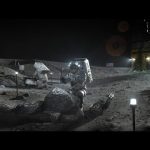
Live from Johnson Space Center in Houston, we’ll announce the company, or companies, that will move forward in developing the next generation of spacesuits for the International Space Station and for Artemis missions at the Moon.
Teams are developing new spacesuits to unlock new spacewalk capabilities outside the International Space Station and allow humans to explore the lunar surface. Under Artemis, new exploration spacesuits, together with human surface mobility systems, the Space Launch System rocket, the Orion Spacecraft, ground systems, Gateway, and human landing systems, will enable NASA to establish a long-term presence at the Moon and to eventually explore Mars.
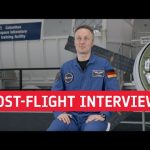
Interview with ESA astronaut Matthias Maurer after the conclusion of his 177-day mission on the International Space Station. During his time in orbit, Matthias supported over 35 European experiments and even more international experiments on board. The outcomes of these experiments will advance our knowledge in areas ranging from human health to materials science, benefiting life on Earth and the future of space exploration. Other highlights included his spacewalk to improve and maintain the Space Station.
We are Europe’s gateway to space. Our mission is to shape the development of Europe’s space capability and ensure that investment in space continues to deliver benefits to the citizens of Europe and the world. Check out https://www.esa.int/ to get up to speed on everything space related.
A commercial crew spacecraft’s historic test mission, recognizing the leadership of our James Webb Space Telescope team, and a small spacecraft prepares for a unique mission around the Moon … a few of the stories to tell you about – This Week at NASA!
Producer: Andre Valentine Editor: Sonnet Apple Music: Universal Production Music
0:00 Introduction 0:15 Boeing’s CST-100 Starliner’s Historic Test Mission 1:28 NASA’s Webb Program Director Named to TIME100 List 2:01 CAPSTONE CubeSat Prepares for Lunar Flight 2:41 NASA-Supported Solar Sail Could Take Science to New Heights 3:09 Ingenuity Mars Helicopter Captures Video of Record Flight
Earth’s oceans are huge heat stores, soaking up 93% of the excess heat from human activity over the past 70 years. Ocean currents redistribute heat around the planet, from the Equator to the poles. Where this ocean heat goes influences weather patterns and regional climate. As well as absorbing heat, oceans are a natural carbon sink, absorbing a quarter of carbon dioxide emissions from human activity. This has led to the acidification of ocean water, threatening marine life.
The amount of heat and carbon dioxide absorbed depends on a number of ocean variables, all of which can be measured from space.
We are Europe’s gateway to space. Our mission is to shape the development of Europe’s space capability and ensure that investment in space continues to deliver benefits to the citizens of Europe and the world. Check out https://www.esa.int/ to get up to speed on everything space related.
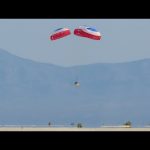
Watch the landing of Boeing’s uncrewed Starliner, targeted at 6:49 p.m. EDT (22:49 UTC) at White Sands Space Harbor at the U.S. Army’s White Sands Missile Range in New Mexico. This return to Earth will wrap up the six-day Orbital Flight Test-2, which will provide valuable data toward NASA certifying Boeing’s crew transportation system for regular flights with astronauts to and from the International Space Station.
Boeing’s Starliner launched to the space station on Thursday, May 19 aboard a United Launch Alliance Atlas V rocket, and docked to the orbiting laboratory on Friday, May 20. The crew opened Starliner’s hatch on Saturday, May 21. The spacecraft will return home with more than 600 pounds of cargo, including Nitrogen Oxygen Recharge System reusable tanks that provide breathable air to station crew members. The tanks will be refurbished on Earth and sent back to station on a future flight.
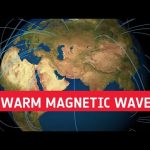
Using information from ESA’s Swarm satellite mission, scientists have discovered a completely new type of magnetic wave that sweeps across the outermost part of Earth’s outer core every seven years. This fascinating finding opens a new window into a world we can never see. This mysterious wave oscillates every seven years and propagates westward at up to 1500 kilometres a year.
We are Europe’s gateway to space. Our mission is to shape the development of Europe’s space capability and ensure that investment in space continues to deliver benefits to the citizens of Europe and the world. Check out https://www.esa.int/ to get up to speed on everything space related.
The next commercial crew test mission to the space station, outlining the agency’s objectives for deep space exploration, and covering the total lunar eclipse on Earth and from space … a few of the stories to tell you about – This Week at NASA!