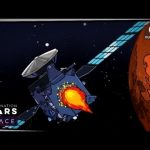
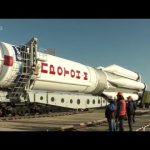
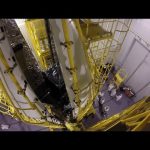
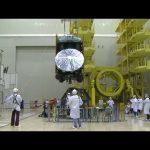
Bajkonur, a Csillagváros a kazah sztyeppéken, az űrkutatás történelmi helyszíne, ahonnan az első ember felszállt az űrbe – itt kezdődik az Exomars-kaland.
A megfigyelőplatform három kilométerre van a kilövőállástól. Európai és orosz mérnökök figyelik, hogyan indulnak el az általuk éveken át tervezett és épített műszerek a Marsra.
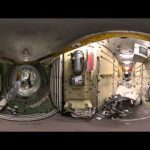
Explore the heart of the Russian segment of the International Space Station in this global view.
This 360° panorama allows you to explore the International Space Station’s third module, Zvezda. Launched on 12 July 2000, the Russian module supplies life support for the Station and crewquarters. All five of Europe’s Automated Transfer Vehicles docked with the module.
The images to create this view were taken by ESA astronaut Samantha Cristoforetti during her Futura mission in 2015; the cosmonaut in the picture is Gennady Padalka.
Explore Zvezda in Flickr, Facebook or YouTube format with your mobile phone and virtual-reality headset, or take the full tour including all Space Station modules with videos and extra information below. We will release a new Space Station module in 360° every week on Thursday.
In the third act of “Swan Lake”, the Black Swan pulls off a seemingly endless series of turns, bobbing up and down on one pointed foot and spinning around and around and around … thirty-two times. How is this move — which is called a fouetté — even possible? Arleen Sugano unravels the physics of this famous ballet move.
Lesson by Arlene Sugano, animation by Dancing Line Productions.
Pascal Lecomte speaks about the history and the aims of the ESA Climate Office which is located in Harwell, Oxfordshire. He also explains how he began and pursued his career with ESA.
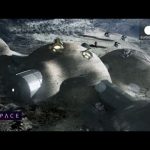
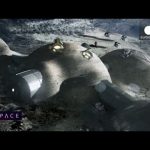
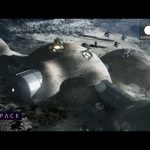
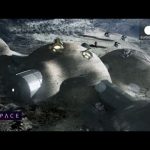
Almost 50 years since man first walked on the lunar surface, the head of the European Space Agency explains his vision for living and working on the Moon.
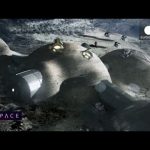
Johann-Dietrich Woerner believes the next giant leap for humankind could be an international collaboration of space faring nations in the form of a Moon village. This village would be a permanent lunar base for science, business, tourism or even mining.
Woerner explains how using the Moon’s own natural resources could help build and sustain a base by 3D printing a structure or building element. Robotic rovers could inflate protective domes for astronauts. He also discusses the potential hazards of living on the Moon as well as the possible locations of he lunar base and the advantages of a new global space project.
Read the Tomorrow Daily show notes – http://cnet.co/22EfCbR
An incredibly detailed and realistic facial tracking and animation project; also, a robot at SXSW agrees with a human query to wipe out humanity.
Gyroscopes form an important in keeping the International Space Station and satellites pointing the right way as they orbit our planet.
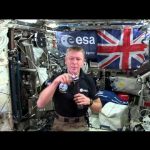
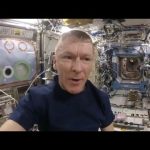
ESA astronaut Tim Peake shows how gyroscopes can be used to keep spacecraft stable during his six-month Principia mission.
There is no up or down in space. Satellites track their pointing direction using the same approach as on submarines and aircraft: fast-spinning gyroscopes that maintain a fixed orientation in the same way as a child’s spinning top. The International Space Station has four big gyroscopes which are used for stabilization of the Station.
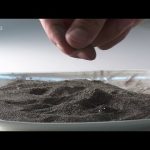
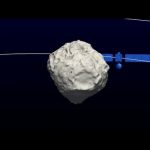
ESA’s Asteroid Impact Mission and the US Double Asteroid Redirection Test together make up AIDA – the Asteroid Impact and Deflection Assessment (AIDA), a pioneering planetary defence test that will attempt to shift the orbit of an asteroid in 2022. Artist Didi Rodan performed a unique depiction of this initiative in sand, a highlight of a recent conference on AIM hosted by the GMV company in Madrid.
“If I have seen further, it is by standing on the shoulders of giants” is the famous quote by renowned scientist Sir Isaac Newton. This is particularly apt as a title for this video summary of ESA astronaut Tim Peake’s Principia mission – named after Newton’s monumental work Philosophiae Naturalis Principia and now building on the work of previous European astronaut missions, while being supported by a huge team of scientists and engineers on the ground.
The music accompanying this video was chosen by Tim, coming from the soundtrack of one of his favourite films, the 2004 movie Layer Cake. This piece is called ‘Drive to the Boatyard’, by internationally known British film composer Ilan Eshkeri. Ilan provided a slightly extended piece specially for ESA.
Tim comments: “I’m delighted with this video, which captures the essence of human spaceflight and natural beauty of our planet from space – all put to Ilan’s inspiring soundtrack!”
Does gravity change the color of light all around you? Einstein thought so. Did this ingenious experiment proved him right?
Subscribe: http://youtube.com/whatthephysics?sub…
↓Want more info?↓
Special thanks:
Tyler Howe
Ari Daniel
Paul Horowitz
Sara Tewksbury
Seeta Joseph
Karishma Desai
Lauren Aguirre
Kristine Allington
Allison Eck
Lauren Miller
Stuart McNeil
Danish ESA astronaut Andreas Mogensen congratulates the European Space Camp on its 20th Anniversary. The first Space Camp took place at the Andøya Space Center, Norway, in 1996, with 20 participants from across Scandinavia in attendance. After this initial success, the European Space Camp quickly became an annual event and over the past 20 years, has attracted over 440 participants from over 30 countries across the world.
During the space camp, students go through every aspect of a rocket launch campaign, including building internal circuitry for a rocket, telemetry, and launching a fully-fledged sounding rocket at the end of the week. Participants attend lectures from some of Europe’s top scientists and researchers on topics as diverse as the Large Hadron Collider at CERN to the physics behind aurora. At the end of an unforgettable week, a multitude of social activities await the participants, including a sea safari, mountain hiking or swimming under the midnight sun.
Two ESA scholarships are available for the European Space Camp 2016 for all applicants with a nationality from an ESA Member State or Cooperating State.Apply now at http://www.spacecamp.no/.
During a March 10 hearing of the U.S. Senate Appropriations Subcommittee on Commerce, Justice, Science and Related Agencies, NASA Administrator Charlie Bolden testified about the $19 billion dollar Fiscal Year 2017 budget proposed for the agency by President Obama. In his remarks, the Administrator outlined the many benefits that this investment in NASA’s present will yield for the future. The funding will enable a future where we send American astronauts to Mars in the 2030s; where more Americans work in good-paying Science, Technology, Engineering and Math (STEM) based careers; where future generations can breathe cleaner air, drink cleaner water, and fly on cleaner, greener, more fuel-efficient aircraft; and a future where humankind has a deeper understanding of our universe, our place in it, and our own planet. Also, First SLS Flight Engine Test, New SLS Rocket Test Stand “Topped Out”, Crew Previews Upcoming Mission to ISS, Total Solar Eclipse, and Dawn’s Anniversary Image of Ceres
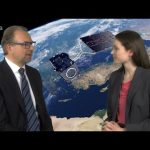
Earth from Space is presented by Kelsea Brennan-Wessels from the ESA Web-TV virtual studios. The Mediterranean island of Cyprus is featured in the one hundred seventy-seventh edition.
Explore the Space Station’s first module with your mobile phone or virtual-reality headset
This 360° video allows you to explore the International Space Station’s first module, Zarya. Launched on 20 November 1998, it was joined three weeks later by the US Unity module. Also known as the Functional Cargo Block, the module is now mainly used for storage.
ESA astronaut Samantha Cristoforetti took the pictures to form these images in June 2015 at the end of her 199-day Futura mission.
Explore this module in Flickr, Facebook or Youtube format with your mobile phone or take the full International Space Station tour on the ESA website with videos and extra information.
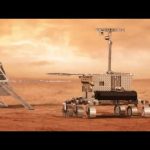
The ExoMars 2016 spacecraft will build on past missions to Mars. From the pioneering Viking missions onwards, our knowledge of Mars has been transformed and we now have an extraordinarily detailed picture of the planet. There are dust storms, polar ice caps and four distinct seasons. Mars has the largest volcanic mountain in our solar system and a canyon stretching over 5000 kilometres.
This film covers what we have learnt in particular from Europe’s Mars Express mission. Since its arrival in 2003, it has found evidence of water on Mars, discovered methane in the planet’s atmosphere, mapped the structure and composition of the south polar ice cap, discovered auroras and made the closest ever flybys of Phobos, one of Mars’ two moons. Mars Express also helped scientists select the landing site for the NASA Mars Curiosity rover, which arrived in Gale crater in 2012.
More remains to be learnt from Mars. Not least, whether the methane results from geological activity or past or present life.
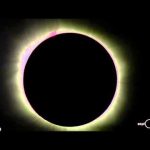
NASA collaborated with the Exploratorium in San Francisco and the National Science Foundation to provide live coverage of the 2016 total solar eclipse from Micronesia, on March 8. The fully eclipsed sun was visible from only a few Pacific islands, but the live broadcast made the phenomenon available to millions of people around the world.
Discover more about our planet with the Earth from Space video programme. In this special edition, ESA’s Josef Aschbacher joins the show to discuss the past, present and future of the Copernicus environment monitoring programme and its Sentinel satellites.
The return of supersonic passenger air travel is one step closer to reality with NASA’s award of a contract for the preliminary design of a “low boom” flight demonstration aircraft. This is the first in a series of ‘X-planes’ in NASA’s New Aviation Horizons initiative, introduced in the agency’s Fiscal Year 2017 budget.
NASA Administrator Charles Bolden announced the award at an event Monday at Ronald Reagan Washington National Airport in Arlington, Virginia.
Participants:
NASA Administrator, Charlie Bolden
Associate Administrator, Jaiwon Shin
David Melcher of the Aeronautic Industry Association
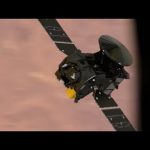
On 14 March at 09:31 GMT ExoMars 2016 will be launched from Baikonur onboard a Proton rocket.
The joint European and Russian ExoMars mission will test key exploration technologies and search for evidence of methane and other rare gases in the Martian atmosphere. These gases could result from geological processes or they could be signatures of current biological activity on the planet.
This film examines the two European science instruments on the ExoMars Trace Gas Orbiter (TGO) – CaSSIS and NOMAD. The high-resolution CaSSIS (Colour and Stereo Surface Imaging System) acts as the orbiter’s scientific eye. It is a telescope with a sophisticated detector that can provide colour and stereo images over a nine and a half kilometre wide strip. CaSSIS will examine recurring slope linea – dark lines on the surface of Mars at different times of the day over the planet’s seasons. These linea are believed to be associated with liquid brine. They increase in size during the Martian spring and summer and fade away during autumn and winter.
NOMAD (Nadir and Occultation for MArs Discovery) will be the first high resolution instrument of its kind around the planet. It will observe information about Mars’ atmosphere by looking at the Sun during sunsets and sunrises. It contains three spectrometers – two working in the infrared and one in ultraviolet – and can identify trace gases in the atmosphere, such as methane. The presence of methane in Mars’ atmosphere could result from simple life forms like microbes.
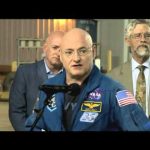
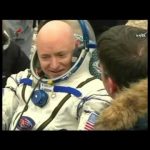
After spending nearly a year aboard the International Space Station — conducting a host of biomedical and psychological research on the impacts of long-duration spaceflight on the human body, NASA’s Scott Kelly and Mikhail Kornienko of the Russian space agency Roscosmos wrapped up their historic mission on March 1 – with a safe parachute landing in Kazakhstan . Just over a day, later – at Houston’s Ellington Field, near Johnson Space Center, a host of family, colleagues and VIPs welcomed Kelly back to the United States, including Second Lady of the United States Dr. Jill Biden, Assistant to the President for Science and Technology Dr. John P. Holdren, and NASA Administrator Charles Bolden. There were cheers, embraces and expressions of appreciation for his efforts to help advance deep space exploration and America’s Journey to Mars. Also, Next ISS crew heads to launch site, “Low boom” aircraft, Orion Service Module’s solar array wing deployment and more!
Earth from Space is presented by Malì Cecere from the ESA Web-TV virtual studios. The one hundred seventy-sixth edition features a Sentinel-2A image of Utah in the US.
This timelapse video shows Sentinel-3A, from final preparations to liftoff on a Rockot launcher from the Plesetsk Cosmodrome in northern Russia, at 17:57 GMT (18:57 CET) on 16 February 2016.
Sentinel-3A is the third satellite to be launched for Europe’s Copernicus environment monitoring programme.
Designed as a two-satellite constellation – Sentinel-3A and -3B – the Sentinel-3 mission carries a series of cutting-edge instruments for systematic measurements of Earth’s oceans, land, ice and atmosphere. Over oceans, Sentinel-3 measures the temperature, colour and height of the sea surface as well as the thickness of sea ice. These measurements will be used, for example, to monitor changes in sea level, marine pollution and biological productivity. Over land, this innovative mission will monitor wildfires, map the way land is used, provide indices of vegetation state and measure the height of rivers and lakes.
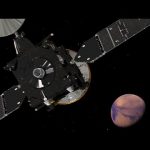
The ExoMars 2016 spacecraft – consisting of the Trace Gas Orbiter (TGO) and the Schiaparelli entry, descent and landing demonstrator – is in Baikonur, Kazakhstan, preparing for its mid-March launch on a Russian Proton rocket.
This joint European and Russian mission will test key exploration technologies and search for evidence of methane and other rare gases in the martian atmosphere. These gases could result from geological processes or they could be signatures of current biological activity on the planet. Three days before reaching Mars in October, Schiaparelli will separate from the orbiter and coast towards the planet in hibernation mode to reduce power consumption.
This video covers the journey, the orbit of the Trace Gas Orbiter, the separation of the Schiaparelli lander and its 20 000 km/hour descent and eventual landing. It also contains filming at ESA’s European Space and Technology Centre (ESTEC) Mars Yard in the Netherlands.
Learning more about Mars’ water and environment will shed further light on this planet – while knowing the origin of its methane could finally answer the exciting question of whether there is life on Mars.
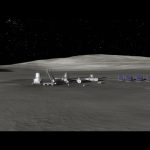
Jan Woerner, Director General of the European Space Agency, has a bold new vision for space exploration. “My intention is to build up a permanent base station on the Moon,” he tells Euronews from the agency’s main control room in Darmstadt. “Meaning that it’s an open station, for different member states, for different states around the globe.”
Mankind has never had a permanent lunar presence, and so this new vision, that Woerner likes to call the ‘Moon village’, would represent a giant leap in space exploration.
Le directeur général de l’Agence spatiale européenne dit vouloir construire une base permanente sur la Lune. Ce projet incroyable prend peu à peu forme à mesure que les scientifiques européens commencent à sérieusement y réfléchir. Nous avons rencontré quelques-uns de ceux qui pourraient faire de ce rêve, une réalité, notamment au Centre européen des astronautes à Cologne.
“J’ai l’intention de construire une base permanente sur la Lune : ce sera une station ouverte pour différents Etats participants, des pays des quatre coins du monde,” explique posément le nouveau directeur général de l’Agence spatiale européenne.
Die Europäische Weltraumorganisation ESA will ein tollkühnes Projekt in Angriff nehmen: Sie will ein Dorf auf dem Mond bauen. Die permanente Station soll an dem Ort entstehen, an dem einst die Russen landeten und die Amerikaner erste Schritte machten. ESA-Chef Jan Woerner hat eine Vision: “Ich will eine permanente Mondstation bauen. Es wäre eine offene Station für mehrere Länder aus der ganzen Welt.”
Die Apollo-Ära hat gezeigt, dass Träume Wirklichkeit werden können. Die Forscher damals hatten ein klares Ziel vor Augen: die Mondlandung. ESA-Astronaut Andreas Mogensen scheint zuversichtlich: “In den 1960er Jahren haben sie das innerhalb von zehn Jahren geschafft. Heute sind wir technologisch gesehen viel weiter. Wir können es also noch einmal machen.”
Die Mondstation würde die Internationale Raumstation, ISS, ablösen. Sie wäre das neue gemeinsame Raumfahrt-Projekt, an dem alle teilnehmen könnten. “Die Amerikaner, die Russen, die Chinesen, die Inder und die Japaner werden mitmachen. Und andere Länder werden ebenfalls etwas beisteuern,” so Woerner.
– Feltett szándékom egy állandó bázisállomás építése a Holdra – mondja az Európai Űrügynökség vezetője, Jan Woerner. – Ez egy közös bázis lenne a partnereinkkel, amit a világ más országaival közösen építenénk és használnánk. Benne lesznek az amerikaiak, az oroszok, a kínaiak az indiaiak, a japánok és kisebb hozzájárulással más országok is.
A jelenlegi helyzetben a Holdbázis álomnak tűnik – de az Apolló-program során már kiderült, hogy megfelelő költségvetés mellett óriási technológiai ugrások lehetségesek. A tervek szerint ez lenne az új globális űrprojekt a Nemzetközi Űrállomás után.
Tornare sulla Luna? La prossima tappa dell’esplorazione spaziale, dopo l’esperienza della Stazione Spaziale Internazionale, prevede molto di più. L’Agenzia spaziale europea ha un nuovo obiettivo: costruire una base permanente sulla luna.
I russi furono i primi a lanciare una missione sulla luna mentre gli americani i primi a camminare sulla sua superficie. Oggi la luna continua ad essere al centro di ambiziose ricerche come ci conferma anche il direttore generale dell’Agenzia spaziale europea Jan Wörner. Una base internazionale, una stazione aperta ai diversi Stati membri dell’Agenzia e ai paesi di tutto il mondo.
Un sogno animato dalla stessa passione che ha portato il primo uomo sulla Luna. Certo finora nessuno ha mai realizzato un progetto simile. Dalla missione spaziale Apollo sono stati fatti passi da gigante.
O homem que está à frente da Agência Espacial Europeia (ESA) tem um ambicioso objetivo: construir uma base permanente na Lua. É no Centro Europeu de Astronautas em Colónia, na Alemanha, que estão a ser dados os primeiros passos nessa direção.
Em 1959, os russos conseguiram aterrar uma nave não tripulada na Lua; dez anos mais tarde, os americanos passearam na sua superfície. Hoje em dia, o plano é ficar. _”O meu objetivo é construir uma base permanente na Lua. Uma estrutura aberta à participação de diferentes países”_, declara Jan Wörner, diretor geral da ESA. A ideia é criar um projeto global à semelhança da Estação Espacial Internacional.
O Centro Europeu de Astronautas em Colónia organizou um workshop precisamente sobre como erguer uma espécie de pequena aldeia sobre a superfície lunar. A presença de certos metais, minerais e de água gelada pode representar um contributo valioso. Segundo Bernard Foing, diretor do Grupo Internacional de Exploração Lunar, _”a Lua tem imensos recursos. Encontrámos gelo nos polos, encontrámos áreas que estão quase constantemente expostas ao Sol. São zonas que nos podem fornecer recursos para utilizarmos na construção ou na manutenção da vida dos astronautas na base lunar.”_
La nueva cúpula de la Agencia Espacial Europea (ESA) quiere construir una base permanente en la Luna. El lugar donde hace medio siglo los rusos llegaron por primera vez y los estadounidenses dieron sus primeros pasos. Se trata de un proyecto muy ambicioso en el que ya está trabajando el Centro Europeo de Astronautas con sede en la ciudad alemana de Colonia.
“Mi intención es construir una base permanente en la luna, una estación abierta a diferentes estados miembros de todo el mundo”, asegura Jan Woerner, director de la ESA.
Aboard the International Space Station, Expedition 46 Commander Scott Kelly of NASA reflected on his year aboard the orbital laboratory and the accomplishments he and Russian cosmonaut Mikhail Kornienko of Roscosmos have chalked up during their year-long mission in an in-flight interview recorded Jan. 28 with NASA Public Affairs Officer Rob Navias of the Johnson Space Center in Houston. Kelly and Kornienko are scheduled to land March 1, U.S. time (March 2, Kazakhstan time) in a Russian Soyuz spacecraft to complete a 340-day mission in which they collected valuable biomedical data on the long duration effects of weightlessness that will be used to formulate a human mission to Mars.
Ever wondered what happens inside the International Space Station during a reboost? ESA astronaut Tim Peake filmed inside during last week’s firing of the Progress thrusters.
Even at 400 km, there are still enough molecules of the atmosphere to create some ‘atmospheric drag’, which causes the Station to drop by about 2 km a month. Because of this we need to raise the Station’s orbit every so often. On 17 February the engines of the Progress M-29M spacecraft that is docked to the aft port of the Zvezda module were fired for 11 minutes.
The burn primarily focused on raising the Station’s perigee, making the orbit more circular.
Pre-reboost: 398.2 x 407.4 km – inclination 51.64° – Period: 92.62min
Post-reboost: 402.1 x 406.9 km – inclination 51.64° – Period: 92.66min
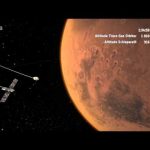
The paths of the ExoMars 2016 Trace Gas Orbiter (TGO) and the Schiaparelli entry, descent and landing demonstrator module arriving at Mars on 19 October (right and left, respectively). The counter begins at the start of a critical engine burn that TGO must conduct in order to enter Mars orbit. The altitude above Mars is also indicated, showing the arrival of Schiaparelli on the surface and the subsequent trajectory of TGO. The orbiter’s initial 4-day orbit will be about 250 x 100 000 km. Starting in December 2016, the spacecraft will perform a series of aerobraking manoeuvres to steadily lower it into a circular, 400 km orbit (not shown here).
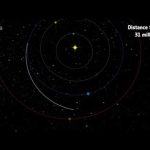
The journey that the ExoMars 2016 spacecraft will take from Earth to Mars. ‘Distance to Mars’ is the straight-line distance between the spacecraft and Mars, and not the actual distance that the spacecraft will travel.
The mission is scheduled for launch in the 14–25 March window. The Trace Gas Orbiter and the Schiaparelli entry, descent and landing demonstrator module will separate on 16 October. Schiaparelli is set to enter the martian atmosphere on 19 October, while TGO will enter orbit around Mars.
Animation visualising milestones during the launch of the ExoMars 2016 mission and its cruise to Mars. The mission comprises the Trace Gas Orbiter and an entry, descent and landing demonstrator module, Schiaparelli, which are scheduled to be launched on a four-stage Proton-M/Breeze-M rocket from Baikonur during the 14–25 March 2016 window.
About ten-and-a-half hours after launch, the spacecraft will separate from the rocket and deploy its solar wings. Two weeks later, its high-gain antenna will be deployed. After a seven-month cruise to Mars, Schiaparelli will separate from TGO on 16 October. Three days later it will enter the martian atmosphere, while TGO begins its entry into Mars orbit.
ESA’s European Astronaut Centre (EAC) in Cologne, Germany, trains and prepares astronauts for their missions into space. This video details how EAC is preparing astronauts and technology for missions to the Moon as part of their SpaceShip EAC programme.
During his Feb. 9 State of NASA speech at Langley Research Center in Hampton, Va, Administrator Charles Bolden characterized President Obama’s $19 billion Fiscal Year 2017 budget proposal for NASA as a vote of confidence and an indication of the agency’s strength. Bolden noted that the investments in the FY2017 budget proposal will empower NASA to continue to work with partners both in and out of government to develop the technologies that drive exploration – to build an even stronger future in which NASA continues reaching for new heights for the benefit of all humankind. Also, Space station one-year crew update, Increased land water slows sea level rise, Gravitational waves detected, and more!
15 months after Philae made its historic landing on a comet, its legacy is enormous even if Rosetta’s lander is facing eternal hibernation.
Mission teams are now looking ahead to the grand finale: making a controlled impact of the Rosetta orbiter on the comet next September.Rosetta arrived at Comet 67P/Churyumov–Gerasimenko on 6 August 2014 and Philae was delivered to the surface on 12 November. After touching down Philae bounced several times and completed 80% of its planned first science sequence before falling into hibernation.
A contact was made with the lander on 13 June and intermittent contacts were made up to 9 July. However the results of Philae mission are unique and complement all the science harvested by the orbiter Rosetta who is continuing its quest before being sent directly to the surface of 69P late September.