Where is the best place to find living life beyond Earth? It may be a small, ice-covered moon of Jupiter or Saturn that harbors some of the most habitable real estate in our Solar System. Life loves liquid water and these moons have lots of it! Dr.Kevin Hand, Deputy Chief Scientist for Solar System Exploration at NASA’s Jet Propulsion Laboratory explains the science behind how these oceans exist and what we know about the conditions on these worlds. Dr. Hand focuses on Jupiter’s moon Europa, which is a top priority for future NASA missions and shows how the exploration of Earth’s ocean is helping our understanding of the potential habitability of worlds.
Blog
-

NASA Announces Latest Progress, Upcoming Milestones in Hunt for Asteroids
NASA is on the hunt for an asteroid to capture with a robotic spacecraft, redirect to a stable orbit around the moon, and send astronauts to study in the 2020s — all on the agency’s human Path to Mars. Agency officials announced on Thursday recent progress to identify candidate asteroids for its Asteroid Redirect Mission (ARM), increase public participation in the search for asteroids, and advance the mission’s design.
NASA plans to launch the ARM robotic spacecraft in 2019 and will make a final choice of the asteroid for the mission about a year before the spacecraft launches. NASA is working on two concepts for the mission: the first is to fully capture a very small asteroid in open space, and the second is to collect a boulder-sized sample off of a much larger asteroid. The agency will choose between these two concepts in late 2014 and further refine the mission’s design.NASA’s Spitzer Space Telescope made recent observations of an asteroid, designated 2011 MD, which bears the characteristics of a good candidate for the full capture concept. While NASA will continue to look for other candidate asteroids during the next few years as the mission develops, astronomers are making progress to find suitable candidate asteroids for humanity’s next destination into the solar system.
-
Earth from Space: Special edition
Discover more about our planet with the Earth from Space video programme.
In this special edition, Nils Olsen from DTU Space joins the show to discuss the latest measurements of Earth’s magnetic field and changes observed over the last six months by ESA’s Swarm mission.
-
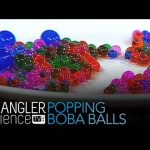
Popping Boba Balls – Cool Science Experiment
It’s a popular topping at your local frozen yogurt store… popping boba balls. But how to do make them? Our science guy, Steve Spangler, introduces us to a kind of food science that is sweeping trendy restaurants throughout the country.
Want more experiments like this? Check out http://www.stevespanglerscience.com/experiments
© 2014 Steve Spangler, Inc. all rights reserved About Steve Spangler Science…
Steve Spangler is a celebrity teacher, science toy designer, speaker, author and an Emmy award-winning television personality. Spangler is probably best known for his Mentos and Diet Coke geyser experiment that went viral in. Spangler is the founder of www.SteveSpanglerScience.com, a Denver-based company specializing in the creation of science toys, classroom science demonstrations, teacher resources and home for Spangler’s popular science experiment archive and video collection. Spangler is a frequent guest on the Ellen DeGeneres Show and Denver 9 News where he takes classroom science experiments to the extreme. For teachers, parents or DIY Science ideas – check out other sources of learning:
Join the Science Club and check out other cool science experiments at – http://www.SteveSpanglerScience.com
Sign up to receive a FREE Experiment of the Week- http://www.stevespanglerscience.com/experiment-of-the-week
Attend a Spangler Hands-on Science Workshop for Teachers – http://www.stevespanglerscience.com/training
Watch Steve on Local and National Media Appearances on YouTube at: https://www.youtube.com/user/SpanglerScienceTV
-
Avamposto42, si inizia
Benvenuti all’avamposto42, questo e’ il primo messaggio di Samantha Cristoforetti, dal centro di addestramento EAC a Colonia, dove si sta preparando per la sua partenza verso la Stazione Spaziale Internazionale. Samantha e’ la prossima astronauta italiana ad affrontare una missione spaziale di lunga durata dove sara’ in contatto con noi per tutto il tempo grazie al suo avamposto, a mezza via tra la Terra e lo Spazio.
-
Inertia Ring – Sick Science! #195
BUY INERTIA RINGS HERE: http://www.stevespanglerscience.com/yellow-rings.html
See the full experiment here: http://www.stevespanglerscience.com/lab/experiments/inertia-ring
Do you think you can successfully perform the Steve Spangler Science inertia challenge? Balance a yellow ring on the mouth of an empty 1 or 2 liter bottle and place a hex nut or other heavy object on top of the ring. When the yellow ring is removed, the hex nut will drop straight into the bottle. It might take a little bit of practice, but you’ll get it. Inertia rings are a perfect tool for introducing students to physics, motion, and inertia.
Want more experiments like this? Check out http://www.stevespanglerscience.com/product/naked-eggs-and-flying-potatoes
Sick Science™ is a trademark of Steve Spangler, inc.
© 2014 Steve Spangler Science all rights reserved
-
The James Webb Space Telescope described by Peter Cullen
Voice actor Peter Cullen, known for bringing to film and television numerous characters including Optimus Prime of “Transformers”,
Disney’s Eeyore and many more, describes NASA’s next generation space telescope. -
ESA Euronews: Gol via satellite
I Mondiali di calcio sono in corso e milioni le immagini dal Brasile arriveranno in tutto il mondo grazie alla tecnologia spaziale. Migliaia di fan vi assisteranno personalmente, ma si stima che più di 3,2 miliardi di persone (ovvero quasi la metà della popolazione del pianeta) ne seguiranno almeno una parte in tv. La Coppa del Mondo viene diffusa con quella che gli operatori satellitari come SES, qui in Lussemburgo, chiamano trasmissione per ‘uso occasionale’. Si tratta della banda supplementare adibita alla copertura di eventi speciali in diretta. Ed è uno spazio molto affollato. “Indipendentemente da quale sia la tecnologia usata nelle case per ricevere la tv” afferma Xavier Lobao, dell’ESA “si utilizzano i satelliti.”
Credits: ESA/Euronews
-
ESA Euronews: Partilhando golos via satélite
Com a chegada do Mundial o planeta irá recorrer à tecnologia espacial para reproduzir os acontecimentos em direto, a partir do Brasil. Milhares de adeptos testemunharão o evento ao vivo, mas são muitos mais os que irão assistir a tudo através da televisão. Estima-se que mais de 3,2 mil milhões de pessoas acompanhem a cobertura televisiva – quase metade da população do planeta terra. O Campeonato do Mundo é transmitido através do que os operadores de satélite chamam de transmissão de “uso ocasional.” É esse o nome para largura de banda alocada juntamente com transmissões regulares para cobrir eventos especiais em direto. O período de duração do Mundial será atarefado. “Independentemente da tecnologia usada nas casas para receber sinal de televisão, os satélites serão utilizados”, sublinha Xavier Lobao, chefe de Projetos de Telecomunicações Futuras na Agência Espacial Europeia.
Credits: ESA/Euronews
-
NASA Spinoff with Seth Green
Actor Seth Green discusses products and technology derived from NASA research, often called “spinoffs”, that are being used to improve life on Earth.
A spinoff is a commercialized product that incorporates NASA technology or NASA “know how” and benefits the public.
Spinoffs promote commercial activity, encourages economic growth, and stimulates innovation in business and commerce.www.spinoff.nasa.gov
-
Electric Cornstarch – Sick Science! #194
Want more experiments like this? Check out http://www.stevespanglerscience.com/product/naked-eggs-and-flying-potatoes
Sick Science™ is a trademark of Steve Spangler, inc.
© 2014 Steve Spangler Science all rights reserved
-
Earth from Space: Mount Kenya
Earth from Space is presented by Kelsea Brennan-Wessels from the ESA Web-TV virtual studios. Explore Mount Kenya and the surrounding national park in the one-hundred-eighth edition.
See also http://www.esa.int/spaceinimages/Images/2014/06/Mount_Kenya to download the image.
-
Colorful Coins – Sick Science! #193
Find out what is happening here: http://www.stevespanglerscience.com/lab/experiments/colorful-coins
If you’ve ever needed to clean a coin like a nickel or a dime, you might have used vinegar. That’s a perfect combination, unless you forget to dry the vinegar off of the coin! With the Colorful Coins activity, you’ll see how there is more to a shiny nickel or dime that initially meets the eyes.
Want more experiments like this? Check out http://www.stevespanglerscience.com/product/naked-eggs-and-flying-potatoes
Sick Science™ is a trademark of Steve Spangler, inc.
© 2014 Steve Spangler Science all rights reserved
-

Bed of Nails – Sick Science! #192
GET THE KIT HERE! http://www.stevespanglerscience.com/bed-of-nails.html
You may have seen your favorite circus performers or magicians perform the classic Bed of Nails Trick… but what is the secret? Using a smaller version of the bed and a clear balloon, you can see the science behind the trick.
Want more experiments like this? Check out http://www.stevespanglerscience.com/product/naked-eggs-and-flying-potatoes
Sick Science™ is a trademark of Steve Spangler, inc.
© 2014 Steve Spangler Science all rights reserved
-

NASA astronaut discusses life in space
Aboard the International Space Station, Expedition 40 Commander Steve Swanson of NASA talked with the CBS Radio Network and the ABC Digital Network about the daily activities he’s involved in on the orbital laboratory, during a pair of in-flight interviews May 27. Swanson and his two Russian crewmates will welcome three new crew mates on May 29.
-

This Week at NASA
The Morpheus prototype lander took to the skies above the Kennedy Space Center to test a suite of landing and hazard avoidance technology and self-navigate to a safe landing. Over in Hawaii, NASA’s Low-Density Supersonic Decelerator, a rocket-powered, saucer-shaped test vehicle, has completed final assembly and will be flown in an experimental flight test is planned for June. And, NASA is moving ahead with construction of the lander for the InSight mission to Mars where it will probe the Martian sub-surface. An ISS Science Forum took place Wednesday at Johnson Space Center, a Spacex Dragon Cargo craft departed the space station while a new expedition crew trains in Russia and students launch rockets that reach nearly 20,000 feet this week on This Week at NASA!
-
ESA Euronews: Echoes from the Big Bang
Scientists are getting closer than ever to understanding the origins of the Universe. For the first time, they have glimpsed behind the veil that covers the ‘Big Bang’ with the announcement that the Background Imaging of Cosmic Extragalactic Polarisation — BICEP2 — experiment at the South Pole had spotted the footprints of something called primordial gravitational waves. These waves may be a sign that a theory known as cosmic inflation can be confirmed. For those studying the Big Bang — the beginning of the Universe — this is big news.
Other languages available:
Italian: http://youtu.be/_woXIqJ1NPQ
French: http://youtu.be/b-e5s0IVgic
German: http://youtu.be/xiNRKQvteWI
Spanish: http://youtu.be/VGc_moUu9Gk
Greek: http://youtu.be/_62reqKm2n4
Portuguese: http://youtu.be/54YS2K6PsuQ
Hungarian: http://youtu.be/PYf_psXKsPg -
ESA Euronews: Vadászat a Big Bang visszhangjára
Segíthetnek-e a gravitációs hullámok megérteni az univerzum kezdetét? Ez még mindig nagy kérdés, ezért izgatják annyira az elsődleges gravitációs hullámok a tudósokat.
-
ESA Euronews: Ήχοι από τη Μεγάλη Έκρηξη
Πλησιάζουμε περισσότερο από ποτέ στην κατανόηση της προέλευσης του σύμπαντος. Για πρώτη φορά αφαιρούμε το πέπλο που καλύπτει το Big Bang. Τι καταλαβαίνουμε λοιπόν για τη γέννηση του κόσμου.
-
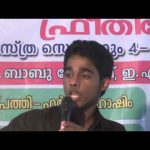
3. Artificial Intelligence, challenges and Achievements (Malayalam) By Ashish Jose
Topic:- Artificial Intelligence (Malayalam) By Ashish Jose
Seminar Organized By :- Freethinkers Facebook Group (https://www.facebook.com/groups/ftkerala4)
Venue :- C Achutha Menon Hall
Date :- 16-02-2014 -
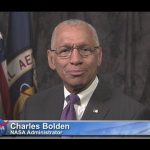
NASA Administrator Charles Bolden Discusses Space Station Science
NASA Administrator Bolden discusses the unique science accomplishments of the International Space Station (ISS) and plans for the future.
-
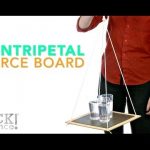
Centripetal Force Board – Sick Science! #191
GET EVERYTHING YOU NEED HERE: http://www.stevespanglerscience.com/centripetal-force-board.html
When you swing a bucket of water over your head, you probably expect a big, wet rush of water to soak you as the bucket goes upside down. However, if you were swinging the bucket fast enough, nothing happens. What in the world?!? Well, we have a pretty incredible physics demonstration to help you understand just why you remain dry. It’s called the Centripetal Force Board, and it will help you experience the physics and forces at play when three plastic cups of water leave you high, dry, and with new hands-on science topics in mind.
Want more experiments like this? Check out http://www.stevespanglerscience.com/product/naked-eggs-and-flying-potatoes
Sick Science™ is a trademark of Steve Spangler, inc.
© 2014 Steve Spangler Science all rights reserved
-
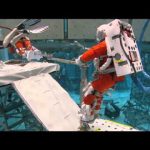
NASA Center Renamed on This Week @NASA
Two giants of aerospace history were honored at a May 13 ceremony to celebrate the renaming of Dryden Flight Research Center to Armstrong Flight Research Center, after the late Neil Armstrong and the naming of the center’s aeronautical test range after Hugh Dryden. Armstrong was the first person to set foot on the moon and a former research test pilot at the center and Dryden served as NASA’s first deputy administrator. Also, Space Station Crews on the Move, Asteroid Mission Gear Tested, Unstoppable Glacier Melt, Exploring Earth’s Magnetic Fields, Shrinking Great Red Spot, Helicopter Drop Test, Technology Transfer University and more!
-
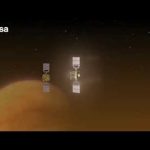
Venus Express aerobraking
Visualisation of the Venus Express aerobraking manoeuvre, which will see the spacecraft orbiting Venus at an altitude of around 130 km from 18 June to 11 July. In the month before, the altitude will gradually be reduced from around 200 km to 130 km. If the spacecraft survives and fuel permits, the elevation of the orbit will be raised back up to approximately 450 km, allowing operations to continue for a further few months. Eventually, however, the spacecraft will plunge back into the atmosphere and the mission will end.
Credit: ESA–C.Carreau
-
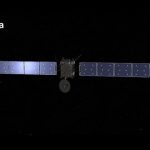
Rosetta puts on the brakes
Rosetta is about to put on the brakes to ensure that it is on target for comet 67P/Churyumov-Gerasimenko.
This video explains the crucial orbit correction manoeuvres that are required to slow down Rosetta’s speed, relative to the comet, from 750 metres per second to just one metre per second between 21 May and 5 August. By then, nine thruster burns (including one test burn in early May) will have reduced the distance between them from one million kms to just under 200 kms.
We also see the first images of the comet from the spacecraft’s OSIRIS camera (Optical, Spectroscopic and Infrared Remote Imaging System), taken between 24 March and 4 May 2014. As the spacecraft gets closer to the comet, further images will improve the orbital corrections and provide more details about the comet’s shape, size and rotation.
MIRO, built by an international team for the European Space Agency, will start taking measurements from late May onwards and will measure gases released from the comet as it approaches the Sun.
-
50 years serving European cooperation and innovation
2014 is a special year: the space community is celebrating the anniversary of the construction of Europe as a space power and 50 years of unique achievements in space.
It started with the creation of two entities, entering into force in 1964, the European Launcher Development Organisation (ELDO) and the European Space Research Organisation (ESRO).
A little more than a decade later, the European Space Agency (ESA) would be established, replacing these two organisations and since then serving European cooperation and innovation.
This video recalls the importance of Europe efforts in space and its successes with now a guaranteed and independent access to space and several programs covering all possible areas from Science, to Earth Observation, Human Spaceflight, Telecom and Navigation.
-
Mystery Balloon Pop – Sick Science! #190
One balloon is blown up inside of another when you use a magnifying glass to focus light onto their surfaces. You expect the balloons to pop, but only the balloon on the inside bursts. What’s going on here? The Mystery Balloon Pop is a tremendous lesson in the power of the sun’s rays and the absorption of light and heat. Did we mention you’re popping balloons for science? Get started!
Want more experiments like this? Check out http://www.stevespanglerscience.com/product/naked-eggs-and-flying-potatoes
Sick Science™ is a trademark of Steve Spangler, inc.
© 2014 Steve Spangler Science all rights reserved
-
NASA’s Fleet of Satellites Help Understand Climate Change on This Week @NASA
The third U.S. National Climate Assessment was released which took observations from NASA’s fleet of satellites to help understand climate change in the United States. Also, NASA’s Orbiting Carbon Observatory-2 spacecraft arrived at California’s Vandenberg Air Force Base to begin final preparations for a scheduled July 1 launch. In Florida, the remaining flight hardware for the Delta IV rocket that will launch NASA’s Orion spacecraft on Exploration Flight Test-1 in December arrived at Port Canaveral. At the Stennis Space Center, a cold-shock test for the RS-25 engine that will help power NASA’s new Space Launch System rocket was completed. The Chandra X-ray Observatory found new stars, simulated space dust was created on earth, a new ISS crew trains in Russia, Shannon Lucid and Jerry Ross are inducted into the Astronaut Hall of Fame and NASA recognizes the small business community for helping the agency work toward achieving its goals!
-
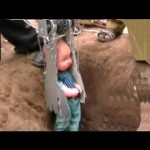
Madurai plumber develops robot to rescue children trapped in borewells
A plumber in Madurai has developed a robot that could save little children trapped in bore wells. Last month the innovation by the 41-year-old plumber turned Instructor, Mr Manikandan at the TVS Community College in the temple town rescued a three-year-old boy who had fallen into a tube well in the Theni district of Tamil Nadu.
Watch more videos: http://www.ndtv.com/video
-
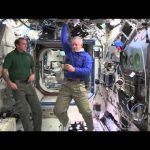
NASA Space Station Crew Discusses Life in Space with Idaho Students and Educators
Aboard the International Space Station, Expedition 39 Flight Engineers Rick Mastracchio and Steve Swanson of NASA discussed their daily work and research on the orbital laboratory with students at Boise State University in Idaho and educators, including former educator-astronaut Barbara Morgan, during an in-flight educational event May 6. Mastracchio is in the final week of his six-month mission on the station, heading for a landing in his Soyuz return craft in Kazakhstan on May 13, U.S. time. Swanson, who will become station commander on May 12, will remain aboard the complex until mid-September.
-
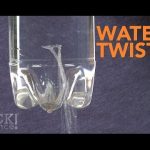
Water Twist – Sick Science! #189
Want more experiments like this? Check out http://www.stevespanglerscience.com/product/naked-eggs-and-flying-potatoes
Sick Science™ is a trademark of Steve Spangler, inc.
© 2014 Steve Spangler Science all rights reserved
-
A Star Wars Day Message from NASA
In celebration of Star Wars Day, NASA flight engineer Rick Mastracchio hopes to deliver a special message from the International Space Station. Little does he know, however, that the Empire plans to jam his transmissions. Thankfully, R2-D2 is on the case.
-
Galileo works, and works well
How far has Europe’s Galileo satellite navigation system progressed?
Watch this video summary of Galileo’s In-Orbit Validation phase milestones to find out, and learn what happens next.
-
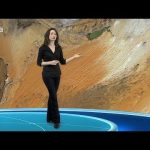
Earth from Space: Desert bullseye
Earth from Space is presented by Kelsea Brennan-Wessels from the ESA Web-TV virtual studios. Discover a giant geological wonder in the Sahara Desert in the one-hundred-third edition.
See also http://www.esa.int/spaceinimages/Images/2014/05/Richat_structure_Mauritania to download the image.
-
Exploration forum showcases NASA’s Human Path to Mars
An April 29 exploration forum aired on NASA Television from NASA headquarters, featured Administrator Charles Bolden and other agency leadership showcasing NASA’s human exploration path to Mars. NASA is developing the capabilities needed to send astronauts to an asteroid by 2025 and Mars in the 2030s.
-

Homemade Rock Candy – Sick Science! #188
GET THE ROCK CANDY KIT HERE: http://www.stevespanglerscience.com/rock-candy-crystal-kit.html
Science is often referred to as the most fun subject in school, but it can be the most delicious subject, too! When you create Homemade Rock Candy, you’ll be diving “string-first” into a science experiment and project that easy enough to do right at home! Young scientists will engage with principles like sedimentation and supersaturated solutions. How tasty does that sound?
Want more experiments like this? Check out http://www.stevespanglerscience.com/product/naked-eggs-and-flying-potatoes
Sick Science™ is a trademark of Steve Spangler, inc.
© 2014 Steve Spangler Science all rights reserved
-
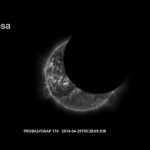
Proba-2 views partial eclipse
ESA’s Proba-2 Sun-watcher saw Australia’s 29 April 2014 partial solar eclipse from orbit – footage captured by the Royal Observatory of Belgium.
-
ESA Euronews: Europe’s 50 year space odyssey
In this edition of Space we look back at the past 50 years of space in Europe; five decades of discovery, drama and innovation that have had a profound impact on how we see ourselves and our planet. Historian John Krige gives his insight on how Europe’s space sector has evolved, while veteran space scientists recount their experiences in major missions and launches.
-
ESA Euronews: Közös űrprogram – amikor Európa működik
Idén ötven éve indult el a közös európai űrprogram. A nehezen összekovácsolt tudományos együttműködés az egyik remek példa arra, amikor Európa működik.
Ötven évvel ezelőtt a világ már az űrverseny lázában égett. A Szputnyik elküldte az első jeleket, Jurij Gagarin már járt az űrben, az Egyesült Államok és a Szovjetunió vetélkedése hajtotta a tudományt előre.
*Azt hittük, vége a világnak*
– A világ elképesztően törékeny, veszélyes hely volt – jellemezte az időszakot John Krige, a Georgia Institute of Technology történésze. – A szuperhatalmak vetélkedése talán akkor volt a csúcson, a kubai rakétaválság idején. Én fiatalember voltam, és egész biztosan azt gondoltam, hogy az lesz a világ vége. Szerintem nem voltam ezzel egyedül.
Ebben a feszült helyzetben lépett fel két európai fizikus, az olasz Eduardo Arnaldi és a francia Pierre Auger, akik szentül hittek abban, hogy a rakétáknak és a műholdaknak a tudományt kell szolgálniuk, nem a kardcsörtetést.
– Azok az országok, amelyek a közös európai űrprogramba belevágtak, húsz évvel korábban gyilkos háborút vívtak egymással – magyarázta Roger-Maurice Bonnet, az Európai Űrügynökség (ESA) volt tudományos igazgatója. – Ezek az országok összegyűltek, és úgy döntöttek, olyan közös nyelvet fognak használni, amelyen nem lehet őket egymásra uszítani – a tudomány nyelvét.
-

Growing and Shrinking Egg – Sick Science! #187
We’ve found a method to take our famous Naked Egg experiment to a new level. By dropping your Naked Eggs into Karo corn syrup or water, you’ll witness eggs that have the strange ability to grow and shrink. It’s all an investigation into chemical reactions and permeability that is fun and engaging.
Want more experiments like this? Check out http://www.stevespanglerscience.com/product/naked-eggs-and-flying-potatoes
Sick Science™ is a trademark of Steve Spangler, inc.
© 2014 Steve Spangler Science all rights reserved