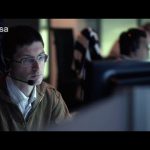
On 24 April 2016, the mission control team was in the Main Control Room at ESOC, ESA’s mission control centre in Darmstadt, Germany, preparing for the liftoff of Soyuz flight VS14. Their job was to assume control of the rocket’s main passenger, the Sentinel-1B radar-sensing satellite.
In this Periscope, video host Thomas Ormston, a spacecraft operations engineer at ESOC, spoke with some of the team working ‘on console’ to find out details on how they get ready to send a satellite into space.
NOTE: About 75 minutes after recording this Periscope, the launch countdown was halted due to an an anomaly with the launcher. The countdown was restarted the next day, with liftoff set for 23:02 CEST, 25 April 2016.
At the Danish Air Ambulance base in Billund, satellite navigation is a true lifesaver in the sky.
The air ambulance service, operated by the Norwegian Air Ambulance in Denmark, is among the first to use a new European satellite system, EGNOS, that makes it safer to fly in low visibility.
¿Existe la vida en Marte? La misión ExoMars intenta responder a esta pregunta. Aquí, en el Cosmódromo de Baikonur, en Kazajistán, nos reunimos con los científicos que trabajan en este proyecto. El cohete de la misión ExoMars se dirige hacia el planeta rojo para buscar buscar potenciales pruebas de actividad biológica.
Al cosmodromo di Bajkonur, in Kazakhstan, euronews ha seguito l’avvio di ExoMars,missione sviluppata dall’ESA, l’Agenzia Spaziale Europea ESA e da Roscosmos, Agenzia Spaziale Russa.
L’obiettivo di ExoMars è lo studio dell’ambiente biologico della superficie del pianeta ma anche la ricerca di eventuali tracce di vita, passata o presente.
Bajkonur, a Csillagváros a kazah sztyeppéken, az űrkutatás történelmi helyszíne, ahonnan az első ember felszállt az űrbe – itt kezdődik az Exomars-kaland.
A megfigyelőplatform három kilométerre van a kilövőállástól. Európai és orosz mérnökök figyelik, hogyan indulnak el az általuk éveken át tervezett és épített műszerek a Marsra.
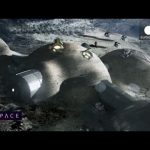
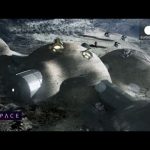
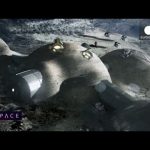
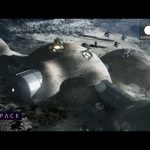
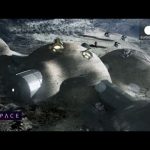
Jan Woerner, Director General of the European Space Agency, has a bold new vision for space exploration. “My intention is to build up a permanent base station on the Moon,” he tells Euronews from the agency’s main control room in Darmstadt. “Meaning that it’s an open station, for different member states, for different states around the globe.”
Mankind has never had a permanent lunar presence, and so this new vision, that Woerner likes to call the ‘Moon village’, would represent a giant leap in space exploration.
Le directeur général de l’Agence spatiale européenne dit vouloir construire une base permanente sur la Lune. Ce projet incroyable prend peu à peu forme à mesure que les scientifiques européens commencent à sérieusement y réfléchir. Nous avons rencontré quelques-uns de ceux qui pourraient faire de ce rêve, une réalité, notamment au Centre européen des astronautes à Cologne.
“J’ai l’intention de construire une base permanente sur la Lune : ce sera une station ouverte pour différents Etats participants, des pays des quatre coins du monde,” explique posément le nouveau directeur général de l’Agence spatiale européenne.
Die Europäische Weltraumorganisation ESA will ein tollkühnes Projekt in Angriff nehmen: Sie will ein Dorf auf dem Mond bauen. Die permanente Station soll an dem Ort entstehen, an dem einst die Russen landeten und die Amerikaner erste Schritte machten. ESA-Chef Jan Woerner hat eine Vision: “Ich will eine permanente Mondstation bauen. Es wäre eine offene Station für mehrere Länder aus der ganzen Welt.”
Die Apollo-Ära hat gezeigt, dass Träume Wirklichkeit werden können. Die Forscher damals hatten ein klares Ziel vor Augen: die Mondlandung. ESA-Astronaut Andreas Mogensen scheint zuversichtlich: “In den 1960er Jahren haben sie das innerhalb von zehn Jahren geschafft. Heute sind wir technologisch gesehen viel weiter. Wir können es also noch einmal machen.”
Die Mondstation würde die Internationale Raumstation, ISS, ablösen. Sie wäre das neue gemeinsame Raumfahrt-Projekt, an dem alle teilnehmen könnten. “Die Amerikaner, die Russen, die Chinesen, die Inder und die Japaner werden mitmachen. Und andere Länder werden ebenfalls etwas beisteuern,” so Woerner.
– Feltett szándékom egy állandó bázisállomás építése a Holdra – mondja az Európai Űrügynökség vezetője, Jan Woerner. – Ez egy közös bázis lenne a partnereinkkel, amit a világ más országaival közösen építenénk és használnánk. Benne lesznek az amerikaiak, az oroszok, a kínaiak az indiaiak, a japánok és kisebb hozzájárulással más országok is.
A jelenlegi helyzetben a Holdbázis álomnak tűnik – de az Apolló-program során már kiderült, hogy megfelelő költségvetés mellett óriási technológiai ugrások lehetségesek. A tervek szerint ez lenne az új globális űrprojekt a Nemzetközi Űrállomás után.
Tornare sulla Luna? La prossima tappa dell’esplorazione spaziale, dopo l’esperienza della Stazione Spaziale Internazionale, prevede molto di più. L’Agenzia spaziale europea ha un nuovo obiettivo: costruire una base permanente sulla luna.
I russi furono i primi a lanciare una missione sulla luna mentre gli americani i primi a camminare sulla sua superficie. Oggi la luna continua ad essere al centro di ambiziose ricerche come ci conferma anche il direttore generale dell’Agenzia spaziale europea Jan Wörner. Una base internazionale, una stazione aperta ai diversi Stati membri dell’Agenzia e ai paesi di tutto il mondo.
Un sogno animato dalla stessa passione che ha portato il primo uomo sulla Luna. Certo finora nessuno ha mai realizzato un progetto simile. Dalla missione spaziale Apollo sono stati fatti passi da gigante.
O homem que está à frente da Agência Espacial Europeia (ESA) tem um ambicioso objetivo: construir uma base permanente na Lua. É no Centro Europeu de Astronautas em Colónia, na Alemanha, que estão a ser dados os primeiros passos nessa direção.
Em 1959, os russos conseguiram aterrar uma nave não tripulada na Lua; dez anos mais tarde, os americanos passearam na sua superfície. Hoje em dia, o plano é ficar. _”O meu objetivo é construir uma base permanente na Lua. Uma estrutura aberta à participação de diferentes países”_, declara Jan Wörner, diretor geral da ESA. A ideia é criar um projeto global à semelhança da Estação Espacial Internacional.
O Centro Europeu de Astronautas em Colónia organizou um workshop precisamente sobre como erguer uma espécie de pequena aldeia sobre a superfície lunar. A presença de certos metais, minerais e de água gelada pode representar um contributo valioso. Segundo Bernard Foing, diretor do Grupo Internacional de Exploração Lunar, _”a Lua tem imensos recursos. Encontrámos gelo nos polos, encontrámos áreas que estão quase constantemente expostas ao Sol. São zonas que nos podem fornecer recursos para utilizarmos na construção ou na manutenção da vida dos astronautas na base lunar.”_
La nueva cúpula de la Agencia Espacial Europea (ESA) quiere construir una base permanente en la Luna. El lugar donde hace medio siglo los rusos llegaron por primera vez y los estadounidenses dieron sus primeros pasos. Se trata de un proyecto muy ambicioso en el que ya está trabajando el Centro Europeo de Astronautas con sede en la ciudad alemana de Colonia.
“Mi intención es construir una base permanente en la luna, una estación abierta a diferentes estados miembros de todo el mundo”, asegura Jan Woerner, director de la ESA.
Os nanossatélites são pequenos cubos que prometem determinar o futuro da exploração espacial, desde as incursões a Marte até à observação de asteróides potencialmente perigosos para a Terra. No Centro Espacial Mektory de Tallin, na Estónia, um grupo de estudantes está precisamente a construir um destes concentrados de tecnologia.
Também conhecidos como cubesats, os nanossatélites abrem um sem número de possibilidades na aventura espacial. Daí que o seu desenvolvimento desperte o interesse tanto das grandes agências espaciais, como das universidades, como esta na capital estoniana, que integra o centro de inovação Mektory.
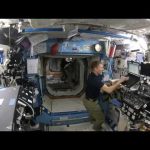
ESA astronaut Tim Peake shows the cleaning duties on the International Space Station. Every Saturday all astronauts living in the weightless research laboratory spend the morning cleaning.
Tim’s six-month mission in space is called Principia: www.esa.int/Principia
Tiny satellites the size of a small cube, jam-packed with the most advanced nanotechnologies: is this the future of Space missions?
To find out, ESA Euronews went to Tallin, Estonia, where students at the Mektory Space Centre are preparing the launch of their first nanosatellite.
Nanosatellites – tiny cubes of 10cm x 10cm x 10cm, full of nanotechnologies — are going to be more and more important in the future of space exploration, from Mars missions, to the surveillance of asteroids, which could potentially be dangerous for our planet.
Also known as ‘CubeSats’ these tiny satellites open up a whole world of possibilities for those who want to explore space.
A nanoműholdak egyre fontosabbak lesznek az űrkutatásban, a Mars megfigyelésétől a Földre veszélyt jelentő aszteroidák felkutatásáig. A bennük rejlő potenciált mindenki igyekszik kiaknázni, a nagy űrügynökségektől a tudományos diákkörökig. Ez a helyzet a Mektory Űrközpontban, az észt főváros, Talinn műszaki egyetemén, ahol a diákok az első nanoműholdjuk Föld körüli pályára állítását készítik elő.
– Azt hittem, soha nem fogok műholdat építeni, hiszen ilyesmit csak a NASA-nál csinálnak. Most meg műholdat építek az egyetemi laborban – hitetlenkedett az Euronewsnak Marta Hang, az űrközpont programasszisztense.
A Mektory nanoműhold-programja egy nemzetközi egyetemi kezdeményezés, amelyben az oktatók és a hallgatók együttműködnek az űrkutatásban érdekelt és más technológiai cégekkel. A cél az, hogy felkészítsék a hallgatókat arra, hogy az űriparban helyezkedjenek el. A csapat jelenleg az első űrküldetését tervezi.
– Egy kockaműholdat fejlesztünk, amely egy egységből áll, és távérzékelési célokat szolgál, vagyis képeket készít majd a Földről – magyarázza a Mektory Űrközpont igazgatója, Mart Vihmand.
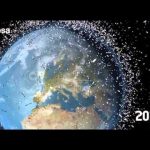
The story of space debris highlighting how the unintended consequences of intense spaceflight activity during the past 60 years has resulted in a growing population of debris objects that pose hazards to safe space navigation. In 2013, experts estimate that 29 000 objects larger than 10 cm were orbiting Earth.
The video also highlights the current state of debris mitigation measures and presents several concepts for removing defunct satellites from economically vital orbits now being studied by space agencies and industry across Europe.
This video was produced for the 6th European Conference on Space Debris, 22-25 April 2013.
La misión AIM (Asteroid Impact Mission), candidata a ser desarrollada, actualmente en fase de diseño preliminar.
AIM se lanzaría en octubre de 2020 y su objetivo es viajar al sistema binario de asteroides Dídimos para estudiar la luna Didymoon. El sistema Didimos cuenta con un cuerpo principal de unos 800 metros de diámetro y una luna que orbita alrededor de este cuerpo principal, de unos 170 metros de diámetro aproximadamente, está luna se la conoce con el nombre de Didymoon. El sistema Didimos se aproximará a 11 millones de kilómetros de la tierra en 2022.
AIM escaneará la pequeña Didymoon en detalle con su cámara VIS, con imágenes térmicas y un radar de alta resolución para construir mapas detallados de su superficie y estructura interior.
La nave principal de AIM llevará al menos tres sondas más pequeñas – el módulo de aterrizaje, Mascot-2, desarrollado por el Centro Aeroespacial Alemán (Mascot-1 ya está volando en la misión Hayabusa-2 de JAXA), así como dos o más CubeSats. Así, AIM pondría a prueba las comunicaciones ópticas y los enlaces inter-satelitales en el espacio profundo, una tecnología que será esencial para la exploración futura del espacio.
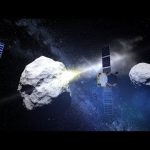
Si se aprueba, AIM también será la contribución europea a la misión AIDA, Asteroid Impact and Deflection Assessment. En 2022, la sonda DART (Double-Asteroid Redirection Test), parte dirigida por la NASA, llegará al sistema binario y se estrellará contra Didymoon a una velocidad de unos 6 km/s.
El impacto será observado por AIM y por sus CubeSats. A través de las imágenes de alta resolución de AIM se evaluará el tamaño y la profundidad del cráter tras el impacto. AIM realizará una segunda fase de mediciones para comparar detalladamente la estructura del objeto, así como su órbita al rededor del asteroide mayor, antes y después del impacto.
The ESA Moon Challenge is an International Student Contest for Lunar Exploration, and this video contains parts of 22 different simulations that teams have submitted.
Universities from across the world participated in this challenge as part of the Symposium Moon 2020-2030: A new Era of Human and Robotic Exploration.
We have all heard of climate change, but what’s really happening to our planet now, in November 2015? As the COP21 summit in Paris looms in December, we set out to establish some of the scientific fundamentals, and hear how space technology is being used to get a truly global view of Earth’s vital signs.
Near Les Deux Alps in the French Alps, some 3,200 metres above sea level, we look at how satellite data and glacier measurements can help us to understand the effects of global warming with remote sensing scientist Jean-Pierre Dedieu.
Discover how you can participate in ESA programmes as a student, and learn about your entry options once you’ve got your Masters degree. ESA recruitment and education colleagues share some valuable info with you.
In this edition of Space we set a course for Jupiter, destination of the next European Space Agency mission.
The aim of JUICE (JUpiter ICy moon Explorer) is to provide the most comprehensive exploration of the giant planet and, in particular, of its moons; supposedly hiding habitable zones under their icy crusts.
Jupiter is more than eleven times larger than Earth but is mainly made of gas. During its three and a half year mission, which blasts off in 2022, JUICE will travel around the giant planet, studying its atmosphere and three of its planet-sized satellites: Ganymede, Europa, and Callisto.
Καλώς ήλθατε στο νέο επεισόδιο του Space. Προσπαθήστε να φανταστείτε ένα ηλιακό μοντέλο στο οποίο κάποιοι πλανήτες θα έχουν κάτω από την επιφάνεια περισσότερο νερό από ότι υπάρχει στη γη.
Αυτός είναι ο επόμενος στόχος της Ευρωπαϊκής Υπηρεσίας Διαστήματος. Θα επανέλθουμε στο θέμα, αφού πρώτα μάθουμε κάποια διαστημικά νέα.
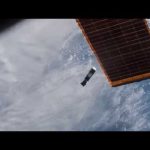
On 5 October at 15:55 CEST two ESA CubeSats, the student-built AAUSAT5 and the professional technology demonstrator GomX-3, were deployed from the International Space Station (ISS). The two satellites have just started their mission in space.
ESA astronaut Samantha Cristoforetti photographs stunning Earth images of Lufthansa worldwide destinations during her Futura mission onboard the ISS. An ESA for Lufthansa inflight film.
ESA astronaut Andreas Mogensen, the first astronaut from Denmark, explains the deployment of the student-built AAUSAT5 CubeSat – the first ESA student CubeSat mission launched from space and the pilot project of ESA’s ‘Fly Your Satellite from the ISS!’ education programme.
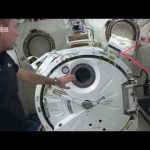
AAUSAT5, a CubeSat entirely built by a university team with ESA’s support, was launched to the International Space Station aboard the Japanese HTV-5 cargo vehicle 19 August 2015. Andreas gives a brief tour of the Japanese cargo vehicle’s storage space, where AAUSAT5 was housed during its flight to the Station. AAUSAT5 was taken to the Japanese Kibo Laboratory, put in a Nanoracks deployer, and placed into the airlock to be launched into space.
AAUSAT5 will be deployed into orbit 5 October 2015. Aalborg University will host a special event in Aalborg, Denmark entitled “ESA CubeSats from the Space Station: a new path for education and technology” to celebrate the deployment.
The Rosetta Mission has been writing a new chapter in what we know about the formation of life. The ESA teams involved are now preparing for the last part of this amazing journey.
Comet Churyumov-Gerasimenko has recently reached the perihelion – that’s the closest point to the Sun in its six and a half year orbit. It’s an important scientific step – as increasing solar energy warms the comet’s frozen ices, turning them to gas and dust. To stay safe, Rosetta has been forced to move further from the comet.
The Rosetta mission has been extended by nine months – until September next year. It’s hoped this will further boost the enormous amount of data that’s already been collected.
Every summer, ESA’s Education Office welcomes primary and secondary teachers from across Europe to ESA’s European Space Research and Technology Centre, The Netherlands. Over the course of three days, in the heart of ESA’s largest establishment, the teachers engage in a number of workshops about how space can be used as a context for teaching many subjects. Space experts, both from within ESA and outside, guide the teachers through mainly hands-on practical workshop sessions.
The LISA Pathfinder spacecraft is due to set off in Autumn 2015 in a bid to prove that it is possible to observe gravitational waves in space. This is the latest step in an incredible journey to spot these ripples in spacetime that were first predicted by Albert Einstein 100 years ago.
If we can manage to capture these waves, then we should be able to observe some of the most violent events in the cosmos, such as black holes colliding and galaxies merging. For the moment, however, we’re still searching.
Earth from Space is presented by Kelsea Brennan-Wessels from the ESA Web-TV virtual studios. The one hundred fifty-first edition features a satellite image of New York City in the United States.
Earth from Space is presented by Kelsea Brennan-Wessels from the ESA Web-TV virtual studios. The sandy and rocky terrain of the Sahara desert in central Algeria, captured by the Sentinel-2A satellite, is featured in the one hundred fiftieth edition.
ESA’s European Space Operations Centre links people with spacecraft travelling to the frontiers of human knowledge. Our world is about systems, communication and exploration; our passion is for humanity’s voyages into the Universe. And even the grandest journey begins with just a few steps.
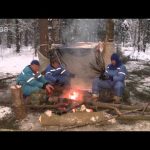
ESA astronaut Tim Peake during winter survival training in Russia.
All astronauts go through winter survival training. There is always the possibility that a Soyuz spacecraft could land in a remote, cold area. Tim has to learn to survive in harsh climates while waiting for rescue.
Tim is training for his mission to the International Space Station set to be launched on a Soyuz spacecraft from Baikonur Cosmodrome in Kazakhstan in December 2015.
ESA astronauts train with all International Space Station partners including onsite training in USA, Europe, Canada and Japan.
ESA astronaut Tim trained in Tsukuba at the Japanese Aerospace Exploration Centre on Japanes experiments and the Japanese space laboratory Kibo.
Tim is preparing for his mission to the International Space Station set to be launched on a Soyuz spacecraft from Baikonur Cosmodrome in Kazakhstan in December 2015.
ESA astronaut Tim Peake during spacewalk training in Houston, USA.
Training underwater on life-size mockups of the Space Station is one way astronauts prepare for their missions as working in water resembles working in space.
Tim is training for his mission to the International Space Station set to be launched on a Soyuz spacecraft from Baikonur Cosmodrome in Kazakhstan in December 2015.
If an asteroid were spotted headed towards Earth, what could humanity do about it? On 30 June, world renowned scientists, Nobel laureates, astronauts, technologists and artists join forces for Asteroid Day (http://www.asteroidday.org/), a global awareness movement to spread knowledge about asteroids and ways to protect Earth from such threats. The Day is held on the anniversary of the 1908 Siberian Tunguska event, the largest asteroid to impact our planet in recent history.
To mark Asteroid Day, ESA experts on Near-Earth Objects (NEO) and asteroids have answered the public’s most insightful questions. Respondents include Ian Carnelli, AIM Project Manager, Detlef Koshny, SSA-NEO Segment Manager and Michael Kueppers, AIM Project Scientist.
If approved next year by Europe’s space ministers, 2020 will see the launch of ESA’s deep space Asteroid Impact Mission or AIM, as part of AIDA (Asteroid Impact & Deflection Assessment), a larger international effort to investigate planetary defence techniques. AIM will travel to a binary asteroid system – the paired Didymos asteroids, which will come a comparatively close 11 million km to Earth in 2022. After encounter and study, the mission will then witness the asteroid being struck by another spacecraft, returning data to help guide planetary defence strategies.
Years in the building, seconds in the launching; rocket engines are truly awesome in their sheer power, but are also amazing feats of engineering and design.
The scientific principle remains quite simple: accelerated gas creating thrust through a nozzle. However, extrapolating that concept to the point where the rocket has sufficient power to lift people and satellites beyond Earth’s gravity and into orbit is far more complex. Don’t let anybody tell you otherwise, the manufacturing and testing process IS rocket science.
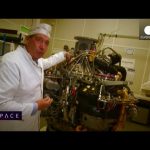
In Europe one of the key centres of work on rocket engines is done at the Snecma factory complex in a remote location in forests near the town of Vernon in Normandy. Many of the components are built elsewhere in Europe, but the assembly and testing are carried at the site in northern France.
The pieces are carefully milled from titanium or lightweight alloys over a period of weeks. When construction is finally completed then comes the critical test phase, where the rockets are fired into life inside a vast tower.
Space reporter Jeremy Wilks visited the Snecma site to find out more about this unique and constantly evolving industrial sector.
Iszonyú erő kell ahhoz, hogy valamit kijuttassunk az űrbe. A rakétahajtóművekre ma már komoly kereskedelmi iparág épül rájuk, amely a teljesítményt abban méri, mekkora tömeget hány dollárért lehet föld körüli pályára állítani.
Európa kifejezetten sikeres ebben az üzletben: az Ariane 5-ös rakéták az iparág kipróbált igáslovai, és már készül az új Ariane 6-os. A Space júniusi epizódjában Jeremy Wilks ellátogat a hajtóműveket gyártó francia SNECMA üzemeibe, hogy megtudja, hogyan lehet valamin akkorát lökni, hogy a geostacionárius pályáig meg se álljon.
A szakemberek a Space-ben megszokott nyíltsággal és érzelmességgel beszélnek a munkájukról, arról, hogy milyen dolog évekig építeni valamit, aminek a sikere azután pár perc alatt eldől, és egyetlen kis hiba is végzetes lehet.
Per costruire un razzo possono volerci anni. Mentre per lanciarlo in orbita bastano pochi secondi. Secondi importanti dove lavorano contemporaneamente forze diverse.
“Per andare nello spazio serve tantissima potenza” spiega Gaele Winters (ESA) “Potenza necessaria a superare la forza di gravità”
La forza in grado di portare uomini e apparecchiature in orbita è generata da sofisticati motori nei quali brucia combustibile liquido o solido, o entrambi. Come nel caso del missile Ariane 5.
“Cinque, quattro, tre, due, uno, zero.E’ in quel momento che accendiamo le turbopompe, che inviano idrogeno e ossigeno nella camera di combustione del cosiddetto motore *Vulcain*” spiega Thierry Delaporte (Snecma) “Il primo ad accendersi. Una volta verificato che funziona, nel giro di 5 secondi, accendiamo anche i due booster laterali a propulsione e…..Hop, il razzo decolla”.
L’azienda dove si producono i motori usati per il programma europeo di lanciatori Ariane è a Vernon, in Francia. E’ qui che si procede ai test sui missili che saranno lanciati in orbita. La torre usata per i test si trova in una valle. E’ lì che i motori vengono accesi per la prima volta.