
Using a Cessna 172 dropped from a height of 100 feet, NASA’s Search and Rescue Mission Office simulated a severe but survivable plane accident Wednesday, Aug. 26 at the agency’s Langley Research Center to test emergency locator transmitters (ELTs). The devices are installed on general aviation and commercial planes to transmit a location signal in the event of a crash. On this third and final test in the series the plane was dropped from 100 feet, tail down into the ground.
Tag: NASA
-

Happy NASA
NASA Television captured some happy moments while producing agency videos. NASA is ranked the best place to work in the federal government.
-

NASA Celebrates Aviation Day
A little more than a century ago, on March 3, 1915, congress created the National Advisory Committee for Aeronautics, the organization from which NASA was created in 1958.
Now, on National Aviation Day, we celebrate 100 years of aviation research, and we’re planning for the next 100 years! -
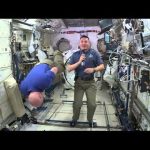
NASA International Space Station Crew Discuss Life In Space With CBS Radio
Aboard the International Space Station, Expedition 44 Flight Engineers Scott Kelly and Kjell Lindgren of NASA discussed their life and research aboard the orbital outpost in an in-flight interview Aug. 17 with the CBS Radio Network. Kelly is completing the fifth month of his year-long mission on the station with Russian cosmonaut Mikhail Kornienko to gather valuable biomedical data that will be used to formulate a human mission to Mars, while Lindgren is completing the first month of a five-month mission on the laboratory.
-

Perseid meteor shower on NASA TV
On August 12, meteor experts from NASA’s Marshall Space Flight Center provided commentary during NASA Television’s live coverage of the annual Perseid meteor shower. The Perseids have been observed for at least 2,000 years and are associated with the comet Swift-Tuttle, which orbits the sun once every 133 years. Every August, the Earth passes through a cloud of the comet’s debris. This debris field consists of bits of ice and dust — most over 1,000 years old — and burns up in Earth’s atmosphere to create one of the best meteor showers of the year.
-

NASA’s New Horizons Team Reveals New Scientific Findings on Pluto
During a July 24 science update at NASA headquarters, new surprising imagery and science results were revealed from the recent flyby of Pluto, by the New Horizons spacecraft. These included an image from the Long Range Reconnaissance Imager or (LORRI) – looking back at Pluto – hours after the historic flyby that shows haze in the planet’s sunlit atmosphere, that extends as high as 80 miles above Pluto’s surface – much higher than expected. Models suggest that the hazes form when ultraviolet sunlight breaks apart methane gas.
LORRI images also show evidence that exotic ices have flowed – and may still be flowing across Pluto’s surface, similar to glacial movement on Earth. This unpredicted sign of present-day geologic activity was detected in Sputnik Planum – an area in the western part of Pluto’s heart-shaped Tombaugh Regio.
Additionally, new compositional data from New Horizons’ Ralph instrument indicate that the center of Sputnik Planum is rich in nitrogen, carbon monoxide, and methane ices.
-

New Horizons arrives at Pluto on This Week @NASA – July 17, 2015
After a nearly decade-long journey, NASA’s New Horizons spacecraft arrived at Pluto on July 14 – passing by at a mere 7,750 miles above the surface … resulting in an absolutely breathtaking image – the closest ever of Pluto. Initial congratulations included a Twitter post from the White House … and from iconic figures in the scientific community. The so-called “data waterfall” released by New Horizons contains so many astounding images and detailed information about Pluto that investigators anticipate it will take about 16 months to send it all back to Earth. Also, Mariner 4 Mars flyby anniversary, Newman sworn-in, New wildfire detection tool, Expedition 44/45 prepares for launch and 40th anniversary of Apollo-Soyuz!
-
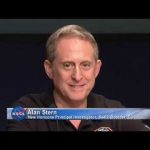
NASA News Conference on the New Horizons Mission
NASA officials and team members of the historic New Horizons mission to Pluto provide an update and share the latest developments on the spacecraft during a news conference from NASA headquarters.
-

New Horizons Arrives at Pluto
At approximately 7:49 a.m. on July 14, NASA’s New Horizons spacecraft is scheduled to be as close as it will get to Pluto, approximately 7,800 miles (12,500 kilometers) above the surface. This historic moment is part of NASA’s coverage of New Horizons’ nine year, three billion mile journey to the Pluto system to gather data about Pluto and its moons.
-
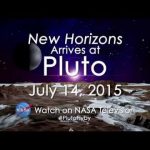
NASA’s New Horizons spacecraft arrives at Pluto on July 14th
NASA’s New Horizons spacecraft arrives at Pluto on July 14th; a journey lasting nearly 10 years and traveling over 3 billion miles. Watch coverage of the historic flyby of Pluto on NASA Television as NASA counts down to the Pluto encounter of a lifetime.
-

NASA LGBT Pride Month Profile Larry C Liou, Glenn Research Center
Larry C. Liou is a project manager in the Space Science Project Office at NASA John H. Glenn Research Center in Cleveland, Ohio. Born in Taiwan, ethnic heritage Chinese, Liou immigrated to the United States in 1977 where he raised a family, graduated from the University of Toledo, Suma cum Laude, and started his NASA career in science and engineering. Early in his career, Liou researched rocket propulsion, transitioned to management and eventually to earth science. “I am passionate about Earth Science that studies Earth as a planet which carries our affection, gratitude, respect and curiosity,” said Liou.
Currently keeping Liou busy is a project that uses a sensor on an aircraft to observe the harmful algal blooms on Lake Erie. Personally, Liou loves, respects and takes care of animals. “They have contributed to human’s wellness and prosperity in most major ways,” Liou said. Liou is also a musician, constantly thankful for the gift of music and music playing, which brings Liou joy and beautiful imagination. Plus, Liou sails “sailing takes me to nature and learning to utilize everything I have learned on journeys.”
-

SpaceX, NASA Managers Discuss Vehicle Mishap Following CRS-7 Launch
During a post-launch press conference on June 28, mangers from SpaceX and NASA discuss the mishap following the liftoff of the SpaceX CRS-7 mission from Space Launch Complex 40 at Cape Canaveral Air Force Station. The mission was to deliver supplies, hardware and other important cargo to the International Space Station. SpaceX is leading the investigation of the cause of the issue.
Anyone who spots debris in the water or sees it washed up anywhere along the shore should report it by calling 866-392-0035 or emailing recovery@spaceX.com or contacting your nearest local law enforcement official.
-

SpaceX Pre-Launch Briefing from NASA’s Kennedy Space Center
NASA and commercial partner SpaceX discussed its plans for a launch of its seventh cargo delivery to the International Space Station under the agency’s Commercial Resupply Services contract. The company’s Falcon 9 will carry its Dragon cargo spacecraft to the station from Space Launch Complex 40 at Cape Canaveral Air Force Station in Florida and be filled with more than 4,000 pounds of supplies and payloads, including critical materials for the science and research investigations that will occur during Expeditions 44 and 45.
The science payloads aboard will offer new insight to combustion in microgravity, perform the first space-based observations of meteors entering Earth’s atmosphere, continue solving potential crew health risks and make new strides toward being able to grow food in space. Research continues to support the twins study and one-year mission investigations with NASA Astronaut Scott Kelly. This mission also is launching more than 30 student experiments, all of which are flying under the U.S. National Laboratory managed by the Center for the Advancement of Science in Space (CASIS).
The first of two International Docking Adapters for the station will be delivered in Dragon’s unpressurized trunk. The adapters will enable space station docking of commercial crew spacecraft, including the Boeing CST-100 and SpaceX Crew Dragon. Expedition 44 Flight Engineer Scott Kelly of NASA will use the station’s Canadarm2 robotic arm to reach out and capture Dragon with Station commander Gennady Padalka of the Russian Federal Space Agency (Roscosmos) supporting Kelly as they operate from the station’s cupola. After more than five weeks at the space station, the spacecraft will return with more than 1,400 pounds of cargo, including science experiments, crew supplies, hardware and computer resources, space station hardware, and trash.
-

Expedition 41 flight Engineer Astronaut Reid Wiseman Gives Presentation at NASA HQ
NASA Headquarters employees joined Astronaut Reid Wiseman, Expedition 41 flight engineer, for a post-flight presentation on Tuesday, June 23, to learn about his time onboard the space station as part of Expedition 40 and 41. As a member of the ISS Expedition 41 crew, Wiseman began his stay aboard the orbiting laboratory in May 2014 and returned to Earth in November 2014. This mission was his first spaceflight and included almost 13 hours of spacewalking to perform work outside the orbital complex. He and his crewmates also spent hundreds of hours conducting valuable scientific research in areas such as human physiology, medicine, physical science, Earth science and astrophysics.
-
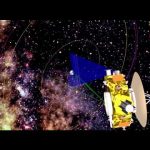
NASA’s New Horizons Mission Update from the Johns Hopkins University Applied Physics Lab (APL)
Weekly pre-flyby updates aired June 23 on NASA TV provides an overview of the New Horizons mission, the spacecraft and its suite of instruments being prepared for a July 14 flyby, and a summary of Pluto science to date.
-

Mission to Europa Gets Green Light on This Week @NASA – June 19, 2015
A new NASA mission to investigate the habitability of Jupiter’s ocean moon Europa has moved from the concept phase to the development phase known as formulation, after successfully completing its first major review by the agency. Europa is considered to be one of the best places in the solar system to search for signs of present-day life beyond Earth. Plans for the mission call for a spacecraft to be launched to the Jupiter system sometime in the 2020s. Also, Seeking other worlds suitable for life, Agreements advance Mars exploration, Asteroid exploration update, Newman visits Langley, Rainfall spacecraft re-enters over tropics and Sample Robot Return Challenge!
-
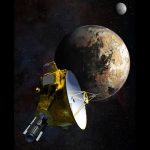
The Year of Pluto – New Horizons Documentary Brings Humanity Closer to the Edge of the Solar System
New Horizons is the first mission to the Kuiper Belt, a gigantic zone of icy bodies and mysterious small objects orbiting beyond Neptune. This region also is known as the “third” zone of our solar system, beyond the inner rocky planets and outer gas giants. Johns Hopkins University Applied Physics Laboratory (APL) in Maryland, designed, built and operates the New Horizons spacecraft, and manages the mission for NASA’s Science Mission Directorate in Washington. The Year of Pluto – NASA New Horizons is a one hour documentary which takes on the hard science and gives us answers to how the mission came about and why it matters. Interviews with Dr. James Green, John Spencer, Fran Bagenal, Mark Showalter and others share how New Horizons will answer many questions. New Horizons is part of the New Frontiers Program, managed by NASA’s Marshall Space Flight Center in Huntsville, Alabama.
-
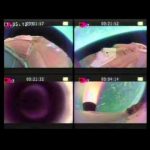
NASA’s Flying Saucer Makes Second Voyage to the Edge of Space
NASA’s Low Density Supersonic Decelerator (LDSD) launched on Monday, June 8th from the U.S. Navy’s Pacific Missile Range Facility on Kauai, Hawaii. The saucer-shaped vehicle was used to test new technologies that will help NASA land heavier payloads than current technology will allow on the surface of planets including Mars. The test vehicle was carried by balloon to about 120,000 feet. After release, an engine took the vehicle to 180,000 feet, where the tests occurred in the thin atmosphere to simulate Mars’ atmosphere. This flight test was the second of three planned for the project. The LDSD mission is designed to test entry and descent technology in the form of a donut-shaped airbag and a supersonic parachute that can be deployed while the vehicle is traveling several times the speed of sound.
-
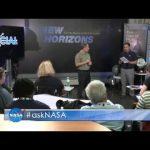
NASA Social Media Conducts Web Chat on New Horizons Pluto Mission at the Applied Physics Laboratory
On Saturday, at the Applied Physics Laboratory in Laurel, MD, NASA connected with social media followers in-person and online for a Web Social on the New Horizons mission exploring Pluto using #NASASocial and #PlutoFlyby and @NASANewHorizons.
NASA Social is a program to provide opportunities for NASA’s social media followers to learn and share information about NASA’s missions, people, and programs. NASA Social is the next evolution in the agency’s social media efforts. Formerly called NASA Tweetup, NASA Social program includes both special in-person events and social media credentials for individuals who share the news in a significant way. This program has brought thousands of people together for unique social media experiences of exploration and discovery.
-
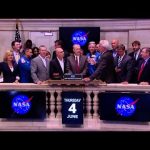
NASA, Partners Ring Closing Bell at New York Stock Exchange
NASA officials and representatives from U.S. commercial space partners rang the closing bell of the New York Stock Exchange Thursday, June 4. NASA’s work with U.S. industry is making commercial research on the space station more accessible and affordable, leading to discoveries not possible on Earth. Commercial companies are already providing cargo transportation services to the orbiting laboratory and will soon launch astronauts once again from the United States. This is stimulating the growth of a robust U.S. commercial space industry with access to low-Earth orbit, creating new jobs and markets.
-

Suit Up – 50 Years of Spacewalks
This NASA documentary celebrates 50 years of extravehicular activity (EVA) or spacewalks that began with the first two EVAs conducted by Russian Alexey Leonov in March 1965 and American astronaut Edward White in June 1965 . The documentary features interviews with NASA Administrator and astronaut, Charles Bolden, NASA Deputy Administrator and spacesuit designer, Dava Newman, as well as other astronauts, engineers, technicians, managers and luminaries of spacewalk history. They share their personal stories and thoughts that cover the full EVA experience– from the early spacewalking experiences, to spacesuit manufacturing, to modern day spacewalks aboard the International Space Station as well as what the future holds for humans working on a tether in space. “Suit Up,” is narrated by actor and fan of space exploration Jon Cryer. Cryer recently traveled to Star City, NASA Headquarters and the Johnson Space Center to film an upcoming Travel Channel documentary series.
-

Science Instruments Selected for Europa Mission on This Week @NASA – May 29, 2015
NASA announced May 26, it has selected nine science instruments for a mission to Jupiter’s moon Europa to investigate whether the icy moon has conditions suitable for life. The instruments, targeted for launch aboard a robotic probe in the 2020s, include cameras and spectrometers to collect high-resolution imagery; an ice penetrating radar to measure surface thickness and look for subsurface lakes; and a magnetometer to measure the strength and direction of the moon’s magnetic field, and allow scientists to determine the depth and salinity of the moon’s ocean. The mission will collect data during a series of close flybys of Europa during a three-year period. Also, Commercial Crew update, Space station module relocated, Bolden visits space companies, SLS engine test, Supersonic vehicle test and more!
-

NASA Asian American Pacific Islander History Month – Alex Chin, Armstrong Flight Research Center
Alex Chin is an aerospace engineer in the Aerostructures Research Branch at NASA’s Armstrong Flight Research Center in Edwards, California. He is responsible for planning, executing, and analyzing tests to support structural dynamics research at Armstrong.
-
Schedule changes for space station traffic on This Week @NASA
NASA and its international partners are making changes to the International Space Station’s schedule of arriving and departing spacecraft, following the Russian Federal Space Agency’s preliminary findings on its recent loss of the Progress 59 cargo craft. Exact dates will be announced in the coming weeks, with a Roscosmos update about the Progress 59 investigation expected May 22. The schedule adjustments mean NASA’s Terry Virts and Expedition 43 crewmates, Samantha Cristoforetti of ESA and Russian cosmonaut Anton Shkaplerov – now will return to Earth in June instead of May. NASA’s Kjell Lindgren, who is conducting pre-flight training in Russia with the other members of Expedition 44, now will launch to the station in July. Also, Small satellite launch services, Latest images of Ceres, Europa’s sea salt? Antarctica Ice Shelf Nearing Its Final Act and No major U.S. hurricanes in nine years!
-
NASA Administrator Charles Bolden on Small Business Week
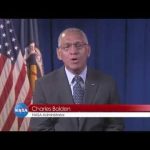
During Small Business Week, NASA Administrator Charles Bolden discusses the importance of small businesses to America’s space program.
-

25 years of Hubble on This Week @NASA-April 24, 2015
On April 24, 1990, NASA’s Hubble Space Telescope rode to space aboard space shuttle Discovery – on a mission to do just that – discover. The results over the past 25 years have been nothing short of remarkable.
The storied and historic journey into the cosmos that Hubble’s eyes have taken us on, has led to groundbreaking discoveries, captivated imaginations and given humans a better understanding of our place in the universe. NASA celebrated Hubble’s Silver anniversary with a variety of events including the unveiling of the official Hubble 25th anniversary image at the Newseum in Washington and a gala at the Smithsonian’s National Air and Space Museum, during which many of the astronauts, scientists, engineers, technicians, educators, and others who have contributed to Hubble’s success were honored. Also, NASA celebrates Earth Day, 3-D printed copper engine part and more! -

NASA’s Documentary Film: Hubble25
In its quarter-century in orbit, the Hubble Space Telescope has transformed the way we understand the Universe, helped us find our place among the stars, and paved the way to incredible advancements in science and technology. The Hubble story is a human story. Hubble overcame much adversity early on in its mission and demonstrated the great heights NASA is capable of achieving against all odds. Much of that is thanks to the “Hubble Heroes”, including scientists, engineers, and the brave astronauts who flew five Space Shuttle missions to service Hubble.
Join NASA Television in celebrating the 25th anniversary of the Hubble Space Telescope in orbit April 24, 2015.
-

NASA Celebrates Earth Day
NASA uses the vantage point of space to increase our understanding of our home planet, improve lives and safeguard our future. The agency also develops new ways to observe and study Earth’s interconnected natural systems with long-term data records, shares this unique knowledge, and works with institutions around the world to gain new insights into how our planet is changing. Here’s a brief thirty second video showing some of the sights and sounds of our Earth and why it’s important to us all to appreciate our unique home in the solar system.
-

NASA Celebrates MESSENGER Mission Prior to Surface Impact on Planet Mercury
NASA held a panel discussion media on Thursday, April 16, to share scientific findings and technical accomplishments of the agency’s MErcury Surface, Space ENvironment, GEochemistry, and Ranging (MESSENGER) spacecraft.
After more than 10 years in space, the highly successful mission will come to an end when it is expected to collide into planet Mercury at a speed of more than 8,750 miles per hour (3.91 km/sec) near the end of this month.
Launched in August 2004, MESSENGER traveled 4.9 billion miles (7.9 billion kilometers) – a journey that included 15 trips around the sun and flybys of Earth once, Venus twice, and Mercury three times – before it was inserted into orbit around its target planet in March 2011. The spacecraft’s cameras and other sophisticated, high-technology instruments have collected unprecedented images and made other observations. Mission managers are preparing to impact Mercury’ surface in the next couple weeks.
Participants featured were:
· James Green, director, Planetary Science Division, NASA Headquarters, Washington
· Sean Solomon, MESSENGER principal investigator; director, Columbia University’s Lamont-Doherty Earth Observatory, Palisades, New York
· Helene Winters, MESSENGER project manager, Johns Hopkins University Applied Physics Laboratory, Laurel, Maryland
· Daniel O’Shaughnessy, MESSENGER systems engineer, Johns Hopkins University Applied Physics Laboratory, Laurel, Maryland -
NASA’s New Horizons Spacecraft: Getting to Pluto
In NASA’a second televised briefings on Tuesday, April 14, plans and upcoming activities about the agency’s mission to Pluto that will make the first-ever close flyby of the dwarf planet on July 14 were briefed.
Briefers described the mission’s goals and context, scientific objectives and encounter plans – including what images can be expected and when.
New Horizons already has covered more than 3 billion miles since it launched on Jan. 19, 2006. The spacecraft will pass Pluto at a speed of 31,000 mph taking thousands of images and making a wide range of science observations. At a distance of nearly 4 billion miles from Earth at flyby, it will take approximately 4.5 hours for data to reach Earth.
Participants for the 2:20-3:30 p.m. discussion were:
– James Green, director of Planetary Science, NASA Headquarters
– Glen Fountain, New Horizons Project Manager, Johns Hopkins University Applied Physics Laboratory, Laurel, Maryland
– Hal Weaver, New Horizons Project Scientist, Johns Hopkins University Applied Physics Laboratory, Laurel, Maryland
– Alan Stern, New Horizons Principal Investigator, Southwest Research Institute, Boulder, Colorado -

NASA’s New Horizons Spacecraft: Seeing Pluto as Never Before
In NASA first of two televised briefings on Tuesday, April 14, plans and upcoming activities about the agency’s mission to Pluto that will make the first-ever close flyby of the dwarf planet on July 14 were discussed.
Briefers described the mission’s goals and context, scientific objectives and encounter plans – including what images can be expected and when.
New Horizons already has covered more than 3 billion miles since it launched on Jan. 19, 2006. The spacecraft will pass Pluto at a speed of 31,000 mph taking thousands of images and making a wide range of science observations. At a distance of nearly 4 billion miles from Earth at flyby, it will take approximately 4.5 hours for data to reach Earth.
Participants for 1-2 p.m. discussion were:
– John Grunsfeld, astronaut and Science Mission Directorate associate administrator, NASA Headquarters, Washington
– James Green, director of Planetary Science, NASA Headquarters
– Alan Stern, New Horizons Principal Investigator, Southwest Research Institute, Boulder, Colorado
– William McKinnon, New Horizons Co-Investigator, Washington University in St. Louis
– Cathy Olkin, New Horizons Deputy Project Scientist, Southwest Research Institute, Boulder, Colorado -
Water in the Universe
This panel discussion from NASA headquarters focuses on recent discoveries of water and organics in our solar system, the role our sun plays in water-loss in neighboring planets, and our search for habitable worlds among the stars.
-

A Story of Ozone-NASA TED Talk with Dr. Paul Newman
Dr. Paul Newman, chief scientist for atmospheric sciences at NASA’s Goddard Space Flight Center in Greenbelt, Maryland, discusses the ozone layer’s past, present and potential future.
-

One-year mission underway on This Week @NASA
A few days after his one-year mission to study the effects of long duration spaceflight on the human body began aboard the International Space Station, Expedition 43 Flight Engineer Scott Kelly was congratulated by NASA Administrator Charlie Bolden from Washington DC. Also on the call – Kelly’s twin brother and former astronaut Mark. The pair will be studied during the mission as part of a science investigation. White House science advisor John Holdren also joined the call and echoed the importance of the mission. Kelly and Russian cosmonaut Mikhail Kornienko will conduct the one-year research mission through March 2016. Also, Super typhoon seen from space, Asteroid mission milestone, LDSD spin test and Sniffing the history of the Martian atmosphere!
-
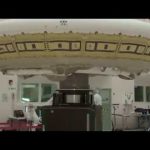
NASA conducts spin test on15-foot-wide saucer-shaped Low-Density Supersonic Decelerator (LDSD)
NASA’s Low-Density Supersonic Decelerator (LDSD) project will be flying a rocket-powered, saucer-shaped test vehicle into near-space from the Navy’s Pacific Missile Range Facility this June from Kauai, Hawaii. To prepare for the flight, a “spin” test was conducted from the gallery above a clean room at NASA’s Jet Propulsion Laboratory in Pasadena, California, where this near-space experimental test vehicle is being prepared for shipment to Hawaii. During the broadcast, the 15-foot-wide, 7,000-pound vehicle underwent a “spin-table” test. The LDSD crosscutting demonstration mission will test breakthrough technologies that will enable large payloads to be safely landed on the surface of Mars, or other planetary bodies with atmospheres, including Earth.
-
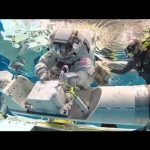
One year ISS crew at launch site on This Week @NASA
Expedition 43, the next crew headed to the International Space Station is conducting final training at the Baikonur Cosmodrome in Kazakhstan. NASA’s Scott Kelly and Gennady Padalka and Flight Engineer Mikhail Kornienko of the Russian Federal Space Agency (Roscosmos) are scheduled for launch aboard a Soyuz spacecraft on March 27 at 3:42 p.m. Eastern. Kelly and Kornienko will become the first crew to conduct a one-year research mission aboard the orbital laboratory. Expedition 44/45 news conference, Orion heat shield testing, Spacewalk training under water, Gemini 3 50th anniversary, SXSW Interactive and Total solar eclipse!
-
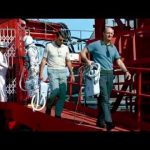
NASA Celebrates the 50th Anniversary of Gemini 3
Gemini 3 launched March 23, 1965 from Cape Canaveral, Florida. It was the first crewed Earth-orbiting spacecraft of the Gemini series. It was piloted by astronauts Virgil “Gus” Grissom and John Young.
-

ISS Crew Discusses Life in Space
Aboard the International Space Station, the new Expedition 43 Commander Terry Virts of NASA and Flight Engineer Samantha Cristoforetti of ESA (European Space Agency) discussed the progress of their mission and key activities in the weeks ahead in a pair of in-flight interviews March 13 with WTOP Radio in Washington, D.C,. and Euronews. Virts took over command of the station March 10 from NASA’s Barry Wilmore, who returned to Earth March 12 aboard a Russian Soyuz spacecraft with two Russian cosmonaut crewmates.
-
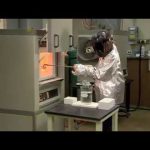
NASA Women’s History Month Profile – Valerie Wiesner (Glenn Research Center)
Dr. Valerie Wiesner is a materials research engineer at NASA Glenn Research Center in Cleveland, Ohio. She is responsible for evaluating high-temperature interactions between Calcium-Magnesium Aluminosilicate and Environmental Barrier Coating materials for aircraft turbine engine development.