Join Commander Steve Lindsey and his crew of Pilot Eric Boe, and Mission Specialists Alvin Drew, Steve Bowen, Mike Barratt and Nicole Stott as they journey to and from the International Space Station. Set to music, the video celebrates the final mission of space shuttle Discovery as it logs the last of its 365 days in flight.
Tag: NASA
-
Einstein Passes Tests by NASA’s Gravity Probe B
NASA’s Gravity Probe B (GP-B) spacecraft has confirmed two key predictions derived from Albert Einstein’s general theory of relativity. Launched in 2004, GP-B was designed to test Einstein using four ultra-precise gyroscopes to measure the hypothesized geodetic effect, which is the warping of space and time around a gravitational body, and frame-dragging, which is the amount a spinning object pulls space and time with it as it rotates. (News briefing held May 4, 2011 at NASA Headquarters in Washington.)
-
NASA Delays Shuttle Launch; No New Date Set
Briefing held at NASA’s Kennedy Space Center on Sunday, May 1, during which shuttle program officials outline work remaining to resolve an electronics problem that scrubbed Friday’s launch try. A new date for space shuttle Endeavour’s launch on STS-134 has not yet been set.
-
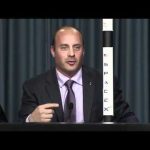
NASA Awards to Develop Commercial Crew Transport
A briefing at the Kennedy Space Center details NASA’s recent awards of more than $269 million for the continued development of commercial transportation systems to carry astronauts to and from low-Earth orbit. Four U.S. companies received the awards in the second round of NASA’s Commercial Crew Development, or CCDev, effort. Commercial crew transport will free NASA to concentrate on developing and building new technologies for human exploration beyond low-Earth orbit.
-
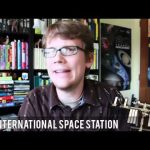
NASA: Increasing the Awesome
Contemplating the ritual of sending Washington a check every April 15, popular Internet vlogger Hank Green of Vlogbrothers explains why he believes NASA is worth every .45 penny of your hard-earned tax dollar.
-
Endeavour Ready to Go on This Week @NASA
April 29 is the official launch date for space shuttle Endeavour on STS-134. That announcement came at the conclusion of the mission’s Flight Readiness Review, where shuttle managers expressed satisfaction with the preparations for the program’s next-to-last flight. Launch is scheduled for 3:47 p.m. Eastern. Also, developing new ways to low-Earth orbit; putting the freeze on Webb’s mirror; Hubble turns 21; NASA’s Earth Day; soaring student rockets; do the Logo Motion; and Yuri’s Night at Langley.
-
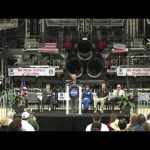
NASA Commemorates Space Shuttle’s 30th Anniversary, Reveals Display Sites for Orbiters
On the anniversary of the first space shuttle flight, NASA Administrator Charles Bolden joined Kennedy Space Center Director Bob Cabana, and STS-1 shuttle pilot Robert Crippen to pay tribute to the space shuttle era at the KSC in Florida. During the event, Bolden named the four institutions that will receive a shuttle orbiter for permanent display.
-
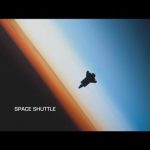
The Space Shuttle (Narrated by William Shatner)
An idea born in unsettled times becomes a feat of engineering excellence. The most complex machine ever built to bring humans to and from space and eventually construct the next stop on the road to space exploration.
-

New Shuttle Launch Date on This Week @NASA
NASA has re-targeted the liftoff of space shuttle Endeavour for Friday, April 29, at 3:47 p.m. EDT. The move comes to resolve a scheduling conflict with a Russian Progress supply vehicle scheduled to launch April 27 and arrive at the station two days later. Also, Goddard Memorial Symposium; “Wheels” rolls with big Shorty; cost-saving software summit; two honors for Ames; and, marking Odyssey’s beginning.
-

Expedition 27 Crew Prepares for Launch as their Soyuz Rocket Move to Launch Pad
The Soyuz TMA-21 spacecraft and its booster and were moved to the launch pad at the Baikonur Cosmodrome in Kazakhstan on a railcar April 2 for final preparations before launch April 5, Baiknour time, to the International Space Station. The Soyuz will carry Expedition 27 Soyuz Commander Alexander Samokutyaev, NASA Flight Engineer Ron Garan and Russian Flight Engineer Andrey Borisenko to the complex. The trio will spend six months on the station, joining station Commander Dmitry Kondratyev, NASA Flight Engineer Cady Coleman and European Space Agency Flight Engineer Paolo Nespoli, who have been in orbit since December 2010. Samokutyaev, Garan and Borisenko are in final training for launch with their backups, Anatoly Ivanishin, Dan Burbank and Anton Shkaplerov. The footage includes interviews with Astronaut Nicole Stott, STS-133 Mission Specialist, and with Mike Lopez-Alegria, Deputy Director for ISS, NASA Flight Crew Operations.
-
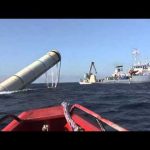
Shuttle’s Boosters Recovered in HD
NASA has released the first ever up-close, high-definition video of Kennedy Space Center’s solid rocket booster (SRB) recovery ships retrieving SRB segments from the Atlantic Ocean following a space shuttle launch. The unprecedented video is from the launch of the most recent shuttle mission, STS-133, Discovery’s final flight, on Feb. 24.
Following each space shuttle launch, crew members of Liberty Star and Freedom Star pull the spent boosters out of the ocean and return them to Hangar AF at Cape Canaveral Air Force Station in Florida. Once they are processed, the boosters are transported to Utah, where they are refurbished and stored, if needed. -
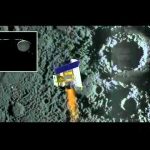
NASA’S MESSENGER Spacecraft Begins Historic Orbit of Mercury
NASA’s MErcury Surface, Space ENvironment, Geochemistry, and Ranging, or MESSENGER spacecraft successfully achieved orbit around Mercury at approximately 9 p.m. EDT Thursday. This marks the first time a spacecraft has accomplished this engineering and scientific milestone at our solar system’s innermost planet. Shown is reaction in MESSENGER mission control at the Johns Hopkins University Applied Physics Laboratory in Laurel, Md., as engineers received telemetry data confirming orbit insertion, plus animated depiction of the event. Among other goals, MESSENGER is expected to detect whether ice exists at Mercury’s poles.
-
NASA’s MESSENGER to Become First Spacecraft to Orbit Mercury
After more than a dozen laps through the inner solar system, NASA’s MESSENGER spacecraft will move into orbit around Mercury on March 17, 2011. The durable spacecraft — carrying seven science instruments and fortified against the blistering environs near the sun — will be the first to orbit the innermost planet. At 8:45 p.m. EDT, MESSENGER — having pointed its largest thruster very close to the direction of travel — will fire that thruster for nearly 14 minutes, with other thrusters firing for an additional minute, slowing the spacecraft by 862 meters per second (1,929 mph). The orbit insertion will place the spacecraft into a 12 hour orbit about Mercury with a 200 kilometer (124 mile) minimum altitude. At the time of orbit insertion, MESSENGER will be 46.14 million kilometers (28.67 million miles) from the sun and 155.06 million kilometers (96.35 million miles) from Earth. MESSENGER has been on a 6.6 year mission to become the first spacecraft to orbit Mercury. The spacecraft followed a path through the inner solar system, including one flyby of Earth, two flybys of Venus, and three flybys of Mercury. This impressive journey is returning the first new spacecraft data from Mercury since the Mariner 10 mission over 30 years ago.
-
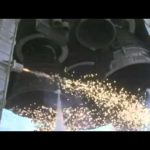
Discovery Launch Captured by Multiple Cameras
The ascent of space shuttle Discovery from NASA’s Kennedy Space Center on Feb. 24 is shown from a number of unique angles recorded by multiple engineering cameras situated at and around Launch Pad 39A.
-

NASA Celebrates Black History Month
Administrator Charles Bolden talks of the contributions to the space program made by African Americans, including Guy Bluford, the first black man in space; the first African American woman in space; and Fred Gregory, the first black to pilot and command a space shuttle mission.
-
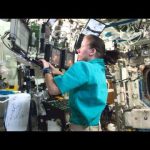
Expedition 24: Life in Space
Follow Expedition 24 crewmembers Aleksandr Skvortsov, Mikhail Korniyenko, Tracy Caldwell Dyson, Fyodor Yurchikhin, Shannon Walker, and Doug “Wheels” Wheelock as they live and work aboard the International Space Station. The music of Five for Fighting provides the backdrop for this compilation of images taken before, during, and after the mission.
-

NASA Briefs Media on Comet Flyby
News conference held Feb. 15 following the flyby of comet Tempel 1 by the Stardust-NExT spacecraft on Valentine’s Day, Feb. 14. The spacecraft’s closest approach was a distance of 112 miles. Participants are: Ed Weiler, NASA’s associate administrator, Science Mission Directorate, Washington; Joe Veverka, Stardust-NExT principal investigator, Cornell University; Tim Larson, Stardust-NExT project manager, NASA’s Jet Propulsion Laboratory, Pasadena, Calif.; Don Brownlee, Stardust-NExT co-investigator, University of Washington, Seattle; and Pete Schultz, Stardust-NExT co-investigator, Brown University.
-

NASA Mission Sheds New Light on Full Sun
For the first time, NASA’s Solar Terrestrial Relations Observatory, or STEREO, spacecraft, has provided a view of the entire sun, including its far side. Scientists can now gain a better understanding of the dynamic nature of our star and give earlier predictions of space weather events that can impact our technological infrastructure.
-
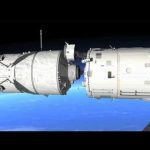
ATV-2 mission profile with ESA Mission Director Kris Capelle
ESA’s lead ATV-2 Mission Director Kris Capelle talks us through all phases of this complex mission – from launch preparation and lift-off to rendezvous and docking with the ISS through the attached phase, undocking and reentry.
-
NASA and OPTIMUS PRIME Team Up
NASA and OPTIMUS PRIME have teamed up to educate! Kids everywhere created videos showing how NASA technology is truly more than meets the eye, and now you can vote on your favorite! Visit http://ipp.gsfc.nasa.gov/optimus/ to learn more. OPTIMUS PRIME is a trademark of Hasbro and is used with permission. © 2011 Hasbro. All Rights Reserved.
-

NASA’s Hubble Finds Most Distant Galaxy Candidate Ever Seen in Universe
Astronomers have pushed NASA’s Hubble Space Telescope to its limits by finding what they believe is the most distant, ancient object ever seen in the universe. Its light traveled 13.2 billion years to reach Hubble, roughly 150 million years longer than the previous record holder. The age of the universe is 13.7 billion years. The dim object is a tiny, compact galaxy of blue stars that existed 480 million years after the big bang, only four percent of the universe’s current age. It is so small, more than one hundred similarly-sized mini-galaxies would be needed to make up our Milky Way.
-
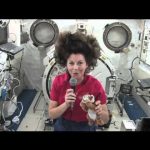
Waking up, working, and going to sleep in Zero G
Expedition 26 NASA Flight Engineer Cady Coleman discusses what daily life is like aboard an orbiting space laboratory on CBS’ news program “The Talk” on January 18, 2011.
-
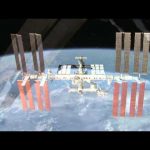
NASA’S Mission Control and ISS Crew Observe National Moment of Silence
At Mission Control at the Johnson Space Center in Houston and aboard the International Space Station, flight controllers and the Expedition 26 crew paused to observe a National Moment of Silence Jan. 10, 2011. The event was held for the victims of the shootings in Tucson, Ariz., Jan. 8 that left six people dead and more than a dozen wounded, including Rep. Gabrielle Giffords (D-AZ). Station Commander Scott Kelly, Giffords’ brother-in-law, led the station crew in its observance from 220 miles above the Earth.
-
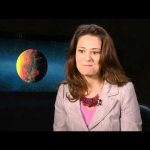
NASA’s Kepler Spacecraft Discovers Its First Rocky Exoplanet
NASA’s Kepler spacecraft has discovered Kepler-10b, its first confirmed rocky planet and the smallest transiting exoplanet discovered to date. Kepler-10b is only 1.4 times the size of Earth and has an average density of 8.8 grams per cubic centimeter, similar to that of an iron dumbbell. The planet orbits its star in only 0.84 days and is not in the habitable zone, where liquid water could exist.
-
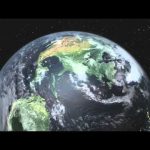
NASA Season’s Greetings 2010
NASA Television’s 2010 Season’s Greetings ID takes us on a journey through some of Hubble’s most beautiful images and ends with a view of a peaceful Earth through the cupola of the International Space Station. This piece was created by Mark R. Hailey, NASA Television’s Art Director with piano accompaniment by Michael Chao.
-
“Best of the Best” Provides New Views, Commentary of Shuttle Launches
This video from the Glenn Research Center highlights in stunning, behind-the-scenes imagery the launches of three space shuttle missions: STS-114, STS-117, and STS-124. NASA engineers provide commentary as footage from the ground and from the orbiters themselves document in detail the first phase of a mission.
-
NASA Science on the Road: Oceans, Carbon, and Climate
The annual gathering of Earth and space scientists in San Francisco at the American Geophysical Union meeting draws thousands of researchers from around the world, including many involved with NASA research. Galen McKinley of the University of Wisconsin-Madison talks about her work with carbon in the global oceans and the Great Lakes.
-

NASA Science Seminar “Arsenic and the Meaning of Life”
A scientific presentation by U.S. Geological Survey research hydrologist Dr. Ronald Oremland about the role of arsenic in microbial life and the microbial ecology of California’s Mono Lake.
Oremland is a senior scientist with the USGS Water Resources Division in Menlo Park, Calif., and a principal investigator with NASA’s Exobiology and Evolutionary Biology Program, an element of NASA’s Astrobiology Program. He is a co-author of the paper on arsenic findings published last week in Science Express and announced during the Dec. 2 NASA press conference. -

Space Station Crew Uses HAM Radio to Call Earth
Inside the International Space Station, Expedition 25 commander Doug Wheelock gave a tour of the Russian segment of the orbiting complex, including the Soyuz spacecraft docked there. Wheelock showed off the station’s HAM radio, using the call sign “NA1SS,” to talk with people on the ground as the station flies overhead at 17,500 miles per hour. Wheelock, and Flight Engineers Shannon Walker and Fyodor Yurchickin all will return home to Earth this Thursday, Nov. 25.
-

New Shuttle Launch Date Tops This Week @NASA
A new target launch date has been selected for STS-133, allowing ample time for repairs to space shuttle Discovery. Also, NASA’s chief technologist and planetary science director were among more than 20 speakers featured at the second TEDxNASA conference in Newport News, Virginia. Hosted by the Langley Research Center, TEDx focused on education, innovation, family, technology, art and space travel. Plus, X-15 astronaut Joe Wagner joins Aerospace Hall of Fame; HQ Honor Awards; and Herrington helps celebrate American Indian & Alaska Native Heritage Month.
-
“Larry the Cable Guy” Says “Git-R-Done!” and Watch NASA TV
In this second of three station IDs, comedian Daniel Lawrence Whitney, a.k.a. “Larry the Cable Guy,” implores viewers to watch NASA Television.
-
NASA Sets Official Launch Date for Shuttle Discovery
After a day-long flight readiness review at Kennedy Space Center in Florida, senior NASA and contractor managers voted unanimously to set space
-
ESA Euronews: Europe and space exploration (Português)
Space exploration is a major global issue and Europe wants to be in the driving seat. It therefore needs to develop a global vision and a strategic action plan.
-
ESA Euronews: Europe and space exploration (Italiano)
Space exploration is a major global issue and Europe wants to be in the driving seat. It therefore needs to develop a global vision and a strategic action plan.
-
ESA Euronews: Europe and space exploration (Français)
Space exploration is a major global issue and Europe wants to be in the driving seat. It therefore needs to develop a global vision and a strategic action plan.
-
ESA Euronews: Europe and space exploration (Deutsch)
Space exploration is a major global issue and Europe wants to be in the driving seat. It therefore needs to develop a global vision and a strategic action plan.
-
ESA Euronews: Europe and space exploration
Space exploration is a major global issue and Europe wants to be in the driving seat. It therefore needs to develop a global vision and a strategic action plan.
-

NASA Experts Assist in Chilean Miners’ Survival and Rescue
On Aug. 31, a NASA team of experts arrived in Santiago for about a week as part of NASA’s commitment to provide U.S. assistance. NASA’s assistance was only a small contribution to the Chilean government’s overall rescue effort. The NASA team included two medical doctors, a psychologist and an engineer. Dr. Michael Duncan, deputy chief medical officer in NASA’s Space Life Sciences Directorate at NASA’s Johnson Space Center in Houston,
led the team. The other team members are physician J.D. Polk, psychologist Al Holland and engineer Clint Cragg. -
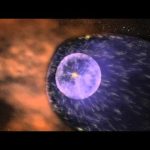
NASA Spacecraft Reveals Changes at Solar System’s Edge
For the first time, NASA’s Interstellar Boundary Explorer, or IBEX, spacecraft reveals changing conditions at the edge of our solar system. The heliosphere changes size through the solar cycle, which affects the number of cosmic rays that reach Earth. Scientists now have a better understanding of the dynamic nature of our home in the galaxy.