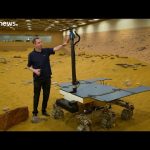
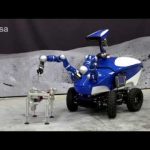
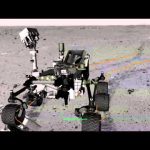
Bei der ExoMars-Mission, die nach Leben auf dem roten Planeten sucht, wächst die Spannung: Denn bereits der erste Satellit dieses europäisch-russischen Projekts entdeckte viel mehr Wassereis knapp unter der Marsoberfläche, als irgendjemand erwartet hatte. Jetzt arbeiten die Ingenieure fieberhaft daran, den Rover rechtzeitig zum Start im Jahr 2020 fertigzustellen.
ESA is Europe’s gateway to space. Our mission is to shape the development of Europe’s space capability and ensure that investment in space continues to deliver benefits to the citizens of Europe and the world. Check out http://www.esa.int/ESA to get up to speed on everything space related.
Los científicos e ingenieros que trabajan en ExoMars lo hacen a contrarreloj para finalizar un todoterreno y una plataforma de aterrizaje que les permitirán, en 2021, explorar la superficie y el subsuelo de Marte y comprobar si hay o ha habido vida en el Planeta Rojo.
Euronews ha viajado hasta el Reino Unido y Bélgica para hablar con los científicos e ingenieros que trabajan en ExoMars, un equipo europeo y ruso.
ESA is Europe’s gateway to space. Our mission is to shape the development of Europe’s space capability and ensure that investment in space continues to deliver benefits to the citizens of Europe and the world. Check out http://www.esa.int/ESA to get up to speed on everything space related.
Space fait le point sur l’avancée de la mission ExoMars dont le deuxième volet consistera à envoyer prochainement un rover capable de forer le sol martien à la recherche d’éventuelles traces de vie.
ESA is Europe’s gateway to space. Our mission is to shape the development of Europe’s space capability and ensure that investment in space continues to deliver benefits to the citizens of Europe and the world. Check out http://www.esa.int/ESA to get up to speed on everything space related.
Στη Βρετανία επιστήμονες και μηχανικοί εργάζονται για την αποστολή ExoMars, την κοινή Ευρωπαϊκή και ρωσική προσπάθεια που θα ταξιδέψει στον κόκκινο πλανήτη, ψάχνοντας για ζωή.
Ο Μπρούνο, είναι το ρόβερ που θα πάει στον Άρη. Είναι ένα όχημα με έξι ρόδες που μπορεί να αναπτύξει ταχύτητα δύο εκατοστών το δευτερόλεπτο και μπορεί να κινηθεί ημιαυτόνομα στην επιφάνεια του πλανήτη. Τις δοκιμές κάνουν οι μηχανικοί της Airbus, που είναι υπεύθυνοι για την κατασκευή του πρώτου οχήματος που θα ψάξει για ζωή στον κόκκινο πλανήτη.
ESA is Europe’s gateway to space. Our mission is to shape the development of Europe’s space capability and ensure that investment in space continues to deliver benefits to the citizens of Europe and the world. Check out http://www.esa.int/ESA to get up to speed on everything space related.
À procura de vida em Marte, a Agência Espacial Europeia (ESA, na sigla em inglês) e a congénere russa Roscosmos estão a ultimar a próxima missão ExoMars, a qual vai integrar também tecnologia de origem portuguesa. A Euronews deslocou-se a Stevenage, a norte de Londres, no Reino Unido, onde a Airbus está a desenvolver um novo veículo com o objetivo específico de procurar sinais de vida no planeta vermelho, o “vizinho” mais próximo da Terra no Sistema Solar.
ESA is Europe’s gateway to space. Our mission is to shape the development of Europe’s space capability and ensure that investment in space continues to deliver benefits to the citizens of Europe and the world. Check out http://www.esa.int/ESA to get up to speed on everything space related.
Spacecraft in orbit and on Mars’s surface have made many exciting discoveries, transforming our understanding of the planet and unveiling clues to the formation of our Solar System, as well as helping us understand our home planet. The next step is to bring samples to Earth for detailed analysis in sophisticated laboratories where results can be verified independently and samples can be reanalysed as laboratory techniques continue to improve.
Bringing Mars to Earth is no simple undertaking—it would require at least three missions from Earth and one never-been-done-before rocket launch from Mars.
A first mission, NASA’s 2020 Mars Rover, is set to collect surface samples in pen-sized canisters as it explores the Red Planet. Up to 31 canisters will be filled and readied for a later pickup – geocaching gone interplanetary.
In the same period, ESA’s ExoMars rover, which is also set to land on Mars in 2021, will be drilling up to two meters below the surface to search for evidence of life.
A second mission with a small fetch rover would land nearby and retrieve the samples in a Martian search-and-rescue operation. This rover would bring the samples back to its lander and place them in a Mars Ascent Vehicle – a small rocket to launch the football-sized container into Mars orbit.
A third launch from Earth would provide a spacecraft sent to orbit Mars and rendezvous with the sample containers. Once the samples are safely collected and loaded into an Earth entry vehicle, the spacecraft would return to Earth, release the vehicle to land in the United States, where the samples will be retrieved and placed in quarantine for detailed analysis by a team of international scientists.
A challenge for the next generation of explorers, an eye-popping virtual tour of the Moon, and introducing the public to a universe of discovery – a few of the stories to tell you about – This Week at NASA!
This video is available for download from NASA’s Image and Video Library: https://images.nasa.gov/details-NHQ_2018_0413_Human%20Exploration%20Rover%20Challenge%20on%20This%20Week%20@NASA%20%E2%80%93%20April%2013,%202018.html
The team developing NASA’s next rover mission to Mars has received a go-ahead from the agency to proceed with building the rover for launch in 2020. A July 15 Facebook Live event from NASA’s Jet Propulsion Laboratory featured updated news about the Mars 2020 rover and its mission. It will be almost identical to the Curiosity rover currently on Mars, but will have enhanced landing technology, the ability to prepare soil and rock samples for return to Earth and microphones to capture sound. The rover will look for signs of past life in a region of the Red Planet where the ancient environment was favorable for microbial life.
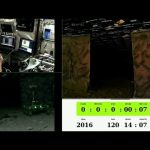
On 29 April 2016, ESA astronaut Tim Peake on the International Space Station took control of a rover, nicknamed ‘Bridget’, in the UK and over two hours drove it into a simulated cave and found and identified targets despite the dark and limited feedback information.
Before and after Tim came online from the orbiting Station, control of the rover was passed several times between engineers at the Airbus D&S ‘Mars Yard’ in Stevenage, UK, Belgium’s ISS User Support Centre in Brussels and ESA’s ESOC operations centre in Darmstadt, Germany. This complex real-time choreography was possible thanks to the ‘Internet in space’ – a network that tolerates disruptions – put in place by teams at ESOC. This network enables remote control of rovers or other devices in the difficult environment of space, with its long distances and frequent connection blackouts inevitable with orbital motion.
During the experiment, a representative mission scenario was set up in which the rover was commanded to go from a lit environment into a challenging dark location (simulating a cave or a shaded crater) and identified a number of science targets. The Mars yard (30 x 13 m) was split into two areas, one lit and one in the dark. From one end of the yard, Bridget was commanded from ESOC until it reached the edge of the shaded area. Then at the edge of the ‘cave’, control was passed to astronaut Tim Peake, on board the Station, who controlled Bridget to drive across the yard, avoiding obstacles and identifying potential science targets, which were marked with a distinctive ultraviolet fluorescent marker. Once the targets were identified and mapped, Tim drove the rover out of the shaded area and handed control back to ESOC, who drove the rover back to its starting point.
This video is a compressed extract that includes highlights of the experiment and includes scenes of the network control centre at ESOC, the Mars Yard at Stevenage and Tim Peake on the ISS. On audio, the voices of astronaut Time Peake, Lionel Ferra, the Eurocom ‘capcom’ controller at ESA’s Astronaut Centre in Cologne, Germany, and Kim Nergaard, the ground segment manager at ESOC, can be heard periodically.
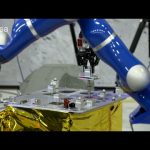
Putting a round peg in a round hole is not hard to do by someone standing next to it. But on 7 September 2015 ESA astronaut Andreas Mogensen did this while orbiting 400 km up aboard the International Space Station, remotely operating a rover and its robotic arm on the ground.
Andreas used a force-feedback control system developed at ESA, letting him feel for himself whenever the rover’s flexible arm met resistance.
These tactile sensations were essential for the success of the experiment, which involved placing a metal peg into a round hole in a ‘task board’ that offered less than a sixth of a millimetre of clearance. The peg needed to be inserted 4 cm to make an electrical connection.
Andreas managed two complete drive, approach, park and peg-in-hole insertions, demonstrating precision force-feedback from orbit for the very first time in the history of spaceflight.
The Interact Centaur rover used in the experiment was based at ESA’s technical centre ESTEC in Noordwijk, the Netherlands. It was designed and built by ESA’s Telerobotics & Haptics Laboratory in collaboration with graduate students from Delft University of Technology.
The Interact experiment is a first step towards developing robots that provide their operators with much wider sensory input than currently available. In this way, ESA is literally ‘extending human reach’ down to Earth from space.
This is the Interact Centaur rover that ESA astronaut Andreas Mogensen will be operating from orbit aboard the International Space Station, to drive into position and then perform an operation requiring sub-millimetre precision.
Developed by ESA’s Telerobotics and Haptics Laboratory, the Interact Centaur is a 4×4 wheeled rover combining a camera head on a neck system, a pair of highly advanced force sensitive robotic arms designed for remote force-feedback-based operation and a number of proximity and localisation sensors.
As demonstrated here, Andreas will first attempt to guide the robot to locate an ‘operations task board’ and then to remove and plug a metal pin into it, which has a very tight mechanical fit and tolerance of only about 150 micrometres, less than a sixth of a millimetre.
As currently scheduled, Monday 7 September should see the Interact rover driven around the grounds of ESA’s ESTEC technical centre in Noordwijk, the Netherlands, from the extremely remote location of Earth orbit, 400 km up.
Signals between the crew and the robot must travel a total distance of approximately ninety thousand kilometres, via a satellite constellation located in geostationary orbit. Despite this distance, Andreas will exactly feel what the robot does on the surface – with only a very slight lag.
The ExoMars spacecraft is almost complete. A joint mission between ESA and Roscosmos, it begins with the launch of the ExoMars orbiter in 2016 and carries an aerodynamically designed capsule containing a robotic lander.
Getting to Mars, landing there safely and searching for life is a huge scientific and technical challenge. ExoMars 2016 will send back information about the Martian atmosphere and the lander’s findings. These will inform the second part of the mission, in 2018, when a European rover will drill into the Martian surface, up to two metres down. The rover will be trying to detect traces of organic molecules that indicate the presence of past or present life on Mars.
This video includes interviews with Jorge Vago, ExoMars Project Scientist, ESA and Pietro Baglioni, ExoMars Rover Manager, ESA. It shows ExoMars 2016 nearing construction in its clean room at Thales Alenia Space in France and a prototype ExoMars rover in the ExoMars test yard at ESA’s ESTEC facility in the Netherlands.
During a July 31 briefing at NASA headquarters, agency officials announced seven science instruments, out of fifty-eight proposed, have been selected to be part of the next rover NASA will send to Mars in 2020. The Mars 2020 rover will be a new version of the Curiosity rover currently operating on Mars – with more sophisticated hardware to conduct unprecedented science and exploration technology investigations, including geological assessments, habitability of the environment and searching for signs of past life on the Red Planet.
A NASA Mars Curiosity rover team member gives an update on developments and status of the planetary exploration mission. The Mars Science Laboratory spacecraft delivered Curiosity to its target area on Mars at 1:31:45 a.m. EDT on Aug. 6, 2012 which includes the 13.8 minutes needed for confirmation of the touchdown to be radioed to Earth at the speed of light. The rover will conduct a nearly two-year prime mission to investigate whether the Gale Crater region of Mars ever offered conditions favorable for microbial life.
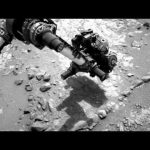
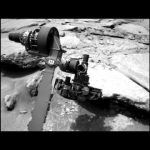
Curiosity carries 10 science instruments with a total mass 15 times as large as the science payloads on NASA’s Mars rovers Spirit and Opportunity. Some of the tools, such as a laser-firing instrument for checking rocks’ elemental composition from a distance, are the first of their kind on Mars. Curiosity will use a drill and scoop, which are located at the end of its robotic arm, to gather soil and powdered samples of rock interiors, then sieve and parcel out these samples into the rover’s analytical laboratory instruments.
A NASA Mars Curiosity rover team member gives an update on developments and status of the planetary exploration mission. The Mars Science Laboratory spacecraft delivered Curiosity to its target area on Mars at 1:31:45 a.m. EDT on Aug. 6, 2012 which includes the 13.8 minutes needed for confirmation of the touchdown to be radioed to Earth at the speed of light. The rover will conduct a nearly two-year prime mission to investigate whether the Gale Crater region of Mars ever offered conditions favorable for microbial life.
Curiosity carries 10 science instruments with a total mass 15 times as large as the science payloads on NASA’s Mars rovers Spirit and Opportunity. Some of the tools, such as a laser-firing instrument for checking rocks’ elemental composition from a distance, are the first of their kind on Mars. Curiosity will use a drill and scoop, which are located at the end of its robotic arm, to gather soil and powdered samples of rock interiors, then sieve and parcel out these samples into the rover’s analytical laboratory instruments.
A NASA’s Mars Curiosity rover team member gives an update on developments and status of the planetary exploration mission. The Mars Science Laboratory spacecraft delivered Curiosity to its target area on Mars at 1:31:45 a.m. EDT on Aug. 6, which includes the 13.8 minutes needed for confirmation of the touchdown to be radioed to Earth at the speed of light. The rover will conduct a nearly two-year prime mission to investigate whether the Gale Crater region of Mars ever offered conditions favorable for microbial life.
A NASA’s Mars Curiosity rover team member gives an update on developments and status of the planetary exploration mission. The Mars Science Laboratory spacecraft delivered Curiosity to its target area on Mars at 1:31:45 a.m. EDT on Aug. 6, which includes the 13.8 minutes needed for confirmation of the touchdown to be radioed to Earth at the speed of light. The rover will conduct a nearly two-year prime mission to investigate whether the Gale Crater region of Mars ever offered conditions favorable for microbial life.
A NASA’s Mars Curiosity rover team member gives an update on developments and status of the planetary exploration mission. The Mars Science Laboratory spacecraft delivered Curiosity to its target area on Mars at 1:31:45 a.m. EDT on Aug. 6, which includes the 13.8 minutes needed for confirmation of the touchdown to be radioed to Earth at the speed of light. The rover will conduct a nearly two-year prime mission to investigate whether the Gale Crater region of Mars ever offered conditions favorable for microbial life.
A NASA’s Mars Curiosity rover team member gives an update on developments and status of the planetary exploration mission. The Mars Science Laboratory spacecraft delivered Curiosity to its target area on Mars at 1:31:45 a.m. EDT on Aug. 6, which includes the 13.8 minutes needed for confirmation of the touchdown to be radioed to Earth at the speed of light. The rover will conduct a nearly two-year prime mission to investigate whether the Gale Crater region of Mars ever offered conditions favorable for microbial life.
A NASA’s Mars Curiosity rover team member gives an update on developments and status of the planetary exploration mission. The Mars Science Laboratory spacecraft delivered Curiosity to its target area on Mars at 1:31:45 a.m. EDT on Aug. 6, which includes the 13.8 minutes needed for confirmation of the touchdown to be radioed to Earth at the speed of light. The rover will conduct a nearly two-year prime mission to investigate whether the Gale Crater region of Mars ever offered conditions favorable for microbial life.
A NASA’s Mars Curiosity rover team member gives an update on developments and status of the planetary exploration mission. The Mars Science Laboratory spacecraft delivered Curiosity to its target area on Mars at 1:31:45 a.m. EDT on Aug. 6, which includes the 13.8 minutes needed for confirmation of the touchdown to be radioed to Earth at the speed of light. The rover will conduct a nearly two-year prime mission to investigate whether the Gale Crater region of Mars ever offered conditions favorable for microbial life.
Curiosity carries 10 science instruments with a total mass 15 times as large as the science payloads on NASA’s Mars rovers Spirit and Opportunity. Some of the tools, such as a laser-firing instrument for checking rocks’ elemental composition from a distance, are the first of their kind on Mars. Curiosity will use a drill and scoop, which are located at the end of its robotic arm, to gather soil and powdered samples of rock interiors, then sieve and parcel out these samples into the rover’s analytical laboratory instruments.
A NASA’s Mars Curiosity rover team member gives an update on developments and status of the planetary exploration mission. The Mars Science Laboratory spacecraft delivered Curiosity to its target area on Mars at 1:31:45 a.m. EDT on Aug. 6, which includes the 13.8 minutes needed for confirmation of the touchdown to be radioed to Earth at the speed of light. The rover will conduct a n
A NASA’s Mars Curiosity rover team member gives an update on developments and status of the planetary exploration mission. The Mars Science Laboratory spacecraft delivered Curiosity to its target area on Mars at 1:31:45 a.m. EDT on Aug. 6, which includes the 13.8 minutes needed for confirmation of the touchdown to be radioed to Earth at the speed of light. The rover will conduct a nearly two-year prime mission to investigate whether the Gale Crater region of Mars ever offered conditions favorable for microbial life.
Curiosity carries 10 science instruments with a total mass 15 times as large as the science payloads on NASA’s Mars rovers Spirit and Opportunity. Some of the tools, such as a laser-firing instrument for checking rocks’ elemental composition from a distance, are the first of their kind on Mars. Curiosity will use a drill and scoop, which are located at the end of its robotic arm, to gather soil and powdered samples of rock interiors, then sieve and parcel out these samples into the rover’s analytical laboratory instruments.
NASA’s newest Mars rover has found evidence that a stream once ran vigorously across the area on the Red Planet where the rover is now driving. The finding is a different type of evidence for water on Mars than ever found before. Scientists are studying Curiosity’s images of rocks containing ancient streambed gravels. The sizes and shapes of stones cemented into a layer of conglomerate rock are clues to the speed and distance of a long-ago stream’s flow.
A NASA’s Mars Curiosity rover team member gives an update on developments and status of the planetary exploration mission. The Mars Science Laboratory spacecraft delivered Curiosity to its target area on Mars at 1:31:45 a.m. EDT on Aug. 6, which includes the 13.8 minutes needed for confirmation of the touchdown to be radioed to Earth at the speed of light. The rover will conduct a nearly two-year prime mission to investigate whether the Gale Crater region of Mars ever offered conditions favorable for microbial life.
Curiosity carries 10 science instruments with a total mass 15 times as large as the science payloads on NASA’s Mars rovers Spirit and Opportunity. Some of the tools, such as a laser-firing instrument for checking rocks’ elemental composition from a distance, are the first of their kind on Mars. Curiosity will use a drill and scoop, which are located at the end of its robotic arm, to gather soil and powdered samples of rock interiors, then sieve and parcel out these samples into the rover’s analytical laboratory instruments.
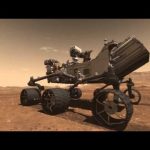
NASA’s most advanced Mars rover Curiosity has landed on the Red Planet. The one-ton rover, hanging by ropes from a rocket backpack, touched down onto Mars Sunday to end a 36-week flight and begin a two-year investigation.
The Mars Science Laboratory (MSL) spacecraft that carried Curiosity succeeded in every step of the most complex landing ever attempted on Mars, including the final severing of the bridle cords and flyaway maneuver of the rocket backpack.
With less than three weeks to the scheduled landing of the Curiosity rover on the Red Planet, leaders of Mars Science Laboratory team field questions form media about the mission, the most difficult ever undertaken in the history of interplanetary robotic exploration.
The NASA Mars Science Laboratory launched from the Cape Canaveral Air Force Station in Florida, beginning its journey to the Red Planet. When it arrives at Gale Crater next August, Curiosity rover’s ten instruments will investigate whether that area of Mars could ever have sustained microbial life. Also, ISS spinoff; Bolden on tour: lander test; best of the feds; money saver; high-flying feast, and more.
NASA’s Mars Rover Opportunity has reached its next destination. Three years after climbing out of Victoria crater, Opportunity has completed an eleven-mile trek to the rim of Endeavour crater at a spot informally named “Spirit Point” after the rover’s decommissioned twin.
At 14 miles in diameter, Endeavour has ridges along its western rim that expose rock outcrops older than any Opportunity has seen so far. Also, Future Forum; shuttles nose-to-nose; hydro basin; women of WISH; STEM forum; and engineering interns. Plus, NASA Art!
This 11-minute animation depicts key events of NASA’s Mars Science Laboratory mission, which will launch in late 2011 and land a rover, Curiosity, on Mars in August 2012. A shorter 4-minute version of this animation, with narration, is also available on our youtube page.