As always, a new year brings new and exciting missions and launches for ESA. In science the world looks forward to the first image releases of the recently launched James Webb Space Telescope and the third data release for Gaia, both teaching us more about our galaxy and Universe. ESA’s new Mars rover will be launched with the ExoMars mission, and we will also see the maiden flights of Vega-C, Ariane 6 and the Artemis I flight. Astronaut Samantha Cristoforetti will return to the ISS for her second mission and a new class of astronauts will be presented to the world. After the groundwork has been laid in 2021 a new Ministerial Council Meeting will gather to look at the future of ESA, and the need for ESA and Europe to accelerate space and integrated space technology into the fabric of our lives.
★ Subscribe: http://bit.ly/ESAsubscribe and click twice on the bell button to receive our notifications.
We are Europe’s gateway to space. Our mission is to shape the development of Europe’s space capability and ensure that investment in space continues to deliver benefits to the citizens of Europe and the world. Check out https://www.esa.int/ to get up to speed on everything space related.
Join ESA astronaut Matthias Maurer inside Kibo, the Japanese laboratory module of the International Space Station in 360°, setting up Astrobee robotic free-flyers for the ReSWARM experiment. Short for RElative Satellite sWArming and Robotic Maneuvering, this robotics demonstration tests autonomous microgravity motion planning and control for on-orbit assembly and coordinated motion.
This investigation aims to test coordination between multiple robots, robots and cargo, and robots and their operating environment as developers envision the future of autonomous robot operations in space.
Matthias was launched to the International Space Station on Crew Dragon Endurance as part of Crew-3 at 02:03 GMT/03:03 CET Thursday 11 November 2021. His ESA mission on board is known as Cosmic Kiss and will see him live and work for approximately six months in orbit.
We are Europe’s gateway to space. Our mission is to shape the development of Europe’s space capability and ensure that investment in space continues to deliver benefits to the citizens of Europe and the world. Check out https://www.esa.int/ to get up to speed on everything space related.
This real-time video shows the separation of the James Webb Space Telescope from the Ariane 5 launch vehicle and the subsequent solar array deployment.
Webb’s launch on an ESA-provided Ariane 5 rocket was performed by @arianespace on behalf of ESA from Europe’s Spaceport in French Guiana, at 12:20:07 GMT (13:20:07 CET) on 25 December 2021.
Webb separation from the Ariane 5 occurred at 12:47:14 GMT (13:47:14 CET) with solar array deployment starting 69 seconds later.
Thanks to Ariane 5’s highly precise launch trajectory Webb’s solar array was able to deploy soon after separation from the Ariane 5, capturing sunlight to power the observatory.
This video shows the view from Ariane 5’s upper stage, taken by a camera manufactured by Irish company Réaltra Space Systems Engineering.
Webb is the next great space science observatory following Hubble, designed to answer outstanding questions about the Universe and to make breakthrough discoveries in all fields of astronomy. Webb will see farther into our origins: from the formation of stars and planets, to the birth of the first galaxies in the early Universe. Webb is an international partnership between @NASA, ESA and the @Canadian Space Agency.
We are Europe’s gateway to space. Our mission is to shape the development of Europe’s space capability and ensure that investment in space continues to deliver benefits to the citizens of Europe and the world. Check out https://www.esa.int/ to get up to speed on everything space related.
Highlights of the launch campaign for the James Webb Space Telescope, from its arrival at Europe’s Spaceport in Kourou, French Guiana, weeks of launch preparations, to launch on board an Ariane 5, and separation of the spacecraft and solar panel deployment.
Now in space and on its way to L2, Webb will undergo a complex unfolding sequence. In the months after, the instruments will be turned on and their capabilities tested. After half a year in space, Webb will start its routine science observations.
Webb will see farther into our origins: from the Universe’s first galaxies, to the birth of stars and planets, to exoplanets with the potential for life, and our own Solar System.
We are Europe’s gateway to space. Our mission is to shape the development of Europe’s space capability and ensure that investment in space continues to deliver benefits to the citizens of Europe and the world. Check out https://www.esa.int/ to get up to speed on everything space related.
From one space flier to another, ESA astronaut Matthias Maurer shares a message of support for the James Webb Space Telescope (Webb) launch, from ESA’s Columbus science laboratory on the International Space Station.
Matthias is currently living and working in space for his first mission known as Cosmic Kiss. He describes the mission of Webb as part of humankind’s biggest adventure, as we explore the cosmos to understand our place within it.
Webb is the next great space science observatory following Hubble, designed to answer outstanding questions about the Universe and to make breakthrough discoveries in all fields of astronomy. It is an international partnership between the European Space Agency ESA, US space agency @NASA, and the @Canadian Space Agency, and will be launched on an Ariane 5 rocket from Europe’s Spaceport in French Guiana.
Webb is designed to see farther into our origins: from the formation of stars and planets to the birth of the first galaxies in the early Universe, just as the International Space Station enables us to learn more about our home planet.
We are Europe’s gateway to space. Our mission is to shape the development of Europe’s space capability and ensure that investment in space continues to deliver benefits to the citizens of Europe and the world. Check out https://www.esa.int/ to get up to speed on everything space related.
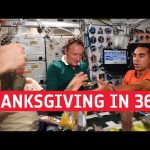
Feel like a guest and join ESA astronaut Matthias Maurer and his Expedition 66 crew mates enjoying a festive Thanksgiving meal on board the International Space Station in 360°. Explore the space station’s dining area and see what’s on the menu for this year’s orbital Thanksgiving.
Matthias says: “One of the best things about international collaboration, beyond our daily work on science and operations, is sharing international celebrations and culture. I’m thankful for all my crew mates up here on the International Space Station and everyone supporting our mission from Earth”.
Matthias was launched to the International Space Station on Crew Dragon Endurance as part of Crew-3 at 02:03 GMT/03:03 CET Thursday 11 November 2021. His ESA mission is known as Cosmic Kiss and will see him live and work in orbit for approximately six months.
We are Europe’s gateway to space. Our mission is to shape the development of Europe’s space capability and ensure that investment in space continues to deliver benefits to the citizens of Europe and the world. Check out https://www.esa.int/ to get up to speed on everything space related.
We’re almost ready to say goodbye to 2021, a year in which ESA once more succeeded in continuing operations in a challenging global situation, and creating some important milestones in the field of European spaceflight. As always, ESA has been at the forefront of science, with several science missions en route to their destinations or being prepared for flight, such as BepiColombo, Solar Orbiter, JUICE and ExoMars, and not least rounding off the year with the impending launch of the James Webb Space Telescope. Europe’s Copernicus programme continues to be the largest Earth observation system in the world, and ESA is even preparing more Earth observation missions. In 2021, ESA astronaut Thomas Pesquet carried out his Alpha mission to the Space Station, and Matthias Maurer began his Cosmic Kiss mission, continuing into 2022. As we said farewell to Prof. Jan Wörner, a new Director General took the helm of ESA and we welcomed Dr Josef Aschbacher with his ambition to accelerate the use of space in Europe. Meanwhile, the latest Vega rocket flight has paved the way for the transition to Vega-C, and the new Ariane 6 launchpad was inaugurated.
★ Subscribe: http://bit.ly/ESAsubscribe and click twice on the bell button to receive our notifications.
We are Europe’s gateway to space. Our mission is to shape the development of Europe’s space capability and ensure that investment in space continues to deliver benefits to the citizens of Europe and the world. Check out https://www.esa.int/ to get up to speed on everything space related.
Did you know that in microgravity you can better study liquid metals and how they solidify?
Research in space on metallurgy helps improving production processes while enhancing properties for stronger, lighter and durable materials.
The step to space research is closer than you might think. Get involved with spaceflight research via https://www.esa.int/spaceflightAO. Find out about our commercial partnerships and opportunities in human and robotic exploration via https://www.esa.int/explorationpartners to run your research in microgravity as well.
★ Subscribe: http://bit.ly/ESAsubscribe and click twice on the bell button to receive our notifications.
We are Europe’s gateway to space. Our mission is to shape the development of Europe’s space capability and ensure that investment in space continues to deliver benefits to the citizens of Europe and the world. Check out https://www.esa.int/ to get up to speed on everything space related.
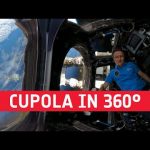
Join ESA astronaut Matthias Maurer inside the seven-windowed cupola, the International Space Station’s “window to the world” and pan around to enjoy the view.
The ESA – European Space Agency-built Cupola is the favourite place of many astronauts on the International Space Station.
It serves not only as a unique photo spot, but also for observing robotic activities of the Canadian Space Agency’s robotic arm Canadarm2, arriving spacecraft and spacewalks.
Just outside the cupola and behind Matthias is a portion of the Soyuz MS-19 crew ship docked to the Rassvet module and the Prichal docking module attached to the Nauka multipurpose laboratory service module.
Matthias was launched to the International Space Station on Crew Dragon Endurance as part of Crew-3 at 02:03 GMT/03:03 CET Thursday 11 November. His ESA mission on board is known as Cosmic Kiss and will see him live and work for approximately six months in orbit.
We are Europe’s gateway to space. Our mission is to shape the development of Europe’s space capability and ensure that investment in space continues to deliver benefits to the citizens of Europe and the world. Check out https://www.esa.int/ to get up to speed on everything space related.
The Copernicus Sentinel-2 takes us over Kourou – home to Europe’s Spaceport in French Guiana, where the James Webb Space Telescope is being prepared for its upcoming launch – in this edition of the Earth from Space programme.
We are Europe’s gateway to space. Our mission is to shape the development of Europe’s space capability and ensure that investment in space continues to deliver benefits to the citizens of Europe and the world. Check out https://www.esa.int/ to get up to speed on everything space related.
Even astronauts in orbit cannot escape housework. Join ESA astronaut Matthias Maurer as he vacuums the European Columbus and Japanese Kibo modules of the International Space Station in this 360° video.
Unlike on Earth, dust on the Space Station does not settle. Astronauts vacuum regularly to prevent floating dust from getting in their eyes and noses, causing irritation and allergic reactions. Pan to explore the different modules and follow Matthias’s work.
Matthias was launched to the International Space Station on Crew Dragon Endurance as part of Crew-3 at 02:03 GMT/03:03 CET Thursday 11 November. His ESA mission on board is known as Cosmic Kiss and will see him live and work for approximately six months in orbit.
We are Europe’s gateway to space. Our mission is to shape the development of Europe’s space capability and ensure that investment in space continues to deliver benefits to the citizens of Europe and the world. Check out https://www.esa.int/ to get up to speed on everything space related.
We are Europe’s gateway to space. Our mission is to shape the development of Europe’s space capability and ensure that investment in space continues to deliver benefits to the citizens of Europe and the world. Check out https://www.esa.int/ to get up to speed on everything space related.
The world’s next generation cosmic observatory, the James Webb Space Telescope, is due for launch on an Ariane 5 from Europe’s Spaceport in French Guiana in late December.
Developed and constructed over more than 30 years, Webb is a remarkable feat of engineering and technology – with the largest astronomical mirror ever flown in space, sophisticated new scientific instruments, and a sunshield the size of a tennis court.
Webb is an international partnership between @NASA, ESA and the @Canadian Space Agency and will reveal the Universe in a whole new light. Optimised for infrared wavelengths, its detectors will be able to look back to shortly after the very dawn of time, revealing the formation of the first galaxies, as well as study stars and planets in our own Milky Way.
We are Europe’s gateway to space. Our mission is to shape the development of Europe’s space capability and ensure that investment in space continues to deliver benefits to the citizens of Europe and the world. Check out https://www.esa.int/ to get up to speed on everything space related.
The James Webb Space Telescope, configured for flight, was moved from the cleanroom to the payload preparation facility for fuelling at Europe’s Spaceport in French Guiana on 11–12 November 2021.
Webb will be loaded with propellants before being mounted on top of the rocket and then encapsulated by the Ariane 5 fairing.
Webb will be the largest, most powerful telescope ever launched into space. As part of an international collaboration agreement, ESA is providing the telescope’s launch service using the Ariane 5 launch vehicle. Working with partners, ESA was responsible for the development and qualification of Ariane 5 adaptations for the Webb mission and for the procurement of the launch service by Arianespace.
Webb is an international partnership between @NASA , ESA and the @Canadian Space Agency.
We are Europe’s gateway to space. Our mission is to shape the development of Europe’s space capability and ensure that investment in space continues to deliver benefits to the citizens of Europe and the world. Check out https://www.esa.int/ to get up to speed on everything space related.
Explore the International Space Station’s Cupola module in 360 degrees while ESA astronaut Matthias Maurer lifts weights in weightlessness. This 360 timelapse video was shot over 53 minutes, at a rate one frame every two seconds, as Matthias completed a workout on the Advanced Resistive Exercise Device (ARED).
Pan to watch the world go by as the Station orbits Earth at around 28 000 km/h, then see how Matthias keeps his muscles and bones healthy for a safe return to Earth.
Exercise is an important part of an astronaut’s daily routine. It not only keeps them fit and ready for demanding tasks like a spacewalk, but it also helps to combat bone and muscle loss caused by a prolonged stay in orbit. ARED is one of several exercise devices astronauts use on Station. They also have a treadmill called T2 and an exercycle known as CEVIS.
Matthias was launched to the International Space Station on Crew Dragon Endurance as part of Crew-3 at 02:03 GMT/03:03 CET Thursday 11 November. His ESA mission on board is known as Cosmic Kiss and will see him live and work for approximately six months in orbit.
We are Europe’s gateway to space. Our mission is to shape the development of Europe’s space capability and ensure that investment in space continues to deliver benefits to the citizens of Europe and the world. Check out https://www.esa.int/ to get up to speed on everything space related.
We are Europe’s gateway to space. Our mission is to shape the development of Europe’s space capability and ensure that investment in space continues to deliver benefits to the citizens of Europe and the world. Check out https://www.esa.int/ to get up to speed on everything space related.
Soon another pair of Galileo satellites will be launched on top of a Soyuz from Europe spaceport in French Guiana. These satellites are the first of the so-called ‘Batch 3’, comprising of 12 additional first-generation Galileo satellites commissioned in 2017 to bring the constellation to full operational capability. They will be used to further expand the constellation up to 38 satellites and act as backups and spares for satellites that reach their end-of-life. This 11th Galileo launch also marks the 10 year anniversary of the first launch of the Galileo operational satellites and the start of the construction of the constellation. Ten years later Galileo is the most accurate satellite navigation system in the world and available on every recent smartphone and device. It is also two decades since satellite navigation was first introduced as a completely new activity in the European space sector.
Meanwhile ESA continues to ensure the future of the Galileo programme and European expertise in satellite navigation. For Galileo ESA has already commissioned a second generation of more powerful and flexible navigation satellites while new services are being developed to meet market demand.
★ Subscribe: http://bit.ly/ESAsubscribe and click twice on the bell button to receive our notifications.
We are Europe’s gateway to space. Our mission is to shape the development of Europe’s space capability and ensure that investment in space continues to deliver benefits to the citizens of Europe and the world. Check out https://www.esa.int/ to get up to speed on everything space related.
What questions do you have about NASA’s #DARTMission? Join our experts Tuesday, Nov. 23 at 4 p.m. EST. NASA’s Double Asteroid Redirection Test (DART) launches soon on a journey to become the world’s first #PlanetaryDefense test. The spacecraft will intentionally crash itself into an asteroid to see if it can move its motion in space. If it does, this could be proved as a viable way to deflect a threatening asteroid in the future, should one be discovered.
DART is a spacecraft designed to impact an asteroid as a test of technology. DART’s target asteroid is NOT a threat to Earth. This asteroid system is a perfect testing ground to see if intentionally crashing a spacecraft into an asteroid is an effective way to change its course, should an Earth-threatening asteroid be discovered in the future.
Meet the experts: Dr. Lori Glaze is the Director for NASA’s Planetary Science Missions. Her favorite part about her job is that she gets to learn something new every day. “The solar system is packed with mysteries, and we have an amazing collection of missions that are working together every day to unlock those mysteries.” Outside of work, Dr. Glaze enjoys spending time outdoors with her family and listening to music.
Dr. Nancy Chabot is the DART Coordination Lead at Johns Hopkins University Applied Physics Laboratory. Her favorite part about her job is working with a team to accomplish more than any one person could do on their own. Outside of work, Dr. Chabot has been learning to cook new recipes.
Lisa Wu is a Mechanical Engineer at Johns Hopkins University Applied Physics Laboratory. Her favorite part of her job is that she gets to work with space flight hardware every day. She is most looking forward to not only the science we’ll learn from the DART impact, but also demonstrating the new technologies onboard the spacecraft. In her free time, Lisa has been figure skating.
Stephanie L. Smith is the social media lead at NASA headquarters. Her favorite part of the job is using pop culture and plain English to make science and technology meaningful and relatable to as many people as possible. When she’s not hosting conversations about smacking into space rocks, you’ll probably find her hiking or cooking.
Meet Hera, our very own asteroid detective. Together with two CubeSats – Milani the rock decoder and Juventas the radar visionary – Hera is off on an adventure to explore Didymos, a double asteroid system that is typical of the thousands that pose an impact risk to planet Earth.
Suitable for kids and adults alike, this episode tells the story of the discovery of asteroids, in ‘The Curious Case of the Missing Planet’. Astronomers in the 18th century were sure there was a planet in the wide gap between Mars and Jupiter – and even formed a group called the Celestial Police to find it. But eventually it became clear there was no single world out there, just lots and lots of little ones. Fast forward to today and more than a million asteroids have been discovered, and Hera will perform close-up detection on two of them.
We are Europe’s gateway to space. Our mission is to shape the development of Europe’s space capability and ensure that investment in space continues to deliver benefits to the citizens of Europe and the world. Check out https://www.esa.int/ to get up to speed on everything space related.
We are Europe’s gateway to space. Our mission is to shape the development of Europe’s space capability and ensure that investment in space continues to deliver benefits to the citizens of Europe and the world. Check out https://www.esa.int/ to get up to speed on everything space related.
Satellites observe the Earth using a range of wavelengths on the electromagnetic spectrum. Different wavelengths allow us to probe different aspects of Earth’s land, atmosphere and ocean. By sampling the electromagnetic spectrum at multiple wavelengths, we can build a more complete picture of Earth’s complex climate system.
We are Europe’s gateway to space. Our mission is to shape the development of Europe’s space capability and ensure that investment in space continues to deliver benefits to the citizens of Europe and the world. Check out https://www.esa.int/ to get up to speed on everything space related.
ESA astronaut Matthias Maurer and @NASA astronauts Raja Chari, Tom Marshburn and Kayla Barron liftoff to the International Space Station in the @SpaceX Crew Dragon spacecraft “Endurance”.
Collectively known as “Crew-3”, the astronauts were launched from launchpad 39A at @NASAKennedy in Florida, USA at 02:03 GMT/03:03 CET Thursday 11 November.
The spacecraft docked to the International Space Station at 00:32 CET Friday, 12 November/23:32 GMT Thursday, 11 November, marking the official start of Matthias’s first mission ‘Cosmic Kiss’.
Crew-3 will spend around six months living and working aboard the orbital outpost before returning to Earth. It is the first space mission for Matthias, who’s become the 600th human to fly to space. He chose the name “Cosmic Kiss” for his mission as a declaration of love for space.
Matthias has a background in materials science and looks forward to supporting a wide range of science and research in orbit. The work he carries out throughout his mission will contribute to the success of future space missions and help enhance life on Earth.
We are Europe’s gateway to space. Our mission is to shape the development of Europe’s space capability and ensure that investment in space continues to deliver benefits to the citizens of Europe and the world. Check out https://www.esa.int/ to get up to speed on everything space related.
The Copernicus Sentinel-2 takes us over Cancún, on the northeast coast of Mexico’s Yucatán Peninsula, in this edition of the Earth from Space programme.
We are Europe’s gateway to space. Our mission is to shape the development of Europe’s space capability and ensure that investment in space continues to deliver benefits to the citizens of Europe and the world. Check out https://www.esa.int/ to get up to speed on everything space related.
ESA astronaut Thomas Pesquet gives a brief interview in Cologne, Germany, less than 48 hours after leaving the International Space Station.
He talks with ESA Web TV editor Julien Harrod about returning to Earth after his six-month International Space Station mission Alpha, how it feels to splash down in a @SpaceX Crew Dragon, and the differences with the Russian Soyuz spacecraft that flew him to space on his first mission, Proxima, in 2017.
After completing two six-month Space Station missions in five years, Thomas recounts the changes he saw while observing our planet Earth from 400 km above.
Thomas is the first European to fly to the International Space Station and return on a commercial spacecraft. SpaceX’s Crew Dragon Endeavour transporting Crew-2 autonomously undocked from the International Space Station and after a series of burns, entered Earth’s atmosphere and deployed parachutes for a soft water-landing. Thomas and crew splashed down on 9 November 2021 at 03:33 GMT (04:33 CET).
Thomas flew to Cologne, Germany, where he is being monitored by ESA’s space medicine team as he readapts to Earth’s gravity at ESA’s European Astronaut Centre (EAC) and @DLR ‘Envihab’ facility.
Over 200 experiments were run during Thomas’ time in space, with 40 European ones and 12 new experiments led by the French space agency @CNES. The experiments continue on Earth charting the astronauts physical adaptation to living with gravity again.
We are Europe’s gateway to space. Our mission is to shape the development of Europe’s space capability and ensure that investment in space continues to deliver benefits to the citizens of Europe and the world. Check out https://www.esa.int/ to get up to speed on everything space related.
ESA astronaut Thomas Pesquet is sharing scenes from life on board the International Space Station during his second mission “Alpha”. Here he gives a quick tour of the @SpaceX Cargo Dragon Endeavour that brought him to the Space Station together with @JAXA | 宇宙航空研究開発機構 astronaut Aki Hoshide and @NASA astronauts Shane Kimbrough and Megan McArthur. The same astronauts, Crew-2, will use the spacecraft to return home after undocking with the Station and fly to Earth for a splashdown off the coast of Florida, USA.
Over 200 experiments are planned during Thomas’ time in space, with 40 European ones and 12 new experiments led by the French space agency @CNES.
We are Europe’s gateway to space. Our mission is to shape the development of Europe’s space capability and ensure that investment in space continues to deliver benefits to the citizens of Europe and the world. Check out https://www.esa.int/ to get up to speed on everything space related.
Join ESA astronaut Thomas Pesquet on a tour of the International Space Station. On his second space mission Alpha, Thomas flew to space from Florida, USA, as part of Crew-2 in the @SpaceX Crew Dragon Endeavour together with @NASA astronauts Megan McArthur, Shane Kimbrough and @JAXA | 宇宙航空研究開発機構 astronaut Aki Hoshide
In this guided tour, a first shot in 4K, Thomas takes you through the modules of the International Space Station including the Dragon. Recorded in October 2021 the Space Station had just seen the departure of Soyuz MS-18 and the relocation of a Progress supply spacecraft. On board where also NASA astronaut Mark VandeHei and Russian cosmonauts Anton Shkaplerov and Pyotr Dubrov.
Over 200 investigations are planned during Thomas’ time in space, with 40 European ones and 12 new experiments led by the French space agency @CNES.
We are Europe’s gateway to space. Our mission is to shape the development of Europe’s space capability and ensure that investment in space continues to deliver benefits to the citizens of Europe and the world. Check out https://www.esa.int/ to get up to speed on everything space related.
The Copernicus Sentinel-2 takes us over the Shetland Islands, an archipelago in the Northern Isles of Scotland, in this edition of the Earth from Space programme.
We are Europe’s gateway to space. Our mission is to shape the development of Europe’s space capability and ensure that investment in space continues to deliver benefits to the citizens of Europe and the world. Check out https://www.esa.int/ to get up to speed on everything space related.
Glaciers across the globe have lost over nine trillion tonnes of ice in half a century. How will glaciers look over the coming decades? “It all depends on what humans are doing now in terms of greenhouse gas emissions:” this is the message one scientist delivered during an ESA-led expedition to the Gorner Glacier in Switzerland – one of the biggest ice masses in the Alps.
As world leaders gather for the 26th @United Nations Climate Change Conference of Parties, watch the exclusive premiere of the documentary that follows ESA astronaut Luca Parmitano, along with a team of glaciologists and climate experts, on their journey across the Alps to learn how rising global temperatures are taking their toll on glaciers.
The documentary features breathtaking scenery of the Gorner Glacier as well as interviews with climate specialists as they explain how we can monitor glaciers using both satellite data and in situ measurements.
We are Europe’s gateway to space. Our mission is to shape the development of Europe’s space capability and ensure that investment in space continues to deliver benefits to the citizens of Europe and the world. Check out https://www.esa.int/ to get up to speed on everything space related.
A collection of the best timelapse videos made during ESA astronaut Thomas Pesquet’s second mission to the International Space Station, “Alpha” in 2021. The camera is setup to take pictures at intervals of two a second, and the pictures are then edited into this video that plays at 25 pictures a second. Most videos around 12 times faster than real speed.
Thomas shared this video on social media with the caption:
“Probably the last the timelapse from space, and fittingly here is a special edition “best of” montage: aurora, lightning, spacewalks, day views and spacecraft reentry in less than five minutes. Get comfy, cast it to your largest screen in the house and enjoy!”
Over 200 experiments are planned during Thomas’ time in space, with 40 European ones and 12 new experiments led by the French space agency @CNES.
We are Europe’s gateway to space. Our mission is to shape the development of Europe’s space capability and ensure that investment in space continues to deliver benefits to the citizens of Europe and the world. Check out https://www.esa.int/ to get up to speed on everything space related.
Satellites play a vital role in monitoring the rapid changes taking place in the Arctic. Tracking ice lost from the world’s glaciers, ice sheets and frozen land shows that Earth is losing ice at an accelerating rate. Currently more than a trillion tonnes of ice is lost each year. The sooner Earth’s temperature is stabilised, the more manageable the impacts of ice loss will be.
Credit: ESA/Planetary Visions
★ Subscribe: http://bit.ly/ESAsubscribe and click twice on the bell button to receive our notifications.
We are Europe’s gateway to space. Our mission is to shape the development of Europe’s space capability and ensure that investment in space continues to deliver benefits to the citizens of Europe and the world. Check out https://www.esa.int/ to get up to speed on everything space related.
Timelapse video made during ESA astronaut Thomas Pesquet’s second mission to the International Space Station, “Alpha”. On 17 October 2021 at 01:14 GMT the Soyuz MS-18 undocked from the Space Station to return to Earth, inside were @Roscosmos Media cosmonaut Oleg Novitskiy (who had spent 191 days in space) and actress Yulia Peresild and Russian producer-director Klim Shipenko (who both spent 11 days in space). The trio landed on Earth just over three hours later. The camera for this timelapse was setup to take pictures at intervals of two a second, and the pictures are then edited into this video that plays at 25 pictures a second. The video is around 12 times faster than real speed.
Thomas shared this video on social media with the caption:
“Soyuz MS-18 departing two weekends ago already. Oleg left with Yulia and Klim and I see pictures of them back looking happy and healthy back on Earth. they were only in space for a few days though, a business trip, more than an expedition, for us and Oleg it will be a bit different: the physical and social readapting to Earth will require some work. This is a timelapse so it moves 12 times faster than in reality. I wasn’t the only one to film in the Cupola, and where the image shakes a bit is when one of my crewmates bumped the tripod! ”
Over 200 experiments are planned during Thomas’ time in space, with 40 European ones and 12 new experiments led by the French space agency @CNES.
We are Europe’s gateway to space. Our mission is to shape the development of Europe’s space capability and ensure that investment in space continues to deliver benefits to the citizens of Europe and the world. Check out https://www.esa.int/ to get up to speed on everything space related.
Europe’s own satellite navigation system, Galileo, has become the world’s most precise, delivering metre-level accuracy, available anywhere on Earth. It is also saving lives, relaying distress calls for search and rescue. Today there are 26 Galileo satellites in orbit 23 222 km over our heads; the first of them were launched on 21 October 2011, with nine more launches in the following years. The satellites in space are supported by a globe-spanning ground segment. The system as a whole is set to grow, with the first of 12 ‘Batch 3’ about to join the current satellites in orbit and new ‘Galileo Second Generation’ satellites in development.
Galileo has been financed by the EU and developed by ESA, with services delivered by EUSPA.
★ Subscribe: http://bit.ly/ESAsubscribe and click twice on the bell button to receive our notifications.
We are Europe’s gateway to space. Our mission is to shape the development of Europe’s space capability and ensure that investment in space continues to deliver benefits to the citizens of Europe and the world. Check out https://www.esa.int/ to get up to speed on everything space related.
ESA astronaut Thomas Pesquet takes you on a brief tour of the International Space Station like no other. Filmed with a 360 camera, he floats from Node-3 to Europe’s Columbus laboratory. Immerse yourself in this brief but unique fly through humankind’s orbital outpost.
We are Europe’s gateway to space. Our mission is to shape the development of Europe’s space capability and ensure that investment in space continues to deliver benefits to the citizens of Europe and the world. Check out https://www.esa.int/ to get up to speed on everything space related.
Time lapse of the stacking of the Orion spacecraft on top of the fully assembled Space Launch System (SLS) rocket at NASA’s Kennedy Space Center in Florida, on 21 October 2021, in preparation for the uncrewed Artemis I launch.
For Artemis I, the European Service Module will take the spacecraft more than 64 000 km beyond the Moon in a test flight to demonstrate its capabilities.
The European Service Module is ESA’s contribution to NASA’s Orion spacecraft that will send astronauts to the Moon and beyond. It provides electricity, water, oxygen and nitrogen as well as keeping the spacecraft at the right temperature and on course.
We are Europe’s gateway to space. Our mission is to shape the development of Europe’s space capability and ensure that investment in space continues to deliver benefits to the citizens of Europe and the world. Check out https://www.esa.int/ to get up to speed on everything space related.
We are Europe’s gateway to space. Our mission is to shape the development of Europe’s space capability and ensure that investment in space continues to deliver benefits to the citizens of Europe and the world. Check out https://www.esa.int/ to get up to speed on everything space related.
ESA’s Ariane 6 will offer more performance and flexibility than its predecessor Ariane 5 and will be available in two versions, with either two or four boosters.
This new rocket will launch from Europe’s Spaceport in French Guiana and its home, the recently inaugurated launch complex, is a marvel of engineering. Take a tour with Tony Dos Santos, ESA’s Technical Manager there.
The main elements of the Ariane 6 launch complex include the mobile gantry, launch pad and launch vehicle assembly building.
See tests being carried out to qualify vital systems involved in a launch campaign and hear how they work. This includes raising a mockup Ariane 6 core stage vertical in the 90 m-high mobile gantry. Watch the deluge system gush water to absorb the roar of launch and capture the moment the fluidic systems detach from the rocket as it lifts off.
The Ariane 6 programme is funded and developed by ESA. These tests by @CNESand @ArianeGroup teams were jointly performed under the responsibility of ESA.
Ariane 6 opens new opportunities and guarantees continued access to space for ESA Member States.
★ Subscribe: http://bit.ly/ESAsubscribe and click twice on the bell button to receive our notifications.
We are Europe’s gateway to space. Our mission is to shape the development of Europe’s space capability and ensure that investment in space continues to deliver benefits to the citizens of Europe and the world. Check out https://www.esa.int/ to get up to speed on everything space related.
These are exciting days at Europe’s Spaceport in French Guiana and throughout several sites in ESA Member States as the development of Ariane 6 enters its final phase. Ariane 6 parts are being shipped from Europe for combined tests on the new Ariane 6 launch base. These tests rehearse all activities and systems involving the rocket and launch base on an Ariane 6 launch campaign. On the final test, the Ariane 6 core stage will perform a static hot firing while standing on its recently inaugurated launch pad. It will be from this new launch base that ESA’s Ariane 6 rocket will soon be launched for the first time.
Meanwhile in Europe, Ariane 6’s upper stage will experience the conditions of space at a new test bench at @DLR in Lampoldshausen. After this, all is ready for the much anticipated first flight of ESA’s new heavy-lift rocket from Europe’s Spaceport.
★ Subscribe: http://bit.ly/ESAsubscribe and click twice on the bell button to receive our notifications.
We are Europe’s gateway to space. Our mission is to shape the development of Europe’s space capability and ensure that investment in space continues to deliver benefits to the citizens of Europe and the world. Check out https://www.esa.int/ to get up to speed on everything space related.
ESA astronaut Thomas Pesquet and @JAXA | 宇宙航空研究開発機構 astronaut Akihiko Hoshide performed a spacewalk on 12 September 2021 to prepare for the installation of a new solar array on the International Space Station.
The new solar arrays, called IROSA or ISS Roll-Out Solar Array, are being gradually installed over the existing arrays to boost the International Space Station’s power system.
Thomas and @NASA astronaut Shane Kimbrough prepared and installed two IROSA solar panels across three spacewalk in June. The arrays were taken from their storage area outside the Space Station and passed from spacewalker to spacewalker to the worksite. There the rolled arrays were secured, unfolded, connected and then unfurled.
Aki and Thomas prepared the P4 truss for its IROSA installation. This is the same area as where Thomas and Shane installed two IROSA’s but closer to the main body of the Space Station, in an area called the 4A channel. Only one new solar array will be installed here, on a later spacewalk. While the extravehicular activity or EVA was already the fourth spacewalk during Thomas’ Alpha mission, it was his first with Aki and the first time a spacewalking pair did not feature a US or Russian astronaut.
Aki and Thomas made good time preparing the 4A channel for the next IROSA and were able to complete a second task to replace a floating potential measurement unit that was faulty. This unit measures the difference between the Space Station’s conductive structures and the atmospheric plasma.
Thomas and Aki completed their spacewalk in six hours and 54 minutes, which hands Thomas the ESA record for longest time spent spacewalking.
Thomas posted this video on his social media channels with the caption: “Hanging out with my buddy Aki on last week’s spacewalk. The music and timelapse makes it look comical, but as you can see tools and equipment have a life of their own and never stop floating away. Keeping track and even just staying in position in front of the worksite is a constant fight! We got the support bracket done and the truss is ready for the new roll-out solar arrays. We are passing on the baton to the next crew, the arrays need to be launched still and they will be installed next year.”
Over 200 experiments are planned during Thomas’ time in space, with 40 European ones and 12 new experiments led by the French space agency @CNES.
We are Europe’s gateway to space. Our mission is to shape the development of Europe’s space capability and ensure that investment in space continues to deliver benefits to the citizens of Europe and the world. Check out https://www.esa.int/ to get up to speed on everything space related.
Going where no spacecraft has gone before, NASA’s Lucy mission will embark on a 12-year journey to Jupiter’s Trojan asteroids. As time capsules to the early solar system, these ancient remnants could give scientists vital clues about how the planets formed 4.5 billion years ago. Join mission experts on Friday, October 15 at 3:30 p.m. EDT as they take you behind-the-scenes at NASA’s Kennedy Space Center ahead of the Lucy spacecraft launch on Saturday. Submit questions using #askNASA to have them answered live during the show.
Meet the experts: Dr. Carly Howett is the Assistant Director of the Department of Space Studies at the Southwest Research Institute. Her favorite part about her job is getting to explore the universe. Before working on the Lucy mission, Carly was on NASA’s New Horizons team when it flew past Pluto. When Carly isn’t working, she enjoys spending time with her husband, two young kids and participating in triathlons.
Wil Santiago is the Deep Space Exploration Engineer at Lockheed Martin Space. His favorite part of the job is working with a team that helps design, develop and fly robotic missions that allow humanity to explore our solar system and beyond and continue pushing the boundaries of what’s possible. Outside of work, Wil enjoys exploring the outdoors and traveling.
We are Europe’s gateway to space. Our mission is to shape the development of Europe’s space capability and ensure that investment in space continues to deliver benefits to the citizens of Europe and the world. Check out https://www.esa.int/ to get up to speed on everything space related.










![Dragon Endeavour tour [in French with English subtitles]](https://video.kidibot.ro/wp-content/uploads/2021/11/11313-dragon-endeavour-tour-in-french-with-english-subtitles-150x150.jpg)
![Space Station tour with your guide Thomas Pesquet | 4K [in French with English subtitles available]](https://video.kidibot.ro/wp-content/uploads/2021/11/11271-space-station-tour-with-your-guide-thomas-pesquet-4k-in-french-with-english-subtitles-available-150x150.jpg)