
(Romanian) Join Paxi as he explores why we have day and night, and learn why the Earth has seasons.
Tag: space
-
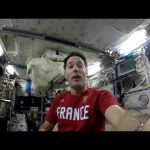
Tour the Space Station with Thomas Pesquet (French)
ESA astronaut Thomas Pesquet takes us on a six-minute tour of the International Space Station, recorded 23 March 2017 during his Proxima mission.
During his Proxima mission, Thomas will perform around 50 scientific experiments for ESA and France’s space agency CNES as well as take part in many research activities for the other Station partners.
The mission is part of ESA’s vision to use Earth-orbiting spacecraft as a place to live and work for the benefit of European society while using the experience to prepare for future voyages of exploration further into the Solar System.
More about the Proxima mission: http://www.esa.int/proxima
Connect with Thomas Pesquet: http://thomaspesquet.esa.int -
ESA Euronews: Earth as a planet
Earth is the largest rocky planet in our Solar System, and the only body we know of capable of supporting life. With so much news about exoplanets dominating the headlines, in this episode of Space we take a step back to take a look at Earth as a planet.
Four and a half billion years old and 149.6 million kilometres from the Sun, it’s not like anything else in the Solar System: “Planet Earth is quite a particular planet,” says Josef Aschbacher, Director of Earth Observation at ESA. “We have 70% of water, we have land masses which are actually moving over time. We have an atmosphere which is rich in oxygen, nitrogen, in water vapour. All of these are necessities in order to have life on a planet like this.”
Rome is a perfect spot to look at the defining characteristics of planet Earth, in particular the presence of liquid water. Our home planet has the right temperature and correct atmospheric pressure for water to flow on its surface, making it so hospitable to life.
This video is also available in the following languages:
French: https://www.youtube.com/watch?v=a6mylGSpU_c
German: https://www.youtube.com/watch?v=wNFtVSWePiY
Italian: https://www.youtube.com/watch?v=YKX1tFjiM6s
Spanish: https://www.youtube.com/watch?v=FauZDhLEeJI
Portguese: https://www.youtube.com/watch?v=7o3B8MlIFQ4
Romanian: https://www.youtube.com/watch?v=0L7ZEcpYbiA
Greek: https://www.youtube.com/watch?v=YKX1tFjiM6s -
ESA Euronews: Um olhar mais atento sobre o planeta Terra
A Terra é, segundo sabemos, o único planeta capaz de suportar vida. Está a cerca de 150 milhões de quilómetros do Sol e tem cerca de quatro mil e quinhentos milhões de anos de idade.
Não existe nada semelhante no sistema solar, como confirma o diretor do Observatório da Terra da “Agência Espacial Europeia”:http://www.esa.int/por/ESA_in_your_country/Portugal (AEE), Josef Aschbacher: “A Terra é um planeta bastante específico. Como podem ver aqui, é fascinante. Temos 70% de água, temos massas que se movem, ao longo do tempo. Temos uma atmosfera rica em oxigénio, nitrogénio, vapor de água… Tudo necessário para haver vida num planeta como este”.
Na superfície da Terra, em Roma, Itália, somos constantemente lembrados de como a água é importante para nosso planeta.
Ao contrário de Marte ou Vénus, a Terra tem a temperatura e a pressão atmosférica corretas para que a água flua na sua superfície.
-

Space debris – a journey to Earth (3D stereoscopic)
Space debris – a journey to Earth (3D stereoscopic version) takes the audience on a journey from the outer solar system back to our home planet. The objects encountered along the way are manmade. Originally designed to explore the universe, these are now a challenge for modern space flight. An estimated number of 700,000 objects larger than 1 cm and 170 million objects larger than 1mm are expected to reside in Earth orbits.
The video gives a closer look at the different regions used for space flight and explains how mitigation and removal measures could preserve future usage of these orbits.
A 2D version of this video is available at: https://www.youtube.com/watch?v=zT7typHkpVg
Produced for the 7th European Conference on Space Debris, 18-21 April 2017.
Follow the conference live via: https://livestream.com/esa/spacedebris2017
Credit: ESA/ID&Sense/ONiRiXEL, CC BY-SA 3.0 IGO (https://creativecommons.org/licenses/by-sa/3.0/igo/)
-
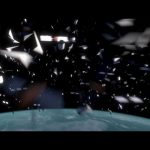
Space debris – a journey to Earth
Space debris – a journey to Earth takes the audience on a journey from the outer solar system back to our home planet. The objects encountered along the way are manmade. Originally designed to explore the universe, these are now a challenge for modern space flight. An estimated number of 700,000 objects larger than 1 cm and 170 million objects larger than 1mm are expected to reside in Earth orbits.
The video gives a closer look at the different regions used for space flight and explains how mitigation and removal measures could preserve future usage of these orbits.
Produced for the 7th European Conference on Space Debris, 18-21 April 2017.
A 3D stereoscopic version of this video is available here: https://www.youtube.com/watch?v=EzrMHWjQCtc
Follow the conference live via: https://livestream.com/esa/spacedebris2017
Credit: ESA/ID&Sense/ONiRiXEL, CC BY-SA 3.0 IGO (https://creativecommons.org/licenses/by-sa/3.0/igo/)
-
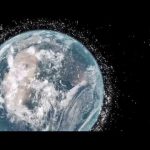
Dealing with space debris
Earth is surrounded by a cloud of space debris. This material ranges from dead satellites and rocket stages to fragments of material and even flecks of paint… and all this junk could do enormous damage to working satellites.
During 18–21 April, experts from around the world will meet at ESA’s European Space Operations Centre, Darmstadt, Germany for the 7th European Conference on Space Debris.
Delegates will discuss the extent of the debris problem and what can be done to ensure that satellites we rely on – providing us with services such as navigation, TV and weather forecasting – can operate safely in the future.
Talks will address acute issues like current practices in debris avoidance, novel concepts for removing debris, and the deployment of large constellations of several thousand satellites for telecommunications.
The conference will be opened by ESA Director General Jan Woerner and NASA’s former orbital debris chief scientist, Donald Kessler.
On 18 April and 21 April, live webcasts will cover the keynote address and press briefing, respectively. Details via esa.int/debris.
More information
ESA Space Debris http://www.esa.int/debris
ESA CleanSpace http://www.esa.int/CleanSpace -
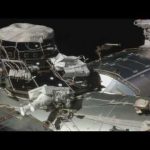
Space Station Upgrades Continue on This Week @NASA – March 31, 2017
Work continues aboard the International Space Station on upgrades to prepare it for future operational activities. Ground controllers, using the station’s robotic arm, moved the Pressurized Mating Adapter-3 (PMA-3) from the Tranquility module to the station’s Harmony module March 26. PMA-3 will be outfitted with one of two International Docking Adapters to accommodate U.S. commercial spacecraft carrying astronauts on future missions. Four days after the PMA-3 move, NASA’s Shane Kimbrough and Peggy Whitson conducted the second in a series of three planned spacewalks to complete work related to the upgrades. The third spacewalk is planned in April. Also, James Webb Space Telescope Completes Acoustic and Vibration Tests, MAVEN Data Helps Measure Loss of Mars’ Atmosphere, Getting Excited About STEM, and New NASA App for Amazon Fire TV!
-
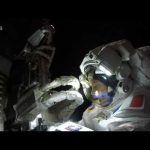
Station spacewalk (GoPro footage hyperlapse)
GoPro footage of ESA astronaut Thomas Pesquet working outside the International Space Station during a spacewalk on 24 March 2017.
Thomas is seen performing his spacewalk tasks. Firstly he inspected the Station’s cooling system for leaks. He took photos and recorded video images as he patted and prodded the cooling pipes to see if any coolant leaked out. No leak was found, but ground control can now analyse the images in detail.
Thomas’ second task was to maintain the multipurpose robotic hand Dextre – he had the laborious job of applying lubricant. The footage concludes when he has set up a foot restraint and is preparing to start work on Dextre – backdropped by a spectactular view of our planet.
For this spacewalk, Thomas and NASA astronaut Shane Kimbrough spent six hours and 34 minutes outside the Station.
Thomas is spending six months on the International Space Station as part of his Proxima mission. During Proxima, Thomas will perform around 50 scientific experiments for ESA and France’s space agency CNES as well as take part in many research activities for the other Station partners.
The mission is part of ESA’s vision to use Earth-orbiting spacecraft as a place to live and work for the benefit of European society while using the experience to prepare for future voyages of exploration further into the Solar System.
More about the Proxima mission: http://www.esa.int/proxima
Connect with Thomas Pesquet: http://thomaspesquet.esa.intCredit: ESA/NASA
Music: ’Oaxaca’
Written by M. Cherry, C. Dennis, G. Fuchs, C. McNeal, S. Moore
Performed by Maserati
Published by Rough Trade Publishing
Courtesy of Temporary Residence Ltd.
By Arrangement with Bank Robber Music -
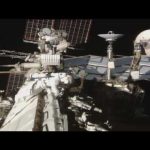
Space Station Crew Members Walk in Space with an Eye to the Future
Expedition 50 Commander Shane Kimbrough of NASA and Flight Engineer Thomas Pesquet of the European Space Agency conducted a spacewalk outside the International Space Station March 24 to disconnect cables and electrical connections on Pressurized Mating Adapter-3 (PMA-3), lubricate the latching end effector on the Canadarm2 robotic arm and replace a computer relay box on the station’s truss. PMA-3 will be robotically relocated March 30 by ground controllers from the port side of the Tranquility module to the space-facing side of the Harmony module for the future installation of a second International Docking Adapter that will accommodate the arrivals of commercial crew vehicles. The spacewalk is the first of three planned in a two-week period for station crewmembers that will see PMA-3 reconnected to its new location on Harmony and an avionics box replaced that routes electricity and data to station experiments.
-

NASA’s Stennis Space Center Conducts RS-25 Engine Test
On March 23, NASA conducted a test of an RS-25 engine at the agency’s Stennis Space Center in Bay St. Louis, Mississippi. Four RS-25’s will help power NASA’s Space Launch System (SLS) rocket to space. During this test, engineers evaluated the engine’s new controller or “brain”, which communicates with the SLS vehicle. Once test data is certified, the engine controller will be removed and installed on one of the four flight engines that will help power the first integrated flight of SLS and the Orion spacecraft.
-

JWST 2016 – Welcome: ESA Space Science Programme (M. Kessler)
The first workshop in this series took place at ESA’s European Space Astronomy Center (ESAC) near Madrid on September 26-28, 2016. The main goal of this first workshop was to present to help prospective JWST users to select the best observing modes to achieve their science goals.
-
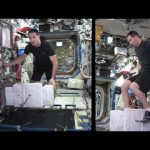
Space Station fitness
ESA astronaut Thomas Pesquet gives a guided tour of the International Space Station’s exercise machines. Staying fit is important on Earth but even more so in space as bones and muscle are used less in microgravity and tend to waste away. Astronauts spend around two hours every day doing fitness routines.
The Space Station has three types of exercise machines: a treadmill (T2), an exercise bicycle (CEVIS) and a weight-lifting machine (ARED).
Thomas is spending six months on the International Space Station as part of his Proxima mission. During Proxima, Thomas will perform around 50 scientific experiments for ESA and France’s space agency CNES as well as take part in many research activities for the other Station partners.
The mission is part of ESA’s vision to use Earth-orbiting spacecraft as a place to live and work for the benefit of European society while using the experience to prepare for future voyages of exploration further into the Solar System.
Connect with Thomas Pesquet: http://thomaspesquet.esa.int
-

The Moon – ESA’s interactive guide
‘The Moon – ESA’s interactive guide’ is a web documentary with over 40 videos narrated by scientists involved in lunar research. The platform allows you to explore your own path and discover the science, technology and the missions around our moon. An engaging space to satisfy your curiosity, learn and be inspired.
Explore at http://lunarexploration.esa.int
-
Yuksek x Thomas Pesquet
This music video, directed by Jérôme de Gerlache, is a collaboration between French musician Yuksek and ESA astronaut Thomas Pesquet on the International Space Station.
The friends came up for the concept of this film to show both ships of creation: Yuksek’s studio where he composed the music inspired by Thomas Pesquet’s flight, and the spaceship where Thomas is performing science for the benefit of humanity.
Illustrating their everyday working life, they are brought together by music that crosses borders and travels easily from Earth to space. Music connects people anywhere, it is universal and that is its intrinsic beauty.
Thomas is spending six months on the International Space Station as part of his Proxima mission. During Proxima, Thomas will perform around 50 scientific experiments for ESA and France’s space agency CNES as well as take part in many research activities for the other Station partners. The mission is part of ESA’s vision to use Earth-orbiting spacecraft as a place to live and work for the benefit of European society while using the experience to prepare for future voyages of exploration further into the Solar System.
Music: Yuksek « Live Alone feat Roman Rappak »
Directed by Jérôme de Gerlache
Director of photography [space] Thomas Pesquet
Director of photography [earth] Jacques Ballard
Editor Nicolas Capus
Colorgrading Arthur Paux
Thanks to Emilien Lazaron.Many thanks to Partyfine, Universal Music, Have a great day films, Sparks seeker
Connect with Thomas at http://thomaspesquet.esa.int
-
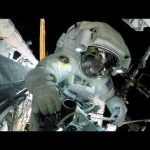
Spacewalker’s view
ESA astronaut Thomas Pesquet completed his first spacewalk 13 January 2017 together with NASA astronaut Shane Kimbrough to complete a battery upgrade to the outpost’s power system.
Thomas recorded the spacewalk for the first time with a camera in a space-proof casing that was mounted to a bracket on his chest called the mini work station. This video shows scenes from the spacewalk using this camera.
The spacewalk went as planned and, even better, Shane and Thomas performed a number of extra tasks once they had installed the batteries. They retrieved a failed camera, installed a protective cover on an unused docking port, moved handrails in preparation for future spacewalks and took pictures of external facilities for ground control.
The duo spent five hours and 58 minutes outside the International Space Station.
Thomas is spending six months on the International Space Station as part of his Proxima mission. During Proxima, Thomas will perform around 50 scientific experiments for ESA and France’s space agency CNES as well as take part in many research activities for the other Station partners. The mission is part of ESA’s vision to use Earth-orbiting spacecraft as a place to live and work for the benefit of European society while using the experience to prepare for future voyages of exploration further into the Solar System.
-
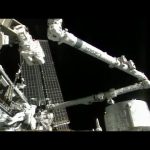
Thomas Pesquet – EVA preparations
Thomas Pesquet from France has been onboard the International space Station since 19 November 2016. He is about to take part in his first Extra-Vehicular Activity (EVA, or spacewalk), performing maintenance outside the Space Station to upgrade its batteries to newer lithium-ion versions. Intensive preparations for this procedure took place in the months leading up to launch, with classroom sessions at NASA’s Johnson Space Centre in conjunction with underwater training in NASA’s Neutral Buoyancy Lab.
-
NASA 2017 – Building the Future
NASA looks forward to 2017.
For more information on NASA in 2016 and beyond, visit:
https://www.nasa.gov/press-release/nasa-reveals-the-unknown-in-2016 -

The Stars of Passengers Quiz NASA Scientist
NASA Scientist Tiffany Kataria drops in on Jennifer Lawrence, Chris Pratt and Michael Sheen for a fun, not so serious chat about science fiction, other worlds and time travel???
-
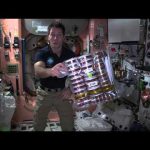
Thomas Pesquet’s space food
ESA astronaut Thomas Pesquet gives a tour of the International Space Station’s kitchen and the special food will share with his crewmates in space.
Astronauts get so-called “bonus food” for special occasions such as Christmas and New Year’s dinner. Thomas’ bonus food was prepared by ESA and France’s space agency CNES together with French chefs Thierry Marx and Alain Ducasse.
Connect with Thomas Pesquet on social media:
http://thomaspesquet.esa.int -
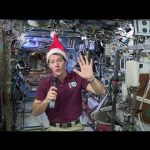
(French) Thomas Pesquet’s space Christmas message
ESA astronaut Thomas Pesquet shares his Christmas plans and wishes on the International Space Station.
Flying 400 km above Earth, astronauts on the International Space Station have a unique experience and vision of our planet that they share in this video. Thomas recounts his memories growing up in Normany, France, and explains what Christmas means to him.
His end-of-year meal was prepared by French chefs – canned of course, there is no way to cook food on the Space Station and includes ox-tongue from his home-region prepared by Thierry Marx, chicken-supreme and for desert, apple gingerbread.
Connect with Thomas Pesquet on social media:
http://thomaspesquet.esa.intThis message is also available in English:
https://www.youtube.com/watch?v=jncXk___ryE -

Thomas Pesquet’s space bedroom (French)
ESA astronaut Thomas Pesquet gives a guided tour of the International Space Station’s crew quarters – the bedrooms and only private areas for the six astronauts in the outpost.
After a day’s work running experiments and maintaining the weightless research centre astronauts can retreat to their private quarters that is no larger than a changing room. In this small space they can store personal items, use a laptop for internet and float to sleep in their sleeping bag.
Find out more about the Proxima mission: http://www.esa.int/proxima
Connect with Thomas at http://thomaspesquet.esa.int
-
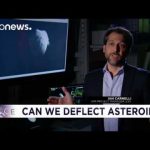
ESA Euronews: Can we deflect asteroids?
In the edition of Space, Euronews correspondent Jeremy Wilks reports from the Observatory of the Côte d’Azur in the south of France on a unique mission to deflect an asteroid.
Asteroids have the potential to cause a catastrophe – a small asteroid could wipe out an entire city, while a large one could mean the end for us all.
It’s a threat we’re aware of, and which scientists and engineers are working to overcome.
This video is also available in the following languages:
German: https://www.youtube.com/watch?v=M1p6fl7sCGk
French: https://www.youtube.com/watch?v=pCehifF8C78
Italian: https://www.youtube.com/watch?v=Qyyjp7Rjip0
Spanish: https://www.youtube.com/watch?v=UiUgVncmKo4
Portuguese: https://www.youtube.com/watch?v=bddwRV07usc
Hungarian: https://www.youtube.com/watch?v=F1dfH4BzeEI
Greek: https://www.youtube.com/watch?v=OcL4oEAG-L8 -
United Space in Europe
European spirit, identity and cohesion are the overarching aspects for Europe to achieve the best of outcomes for its states and citizens in space and for a globally successful European space sector.
United Space in Europe describes the intensive cooperation of different European entities for the sake of a strengthening of Europe. With this strengthened European cooperation in space, the 2016 Ministerial Council will further ESA’s breadth and strength of action to cover its mandate as laid out in the ESA Convention through enhanced partnership with its Member States, with other institutional actors and with space actors worldwide.
The conference takes place in the advent of the Space 4.0 era, a time when space is evolving from being the preserve of the governments of a few spacefaring nations to a situation in which there is the increased number of diverse space actors around the world, including the emergence of private companies, participation with academia, industry and citizens, digitalisation and global interaction.
Space 4.0 represents the evolution of the space sector into a new era, characterised by a new playing field. This era is unfolding through interaction between governments, private sector, society and politics. Space 4.0 is analogous to, and is intertwined with, Industry 4.0, which is considered as the unfolding fourth industrial revolution of manufacturing and services.
To meet the challenges and to proactively develop the different aspects of Space 4.0, the European space sector can become globally competitive only by fully integrating into European society and economy. This requires a sustainable space sector closely connected with the fabric of society and economy. For this to happen, space must be safe, secure and easily and readily accessible, and built on a foundation of excellence in science and technology – broadly and continuously over time.
ESA will table proposals at the meeting to meet the common European goals for space in this exciting and challenging new era.
This video is also available in the following langauges:
German: https://www.youtube.com/watch?v=PV775vLxgEU
French: https://www.youtube.com/watch?v=Lt5cFRpo8oQ
Spanish: https://www.youtube.com/watch?v=X4QpTqK2FqE
Italian: https://www.youtube.com/watch?v=xCZ8Sm0ySrERead more about the ESA Ministerial Council 2016:
http://www.esa.int/About_Us/Ministerial_Council_2016 -
(French) United Space in Europe
[French version] European spirit, identity and cohesion are the overarching aspects for Europe to achieve the best of outcomes for its states and citizens in space and for a globally successful European space sector.
United Space in Europe describes the intensive cooperation of different European entities for the sake of a strengthening of Europe. With this strengthened European cooperation in space, the 2016 Ministerial Council will further ESA’s breadth and strength of action to cover its mandate as laid out in the ESA Convention through enhanced partnership with its Member States, with other institutional actors and with space actors worldwide.
The conference takes place in the advent of the Space 4.0 era, a time when space is evolving from being the preserve of the governments of a few spacefaring nations to a situation in which there is the increased number of diverse space actors around the world, including the emergence of private companies, participation with academia, industry and citizens, digitalisation and global interaction.
Space 4.0 represents the evolution of the space sector into a new era, characterised by a new playing field. This era is unfolding through interaction between governments, private sector, society and politics. Space 4.0 is analogous to, and is intertwined with, Industry 4.0, which is considered as the unfolding fourth industrial revolution of manufacturing and services.
To meet the challenges and to proactively develop the different aspects of Space 4.0, the European space sector can become globally competitive only by fully integrating into European society and economy. This requires a sustainable space sector closely connected with the fabric of society and economy. For this to happen, space must be safe, secure and easily and readily accessible, and built on a foundation of excellence in science and technology – broadly and continuously over time.
ESA will table proposals at the meeting to meet the common European goals for space in this exciting and challenging new era.
Read more about the ESA Ministerial Council 2016:
http://www.esa.int/About_Us/Ministerial_Council_2016 -
(Spanish) United Space in Europe
[Spanish version] European spirit, identity and cohesion are the overarching aspects for Europe to achieve the best of outcomes for its states and citizens in space and for a globally successful European space sector.
United Space in Europe describes the intensive cooperation of different European entities for the sake of a strengthening of Europe. With this strengthened European cooperation in space, the 2016 Ministerial Council will further ESA’s breadth and strength of action to cover its mandate as laid out in the ESA Convention through enhanced partnership with its Member States, with other institutional actors and with space actors worldwide.
The conference takes place in the advent of the Space 4.0 era, a time when space is evolving from being the preserve of the governments of a few spacefaring nations to a situation in which there is the increased number of diverse space actors around the world, including the emergence of private companies, participation with academia, industry and citizens, digitalisation and global interaction.
Space 4.0 represents the evolution of the space sector into a new era, characterised by a new playing field. This era is unfolding through interaction between governments, private sector, society and politics. Space 4.0 is analogous to, and is intertwined with, Industry 4.0, which is considered as the unfolding fourth industrial revolution of manufacturing and services.
To meet the challenges and to proactively develop the different aspects of Space 4.0, the European space sector can become globally competitive only by fully integrating into European society and economy. This requires a sustainable space sector closely connected with the fabric of society and economy. For this to happen, space must be safe, secure and easily and readily accessible, and built on a foundation of excellence in science and technology – broadly and continuously over time.
ESA will table proposals at the meeting to meet the common European goals for space in this exciting and challenging new era.
Read more about the ESA Ministerial Council 2016:
http://www.esa.int/About_Us/Ministerial_Council_2016 -

Expedition 50/51 Launches to Space Station on This Week @NASA – November 18, 2016
The Expedition 50/51 crew, including NASA astronaut Peggy Whitson, launched aboard a Soyuz spacecraft from the Baikonur Cosmodrome in Kazakhstan Nov. 17 eastern time, to begin a two-day flight to the International Space Station. Whitson, Oleg Novitskiy of the Russian space agency Roscosmos and Thomas Pesquet of ESA (European Space Agency) are scheduled to join Expedition 50 commander Shane Kimbrough of NASA and Roscosmos cosmonauts Sergey Ryzhikov and Andrey Borisenko, who all have been aboard the orbiting laboratory since October. Whitson will assume command of the station in February – making her the first woman to command the space station twice. Whitson and her Expedition 50 crewmates are scheduled to return to Earth next spring. Also, Supermoon Shines Bright, Newman Participates in Operation IceBridge, and Advanced Weather Satellite Mission Previewed!
-
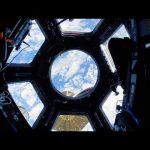
Space Station Fisheye Fly-Through 4K (Ultra HD)
Join us for a fly-through of the International Space Station. Produced by Harmonic exclusively for NASA TV UHD, the footage was shot in Ultra High Definition (4K) using a fisheye lens for extreme focus and depth of field.
-
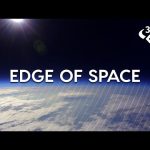
Journey To The Edge Of Space (360 Video)
Experience what it’s like to leave Earth, traveling to over 90,000 feet into the stratosphere. Never before has a 360 video been recorded at these heights – so buckle up and enjoy the view as Seeker takes you on a journey to the Edge of Space.
Subscribe to Seeker VR ►►► http://bit.ly/2cPGh2u
Download the Discovery VR app!
iTunes: https://itunes.apple.com/us/app/id1030815031
Google Play: http://bit.ly/2cFGia8 -
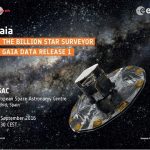
Press Conference: First Data Release from ESA’s Gaia Mission
Launched in December 2013, Gaia is destined to create the most accurate map yet of the Milky Way. By making accurate measurements of the positions and motions of stars in the Milky Way, it will answer questions about the origin and evolution of our home galaxy.
The first intermediate data release, containing among other things three-dimensional positions and two-dimensional motions of a subset of two million stars, demonstrates that Gaia’s measurements are as precise as planned, paving the way to create the full map of one billion stars to be released towards the end of 2017.
-
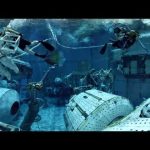
NASA VR/360 Astronaut Training: Space Walk
A 360-degree immersive virtual reality (VR) viewing experience, featuring exclusive astronaut training footage from NASA’s Neutral Buoyancy Laboratory (NBL) in Houston, Texas. The stunning NASA VR/360 video, produced by Harmonic, offers a variety of perspectives – in the pool and out – as astronauts complete space-walk training for future missions to the International Space Station (ISS).
-
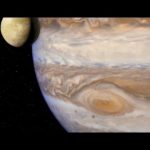
Space science: everything starts here
How did it all begin? What are the origins of our planet? To understand our place in the Universe we need to explore space. Find out how we’re doing this with ESA’s incredible fleet of space science missions to study our Sun and chart the stars around us, probe the dark matter and dark energy of the Universe, and tour various planets, moons and other small bodies in our Solar System.
-

ExoMars/TGO Deep Space Hangout
Google hangout with ExoMars mission experts for an update on the cruise to Mars, the crucial mid-course manoeuvre on 28 July and the upcoming preparations for the arrival phase. The hangout was held on 26 July at 16:00 CEST/14:00 GMT.
Since launch on 14 March, ESA’s ExoMars Trace Gas Orbiter and the Schiaparelli landing demonstration module have been en route to the Red Planet.
The hangout included mission updates and a live Q&A with ESA experts and scientists, focusing on the crucial milestones during the spacecraft’s seven-month cruise to the Red Planet.
The hangout was hosted by Daniel Scuka (ESA Spacecraft Operations Editor) who was joined by:
** Michel Denis – ExoMars Flight Director, ESOC
** Silvia Sangiorgi – ExoMars Deputy Spacecraft Operations Manager, ESOC
** Michael Khan – Mission Analyst, ESOC
** Ian Thomas – NOMAD (spectrometer) Project Manager, Royal Belgian Institute for Space AeronomyBackground info on #ExoMars :
http://www.esa.int/Our_Activities/Space_Science/ExoMars
http://www.esa.int/Our_Activities/Operations/ExoMars_TGO_operations -
Space Launch System Booster Test Fired on This Week @NASA – July 1, 2016
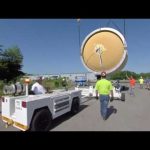
On June 28, the booster for NASA’s Space Launch System (SLS) rocket was fired up for a major two-minute full-duration qualification ground test at Orbital ATK Propulsion Systems’ test facilities in Promontory, Utah. Engineers will evaluate test data on the motor’s performance using cold propellant, the steering operation of its redesigned nozzle, and other operational data to help qualify the booster for flight. This is the last time the booster will be fired in a test environment before it’s used for the first uncrewed test flight of SLS with NASA’s Orion spacecraft, known as Exploration Mission-1, in late 2018. Also, SLS Test Hardware Arrives at Marshall, Juno Arrives at Jupiter July 4th, Test Lab Launched to Streamline Air Travel, Russian Docking System Tested on ISS, and NASA 2016 Agency Honor Award Distinguished Honorees.
-

10 September 2016: Citizens’ Debate on Space for Europe in 22 ESA Member States
On 10 September 2016 about 2000 citizens from 22 European countries will participate in the first Citizens’ Debate on Space for Europe. In the course of the day, citizens will have the opportunity to learn, debate, have their say and participate by suggesting priorities on all aspects of current and future space programmes. This consultation on an unprecedented scale will take place simultaneously in all 22 Member States of the European Space Agency (ESA).
Approximately 100 citizens per Member State will be gathered at various locations. Those selected will be as representative as possible of the population of their country according to socio-demographic criteria. The results of the consultation will be collated – as early as 48 hours after the debate takes place – and communicated to ESA.
The Citizens’ Debate on Space for Europe is a major first – never before has the future of space activities been addressed in such an event held across so many countries.
For more information, and to apply to take part in the debate, visit http://www.citizensdebate.space
-
ESA Euronews: Sport and Internet via satellite
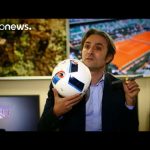
Dozens of Euro 2016 matches are being beamed via satellite to television sets and phones all over the world this summer. But did you know that there is a technology, based on internet and satellite, that allows even a small football club to live stream their games and target a new audience?
Claudio Rosmino and the Space team travelled to Italy to see this innovation in action – and also to France to explore the science behind the technology.
This video is available in the following languages:
English: https://www.youtube.com/watch?v=sI9He-OCyY0
French: https://www.youtube.com/watch?v=PS6HbTzUvkE
German: https://www.youtube.com/watch?v=tFys7MGwrVk
Italian: https://www.youtube.com/watch?v=T82rBP-bBow
Spanish: https://www.youtube.com/watch?v=c-gJxC7ch1Y
Portuguese: https://www.youtube.com/watch?v=hmVgrd5CoXY
Greek: https://www.youtube.com/watch?v=h41xGsJ745Y
Hungarian: https://www.youtube.com/watch?v=nKhGZKaXnmQ -
Soyuz TMA-19M landing
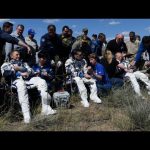
ESA astronaut Tim Peake, NASA astronaut Tim Kopra and commander Yuri Malenchenko landed in the steppe of Kazakhstan on Saturday, 18 June in their Soyuz TMA-19M spacecraft. The trio spent 186 days on the International Space Station. The landing brings Tim Peake’s Principia mission to an end but the research continues. Tim is the eighth ESA astronaut to complete a long-duration mission in space. He is the third after Alexander Gerst and Andreas Mogensen to fly directly to ESA’s astronaut home base in Cologne, Germany, for medical checks and for researchers to collect more data on how Tim’s body and mind have adapted to living in space.
Follow Tim Peake via timpeake.esa.int
-
Tim Peake: how to draw blood in space
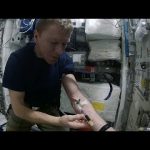
ESA astronaut Tim Peake shows how to draw blood for research on the International Space Station. Researchers often request samples before, during and after a spaceflight to examine differences.
The tubes of blood are put in a refrigerated centrifuge and then stored in the International Space Station’s –80°C freezer called MELFI for later analysis on Earth.
Read more about the experiments Tim Peake took part in: http://www.esa.int/Our_Activities/Human_Spaceflight/Principia/Body_and_mind
-
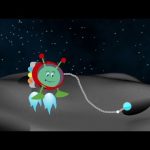
Paxi – Rosetta och Kometer
Följ med Paxi till utkanten av Solsystemet för att upptäcka en värld av kometer och lära dig om det fascinerande Rosetta-projektet till kometen 67P/Churyumov-Gerasimenko.
I den här videofilmen, som är avsedd för barn mellan 6 och 12 år, tar Paxi med sig barn för att utforska kometer och Rosetta, ESA:s fascinerande rymdfarkost som flyger sida vid sida med kometen 67P/Churyumov-Gerasimenko och ska försöka släppa ned en landningsenhet på kometen den 12 November 2014.
Den här videofilmen är den tredje i en serie av animationer i vilka Paxi, ESA:s utbildningsmaskot, berör olika aspekter av Solsystemet, Universum, planeten Jordens hemligheter och mycket mer.
-
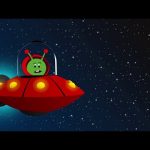
Vem är Paxi
Lär känna Paxi, ESA:s utbildningsmaskot. Var han kommer ifrån, varför han gillar rymdresor, vilka hans vänner är …
I den här videofilmen som är avsedd för barn mellan 6 och 12 år, introduceras Paxi, en liten rymdvarelse från planeten Ally-O, och som har kommit till Jorden för att träffa nya vänner och ta med barn på en äventyrlig upptäcktsresa i rymden. Det är den första i en serie av animationer i vilka Paxi, ESA:s utbildningsmaskot, berör olika aspekter av Solsystemet, Universum, planeten Jordens hemligheter och mycket mer.